
![Эртугрул на границе с Византией | Подъем Османского государства [1 часть] | Мухаммад Муса Аш-Шариф](https://i.ytimg.com/vi/ZtP9fSKqryI/maxresdefault.jpg)










![Ζάκυνθος: Ημερίδα «Ιστορικός Διάπλους: Από την Κρήτη στη Ζάκυνθο» [11.10.25]](https://i.ytimg.com/vi_webp/efkj7bShmcA/maxresdefault.webp)


![Developments in EUROPE [AP World History Review—Unit 1 Topic 6]](https://i.ytimg.com/vi/ZaGC4rlc7nk/maxresdefault.jpg)

Byzantine art, the artistic tradition of the Eastern Roman Empire centered in Constantinople (modern Istanbul), spanned over a thousand years from 330 to 1453 AD and is best known for its mosaics, religious icons, architecture, and carved ivory. The art evolved through three distinct periods: the Early Period (330-842 AD) featuring monumental works like Hagia Sophia and St. Vitale in Ravenna; the Middle Period (842-1185 AD) marked by a revival of classical forms and renewed interest in the human body; and the Late Period (1185-1453 AD) characterized by emotional intensity and dynamic movement. The art was significantly influenced by Iconoclasm (842-962 AD), a 120-year period when religious images were destroyed, followed by a revival under Michael III. The style continued in Crete through the Cretan School, influencing artists like El Greco, and later inspired the Neo-Byzantine movement from the 19th century onwards.
Byzantine Art History: Eastern Roman Empire Masterpieces
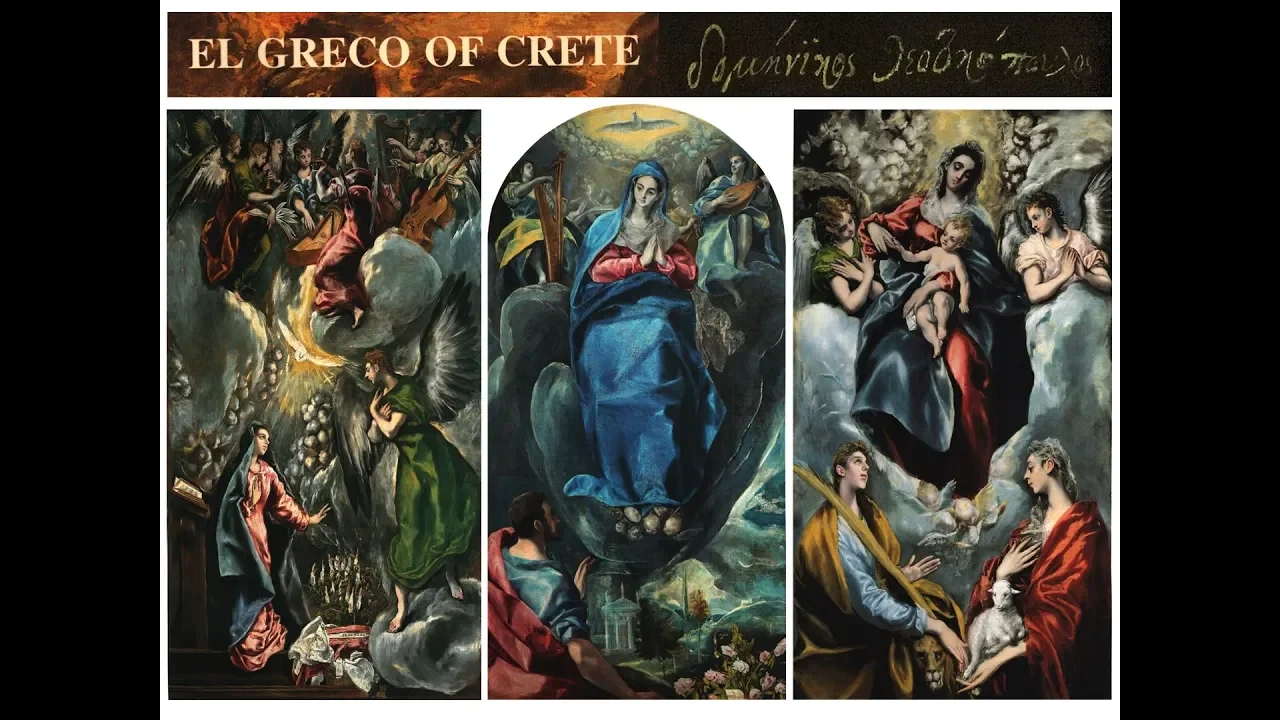
Added:today I'm going to be talking about bantine art which is the art of the Eastern Roman Empire whose capital was Constantinople or present day Istanbul and the Empire survived for over a thousand years so there's a lot to cover a bit of background first what exactly was the Eastern Roman Empire it was founded by Emperor Constantine the Great in 330 and he reamed the old town of banum New Rome but almost immediately it was known as Constantinople after him but historians use the old name Byzantium to describe the art and the name of the Empire it was about um 17 years later the theodosius I first became emperor and he established the nying Creed or Creed of Constantinople as the Orthodox Doctrine for Christianity and he was the last emperor to roll the entire Roman Empire before it was permanently split as you see here between the west and the East for a period of about 80 years there were two separate co-equal courts dividing the governance of the empire into the Western provinces and the Eastern provinces but in 410 Rome was sacked by the Visigoths and the critical date 476 Rome's power was ended when the last Roman emperor of the West Romulus Augustus was deposed the Byzantine Empire the the Eastern Roman Empire regarded itself as a continuation of the whole Roman Empire with Constantinople as the new capital and it lasted um over a thousand years until eventually it was conquered by the ottoman Turks in 1453 so over this Thousand-Year time span the Byzantine Empire had some 90 three Emperors divided into 17 dynasties and four nestic periods the first emperor was Constantine the Great shown here now bantine art is best known for its mosaics its religious icons its um architecture it's cved iery and you can divide the uh whole period into or roughly into three periods the early period lasted about 500 years 330 to 842 and it was during that period that the a Sophia was built and the Rena mosaics were created and within this early period the reign of Justinian the first was important I'll be talking more about that because he reinvigorated the Arts now Byzantine art broke away from the naturalistic Greek and Roman tradition by adopting a more symbolic approach but you can see here that um it was actually a combination of the naturalistic and the symbolic the early period this early period of 500 years was ended with 120e period of conoc clasm when much of the art was destroyed and you see here um the um image of Christ being whitewashed over then during the middle period sometimes called the high period of 350 years art flourished there was a return as you see here to classical forms a renewed interest in the human body and um are Diversified was influenced by the West as well as by Islamic Art and then there was um a late period of about 200 years which saw a Revival of Byzantine art characterized by emotional intensity and dynamic movement and as you can see here there are some similarities with early Italian art this was followed by a post bantine period when the the style was continued in cre and this creeton schools most well-known exponent today was El Greco and then much later from the 19th century onwards there was a Revival known as Neo Byzantine so let's go through all of that a little bit more slowly and also what I'd like to do is to introduce some of the the history to put the art in context so let's return briefly to the history of Constantinople the history of the the old town I mentioned Byzantium predates Constantinople and there was an enormous Hippodrome which was built by septus seus in 203 Common Era the layout of the hipper Drone you see on the far left is All That Remains there's no Hippodrome just the the road following the layout of the Hippodrome which is now in Sultan met Square in modern day ebul but in its day the Hippodrome could hold a 100,000 Spectators and it was filled with art statues of gods Emperors animals Heroes and so on in the modern day Square there is the serpent column which I thought I'd mention because Constantine brought it from the Temple of Apollo at Deli and it dates from about the fifth century bcee it celebrates the victory of the Greeks over the Persians there's also in the Square this um Egyptian obelisk which dates from um 1,490 BC and it was brought from the Temple of carac at luxa by theodosius the great note on the map the gray area is or was the great palace now long gone the only um remains are this Sentry Pier now in the courtyard of the Istanbul archaeological Museum but the the great palace was the main Imperial residence of the Byzantine emperors until about 1081 and it was the center of um Administration for the empire for over 690 years there there are um a few fragments of the great palace its foundations and a mosaic but but little has survived so let's return to Constantine I known as the great who gave his name to Constantinople this is the head of what was once an enormous statue the head is over 2 m high and this is a recreation what the statue might have looked like based on the few pieces that remain and this Recreation is made from resin and was made in 2024 so it it's a recent reconstruction just to show you the size in 330 Constantine agreed the Edict of Milan which ended the persecution of Christians and then in 380 Christianity was made the state religion of the Roman Empire the Edict of thessalonica now Constantine only visited Rome a few times and decided the Empire needed a new capital and that's why he chose the Greek Town of Byzantium and he renamed it in 330 New Rome but as I said it quickly became called Constantinople he chose it incidentally as it's situated on the Bosphorus at the junction of European Asia and from then on it was the capital of what became known as the Eastern Roman Empire or the Byzantine Empire and it it saw itself as the continuation of ancient Rome that that is the whole empire incidentally it wasn't until the 17th or 18th century that it became known of as Istanbul which is um medieval Greek it IM timolin which means to the city and um that became because it was the only city around the the Greek phrase to the city became the name of um the city for a while both names for you were used but Istanbul was first used on coins in um 1730 this is um an ivory carving of an Eastern Roman general called flavus arob bindus dagus aroen bindas and he was the Consul in Constantinople and here in this um Ivory carving you can see mythological figures military victories allegorical representations of the virtues and it was intended to convey power Prestige and legitimacy Ario bindus is shown at the top seated presiding over the games which is one of the reasons I'm showing it to you in the the Hippodrome and the Hippodrome is at the bottom and you can see at the bottom uh animals uh devouring fighting with Gladiators and um other people now Ario bindas was born into a distinguished family in fact his father his grandfather as well as his mother's father and grandfather were all consules in Constantinople and he married the daughter of the Western Roman Empire Emperor and you can see here in his right hand he holds um a handkerchief a cloth uh called the mappa chenis which is um a map of the circus or a map of the Hippodrome and it was used as a signal to start the games in his other hand he's got an elaborate scepter and he's flanked as you see by two assistants and he is the one sitting on this luxurious chair his um Power and Prestige was such that at one point according to chroniclers the popus took the cry arob bindus for Emperor and marched on his house to Proclaim him but he heard they were coming was unwilling to take part in a coup fled the house and went into hiding and in fact um historically nothing further is known about him and um it's assumed he died not long after this is a photo I took of the the Basilica of San Vitali in Rena it's a sixth Century church and was actually begun the construction was begun in 526 and it's an important example of Byzantine architecture and inside of art you may wonder why Rena well about a 100 years before early to mid fth century Rena was the capital of the Western Roman Empire until the German um Odo ASA is the one who overthrew Romulus Augustus the um Last Emperor marking the end of the Western Roman Empire now in this um Basilica or church the central building as you see is octagonal there's a dome and you'll notice interestingly the use of flying buttresses normally associated with the much later Gothic churches the church is um best known for its mosaics which are the largest and best preserved outside estanbul and around the central section there are two ambulatories and you can see the windows of the ambulatories one above the other we think the upper one was for married women inside this is the the apps and apps is a a large semicircular recess in a church with a typically with an arched or doed roof and this Mosaic shows a youthful depiction of Jesus Christ Seated on a blue globe robed in purple flanked By Angels offering with his right hand the Marty's Crown to San vital and on his left Bishop ecclesius offers a model he offers a model of the church and um according to Legend the church was erected on the site of the martyrdom of St falis on the sidewalls either side of the apps there are two famous Mosaic pattern uh panels and this depicts Emperor Justinian the first who stands in the middle he has soldiers to his right and clergy on his left to make it clear that he was the leader of both church and state by the way the um inscription above and to the right of his head was inserted later and refers to uh Bishop uh Maxim I but the the halo around Justinian's head appears to give him the same Holiness as Christ that I showed you in the Dome of the apps um but it is just part of a tradition that members of the Imperial family are shown with Halos on the opposite wall there's a more elaborate panel showing Justinian's wife Empress Theodora Solomon formal with a golden Halo crown jewels a group of Court women on her left and two Uno on her right she's holding the Eucharist vessel for the precious blood and her panel differs from the one I just showed you of Justinian as it's got a a more complex background around as you see there's a fountain over on the left a c cupular or rounded Dome above her and lavish hangings over on the right there there um there are many other mosaics in sanal there's um the story of Abraham and the sacrifice of Isaac Moses and the burning bush Jeremiah and I Isaiah and and the story of Cain and Abel and on the sidewalk towards the four evangelists this is a sopia built in this form by Emperor Justinian and Empress Theodora in just four and a half years it was the third of three churches to be built on the site and when it was built it was the world's largest interior space and the world's largest Cathedral for nearly a thousand years until ceville cathedral in 1520 and even now it's acknowledged as one of the greatest buildings in the world it was a staggering work of bantine architecture it was intended to awe all who set foot in the church and for the rest of Byzantine history it was the center of Christian worship in Constantinople this is the Dome inside looking up the church contains some of the most sophisticated mosaics of the bantine period the artist who created the imagined idealized images as we'll see later that reflect their spiritual Essence and the goal was to inst instill awe and to give the feeling to the the viewer of occupying a spiritual realm one Byzantine scholar bopus said of the Dome it seems not to be founded on solid masonry but to be suspended from Heaven this is one of the mosaics in AOS Sophia it's the desis Mosaic considered by some to be its the finest Mosaic it depicts the on the left the Virgin Mary and on the right John the Baptist either side of um uh Christ pantoc which which pantoc literally means Almighty or all powerful interestingly some art historians believe that the faces of the Virgin and John the Baptist were originally portraits of Justinian and Theodora uh later changed and that happens a lot with mosaics they're modified over the years so exact dates and intentions are unclear and are still actively debated and and some believe the underlying structure of this Mosaic uh might date back to the 6th century rather than the the 10th or 13th century although that's the the date light of of the the final version uh by the way Empress Theodora who i' I've mentioned was one of the most fascinating and influential figures in Byzantine history she had a humble background so she was from poor Beginnings but married the emperor Justinian when she was 35 she managed to quell riots uh the the niika riots she with with a powerful spe speech she was a shrewd political strategist but she also championed women's rights and introduced new laws on divorce and prostitution that protected marginalized women she supported religious tolerance and commissioned many public works and many art projects in particular she financed um mosaics in the in a sopia a strong ruthless and ambitious woman we don't know how she died there was a plague that swept right through the Empire between 541 and 549 which um she died in 548 uh so it's it's possible she was killed by the plague but that's um uh not recorded this is interesting if you do visit Istanbul you should visit the this the underground water system it's about um not far 150 M or so from the a sfia built in the 6th Century by or during the reign of Justinian on the site of an ancient Roman Basilica there are 336 columns supporting the ceiling uh incidentally re recycled from the ruins of older buildings a process called spoliation and and the the material taken from the old buildings it's called spolia the system when it's filled with water through the top can hold 80,000 cubic M of water and the water comes from a forest about 12 miles to the north uh it's it's claimed that 7,000 slaves were involved in the construction of the system and and you might recognize it from a film um From Russia with Love the James Bond 1963 film but if you do remember the film the um syst the water system is not actually under the Soviet Embassy I mentioned this earlier it it shows a mixture of styles first of all in the center the Virgin Mary sits between on the left St Theodore and on the right George holding martyr's crosses there behind them there are two ethereal Angels looking upwards to God and you can just see the hand of God coming down in the center the Angels the heads of the angels are well modeled in three dimensions a as is the virgins and her face has a realistic appearance similar in a way to Coptic tomb paintings notice um Mary and Christ avert their eyes so they're not looking directly at us but the two Saints are staring directly at us suggesting that um there a conduit between us and the he the Heavenly realm the background is not just plain gold but represents a wall with an Al Cove for the virgin's Throne so it's a mixture of styles that elements of three-dimensional classical painting but also elements of um pure symbolic painting but mixed together and overall it it it has a consistency it has a vivacity and a stability that creates a powerful relationship between us and another world in in other words it's a form of it's It's a linal space a Gateway from the everyday world to the spiritual world through the Saints to the Virgin Mary and then up to God and I should mention that at this point during the reign of Justinian and Theodora the Byzantine Empire reached its greatest extent which you you see here uh as you can see it stretched around a large part of the Mediterranean and included uh many modernday countries Turkey Greece Egypt Italy southern Spain and so on but we've reached um a period sometimes called the Byzantine Dark Ages the first iconic clasm the first lasted about 61 years the second 29 in total about a 100 years and during that period period mosaics and other images were destroyed or whitewashed over the ban was strictly imposed and we can see here the torture and martyrdom of the icon loving Bishop emus of Sardis on the left by the Arcon class Emperor Michael II who's sitting on the right and that was during the second iconic clasm although this as you can see is um from a much later a 13th century manuscript iconic clasm which of course is the destruction of all religious images is motivated by a theological interpretation of the Ten Commandments or a strict interpretation the the Commandments uh from Exodus and Deuteronomy forbids the making of graven images and in fact the Commandment is quite clear let me read it Thou shalt not make unto thee any Graven image or any likeness of anything that is in heaven above or that is in the earth beneath or that is in the water under the Earth which seems to rule out all images so why raises the question of why the Catholic Church allows any images well the the justification following this period of iconic clasm is that it distinguish between Idols that is images that are worshiped themselves instead of God and religious images which serve as aids to prayer and devotion if you like um a graphical or pictorial representation of the text of the Bible to make it the the stories in the Bible clear so it's that distinction between idols and religious images and the interpretation of graven images uh referring only to Idols uh maybe a fine distinction that the the Muslim Muslim world doesn't make although at the time it didn't actually have a formal policy of iconicism but the Byzantine emperor Leo III did and he banned all religious images and then the ban was further strengthened by Constantine I 5th and Leo the F what you show what's shown here is um a 9th century uh text from the Bible the text is they gave me Gall to eat when I was thirsty they gave me vinea to drink with a picture of a soldier offering uh on the right Christ vinegar on a sponge attached to a pole and then reflecting that there's a picture of the last iconclass patriarch of Constantinople John iith and he's rubbing out or whitewashing a painting of Christ with a similar sponge attached to a pole and John his character could look closely and you'll see he's got sort of sticky up straight hair sticking out in all directions and and that was intentional and meant to portray him as wild and barbaric in his iconic clasm so in other words this is a picture criticizing iconic clasm and from a a later period so following that period known as the Dark Ages we reach middle bantine Empire the middle period it was Michael III that um ended aonic clasm and brought in a Revival of Byzantine art with an emphasis on spiritual expression this is the um Joshua role it's interesting because it's um a continuous role about 10 m long which of course is common in Chinese art but unique in medieval Christian art and this this role tells the story of the Old Testament book of Joshua unfortunately it's incomplete it starts with chapter 2 and it shows um well the story of Joshua his military successes and you can see here that that's what's going on here on the the left and the right there's um uh conquered Kings uh kneeling in OB bance paying homage to uh Joshua and and again this um also reflects the military successes of the Byzantine Empire at this time sheet 12 through the role shows an angel on the left in Commander's uniform appearing before Joshua a shown and Joshua is shown twice standing on the right and also uh prostrate kneeling or lying in abeyance before the angel incidentally the woman sitting on the right personifies Jericho she represents Jericho and it's a convention found through the role the way you can tell is that on her head she's got a tower and so she represents as I said Jericho unusually in this role the images take precedence the text is truncated to fit and is written around the images as you can see here um and the the poses and the landscape setting are inspired by classical Roman art and there was a Revival in Roman and even classical Greek mythology as we see here on What's called the Veri casket and its use of um a form of classical helenistic style the on let me show you um a closeup of the lid this is the rape of Europa you can see the bull which is um the Greek Zeus or Roman Jupiter King of the Gods disguised himself as a bull to abduct a mortal woman who's sitting on the bull's back but there are many mythological inaccuracies so either the the maker didn't have access to the original classical texts or or didn't care just ignored them for example there's no indication of water the the bull uh went out across the sea so it's normally the bul is shown with waves beneath it and also this uh group of unruly boys on the right with with throwing stones is sort of is not part of the original myth it it possibly is from the Old Testament the stoning of Aran in the story of Joshua and so if so it's a sort of merging of of biblical stories with classical or elements of classical mythology the the person over on the far right playing the musical instrument is I think Hercules so classical mythology combined with Biblical stories we've now reached in the 9th to 11th centuries the Macedonian Renaissance soall and this really shows iCal influence of this period we could be looking at a Roman wall painting a fresco but this is in fact an illuminated manuscript the Paris Suter containing the Psalms of David and and a series of prayers a popular subject for private devotion it's um depth composition naturalism its coloring its quality make it unique for this period 10 Century in the sulter there is an extensive glossery explaining the prayers and with the Royal iconography and the the quality the sumptuousness it indicates it was for a learned Imperial Patron which suggests it was Constantine Constantine I 7th who ruled from 9 13 to 959 what we're looking at here is one of the scenes of David's life he shown playing this um form of harp with melodia behind him melodia is uh not a Greek goddess it's it's the symbol it symbolizes melodia symbolizes music behind the there's a woman looking out from behind the pillar over on the right I think that's the nymph Echo and Echo was cursed by Hera and was unable to say anything because of the curse other than the last thing she'd heard so all she can do is repeat David's music and then bottom right is um a figure that looks a bit like Hercules but I think it's Mount Bethlehem shown as a Shepherd thus the Sheep referring to David's role of as a Shepherd before becoming King and also to Bethlehem known as of course as the city of David but also a reference to the birthplace of Christ so um a lot can be read into these illustrations back to ayasophia and this is a representation of Christ with the emperor Leo I 6 possibly his son Constantine I 7th bowing down um before Christ on the in in the medallions on the right is Archangel Gabriel and of course on the left is the virgin Mary and Christ is holding um a text which reads translated peace be with you I am the light of the world now Leo I 6 was the second ruler of the Macedonian Dynasty and was extremely well read leading to his epithet the wise it's Leo the wise and this is a very this is quite an interesting um mosaic the tessera confirmed the work was executed by experts with Verve spontaneity the Tessa are have been carefully analyzed and they're angled downwards at various angles between 9° and 15° which give the optimal result for an observer standing beneath in the doorway opposite they as the sun moves they scintillate in the sun this is um an ivory relief panel from this period it's it's um what you're looking at is a legend concerning 40 Roman soldiers who refused to recant their Christian faith and they were condemned to a painful death by being forced out onto a frozen pond and there's um heated bath house you can see on the right which was on the shore for those that recanted but only one did and he was replaced by one of the guards so there there were still 40 Martyrs the half naked soldiers the martyrs are shown packed together on the lower half some doubled in pain some have collapsed and above sits Christ with three prostate prostrate angles on each sorry not angles angels on each side ready to receive them into heaven another Mosaic in AOS Sophia by the way I've separated out the mosaics so that I can red introduce them into in in roughly the correct sequence chronologically but as many of them were modified over the years it it's needed a bit of um manipulation but this is a mosaic of Empress Zoe on the right and dates back to the 11th century she's holding a scroll that represents the um donations made to the church in um the form of um promise written promises and on the left is a mosaic of emperor Constantine the 9th holding a bag of coins which also is a um a donation to the church and Christ sits on a throne in the middle wearing blue robes holding the Bible and his um gesture is a blessing Empress Zoe is interesting she was born into royalty into the Royal Dynasty briefly ruled with her sister in 1028 but when her sister died she was pushed to one side although she remained a powerful force in the background and in 1042 when she was 64 she unexpectedly ascended to the throne and was the first woman to rule on her own in Byzantine history she then faced challenges to her power and decided to marry Michael IV who was a young Noble and and she married him and adopted him as her son and made him the emperor but it wasn't a happy marriage marriage and uh there were power struggles which led to his death followed by two more husbands with uh Power struggles again until her final marriage to Constantine the 9th which brought stability and prosperity and as I said I think it's Constantine the 9th that's um shown on the left here this um is the uh welcome to the 12th century this is Emperor John kenos and during his Reign he was a very respected Emperor even by the Crusaders respected for his courage dedication and piety and in fact um he gave his name to the comenian period when there was great EXP experimentation and diversification in the art and the Art became influenced more by the Western Art at the time and Islamic Art this for example is one of the frescos in the Church of uh Penton and it shows a new level of emotional intensity and a new naturalism in the art the quality of the Fresco in this small Church which is in North Macedonia suggests the artist there came from Constantinople to um paint the frescos John the Evangelist is holding Christ's hand and his body creates a sweeping Contour that leads the eye to Mary holding Jesus's body in her arms and suggesting I mean it might remind you of the um that that composition and posture uh remind you of giotto's uh 14th century uh Fresco in the Arena Chapel sometimes called the sceni chapel in Padua which moves us on to the late bantine Empire following the sack of Constantinople in 1204 by the Crusaders leading of eventually in 1453 to the fall of Constantinople to the Ottoman Empire this is a much later work it's it's tindero showing the capture of Constantinople prior to the sack almost well to me almost unbelievably I mean I know I know all the reasons historically but almost unbelievably in 1204 Venetian and French Knights Of The Fourth Crusade uh captured and then burnt and pillaged Constantinople and murdered and raped the inhabitants and much of the art was destroyed I say unbelievably because the Crusaders and the inhabitants of Constantinople were both Christian and the aim of the Crusaders was to Journey on and recapture the holy land from Muslim control in the event it seems and I won't go into all of the um the reasons and the toing and frowing but it was politics combined with greed lust and an instinct to destroy that led to the want unnecessary and unjustified sack of the city well the sack of Constantinople was pivotal and although the byzantines regained the city in 1261 from that point on the empire was small and weak and confined to um Constantinople and a few islands in the aan and in this late Byzantine period there was in fact a brief flourishing of art and literature um it was the the empire was uh ruled by paleologos and was it became known as the paleologos Dynasty and the palean Renaissance between 1261 and 1453 when it fell to the Ottoman Empire the um it it said that the migration of Byzantine Scholars some who went to the West also helped spark the Italian Renaissance but as I said it it although there was this brief flourishing it um never recovered fully followed following the sack of Constantinople by the Crusaders and because it was so weakened there were new numerous raids by Turkish Muslims bulgarians and so on um capturing parts of the the former large empire there were two disastrous Civil Wars as well there was the Black Death 1348 and then an earthquake in 1354 and by 1380 the former Empire was reduced to more more or less Constantinople and a few small isolated areas the Kora Church on the outskirts of Constantinople is the finest example we have of the Mosaic work of this late period the church um dates right back to Constantine um but was um rebuilt this is one example showing Mary and Joseph registering for the census of the Roman Aristocrat quirinus and during this um this period there was a last great outflow of art this Renaissance was although Constantinople was small this Renaissance attracted Scholars poets artists from across the world the the then um Western World and a glittering Court emerged as the effectively dispossessed intelligencia gathered together United by a hatred of their enemies this pale Dynasty um was the um created Landscapes pastoral scenes uh Su as Mosaic Su as Fresco harking back to um The Classical period but also influenced by the developments in Western Art I should mention before leaving this period that there was another skill possessed by bantine artists which I haven't mentioned and that is the ability to create micro mosaics and these became uh very popular they were created bantine by bantine artists until at least the 12th century and um there's there aren't many left that we have about I'm I don't know about 20 examples and this is one in the Lou um St George and the Dragon they they're quite small usually less than 25 cm in height this one's 22 cm and the Tessa are are tiny they're no bigger than a a pins Point set in wax on a wooden ground so they became um a sort of a a luxury item something that the wealthy wanted to possess they were collected in other words by Rich p patrons in Byzantine era and and period and also uh wealthy people in the west another part of this final Revival of Byzantine art is the emotional intensity and dynamic movement and interest in secular themes but here I'm showing um a church in um Macedonia uh the Fresco inside the church and if you look at the uh the Fresco in the middle there I'll show you a larger and better quality version this is um one of the most admired um Fresco of the palean Renaissance the composition and postures suggest as I said just now a connection with giotto's 14th century Fresco in the arena chapel and it's gioto de bondon can be he can be seen as the beginning of the Italian Renaissance particularly in this um perhaps his most famous uh Fresco lamentation of Christ so the suggestion here is the influence of these uh Byzantine art on some of the earliest uh work of the Italian Renaissance note um the use in both pieces of perspective and the realistic uh representation of human expression and emotion we reached the fall of Constantinople to the Ottoman Empire 1453 this is a representation uh produced in in France a couple of years only a couple of years after the event the Byzantine emperor Constantine the 10th was defeated by the 21-year-old Sultan mmed II who made Constantinople the new ottoman Capital following The Siege the city was again looted women and children raped the ELD and elderly and sick killed and 30 to 50,000 citizens was forced into slavery anyone who resisted was put to the sword and it was reported that the ground in the city could not be seen as it was heaped with corpses this is an enormously significant event the fall of Constantinople as as it marked the end of the um 1500 year old Roman Empire and many see this event as the end of the medieval per period and the beginning of the early modern period in fact the um Byzantine art did continue in cre the creeton school as it's known today gradually introduced Western elements into its style and you can see here an early work by El Greco when he was still a resident in CET and this was um some 300 years later that the bantine style was still continuing as I said this was an early work by El Greco uh from CRE he traveled to Venice and then Rome before moving to too in Spain which is where he remained until his death and this were work vision of St John was part of an order piece uh that he he produced for the hospital of St John the Baptist in toled it's a scene from The Book of Revelation uh it was exhibited in Paris in 1907 and inspired Pablo Picasso who was uh then working on Le demoiselle Davin El greo style is so original that it's it's difficult to categorized it it was met with puzzlement by his contemporaries but he was um nevertheless commissioned it can be seen perhaps as a mixture of bantine with mannerism and Venetian Renaissance the drama the distortions can be also be seen perhaps as precursors of expressionism and cubism for example in uh the work I just mentioned bicos leel avor of 1907 and then finally what's called um post bantine um artist inspired by Bane art from the 19th century onwards are known as Neo Byzantine like this Ukrainian artist Miko Boychuk now Boychuk was Austrian Hungarian artist who studied in krackow Vienna and Munich and then lived in Paris where he founded his own school he held an exhibition at the salon De independ in 1910 and he revived bantine art in this form and a group of Ukrainian artists who studied and worked with him became know known as the boy chuk kists in 1910 he left Paris returned to Ukraine worked as a conservator in the national museum traveled to the Russian Empire but after World War I he was intered there because he was seen to be an Austrian Citizen and after the war boyuk uh returned to and remained in keev that brings me to the end it was difficult to summarize over a thousand years of Art in into this uh short talk so I hope I haven't missed your favorite work thank you for your time and attention and um goodbye for now
Up Next

Middle Byzantine Monastery Churches: Mosaics & Architecture
@EastTennesseeState
3K views•2013-09-05

Christian Iconography: History, Theology, and Meaning | Fr. Panayiotis Papageorgiou
@Trisagionfilms
58.8K views•2020-02-21
The Pre-Raphaelite Brotherhood: Victorian Art Revolution 1848
@LaurenceShafe
10.6K views•2021-01-20

Earliest Depictions of Jesus in Art: 10 Ancient Images Explained
@UsefulCharts
5.9M views•2022-06-03
Related Study Plans & Knowledge Roadmaps
Structured learning paths in Art History