

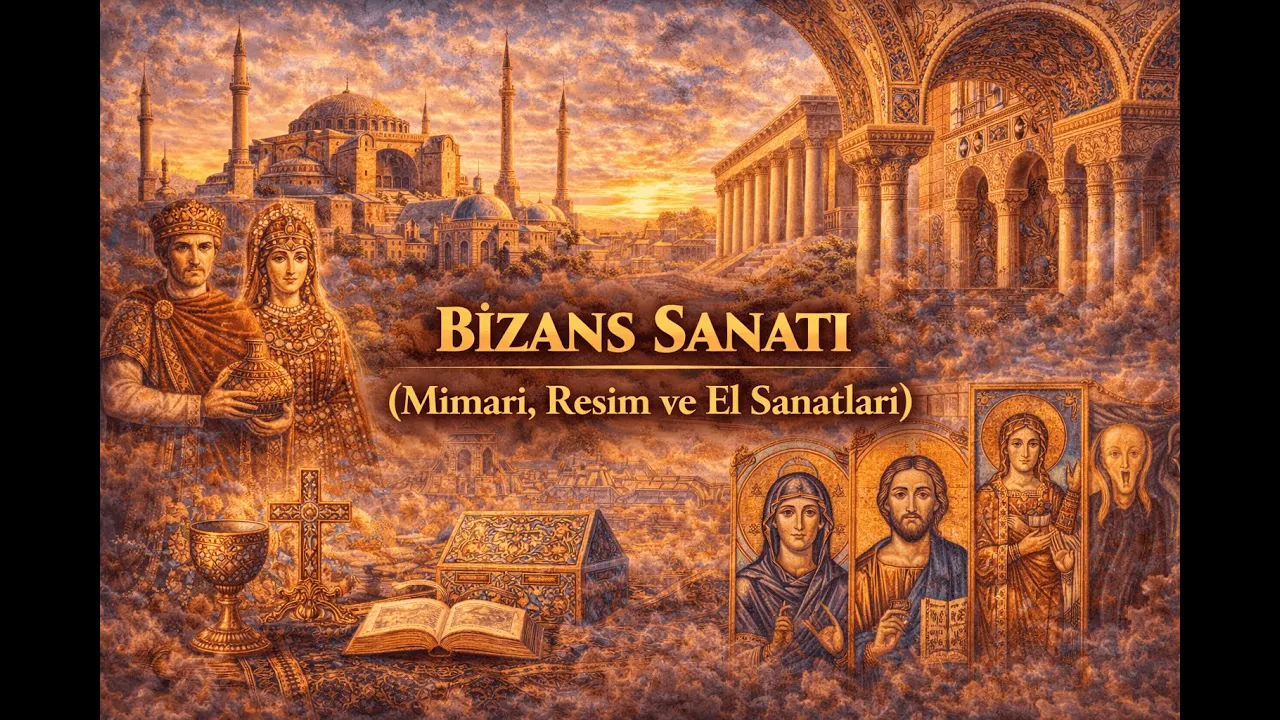
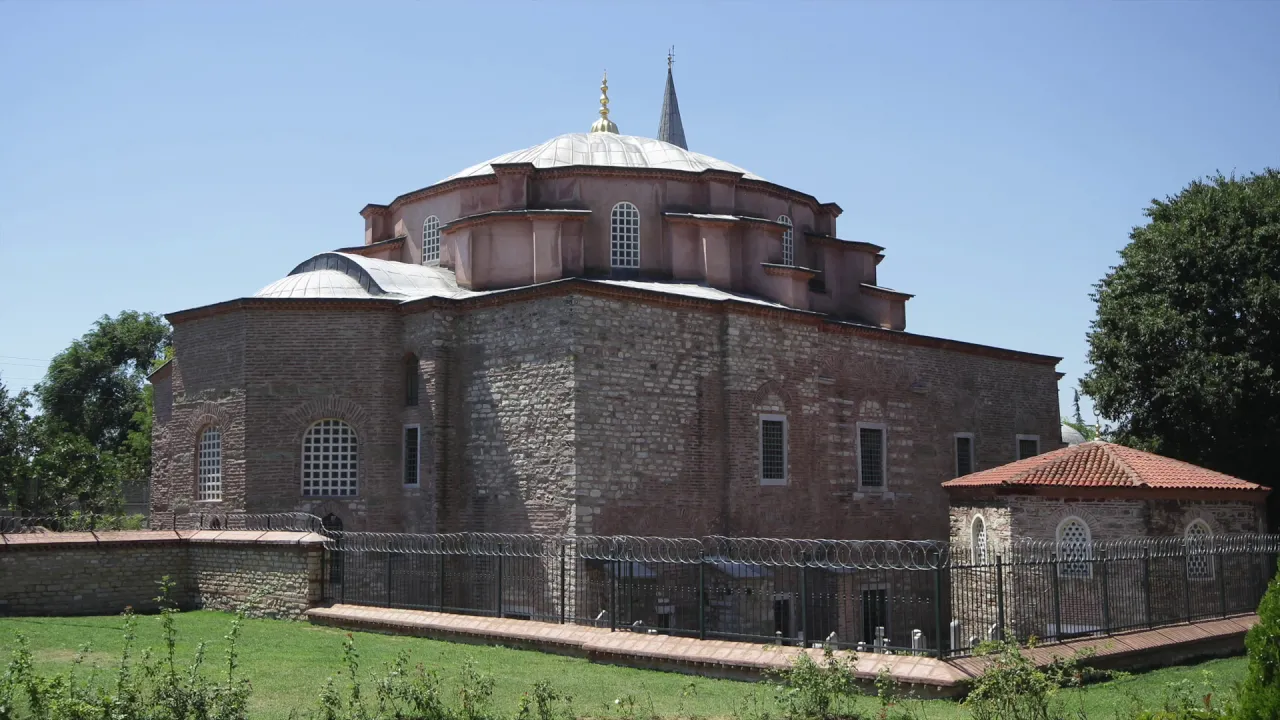















Middle Byzantine monastery churches feature centralized Greek cross or cross-in-square plans with domes and vaults, decorated with hierarchical mosaics where Christ Pantocrator occupies the central dome while scenes from the liturgical calendar (the 12 major feast days of Christ's life) are arranged in pendentives and walls, creating a spiritual pilgrimage through Christ's life as worshippers circumambulate the church; key mosaics include the Annunciation, Nativity, Baptism, Transfiguration, Crucifixion, Anastasis (Resurrection), and Pentecost, with theophanies depicting Christ's divine revelations to humanity.
Middle Byzantine Monastery Churches: Mosaics & Architecture
Added:The historical transition from Early Byzantine architecture, such as Justinian's Hagia Sophia, to the Middle Byzantine period.
Basic architectural vocabulary of church design, including terms like centralized plan, cross-in-square, pendentive, and squinch.
The Byzantine Iconoclasm (726–843 AD) and its profound impact on how religious images were theological justified and structured.
Fundamental Christian iconography and the traditional hierarchy of sacred figures in Eastern Orthodox theology.
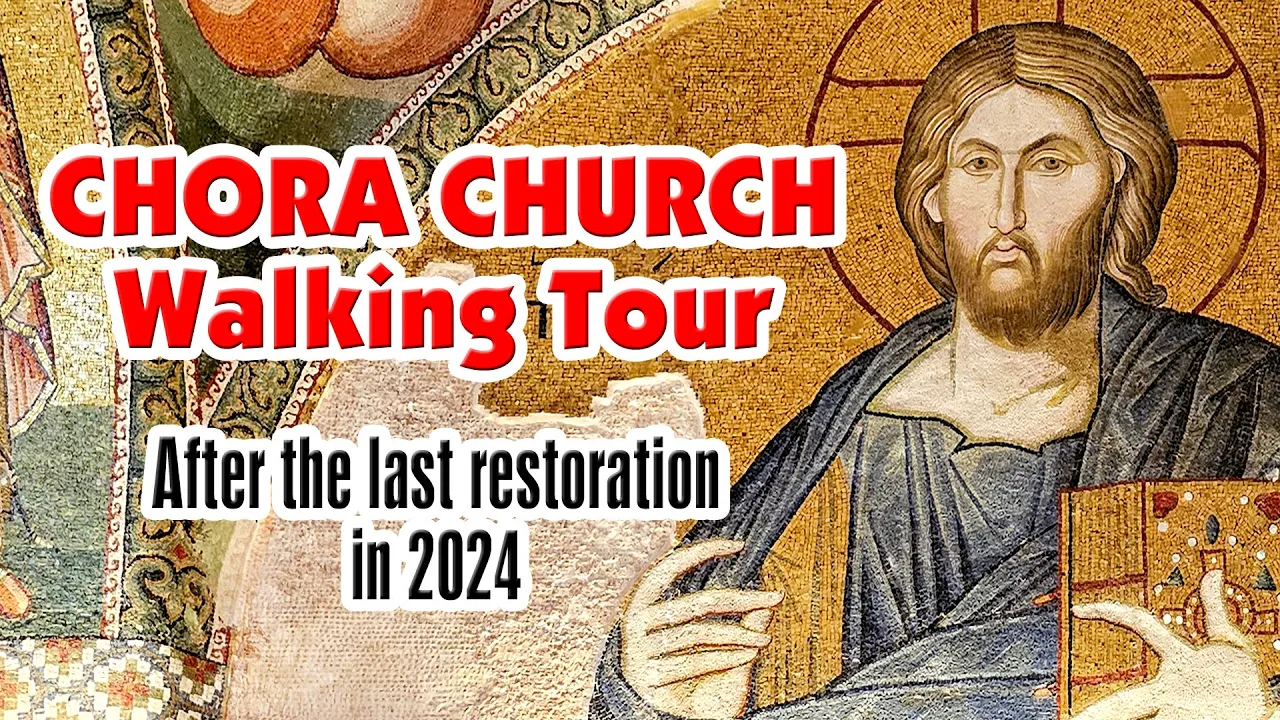
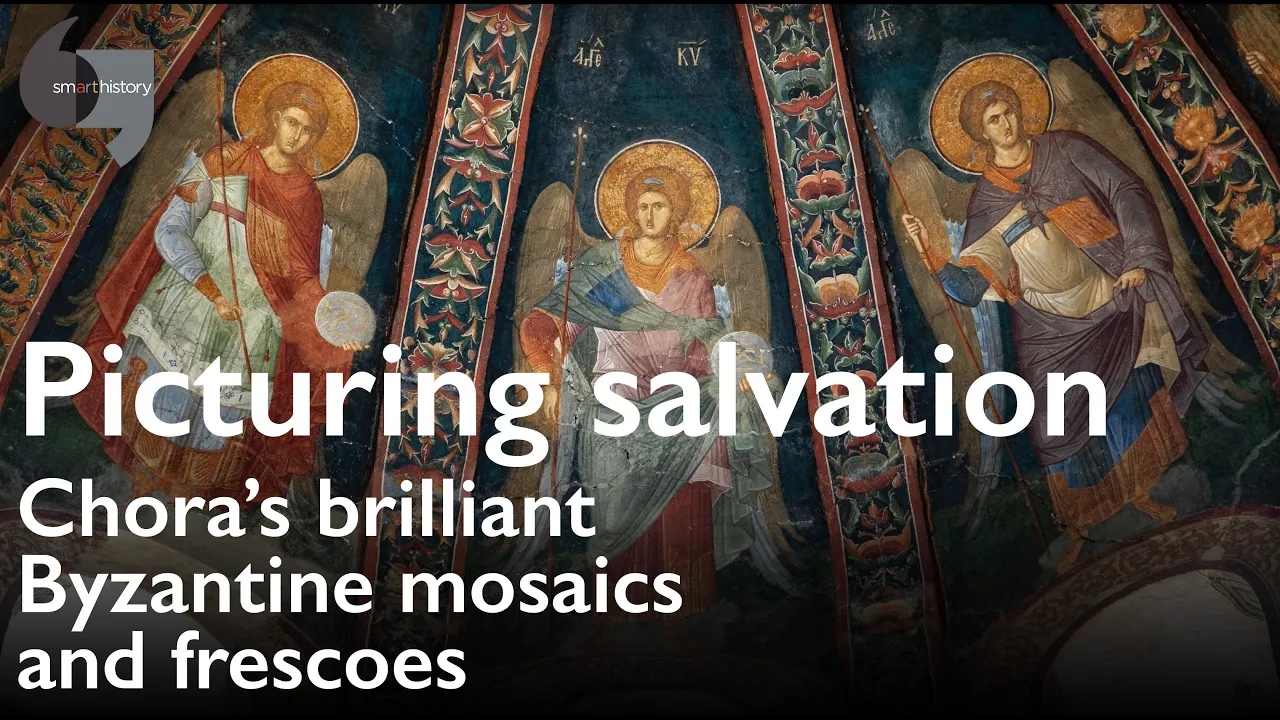
The evolution of Byzantine art into the Late Byzantine period, often referred to as the Palaeologan Renaissance (e.g., the Chora Church in Istanbul).
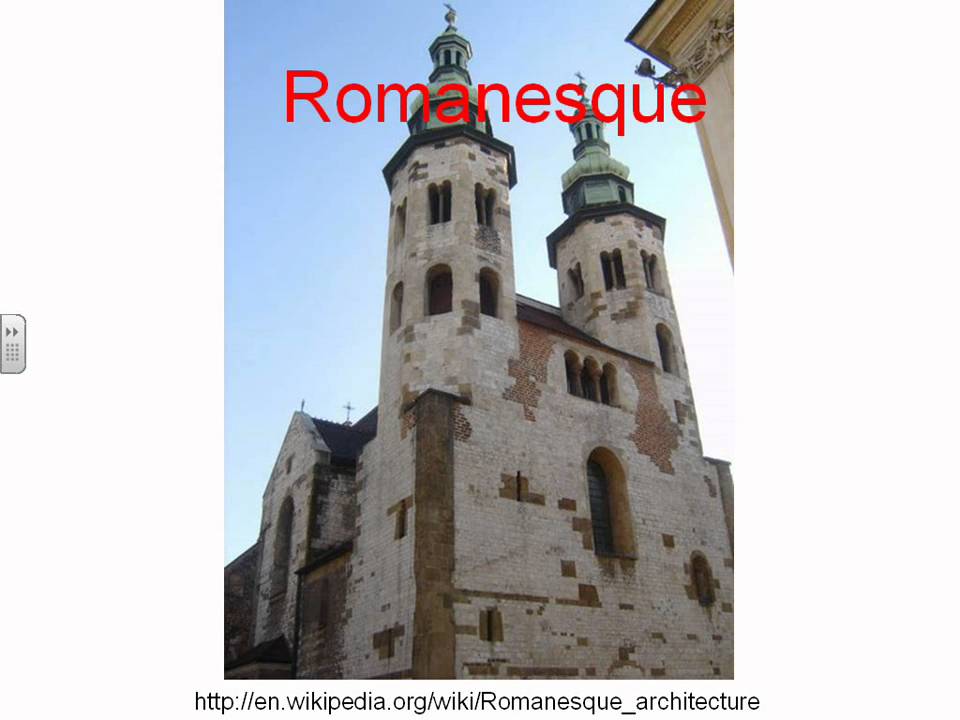
Comparative studies between Middle Byzantine architectural programs and Western European Romanesque and early Gothic styles.
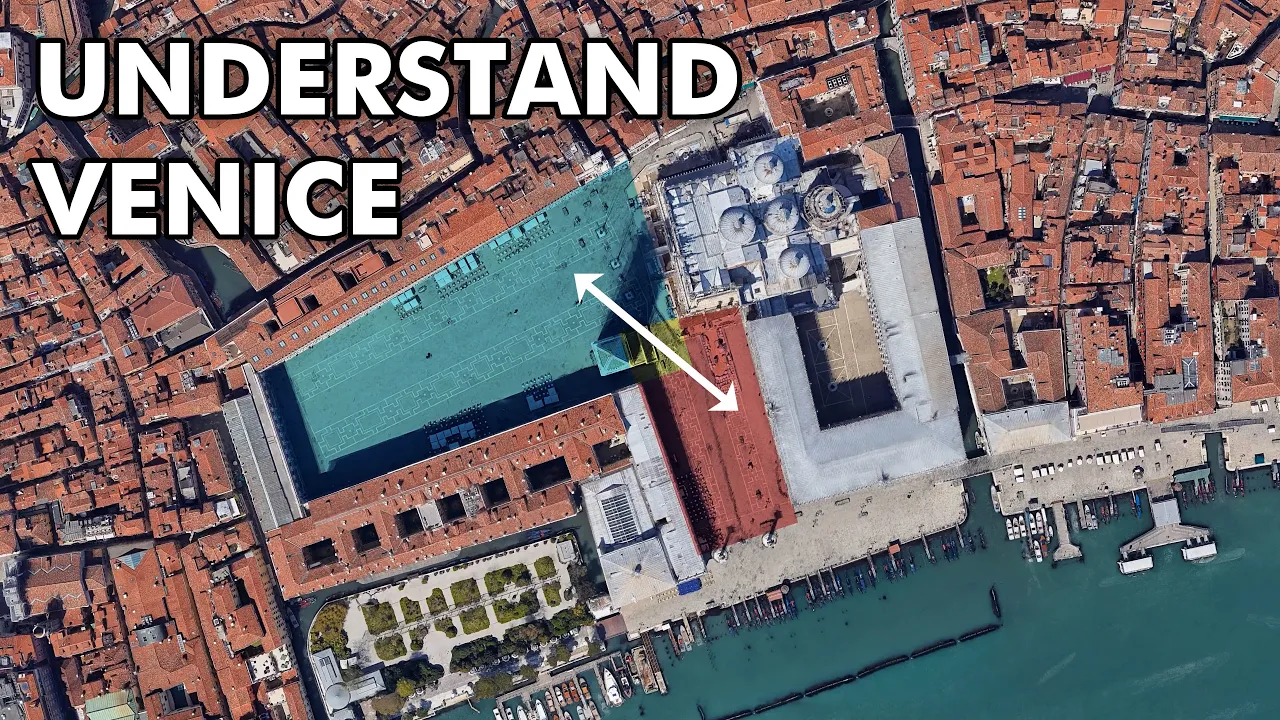
The regional spread of Byzantine artistic influence to Norman Sicily, Venice (St. Mark's Basilica), and Kievan Rus.
Theological movements in late Byzantium, such as Hesychasm, and how they influenced later monastic painting and mosaic styles.
The technical and chemical composition of Byzantine glass tesserae and modern conservation techniques for preserving historic mosaics.
3K views32likes34:36Original Release: 2013-09-05
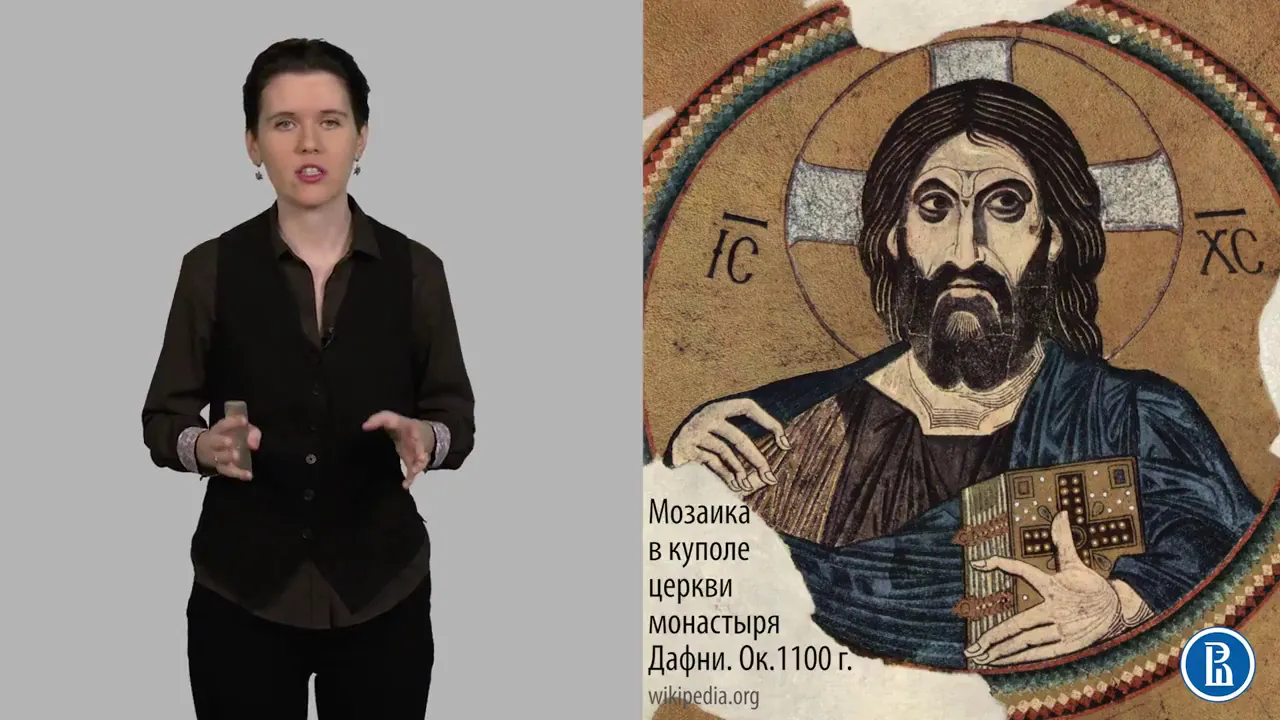
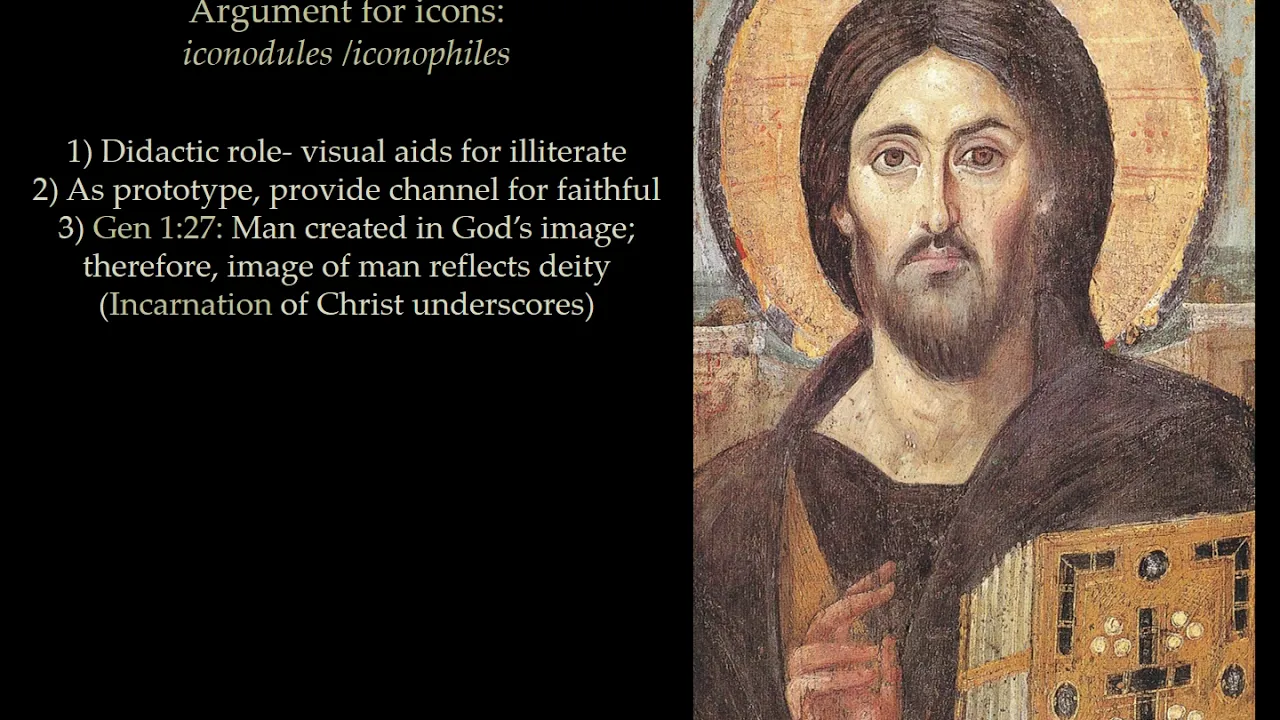
now we're going to talk about middle Byzantine Monastery churches and the mosaics that decorate them with middle Byzantine architecture the monastery churches are uh what we look to to determine the type of architecture and they generally are centralized churches uh very frequently they have either a Greek cross plan that is a cross that is uh uh equal arms both ways or uh what they call a cross in the square in other words you have a Greek cross uh with the the corners filled in uh and so you'll have a central Dome uh at The Crossing At The Center and then either vaults or domes in the corners or in the cross arms so we're going to look at uh some examples of this and the first one is a church in Greece remember that Greece is part of or Greece was part of the business Byzantine Empire and this is hoseus Lucas in focus in Greece uh and this church dates from the 11th century it actually is uh two connected churches at this Monastery uh one is called the catholicon and this is a Greek cross plan and the other is dedicated to the thoticus uh to uh Mary as god-bearer and uh it has the cross in in the Square so both of those types are represented what we want to do also is look at the mosaics and so here we are in the church and we're looking up at the Dome and you can see where some of these mosaics are placed uh in The Conch of the apps in the Half Dome over the apps uh with the altar below uh you see a seated Madonna uh you will also see in the center of the central Dome uh Christ Panda crater and that is something that is a very very frequent uh uh subject it's almost always placed in the center uh Central highest Dome the mosaics of the middle Byzantine churches are placed in a hierarchy with the most important images in the highest part of the church the central Dome and there you will find the image of Christ pantac crator Christ the all ruler also uh many of these scenes are in lurgical order uh the order of the lurgical year in other words the feast days the Hol H holy days from once we get our word holiday uh the 12 feast days uh of the events in Christ life and so it's often said that this is as though you are taking a pilgrimage through the The Life of Christ or through the Holy Land following following the lurgical calendar so a person could go around the church looking at these scenes praying in front of them and essentially me making a kind of spiritual pilgrimage through the Life of Christ and because it's a centralized church and it's it's a a circular uh um Journey you can come back and start it over again um I have here a list of these feast days if you're interesting uh the anunciation the Nativity of Christ the presentation in the temple the baptism of Christ the Transfiguration the raising of Lazarus Christ's entry into Jerusalem his crucifixion and the resurrection which would be shown as an anastasis which means Resurrection uh as a heroine of Hell or a descent into limbo and then there would be the Pentecost or uh the um Descent of the Holy Spirit to the apostles and the Ascension Christ ascending into heaven and either the dorm mission of the Virgin which is the death of the Virgin the going to sleep of the Virgin uh or sometimes the Nativity of the Virgin now in the pendentives you might sometimes see Angels Who Are Spiritual Beings uh who are high on the hierarchy of being but what we're going to look at are pendentives that show the four theophanies and this is Christ revealing himself revealing himself as God and you'll find these four theophanies in the the churches that we're going to use as our examples hoseus Lucas and the church at Daphne which is the Church of the dorm mission of the Virgin at d a um the anunciation which you'll remember is the moment of the Incarnation uh when God Christ takes on human flesh the Nativity of Christ and the baptism of Christ and the Transfiguration which we've already heard about when Christ appears between the two great prophets Moses and Elijah emus in his book on Byzantine mosaics said that there were three systems of interpretation for the cross and Square Church for the arrangement of the mosaics and the cross and Square Church now these are not uh exclusive these work together you can do all of these things in the church one is hierarchical the idea that the church is the cosmos and is an image of paradise so something that is spiritually higher will be higher in the church for the image of Christ on the central Dome we mentioned that or topographic in which you can make a symbolic or a spiritual pilgrimage through Christ's life or through the holy lands uh by following the images on the wall or the ceilings and then of course you can also follow the lurgical order of the scenes throughout the church Church in other words the date of the feast days now the feast days are not necessarily in chronological order uh in the order that they happened in history so uh you know the Nativity is not necessarily followed by the uh presentation in the calendar year so this becomes a lurgical order but uh they all work together let's look again at hoseus Lucas uh we look up to the the central Dome and we see Christ panac crater uh and you can see that there are angels uh surrounding him and then we look at the Conch of the apps or the Half Dome over the altar we see the image of the Virgin and child enthroned Mary as theodus the god-bearer and you may notice that the iconography is very very similar to that famous image over the the Half Dome in The Conch of the apps at a Sophia and you'll remember I said that Byzantine art uh wants to be the True Image so um there are types uh for showing Mary you can't just make up what Mary looks like you have to follow the correct types and of course there are variations uh in this case you know the there are uh you could compare these and you could see for example the length of the face looks a bit different uh this is more stylized and more simplified than the image at a Sophia Christ is in a slightly different position but essentially you have your frontal image of Mary uh she her body encloses the Christ child uh and he's showing in this beautiful uh gold against her rich blue robes and they are enthrone on uh the the Byzantine type throne with I always called a poofy pillow which you can see uh there let's look at some of the other images uh in hoseus Lucas this is in the crucifixion it's further down in the apps but it's still high on the wall now I'm going to show you just a few other images from hosas Lucas because these are the ones I have pictures of now we're going to look at just a few more of the mosaics at hoseus Lucas uh this is the crucifixion as you can see it is in a a Lunette fairly high on the wall uh this would be uh a very important event for Christians and you can see Christ is stylized he is uh nailed to the cross and it's a different type than we've seen before we've seen images of Christ um where he is erect on the cross where he is alive where he is triumphant over death and this is a new type of image uh when we look at um when we look at carolingian Art I'm going to show you the first known example of the suffering of Christ which is in the 9th century U but here we see in the 11th century uh the type of Christ which shows Christ suffering on the cross he is man as well as God and he suffers like a man uh so his head is um inclined it's sagging down his body uh curves to the side as though he were uh once again um you know sagging um and it's all done with um very linear outlines as you can see uh the musculature of the abdomen uh looks segmented uh it's not very realistic uh it's a pattern uh Mary stands on one side she points to him now she's still hoi Tiera pointing to the way the way to Salvation is Christ he says I am the way the truth and the light uh and on the other side we see John uh with his hand to his head in the gesture of distress uh but you can see that they are very linear figures and it's taken in a sense out of time because you have the gold background you don't have all of the narrative details uh the other holy women Mary Magdalene uh the soldiers dicing uh uh the the soldiers uh um piercing Christ's side as long ginus is supposed to have done or offering him the wine just the three main figures so this becomes an iconic or devotional image uh rather than a narrative of all the events that happened uh something that you can pray to that you can meditate on and you can also see an anastasis or Resurrection at hoseus Lucas now we've already seen the anastasis at the kajam the Church of Christ in Kora and that one was a fresco and it was much larger and more elaborate so what we're seeing at hoseus Lucas is uh an abbreviated anastasis uh with once again sort of the main uh parts of the image so you see Christ in the center striding across the opening of Hell uh and you can see the doors of hell that have burst apart beneath his feet and then you have what seemed to be sarcophagy uh on either side in one side stands uh David and Solomon and in a sense they're representing all of the Old Testament figures that we uh know that Christ rescues if you believe the uh the teachings of the church uh and then on the other side uh you have uh Adam and Eve so uh you just have four figures standing in for all the prophets and Patriarchs and just of the Old Testament rather than having a crowd as we do at uh the K Jami we're now going to look at the church of the domm mission of the Virgin uh in Daphne Greece sometimes when we're talking about these churches uh we'll refer to them by the city you know we'll say oh we're looking at Daphne uh we're looking at the famous church at Daphne this one's dedicated to the dorm mission of the Virgin um dorm Mission literally would mean going to sleep um and it's kind of a euphemism for the death of the Virgin and that is um often portrayed with um Mary lying on her deathbed with Christ who have come down from heaven uh holding a small image of Mary which is her soul which is taking up to heaven and the apostles are surrounding uh the deathbed of the Virgin when we look at the interior and you can see here we have the plan and we have a list of all of these different scenes of the mosaics that still exists unfortunately I don't have have a a good interior uh picture to show you but we'll be we do have pictures of some of the mosaics uh so you can see how they are arranged so we look up into the Dome and this of course is the central Dome uh the highest part it represents Heaven it represents the cosmos and of course the ruler of the cosmos is in the center and this is Christ as pantac crator um you might notice when you look at this that parts of the Mosaic large parts of the mosaics um are uh gone they have not managed to survive the centuries uh but we have most of the image of Christ and most of the images that are in the uh pendentives let's look closer at the image of Christ pantac crater iconographically it's the same general type hpe as other images that you've seen uh for example back to the icon from about 700 on uh at the monastery of St Catherine where you have Christ with these high cheekbones large eyes uh blessing and holding a book but stylistically and I think we could say emotionally uh how different he looks uh this is done in Mosaic and so what you're seeing of course is um very stylized you have rows of the tessai that make lines so it's become very very linear uh and very stylized and just look at the way he's created um would you want to meet this Christ at the last judgment he looks very Stern uh unforgiving perhaps he is shown as Eternal and Timeless and so he is uh you have the bust of Christ in the circle of the golden dome of Heaven he is the Alpha and the Omega the beginning and the end uh he is eternal um he's he he seems to be more Divine than human even though he is in human flesh in the human form uh he's holding the Gospels which of course is this great thick book with the jeweled cross on the front and is extremely linear when you look at the drapery folds uh you see them as parallel lines falling into sharp angles and so you have this feeling of a kind of Otherworldly abstraction as though he lives in this immaterial realm of the the uh of Heaven which is represented of course by the golden uh Mosaic in the dome and he is indeed an omnipotent ruler and an omnipotent judge in the pendentives uh we see scenes from the uh theophanies of Christ when Christ is revealed to mankind um the first of course is the Incarnation itself uh the enunciation uh and then uh when we actually see him in human flesh would be the Nativity we're looking at the enunciation and once again you have just the two figures uh you don't have um a naturalistic setting for example it seems to be taking place in a Timeless realm uh we said these are in the pendentives uh the next highest Place below the Dome we see the theophanies of Christ the times when Christ revealed himself to mankind kind um the first one of course is the Incarnation when Christ first takes on human flesh also known as uh the first of course is the uh Incarnation when Christ takes on human flesh the second is the Nativity when he is born and uh human beings can actually see him uh in in in the flesh so let's take a look at each of these images we're looking at the annunci ation this is the moment when the angel Gabriel tells Mary announces hence Annunciation uh tells Mary that she is going to Bear the Christ child and it is at the time of the enunciation when Mary gives her permission when Mary says behold the handmade of the Lord that the Holy Spirit overshadows her and she becomes pregnant by the Holy Spirit and that is the the moment of the Incarnation the moment when Christ takes on human flesh now I want you to notice a few things about this image um the way of course that the byzantines show angels with this uh wonderful uh wings that come up in a a kind of circular motion that encloses and repeats uh this the Halo of the head of the Angel um but they're very simplified images uh we don't have a setting we don't uh see the room in which Mary is uh is having this event so once again it's taking place in as a kind of Timeless event um rather than just one point in history and you can see of course how linear the forms are how the draperies uh form angles and curves that relate back to when these um you you had illusionistic images if you think copying illusionistic images and copying and and they become more linear and more stylized and uh so then you have this very stylized uh style of art uh much more abstracted which is often suggested that more abstract art refers to the spiritual realm because it does not exactly repeat uh the material world around us now one thing you have to realize when you're looking at these we said these are on pendentives you look at a photograph and they look flat but use your imagination this is curving like in the conap an apps only here uh a slighter curve but still the curve of the pendentives so the angel Gabriel is really placed across space from Mary he really is communicating to her across the space rather than in a completely flat image but the the flatness is how each image is portrayed and yet they exist uh in in an actual space now we're looking at the Nativity uh the birth of Christ and this has many more narrative elements in it uh when you look at different uh examples of the Nativity at different uh churches they all once again share iconographic elements uh sometimes you know they slight differences but some of these things you will see over and over again um Mary is showing reclining after the birth uh she always seems to be on this great poofy I I I what have called an air mattress I'm sure that's not what it is but this uh this great uh poofy bed uh or mattress and the Christ child is in the manger wrapped in swaddling clothes you might notice the little heads of the ox and the ass there's several ways of showing the ox and the ass and this probably refers to a legend uh that the ox and the ass warmed the Christ child with their breath uh Joseph is uh seated at the side uh with his you know hand up to his chin and sort of contemplating everything uh Joseph of course according to Christian doctrine was not the actual father of Christ he's the Foster father uh so he's sort of set aside um and uh this has a little bit of narrative detail that you do not see in all of the nativities for example has these little sheep uh drinking water uh they just may be the shepherd sheep drinking water and they had to fill in the corner uh they do happen to remind me of the Stags drinking The Living Water we see everything is taking place uh on this little this little Hill or Mountain uh the the Nativity is taking place in a cave uh and if you were to go to Jerusalem uh and find the site that St Helena had identified as the place of the Nativity it is The Grotto of the Nativity it is a cave uh and uh so this is why you would see a cave rather than a stable uh in Byzantine art uh we see that Christ child and Mary the holy family are accompanied by angels and then there is another Angel who uh turns toward two Shepherds and of course uh this is the enunciation to the Shepherds and uh they are being told to go and visit the newborn Savior and here we have a little uh closeup uh so you can see Christ and Mary and uh in this particular picture it gives you a little idea of the shimmering of the gold remember all of these images are light and light will reflect off of the golden and glass tessai and so it it would seem to Shimmer and um have a certain amount of movement uh maybe sort of heavenly feel to it um we seeing here the baptism of Christ uh you've seen baptisms before so you recognize many of these elements uh think about the menian of B basil the uh second that you saw was it basil the first okay uh think about the menologium of Basil that you saw and the U mosaics in the uh baptistries at uh Rena and so here we have the Christ uh in the Jordan River uh a nude figure uh with the water here Rising very very high way up to his chest but translucent transparent uh John the bap Baptist is reaching out to baptize him uh Angels await him on one side uh other people uh people waiting to be baptized uh behind John and then of course we see a trinity with the hand of God uh reaching down with Rays going to Christ uh and in the center is the dove of the Holy Spirit and of course the words that God said uh it said that the Holy Spirit descended as a dove and the words were heard this is my beloved Son and whom I am well pleased so these are indicated in the uh in the artwork um you've seen images of the baptism of Christ before and of course these follow uh the same types uh you've seen them in uh you've seen images of the baptism of Christ before such as uh the menian of Basil II and here you can see see in the Daphne Mosaic that many of the same iconographic types are being followed uh you have Christ uh suspended in the water which is transparent he's in the nude uh and John the Baptist is leaning over to baptize him uh behind John there are figures of other people waiting to be baptized and on the opposite side of the Jordan River there are angels waiting to receive Christ it looks like they're waiting to dry him off and to supply him with clothes uh they are attendant Angels uh and then we see the Trinity essentially uh from the very top of both the Mosaic and the manuscript illumination there is the hand of God reaching down with rays of light descending and so the Bible says that the spirit of God descends like a dove and so we see the dove of the Holy Spirit hovering between and then of course uh there are gods words uh this is my beloved Son and whom in whom I am well pleased one thing you may notice in the difference between the menian of Basil II which is from what about 1,000 uh and the Daphne baptism which is around 1100 so about a 100 years different is that the Mosaic is more stylized uh it's as though someone is copying uh a model which you know it's the same types in both cases um but when you're copying uh you become perhaps more stylized more linear uh and also mosaics as we said you can't shade a mosaic you have to arrange the tessai so that if you're far enough back maybe the the uh uh uh the image looks shaded which we saw at places like Santa Maria major however uh as time goes on uh the Mosaic technique becomes much more linear which is um what we're seeing here but here you have the Transfiguration of Christ uh with rays of light beaming from Christ and around him is a uh mandorla or an almond shaped body Halo so this is to show uh his spirituality that he is indeed transfigured um I was when I was a child I always wonder what transfigured meant and I thought I'd grow up and I would know and um well I'm still just looking at images and seeing how they're portrayed um but on either side we have Moses and Elijah and in this case uh they are fulllength figures and then the three disciples Peter John and James uh cower uh before the him uh John is is literally is cowering uh Peter is looking up he's kneeling he's gesturing uh James is sort of uh has his hand up as though the the brightness of this image might be hard on his his eyes or his head um in other words it's something miraculous is happening and they all are reacting to it uh this one has a little bit more uh setting you have a a suggestion of a landscape and a hill of course this took place uh on a hill if you look at the detail uh you see how very linear the uh arrangement of the tessari is so this gives us a feeling of abstraction and timelessness the Daphne crucifixion uh this is not in the pendan U the Daphne crucifixion shows the suffering of Christ Christ is hanging on the cross and you'll notice here he's hanging down uh his hands are nailed to the cross but his arms Arc down and this is I I just say this is a very elegant crucifixion uh you have repeated curving forms as well as some of the angular forms um his body sways to one side as though you know he can't hold it up it's sagging and then you see both the blood and the water coming from the wound it's a perfect Arc a line of red and a line of white tessari so you know it's both the body and blood Christ is showing suffering but there is emotional restraint uh Mary stands erect under the cross erect in faith she gestures to Christ we mentioned the idea of pointing to Christ as showing that he is the way to Salvation uh John uh here he's not using the gesture of putting his hand to his cheek to show his suffering his hand is up what in Wonder uh pointing to Christ uh uh drawing our attention uh toward the Savior and once again very linear images but very very elegant uh you can see the decoration for example on Mary's uh garment and uh these J zigzags uh that form the edge of her veil when you look at this image it is Iconic it is timeless it invites devotion you have the Essential Elements the three main figures Christ Mary and John and as you can see just above the cross there's just a little bit of uh two angels who who were hovering there but we uh but the the tessari have been lost it is is an elegant crucifixion uh with these beautiful curving lines uh a real feel for both the positive and negative shapes negative shapes are the background shapes the positive shapes are the shapes of the figures uh which of course are created with outline you create the feeling of uh the drapery folds are also outline and you might notice the beautiful decoration on Mary's garment and the little zigzag folds that Mark both the edge of her veil and um the Hem of her mantle that Cascades down now at the feet of Christ we have just a little bit of landscape we have a couple of plants uh that uh curve upward and add to the elegance and a little bit of Mount golgatha and you'll notice that there is a skull at the bottom and Christ's uh blood seems to be dripping down toward the skull there are two explanations for the skull one is that the place of Christ's crucifixion is called golgatha the place of the skull the other is the legend of the True Cross that tells us that Christ's crucifixion took place on the very spot that Adam was buried Adam was the first human being he was um the parent to mankind mind he is the sinner who brings s Adam and Eve brings sin and death into the world and it is because of the sin of Adam that Christ must come to save mankind human beings can't do it themselves they aren't good enough uh so Christ sacrifices himself to make up for all the sins of mankind and thereby uh becomes a conduit for salvation of mankind uh Paul calls Christ the new Adam who redeems the sin of the old Adam so there you have the new Adam literally Redeeming the sins of the old Adam who is showing here as a skull the remains of his mortal flesh uh and you know so the whole drama of Salvation is suggested if you know the Theology and this is once again uh the kind of image that you could uh a pray before you could uh contemplate you could think of some of the theological things that I've just suggested
Up Next

5:01
Hagia Sophia Apse Mosaic: Theotokos & Byzantine Iconoclasm Explained
@smarthistory-art-history
120.1K views•2014-06-08

114:18
Christian Iconography: History, Theology, and Meaning | Fr. Panayiotis Papageorgiou
@Trisagionfilms
58.8K views•2020-02-21

49:29
Icons and Iconoclasm in Byzantine Art History | Explained
@EastTennesseeState
15.5K views•2014-01-14

16:34
Earliest Depictions of Jesus in Art: 10 Ancient Images Explained
@UsefulCharts
5.9M views•2022-06-03
Related Study Plans & Knowledge Roadmaps
Structured learning paths in Art History
art-history
Gothic Cathedrals: Engineering, Light & Society
01The Birth of the Gothic: Romanesque to Suger's Vision
02The Structural Triad: Pointed Arches, Ribbed Vaults, and Flying Buttresses
03Theology of Light: Lux Nova and Sacred Geometry
+ 2 more learning modules
14h5 modules
Explore Roadmap
art-history
Pre-Raphaelites: Realism, Symbolism & Critique
01The Victorian Art Establishment and Academic Formula
02The Founding of the PRB and Radical Realism
03Medieval Revivalism and Literary Symbolism
+ 1 more learning modules
8h4 modules
Explore Roadmap
art-history
Street Art: From Subways to Art Market
01Subcultural Origins in Philadelphia and New York (1970s)
02The Subway Era and Style Wars (Late 1970s - 1980s)
03The East Village Scene and Early Gallery Crossover
+ 2 more learning modules
10h5 modules
Explore Roadmap
art-history
Classic Maya Art: Iconography, Glyphs & Ritual
01Foundations of Classic Maya Visual Culture
02Deciphering Maya Hieroglyphs & Text-Image Integration
03Sacred Geography and Cosmological Architecture
+ 2 more learning modules
14h5 modules
Explore Roadmap