
















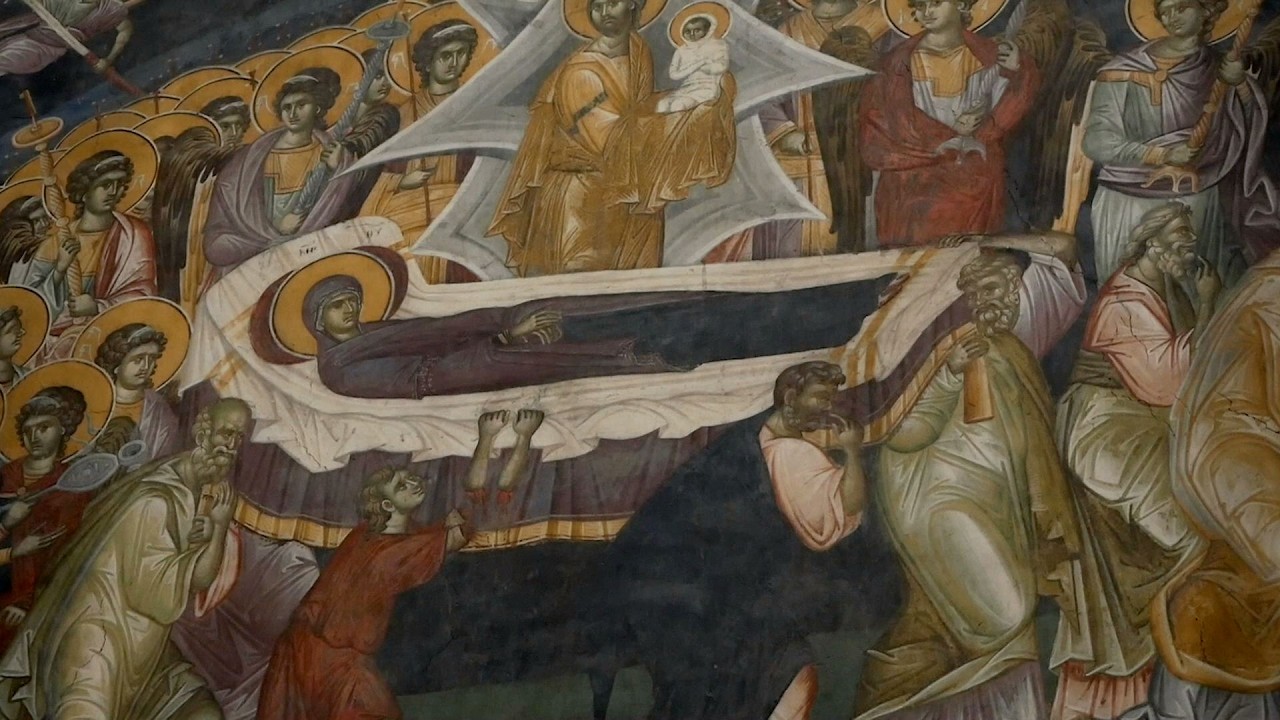


The Chora Church in Istanbul, renovated between 1316-1321 by wealthy patron Theodore Metochites, exemplifies the Palaiologan Renaissance—a revival of Byzantine art following the city's recapture from Latin occupation in 1261. This church features exquisite mosaics and frescoes that demonstrate a remarkable evolution in Byzantine art, incorporating tender human emotion and narrative storytelling typically associated with early Italian Renaissance artists like Giotto, while maintaining traditional stylized forms. Key works include the Christ Pantokrator mosaic, the Deësis, and the Harrowing of Hell fresco, which visually convey theological concepts of salvation, divine judgment, and the connection between earthly and heavenly realms.
Chora Church Mosaics & Frescoes | Byzantine Art History
Added:Introduction to Byzantine Art and Architecture: Familiarity with standard Byzantine church design (such as the cross-in-square plan) and the traditional role of religious imagery in the Eastern Orthodox Church.
The Late Byzantine Empire (Palaiologan Dynasty): Historical context of the restoration of Constantinople in 1261 after the Latin occupation, which set the stage for a final cultural and artistic revival.
Eastern Orthodox Iconography: Basic understanding of common Orthodox theological themes, such as the Anastasis (Harrowing of Hell), the Deesis, and the narrative cycles of the Virgin Mary and Christ.
The Role of Imperial and Noble Patronage: Understanding how elite donors in medieval society funded religious art and architecture for both personal salvation and political prestige.
Comparative Analysis with the Italian Proto-Renaissance: Comparing the stylistic evolution of the Chora Church frescoes (naturalism, emotion, and spatial depth) with contemporary Italian artists like Giotto.
The Post-Byzantine Fate of Sacred Spaces: Exploring how Chora Church was converted into a mosque (Kariye Camii) during the Ottoman Empire, the preservation/covering of its images, and its modern status.
Late Byzantine Humanism and Intellectual History: Investigating the scholarly and scientific circle of Theodore Metochites, examining the connection between 14th-century intellectual life and artistic patronage.
The Expansion of the Palaiologan Style: Studying the diffusion of late Byzantine artistic styles to the wider Orthodox world, including regional developments in Mystras, Greece, and the medieval kingdoms of Serbia and Bulgaria.
43.5K views1.3Klikes9:38Original Release: 2021-04-29
(jazzy music) - [Steven] We're in the Chora Museum in Istanbul in what was once a church and monastery.
- [Beth] The word Chora means countryside.
- [Steven] It was outside of the walls built by the Emperor Constantine and so it was in the country.
- [Beth] We walk into a double narthex, that is two porches that would lead into the main area of the church.
- [Steven] Inside the exonarthex, that is the outer narthex, we first see a lunette just above the doorway with a large Christ Pantokrator.
- [Beth] This is a mosaic.
Pantokrator means ruler of the universe and he holds the gospels in one hand and in the other begins to make a gesture of blessing.
- [Steven] It's a very fine mosaic.
You can see just how small those tesserae are and how elegant the face is, the long nose, characteristic of the Late Byzantine.
- [Beth] That's an important distinction.
The Late Byzantine.
We're talking about the period after 1261.
In the early part of the 1200s, the city of Constantinople was sacked by the Crusaders.
- [Steven] During the Fourth Crusade.
- [Beth] And they took the city and held it for 60 years before it was reclaimed by another Byzantine emperor.
This time from the dynasty of the Palaiologons, so this period is often referred to as the Palaiologan Renaissance.
- [Steven] During the Occupation, the city had imposed on it the Latin literature, that is the church of Rome and, of course, this area is eastern Orthodox.
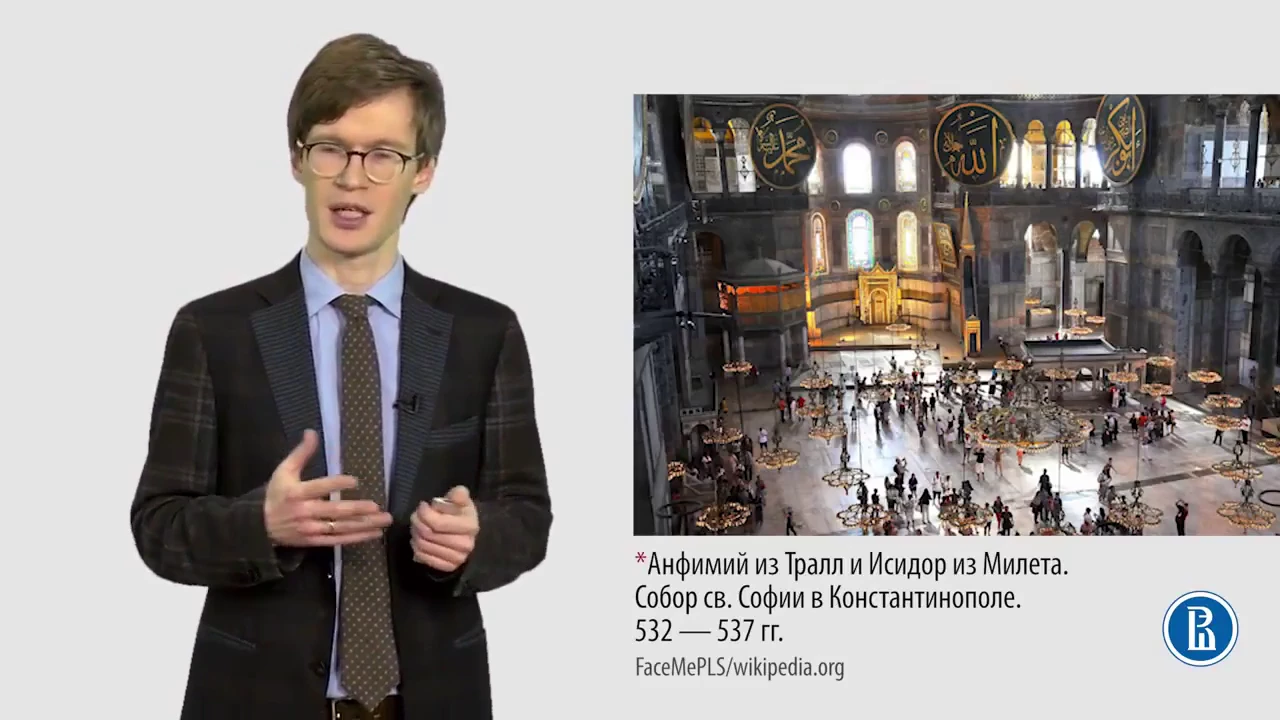
So when the eastern Orthodox came back in, there is this moment that we almost see as a revival, some even call it a Renaissance of Byzantine art and this church is such a great example because it is covered with mosaics and with frescoes.
- [Beth] In this exonarthex, this first narthex and porch, we see mosaics and the lunettes.
And in the vaults above, we see scenes of the life of Christ.
- [Steven] And directly across from the Pantokrator, we see Mary bearing Christ.
- [Beth] That was a very Byzantine of Mary as bearer of God.
- [Steven] When we walk from the exonarthex to the inner narthex, we see just above the inner doorway before the main church an image of Christ enthroned and to Christ's right kneeling, we see the patron of this church.
- [Beth] His name was Theodore Metochites and he was a very wealthy and powerful man in the Byzantine Empire during this period.
- [Steven] He was the minister of finance and he was also seen as a humanist, as a poet... - [Beth] As a scholar.
Later in his career, he became essentially the prime minister and he became a major patron in the renovation of this church, which fell into disrepair and ruin during the period of the Latin Occupation.
- [Steven] But in this period immediately after this period of renewal, a lot of older Byzantine churches were renovated, were restored, and this is a great example of that.
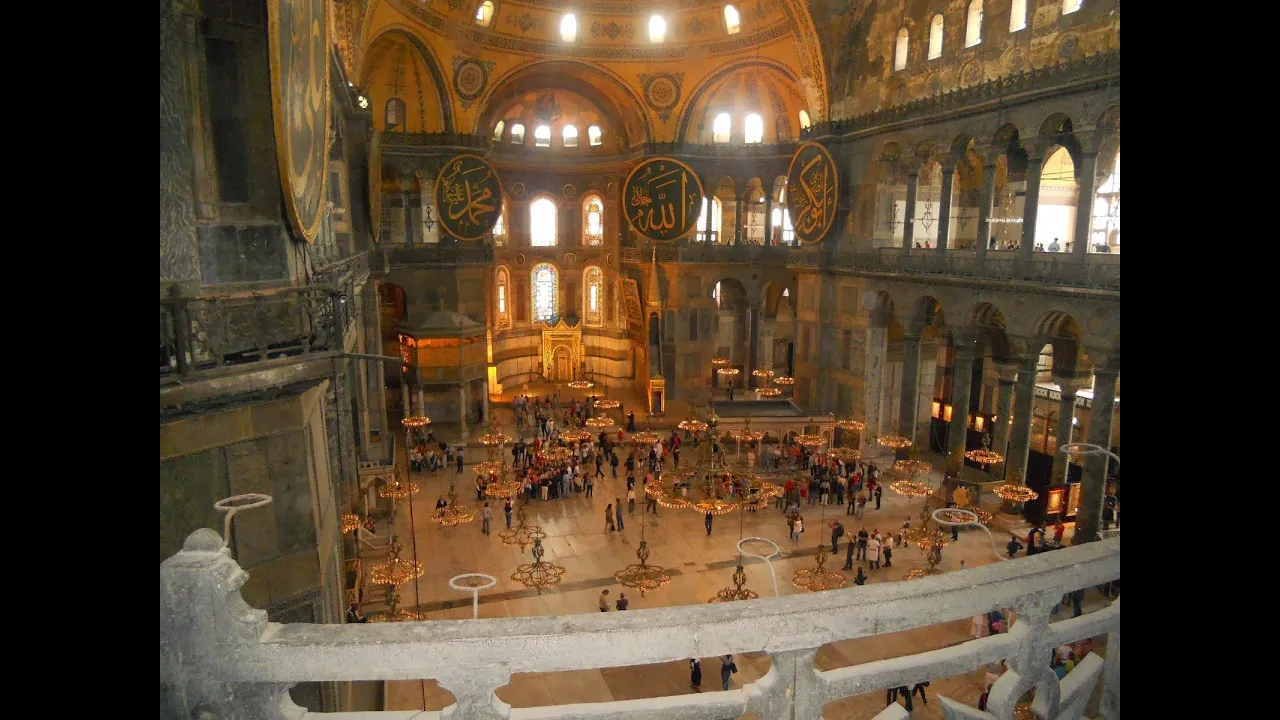
- [Beth] Just above the colored marble panels or marble revetment which we see also in Hagia Sophia, we see Metochites in this beautiful mosaic presenting an image of this church to Christ enthroned.
- [Steven] Christ looks out at us, holds his hand in a position of blessing and so we have the sense that Metochites is honoring Christ with this church and Christ in turn is blessing him and blessing this church.
- [Beth] And just like we've seen in many other Byzantine images of Christ, he's seated on a throne which has jewels embedded in it and a footstool with jewels.
- [Steven] The narthex has an extensive mosaic cycle and the largest mosaic in it is a Deësis.
Much of it has been lost but the principal figures remain.
We see a very large representation of Christ and of the Virgin Mary.
The inner narthex focuses on the life of the Virgin Mary.
First of all, there are two domes.
They're small domes.
The one on the left is devoted to the Virgin Mary and her ancestors.
The one on the right as we walk into the church is devoted to Christ and his ancestors.
- [Beth] And then surrounding those domes are additional mosaics' narratives on the left, scenes from the life of Mary and on the right scenes from the life of Christ.
- [Steven] It is so rare to see Byzantine mosaics that are able to express a tenderness, a kind of human emotion and human experience in the way that these do.
Look, for instance, at the mosaic of the Virgin Mary taking her first steps as a young child or the way that Mary's parents, Joachim and Anna, hold her so tenderly in another mosaic.
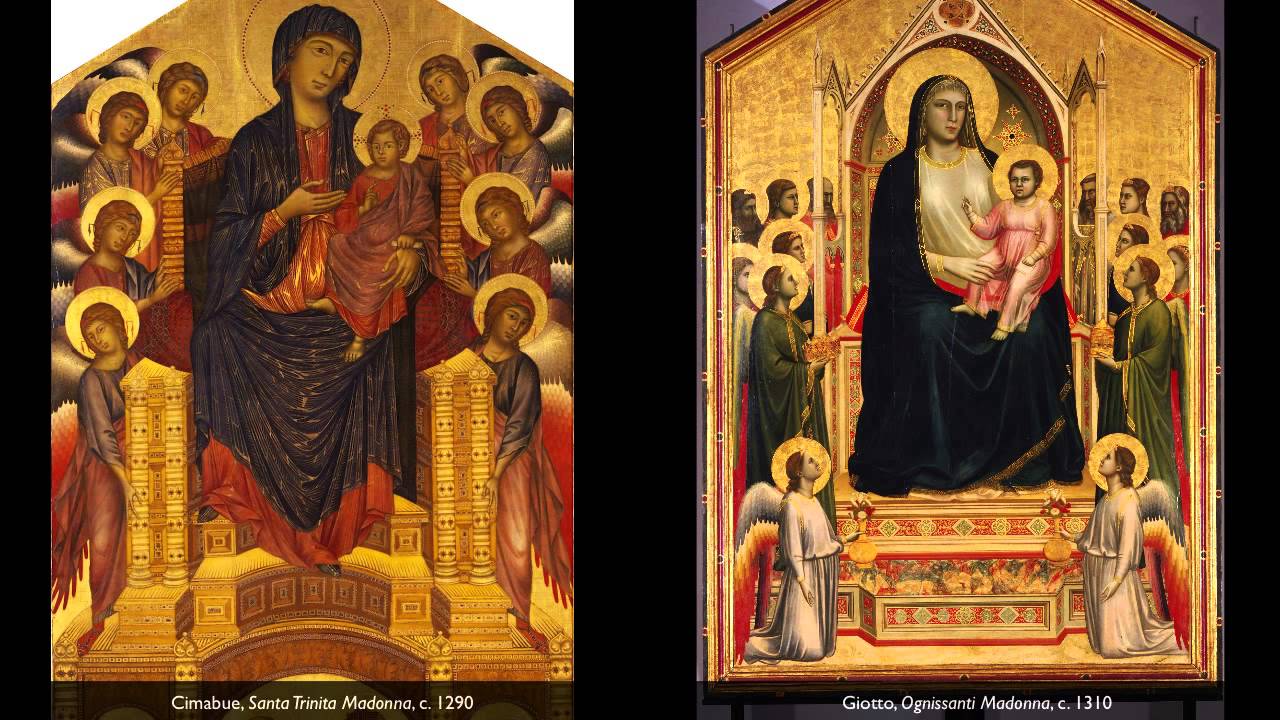
- [Beth] This might remind us of the exploration of human emotion that we begin to see in the 1300s in Italy with artists like Giotto and Duccio.
- [Steven] And that's why it's so interesting to see it here because we associate this kind of attention to human experience with that early Italian art and less so with the Byzantine.
And yet here it is.
- [Beth] We do see that exploration of human emotion but not with the kind of naturalism of the human body that we see with Giotto.
Here the figures are still elongated and stylized, and there's a drama and exaggeration of their gestures to help us read that narrative.
- [Steven] Look, for instance, at the architecture.
This is kind of exaggerated perspective that's used.
- [Beth] But it helps to draw our eye to that central scene of Anna and Joachim and the child Mary.
- [Steven] We've been looking at mosaics so far but let's move into another part of the church where the material changes from small tesserae stone and glass to fresco.
- [Beth] Now this part of the church is called the parekklesion and this was added by Theodore Metochites as a funerary chapel.
- [Steven] The patron of this church, despite his wealth and his power, didn't have an easy time of it later in his life.
The emperor for whom he worked was the victim of a palace coup, an uprising, and a new emperor came in.
He was exiled as a result and according to letters that he wrote, lived two miserable years away from the city of Constantinople.
- [Beth] And begged to return.
And he was allowed after two years to return and came back to this monastery as a monk and lived out his remaining years here and was buried here in this funerary chapel.
- [Steven] The entire space of the chapel is covered with fresco.
Most impressive is the dome we come upon as we first enter in Mary above with the Christ child and below a series of beautifully rendered angels that have survived very well.
Below the base of the dome, as is so common in Byzantine domes, we have four pendentives and each is filled by the writers of hymns.
In the lunette just to the left is really an extraordinary image.
We see Jacob's Ladder.
- [Beth] That's an Old Testament story of Jacob having a dream of a ladder between earth and heaven and of angels going up and down that ladder.
A prefiguration of the way that Mary allowed for the divine to come down to earth by being the bearer of God, the mother of God.
- [Steven] In this case, it's not actually a ladder so much as a staircase but what's important is that this is this intermediary space, this connection between the divine and the earthly.
- [Beth] And we see that connection again in the story just below the ladder or staircase of Jacob wrestling with the angel, another Old Testament scene.
And on the other side of the lunette, another moment from the Old Testament, when man and the divine come together where, in this case, Moses sees God in the form of a burning bush.
- [Steven] Interestingly and, of course, because we're in the context of a Christian church, we see an image of the Virgin Mary within that burning bush, which is really taking the Old Testament, that is the Jewish Bible, and bringing it into a Christian context.
There's another dome-like space as we enter further into the parakklesion and it shows the Last Judgment.
- [Beth] So here we see Christ seated in a blue mandorla.
On one side John the Baptist, on the other the Virgin Mary and surrounded by prophets and apostles and angels.
- [Steven] Specific elements from the book of the apocalypse have been rendered here.
For example, in the very center we see a kind of spiral and that's a reference to the angel rolling up the heavens at the end of time.
- [Beth] And below Christ, on Christ's left, we see the damned in hell and on the right the blessed going into heaven.
- [Steven] One of the most distinctive and really one of the most interesting frescoes in this cycle, in this entire church is in the back apse.
- [Beth] This is the scene that's sometimes called the Harrowing of Hell.
It's the moment when Christ descends into hell and saves souls who are in hell only because they lived before the time of Christ.
Figures like the Old Testament prophets or Adam and Eve.
- [Steven] This is such an amazing image.
So often we see Christ in a very static pose, especially in the Byzantine tradition.
- [Beth] But here he's actively saving souls.
This is a very reassuring image for a funerary chapel.
- [Steven] And they are literally being lifted out of their tomb.
- [Beth] And he's grabbing them by their wrists.
It's not anything that man can do to save himself or herself but only God's grace, Christ's sacrifice, that can save us.
- [Steven] Look at the broken locks and chains that litter the floor underneath Christ.
These were, of course, the things that locked these souls in hell that he's broken.
- [Beth] Well, you can see the doors right below Christ's feet.
- [Steven] This must've been such reassuring imagery for the patron who knew he would be buried here who knew his soul was soon to be judged.
- [Beth] This is really an overwhelming space and its iconography and its density of references and symbolism.
We can almost feel Theodore Metochites here and his passionate desire to ensure salvation for his soul.
and his passionate desire to ensure salvation for his soul.
(jazzy music)
Up Next

5:08
Deësis Mosaic, Hagia Sophia: Late Byzantine Art Explained
@smarthistory-art-history
79K views•2014-06-08

114:18
Christian Iconography: History, Theology, and Meaning | Fr. Panayiotis Papageorgiou
@Trisagionfilms
58.8K views•2020-02-21

10:26
Redgrave's The Sempstress: Victorian Social Realism, 1846
@smarthistory-art-history
3.2K views•2011-10-22

16:34
Earliest Depictions of Jesus in Art: 10 Ancient Images Explained
@UsefulCharts
5.9M views•2022-06-03
Related Study Plans & Knowledge Roadmaps
Structured learning paths in Art History
art-history
Gothic Cathedrals: Engineering, Light & Society
01The Birth of the Gothic: Romanesque to Suger's Vision
02The Structural Triad: Pointed Arches, Ribbed Vaults, and Flying Buttresses
03Theology of Light: Lux Nova and Sacred Geometry
+ 2 more learning modules
14h5 modules
Explore Roadmap
art-history
Pre-Raphaelites: Realism, Symbolism & Critique
01The Victorian Art Establishment and Academic Formula
02The Founding of the PRB and Radical Realism
03Medieval Revivalism and Literary Symbolism
+ 1 more learning modules
8h4 modules
Explore Roadmap
art-history
Street Art: From Subways to Art Market
01Subcultural Origins in Philadelphia and New York (1970s)
02The Subway Era and Style Wars (Late 1970s - 1980s)
03The East Village Scene and Early Gallery Crossover
+ 2 more learning modules
10h5 modules
Explore Roadmap
art-history
Classic Maya Art: Iconography, Glyphs & Ritual
01Foundations of Classic Maya Visual Culture
02Deciphering Maya Hieroglyphs & Text-Image Integration
03Sacred Geography and Cosmological Architecture
+ 2 more learning modules
14h5 modules
Explore Roadmap