


![[53회] 초기 교회 미술(2) | 장긍선 신부 편 | 🍃영성의 향기 4](https://i.ytimg.com/vi/Z48zacMyDyk/maxresdefault.jpg)
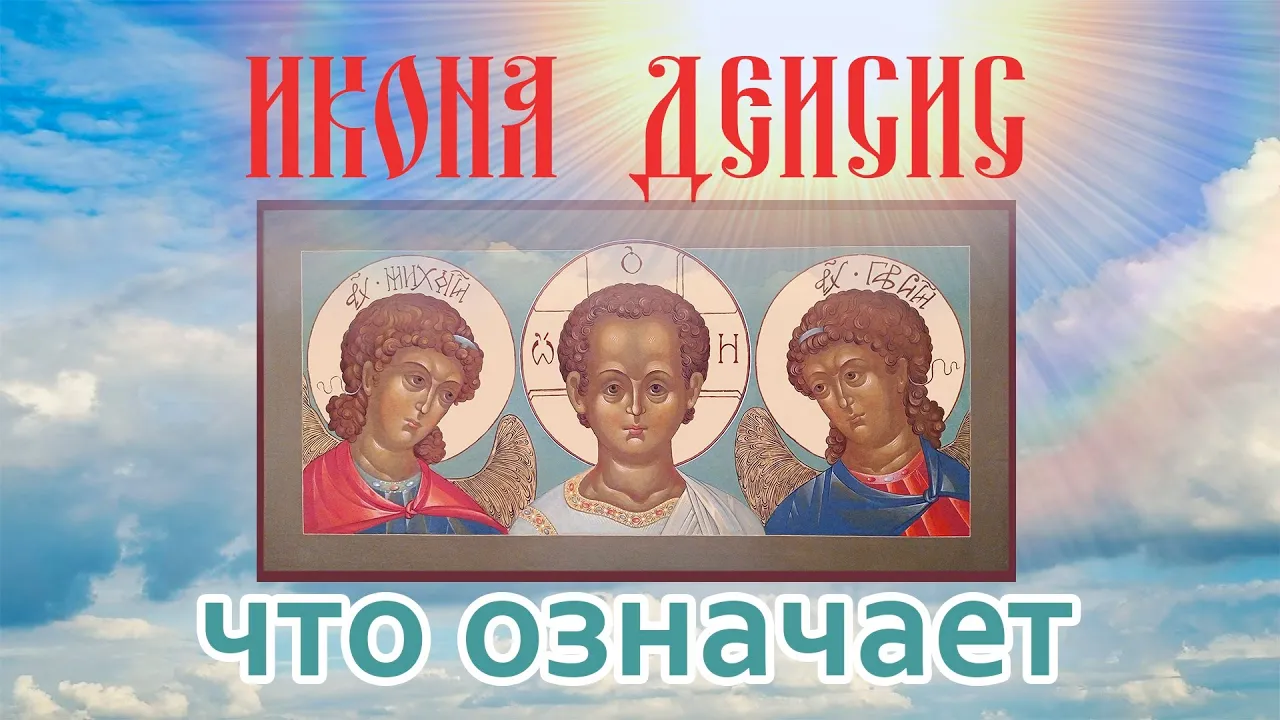











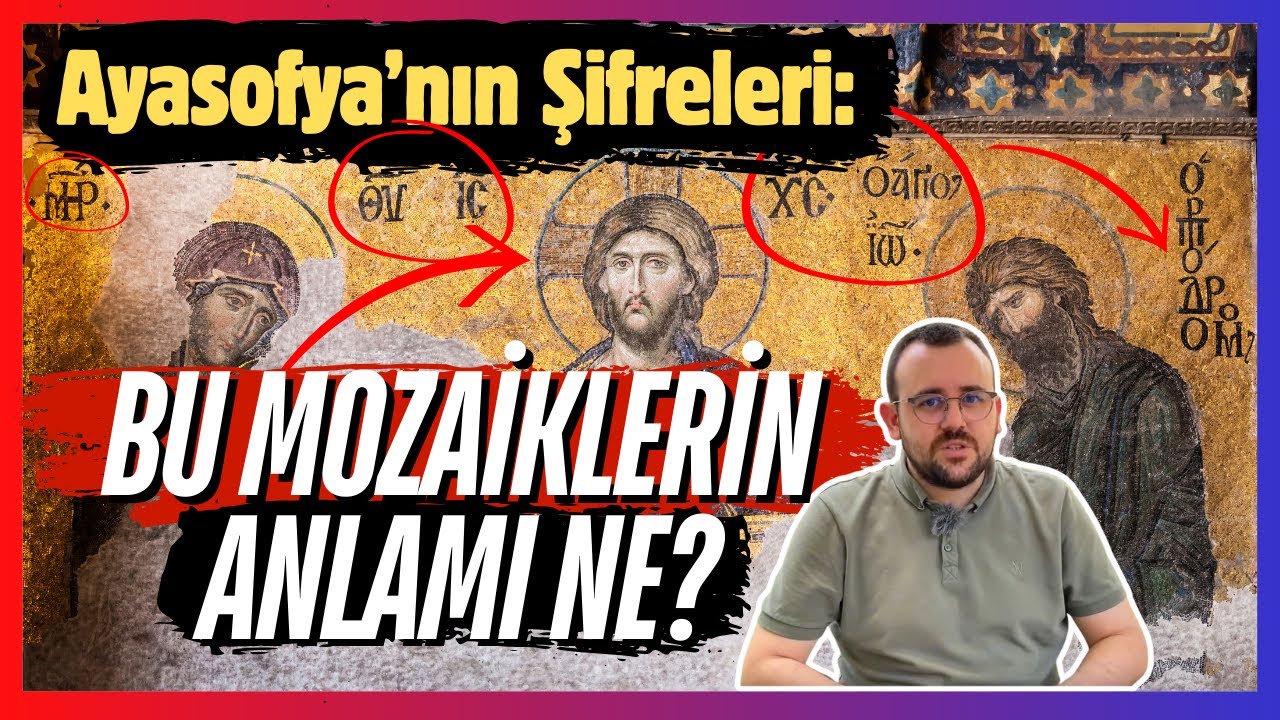

The Deësis mosaic in Hagia Sophia, Istanbul, dating to the 1260s, depicts Christ flanked by the Virgin Mary and St. John the Baptist in an intercessory pose, representing a key Byzantine artistic subject where figures appeal to Christ on behalf of humanity; this massive gold-ground mosaic uses tesserae set at different angles to catch light, creating heavenly spatial effects while carefully modeling facial features to convey emotional depth, reflecting the late Byzantine artistic revival following the Fourth Crusade's sacking of Constantinople in 1204.
Deësis Mosaic, Hagia Sophia: Late Byzantine Art Explained
Added:The history and architectural significance of Hagia Sophia, particularly its transition from a Justinian-era cathedral to a contested religious space.
The theological concept of 'Deësis' (entreaty) and the standard iconographic layout of Christ flanked by the Virgin Mary and John the Baptist.
The political climate of 13th-century Constantinople, including the aftermath of the Fourth Crusade (1204) and the restoration of the Byzantine Empire.
The fundamentals of Byzantine mosaic techniques, including the use of gold-leaf tesserae and angling techniques to manipulate light.
The Palaiologan Renaissance, a cultural revival in late Byzantium characterized by increased humanism, emotional expression, and spatial depth in art.
Comparative analysis of Late Byzantine art and Early Italian Renaissance art (e.g., Giotto, Duccio), exploring the cross-cultural artistic exchanges in the Mediterranean.
The theological and political implications of post-Iconoclastic art and how the Deësis represents a culmination of Byzantine icon theory.
Modern conservation challenges, ethical debates, and digital preservation strategies surrounding the mosaics of Hagia Sophia.
79K views589likes5:08Original Release: 2014-06-08
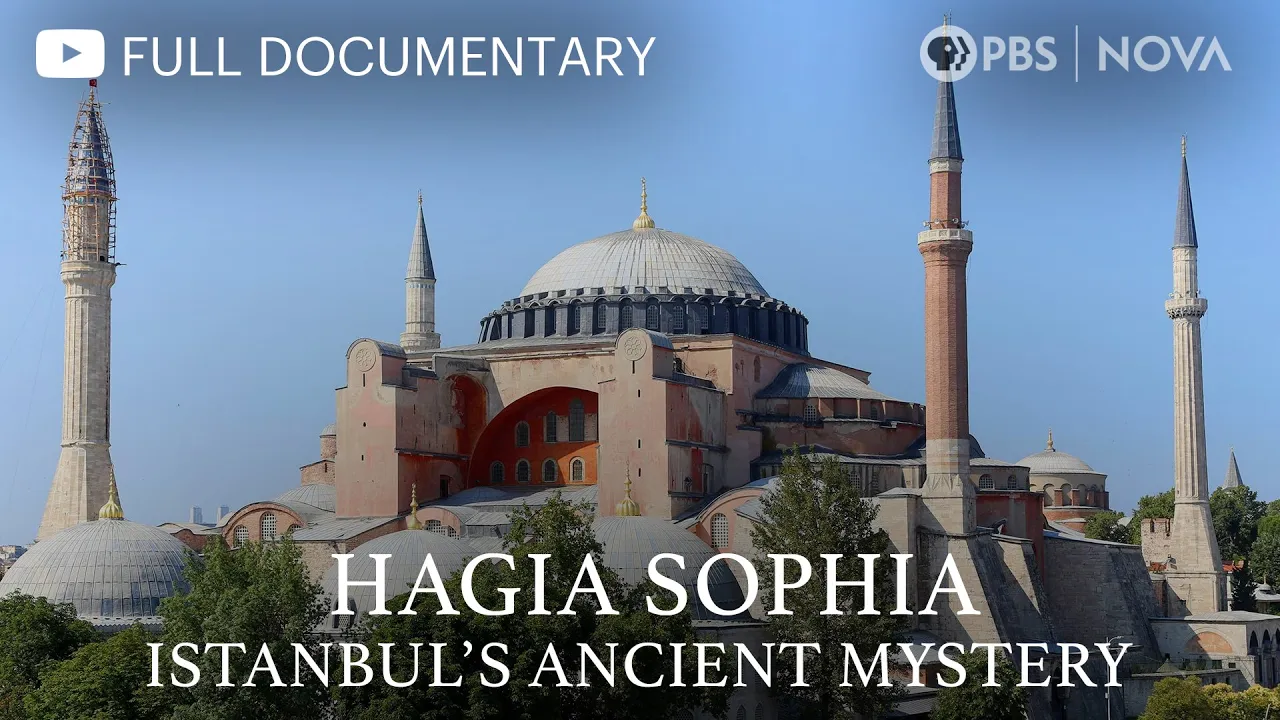
(jazzy piano music) Voiceover: We're looking at a mosaic that dates from the late Byzantine period from the 1200s, but it's in a church, Hagia Sophia in Istanbul that dates to the 500s, the very beginning of the Byzantine period.
Voiceover: We normally think about a building and its decoration dating from the same period, but we also know that we decorate our own homes so we're familiar with that idea.
Voiceover: Now, it's important to know that this mosaic, which is just glorious, was actually covered up for a very long time because this church became a mosque and when it became a mosque, all of its images, all of its crosses were either removed or were covered.
It's wonderful to see it, but it hasn't survived very well.
Voiceover: We only have about one-third left of this mosaic.
Voiceover: Luckily we have the faces of the three figures.
Voiceover: This is called the De�sis.
It shows Christ in the center with His right hand blessing, His left hand holding the Gospels.
He's flanked by the Virgin Mary and St. John the Baptist.
Voiceover: That's what De�sis means.
This is a subject that we see often in Byzantine art.
It's an intercession.
That is both of these figures are coming to Christ on behalf of mankind.
Voiceover: It's really easy to see the appeal of this medium.
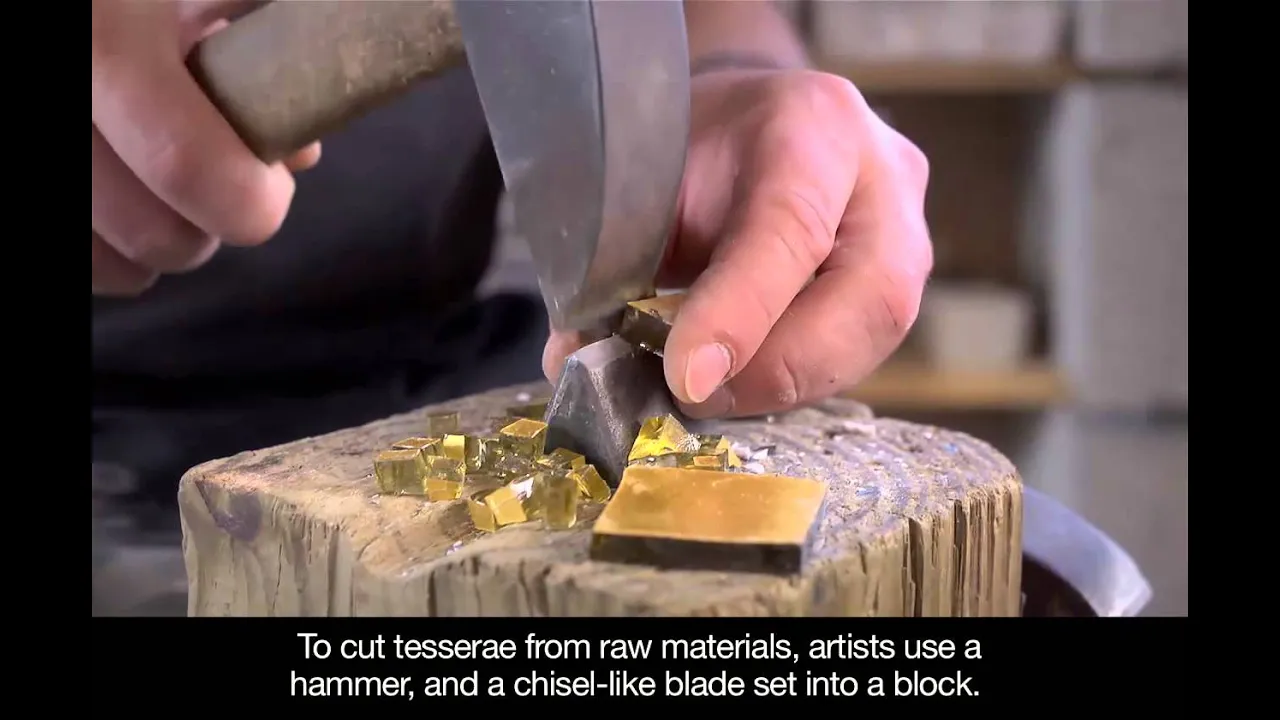
Small pieces of glass, some with gold in them, some colored.
These are tesserae and what's fabulous about them is they're set in the wall at slightly different angles so they all catch the light in different ways.
Voiceover: The artist has created a pattern in the background of that gold that also catches the light.
Voiceover: This is a massive mosaic.
These figures are much larger than life and it's also fairly high off the ground, so they really do stand above us and that gold ground reminds us that this is a heavenly space.
This is not an earthly space.
They are distant from us, but they're also proximate.
We feel as if there is emotional connection.
Voiceover: There is abstraction to the background.
We see no landscape, we see no architectural setting and yet, the face is carefully modeled, especially of Christ.
The artist has used light and dark to create a sense of three dimnensionality in the face and in the neck and the hands of the fgiures.
That's also true of Mary and John though perhaps to a lesser extent.
Voiceover: Yet there is still these striations, that is the use of line and the drapery to define the folds.
It still a kind of drawing as opposed to modeling.
Voiceover: Christ seems to look directly out at us and seems to be in the middle of raising His hand for that blessing.
Voiceover: It's interesting because He does look up, but the other two figures, they're bowed.
There is a kind of solemnity, that quiet.
Voiceover: Both of these figures would have their hands forward in gesstures of prayer.
We're in the 1260s here and this is just after a very tumultuous period, to say the least, in Byzantine history.
Voiceover: This church, which is the heart of the Eastern Orthodox tradition, had been controlled briefly by the Latins, that is by the Roman Catholics, the Western Church.
Voiceover: In 1204 during the Fourth Crusade, as the crusaders were heading toward Jerusalem, they stopped and instead sacked the very wealthy city of Constantinople.
Voiceover: It was a terrible event and there was tremendous violence and really long-term scarring.
Some historians look at that moment, the Fourth Crusade, as the moment of the long downward spiral of Constantinople.
Nevertheless, after the Byzantines reclaimed their city, there were a couple of hundred years of a real flowering and this mosaic is one of the great expressions of that period which some even call a Renaissance.
Voiceover: This is a great example of late Byzantine work.
It might even remind us of what's going on in Italy at the same time with the artist like Duccio.
Voicemaker: Look at the elongation of the bodies.
It's not naturalism for all that's emotional engagement.
These are tremendously elegant figures.
Look at the lengthening of the faces, of the nose, of the fingers.
Voiceover: Elegant but also emotional.
Look at the St. John.
There is an awareness of the terribleness of Christ suffering on behalf of mankind.
Voiceover: I think this is a gorgeous mosaic, but in some ways it feels out of place.
It's important to remember that when this church was first consecrated it's extensive mosaics were not figurative.
They didn't show the Virgin Mary and Christ and St. John.
They showed abstract symbols of the cross or patterns.
In some ways, they really emphasized the structural forms, the volumes of the building as opposed to pictures on its walls.
Voiceover: We know that there is tension around the use of images from the beginning of Christianity.
Do you picture Christ?
Do you picture Mary?
We know that in the Judaic tradition that was disallowed.
On the other hand, looking at this image, I can see the incredibly profound value of images in aiding prayer, in helping one to engage with the Divine and the Transcendent.
(jazzy piano music)
Up Next
43:39
Chora Monastery Virtual Tour: Byzantine Mosaics & Frescoes
@SerifYenen
38.2K views•2020-05-26

114:18
Christian Iconography: History, Theology, and Meaning | Fr. Panayiotis Papageorgiou
@Trisagionfilms
58.8K views•2020-02-21

10:26
Redgrave's The Sempstress: Victorian Social Realism, 1846
@smarthistory-art-history
3.2K views•2011-10-22

16:34
Earliest Depictions of Jesus in Art: 10 Ancient Images Explained
@UsefulCharts
5.9M views•2022-06-03
Related Study Plans & Knowledge Roadmaps
Structured learning paths in Art History
art-history
Gothic Cathedrals: Engineering, Light & Society
01The Birth of the Gothic: Romanesque to Suger's Vision
02The Structural Triad: Pointed Arches, Ribbed Vaults, and Flying Buttresses
03Theology of Light: Lux Nova and Sacred Geometry
+ 2 more learning modules
14h5 modules
Explore Roadmap
art-history
Pre-Raphaelites: Realism, Symbolism & Critique
01The Victorian Art Establishment and Academic Formula
02The Founding of the PRB and Radical Realism
03Medieval Revivalism and Literary Symbolism
+ 1 more learning modules
8h4 modules
Explore Roadmap
art-history
Street Art: From Subways to Art Market
01Subcultural Origins in Philadelphia and New York (1970s)
02The Subway Era and Style Wars (Late 1970s - 1980s)
03The East Village Scene and Early Gallery Crossover
+ 2 more learning modules
10h5 modules
Explore Roadmap
art-history
Classic Maya Art: Iconography, Glyphs & Ritual
01Foundations of Classic Maya Visual Culture
02Deciphering Maya Hieroglyphs & Text-Image Integration
03Sacred Geography and Cosmological Architecture
+ 2 more learning modules
14h5 modules
Explore Roadmap