








![Immortals Fenyx Rising: New Abilities in A New God DLC Gameplay | Ubisoft [NA]](https://i.ytimg.com/vi/xlS1yZPKZl4/maxresdefault.jpg)






![[4K] 무려 1500년 된 유적지에서 이슬람 문화 체험하기ㅣTürkiye [04]](https://i.ytimg.com/vi/DiyZ6VpFOo4/maxresdefault.jpg)



The Chora Monastery (Kariye Museum) in Istanbul houses one of the world's most significant collections of Byzantine mosaics, created primarily in the 14th century by Theodore Metochites, featuring scenes depicting the lives of Jesus Christ and the Virgin Mary, including the Hodogetria (Virgin Mary holding Infant Jesus), Koimesis (Virgin Mary's falling asleep), and various biblical narratives, showcasing the sophisticated mosaic technique using colored stones and gold leaf tesserae that represents a parallel artistic movement to the Italian Renaissance.
Chora Monastery Virtual Tour: Byzantine Mosaics & Frescoes
Added:Fundamental history of the Byzantine Empire, particularly the significance of Constantinople (modern-day Istanbul) as its cultural and religious capital.
Basic concepts of Christian iconography and biblical narratives, specifically the lives of Jesus Christ and the Virgin Mary, which dominate Byzantine sacred art.
The physical and artistic distinction between the mediums of mosaics (using glass, stone, or gold tesserae) and frescoes (painting on wet plaster).
An introduction to the Palaiologan Renaissance, the final cultural revival of the Byzantine Empire characterized by increased naturalism and narrative detail in art.
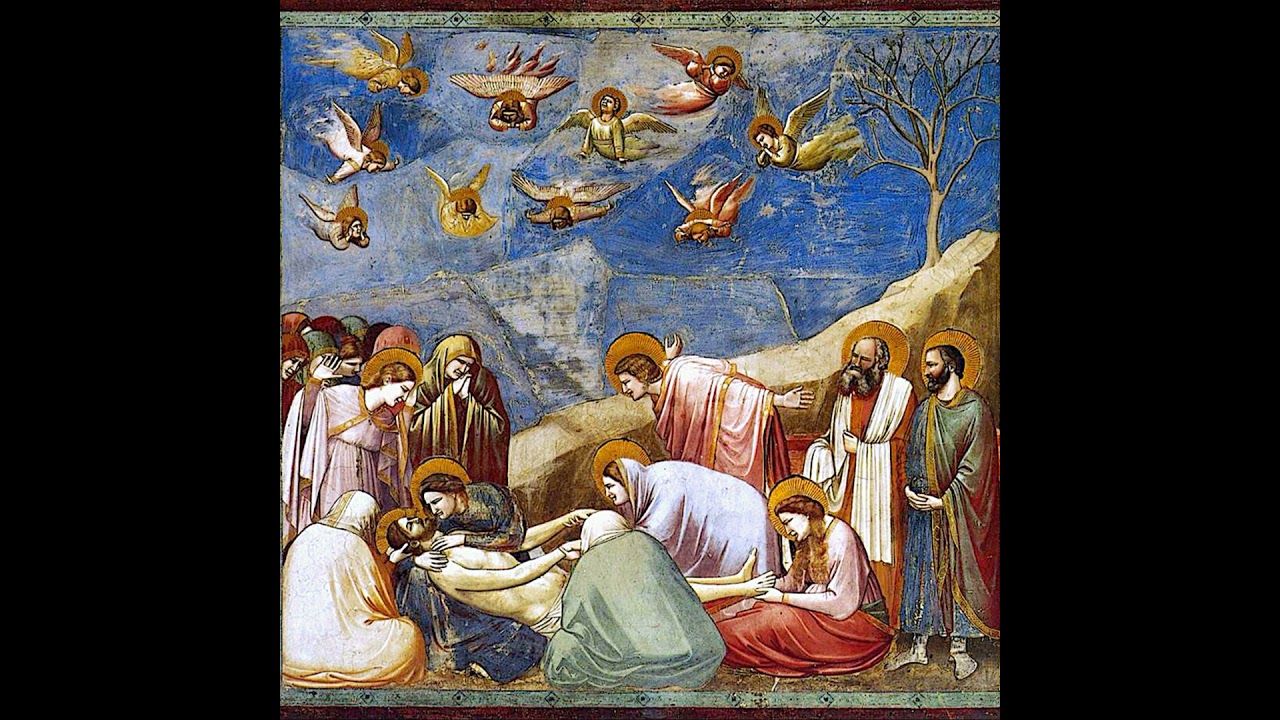
A comparative study of late Byzantine art and the early Italian Proto-Renaissance (such as the works of Giotto in the Scrovegni Chapel) to analyze mutual influences.
The historical impact of the Ottoman conquest on Byzantine sacred spaces, focusing on the preservation, plastering over, and modern recovery of Christian imagery.
An in-depth exploration of Byzantine church architecture, specifically the functional and symbolic roles of the narthex, nave, and parekklesion (funeral chapel) in relation to their decorative programs.
The political and religious role of secular patronage in the late Byzantine Empire, focusing on figures like Theodore Metochites who funded the Chora restoration.
38.2K views877likes43:39Original Release: 2020-05-26
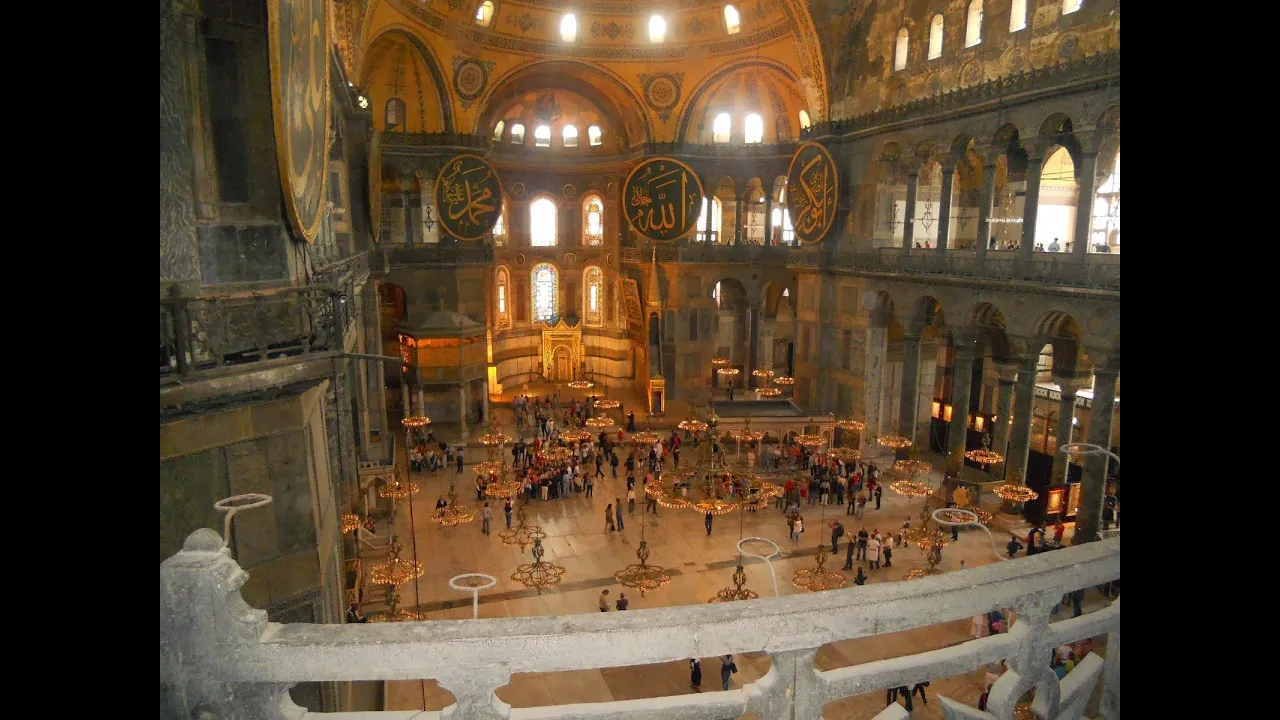
You stay home we bring the sights to you Today we are in the Chora Museum One of the most beautiful museums in Istanbul May be the second most important Byzantine monument in Istanbul, after Hagia Sophia Today we are enjoying the privacy in here just you and I We will be talking about the Chora Museum and the mosaics in here This place was once upon a time a church inside a large monastery complex From the Byzantine period.
Later in the ottoman times Like the Hagia Sophia it was converted into a mosque The minaret outside was added then And the name was changed from Chora to Kariye Kariye has also become the name of the neighborhood here And in the Republic Period Like the Hagia Sophia This place was made a museum Then the plasters covering the whole panels of mosaics have been taken out And they restored the mosaics, and we have the beautiful set of mosaics in here we are going to talk All about them One by one The name of this complex is Chora In the Greek language Chora has a few meanings It means rural It also means home So why would you call a monastery complex As rural?
I think we would expect it to be in the countryside Let us look at the walls The 5th Century Theodosius walls are a little farther up from here The Chora is within the walls In the 5th Century But let us look at the Constantine walls from the 4th century This place is outside the walls So we can Make a generalization and say that the history of this Monastery complex in here Goes back to the 4th century But the archaeological evidence does not take us back then It's from much later times Maybe we can assume that This building was built here a few times The last one being this one If we are talking about the Chora We have to mention a special name That is Theodore Methocites He's the founder, he's the donor of the church He's an intellectual, a scientist, a statesman who lived in the 14th century Because of the religious views of his family The whole family was exiled Somewhere in Anatolia in the Byzantine era in the 14th century One day the Byzantine emperor Andronikos II meets him by coincidence and he's impressed With his intelligence and wit So he hires him as an advisor for the Palace And with his intelligence in a very short while He gets promoted To be the prime minister For the Byzantine Empire who would be in charge of the treasury of the state He's a scientist He's a writer He writes about philosophy Astronomy, he has even written an encyclopedia He's such a talented man But after Andronikos II, He loses his popularity And he's exiled first He comes back to Constantinople He wants to spend the rest of his life In isolation in this monastery complex While he stays here He thinks of a burial place for himself So he adds the Funerary Chapel on the side which is also named as the parecclesion And he makes a big donation for the church for the complete restoration of the building Whatever we see here today is mostly From the time of Theodore Metochites After he passes away he's buried in here He is such an intelligent Man He's such a narcist man By making some meticulous calculations And by making these wonderful pieces of art in here He tries to make his life eternal.
Here we have the Mosaic of Theodore Metochites He's the donor of the church He is offering his church to Jesus He's wearing a turban like thing with a caftan This is the 14th century 14th century Is the time in which the Anatolian Seljuk State was already founded in Anatolia And the Turks and the Byzantines were interacting with each other And we can see traces of this interaction in their costumes The Chora church was very close to the late Byzantine period palace the Blachernae So as a result of this this small church was also used a a Palace Church.
Some of the rituals for the emperors were held here Planwise, It is a typical Byzantine architecture There's a Naos here One big nave Together with the apse in In the east And on top of the main Nave Is a circular dome With the four pendentives in the four corners And there are 16 Windows around the dome And the central Dome is the largest and highest of the others Right behind the Nave Is the inner narthex, which is the horizontally lying aisle The other narthex parallel to it is called as the outer narthex Theodore Metochites added his Funerary Chapel on this side, behind these walls And the interior of the Funerary Chapel the parekklesion is not covered with mosaics like the rest of the building It is only frescoes there You can see the additional prayer niche for the Imam, which is called as Mihrap, it not in the center, it is off-centered Directed towards the Mecca Direction In the mosaic art They never use any paint or any brushes It is only stones.
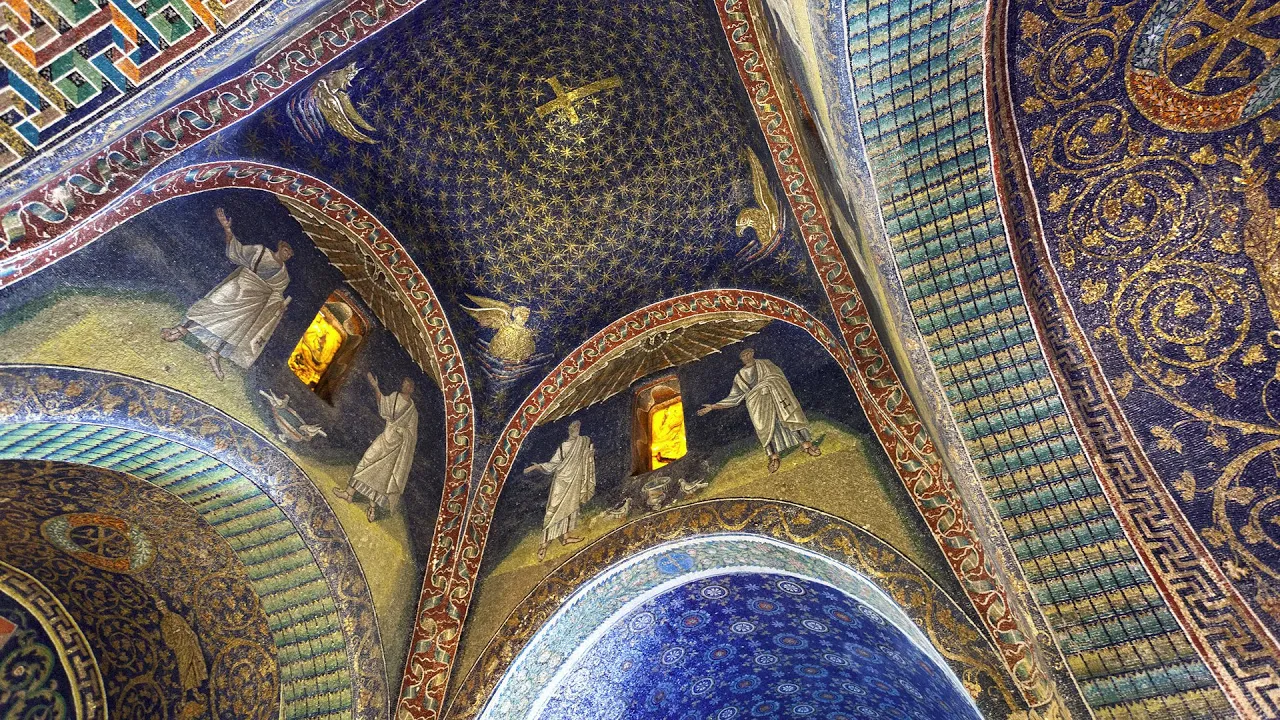
Green is from the green stone Red is from the red stone Only the yellow in the mosaic Is obtained with gold leaves Together with glass So they cut the glass and the stones in cubic forms And each piece is called as tesserae And by fixing these tiny pieces of tesserae next to each other With a glue type of mortar they obtain the picture The finer the tesserae pieces are Higher density We would have in the picture This is how it is.
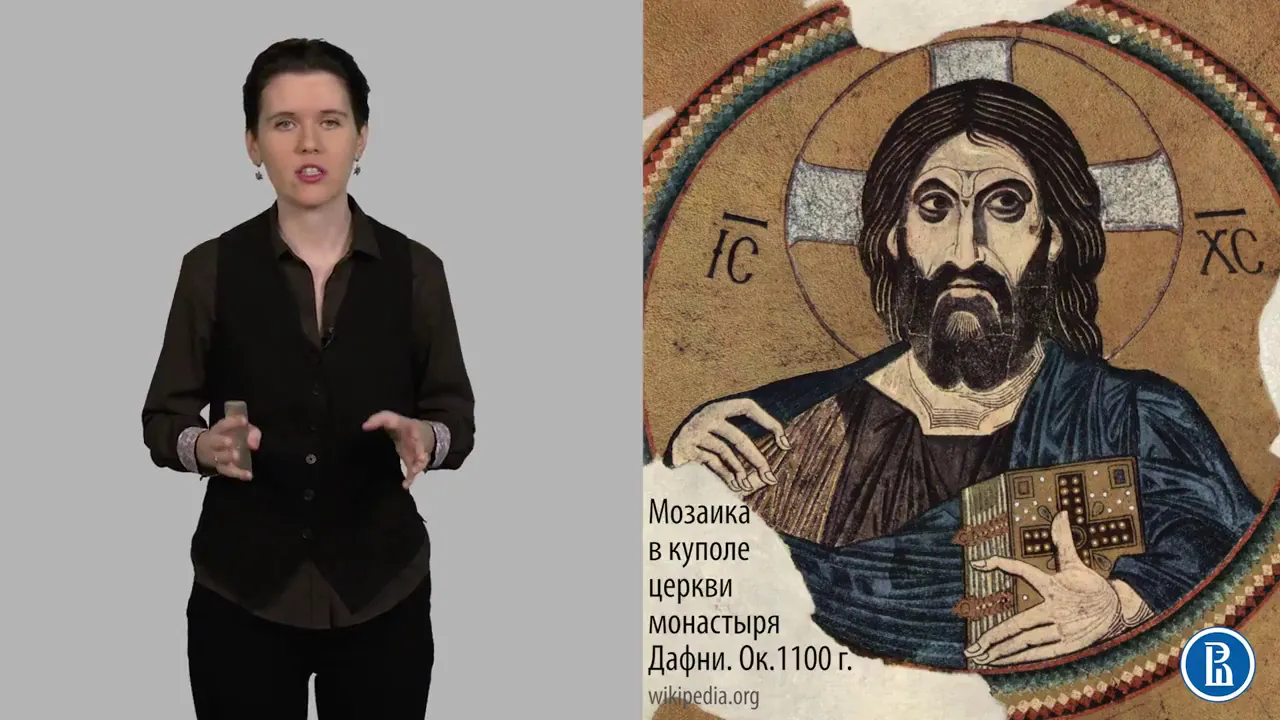
One of the three mosaics In the main Nave Is The Mosaic of Jesus Christ Unfortunately the face hasn't been kept in a good condition But the other details Like the inscriptions in the holy book And the details of his costume have survived to our day perfectly On the holy book it says You who are weary Have to carry heavy burdens Come to me I will give you rest One of the three mosaics in the naos Is this one here The Virgin Mary together with Infant Jesus. Jesus has a mature face Because from his childhood he was mature He was giving lectures he was answering questions of people In the Jewish temple The Virgin Mary here In the Greek language is called as Hodogetria Hodogetria means someone showing the right way The way that she's holding Infant Jesus is like this He's pointing at Jesus To be the Right person for the Salvation of Hımanity The last Mosaic in the Nave Falling asleep of the Virgin Mary before she ascends to heaven In the Greek language This is called as Koimesis Falling asleep of the Virgin Mary While she's sleeping, next to her is Jesus Jesus is holding a baby Which represents the soul of the Virgin Mary And together with Jesus In the picture We see the apostles The evangelists And the Bishops Just a little above Jesus, see the seraphim angel The six-winged angel Seraphim angels are the guardians of the Throne of God They have six wings And they use the two wings to fly Two to cover the feet And the other two Wings to cover the face Just above the door connecting the inner narthex to the naos Is a beautiful Mosaic of Jesus As the pantocrator In the Greek Orthodox Church We don't see many scenes of crucifixion Because Greek Orthodox people do not prefer showing Jesus while he's suffering Instead They prefer showing Jesus like at victorious emperor This is what it is.
Jesus is sitting on a throne He's wearing the costumes of an emperor And he's doing the gesture of blessing with his right hand and he's holding the holy book in his left He's the pantocreator Creator of the universe And right below is Theodore Metochites He is offering his church to Jesus On the two sides of the door we have two notable Saints One of them is Saint Peter And in his left hand he's holding the keys to heaven The other one is the Anatolian-born saint, Saint Paul He was born in Tarsus And he took most of his missionary Journeys throughout Anatolia The largest Mosaic panel In the Chora Church The figures in the Mosaic are in gigantic size The image of Jesus together with the Virgin Mary There are two different interpretations of this One interpretation is that this should be an Atypical Deisis Which was taken from the judgement day Jesus should be standing in the middle, on one side is the Virgin Mary and the other side is Saint John the Baptist Saint John the Baptist is missing here.
That's why it is accepted To be atypical But another thought is different They say this is not the Deisis scene The Virgin in here, the way she's standing And the way that she's addressing at Jesus is the Hodogetria feature.
The person who shows the right way So she's pointing at Jesus to be The right person for the Salvation of humankind The donor Of the church was Theodore Metokhites But he had respect for Earlier donors So on the left hand side one Emperor from the Komnenos family is depicted He must be one of the earlier donors of the church On the right hand side there's another woman figure It is the Lady of the Mongolians, Melanie the nun.
And if you notice this is actually a niche in the wall Probably at the bottom of this niche there was a large size sarcophagus This niche Was a burial place For one of the dignitaries In this inner narthex there are two domes One higher than the other one In the higher dome, in The Medallion We have the image of Jesus Christ as the pantocrator In the center And Other than Jesus We have the ancestors Of Jesus Christ In two rows There are 24 figures in it.
In the upper row Starting with Adam Coming up until Jesus Their names are all inscribed one by one In the lower row It is the sons of Jacob And the others In the lower dome right in the center It is the Virgin Mary Theotokos The mother of God And then the genealogy of Jesus Christ 16 Kings With King David Up until the Virgin Mary Now we are going to look at the life story of the Virgin Mary Before she was born Of course we have to mention about Her parents The father's name was Joachim And the mother's name was Anna This was Kind of a wealthy couple They were getting aged They didn't have any children They were Longing for a child So this was the Jewish time Before Christianity And the temples at the time were Jewish temples So Joachim goes to the temple with some offerings The temple is shown with a dome resting on four columns in the four corners There's a high priest inside And his name is Zakarias Zakarias is doing the gesture of rejection He's lifting up Two hands showing the palms, this means Because Joachim has no children, His offerings are rejected In the Jewish temple He's very much disappointed He goes out into the forest area And he goes through penance for 40 days And he's praying and he's fasting and He's praying for a child Then we see Anna in her red robe Anna is standing there And the right in front of Anna There are a few trees On top of one of the trees Is a bird nest with some baby birds inside And there's another mother bird Flying towards the babies with food In her mouth Anna looks at this happy Family picture And She says I wish I had a family like this Right at that point an angel appears to Anna And the angel says your prayers have been heard And you're going to have a baby soon Anna becomes excited She becomes very happy As she says When this happens I promise that I'm going to dedicate my child to the service of God The couple meets the mother and father Come together Anna and Joachim And Anna shares the good news with her husband And They are very happy And they give a hug to each other Next scene is the birth scene of the The Virgin Mary Anna is half-lying in her bed And the Virgin Mary was just born And the Midwife is holding her in In her lap in the right corner One maid is preparing the Cradle on the left Another maid is preparing the bath And there are 3/4 friends of Anna bringing gifts Behind these friends Is another maid Waving a fan Among all of these figures There is only one male figure in this picture Which is the father Joachim He's standing in the door half inside and half outside He knows it's a woman thing in there He doesn't belong there But he's so curious about what's going on inside He's Just trying to look through And then We see Anna and Joachim while caressing their baby In this picture there are a few houses and a few architectural details Which are giving some Deptness in the picture And the two peacocks on the two sides Symbolize Incorruptibility and royalty In here We see the temple The Jewish temple And three priests are sitting at a table And Joachim is bringing his daughter to these priests So that they are going to bless the Virgin You see they're doing the gesture of blessing All three of them we see the first steps of the Virgin Then she is 6 months old He takes her first steps She's walking towards her mom A maid is trying to help her from behind And while doing so Cape of the maid is rolling up with the Wind But it makes almost like the Halo shape there As Anna promised She's going to dedicate Her daughter to the service of God That means when Mary becomes 3 years old They bring her to the temple and she's going to spend the next Few years in the temple Like a boarding school Religious school For the service of God The high priest is welcoming her And behind the high priest you see the temple Resting on four columns in the four corners together with a dome It is said that during the time when the Virgin Mary was in the temple She was taken care of or fed By some Angels In this picture we see an angel Bringing food Bringing bread to The Virgin When The Virgin stays in the temple She made a promise She took oath to Stay As virgin not to marry To dedicate herself to the service of God In this picture we see maiden girls The girls from the temple holding their torches they are welcoming the Virgin Mary to the Temple on the wall in here We see the three priests Sitting on a bench And there are seven girls Standing And these girls Are going to be asked Do weave a cover for the temple, each girl is going to be responsible for one color So that the cover for the temple is going to be in the rainbow color See the wool that the Virgin is getting from the priest is purple in color Purple is the color of royalty In the Byzantine culture purple has always been the color for the Emperors So, common people were not permitted To use the purple color After many years in the temple it is time for graduation When the girls Come to a certain age they are going to graduate From the temple And they will marry and they will leave, but as we said the Virgin took an oath Not to get married Stay as virgin So the high priest Zakarias He knows about this and he honors this decision They think of a solution The solution will be To find the Widow man who would not expect any children from the Virgin But who would take care of her They see if there are any volunteers for this And they notice that there are many people Who would like that So all the volunteering people are invited And the high priest Tells them To leave their canes On the table In the temple And the priest is kneeling down He's going to pray for a sign from God and the Virgin is asked to sit just next to the canes When the priest asks for a sign from god the sign comes How does it come?
If you look at the fourth cane from the right From the handle side There are little green leaves sprouting So the priest thinks this is the sign from God so he takes the cane With the leaves and he says who is the owner of this Joseph comes forwards he's the owner of the cane See how little Mary looks there. The body language of the priest He's holding on the head of the Virgin Mary The body language says she is under our protection Joseph and the Virgin Mary, they meet each other Joseph was married from before with at least three or four sons but his wife passed away So he's a widow Joseph takes the Virgin and they all together go. Joseph is in the middle He looks like a mature man, right behind is the Virgin She looks like a little girl and Joseph is looking behind making sure that she's walking with them In front of Joseph that is one of his sons they are walking all together The way that the son looks at the Virgin is open to different interpretations Right after that as a carpenter Joseph gets a new job from outside to city He doesn't want to miss that He wants to take That job So he tells his son get ready We are going So his son puts a basket on his back With the carpenter tools in the basket And they have to say goodbye to Mary Maybe for the first time in her life Mary is going to be alone She's so young And she's so sorry that she's going to stay alone So she tilts her head a little bit and she says goodbye but you can see See how sad she is Then we see the Virgin Mary By the well An angel appears to her And the angel tells her that She's going to have a baby from God soon and she has to accept that That is the Annunciation scene there Just opposite that Is the Annunciation scene for Anna Her mother It cannot be a coincidence Theodore Metochites Must have planned all of these kinds of little details This is the outer narthex Here we're going to have the life story of Jesus Over there we see Joseph In his sleep Joseph is in his sleep And while he's sleeping An angel appears to him in his dream and the angel says hey Joseph When you go back You're going to find your wife Pregnant What she's carrying In her is from God You have to accept And then we have another scene there that's the journey into Bethlehem Local governor for the Roman Empire Is going to take a population count The Roman Empire Is collecting taxes from everyone under the Roman rule So to be able to collect taxes properly They have to take the name count correctly That's why they are going to take a population count A census.
But Everyone has to register In his own hometown That's why The Virgin is on a mule Joseph And his son in the front are going to Bethlehem Journey into Bethlehem. Then we have the scene of seeing here the governor Of the area is Cirenius He's sitting in a throne And his guard is just next to him And the scribe is writing down the names And he has his guard standing next to him as well And it is Mary's turn So they are registering her name now Right behind Mary is Joseph And his many sons Here is the nativity Jesus was born in a cave barn The Virgin Mary is half-lying Right behind the virgin Is a little box This is the place for the animal food And the baby's there A holy beam is reaching onto Jesus And next to the box are animals And they must have understood the Holiness of the baby by breathing next to the baby they are Warming him up You see shepherds outside An angel is telling the shepherds that The son of God Was just born inside They will later go And see the baby in the box there later Jesus Is going to be washed Always Joseph is somewhere Joseph never abandons The Virgin Mary He's in the middle of the picture He's a little bit thoughtful He's still thinking about what the Angels was telling him in his dream He's trying to understand In here we see the Three Magi These are the Three Kings By looking at the astrology, by looking at the stars in the sky They know that The son of God Was just born And they want to locate where this newly born son of God is So they came two Herod King Herod And they asked him this question Where is he The newly born baby Who is going to be the king of the Jews?
Of course.
When he hears this He gets angry But he tries to keep calm He wants to gather as much as information From them He stays calm he asks questions and he tries to collect more information With this information he makes his own investigation With no results he wants to locate this boy And he wants to execute him and he wants to avoid the problems He doesn't want a new King around So when he is unable to locate the boy He takes a shortcut, he calls his soldiers And then He gives an order to his soldiers The order is that They will go all around Bethlehem And they will find all of the Newly born boys Who are under the age of 2 And they are supposed to kill all of these boys You see there is one soldier there killing a boy with his sword While another Soldier is trying to keep the mother away There are two soldiers there And the mother and the baby is killed by the soldiers And a few more of the same scene here and there Then we see many mothers together They are sitting down they are mourning they are lamenting They have the dead bodies on their boys In their laps They are crying, they are sad and sorrow Only one mother is able to run away With her son This is Elizabeth Elizabeth is the mother of St. John the Baptist While running away from the soldiers suddenly a cave opens In front of her Together with her son She goes into the cave and hide there and this way she is able to save her son.
Saint John the Baptist. In here we see Joseph again Joseph is sleeping and while he is sleeping and Angels appears to him in his dream again And he says hey Joseph It is dangerous time Take your family and run away they are killing the children Joseph takes this warning very seriously he gathers his family quickly And as you see the whole family Is running away this is flight into Egypt Jesus Is a boy sitting on the shoulder of Joseph Going to Egypt they hide there for a while After some years Jesus Becomes a teenager And this is still the Jewish time And as usual For the passover Every year they go to Jerusalem For the activities there And together with Jesus there is also St John the Baptist More or less the same age And when they go to Jerusalem Mary loses her son for a few days She cannot find him for a few days Only after 3 days She finds him in the Jewish temple In the Jewish temple As a teenager Jesus is giving a lesson To the priests in the temple And the Virgin is very excited And she says Where have you been, I have been looking for you Jesus Gives an answer to his mother And he says You know Mom I also have to take my seat near my father So he has some responsibilities to do In here We see some temptations by the Satan. Satan is an Angel that's why he's depicted with wings But Satan is a Bad Angel, that's why he is in Black He heard that Jesus was the son of God and he tries to tempt Jesus.
He addresses Jesus and he says hey you If you are the son of God's why don't you turn these stones into bread let's see If you can do that. over there he says if you kneel down in front of me, if you obey me I'm going to give you all the kingdoms on this earth Over there He takes him to the holy city and he says climb up the roof of that building And jump down and let's see if anything will happen if you are the son of God Nothing should happen to you He is trying to tempt Jesus in here with no success Then we have Saint John the Baptist St John the Baptist has his followers behind And he turns his people and he says Remember what I told you I told you that there's someone to come he is far beyond me, that is him So he's pointing at Jesus here St John the Baptist is bearing witness to Jesus Christ and after this He's going to baptize Jesus here Baptism means Rejection of the satan.
We start seeing Some Miracles There's going to be this Cana wedding And there are preparations for the Cana wedding they're sacrificing an animal there You can see the beautiful legs of the feast table right behind During that wedding there are lots of participants and they suddenly ran out of wine And then they go to Jesus and they say they ran out of their wine and Jesus says fill these pots with water And they fill them up with water and he says This is wine, it becomes wine they serve a cup of Wine to Jesus It is good quality wine and wine here represents The blood of Jesus In here multiplication of the loaves, making bread There are five thousand people who do not have food And Jesus multiplies the breads And a they are all fed and there are still remaining bread They put them in the baskets and there are 12 baskets of bread in here Here is the paralytic man who cannot move, he is lying in his bed and they ask Help From Jesus Jesus says You're going to be healed And you will stand up And walk And it happens so He stands up takes his bed And he just walks away To continue with the Miracles We had to come back to the inner narthex again because we are following the chronology Healing the leper In this Mosaic He's healing the mute and deaf.
And in here that are two blind men you can see the blind stick And he is healing the blind men there One day while he's walking outside he sees a group of people Waiting on the side of the road And he asks Who are you what are you waiting for They say they are sick And they are suffering with different sicknesses And they are asking him or they are waiting for him to Be healed Then he turns them and he says you will be healed and they are all healed Over there We see him while he is healing the bad arm There is a woman with the bleeding problem she cannot get healed She is begging Jesus to be healed and he says you are healed and then she's okay Here there's a woman lying in a bed that is the mother-in-law of St Peter And she's suffering with some sickness as well And Jesus holds her hands And he heals her And after this she stands up and she even prepares food for them And these are the miracles about healing people Healing people here means Getting rid of sins.
Now, let us look at the pareklesion, the Funerary Chapel The walls in the pareklesion are all covered with frescoes They are not mosaics So, Theodore Metochites Built This Funerary Chapel First for himself then for the other dignitaries First Arch On the left The niche in the wall Was the burial place for Himself So in the far end of the apse We have a beautiful scene of the Resurrection The Greek name for the resurrection was Anastasis.
Jesus is in the middle Who had just broken down the gates of hell Is standing in the middle And he's trying to pull Adam and Eve from their tombs Behind Adam Stand Saint John the Baptist David Others are the Righteous Kings 6 Saints are depicted underneath And from left to right they are Saint Athanasius, St. John of Chrisostom, Saint Basil Saint Gregory St Cyril of Alexandria.
The last judgment Is also the most beautiful part of this parekklesion You see how big it is. It is covering the whole area there This is the second coming of Jesus There is heaven and there is hell Hell is filled with burning fire Jesus is sitting in the throne And at his sides are the Virgin Mary and st. John the Baptist As you know this is also the Deisis scene An angel is carrying the symbolic heaven on top he wrapped the calender, the months, the years, the universe so eternity has just started The people on the way to heaven At the Gate of Heaven St Peter is in charge he's supervising the entrance into heaven There are big crowds Trying to get into the heaven here The winged angel The throne angel Kerubim angel Is just standing there And the good thief is there as well Four gospel hymnographers in the four pendentives Combat with the Assyrians in the outskirts of Jerusalem Jacob's dream Jacob is sleeping in front of the ladder Angels Ascending and descending it Above This Mary and Infant Jesus are presented in a medallion.
Up Next

28:31
Byzantine Icons: Theology in Color | Holy Image Holy Space
@GreekOrthodoxChurch
1.9K views•2012-11-06

114:18
Christian Iconography: History, Theology, and Meaning | Fr. Panayiotis Papageorgiou
@Trisagionfilms
58.8K views•2020-02-21
7:48
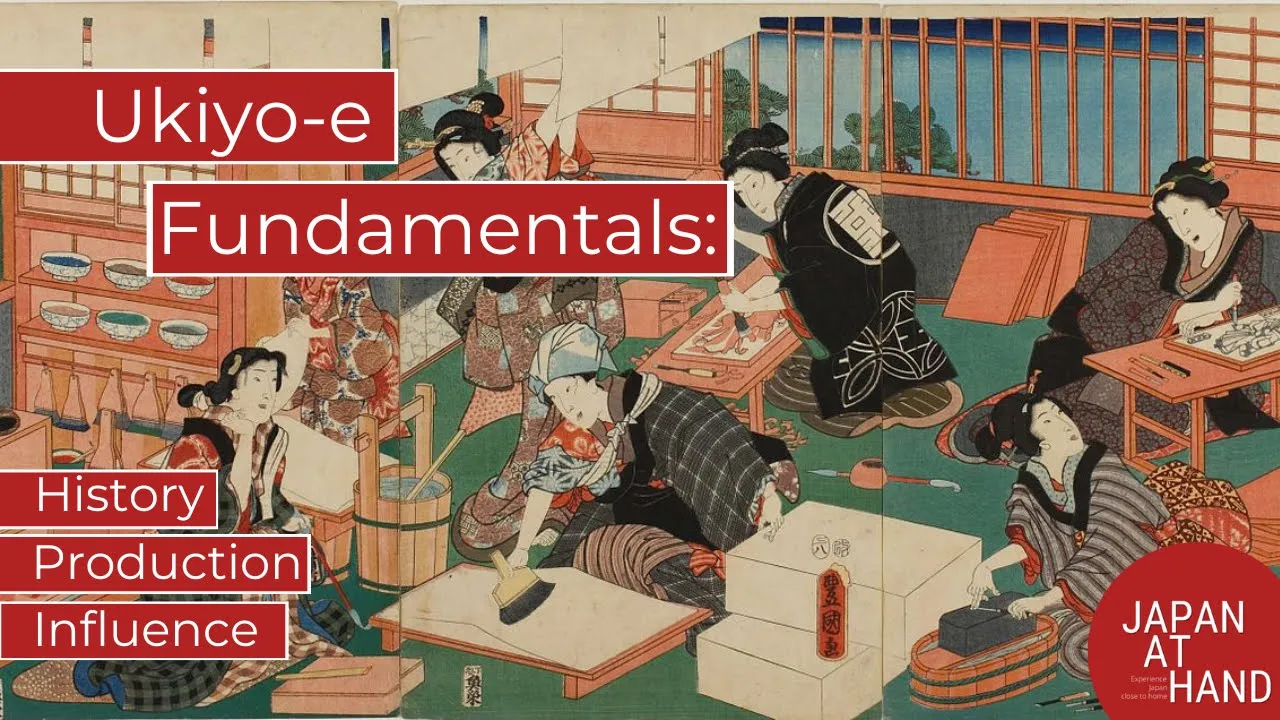
Ukiyo-e Art: History, Woodblock Printing & Influence
@japanathand
6.3K views•2023-06-08

16:34
Earliest Depictions of Jesus in Art: 10 Ancient Images Explained
@UsefulCharts
5.9M views•2022-06-03
Related Study Plans & Knowledge Roadmaps
Structured learning paths in Art History
art-history
Gothic Cathedrals: Engineering, Light & Society
01The Birth of the Gothic: Romanesque to Suger's Vision
02The Structural Triad: Pointed Arches, Ribbed Vaults, and Flying Buttresses
03Theology of Light: Lux Nova and Sacred Geometry
+ 2 more learning modules
14h5 modules
Explore Roadmap
art-history
Pre-Raphaelites: Realism, Symbolism & Critique
01The Victorian Art Establishment and Academic Formula
02The Founding of the PRB and Radical Realism
03Medieval Revivalism and Literary Symbolism
+ 1 more learning modules
8h4 modules
Explore Roadmap
art-history
Street Art: From Subways to Art Market
01Subcultural Origins in Philadelphia and New York (1970s)
02The Subway Era and Style Wars (Late 1970s - 1980s)
03The East Village Scene and Early Gallery Crossover
+ 2 more learning modules
10h5 modules
Explore Roadmap
art-history
Classic Maya Art: Iconography, Glyphs & Ritual
01Foundations of Classic Maya Visual Culture
02Deciphering Maya Hieroglyphs & Text-Image Integration
03Sacred Geography and Cosmological Architecture
+ 2 more learning modules
14h5 modules
Explore Roadmap