Classic Maya Art: Iconography, Glyphs & Ritual
Learning Goal: Analyze the iconographic programs, hieroglyphic integration, and cosmological symbolism in Classic Maya art and architecture, focusing on the visual representation of divine kingship and ritual performance.
- Prerequisites: None (A basic introduction to Mesoamerican history is helpful but not required).
- Estimated Study Time: 14 Hours
Module 1: Foundations of Classic Maya Visual Culture
This module introduces the historical timeline, regional geography, and core aesthetic values of Classic period Maya art (c. 250–900 CE). You will explore how major civic-ceremonial centers like Tikal and Bonampak projected political authority through public monuments, murals, and portraiture, setting the stage for advanced iconographic analysis.
Recommended Videos

This video serves as a concise, highly visual primer on the aesthetic goals of Classic Maya elite society. It introduces the fundamental concept of beauty and majesty in royal portraiture, emphasizing how physical modifications, elaborate dress, and ritual ornaments were deployed to materialize divine presence and social status.
Knowledge Checkpoint
- Understand the core physical modifications (such as dental inlays and cranial shaping) used by Maya elites to mimic divine models.
- Describe the basic materials (such as jade, feathers, and fine textiles) that signified royal authority in public portraiture.

The murals of Bonampak represent the pinnacle of Classic Maya narrative painting. This video examines Structure 1 at Bonampak and the artistic commissions under Chan Muan II. It explains how these incredibly detailed, multi-scene frescoes shattered the 20th-century myth of a purely peaceful Maya civilization by illustrating the realities of warfare, courtly politics, captive presentation, and political alliances.
Knowledge Checkpoint
- Explain how the discovery of the Bonampak murals fundamentally revised the modern academic understanding of Classic Maya sociopolitical life.
- Identify Chan Muan II and explain how he utilized stelae and structural paintings to secure regional political alliances.
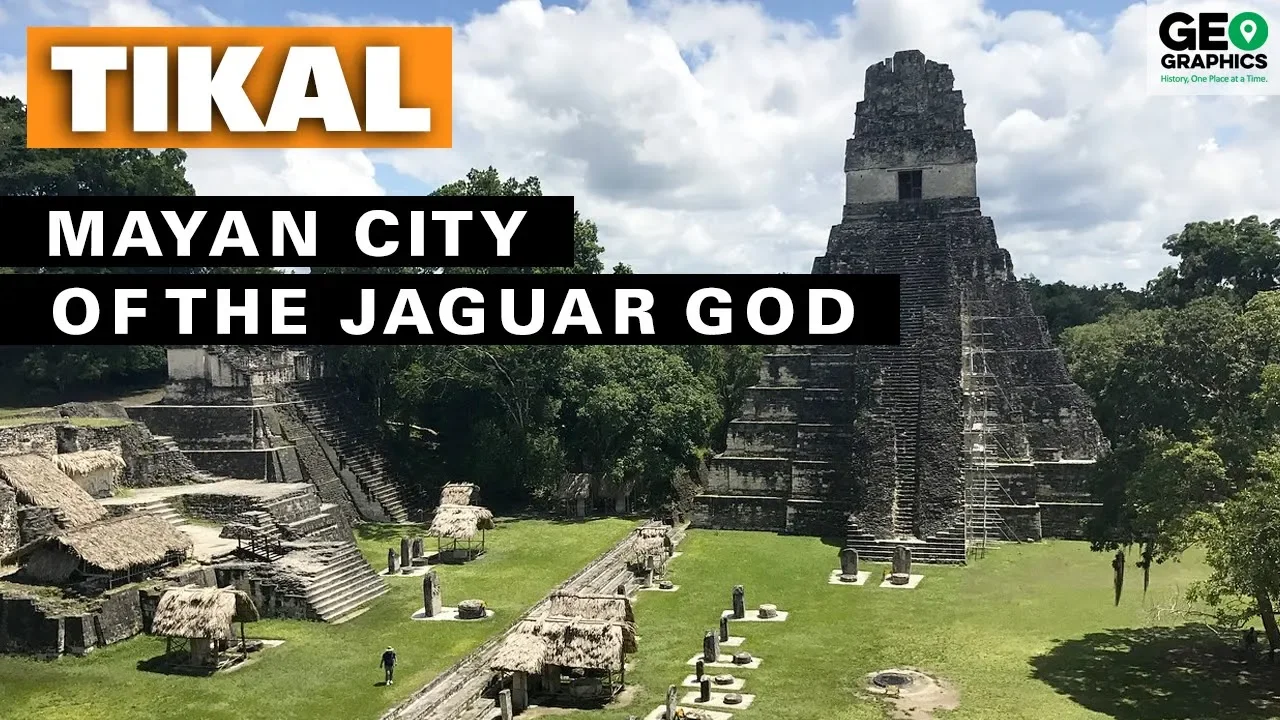
To analyze iconographic programs, one must understand their geographic and structural contexts. This video provides a comprehensive overview of Tikal, one of the grandest urban centers of the Classic Maya world. It focuses on the city's patron deity—the Jaguar God of the Underworld—and details how the architecture of Tikal physically hosted the visual displays of dynastic power, war patronage, and cosmological alignment.
Knowledge Checkpoint
- Identify the visual and symbolic attributes of the Jaguar God of the Underworld as Tikal's patron deity.
- Describe the political and physical scale of Classic Tikal and how monumental public art integrated with its dense urban center.
Module 2: Deciphering Maya Hieroglyphs & Text-Image Integration
One of the most unique aspects of Classic Maya art is the seamless, fluid integration of logosyllabic writing with figurative iconography. In this module, you will learn the history of Maya decipherment and the mechanics of the writing system, allowing you to read stone stelae, lintels, and painted ceramics as integrated narrative programs where text and image clarify and expand upon each other.
Recommended Videos
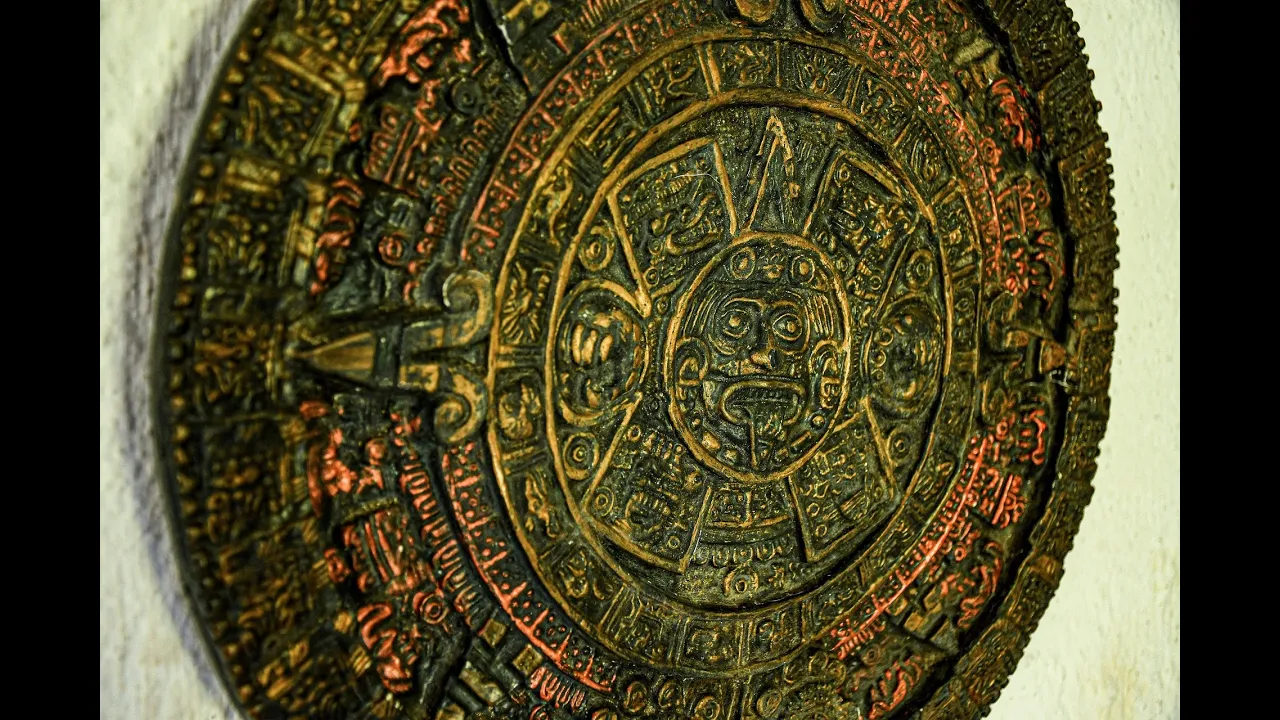
This legendary documentary chronicles the epic intellectual breakthrough of deciphering the Maya script. It details the contributions of Yuri Knorosov, Tatiana Proskouriakoff, Linda Schele, and David Stuart. The video tracks the realization that the writing system is logosyllabic (comprising both word-signs and phonetic syllables) and that the public stelae record the highly detailed, historic actions of real rulers rather than merely calendar calculations or abstract astrological mysticism.
Knowledge Checkpoint
- Describe the difference between a logograph and a phonetic syllabogram in the Maya writing system.
- Explain Tatiana Proskouriakoff's breakthrough regarding the pattern of dates on stelae and how it proved that monuments recorded real human histories (births, accessions, wars).
- Define how David Stuart's discovery of phonetic substitution "simplified" the decipherment of complex glyph variations.

This immersive exploration of Yaxchilan provides a close-up look at how hieroglyphs are physically carved into limestone structures, stairs, and lintels. Watching the presenter identify glyph panels in situ highlights the spatial placement of texts. This showcases how ancient Maya viewers experienced these texts not as flat pages, but as dynamic, architectural elements meant to be read in three dimensions.
Knowledge Checkpoint
- Contrast the physical state of carved inscriptions on limestone lintels versus exposed structural stairways.
- Explain how the physical position of texts within doorways at Yaxchilan affected the movement and perception of people entering sacred structures.
Module 3: Sacred Geography and Cosmological Architecture
Classic Maya cities were planned as physical replicas of the cosmos. Pyramids represented sacred mountains (witz), temples served as symbolic caves, plazas mimicked the primeval sea of creation, and E-groups registered key solar alignments. This module investigates how urban layouts, public ballcourts, and architectural programs functioned as active stages for theatrical rituals that merged the human realm with the supernatural underworld (Xibalba) and the heavens.
Independent Research Acknowledgment: The video pool provides excellent coverage of the Mesoamerican ballgame and cave archaeology, but lacks specialized technical lectures on E-groups and precise architectural geometry. To supplement this module, independent academic searches for terms such as "Classic Maya architectural cosmology E-groups" and "Maya temple as sacred mountain witz" are highly recommended.
Recommended Videos
This extensive educational discussion details two critical components of Maya sacred geography: the physical cave systems of Central America and the design of the Mesoamerican ballcourt. The video connects the physical geology of limestone caves directly to the mythical narrative of Xibalba (the nine-layered underworld), and analyzes how the ballcourt served as a transitional portal where the Hero Twins of the Popol Vuh defeated the Lords of Death.
Knowledge Checkpoint
- Describe the nine-tiered structure of Xibalba and explain how physical caves functioned as actual geographic entries to this supernatural space.
- Analyze the symbolic function of the ballgame, detailing how the game reenacted cosmological cycles of life, death, and astronomical rebirth.

This short video reinforces how the Maya conceived of the underworld. Instead of an abstract celestial abyss, Xibalba was understood as a tangible, living realm physically situated directly beneath the earth's crust, accessible through local watery sinkholes (cenotes) and deep cave mouths.
Knowledge Checkpoint
- Define the geographical relationship between caves, cenotes, and the underworld in the Maya worldview.
- Explain how this proximity influenced where temples and shrines were built in Classic Maya civic centers.
Module 4: Iconography of Divine Kingship (K'uhul Ajaw)
Classic Maya sovereigns ruled as K'uhul Ajaw (divine lords), serving as the axis mundi—the cosmic trunk linking the underworld, earth, and sky. This module analyzes the visual codes used to construct and project this supernatural status, specifically focusing on jade costumes, celestial headdresses, and the ruler’s ritual identification with the eternally young, self-sacrificing Maize God.
Recommended Videos

In this video, archaeologist Dr. William Saturno discusses the deep-seated mythology of the Maize God. He outlines the deity's cycle of birth from flowing waters, dancing on the back of the earth-turtle, and carrying the agricultural harvest. Rulers cast themselves as this precise deity to prove their control over fertility, rain, and the continuation of the civic universe.
Knowledge Checkpoint
- Detail the mythological cycle of the Maize God's death, burial, and subsequent rebirth from a turtle shell representing the Earth.
- Explain why the Maize God embodies the ultimate metaphor for both the agricultural cycle (planting/harvest) and human civilization.

This audio documentary from the British Museum analyzes a beautifully carved limestone bust of the Maize God. The analysis highlights his serene face, meditative expression, and stylized hair resembling silk from a cob of corn. It explores how rulers utilized these specific aesthetic attributes in their personal portraits to associate themselves with peace, abundance, and cosmic order.
Knowledge Checkpoint
- Identify the visual hallmarks of the Maize God's portraiture (such as elongated forehead, serene meditative expression, and parted lips).
- Discuss how stone chiseling and hammer techniques were utilized to produce highly idealized royal sculptures.
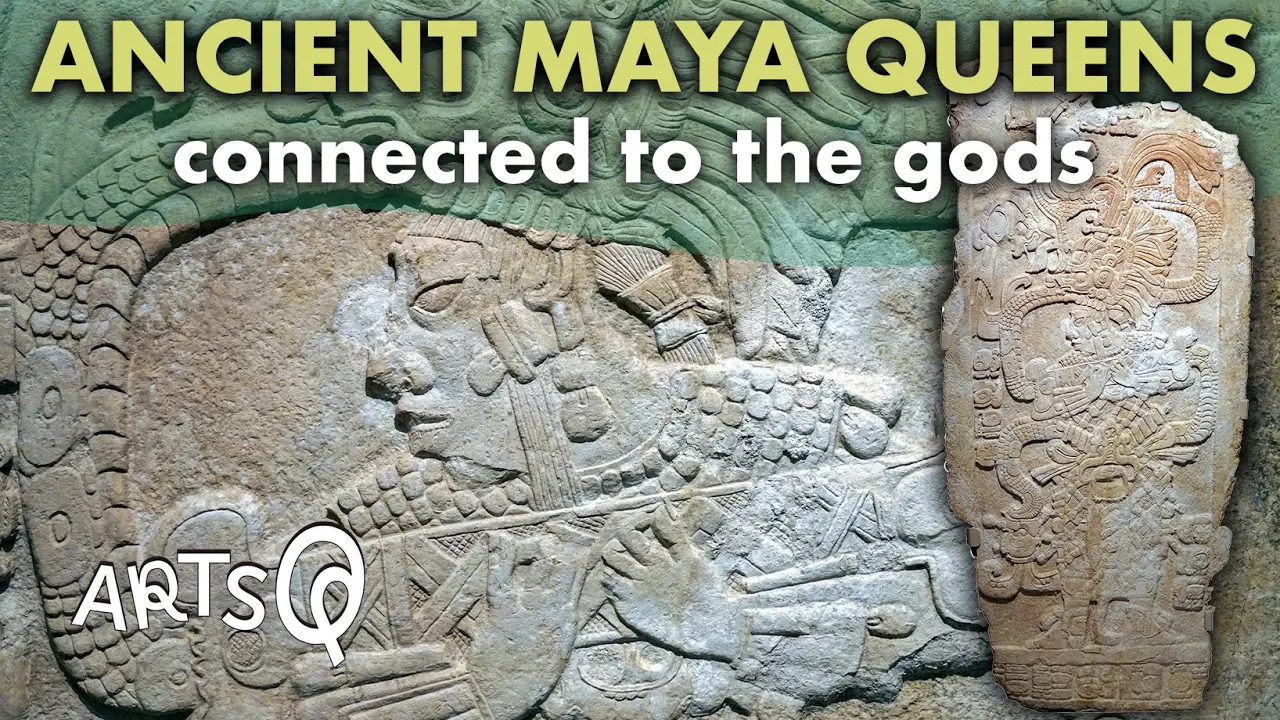
Divine status was not exclusive to male rulers. This video conducts a deep iconographic reading of the 760 CE stela of Queen Ix Mutal Ahaw. It details her massive jade bead costume, heavy pectoral ornaments, and elaborate feathered headdress. The video highlights how her dress served as a highly codified visual medium that transformed her into a literal embodiment of the Maize God, bridging the human court with divine forces.
Knowledge Checkpoint
- Identify key components of Ix Mutal Ahaw's royal regalia (jade skirts, pectorals, earspools) and their symbolic meanings.
- Describe how female elites held key positions in regional ritual performance and dynastic lineages.

This brief focus piece shows how the physical visual vocabulary of divine kingship was integrated into monumental architecture from as early as 300 CE. It shows how giant masks of rulers depicting them as the Maize God were integrated directly onto the stuccoed facades of temple pyramids.
Knowledge Checkpoint
- Explain how pyramid facades integrated monumental masks to unite the physical architecture of the temple with the face of the divine king.
Module 5: Ritual Performance, Bloodletting, and the Supernatural
This final module focuses on the direct practice of ritual devotion and supernatural communication. You will explore how Classic Maya elites performed autosacrifice (bloodletting) and entered altered states of consciousness to conjure ancestral spirits and deities. Through close visual analysis of the famed limestone lintels of Yaxchilan and Classic period painted pottery, you will learn to read depictions of vision serpents, blood-offering vessels, and the supernatural denizens of Xibalba.
Recommended Videos
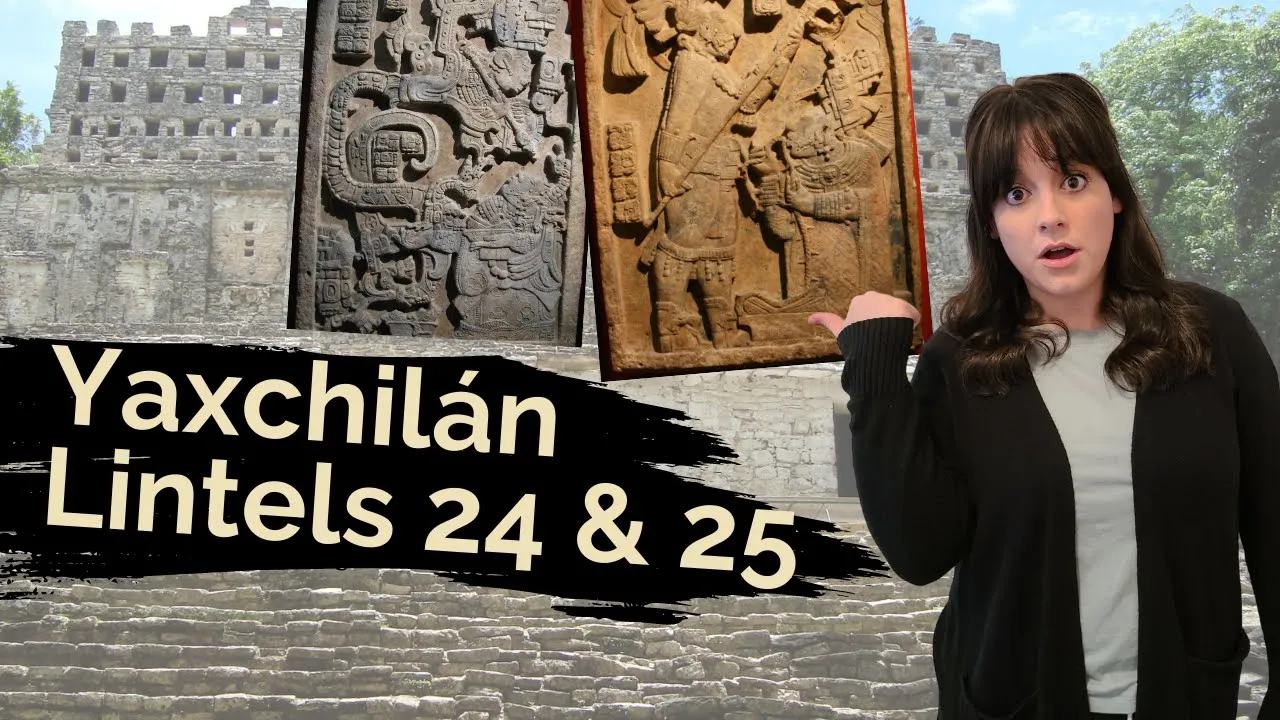
This art-historical presentation provides an exceptional, detail-oriented iconographic analysis of Yaxchilan Lintels 24 and 25 from Structure 23. It explains the visual mechanics of the bloodletting ritual: Lady Xook drawing a thorned rope through her pierced tongue, the collection of blood on bark paper, the burning of the offering, and the subsequent materialization of the Vision Serpent. This serpent's open maw reveals the deified ancestor of the dynasty, cementing the royal line's divine right to rule.
Knowledge Checkpoint
- Identify the visual elements that convey the physical reality of bloodletting in Lintels 24 and 25 (such as blood droplets on faces, thorned ropes, and woven baskets).
- Describe the iconographic anatomy of a Vision Serpent and identify who or what emerges from its mouth.
- Explain the active role of Queen Lady Xook in legitimizing her husband Shield Jaguar's military and political reign.
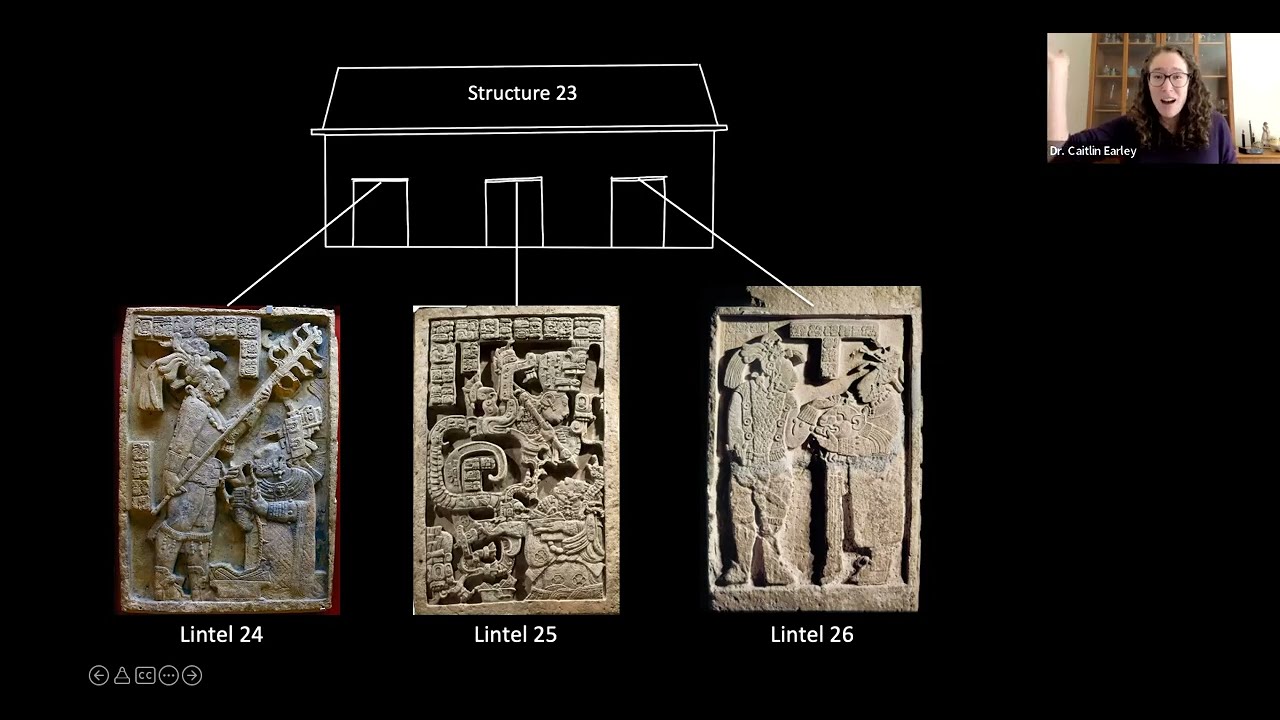
In this excerpt, art historian Dr. Caitlin Earley unpacks the physical mechanics and societal importance of royal autosacrifice. She outlines how bloodletting was not merely a display of pain tolerance, but a calculated transaction. By shedding sacred blood onto paper and burning it, elites converted their physical vitality into a sanctified smoke that sustained the deities.
Knowledge Checkpoint
- Describe how bloodletting was performed, detailing the specific materials (obsidian, stingray spines, thorned ropes) used.
- Explain how paper, baskets, and fire functioned together as a ritual technology to transport offerings from the material world to the divine realm.
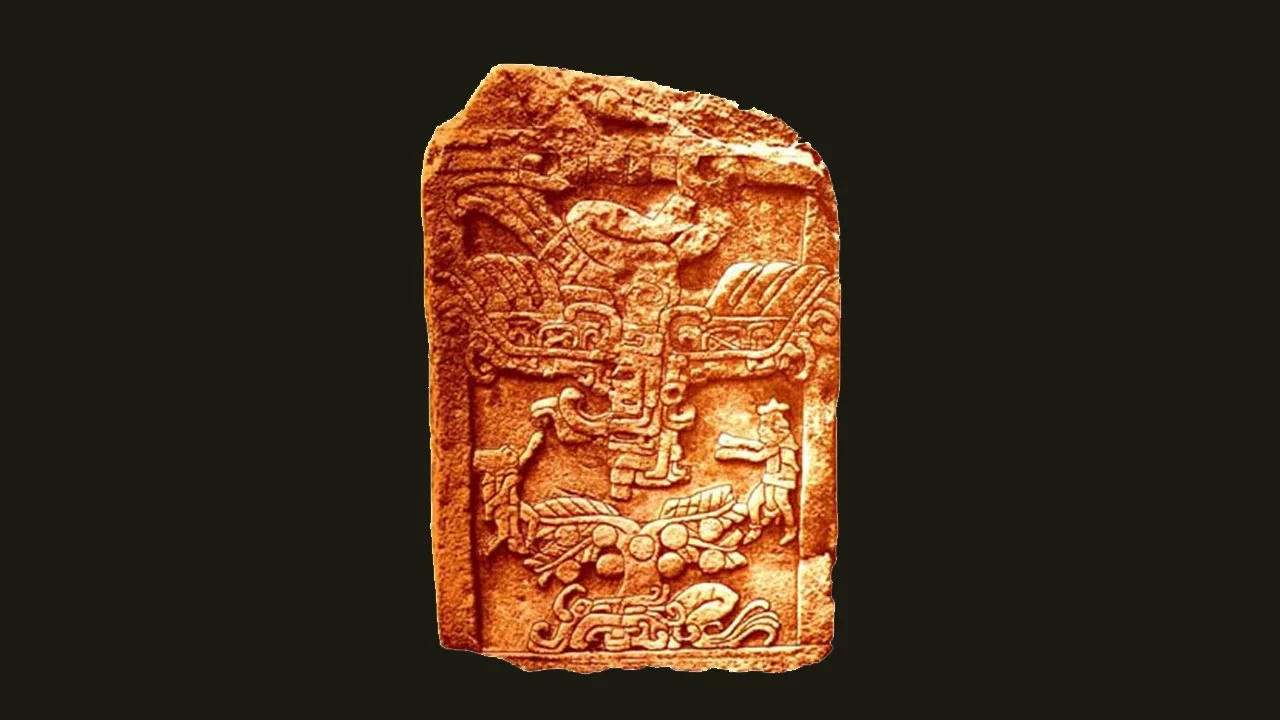
This video examines Classic period painted ceramic vessels (600–700 CE). It demonstrates how portable pottery was used to carry complex, painted mythological narratives. This includes scenes of the Maize God surrounded by underwater women, which were exchanged among elites to reinforce a shared theological and artistic tradition.
Knowledge Checkpoint
- Understand the role of Classic period painted ceramics in circulating complex narrative scenes beyond monumental stone carving.
- Explain how water-world imagery and female attendants are visually represented on cylindrical vessels.
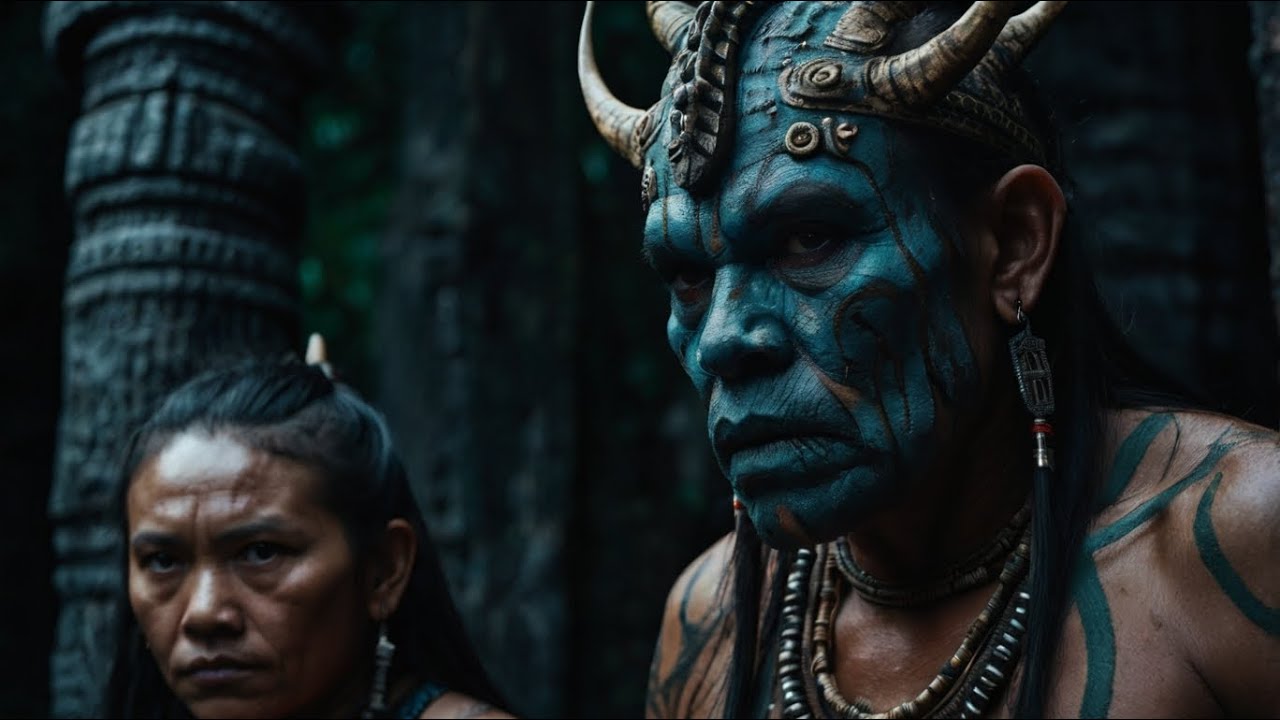
This final video offers a deep dive into the complex visual iconography of the supernatural denizens of Xibalba. It explains the trials that souls and deities had to navigate—from freezing rivers to chambers of blades and bats. This provides a crucial iconographic key for identifying underworld skeletal deities, jaguars, and personified diseases on painted funerary ceramics.
Knowledge Checkpoint
- List at least three of the distinct "houses" or trials of Xibalba and their associated supernatural hazards.
- Identify the visual markers of underworld death gods (such as skeletal features, jaguar skins, and indicators of decay) frequently depicted in Classic Maya art.
Course Map
Key People Index
- David Stuart (Epigrapher): One of the key deciphers of the Maya writing system. His discovery of "phonetic substitution" proved that many visually distinct glyphs represented the exact same spoken syllable, unlocking many difficult glyph panels.
- Linda Schele (Iconographer & Epigrapher): A central figure in the decipherment of the Maya code and a pioneer in structural iconography. Her books, public workshops, and direct drawings of monuments transformed our understanding of Classic Maya cosmos, ritual, and history.
- Dr. William Saturno (Archaeologist): Expert on early Maya art and discoverer of the murals of San Bartolo, Guatemala. His research focuses heavily on the Maize God creation narrative and early kingship.
- Dr. Caitlin Earley (Art Historian): Scholar of Mesoamerican art who conducts critical research into the production, context, and ritual mechanics of Classic Maya stone sculpture, including royal portrait monuments and lintels.
Final Self-Assessment
Complete this comprehensive self-assessment after finishing all five modules to test your mastery of Classic Maya art history, iconography, and epigraphy.
- Can you outline the chronological boundaries of the Classic Maya period (c. 250–900 CE) and place major sites like Tikal, Bonampak, and Yaxchilan geographically?
- Can you explain the difference between a logograph (word-sign) and a syllabogram (syllabic phonetic sign) within the Maya writing system?
- How did Tatiana Proskouriakoff's discovery of birth and accession patterns on stelae dismantle the mid-20th-century view of the Maya as timeless, peaceful astronomers?
- What cosmological spaces do E-groups and ballcourts represent within a Classic Maya city's sacred geography?
- Describe the mythological cycle of the Maize God's death, interment inside the cosmic earth-turtle, and subsequent resurrection.
- How does the visual representation of the K'uhul Ajaw (divine king or queen) incorporate the symbolic anatomy of the Maize God?
- Identify three diagnostic iconographic elements of Queen Ix Mutal Ahaw’s stela costume.
- Explain the sequential steps of a royal bloodletting ritual as illustrated on Yaxchilan Lintel 24.
- What is the iconographic function of the Vision Serpent, and how does its body serve as a physical bridge to ancestors?
- Identify the visual codes used to represent the underworld (Xibalba) and its rulers on painted ceramic vessels.
- How did the murals of Bonampak (Structure 1) change the historical interpretation of Maya warfare and royal capture?