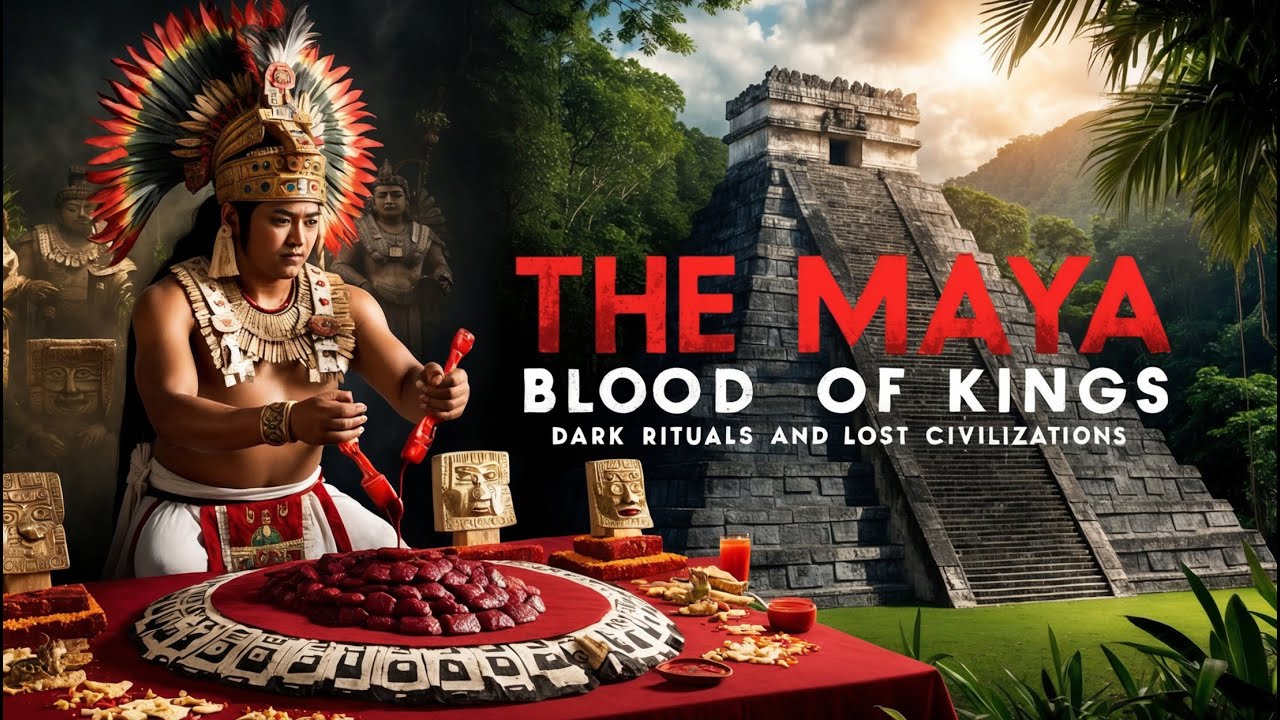


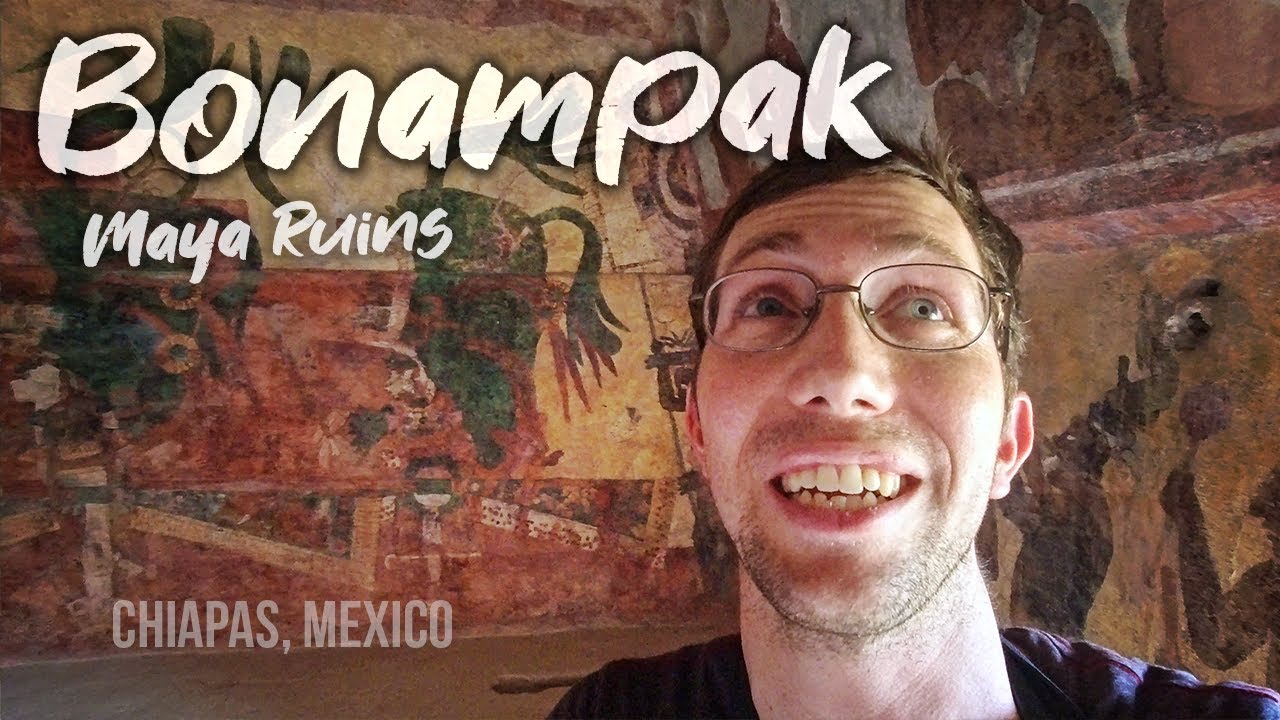













The discovery of the Bonampak murals in 1946 revolutionized our understanding of ancient Maya civilization by revealing graphic scenes of warfare, torture, and human sacrifice that contradicted the previously held romanticized view of the Maya as a peaceful society of intellectuals and priests; these murals, painted using the true fresco technique and preserved for over a millennium by calcification layers, depict the elaborate courtly life of 8th-century Bonampak under rulers like Chan Muan II, showing military campaigns, captive treatment, and ritual bloodletting, thereby forcing scholars to reconsider their understanding of Classic Maya society.
How Bonampak Murals Rewrote Classic Maya History
Added:The timeline and geographic distribution of the Classic Maya civilization (circa 250–900 CE).
The early 20th-century archaeological historiography that characterized the Maya as peaceful, star-gazing elites (the 'peaceful Maya' myth).
The fundamental socio-political structure of Maya city-states and the divine role of the 'K'uhul Ajaw' (holy lords).
Basic understanding of Mesoamerican religious practices, including bloodletting and ritual sacrifice.
The epigraphic revolution and the decipherment of Maya hieroglyphs, which confirmed historical warfare narratives.
The theories surrounding the Classic Maya Collapse, examining how endemic warfare and environmental factors interacted.
A comparative study of Maya warfare tactics, weapons, and captive-taking versus those of the later Aztec Empire.
Modern preservation and digital reconstruction technologies used to study and protect fragile archaeological murals.
656 views140likes16:02Original Release: 2026-06-07
Bonam Pac is located deep within the Lakandon jungle of Chiapas, Mexico, approximately 30 km south of the larger Maya center of Yashchilan. These fascinating ruins give us one of the most significant windows into the elite world of classic Maya civilization because they preserve an unparalleled visual record of 8th century courtly life in murals. Before Bonak's murals were discovered, many archaeologists and historians had portrayed the ancient Maya as a relatively peaceful culture of intellectuals and priests primarily concerned with astronomy. But the graphic scenes of warfare, torture, and human sacrifice depicted in the Bonamp Pak murals dramatically contradicted this romanticized vision, forcing scholars to reconsider how they thought of classic Maya society. I'm going to tell you all about this place and the murals. Prepared to be astounded.
The name Bonampak is derived from Yucatech Maya and means painted walls, but it's modern. The original Maya name was Us Witz, meaning vulture hill or a relatively small number of visitors who make the journey to Bonak combined with the site's remote location means that we had the rare experience of exploring ancient Maya ruins without a crowd. The sight setting within the tropical rainforest creates a dramatically different atmosphere from more heavily visited Maya centers with the sounds of howler monkeys and tropical birds providing a constant reminder of the jungle environment that reclaimed these structures for more than a thousand years. The site covers a large area of roughly 4,000 hectares, nearly 10,000 acres, but only the monumental core is currently open to the public. The archaeological site is oriented approximately 25° east of True North, a common astronomical alignment found at many classic Maya centers. A long-haired Maya boy training to be a guide followed us to tell us what he knew about the site. And his knowledge was impressively extensive.
>> Yeah.
>> The Grand Plaza forms the heart of the site and was the primary public space for ceremonial gatherings. This large open area maintained today as a cleared grassy plaza would have been surfaced with plastered stone paving during the classic period. As we enter the plaza, we see structure 15 on the left.
Unusually, it faces away from the plaza rather than toward it. Some archaeologists suggest it was built deliberately to face toward the city of Yashchilan, symbolically acknowledging Bonak's subordinate relationship to it.
But straight ahead is the monumental Acropolis complex built into the face of a steep natural hillside. This impressive architectural composition consists of multiple terrace levels ascending approximately 150 ft 46 m above the plaza floor. Note the five buildings up at the top, structures 4 through 8. Archaeological excavations have discovered tombs within several of these, indicating that they served as mortuary temples housing the burials of important individuals. On the far right is structure 4, which is the only one with a double doorway. Two columnar altars were found in it, as well as a pyite mirror believed to provide a window into the supernatural realm. The middle building is structure six and it had a lintil over the door depicting the earliest ruler of Bonampak that we know of. Yahawo Chan Muan I. Maybe this was his mortuary temple. According to an inscription found here, Yaho Chan Muan I acceeded to the throne on a date corresponding to April 25th, 600 CE in our calendar. And the accession ceremony took place under the direct supervision of its Naib Balam II, ruler of Yashchillan.
The involvement of the Yashchillan king in installing Bonampak's ruler clearly demonstrates the subordinate status of Bonampak. The ruler responsible for the greatest of Bonampak's architectural and artistic achievement was Chan Muan II who acceded to the throne on June 19th 775 with the oversight and approval of its amni balam IV of Yashchalan whom I introduced you to in the last episode.
Chan Muan II married the king of Yashchan's sister. Here we have one of the tallest steel in the Maya world.
Nearly 20 feet tall here at Bonak. Isn't it amazing? And on it, you see this figure with all this royal garb on. This is the regalia of the king. This is Chan Muan II. And uh this is establishing his legitimacy. Um now up at the top, it's a little bit worn up there, but that's where the date was and it's sometime in the 780s. All right. Uh and then you can see him. He's holding a shield on one side and a spear on the other. All right. Below him is a band of hieroglyphs and on those hieroglyphs it tells you his parentage. All right.
Below that is the the earth monster, okay, of the Maya. And then uh coming out the top and the sides is the maze god. So there's religious symbolism at the bottom. But one of the most interesting parts of the stila is uh the carvers signed their names. Yeah, there's three names on here. I don't know if you could tell. There are three vertical columns. One is at the base of his spear and then there's two other ones on the sides. Now, the one at the base of his spear is the most interesting because it's the name of a carver, an artist from Yashchelan.
Yeah. And it is believed that Yashchelan, the ruler of Yashchelan, is the one who installed this particular king of Bonamp Pak. He's sort of a subordinate, if you will. uh and it tells us a little bit about the relationship between Bonampak and Yashchillan. At this time, visitors ascend the Acropolis on a monumental central stairway. You will encounter Stilas 2 and three positioned on opposite sides of the ascending stairway. Stila 2 depicts Chon Muan II flanked by his mother and his wife. The scene commemorates preparations for a bloodletting ritual on June 13th, 776.
Still a three portrays Chan Moan II performing a scattering ritual while standing over a kneeling captive. The date recorded on it corresponds to November 4th, 785. On the first terrace are structures 1, 2, and three, but it's structure 1, known as the temple of the murals, which gets all the attention.
The exterior surfaces of the building were once painted in bright hues of Maya blue, blue green, red, and yellow. Above each room, a small niche housed a seated figure likely representing a ruling lord. And between the niches were larger stucco scenes depicting captive taking, though only one of these has survived.
The lintils spanning the doorways provide historical information about wars during Chanuan II's reign. Lentil one depicts Chanuan II grasping a captive by the hair following a military engagement on January 10th, 787. The enemies depicted may have been usurpers allied with the nearby polity of Sakzi.
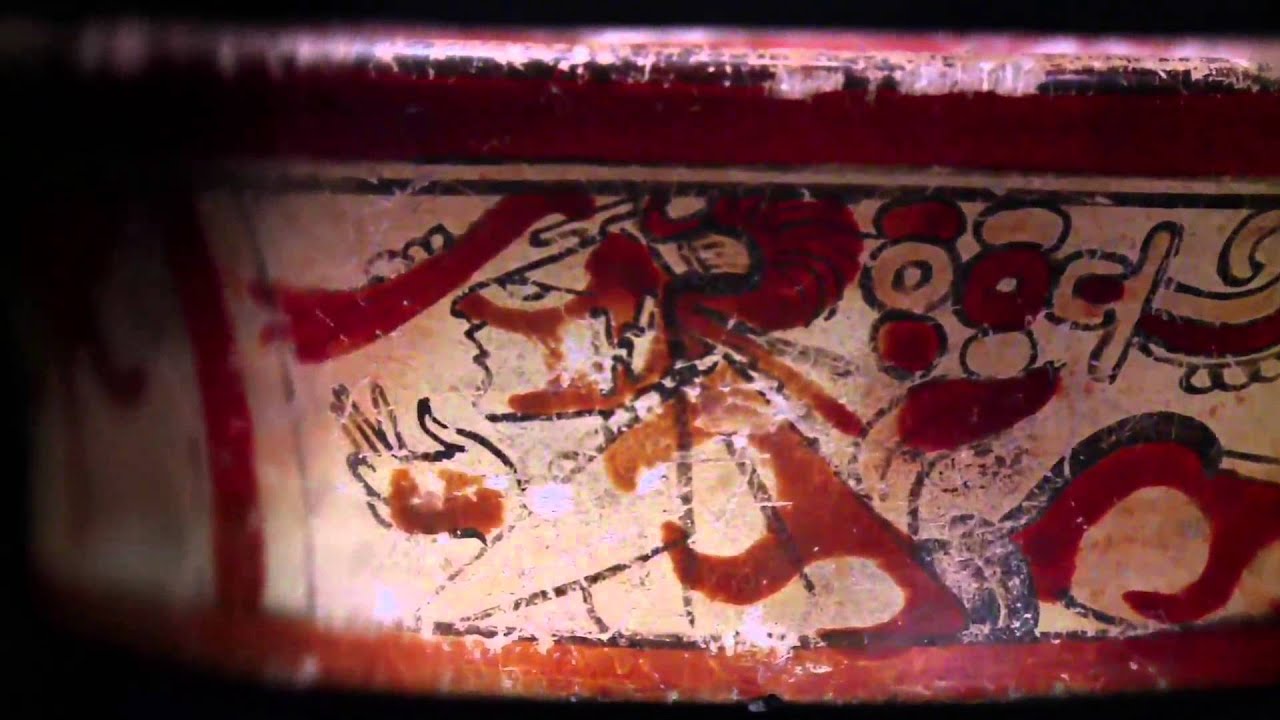
Lentil 2 dated four days earlier than Lentl one shows the Yashchelan ruler at Sami Balam IV in a similar scene indicating that the same military conflict involved forces from both cities. Lintil 3 is more difficult to interpret or date precisely, but it's the inside of the building that has the most spectacular remains, murals, which present a carefully orchestrated narrative that unfolds sequentially across the three rooms. The paintings cover virtually every interior surface of the three chambers and contain approximately 125 hieroglyphic captions painted in orange and black, identifying various individuals and providing dates for the depicted events. The Bon Pac murals were executed using the true fresco technique in which pigments are applied to wet lime plaster so that the paint becomes chemically bonded to the wall surface as the plaster dries. That means the painting had to be completed while the plaster remained wet. The absence of seams in the plaster coating the walls indicates that each room was prepared and painted in a single continuous session. This was an enormous logistical undertaking that could only have been accomplished by a large team of highly skilled specialists. The original paintings were remarkably well preserved for over a millennium due to an accidental process by which water seeping through the poorly constructed limestone vault built up protective layers of calcification that encased the painted plaster. But once the chambers were opened and exposed to increased air circulation, deterioration accelerated dramatically. So sophisticated techniques were developed over the decades following the discovery. A big breakthrough came with the application of infrared imaging in 1996, which revealed details invisible to the naked eye and exposed hieroglyphic text that had been unreadable before. This allowed highquality reconstructions to be made, one of which is in the National Museum of Anthropology in Mexico City, which we later got to see. Room one depicts a ceremony dated to December 12th, 790.
The main upper register shows Chan Muan II presenting his young son to the assembled nobles of his court as his heir. The courters are depicted wearing distinctive regalia that may have indicated their specific roles and ranks within the political hierarchy. There's some tension apparent in the body language of Chan Muan II's mother and his wife from Yashalan, which suggests competition for influence at court between the king's natal family and his relatives by marriage. The middle band contains hieroglyphic inscriptions on one section and images of captives or menial workers on another. The lower register depicts a procession of lesser nobles, including musicians and people wearing elaborate god masks. The dance performance is connected to Venus observations. And as the Maya god of Venus was a male deity of war, the ritual may have been timed to ensure that the new heir would become a great warrior like his father. The vated ceiling depicts the Maya conception of the celestial realm, including supernatural beings who inhabit the sky world. Room two presents a dramatically different tone with vivid depictions of warfare and the violent treatment of captives. The murals show over a 100 individual human figures engaged in various aspects of battle and its aftermath. The most prominent wall shows warriors dressed in elaborate costumes, including jaguar pelts, engaged in hand-to-hand combat with enemy fighters.
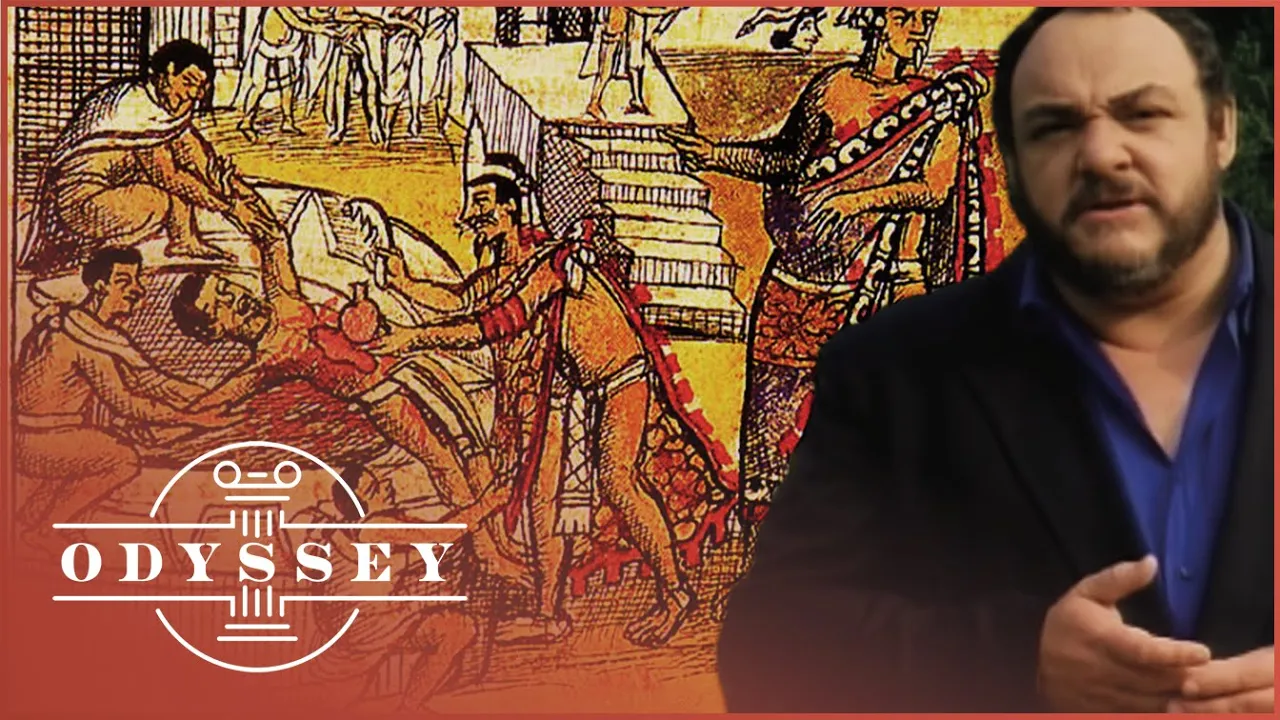
You can see Chon Muan II as the supreme commander, accompanied by his warlords and personal attendants, supervising the battle. The primary weapons depicted are long spears, which are shown perforating the bodies of enemies. The warriors are organized into units identifiable by shared costume elements or shield designs. Other sections show the aftermath of battle with bound captives presented to the rulers on a monumental stairway where they're subjected to torture and humiliation. The prisoners are stripped of their clothing which symbolically represented their loss of identity or status. In one particularly graphic scene, captives sit weeping in pain with blood streaming from their fingertips after having their fingernails torn out. This torture served multiple purposes. Inflicting maximum suffering as an offering to the gods, humiliating the captives and their home polities, demonstrating the power and cruelty of the victors, and entertaining the assembled court. The murals also show foreign ambassadors at Bonampak who would carry reports of Bonampak's magnificence back to their home kingdoms. This would serve as a warning of the fate awaiting enemies of Bonampac and its ally Yashchelan. A significant archaeological discovery was made beneath the floor of this room in 2010 when a tomb was found containing the remains of an adult male between 35 and 42 years of age. The individual was interred with rich grave goods. Some of the objects found have led some to theorize that the tomb's occupant may have been one of the sacrifice victims depicted in the murals. Room three depicts ceremonial celebrations held after the military victory, including ritual bloodletting by nobles and elaborate dance performances. The most striking figures in the composition are three elaborately dressed individuals in the upper register who wear massive headdresses constructed of brilliant green kettzle feathers and dancers wings. These are identified as three young brothers, including the heir who was presented to the court in room one.
Each brother holds a bloody femur bone that has been modified to serve as a ritual axe. Directly below the central figure, another individual kneels holding an ax in one hand while grasping an object in his other hand. That infrared imaging revealed to be the stillbeating heart of a sacrifice victim shown below whose body is being dragged down pyramid steps by attendants. This graphic scene shows how captives taken in battle were ultimately offered to the gods through ritual killing. The sacrifice of high status captives are particularly valuable as their noble blood provided greater sustenance to the gods than that of commoners. But there's also self-inflicted bloodletting which was a central element of Maya religious ritual. The heir appears with his mother preparing to participate in his first bloody sacrifice. This served to socialize the prince into his future role as warrior king and to legitimate his position. Other sections depict noble women participating in bloodletting rituals in which they pierce their tongues with obsidian studded ropes to draw blood. Chan moan II's principal wife appears in multiple scenes. Her presence alongside her husband in these ceremonies underlines the political importance of elite Maya women. The vaulted ceiling, as in room one, contains elaborate cosmological imagery representing the Maya conception of the celestial realm.
is what the first room represents is preparation for war >> and a battle.
>> Okay.
>> Okay.
>> Wait, how old is our guide here?
>> This one.
>> Eight.
>> Yeah, he's eight. But he is descendant of the first man who uh Chambor is last name Chambor. And Chambbor is the is the name of the man who showed the painting for the first time to anybody outside this world in 1946.
and the skin of deer.
>> Despite the prominence of his heir in the murals, Chanuan II is currently the last known ruler of Bon Pac. After this time, the historical record falls silent and Bon Pak like Yashchillan and many other cities in the Usuma Valley appears to have been abandoned during the early 9th century as part of the broader terminal classic collapse, which we will consider in detail in our next episode when we visit the ruins of the ancient cities of Chinkik and Tenuente. You've probably never heard of them, but you really should because they are fascinating. See you then.
Up Next
82:24
Maya Archaeology: Xibalba, Underworld & Mesoamerican Ballgame
@arcsbehavingbadly
298 views•2023-01-23

33:02
The Great Schism of 1054: Causes and Consequences
@SacredCathedrals
113.5K views•2026-02-19
22:35
Ancient History Myths Debunked in 2025 | 10 Findings
@WorldofAntiquity
702.7K views•2025-11-27
17:05
Understanding the Cold War: Superpower Conflicts and the Road to Détente
@OverSimplified
46.1M views•2019-01-24
Related Study Plans & Knowledge Roadmaps
Structured learning paths in History
history
Byzantine Iconoclasm: Theology, Art & Politics
01Foundations of Byzantium and Early Christian Images
02The First Iconoclasm: Leo III and the Crisis of Images
03Empress Irene, Nicaea II, and the Second Iconoclasm
+ 2 more learning modules
9h5 modules
Explore Roadmap
history
Iranian Revolution (Causes, Events & Legacy)
01The Pahlavi Dynasty and the Roots of Discontent
02The Spark of Rebellion and the Rise of Khomeini
031979: The Fall of the Shah and the Climax of the Revolution
+ 2 more learning modules
8h5 modules
Explore Roadmap
history
Mali Empire: Mansa Musa, Trade & Timbuktu
01Foundations of the Mali Empire
02The Trans-Saharan Gold and Salt Trade
03The Reign and Pilgrimage of Mansa Musa
+ 1 more learning modules
6h4 modules
Explore Roadmap
history
1947 Partition: Politics, Borders & Legacies
01Foundations of British India and the Divide
02The Political Negotiations and the Mountbatten Plan
03Drawing the Boundary: The Radcliffe Line
+ 2 more learning modules
8h5 modules
Explore Roadmap