

![Starożytny Egipt - Wzlot i Upadek Imperium Faraonów! Historia i Tajemnice [Podcast Historyczny]](https://i.ytimg.com/vi/jUW0wgANGWY/maxresdefault.jpg)















Archaeological understanding evolves as new scientific methods and evidence emerge; ten prominent ancient history myths—including the Maya sudden collapse, the Solutrean hypothesis, and the Roman massacre at Maiden Castle—were debunked in 2025 through rigorous scientific research such as DNA analysis, radiocarbon dating, and experimental archaeology, demonstrating that what we accept as historical fact today may be revised tomorrow as evidence accumulates.
Ancient History Myths Debunked in 2025 | 10 Findings
Added:Familiarity with the mainstream historical narratives of Ancient Egypt (specifically the Ptolemaic dynasty and Cleopatra), the Maya civilization, and early human migration to the Americas.
Basic understanding of archaeological and scientific dating methods, such as radiocarbon dating, stratigraphy, and how consensus is formed in academic history.
An introductory awareness of the 'Solutrean hypothesis' and the conventional 'Clovis First' model of the peopling of the Americas.
The concept of historical revisionism—understanding how history is continuously updated with new empirical evidence and technological advancements.
Advanced study of paleogenomics and ancient DNA (aDNA) analysis, exploring how genetic mapping corrects or confirms historical lineages and migrations.
Deep dive into modern Mesoamerican archaeology, focusing on how LIDAR technology has revealed vast, continuous urban networks, debunking sudden 'collapse' theories.
The historiography and political implications of archaeological myths, analyzing how theories like the Solutrean hypothesis can be co-opted for socio-political agendas.
Critical analysis of the ethical considerations surrounding the excavation, study, and display of ancient human remains (such as Ptolemaic or Egyptian skeletons).
702.7K views25Klikes22:35Original Release: 2025-11-27
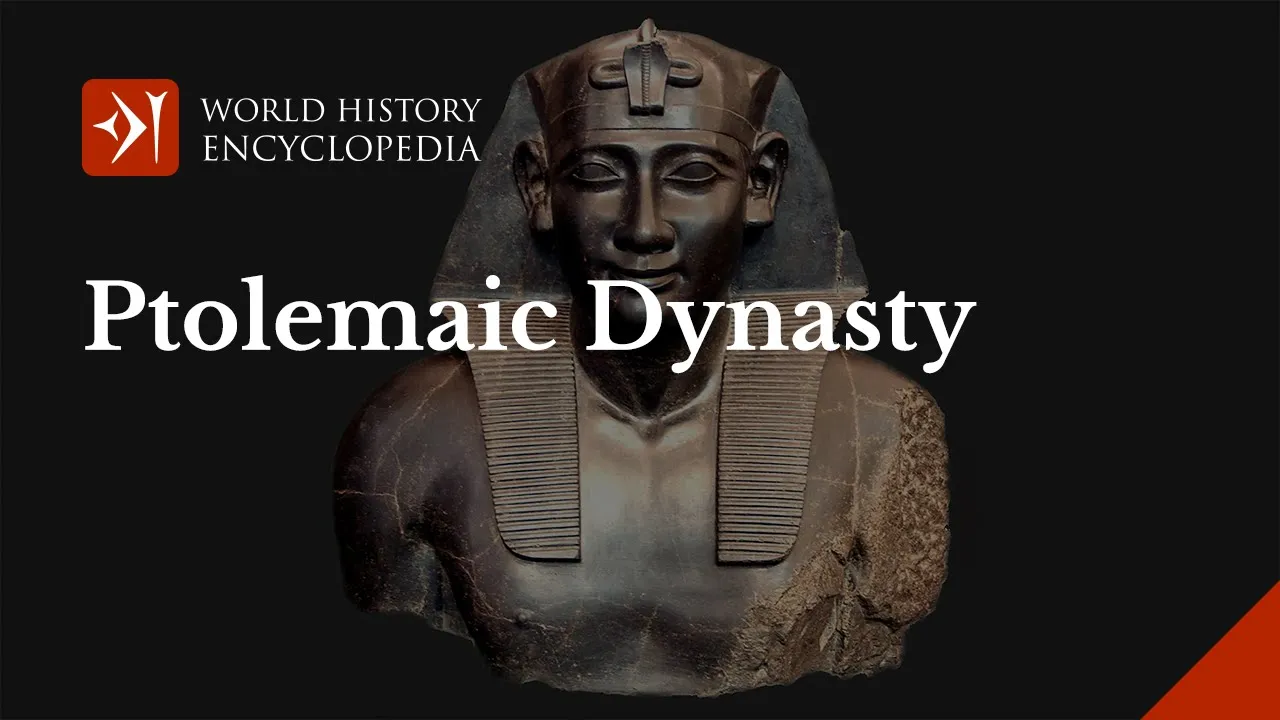
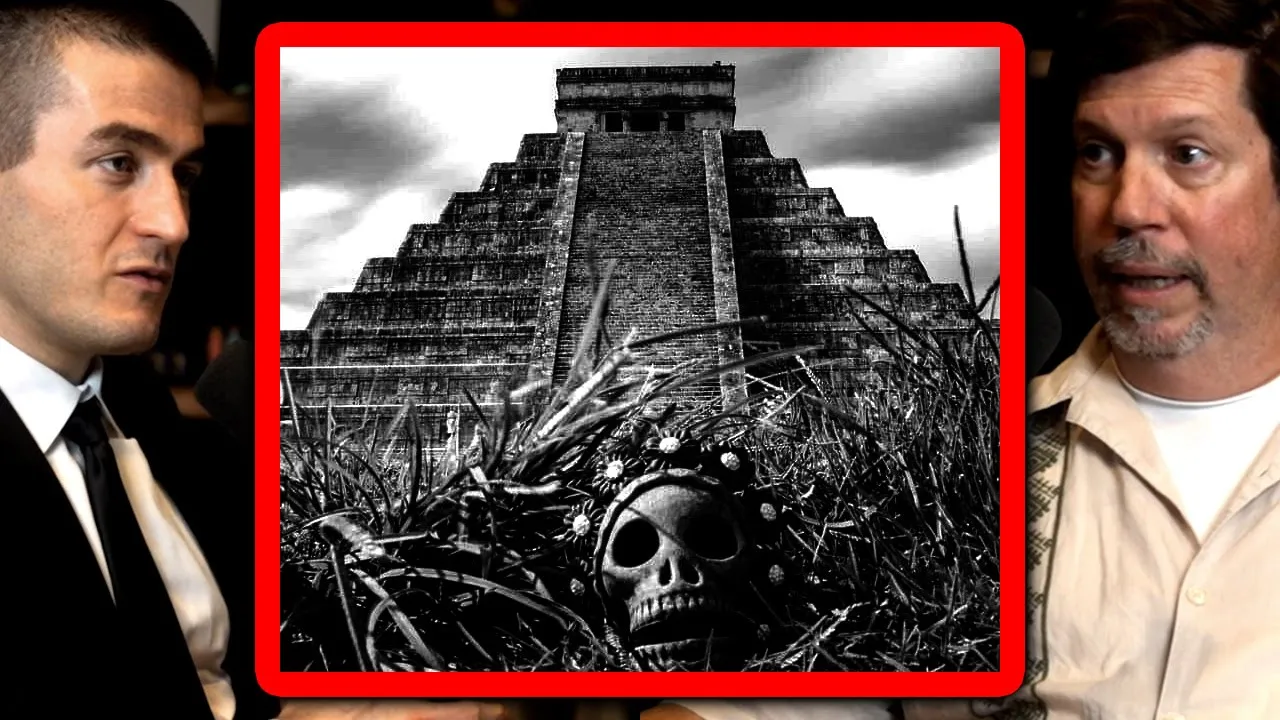
Every year, archaeology gives us new discoveries… but it also takes away old narratives we thought were true but weren’t. In 2025, some big myths in ancient history finally collapsed under the weight of real evidence. And today, we’re going over ten beliefs that were busted this year — and what the new research actually shows. Let’s do this. “Cleopatra’s Sister’s Skull” Back in 2009, the BBC aired a documentary that made a big splash. It was called Cleopatra: Portrait of a Killer, and it claimed that a skeleton found in the Octagon Tomb at Ephesus belonged to Cleopatra’s younger sister, Arsinoe IV. In the program, the team discussed the skull’s supposed features and suggested they might point to African ancestry. That idea then raced through media headlines, blog posts, and countless online discussions for more than a decade. And before long, people were using this skull as evidence in arguments about Cleopatra’s own ancestry. But this year, a new scientific study finally re-examined the remains properly—their morphology, their context, their radiocarbon dates, and even their DNA. The results appeared in Scientific Reports in 2025, and they completely upended the older claims. The skull doesn’t belong to Arsinoe at all. In fact, it doesn’t belong to a woman. The new team found that the remains come from a single individual, a boy around eleven to fourteen years old. His ancestry signature points toward the Italian peninsula or Sardinia—not North Africa, and certainly not the mixed heritage suggested in the earlier documentary. In other words, the entire chain of assumptions that connected this skull to Cleopatra’s family falls apart once you look at the new evidence. The Austrian Academy of Sciences issued a press release summarizing the findings with a simple headline: “Cleopatra’s sister remains missing.” Whatever Cleopatra’s ancestry may have been, this particular skull tells us nothing about it. The 2025 study reminds us why revisiting old claims with modern methods matters. “The Maya Collapse” One of the most stubborn ideas about the ancient Maya is that their cities collapsed all at approximately the same time. There was a single dramatic event around the year 900 when everything fell apart. Major centers abandoned overnight, kingdoms wiped out, people disappearing into the jungle. It’s a powerful story, and it still shows up in documentaries and social media. Evidence has turned up over the years that calls this narrative into question. Heck, just recently I visited two Maya cities that survived until 1200. But new research keeps coming in, and in 2025, three major studies bearing on this issue were published. A paper in the journal Radiocarbon used Bayesian modeling of settlement dates in east-central Belize. And what it showed is that different communities experienced change on very different schedules. Some centers were reorganizing or relocating while others were still growing. There’s no single story that fits the entire Maya world. A 2025 article highlighted how major droughts coincided with periods of political instability, yet those droughts varied from region to region. Some areas were hit harder, some earlier, some later. Again, the pattern is staggered, not synchronized. A study published in Current Biology analyzed ancient DNA from Maya individuals across the Classic period (600 to 900). What the researchers found was that populations didn’t vanish suddenly. Instead, there were declines, some dramatic, some gradual, but also clear signs of continuity. Lineages persisted. People adapted. And when you put all of this together — the genetics, the settlement timelines, the climate data — you see exactly what archaeologists have been trying to say for years. The so-called “collapse” wasn’t one moment of disaster. It was a centuries-long process of political fragmentation, environmental challenge, migration, and cultural change. Some cities fell. Others persisted. Some traditions declined. Others developed into the Postclassic world.
“The Band of Holes” One of the most visually striking archaeological sites in Peru is a place called Monte Sierpe, better known today as the Band of Holes: a line of more than five thousand small pits carved into a ridge of the Pisco Valley. People didn’t know what their purpose was, and for years, the site has been a magnet for fringe interpretations. You’ve probably seen the claims: that the pits form an alien runway, or that they were created by some unknown, technologically advanced civilization whose traces have vanished everywhere else. The mystery has been irresistible to pseudo-archaeology channels. But in 2025, we finally got a detailed scientific explanation. A team of researchers, drawing on drone mapping, sediment analysis, and micro-botanical sampling, published a study showing that the Band of Holes was not the work of a lost civilization at all. Instead, it was part of an Indigenous accounting and storage system linked to local trade networks. These were orderly, functional features built by communities who lived and traded in the region long before the Inca. Drone imagery revealed consistent spacing and organization that match known storage and tallying practices in the central Andes. Sediment studies showed that many of the pits had signs of repeated use — not as graves or ritual chambers, but as places where materials were sorted or deposited temporarily. And microbotanical evidence pointed to the presence of plants associated with regional exchange. The new study doesn’t just offer a better explanation — it replaces the mystery entirely. There’s no need to invoke lost civilizations when the actual cultural context is right there in the soil. For communities living in the Pisco Valley centuries ago, the Band of Holes was a working landscape, a practical solution to the everyday needs of organizing and managing goods. Once again, when you look closely, the mystery dissolves — and what’s left is a clear, grounded picture of real people doing real work in the ancient world. “Poverty Point” Poverty Point, in northeast Louisiana, is one of the most impressive earthwork complexes in North America. You’ll find enormous concentric ridges there, and massive mounds, all built around 3,500 years ago. And because of that scale, archaeologists have long assumed that it must have been the center of a sedentary, hierarchical society — something like a chiefdom, complete with leadership, permanent residence, and top-down planning. But 2025 brought a major reinterpretation that flips that assumption on its head. A new study in Southeastern Archaeology presents evidence that Poverty Point wasn’t the capital of a ranked society at all. Instead, it may have been a place where mobile hunter-gatherers gathered temporarily — for exchange, for rituals, for social networking, and for collective work — then dispersed again. The Washington University research team points out that many of the features once used to argue for a hierarchical center don’t actually show long-term occupation. The earthworks may have been constructed during episodic gatherings, not under the supervision of a ruling elite. And there’s no strong evidence for the kind of status differentiation we see in classic chiefdoms. What the 2025 study shows is that big does not automatically mean “complex hierarchy.” The people who built Poverty Point didn’t need kings or chiefs to organize massive communal labor. They were highly connected hunter-gatherers who came together at intervals to affirm relationships, trade goods, and participate in shared traditions — and then returned to their own territories. So one of the most impressive ancient sites in North America wasn’t the seat of an early state. The myth that “only chiefdoms build big things” doesn’t hold up, and the 2025 research makes that clearer than ever. Hunter-gatherers were fully capable of building monumental landscapes without settling down or surrendering autonomy.
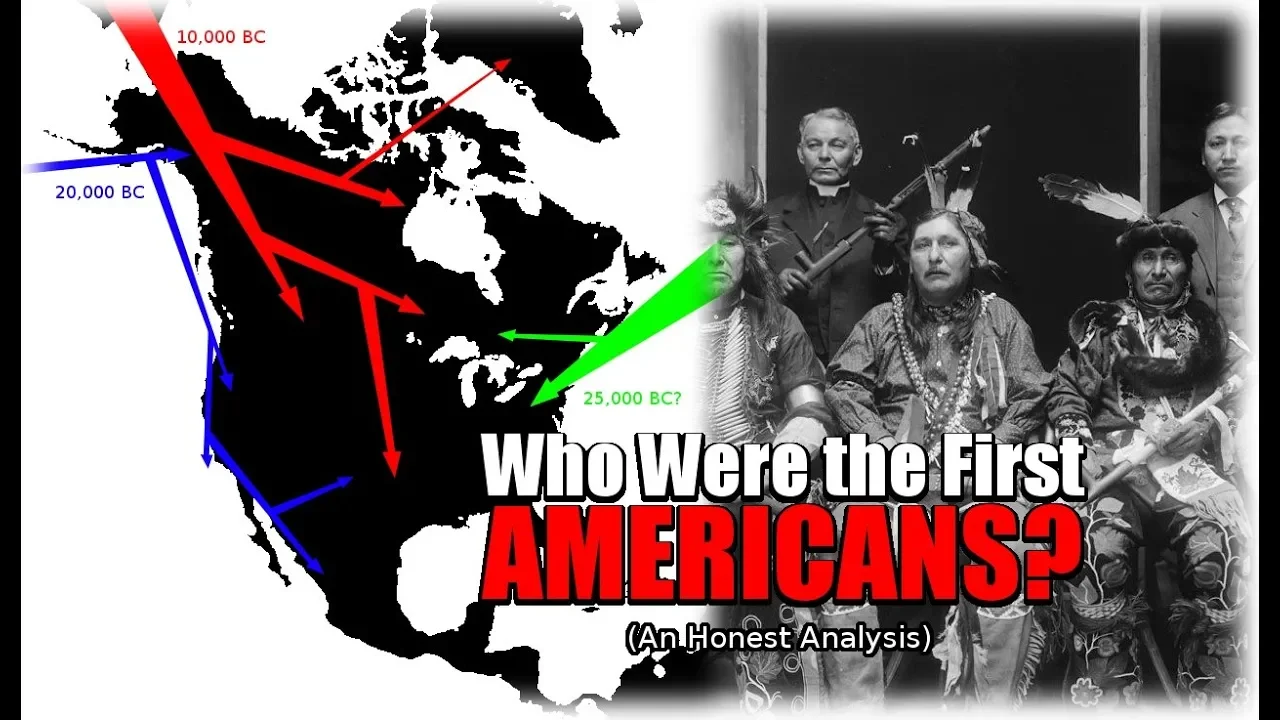
“Goodbye, Solutrean Hypothesis” The Solutrean hypothesis, the idea that Ice Age Europeans crossed the Atlantic around twenty thousand years ago, bringing stone-tool technology that supposedly became the basis for Clovis culture, is a dramatic story that has stuck around for decades, especially in pseudo-historical circles looking for alternatives to the Beringian migration. But in 2025, a pair of large-scale genetic studies delivered what is probably the most decisive blow yet. First, a massive paper in Science analyzed the genomes of more than fifteen hundred people across northern Eurasia and the Americas. What it showed is crystal clear: the founding populations of the Americas trace back to North and East Asia, not Europe. The divergence dates line up with the Beringian migration window, and there isn’t a hint — not even a statistical whisper — of ancestry from Ice Age Europeans. If the Solutrean migration had happened, we’d expect to see at least some genetic signature of it. The study found none. Then came a second paper in Nature, looking at ancient individuals from central Argentina. This team uncovered a deep-rooted lineage that stayed remarkably isolated for eight thousand years — a genetic time capsule. And even there, in one of the least admixed populations we’ve ever sampled, the ancestry still traces back to that same Asian-derived founding group. No European signal. No hidden Solutrean imprint. Together, these studies firm up what archaeologists and geneticists have been saying for years: the first Americans came from Asia, not Europe. The 2025 data makes the Solutrean hypothesis genetically untenable. “Yes, the Egyptians Could Move Those Stones” One of the most common claims in the pseudo-archaeology world is that the ancient Egyptians couldn’t possibly have moved the hundreds of thousands of multi-ton blocks used in the Great Pyramid, at least not in time to complete it in 20 or 30 years. The stones were too heavy, the desert sand was too soft, and without wheels or modern machines they would have sunk, bogged down, or been too much of a pain to haul. And because of that, the only option must be lost technology, or outside intervention, or a forgotten civilization that left no trace. You’ll sometimes see AI-generated images making fun of the idea that primitive Egyptians could move the stones. But in a recent episode of Expedition Unknown, we got yet another clear demonstration of how the Egyptians actually did it — using very simple technology. In the filmed experiment you’ve probably seen circulating, a team led by stone mason Frank Burgos, loaded a limestone block onto a wooden sledge and pulled it across sand. No cranes, no engines, no high technology. And when they followed the trick we see depicted right on Egyptian tomb walls — wetting the sand in front of the sledge — the friction dropped dramatically. With a coordinated pulling team, the block moved steadily, relatively quickly, and with far less effort than you might think. Mind you, this experiment applies only to the limestone blocks that make up the majority of the Giza pyramids, and not the larger and far fewer granite ones used in the interior. But it does show that the Egyptians didn’t need advanced technology to build 99% of the Great Pyramid. They didn’t even need wheels. What they needed — and what they had — were sledges, ropes, teams of organized workers, and a deep understanding of the materials they were working with. “The Maiden Castle Massacre” If you’ve ever watched a documentary on Iron Age Britain, you’ve probably heard the story of the “Roman massacre” at Maiden Castle. It goes all the way back to the 1930s, when archaeologist Mortimer Wheeler uncovered a group of burials with apparent battle wounds, and declared that the Roman legions had stormed the hillfort in the year 43, slaughtering the defenders in a single, bloody attack during Emperor Claudius's invasion of Britain. That interpretation stuck. It appeared in school textbooks, museum displays, and popular books for nearly a century. Maiden Castle became one of the most dramatic episodes in the Roman conquest of Britain… at least in the popular imagination. But in 2025, a new radiocarbon dating project by researchers at Bournemouth University brought the whole story crashing down. By dating each of the individuals in Wheeler’s so-called “war cemetery,” they found the burials didn’t come from a single catastrophic event at all. Instead, the people died over a span of decades, from the late first century BCE well into the mid-first century CE. And the injuries? They weren’t the work of a Roman legion. They represent sporadic violence: local conflicts, feuds, executions, maybe even ritualized killings. In fact, by the time the Romans actually arrived, Maiden Castle was already largely abandoned as a defensive center. So the famous Roman massacre, the dramatic last stand of the Britons, never happened. It was an interpretation shaped in the 1930s, and it endured mainly because it made for great theatre. The 2025 radiocarbon dates give us a different picture: a complex pattern of internal conflict long before Rome ever marched through Dorset.
“Plague of Akhetaten” One of the most persistent ideas about Pharaoh Akhenaten’s city, Akhetaten — the royal capital at Amarna — is that it was abandoned because of a deadly plague that swept through and killed much of the population. You’ll see this explanation in documentaries, popular books, and even on some museum panels. And until recently, it seemed to make sense. But in 2025, a new bioarchaeological study took a fresh look at the human remains from Amarna, and the results tell a very different story. Researchers examined the skeletal evidence from the city’s cemeteries and found no markers of a catastrophic epidemic. None of the mass-mortality signatures were there. The patterns of age-at-death look normal for a stressed but functioning community, not one suddenly struck down. The burials are orderly; the trauma and disease markers are routine; and the population profile doesn’t show the kind of spike you’d expect from an ancient plague. So the idea that Akhetaten collapsed because of an epidemic simply doesn’t hold up. What really happened was probably far more complex — a mix of political upheaval, economic disruption, and ideological backlash. The “plague” was a story we told to make that complexity feel simple. The 2025 study brings the evidence back into focus: No city-ending plague.
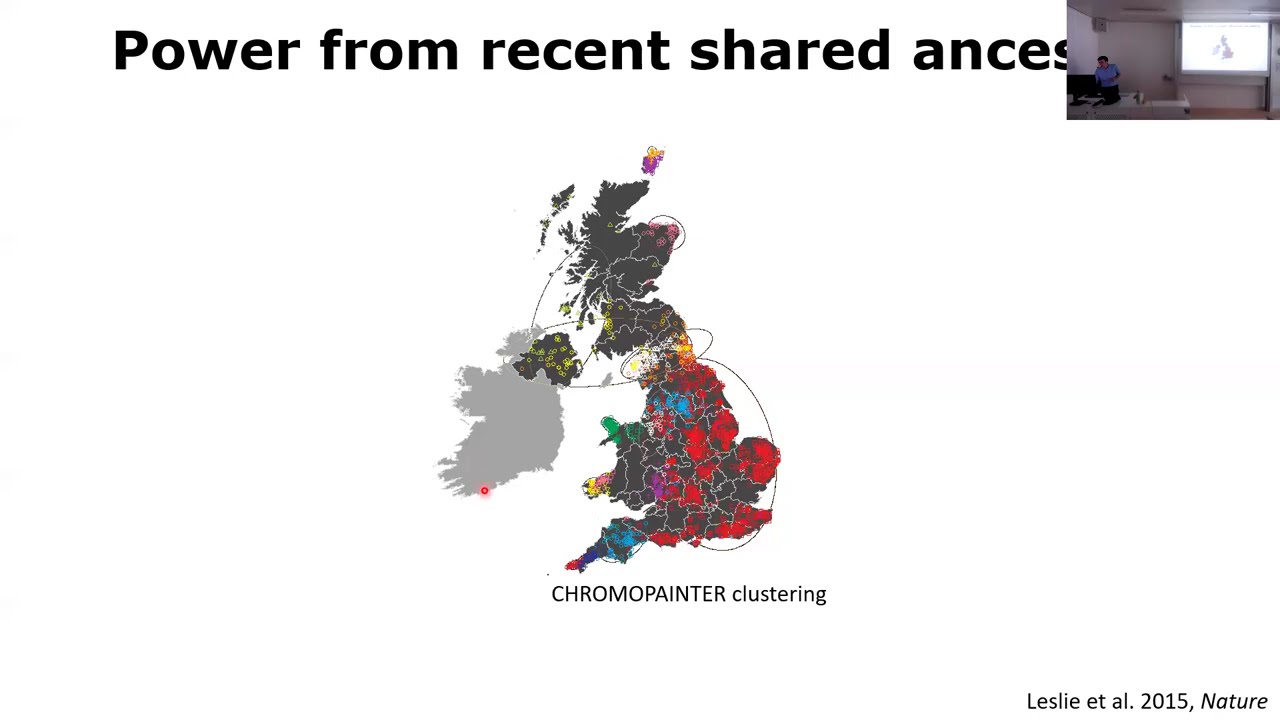
“Early Medieval England Wasn’t Isolated” One of the most common misperceptions about early medieval England is that it was a completely isolated and genetically uniform society, a “closed island” with no contact beyond northern Europe. You see this idea online, especially in nationalist pseudo-history circles, where it’s taken almost as a given that England in the seventh century was entirely homogeneous. But in 2025, a new genetic study in the journal Antiquity showed that this picture is just too simple. Researchers analyzed ancient DNA from two individuals buried in early medieval cemeteries — one in Kent and one in Dorset — and both of them carried a significant proportion of ancestry tracing to West Africa. Their genetic signatures are genuinely ancient, carried by people who lived and died in England around the middle of the seventh century. Now, this doesn’t mean that early England was some cosmopolitan melting pot, and the authors never claim that. These individuals were probably uncommon — but they are real, and there most likely are other examples out there that will be found. They show that, even during the so-called Anglo-Saxon period, long-distance movement of people into Britain was not unheard of. Early medieval Europe was connected to other places in ways we’re only just beginning to understand.
“The Göbekli Tepe Trees” This year, Göbekli Tepe found itself at the center of a very strange online narrative. A YouTube creator argued that the trees on the mound had been damaging the site for decades, that archaeologists had done nothing about it, and that only after his videos went viral did officials scramble to remove the trees. But none of that holds up when you look at what archaeologists and conservation planners have actually said. Jimmy Corsetti, known online as Bright Insight, is a YouTuber and self-described "investigator of lost ancient history" with over 1.7 million YouTube subscribers and a huge following on social media. He gained mainstream attention through appearances on the Joe Rogan Experience. Corsetti's specific claims about the archaeological site of Göbekli Tepe emerged prominently in mid-2024 and escalated into a major online controversy. At that time, he claimed that hundreds of olive trees had been planted on top of Göbekli Tepe to prevent excavation… and to hide what archaeologists didn’t want people to see. He even tied it into the World Economic Forum. And that narrative spread like wildfire. The excavation director, Necmi Karul, gave interviews that summer explaining that archaeological work had not been halted, nothing was being hidden, and that the trees had been planted by the former owners around 2004-2005, before the government had acquired the land. He also said that removing them was already under discussion, and part of the site’s long-term conservation work. On Instagram, the former landowners confirmed that they are the ones who planted the trees. But Corsetti continued to insist that there had not been a plan in place to remove the trees, even as multiple researchers — including Veritas et Caritas — showed clear evidence to the contrary. The Site Management Plan is publicly available on the UNESCO website, and in one of the annexes in the plan, the following decision was logged: “The trees planted recently in the 1st Degree Archaeological Site which damages the archaeological elements shall be uprooted by the Excavation Directorate and planted in different areas.” The decision date is given as February 23, 2016. Moreover, in the Supplementary Information section of the plan, dated to 2017, one of the long term priorities for the site is stated to be the “removal of olive trees (impact of roots on unexcavated archaeological heritage).” So that myth was busted. And then, in early 2025, Turkish conservation officials announced that the olive trees were being relocated. And they were. The trees were carefully uprooted and replanted elsewhere, just as the management plan had indicated should be done. Jimmy took credit for the removal, and to this day claims it was done only because he brought the matter to the world’s attention and put pressure on the archaeologists. Considering that the roots were a conservation issue for a long time, and the timing of removal had been dictated by soil-stability concerns and infrastructure priorities to protect the exposed parts of the site, I think it unlikely that Jimmy was the catalyst, but I think it is fair to say he probably got them to pick up the pace. But one of his current talking points is that the trees were removed too late because the site ruins were damaged by the trees. Some of the “evidence” he showed — like video clips of trees supposedly growing in the middle of ancient structures — wasn’t evidence at all. Archaeologists pointed out that the video showed modern farm walls and old outbuildings near the car park, not Neolithic ruins. In February 2025, the site director, Necmi Karul, gave interviews to Turkish newspapers, explaining exactly why the olive trees were being moved. He said — in the original Turkish — that as the trees grow, their roots could damage shallow archaeological layers, and that they had “needed to be removed for a long time.” That’s why the authorities were finally relocating them. But the English translation of Karul’s comments — produced by Anadolu Agency — changed his conditional phrasing into past tense. Instead of “could damage,” it became “began to damage.” They wrote, “He noted that the trees resulted in unintended damage to the site. ‘As the trees grew, their roots began to damage the remains beneath the surface. Therefore, they must be relocated.’” And once that mistranslation circulated through English-language media sites, Corsetti pounced on it and claimed it was proof that archaeologists had already let damage occur. Now I wanted to be sure about the translation, so I asked a Turkish friend of mine what Karul’s words mean in Turkish, and I didn’t tell him why I was asking. He translated the words as: “as the trees grew, the roots have become dangerous to remains.” He said this does not indicate that damage has already been done, but that the wording is ambiguous. The Turkish verb forms Karul used generally indicate hypothetical or future risk, not past damage. Jimmy continues to appeal to the English translation, however. Last year, when site director Lee Clare said that the tree roots had not yet caused any damage, Jimmy claims this was a lie, and that the English version of Karul is the one that is telling the truth: there was damage. But then, in October of this year, Karul reported that scans were taken of the area that had been covered by the trees. Using geomagnetic, ground-penetrating radar, and LiDAR, they detected intact structures beneath the surface. The surveys revealed not only the well-known circular enclosures with limestone T-pillars, but also rectangular buildings interpreted as houses. There was no report of any damage. The fact that the outlines of the structures were clear shows that, if there was any damage from the tree roots (olive tree roots don’t go very deep, by the way), it was superficial. So the myth of significant damage to the site from the trees can be laid to rest. In the end, nothing was being hidden. Nothing was being suppressed. And not much of anything was “saved” by an alternative archaeologist. Sometimes, the truth is just boring — and that’s okay.
So there you have it. Ten popular ideas that were debunked in 2025 by scientific research and testing. Was there any myth busting that happened this past year that you think I missed? Let me know in the comments down below. You might like my little e-booklet, Why Ancient History Matters. It's designed to persuade people that the subject is important even in the modern world. You might also wish to use it to help spread the word. So, feel free to share it with someone you know. It's free for anyone who wants it. I've left a link in the description box below the video for you to grab a copy. Catch you later.
Up Next
13:43
Maya Civilization: Democracy, Collapse, and Calendar Cycles Explained
@LexClips
186K views•2024-10-01

33:02
The Great Schism of 1054: Causes and Consequences
@SacredCathedrals
113.5K views•2026-02-19

16:02
How Bonampak Murals Rewrote Classic Maya History
@WorldofAntiquity
656 views•2026-06-07

17:05
Understanding the Cold War: Superpower Conflicts and the Road to Détente
@OverSimplified
46.1M views•2019-01-24
Related Study Plans & Knowledge Roadmaps
Structured learning paths in History
history
Byzantine Iconoclasm: Theology, Art & Politics
01Foundations of Byzantium and Early Christian Images
02The First Iconoclasm: Leo III and the Crisis of Images
03Empress Irene, Nicaea II, and the Second Iconoclasm
+ 2 more learning modules
9h5 modules
Explore Roadmap
history
Iranian Revolution (Causes, Events & Legacy)
01The Pahlavi Dynasty and the Roots of Discontent
02The Spark of Rebellion and the Rise of Khomeini
031979: The Fall of the Shah and the Climax of the Revolution
+ 2 more learning modules
8h5 modules
Explore Roadmap
history
Mali Empire: Mansa Musa, Trade & Timbuktu
01Foundations of the Mali Empire
02The Trans-Saharan Gold and Salt Trade
03The Reign and Pilgrimage of Mansa Musa
+ 1 more learning modules
6h4 modules
Explore Roadmap
history
1947 Partition: Politics, Borders & Legacies
01Foundations of British India and the Divide
02The Political Negotiations and the Mountbatten Plan
03Drawing the Boundary: The Radcliffe Line
+ 2 more learning modules
8h5 modules
Explore Roadmap