















Tikal, an ancient Mayan city-state in Northern Guatemala's Petén Province, flourished from 300 to 850 CE as one of Mesoamerica's most significant urban centers, reaching a population of 50,000 inhabitants at its peak during the Classic Period (250-900 CE); the city was dedicated to the Jaguar God of the Underworld, whose religious significance permeated all aspects of Maya life, including their sophisticated astronomical calendar system, the sacred ball game Poc-a-Toc, and elaborate human sacrifice rituals that were believed to ensure souls' passage to paradise; despite its mysterious abandonment around 900 CE, Tikal remains remarkably preserved as a UNESCO World Heritage Site, offering invaluable insights into the Maya civilization's achievements in mathematics, astronomy, architecture, and spiritual philosophy.
Tikal: The Ancient Maya City of the Jaguar God
Added:For todays’ Geographics we are going to explore the Petén Province, in Northern Guatemala.
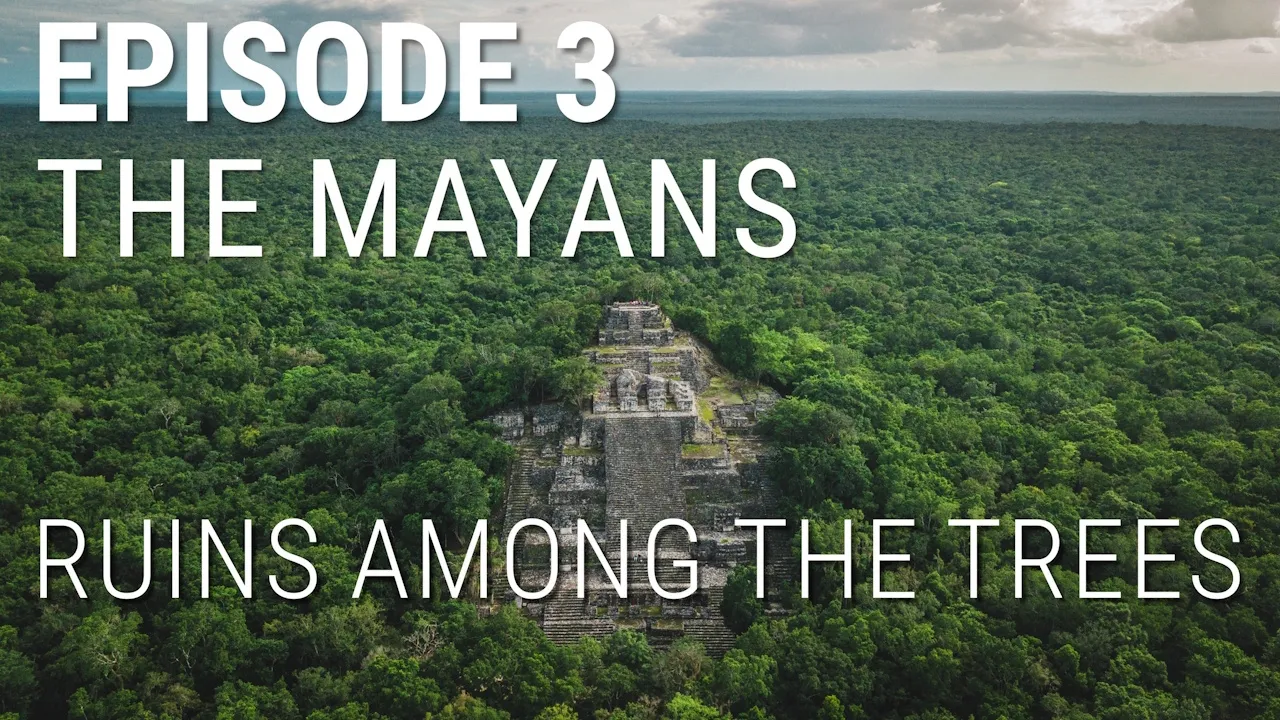
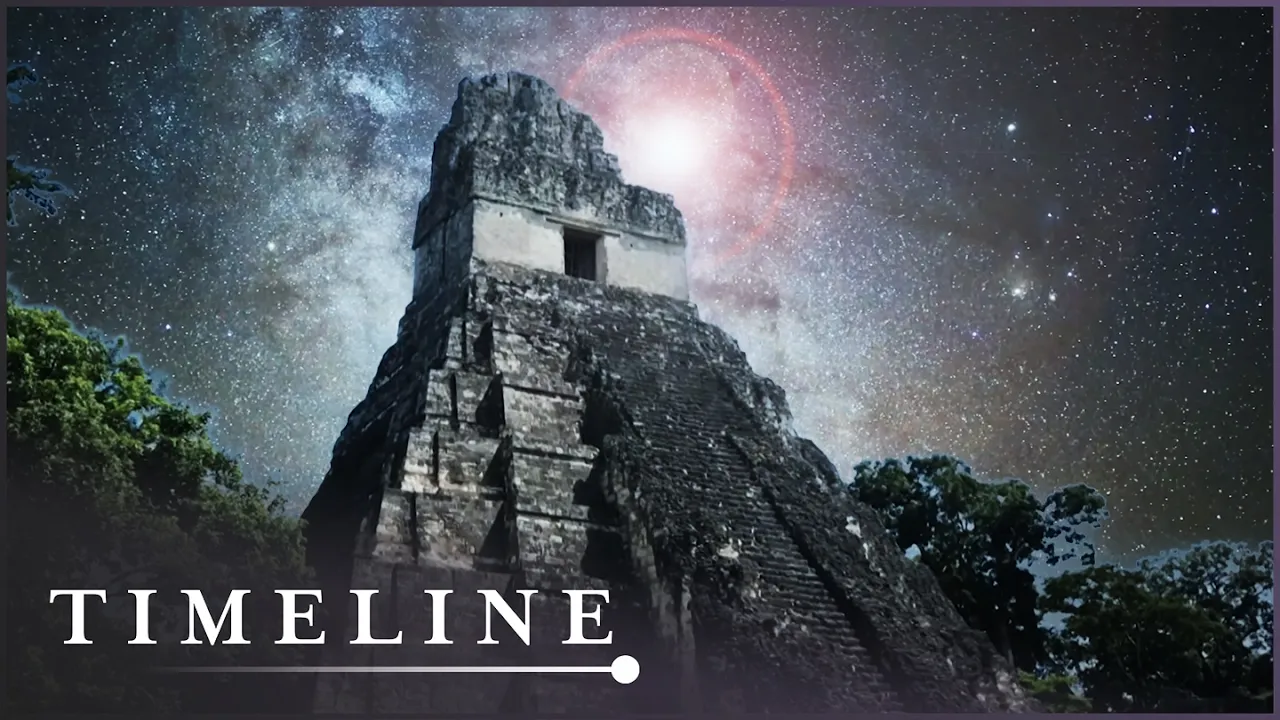
In the heart of the jungle, surrounded by lush vegetation, lies one of the major archaeological sites of the Maya civilization -- a bustling city-state which flourished from the year 300 to 850 CE.
This is Tikal, also known as Mutul -- the City of the Jaguar God of the Underworld.
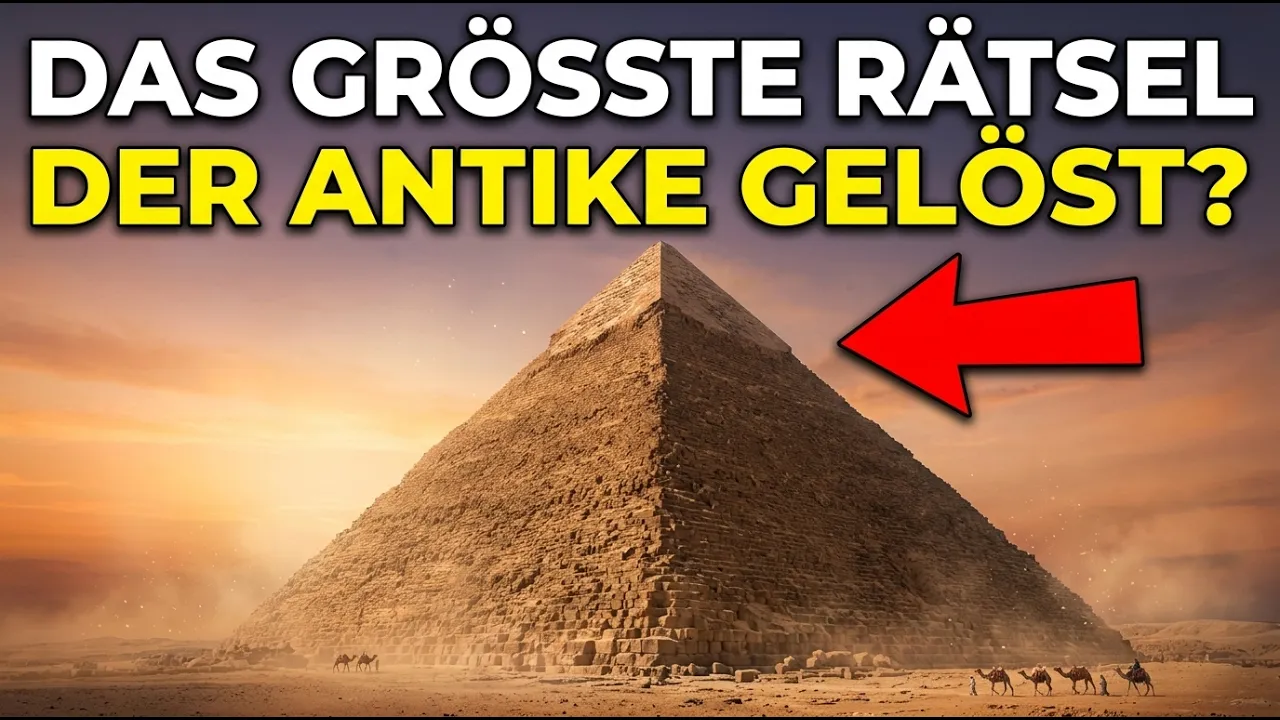
Perhaps less known and less celebrated than Palenque, Teotihuacan, or other ancient cities of central America, Tikal is wonderfully preserved and simply breath-taking, with its towering pyramids emerging from the greenery.
Along the way, we are going to find out about the Mayas’ history, complex religion, and the two reasons why we should be thankful for them.
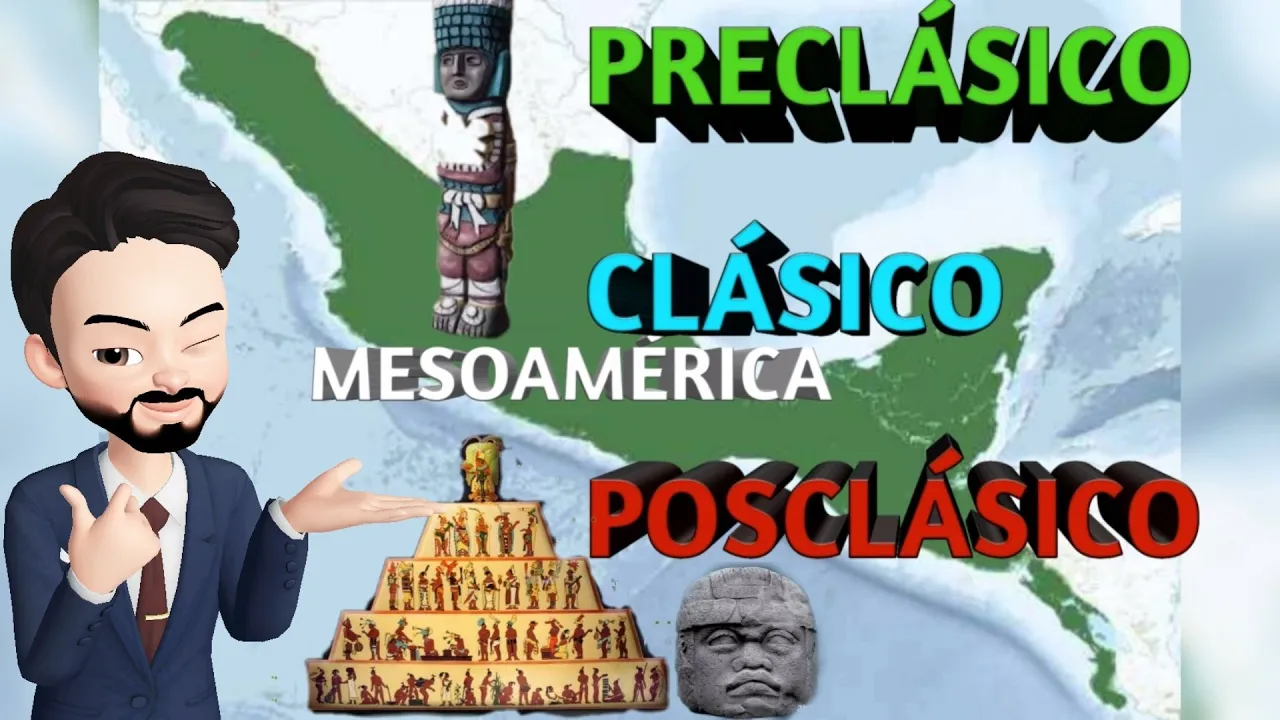
History of Tikal The Maya were a native people of Mexico and Central America who inhabited the lands comprising modern-day Yucatan, Quintana Roo, Campeche, Tabasco, and Chiapas.
Their civilization stretched well beyond current-day Mexican borders, southward through Guatemala, Belize, El Salvador and Honduras.
The overall time span of the Maya extended from 7000 BCE to 1524 CE.
But their civilisation reached its apex of maximum splendor during the so-called ‘Classic Period’, from 250 to 900 CE.
The Maya have intrigued the world since their modern `discovery’ in the 1840s by John Lloyd Stephens and Frederick Catherwood.
Contrary to popular imagination, the Maya did not vanish, and their descendants still inhabit the same lands.
Many even continue to practice, sometimes in a modified form, the same rituals of their ancestors.
A prime example of the Maya cultural peak is the ancient city-state of Tikal.
Tikal, one of the grandest cities in Mesoamerica, dates back to 300 BCE, when the first settlements were established.
In the 1st Century CE, the Tikalians undertook a massive clearing of jungle vegetation and built the first monumental buildings.
Tikal was surrounded by valuable goods, and it didn’t take long for the city to thrive.
Cedar wood, colour dyes, copal resin, all contributed to its economic growth.
So did maize – or corn – a major crop that fed much of the growing city.
In the year 378 Tikal came into contact with forces from distant Teotihuacan, the powerful Aztec centre in Mexico.
We don’t know if the nature of this contact was an invasion, or simply trade, but the Aztecs definitely had an influence on the cultural practices at Tikal, from art to architecture.
From the late 4th century, Tikal initiated an aggressive expansionist campaign, forming an alliance with Kaminaljuyú, a rich highland city controlling crucial trade routes in the Maya region.
The Tikalians also conquered the long-time rival city of Uaxactún.
In the 6th century, Tikal got a taste of its own medicine, suffering a military defeat from the city-state Caracol in 562.
But during the following century, Tikal recovered, big time.
The city reached its zenith in the 7th century, becoming a sort of Maya superpower.
At this time, the population of Tikal reached 50,000 inhabitants, spread over 200 square kilometres of multiple settlements.
The ruler responsible for this resurgence was Jasaw Chan K'awiil, who defeated rival Calakmul in 695 and oversaw a significant rebuilding programme in the city.
This is when the Tikalians erected the most impressive monuments, such as the massive pyramids known as Temple I and II.
These buildings granted for Tikal a listing as a World Heritage Site by UNESCO.
Along with other major Maya cities, Tikal went into gradual decline during the 8th century, and by 900 it had become a ghost town.
Its gigantic structures and soaring pyramids were abandoned by its inhabitants.
The once-proud architecture fell into disrepair and was reclaimed by nature, covered by the jungle, month after month, inch after inch, waiting to be rediscovered.
A Lost World Tikal was eventually found following Stephens’ and Cathewoods’ expeditions in the mid-19th Century.
Of course, the ancient city was known to the locals, so it wasn’t really a ‘discovery’ to anyone near the Yucatan.
Today’s UNESCO heritage site consists of nine clearings, or ‘plazas’ and courts connected by causeways and ramps, surrounded by more than 3,000 structures.
Before the year 250, the Great Plaza and North Acropolis were built along a north-south axis.
Later constructions, such as Temples I and II in the 8th century, followed an east-west axis, balancing the plan of the city.
Besides its imposing temples, the city also had palaces, a market complex, ten reservoirs, two sacred causeways, and a unique triple ballcourt.
Yes, it is well known that the Mayas played ball.
The larger structures at the site all display the usual Maya features of multi-level pyramids, raised platforms, vaulted chambers, large stucco masks of gods flanking staircases.
But the most important feature is that many of the buildings were placed according to astrological considerations.
For example: from one of the temples you can see the sun rising on the 12th of February.
From another temple, along the same axis, the sun can be observed rising on the 30th of October.
Both are key dates of the Maya sacred calendar, more on this later.
It is believed that the pyramidal structure was a representation of the sacred mountain-top caves: Mesoamerican people had used them as places of worship for millennia.
The North Acropolis houses temples built on two rectangular platforms used as mausoleums for the early Tikal kings.
The richest tomb belongs to Yax Nuun Ayiin, also known as 'Curled Nose,' who died in 420.
He was buried in all his finery along with maize gruel, which may explain the curled nose.
But as a powerful ruler, he had the privilege of having nine sacrificial victims also buried with him.
Also, a more pleasant surprise: several fine pots of chocolate.
As an aside, I would not be surprised if one day an archaeologist translated one of the inscriptions at Tikal to find it to be a giant sign saying ‘You Are Welcome.’ That’s because the Mayas discovered cocoa and invented chocolate.
They consumed it mostly in its liquid form, and treated it as a delicacy, a medicine and an aphrodisiac.
Other rulers buried in the temples, with or without chocolate, include Moon Zero Bird, Great Jaguar Paw, Stormy Sky, and Smoking Frog.
When hearing those names, you may have noticed that a) they sound awesome, and b) one of them may sound familiar.
Jaguar Paw is in fact the protagonist of Mel Gibson’s film Apocalypto, about the decline of the Maya civilisation.
The film was mainly shot in Mexico, although second unit filming took place in and around Tikal.
According to the local tour guides, Gibson and scriptwriter Safinia visited Tikal to draw inspiration from local historical characters and their stories.
All these rulers I mentioned dwelled in the five-story Royal palace in the Great Plaza.
The structure has extensive galleries, enclosed courtyards, and artistic depictions of captives.
The courtyards were used for ceremonies such as royal blood-letting and sacrifices.
I’ll get into these later.
Obviously, viewer discretion is advised.
Nearby all this is the 'Lost World', or ‘Mundo Perdido’ in Spanish.
It is dominated by a huge pyramid flanked by a row of small temples.
Their exact purpose is unknown, but those to the east are aligned with the sunrise at the equinoxes.
This is more proof of the Maya’s incredibly sophisticated astronomical knowledge.
The real centre-pieces of the Tikal site are the late temples, built on the east-west axis.
Temple I is a 50 meter (164 ft) high pyramid.
If you want to get on top, you will have to climb a steep 70-degree staircase, with steps so narrow they can only be climbed side-footed.
Temple I is layered over nine levels, in imitation of the nine levels of the Maya underworld.
This temple was also the burial site for the king of the Maya resurgence, Jasaw Chan K'awiil.
His wife may have been buried in Temple II, 42-metre high.
The tallest structure in Tikal, though, is the 70-meter high Temple IV, which acts as a tomb to a king named Yax Kin.
Fun fact: it was from the top of this Temple that George Lucas filmed a shot for ‘Star Wars: A New Hope’.
I am no expert of Star Wars lore, but according to fan forums Tikal doubled as the Rebel base of Yavin IV.
Tikal rulers were celebrated not only by massive pyramids, but also by simple stone slabs, which depicted their features and recorded their stories.
Such stelae in Tikal are the oldest recorded inscribed slabs in Mesoamerica.
One of them shows a ruler holding in his left hand an interesting fellow, who will be our guide to the religion and customs of the Mayas: the Jaguar God of the Underworld.
The Jaguar God of Xibalba The Jaguar God is considered to be the protector deity of Tikal.
Among other things he was the patron of War, of the Number Seven and maybe even a fire god.
But most importantly, he was one of the Lords of Xibalba, also called Metnal, a dark and frightening place we would call the Underworld.
The Jaguar God is usually depicted as having square eyes with spiral pupils, and a single large tooth.
The Maya carved or drew this God with so-called k'in signs, which are symbols of the Sun, a curious attribute for one of the Lords of the Afterlife.
This has led to interpret the Jaguar as a symbol of the sun during night time, while it travels through Xibalba.
Xibalba was a terrifying place, in which all souls would end up after death.
It was populated by deities with cheerful names like Bloody Teeth, Flying Scab, and Bloody Claw.
Which by total coincidence, are the names of my three cats.
Xibalba was covered in eternal darkness and the barren landscape was strewn with rivers of blood and pus.
A newly arrived soul would start a quest for Tamoanchan, the Maya paradise, and the mischievous Lords of Xibalba would steer them in the right or wrong direction, according to their whims.
Souls of the dead had to ascend the nine levels to reach the middle world, our Earth, and then climb thirteen more levels before reaching Heaven.
The stay here was short, for souls then descended to a lower level, on the earth or just above it, to live in eternal happiness.
A well deserved happiness, I’d like to add.
The only souls considered exempt from this journey were sacrificial victims, women who died in childbirth, those killed in warfare, suicides, and those who died playing the ball game Poc-a-Toc.
Before I continue my exquisite investigation of the Maya afterlife and their pantheon, please allow me to talk sports.
I am a bloke after all.
So what is Poc-a-Toc exactly?
Poc-a-toc As a major Maya city, Tikal could boast several courts for playing Poc-a-toc, located in its inner urban zone of around 400 hectares.
Here the courts are surrounded by palaces, temples, ceremonial platforms, residential buildings and terraces.
The traditional ball game of Poc-a-toc was developed during the Classic Period of Maya history.
Some sources claim it is even older, invented 3500 years ago.
That would make it arguably the first organized game in the history of sports, and certainly the first organized ball sport.
Another reason to say ‘thank you’ to the Mayas.
Poc-a-Toc was the most popular game among the Mayas and was far more than a simple sport or competition: it symbolized the human struggle, the cyclical nature of time and reflected the way the Mayas viewed existence.
If you want to try your hand at Poc-a-toc, the rules are not entirely clear to Mayanists.
But we do know that the game involved two opposing teams of two to seven men each.
They faced each other, trying to score a small rubber ball through a vertical hoop affixed to a wall, twenty feet in the air or even higher.
Sounds easy?
Wait to hear this.
The solid rubber balls used were heavy, up to eight or nine pounds, and could cause serious injury or even death.
Plus, players were not allowed to use the hands or the feet, having to rely only on their hips, shoulders, head and knees to hurl the balls around.
Spanish Bishop Diego De Landa wrote that watching the Mayas play Poc-a-Toc was like watching lightning strikes, due to the speed and skill of the players.
Some matches were simply what they looked like: a game of ball – sometimes with gambling on the side, very often with critical injuries at the end.
But others had a deep religious meaning, involving human sacrifice.
It has long been believed that the losing team, or their captain, would be killed at the end of the match.
But recent findings suggest the opposite: it was the winners who had the honour of being put to a quick death.
This would ensure them an escape from the darkness of Xibalba and an instant passage to paradise, as I said earlier.
In other occasions, the city rulers would challenge a team of captive warriors in a rigged game.
In that case, it was the losing captives who were killed by ritual sacrifice.
Other theories about the mysterious Poc-a-toc is that it was used as a proxy for war between rival cities, which is a great way to resolve international conflict if you ask me.
In WWII my country could have won in just a week by challenging Germany and Italy to a game of test cricket, for example.
Although I am not so sure about the results if the chosen sport was football - also known as soccer if you belong to the former colonies.
Warfare aside, the game of Poc-a-toc’s importance is made clear by its inclusion in the Popol Vuh, one of the few remaining books of the Mayas.
Here, the game is played by Hunahpu and Xbalanque, the hero Twins who defeated the Dark Masters of Xibalba.
The Popol Vuh Most of the ancient Maya texts had been carelessly destroyed following the invasion of the Spanish conquistadores.
The Bishop of the Yucatan peninsula, and sports commentator, Diego De Landa, was the main culprit: he had most of these books burned in July of 1562.
As they used to say, nobody expects the Spanish Inquisition.
The Popol Vuh was one of the very few survivors, making it all the more important in understanding Maya traditions and especially their creation myths.
The Mayas also knew this book as ‘The Light That Came From Beside The Sea,’ but following its translation into Spanish by the missionary Ximenez in the 18th Century, it became known in Europe as “the Maya Bible”.
The comparison is not precise, though, as the Popol Vuh should be seen more as an epic poem, the equivalent of the Iliad and Odyssey, rather than a purely religious work.
The Mayas would have defined this book as an Ilb'al: an instrument of sight, providing a hearer with clarity.
The Popol Vuh is a collection of stories that describe the creation of the world, of the human beings, and how the order was established by the great Hero Twins, Hunahpu and Xbalanque, through their victory over the forces of darkness and death.
In these stories, the early demi-gods Hun Hunahpu and Vucub Hunahpu, symbols of the planets and fertility, are excellent Poc-a-Toc players.
They enjoy themselves too much playing it, though, and the noise they make enrages the dark Lords of Xibalba.
They invite the two brothers to the underworld, challenging them to a match.
This is just a pretext, and the two demi-gods are tricked and murdered.
Their bodies are buried under the Poc-a-toc court, but Hun Hunahpu’s head is placed inside a calabash tree, as a warning for the dark Lords’ strength.
This head is still animated, though, and it spits into the palm of the virgin goddess Xquiq.
She later becomes pregnant with two boys: the Hero Twins, Hunahpu and Xbalanque.
Not only they are both ace Poc-a-Toc-ans (if that’s a word), but they are also fierce warriors who defeat the Lords of Xibalba and all the forces of chaos and darkness.
A Spiritual World, A Cyclical Time These stories only offer a glimpse of the complex nature of Maya religion, which trickled into every aspect of their civilization -- from their architecture, to their personal appearance, and even their calendar.
The Maya gods may have lived in Tamoanchan, or paradise, but they were an integral part of everyday life.
The jungles surrounding their cities were inhabited by the great god of the woods, Yum Caax, protector of plants and animals.
The rains came because Chac was pleased and Lord Yaluk flashed his lightning.
Each individual had a spirit guide, the Wayob, who helped him or her as an animal, or as a dream, relaying messages from the spiritual realm.
Each year, at the spring and autumn equinoxes, the great serpent god Kukulcan descended from the sky down the staircase of his temples.
In summary, the whole of the earth, and human life, were imbued with spiritual forces which needed to be honoured and consulted, for the community and individuals to prosper.
Mathematics and Astronomy were also part of religious observance and were key components in the creation of the Sacred Calendar.
The Maya actually had two calendars: a secular one to track the days and the seasons, and a sacred one to predict the future and chart the courses of the stars.
The scribes and the priests doubled as astronomers, studying the cycles of the planets, seeking in the celestial patterns the celestial messages of the gods.
These messages would be carried to the ruler of the city, an intermediary between the gods and the people.
Inconveniently, these gods had a taste for human blood.
Blood was their food and the kings were not exempt from this sacrifice.
A ritual involved the king using a string of thorns on his tongue or penis to draw blood on a leaf which was then burned as an offering to the gods.
If the offering was acceptable, based on the pattern of the burning leaf, the petition of the king was granted.
If not, a further sacrifice was needed.
While gods accepted animals and gems as a gift, human sacrifice was central to Maya beliefs.
Excavations in and around Tikal and other sites have revealed bones of what appear to be sacrificial victims.
Human sacrifice is also depicted in paintings and carvings throughout the Maya region.
Some of these victims were prisoners of war, while others were citizens of the community.
Remember -- Dying as a sacrificial victim was a great honour, as it granted immediate ascension to Heaven.
Our ‘friend’ Bishop De Landa, wrote: “Their festivals were only to secure the goodwill or favour of their gods…They believed them angry whenever they were molested by pestilences, dissensions, or droughts or the like ills, and then … forgetful of all natural piety and all law of reason they made sacrifices of human beings as easily as they did of birds” In other cities, like Chichen Itza the sacrifice took the form of being thrown into the Sacred Cenote, a deep natural well.
But in Tikal and other sites, victims were usually disembowelled.
Or, as depicted most frequently by popular culture, the victims had their hearts torn out on the altar of a temple.
The Mayas believed in the cyclical nature of time and of life.
So, for them, nothing and no one ever truly `died.’ Sacrificial victims were considered to have simply `moved on’ to live among the gods.
We don’t have their views on the matter, sadly.
All of existence carried on eternally in the great cycle of time, and this was illustrated in both the secular and sacred calendars.
Now, if you are aged seven or younger … you shouldn’t be watching this.
I have been talking about people being disembowelled.
For Pete’s sake, go back to Peppa Pig.
But if you are eight or older, you may remember the big 2012 scare.
Based on an incorrect interpretation of the Maya calendars, many believed that the world would end on the 21st of December 2012.
But this is the wrong way to look at the Maya beliefs, through a western European lens.
For the Maya, time was eternal, bound in endless cycles, and as such it could never end.
The identified date in 2012 was simply the end of one cycle, called a ‘Baktun’, and the beginning of another.
It could be argued that Time itself was the supreme god of the Maya pantheon and their intricate calendars rose from, and then shaped, their religious beliefs.
Decline of the Mayas Around 900 AD, the Maya may have marked the end of one such cycles of time.
That period, during which Tikal was abandoned by its inhabitants, marked the end of the so-called Classic Maya Period.
This was the age of maximum splendour for this civilization: this is when the Mayas reached their peak in science, architecture, military power and demography, numbering in the millions.
Then, the Mayas mysteriously started abandoning their once-grandiose cities and dispersing into the surrounding rural areas.
So far, archaeologists and historians have not found a clear explanation as to why this happened: climate change and overpopulation are two likely possibilities.
The Toltecs, a new tribe moving into the region, took over the vacant urban centres and re-populated them.
The Mayas scattered around the jungles and mountains of central America, divided into several tribes such as the Quiche [Key-tches] or the Cakchiquel [Cahk-chee-kell].
After a long period of decline, a calamity befell upon them.
This one is clearly documented -- the arrival of the Conquistadores.
On the 6th of December 1523, one of Hernan Cortes’ lieutenants, Pedro De Alvarado, left Tenochtitlán – Mexico City – looking for more riches in the area of today’s Guatemala.
He was leading 400 Spanish soldiers and over 5000 native auxiliaries.
The area was not completely unknown to the Spanish: in fact, a previous expedition had introduced smallpox, which had eradicated one third of the population.
Alvarado soon clashed with the Quiche Mayas, ruling the highlands since the 14th century, from their capital Utatlan.
The Quiche were not a unified people, though: constant infighting had led them to abandon the fertile valleys to inhabit fortress-like towns, like their capital.
All this had put them in a position of weakness against the invaders.
When Alvarado and his men arrived at Utatlan they asked the Mayas to surrender peacefully.
The Quiches refused to cooperate and their leader Tecum rallied 10,000 troops.
But Alvarado had already brought the Cakchiquel tribes to his side, in exchange for favourable treatment.
Tecum succeeded in increasing his army to 30,000 warriors.
They marched into battle behind flag bearers, conch-shell trumpet players, and rows of drummers.
Then, on a plain outside of Quetzaltenango, both sides clashed in a fierce battle.
The Quiches, numerically superior, were outclassed by the superior Spanish weapons and suffered a horrific defeat.
The Quiches surrendered, and Alvarado burned Utatlan to the ground.
The year of the battle of Utatlan, 1524, traditionally marks the end of the Maya Civilization.
Going to Tikal Today the Tikal National Park is a UNESCO Heritage site, embedded within the Maya Biosphere Reserve.
The Park is one of the few World Heritage properties inscribed according to both natural and cultural criteria, for its extraordinary biodiversity and archaeological importance.
The park boasts 57,600 hectares of wetlands, savannah, tropical broadleaf and palm forests, plus the main archaeological sites.
Local wildlife includes jaguars, pumas, anteaters, 300 species of birds, and several species of monkeys.
By the way, watch out for the monkeys.
You don’t piss off the monkeys.
One of our team went there some years ago, and he managed to piss off the monkeys.
He was targeted with vines, branches and faeces.
From the monkeys.
You leave the monkeys alone.
So, if you are lucky enough to visit Guatemala, definitely go visit Tikal.
If time is indeed cyclical, and nothing ever dies, then Tikal is a clear example: preserved and mostly intact since it was abandoned hundreds of years ago, this city is a unique experience to witness the might and spiritual knowledge of the ancient Mayas.
Up Next

Yaxchilan Maya Glyphs: Secret Inscriptions at Ancient Ruins Explained
@WallaceSpirit
1.3K views•2022-01-13

The Great Schism of 1054: Causes and Consequences
@SacredCathedrals
113.5K views•2026-02-19
Notre-Dame Cathedral: History, Fire, and the 2024 Restoration
@geographicstravel
13.8K views•2024-07-16
Understanding the Cold War: Superpower Conflicts and the Road to Détente
@OverSimplified
46.1M views•2019-01-24
Related Study Plans & Knowledge Roadmaps
Structured learning paths in History