Xibalba, the Maya underworld, was a realm of nine terrifying levels where souls faced increasingly horrific trials: a glacial wasteland, fiery forges, serpents, jaguars, darkness, knives, and bats, ruled by the malevolent Hun-Came and Vucub-Came; the Hero Twins Hunahpu and Xbalanque, sons of a god and mortal woman, descended into this abyss to confront the Lords of Death, demonstrating courage, cunning, and sacrifice in their quest for vengeance against their father's killers.
Exploring Xibalba: The Hero Twins' Descent into the Maya Underworld
Added:Deep Dive
Familiarity with the geography, chronology, and cultural structure of the ancient Maya civilization.

高校入試によく出る「地理・歴史・公民」の重要用語100語完全暗記!
585.2K
文明開化は明治初期欧米の文化が盛んに取り入れられ、伝統的な文化が変化したことです。
Click to watch →

Charla de café Sala Maya Museo Nacional de Antropología
1.2K
The Museum National de Antropología, inaugurated September 17, 1964, was designed by architect Pedro Ramírez Vázquez, who also created the Azteca Stadium and Templo Mayor. The museum spans 45,000 square meters with 22 halls dedicated to preserving Mexico's archaeological and ethnographic collections. The Maya civilization occupied approximately 325,000 square kilometers across Yucatán, Campeche, Quintana Roo, Tabasco, Chiapas, and Central America (Guatemala, Honduras, Belize, El Salvador). The Maya are geographically divided into three regions: Highlands (Guatemala and Central America) with mountains and dense jungle; Southern Lowlands (southern Campeche, Calakmul) with moderate vegetation; Northern Lowlands (Yucatán and northern Campeche) with scarce surface water requiring artificial storage systems like chultuns and cenotes. Maya civilization is divided into three major periods: Preclassic (1200 BCE to 200 BCE), Classic (200 BCE to 900 CE), and Postclassic (900 CE to 1521 CE). The Preclassic represents early development, the Classic marks peak cultural and economic achievement, and the Postclassic covers decline and Spanish conquest. Maya culture is defined by shared characteristics: limestone construction with lime mortar, the Maya vault system for high ceilings, artistic traditions in sculpture and mural painting, use of jade and shell, astronomical observations for agriculture, a vigesimal (base-20) numerical system with zero, and the ball game. Maya cosmology describes the world passing through multiple destructions before the current era. According to the Chilam Balam de Chumayel and Popol Vuh, four trees were planted at the world's corners with divine birds of four colors (yellow south, white north, black west, red east), with a green tree representing the central axis connecting heaven, earth, and underworld through the ceiba tree. The earth was conceived as a great marine turtle or crocodile. The Maya created humans from maize dough after failed attempts with clay and wood, becoming the 'people of maize.' This is reflected in cranial deformation practices (oblique type) reserved for nobility and priesthood, using wooden boards on infants' heads during the first three months. The Maya also practiced dental deformation and incrustations using jade. When Hernán Cortés arrived in Yucatán, he encountered individuals like Gonzalo Guerrero, a Spanish sailor captured by the Maya who adopted their culture, married a Maya princess, and became the first mestizo. The Maya were organized into independent city-states, each with its own ruler (halach uinic), making conquest more difficult than the centralized Aztec Empire. The dispersed nature of Maya populations, living in scattered settlements rather than concentrated urban centers, contributed to the slower conquest process. Maya subsistence was primarily based on maize cultivation, with archaeological representations showing farmers using planting sticks to sow seeds. Animals important to Maya culture included the feathered serpent (Kukulkan), lizards, iguanas, tortugas (representing the earth turtle in creation mythology), and armadillos.
Click to watch →

Sustainable Environmental Adaptations Among the Ancient Maya of Central America
190
The ancient Maya civilization spanned southeastern Mexico, El Salvador, Guatemala, western Honduras, and Belize—a region roughly the size of New England. The heartland was the elevated interior plateau (peninsula) with limestone-based karst geology where water drains underground through caves, cenotes, and chultunes. The civilization developed through three major periods: the Preclassic (900 BC-150 AD) saw emergence of early villages and state-level society; the Classic (150-900 AD) represented peak population and achievement; and the Postclassic continued until Spanish arrival. Maya architecture emphasized outdoor plazas over interior spaces, with temples built without metal tools or pack animals using only stone, wood, bone, and chert/flint implements.
Click to watch →

MARAVILLAS DEL MUNDO - GUATEMALA CON CLAUDIO ITURRA
1.3M
The ancient Maya civilization flourished from approximately 400 BCE to 1500 CE, spanning across what is now southern Mexico, Guatemala, Belize, Honduras, and El Salvador. This civilization developed sophisticated urban centers, including Tikal, which reached populations of nearly 100,000 people at its height. The Maya established complex societies characterized by advanced agriculture, writing systems, mathematics, astronomy, and monumental architecture.
Click to watch →
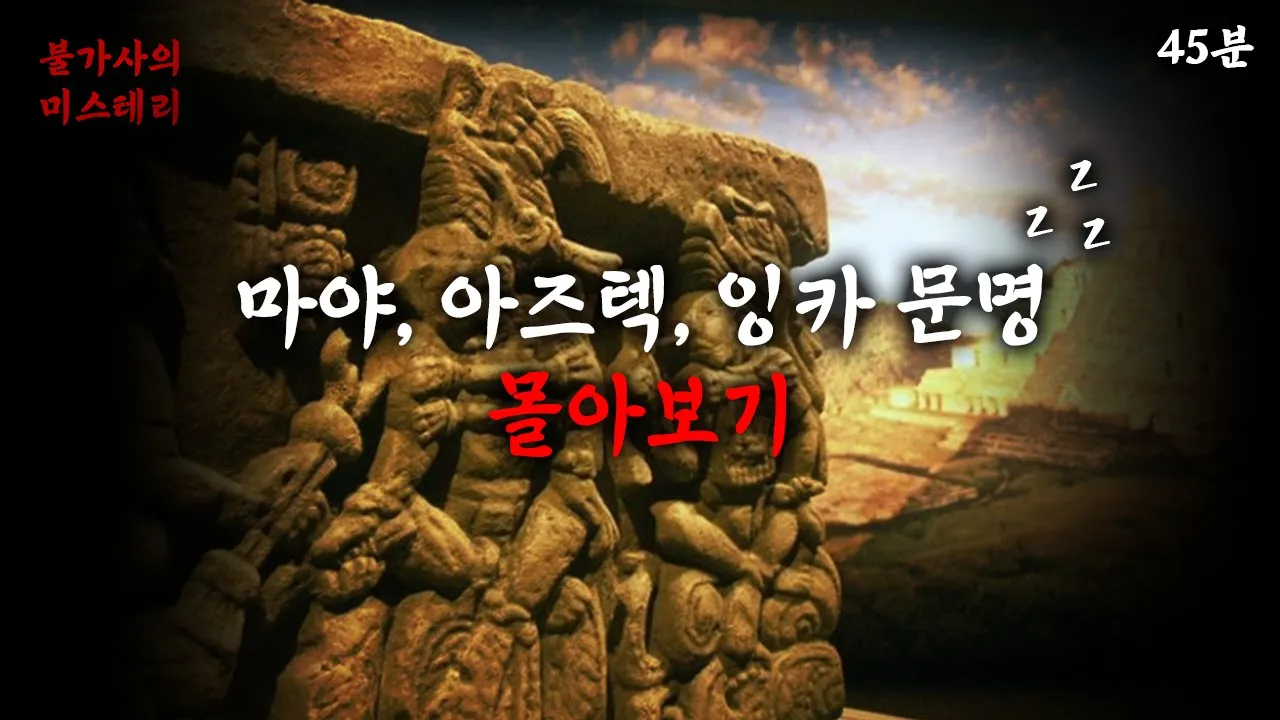
마야, 아즈텍, 잉카 문명 몰아보기 | 불가사의 미스테리
77.2K
The Maya civilization spanned approximately 3,800 years across five modern-day countries: Mexico, Guatemala, Honduras, Belize, and El Salvador. Unlike most ancient civilizations that developed near large rivers, the Maya thrived in the challenging tropical rainforest environment, constructing impressive pyramids and temples. Their political structure consisted of multiple independent city-states, each with its own name, sharing common language and cultural practices. The civilization's history is divided into three major periods: Preclassic (2000 BCE - 250 CE) saw the emergence of villages and agriculture; Classic (250 CE - 900 CE) represented the golden age with major urban development; Postclassic (900 CE - 1500s) saw the civilization's decline. The Maya developed sophisticated astronomy, mathematics, and writing systems, with their calendar systems and astronomical observations demonstrating sophisticated understanding of celestial mechanics.
Click to watch →
Deep Dive
An understanding of the Popol Vuh, the sacred K'iche' Maya text that documents their creation myths and heroic legends.
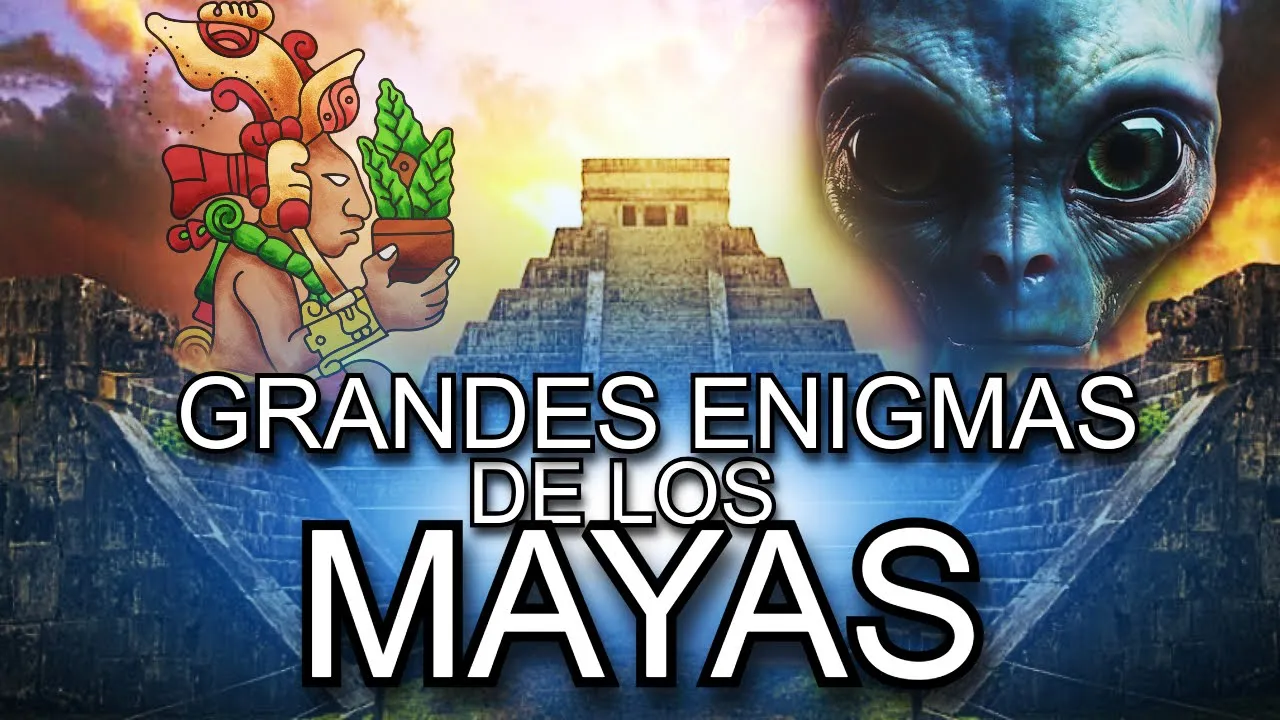
GRANDES ENIGMAS DE LOS SEÑORES MAYAS (Recopilación)
13.3K
The Popol Vuh is the most important Maya text preserved, distinguished by its extraordinary historical and mythological content and literary qualities comparable to the Hindu Ramayana or Greek Iliad. The Mayas understood that humans were not created by God but by a group of wise and intelligent beings from another world, whom they called the creators. Tepeu and Gucumatz are two of these creators who, according to the Popol Vuh, did not work alone but belonged to a larger group of creator gods. They decided to create humans from yellow maize and white maize, endowing them with intelligence and the ability to see everything in the world. The Popol Vuh mentions that the previous humanity could see any place on the earth from where they were without moving, which could be talking about screens and something similar to the internet, or about a past humanity where inhabitants could perform astral projections. This humanity reached to know everything without leaving any doubts about anything. This is extraordinary as the Mayas mentioned that the world is a sphere, while in Europe at the same time it was believed to be flat.
Click to watch →
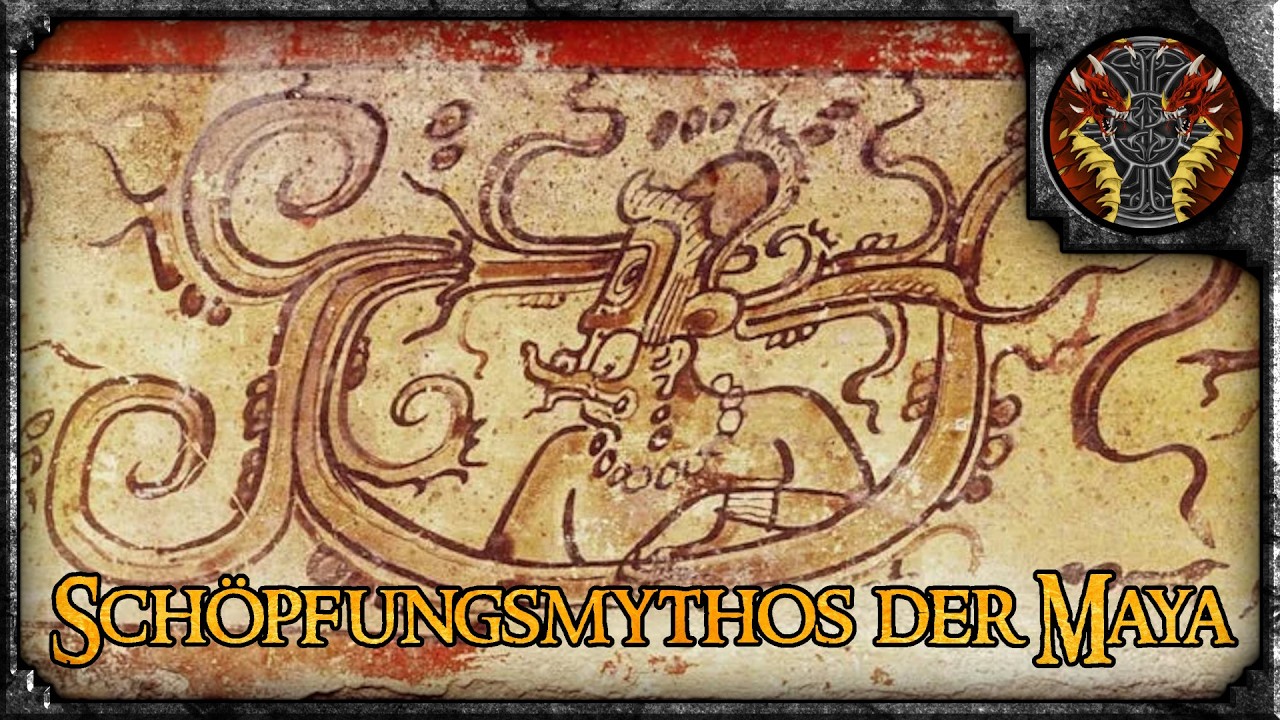
Der Schöpfungsmythos der Maya --- Das Popol Vuh
287
The Popol Vuh, the sacred book of the K'iche' Maya, describes their creation myth where the gods Hurakan (Heart of the Sky) and Gukumatz (Feathered Serpent) created the world through four failed attempts before successfully creating humans from maize, after defeating the arrogant Seven Macaw and his sons who claimed to be gods.
Click to watch →

Hunahpu und Xbalanque --- Die Heldenbrüder der Maya
278
The Popol Vuh is the most important surviving mythological work of the ancient K'iche' Maya civilization, containing the creation myth and the story of the hero brothers Hunabpu and Spalanke. The K'iche' are one of the largest Maya ethnic groups in the Guatemalan highlands. The book was written in the 16th century after European colonization, when Maya priests used Latin script to preserve their culture. For Maya priests, it remains a sacred text providing insight into signs, omens, and astronomical events. The brothers Hunabpu and Spalanke are central figures to whom a large portion of the text is dedicated, making them among the most important figures in Maya mythology.
Click to watch →

The Popol Vuh: The Maya Story of Creation
694.2K
The Popol Vuh, a sacred text of the K'iche Maya people, recounts the Maya creation story through four failed attempts to create humans—from animals and mud to wooden beings—before the successful fourth creation using maize dough, which established August 14, 3114 BCE as the Maya calendar's starting point; this mythological narrative demonstrates how the Maya understood their world through spiritual cosmology, where celestial bodies and natural phenomena were personified as divine entities, and everyday activities like maize planting were connected to the mythic journey of the maize god Hunapu's descent to and resurrection from the underworld Xibalba.
Click to watch →
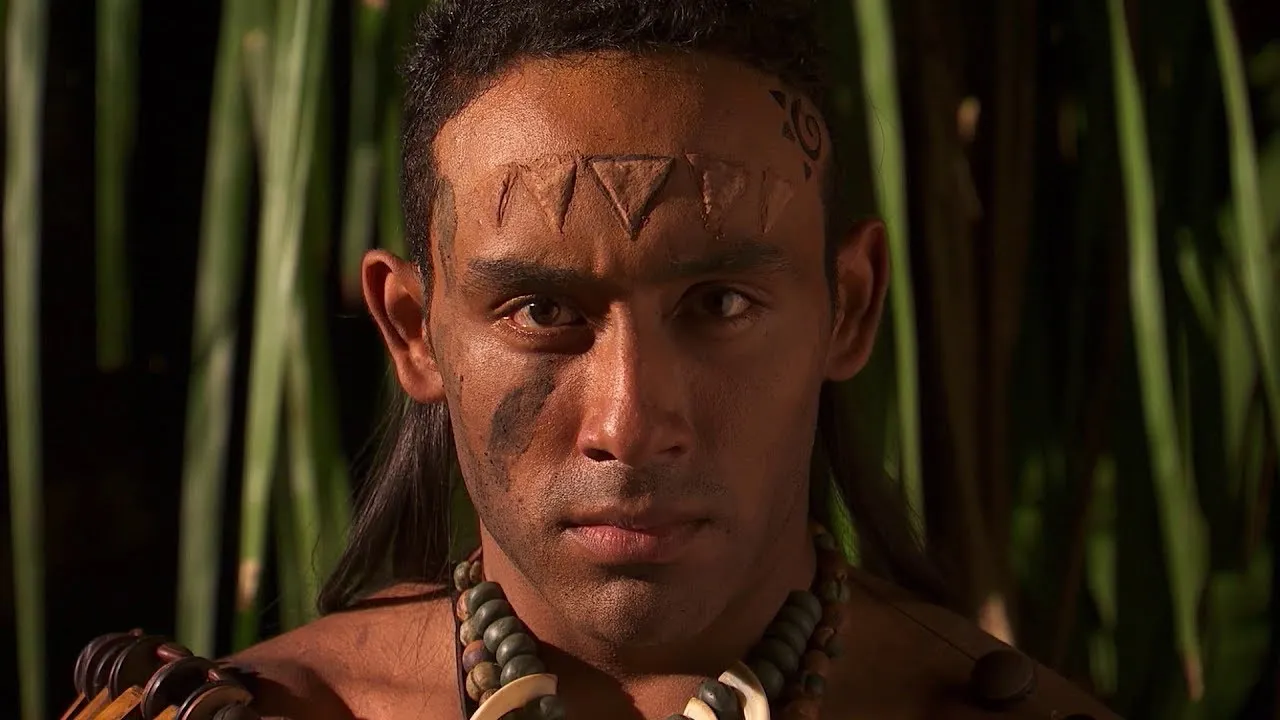
ИСТОРИЯ САМОЙ ЗАГАДОЧНОЙ ЦИВИЛИЗАЦИИ! Майя. Рождение легенды. Лучшие фильмы. Filmegator
3.2M
The Popol Vuh, the Maya creation myth, begins when the universe was in darkness. The sky god Hunab Ku and the creator god Tepeu created the world. The myth tells of two brother-twins who traveled to the underworld, defeated the underworld gods in a ball game, and resurrected their father. The father became the Maize God, while the brothers became the Sun and Moon. The myth explains how gods created humans, with maize being one of the ingredients. The K'iche' people recorded this myth, preserving Maya cosmological understanding.
Click to watch →
Deep Dive
Basic concepts of Mesoamerican cosmology, specifically the tripartite division of the universe into the heavens, the earthly plane, and the underworld.
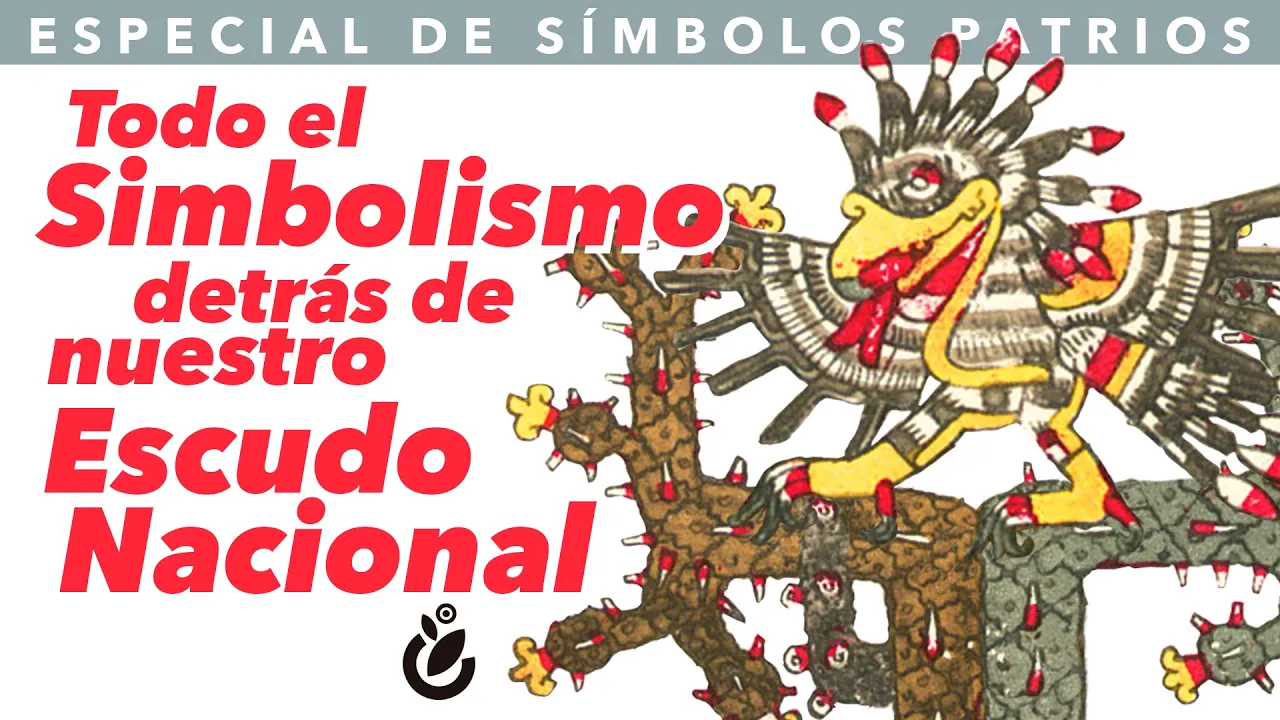
Todo el simbolismo detrás del ESCUDO NACIONAL
11.3K
Mesoamerican cosmology is structured around three interconnected planes: the underworld (inframundo) at the bottom, the terrestrial plane in the middle, and the celestial plane at the top. The underworld is associated with moisture, cold, darkness, and death, while the celestial plane is associated with the sun, light, and warmth. Cosmic trees (árboles cósmicos) serve as the axis mundi connecting these planes, always crowned by birds representing the celestial realm. Vegetal elements like nopales and milpas grow from underworld beings. From the axis mundi, four rumbos (directions) radiate in the terrestrial plane, representing the four directions of the universe. This three-plane structure is a fundamental concept found across all ancient Mexican cultures.
Click to watch →

Culturas del México antiguo
281.8K
Mesoamerican civilizations conceived the world through a three-tiered cosmology: the underworld (Inframundo), the terrestrial plane, and the celestial realm, connected by the axis mundi (cosmic tree). The Sun Stone (Piedra del Sol), discovered in 1790, represents this solar-centric worldview. Originally called the 'calendario azteca,' its true name reflects its astronomical significance. The stone was displayed publicly in the cathedral while Coatlicue was confined to the Royal University, symbolizing colonial attitudes toward indigenous knowledge. The exhibition aimed to prove to Spain's enemies that America was not inhabited by ignorant peoples but by a scientifically advanced civilization.
Click to watch →

NASA FAZ NOVOS AVISTAMENTOS DA LUZ MISTERIOSA NOS CONFINS DO SISTEMA SOLAR
25.6K
NASA's New Horizons spacecraft detected ultraviolet light emanating from the heliopause, the boundary where the Sun's influence ends. This phenomenon, first observed by Voyager 1 and 2 in 1970, was verified by New Horizons as it explored the Kuiper Belt beyond Neptune. The heliopause marks where the solar wind's magnetic bubble terminates. Separately, archaeologist Sergio Gomez discovered a 2,000-year-old tunnel at Teotihuacan, Mexico, in 2003. The tunnel, impregnated with pyrite, represented stars in Mesoamerican cosmology, which divided the cosmos into three regions: sky, earth, and underworld—a place of both death and creation. The entrance remains covered and restricted to project workers.
Click to watch →

HERENCIA PREHISPANICA DE LAS OFRENDAS DE MUERTOS PARTE 1
16.2K
Mesoamerica is one of six originating civilizations that emerged independently and spread culture globally, extending beyond modern Mexico to include Belize, Guatemala, El Salvador, Honduras, and potentially Nicaragua. The Tropic of Cancer defines its northern boundary, separating arid Aridoamérica from rain-fed regions supporting large civilizations. The fundamental concept of duality permeates all Mesoamerican thought, symbolized by two-headed serpents representing eternal cycles where beginnings and endings are interconnected. Coatlicue, the Mother Earth deity, embodies profound duality as both life-giver and death-consumer, associated with serpents symbolizing fertility and regeneration. According to mythology, she made a pact with humans: providing life through plants in exchange for being fed with death. The afterlife consists of four distinct regions determined by how a person dies: Tlalocan (east) is paradise of rain and abundance for those who died from rain-related circumstances; Cihuatlan (west) is the domain of women who died in childbirth, considered heroic acts; Xibalba (south) is the Maya underworld with nine levels of transformative trials; and Mictlán (north) is the general region of the dead. In Mesoamerican cosmology, the soul's journey after death follows a specific path. Those who die in battle (warriors) are cremated and take 80 days to reach the sun, helping it travel from sunrise to noon. Women who die in childbirth (Cihuateotl) then help the sun from noon to sunset. At sunset, the sun is consumed by the Mother Earth and must travel through darkness in Mictlán before being reborn each day. This explains the importance of sacrifices to help the sun be reborn. Warriors who died in battle transform into monarch butterflies or blue birds after four years. According to the Legend of the Five Suns, humanity was created and destroyed four times through cataclysms. For the fifth sun, Quetzalcoatl was tasked with retrieving bones of ancestors from the underworld. Disguised as a dog (Xoloitzcuintle), he descended to Mictlán, where he encountered Mictecacihuatl, the Lady of the Dead. She agreed to give him the bones but demanded he dance four times around her throne and blow a conch shell. After collecting the bones, he fell into an abyss created by her helpers and remained there for four years before resuscitating. He transformed into a feathered serpent and delivered the bones to Mictecacihuatl, who presented them to the grandmother of the gods. Feeling guilty about his failure, she performed an autosacrifice, drawing blood from her own body to fertilize the bones, creating the fifth humanity. Mesoamerican cosmology conceives the universe as consisting of thirteen heavens, one Earth, and nine underworlds, represented metaphorically by the ceiba tree with roots penetrating deep into the Earth (underworlds) and branches extending upward (heavens). The nine underworlds can also represent the nine months of gestation. The Temple of the Inscriptions at Palenque has nine levels, symbolizing the descent through the underworlds to reach the burial place of Pakal. Jade holds profound symbolic significance in burial practices, its green color representing vegetation and nature, symbolizing eternal life, regeneration, and rebirth. Jade objects found in tombs include masks, bracelets, collars, rings, and nose rings. In Pakal's tomb, he held a jade sphere in his left hand and a jade cube in his right, representing the duality of existence. A jade bead in the mouth symbolizes the promise of rebirth. The jade deity Chalchiuhtlicue (Lady of the Jade Skirt) governs the Earth's water sources and manantiales. Cinabrio (mercury sulfide) was used as a preservative substance, coating cadavers, walls, and objects with its intense pink color. Marine elements like conch shells and caracoles were deposited in offerings, symbolizing water and life abundance.
Click to watch →
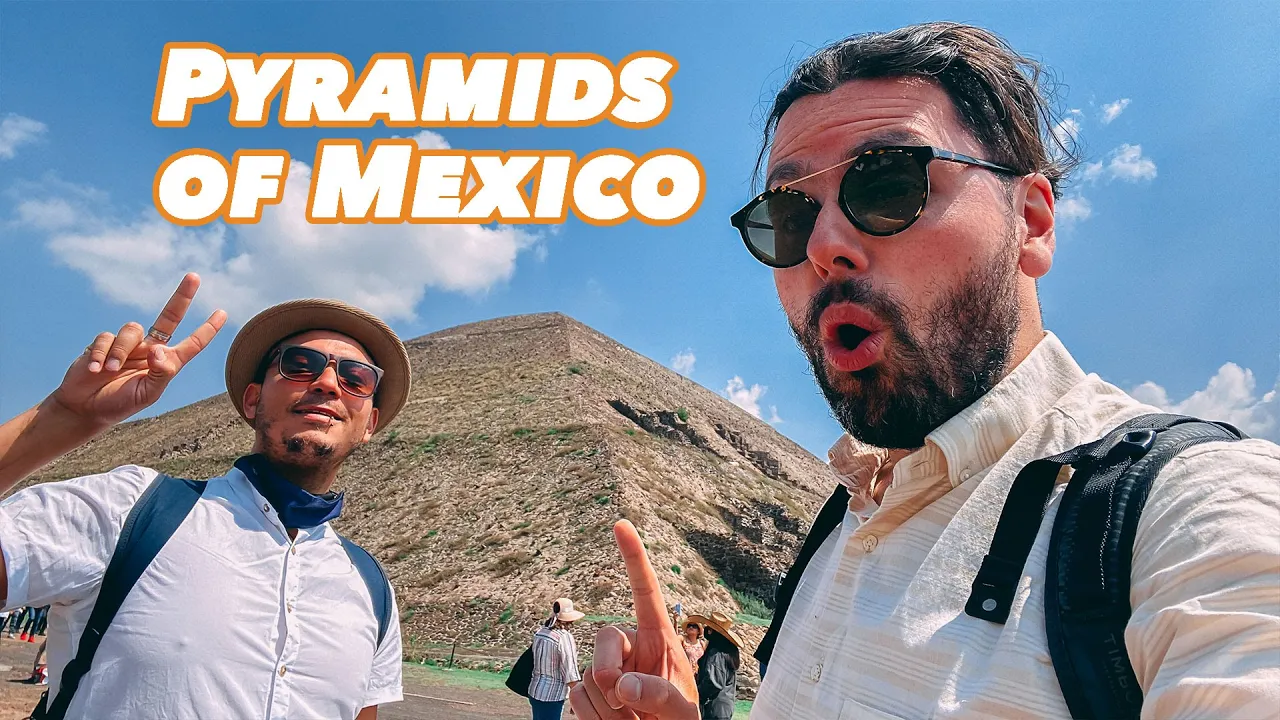
The Pyramids at Teotihuacán Mexico
4.2K
Mesoamerican civilizations understood the cosmos as divided into three levels: the heavens (upper levels), the physical world (middle), and the underworld (lower section). The underworld was not a place of punishment but represented death, darkness, fertility, and the cycle of seasons. Pyramids were built on man-made chambers symbolizing caves and the underworld, with glyphs showing temples built on top of underground spaces. This design connected the physical world with the underworld, expressing the duality of day and night and the relationship between life and death.
Click to watch →
Deep Dive
The cultural and ritual significance of the Mesoamerican ballgame (pitz), which serves as a central plot device in the Hero Twins' mythos.

The Evolution of Death & Burial, 12/13: Olmecs and Mayans by John David Ebert
2.3K
The ballgame, found in every Mesoamerican city, was not played for entertainment but to the death, with losers sacrificed. The I-shaped courts with V-shaped furrows replicated the cleft in the earth where the maize god emerged, representing the underworld (Xibalba). The ballcourt served as the sole immunological antidote to the image of the swallowed man peering from the Beast's mouth—the only defense against the astral plane. The Popol Vuh myth explains this: hero twins Hunahpu and Xbalanque descended to Xibalba to play ball, were killed, and their father's head impregnated Blood Moon. They descended again, passed trials (dark house, razor house, cold house, jaguar house, bat house), and triumphed by killing and resurrecting the Lords of Death. They retrieved their father's head, resurrected him as the maize god, and ascended as sun and moon—illustrating how the human soul falls into the underworld but can defeat death and return to the world of light.
Click to watch →

The Aztec Ballgame where the Losers were Sacrificed
1.6M
The Mesoamerican ballgame, dating back to 1600 BCE and played by civilizations including the Maya and Aztecs, was a central element of political, religious, and social life in ancient Mesoamerica. Played on large masonry courts near temples, the game involved two opposing teams using their hips to keep a heavy rubber ball in play, with scoring achieved by hitting targets or shooting through elevated rings. While primarily a sport, the game carried profound ritual significance, symbolizing cosmic battles between life and death, and in some instances, sacrificial victims—including defeated players, coaches, and entire teams—were killed after matches. The Spanish conquest led to its decline, though the game persists today as ulama or pok-ta-pok among indigenous Mexican communities.
Click to watch →

Ancient Sports TOO CRAZY for the Modern World
162.2K
Pitz, also known as the Mesoamerican Ballgame, dates back to 1400 BCE and was played by pre-Columbian inhabitants of ancient Mesoamerica. The game is similar to racquetball, with players keeping a heavy ball in play. The sport was brutal, causing serious injuries and possibly death. It also had ritual aspects requiring human sacrifice of the losing team, particularly the captain.
Click to watch →
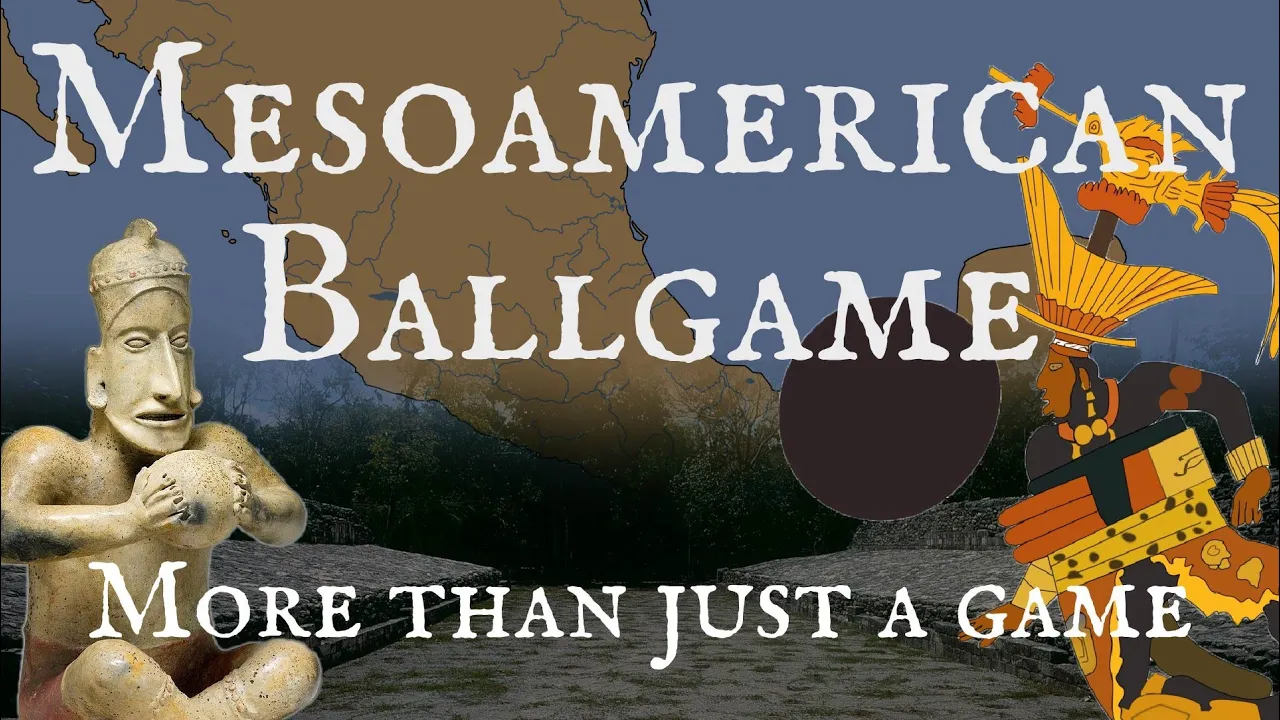
The Mesoamerican Ballgame: More Than Just a Game
54.6K
The Mesoamerican ballgame is widely regarded as the oldest team sport in history, played across Mesoamerica from the Olmec civilization onward and extending to the American Southwest and Caribbean. The standard Nahua version (ullamaliztli) involved striking a 3-4 kg rubber ball with hips, buttocks, or knees, with scoring through bounces, out-of-bounds plays, or successful ring shots. Rubber, obtained from the Panama rubber tree, held profound symbolic significance—the Nahuatl word for rubber (ollin) closely resembled the word for movement. Players protected themselves with yokes (U-shaped torso guards) and yuguitos (knee/forearm protectors). Beyond recreation, the game was deeply embedded in mythology and religion, serving as a bridge between athletic competition and sacred ceremony. Common themes included duality, where opposing teams represented forces of light/darkness, life/death, or good/evil, with black and white stone balls representing night/day or sun/moon.
Click to watch →

Documental, Los Mayas
3.3K
The ballgame was part of ceremonial ritual that almost always concluded with human sacrifices. The game represented celestial movements from east to west and west to east, associated with decapitation rituals. The Popol Vuh describes the ballgame through hero twins Hunahpu and Xbalanque confronting lords of Xibalba (the underworld). Most ballgame courts are underground, symbolizing descent into the underworld. Blood was a crucial metaphor representing essential food gods needed for survival, reflecting the Maya belief that gods needed humans as much as humans needed gods.
Click to watch →
Prerequisite Knowledge
- Concept 01Familiarity with the geography, chronology, and cultural structure of the ancient Maya civilization.
- Concept 02An understanding of the Popol Vuh, the sacred K'iche' Maya text that documents their creation myths and heroic legends.
- Concept 03Basic concepts of Mesoamerican cosmology, specifically the tripartite division of the universe into the heavens, the earthly plane, and the underworld.
- Concept 04The cultural and ritual significance of the Mesoamerican ballgame (pitz), which serves as a central plot device in the Hero Twins' mythos.
Subsequent Learning
- Step 01Analyzing Maya funerary art, iconography, and tomb architecture to see how concepts of Xibalba influenced real-world burial practices and elite ruler deification.
- Step 02Conducting a comparative mythology study of the descent to the underworld (catabasis) across different world cultures, such as Sumerian, Greek, and Egyptian myths.
- Step 03Exploring the astronomical interpretations of the Hero Twins, specifically their association with the cycles of Venus, the Sun, and the Moon.
- Step 04Investigating the political use of myth by Maya kings (Ajaws), who claimed lineage from the Hero Twins to legitimize their divine rule.
Underworld's Terror
Heroes' Descent
Core Challenge
Underworld's Terror
0:00Playing Section
- 1
Describes Xibalba as a nine-level Mayan underworld of torment.
- 2
Details specific horrors like houses of fire, snakes, and bats.
- 3
Introduces its rulers, Hun-Came and Vucub-Came, as architects of suffering.
Colonial Syncretism and Christian Influence in the Popol Vuh
While the descent of the Hero Twins into Xibalba is traditionally studied as a window into ancient Maya mythology, a significant counterpoint in Mesoamerican scholarship highlights the influence of Spanish colonial syncretism. Because the surviving text of the Popol Vuh was transcribed in the 18th century by the Dominican friar Francisco Ximénez, critics argue that the narrative may have been adapted to align with Christian theology. This perspective suggests that the stark moral binary between the 'good' Hero Twins and the 'evil' Lords of Xibalba, as well as the themes of resurrection and self-sacrifice, reflect European concepts of Heaven, Hell, and salvation rather than original, cyclical Maya cosmology. Examining this counterpoint encourages students to view the myth not as a static, purely pre-Columbian artifact, but as a complex, hybrid text shaped by colonial contact and cultural survival.
Deep Dive
Analyzing Maya funerary art, iconography, and tomb architecture to see how concepts of Xibalba influenced real-world burial practices and elite ruler deification.

MIRA! Arqueólogos sorprenden a todo México y al Mundo por hallazgo escalofriante en zona Maya!
501.8K
Maya burial practices at Palenque reveal complex funerary traditions: (1) Secondary burial practices where bodies decomposed elsewhere before bones were reinterred in primary chambers; (2) Consistent burial orientation with 9 out of 10 individuals buried supine with heads facing north; (3) Multiple burial types including primary chambers, secondary deposits, and infant burials; (4) Strong ancestor veneration evidenced by at least six different burial contexts found in excavations. These practices demonstrate standardized yet varied funerary traditions across the Maya civilization.
Click to watch →
216 Infiernos -Tania y Gabe de Leyendas legendarias-
82K
This segment explores Xibalba, the underworld in Maya mythology, described as a physical place consisting of subterranean caves with entrance in Cobán, Guatemala. Unlike Western hell, Xibalba is not a place of eternal suffering but rather the realm of the Maya gods. The most powerful deities are Hunab Ku (meaning 'One Death') and Seven Death (meaning 'Seven Deaths'). The hosts explain that the Popol Vuh, the sacred Maya text meaning 'Book of the People,' preserves these myths. They detail how the Lords of Xibalba cause various diseases and misfortunes, including causing people to cough blood when returning home, representing the consequences of interacting with these powerful underworld deities.
Click to watch →
![현대까지도 비밀이 풀리지 않는 역사상 가장 기이한 문명 '마야' [합본]](https://i.ytimg.com/vi/Hts7WvllSjs/maxresdefault.jpg)
현대까지도 비밀이 풀리지 않는 역사상 가장 기이한 문명 '마야' [합본]
44.7K
The Maya believed the universe consisted of three layers: heaven, earth, and the underworld (Xibalba). They thought souls of the dead traveled to Xibalba, which was not a comfortable place but filled with trials and dangers. According to the Popol Vuh, Xibalba included chambers of darkness, cold winds, jaguars, bats, sharp knives, and fire. In 2009, archaeologist Guillermo de Anda discovered a hidden underground space connected to the Polon Cenote near Chichen Itza, containing stalactites, sharp rocks, and a hidden door to a crystal pyramid. The Maya considered cenotes as gateways to the underworld. Human remains found in cenotes, particularly 80% being children aged 3-11, suggest these were sacrifices to underworld deities to maintain cosmic balance.
Click to watch →

« Civilisations précolombiennes : Mystères & Origines » avec Romain Prioux
50.8K
The presenter explains the Maya belief system regarding the afterlife. According to Maya mythology, when nobles died, their souls would descend to Xibalba, the underworld, where they would be accompanied by deities. The stele from Pacal's tomb depicts this journey, with the figure shown descending through a celestial vehicle. The presenter notes that this interpretation is purely symbolic and represents the Maya cosmological understanding of death and the afterlife.
Click to watch →
Шокирующая правда об Аде: откуда взялась концепция вечного мучения? История с Artifex
140.7K
The Maya had Xibalba, a world of traps requiring enormous effort to reach. The dead crossed three rivers (scorpions, blood, pus), then four 'speaking roads' that confused souls. At the Council of Death, gods mocked the dead and determined their fate. The dead sat on heated benches before being sent to one of six houses containing cold, obsidian knives, bats, or jaguars. To reach Xibalba, one must spend four years walking between crushing mountains with lizards and snakes, crossing eight deserts and climbing eight peaks, facing supernatural winds throwing obsidian blades. The dead rode a small dog to the underworld ruler, who assigned them to one of nine circles of hell.
Click to watch →
Deep Dive
Conducting a comparative mythology study of the descent to the underworld (catabasis) across different world cultures, such as Sumerian, Greek, and Egyptian myths.

Dr Edward Tick: Soul Medicine (Warrior Within S2E4)
200
Catabasis means descent to the underworld throughout mythology—Orpheus bringing back Eurydice, Odysseus and Aeneas needing underworld instructions, Hercules going to the end of the world. The Eleusinian Mysteries taught that the body dies but the soul is immortal, helping people overcome fear of death. The descent is necessary and we descend every night in sleep. We can incubate ourselves at home.
Click to watch →

Did Jesus Really Go to Hell? The Harrowing of Hell Explained
70.1K
Catabasis is a Greek term meaning 'going down,' coined by classicists to describe a widespread literary tradition across ancient cultures where living people descend to the underworld for guided tours. This narrative device appears in Homer's Odyssey (Odysseus meets shades in Hades), Virgil's Aeneid, Jewish texts, and early Christian writings. The primary function of catabasis is pedagogical: showing what the afterlife is like to teach proper living. In the Odyssey, the depiction of equal treatment of heroes and cowards as shadowy, bodiless existences teaches that prolonging life and enjoying family is preferable to dying gloriously in battle. This literary tradition provides context for understanding similar narratives in early Christian texts about Jesus' descent to Hades.
Click to watch →

CONJUROS PARA LIBRARSE DEL INFIERNO Y ALCANZAR LA FUENTE: Los Egipcios lo Sabían
102.9K
Ancient Egyptians and Sumerians developed sophisticated underworld beliefs. Egyptians described Duat, where Ra traveled daily on his boat to confront Apep, and Osiris became lord of the underworld. Sumerians described Ki Gal, ruled by Nergal and Ereshkigal, with seven gates and demonic Galla beings. Both cultures believed neither heavenly nor underworld gods could freely move between realms. The deceased undertook a 70-day journey through Duat, encountering demons and wise guides. A central ceremony involved Anubis weighing the heart against Ma'at's feather, determining the soul's fate based on moral deeds.
Click to watch →
Yaradılış ... ( Kuran-ı Kerim , Tevrat - İncil , Sümerler , Mısır ve Yunan Mitolojisinde yaratılış )
158
This segment examines creation narratives from three major ancient civilizations. Greek mythology begins with Chaos, an infinite void, from which emerged Gaia (Earth), Tartarus (Underworld), and other primordial beings. The Titans were created from these beings, and Zeus eventually overthrew them. Zeus created humans by mixing his tears with earth, intending to create beings who would challenge the gods. He gave humans various animal traits. As punishment for Prometheus stealing fire, Zeus created Pandora, a woman made from clay, water, and earth. Despite warnings, Pandora opened her box, releasing all evils except hope. Egyptian mythology began with Nun, a vast darkness and water source. From this emerged a luminous substance that formed the earth, followed by the Sun God Ra creating the sky, rivers, and all living things. Sumerian mythology began with a cosmic ocean from which the earth and sky emerged. The gods, tired from their work, created humans from clay to serve them. All three traditions share water as a primordial substance but differ in their specific creation narratives and the role of divine beings.
Click to watch →

Homer's Iliad: Poem of War and Death (5/5)
386
Priam's journey to Achilles' tent constitutes a figurative descent into the underworld (catabasis), an archetypal motif found across world literature from the Epic of Gilgamesh to Dante's Divine Comedy and Milton's Paradise Lost. This descent involves several symbolic elements: references to going 'down to the house of death,' Hermes escorting Priam (as Hermes serves as psychopomp, guide of souls), riding in a wagon (typically used for carrying bodies to burial), passing over water (like crossing the river Styx in underworld depictions), and passing unseen through the Greek camp like a ghost. The journey parallels agricultural rituals involving planting seeds that go into the underworld (earth) to produce new life. For heroes undertaking catabasis, the descent often brings heightened awareness of human limits and acceptance of mortality. In Priam's case, this journey enables him to achieve new understanding and rebirth, allowing him to return home transformed.
Click to watch →
Deep Dive
Exploring the astronomical interpretations of the Hero Twins, specifically their association with the cycles of Venus, the Sun, and the Moon.
Popol Vuh: The Creation Myth of the Maya
2.4K
The Popol Vuh is the sacred creation story of the Maya people from Guatemala and Mexico. It tells the story of the birth of the Sun and Moon and the sewing of the first corn. The Maya drew pictures of these sacred stories on paper buried in graves and tombs to guide the dead through the underworld. The story begins with only the sky and sea existing, then the former, shaper, and plumed serpent created trees, shrubs, and humanity through three failed attempts: mud (which couldn't multiply), wood (which had no hearts or minds), and finally the successful creation of the hero twins. One Hunter and Seven Hunter were born in the darkness of nighttime. One Hunter married an alligator parrot, and their sons were one howler and one monkey, both magicians. The evil Lords of Xibalba (One Death, Seven Death, P Maker, Bile Maker) wanted the miraculous rubber ball and tricked the ball players, sacrificing them. Little Blood, a maiden, went to the miraculous tree and picked a skull that had turned around on branches. She told the Lords to take the sacred sap kopal, which bewitched them and defeated the Lords of sickness, death, and darkness. Little Blood climbed to Earth and told her grandmother that her sons died in the Underworld and she had two grandchildren, one howler and one monkey. The grandmother tested her by sending her to the field of corn, where there was only one stock of corn. The grandmother believed she was her daughter-in-law. The twins, Hunter and Jaguar Deer, were born at dawn but their grandmother wouldn't receive them. The older brothers were jealous and wanted the twins to die on thorns, but the twins grew up in the mountains hunting food. They were always hungry and never given food or warmth. The twins cleared fields and sowed corn to trick their grandmother into feeding them. At midnight, animals came talking in their own language, saying 'rise tree, walk.' Deer and rabbit lost their tails, but the twins burned up trying to catch animals. They caught a rat who told them their father's gaming things were hidden in the roof. The twins tricked their grandmother and got rid of her. The Lords of Xibalba heard them playing ball and sent owls to call them. The grandmother agreed to tell the twins of the summons and wept, remembering her sons who died in the Underworld. The owl told the twins to come to Xibalba within 7 days. The owl crawled to a toad, who swallowed him, then a hawk swallowed the snake, and flew to the ball court. The twins pushed on the toad until his back was like it is today. The grandmother told them they must go play ball with the Lords of Xibalba in seven days. They passed Seven Ma, who said 'I am the Sun, the light, the moon.' Heart of Sky told the twins to shoot him. They shot him in the jaw and took out his teeth, eyes, and jewels, leaving plain white corn in its place. Seven days passed and the twins went down to the canyons, scorpions, and Xibalba River. They crossed the deadly water on their blue guns. At the crossroads, they were not confused like their fathers had been and set a spy ahead to learn the Lords' names. Knowing names takes power away from evil. The twins attached fireflies to their cigars and red parrot feathers to their torches, passing the first trial. The Lords were troubled and wanted to play ball to use their power. The twins countered and their ball went through the ring, ending the game. The Lords locked the twins in the house of knives. The twins spoke to the knives, saying 'what is yours is the flesh of all animals.' The knives became still. The twins sent knife ants to cut flowers from the garden, and the watchmen never noticed them. The twins came out with red, yellow, white, and black blossoms. The Lords split the owl's mouths as punishment. They locked the twins in the house of cold, which the twins destroyed by lighting fires. The Lords locked them in the house of jaguars, then the house of bats. The underworld rejoiced as Hunter's head rolled around the ball court. Jaguar Deer called all animals to bring food, and Kaati brought a pumpkin to become Hunter's head. Pum was called to delay the dawn four times so Heart of Sky could finish the face. The twins saw the head of Hunter at the ball court and said 'we've been winning, you're already finished.' The ball flew up and out of the court. Rabbit bounded off and all of Xibalba chased him. Jaguar Deer exchanged the pumpkin for Hunter's head. The pumpkin head smashed into the wall and sprayed seeds over all the Lords, defeating them.
Click to watch →

The Five Suns
3.2K
The Popol Vuh, the sacred creation text of the Maya people of Guatemala and Mexico, tells the story of the hero twins Hunter and Jaguar Deer who, after being born from the sacrifice of their father One Hunter, journeyed through the underworld of Sheibbala, defeated the evil lords of sickness and darkness through wit and courage, and ultimately sacrificed themselves by jumping into fire to become the sun and moon, bringing light to the earth and establishing the cosmic order that continues to this day.
Click to watch →
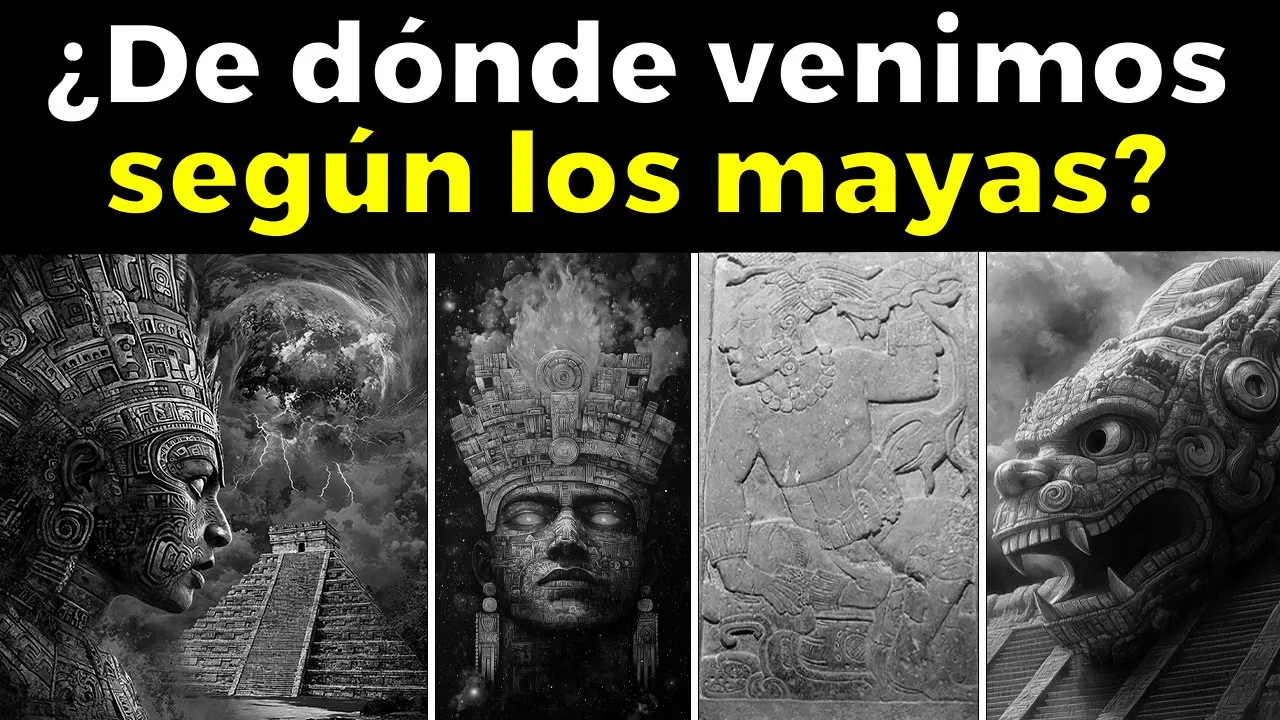
¿De dónde venimos según los mayas? - El misterio de la MITOLOGIA MAYA
852K
After the creation story, the Popol Vuh narrates the adventures of Hunahpu and Xbalanque, legendary twin heroes who defeated the lords of Xibalba (the underworld). These twins represent complementary forces and underwent many trials demonstrating their power and capability. After defeating the underworld lords, they imposed conditions that the inhabitants must renounce doing evil. The twins then became the deities of the moon and sun respectively, establishing their eternal roles in the Maya cosmos.
Click to watch →
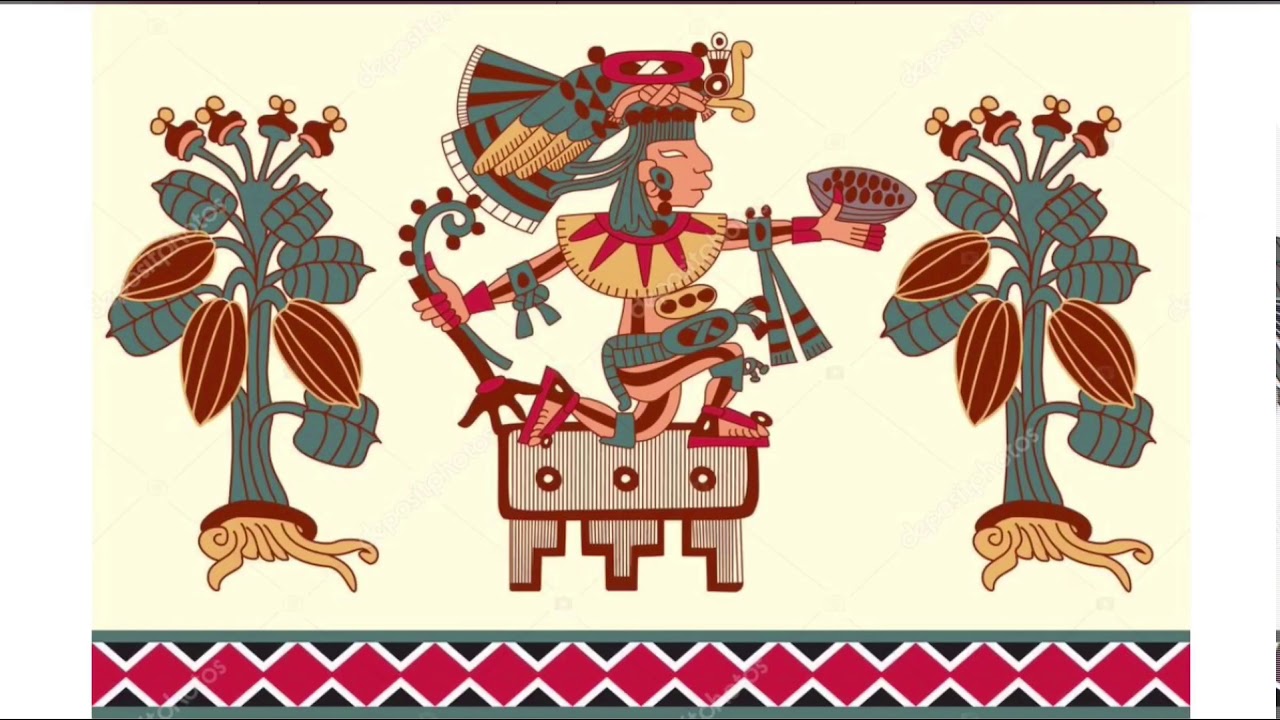
ECHOES OF SOURCE IN THE MAYAN POPUL VUH
603
The Mayans describe the hero warrior twins and their cosmic ball game, representing significant ritual and cosmic events. The twins carried blowguns and descended in the direction of Sababa, then rose up in the midst of light and were lifted into the sky. One twin was given the Sun and the other the Moon, lighting up the arch of heaven and the face of the earth. They dwelt in heaven, representing cosmic origins and the establishment of celestial order. The imagery includes a goddess with a configuration transforming into a winged disc and descending mountain, symbolizing cosmic transformation and the connection between celestial and terrestrial realms. This narrative represents the Mayan understanding of cosmic origins and the establishment of celestial order through divine intervention.
Click to watch →

Historias del Universo Maya (Tales Of The Maya Skies)
44.3K
The Maya civilization developed a sophisticated understanding of the cosmos through the integration of mythology, astronomy, and mathematics. According to Maya creation myths, the world emerged from primordial darkness when the gods established the four cardinal directions, called forth the earth from the depths, and summoned the first mountain. The universe was structured in three levels: the sky, the earth, and the underworld Xibalbá, connected by the Tree of Life. The Maya believed humans were created from maize after failed attempts with clay and wood. The legend of the Hero Twins, Hunahpu and Xbalanque, explains the creation of the sun and moon. These twins, skilled ball players with magical powers, traveled to Xibalbá to rescue their father from the lords of death. Through their courage and abilities, they defeated the underworld lords and revived their father. The twins then ascended to become the sun and moon, bringing light to the world. The Maya developed sophisticated timekeeping systems based on celestial observations, tracking seasonal changes caused by Earth's axial tilt. They began observations by marking the horizon where the sun rises, using stakes and shadows to track the sun's movement. They built observatories to study the skies, marking equinoxes and solstices. The Maya created a sophisticated calendar system: 20 days per month, 18 months per year (360 days), plus 5 ritual days for a 365-day calendar. They were the first civilization to invent and use zero as a mathematical symbol. The Maya city of Chichén Itzá was built with precise astronomical alignments. The Kukulkan Temple has 365 steps representing the days of a year. During the spring equinox, sunlight cascades down the pyramid's staircase in a serpentine pattern. For over 2,000 years, Maya astronomers observed celestial bodies with remarkable precision, predicting total solar eclipses once every 370 years. Venus held special significance for the Maya as an oracle announcing good or bad agricultural seasons. Maya astronomers tracked Venus's movements by observing it at the same time and place each day, discovering its complex pattern of appearing and disappearing. This pattern earned Venus the nickname 'the dancing wasp.' The Maya built the observatory El Caracol specifically to study Venus, with its staircase facing 27.5 degrees north of west, matching Venus's northernmost position. The Maya understood that Venus's movements repeat in an 8-year cycle. They developed the Long Count calendar, spanning approximately 5,000 years from 3114 BCE to 2012 CE. For the Maya, reaching the end of this complete calendar cycle was a time of celebration. The Maya perceived everything as interconnected—the earth and its people, the sun, moon, and stars. Today, approximately 7 million Maya people continue to maintain their ancestral traditions, with their science, art, and mythology interwoven like a fabric passed down through generations for 2,000 years.
Click to watch →
Deep Dive
Investigating the political use of myth by Maya kings (Ajaws), who claimed lineage from the Hero Twins to legitimize their divine rule.
¿De dónde venimos según los mayas? - El misterio de la MITOLOGIA MAYA
852K
After the creation story, the Popol Vuh narrates the adventures of Hunahpu and Xbalanque, legendary twin heroes who defeated the lords of Xibalba (the underworld). These twins represent complementary forces and underwent many trials demonstrating their power and capability. After defeating the underworld lords, they imposed conditions that the inhabitants must renounce doing evil. The twins then became the deities of the moon and sun respectively, establishing their eternal roles in the Maya cosmos.
Click to watch →
Popol Vuh: The Creation Myth of the Maya
2.4K
The Popol Vuh is the sacred creation story of the Maya people from Guatemala and Mexico. It tells the story of the birth of the Sun and Moon and the sewing of the first corn. The Maya drew pictures of these sacred stories on paper buried in graves and tombs to guide the dead through the underworld. The story begins with only the sky and sea existing, then the former, shaper, and plumed serpent created trees, shrubs, and humanity through three failed attempts: mud (which couldn't multiply), wood (which had no hearts or minds), and finally the successful creation of the hero twins. One Hunter and Seven Hunter were born in the darkness of nighttime. One Hunter married an alligator parrot, and their sons were one howler and one monkey, both magicians. The evil Lords of Xibalba (One Death, Seven Death, P Maker, Bile Maker) wanted the miraculous rubber ball and tricked the ball players, sacrificing them. Little Blood, a maiden, went to the miraculous tree and picked a skull that had turned around on branches. She told the Lords to take the sacred sap kopal, which bewitched them and defeated the Lords of sickness, death, and darkness. Little Blood climbed to Earth and told her grandmother that her sons died in the Underworld and she had two grandchildren, one howler and one monkey. The grandmother tested her by sending her to the field of corn, where there was only one stock of corn. The grandmother believed she was her daughter-in-law. The twins, Hunter and Jaguar Deer, were born at dawn but their grandmother wouldn't receive them. The older brothers were jealous and wanted the twins to die on thorns, but the twins grew up in the mountains hunting food. They were always hungry and never given food or warmth. The twins cleared fields and sowed corn to trick their grandmother into feeding them. At midnight, animals came talking in their own language, saying 'rise tree, walk.' Deer and rabbit lost their tails, but the twins burned up trying to catch animals. They caught a rat who told them their father's gaming things were hidden in the roof. The twins tricked their grandmother and got rid of her. The Lords of Xibalba heard them playing ball and sent owls to call them. The grandmother agreed to tell the twins of the summons and wept, remembering her sons who died in the Underworld. The owl told the twins to come to Xibalba within 7 days. The owl crawled to a toad, who swallowed him, then a hawk swallowed the snake, and flew to the ball court. The twins pushed on the toad until his back was like it is today. The grandmother told them they must go play ball with the Lords of Xibalba in seven days. They passed Seven Ma, who said 'I am the Sun, the light, the moon.' Heart of Sky told the twins to shoot him. They shot him in the jaw and took out his teeth, eyes, and jewels, leaving plain white corn in its place. Seven days passed and the twins went down to the canyons, scorpions, and Xibalba River. They crossed the deadly water on their blue guns. At the crossroads, they were not confused like their fathers had been and set a spy ahead to learn the Lords' names. Knowing names takes power away from evil. The twins attached fireflies to their cigars and red parrot feathers to their torches, passing the first trial. The Lords were troubled and wanted to play ball to use their power. The twins countered and their ball went through the ring, ending the game. The Lords locked the twins in the house of knives. The twins spoke to the knives, saying 'what is yours is the flesh of all animals.' The knives became still. The twins sent knife ants to cut flowers from the garden, and the watchmen never noticed them. The twins came out with red, yellow, white, and black blossoms. The Lords split the owl's mouths as punishment. They locked the twins in the house of cold, which the twins destroyed by lighting fires. The Lords locked them in the house of jaguars, then the house of bats. The underworld rejoiced as Hunter's head rolled around the ball court. Jaguar Deer called all animals to bring food, and Kaati brought a pumpkin to become Hunter's head. Pum was called to delay the dawn four times so Heart of Sky could finish the face. The twins saw the head of Hunter at the ball court and said 'we've been winning, you're already finished.' The ball flew up and out of the court. Rabbit bounded off and all of Xibalba chased him. Jaguar Deer exchanged the pumpkin for Hunter's head. The pumpkin head smashed into the wall and sprayed seeds over all the Lords, defeating them.
Click to watch →
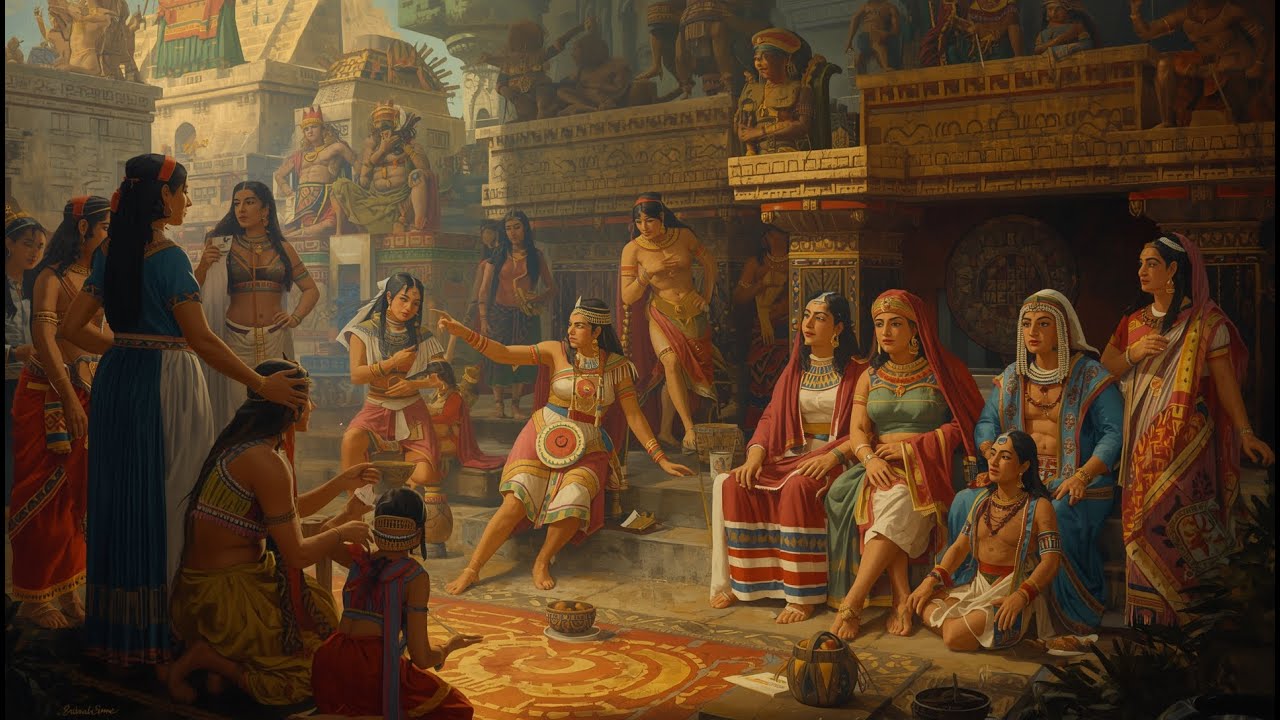
The ENTIRE Story of Mayan Mythology – Full Detailed Documentary
5.3K
Maya kingship was a sacred institution rooted in mythology, where the ruler (ajaw) was the living intermediary between human and divine worlds. Kings claimed descent from mythological ancestors, especially the hero twins or maize gods, linking authority to sacred precedent. Accession rituals were timed according to calendar cycles, aligning the king's rise with auspicious dates. The act of taking the throne was described as transformation, with the new ruler becoming a conduit for divine power. Kings performed bloodletting, offering their own blood to the gods as sacrifice and demonstration of fitness to rule. This was not merely political power but sacred responsibility to maintain cosmic balance. Kings were patrons of monumental architecture, building temples aligned with celestial events to anchor their cities within the universe.
Click to watch →

La Verdad ASOMBROSA Detrás de la Civilización Maya!
14.2K
Maya noblewomen were not decorative figures but orants, sacrificants, and visionaries. They actively participated in rituals, political acts, and calendar cycles, carrying sacred lineage blood and sometimes supreme power scepters. Some governed as Ajaw with full authority, leaving names inscribed on stelae and lintels. Beyond blood sacrifice, Maya rituals included dances imitating planetary movements, food offerings cooked on specific dates, incense ascending to connect invisible planes, precious objects aligned with stars, sacred chants invoking solar or rain deities, and processions tracing ritual routes through cities charged with territorial symbolism. The ball game was not sport but moving ceremony, physical representation of cosmic struggle between day and night, life and death, Hero Twins and underworld lords. Courts were designed as passages between worlds, representations of underworld caverns.
Click to watch →

El Popol Vuh :: Mitología Americana - Los Mayas :: DocuHistory
10.4K
This video presents the complete Mayan creation myth. The gods Guacamatz and Huracán created the world, animals, and humanity through multiple attempts: clay humans (destroyed), wooden humans (destroyed by flood), and maize humans (intelligent but punished). The twin heroes Hunahpu and Xbalanque challenged the envious lords of Xibalbá to a ball game. The twins faced supernatural trials in the underworld, defeated the lords, and transformed into the sun and moon. This narrative illustrates the Mayan understanding of creation, divine punishment, and the eternal cosmic conflict between light and darkness.
Click to watch →
Underworld's Terror
Heroes' Descent
Core Challenge
Underworld's Terror
0:00- 1
Describes Xibalba as a nine-level Mayan underworld of torment.
- 2
Details specific horrors like houses of fire, snakes, and bats.
- 3
Introduces its rulers, Hun-Came and Vucub-Came, as architects of suffering.
Colonial Syncretism and Christian Influence in the Popol Vuh
While the descent of the Hero Twins into Xibalba is traditionally studied as a window into ancient Maya mythology, a significant counterpoint in Mesoamerican scholarship highlights the influence of Spanish colonial syncretism. Because the surviving text of the Popol Vuh was transcribed in the 18th century by the Dominican friar Francisco Ximénez, critics argue that the narrative may have been adapted to align with Christian theology. This perspective suggests that the stark moral binary between the 'good' Hero Twins and the 'evil' Lords of Xibalba, as well as the themes of resurrection and self-sacrifice, reflect European concepts of Heaven, Hell, and salvation rather than original, cyclical Maya cosmology. Examining this counterpoint encourages students to view the myth not as a static, purely pre-Columbian artifact, but as a complex, hybrid text shaped by colonial contact and cultural survival.
Familiarity with the geography, chronology, and cultural structure of the ancient Maya civilization.
An understanding of the Popol Vuh, the sacred K'iche' Maya text that documents their creation myths and heroic legends.
Basic concepts of Mesoamerican cosmology, specifically the tripartite division of the universe into the heavens, the earthly plane, and the underworld.
The cultural and ritual significance of the Mesoamerican ballgame (pitz), which serves as a central plot device in the Hero Twins' mythos.
Analyzing Maya funerary art, iconography, and tomb architecture to see how concepts of Xibalba influenced real-world burial practices and elite ruler deification.
Conducting a comparative mythology study of the descent to the underworld (catabasis) across different world cultures, such as Sumerian, Greek, and Egyptian myths.
Exploring the astronomical interpretations of the Hero Twins, specifically their association with the cycles of Venus, the Sun, and the Moon.
Investigating the political use of myth by Maya kings (Ajaws), who claimed lineage from the Hero Twins to legitimize their divine rule.
560 views8likes5:03@MysticsMatterOriginal Release: 2024-08-08
Xibalba. A name whispered in hushed tones, a place etched into the collective nightmare of the Maya.
It was not merely a realm; it was an abyss, a chasm yawning at the foundations of existence.
A realm where light feared to tread, where shadows were not merely absence but a malignant presence.
Described as a labyrinth of terror, Xibalba was a place of nine infernal levels, each more dreadful than the last. The descent began in a chilling expanse, a glacial wasteland where hope froze and despair reigned. Deeper, the air grew heavy with the stench of sulfur, the ground trembled with the heat of an eternal forge. Here, in the House of Fire, souls were purified in agony, their essence consumed by the relentless flames. But the torments were only beginning. Beyond lay the House of Serpents, a writhing mass of venomous creatures, their eyes glinting with malice. To survive, one had to navigate a treacherous path, dodging fangs and poison, with every step a gamble with death. And then, the House of Jaguars, a domain of darkness where stealthy predators stalked their prey in perpetual twilight. A single misstep could mean becoming a feast for these monstrous cats. Yet, these were mere appetizers for the horrors that lurked in the heart of Xibalba. The House of Darkness was a void of perception, where sightless terror consumed the soul. The House of Knives was a torture chamber beyond imagination, where invisible blades carved at the flesh. And finally, the House of Bats, a realm of eternal night filled with the screeching cacophony of these winged creatures, their leathery wings a constant threat. The rulers of this infernal domain, Hun-Came and Vucub-Came, were architects of suffering, their twisted minds devising endless torments. Their palace, a sinister edifice of obsidian and human sacrifice, stood as a grim monument to their power. The air was thick with the cries of the damned, a mournful symphony that echoed through the corridors of Xibalba. To enter Xibalba was to invite oblivion, to challenge the very fabric of existence. Yet, there were those who dared to defy the underworld. The Hero Twins, Hunahpu and Xbalanque, would write a legend against this backdrop of terror. But their tale is a saga of courage, cunning, and sacrifice, a story that would reverberate through time.
Hunahpu and Xbalanque, their names whispered with reverence and fear, were no ordinary mortals. Sons of a god and a mortal woman, they carried within them a spark of divine power. Their father, a skilled ballplayer, had unwittingly challenged the Lords of Xibalba, a fatal mistake that sealed his doom. Yet, from this tragedy, a legend was born. The twins grew amidst tales of their father's demise, their hearts filled with a burning desire for vengeance. Xbalanque, the elder, was a master of illusion and deception, his mind a labyrinth of cunning strategies. Hunahpu, the younger, possessed raw strength and an indomitable spirit. Together, they were a force to be reckoned with.
Their journey to Xibalba was a descent into the unknown, a plunge into the abyss. The entrance, a gaping maw in the earth, was a portal to a world turned upside down. As they ventured deeper, the ground trembled beneath their feet, the air grew thick with an oppressive silence. The first level, a frozen wasteland, tested their endurance. Shivering, they pressed on, their determination as cold as the icy wind that whipped around them. The second level, a fiery inferno, was a trial of their physical and mental fortitude. Flames licked at their bodies, the heat a relentless torment.
Yet, they endured, their spirits unbroken. The House of Serpents was a slithering nightmare, a labyrinth of death where a single misstep could be fatal. With every rustle of leaves, they braced themselves for the strike, their hearts pounding in their chests.
As they delved deeper, the challenges became more sinister. The House of Jaguars was a realm of shadows, where fear was their constant companion. The stealthy predators stalked them, their eyes glinting with predatory hunger. The House of Darkness was a sensory deprivation chamber, a world without sight where paranoia gnawed at their minds.
With each level, the twins grew stronger, their bond deepening. Their courage was tested to its limits, their faith in each other their only solace. As they approached the heart of Xibalba, they knew the greatest challenges lay ahead. The Lords of Death awaited, their malevolent laughter echoing through the corridors of despair
Up Next
99:51
History of Human Emotions: How Cultural Forces Shape Feeling
@TheWeekendUniversity
4.2K views•2019-12-22

33:02
The Great Schism of 1054: Causes and Consequences
@SacredCathedrals
113.5K views•2026-02-19

91:57
The Geopolitics of the Ukraine War and the Rise of Global Autocracy
@JordanHarbingerShow
468K views•2025-04-19
17:05
Understanding the Cold War: Superpower Conflicts and the Road to Détente
@OverSimplified
46.1M views•2019-01-24
Related Study Plans & Knowledge Roadmaps
Structured learning paths in History
history
Byzantine Iconoclasm: Theology, Art & Politics
01Foundations of Byzantium and Early Christian Images
02The First Iconoclasm: Leo III and the Crisis of Images
03Empress Irene, Nicaea II, and the Second Iconoclasm
+ 2 more learning modules
9h5 modules
Explore Roadmap
history
Iranian Revolution (Causes, Events & Legacy)
01The Pahlavi Dynasty and the Roots of Discontent
02The Spark of Rebellion and the Rise of Khomeini
031979: The Fall of the Shah and the Climax of the Revolution
+ 2 more learning modules
8h5 modules
Explore Roadmap
history
Mali Empire: Mansa Musa, Trade & Timbuktu
01Foundations of the Mali Empire
02The Trans-Saharan Gold and Salt Trade
03The Reign and Pilgrimage of Mansa Musa
+ 1 more learning modules
6h4 modules
Explore Roadmap
history
1947 Partition: Politics, Borders & Legacies
01Foundations of British India and the Divide
02The Political Negotiations and the Mountbatten Plan
03Drawing the Boundary: The Radcliffe Line
+ 2 more learning modules
8h5 modules
Explore Roadmap