








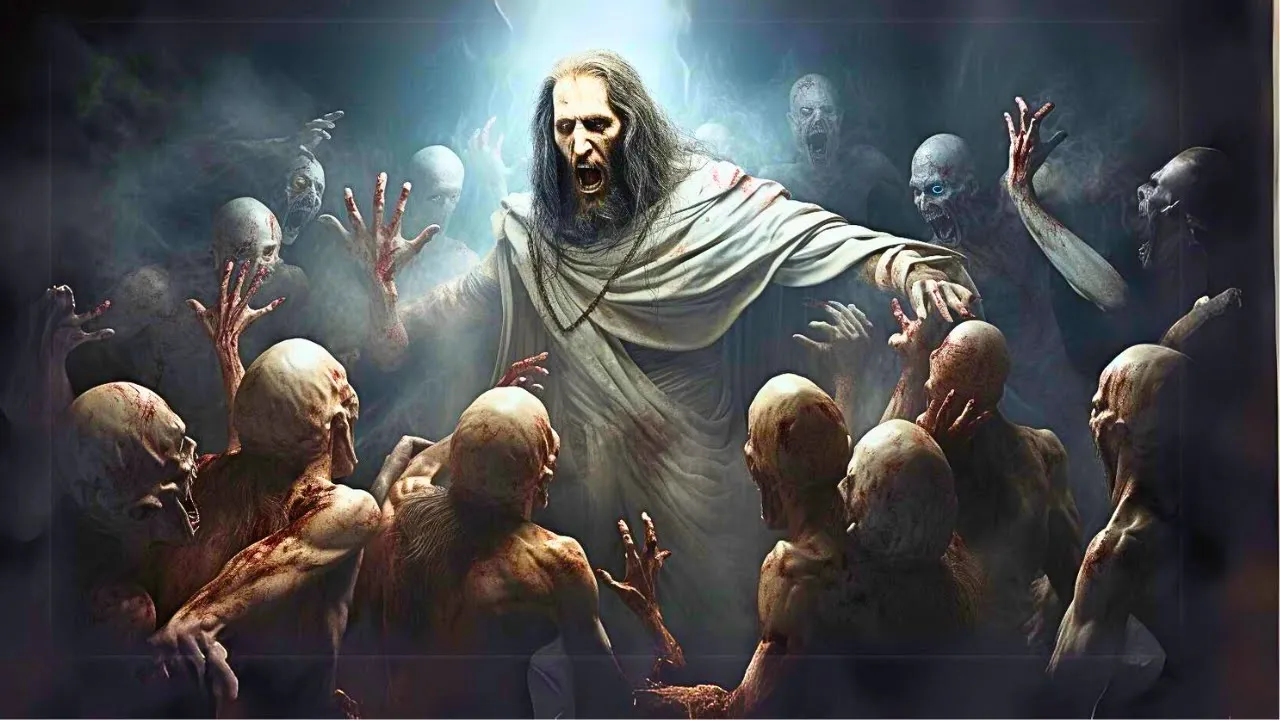
















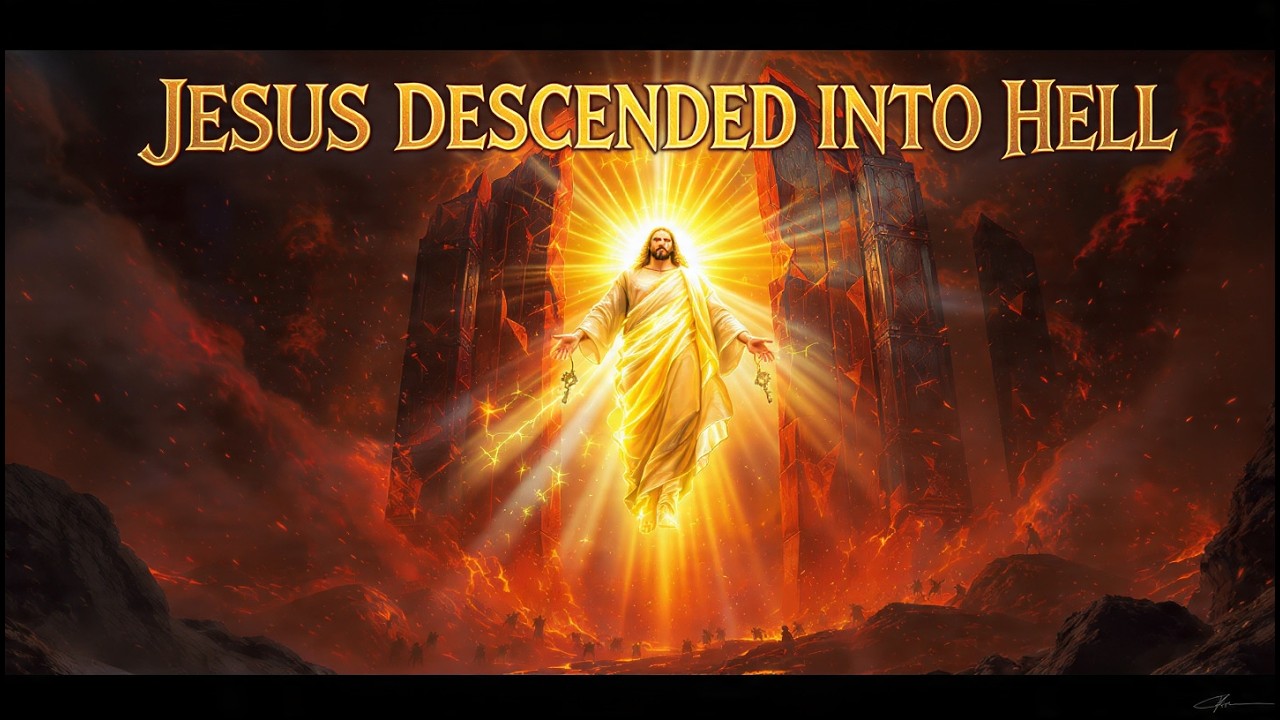

The harrowing of hell is an early Christian doctrine describing Jesus' journey to the realm of the dead between his crucifixion and resurrection, where he liberates souls from eternal torment. This concept emerged from ancient catabasis traditions (guided tours of the underworld) found in Greek, Roman, Jewish, and early Christian texts. Early Christians debated whether Jesus preached salvation to the righteous dead or demonstrated absolute power to save everyone, with universalist interpretations (like the original Gospel of Nicodemus) being modified over time to align with orthodox theology. This doctrine reflects broader tensions in Christian theology between God's love and justice, and it has experienced renewed interest in modern times as many Christians question the compatibility of eternal conscious torment with a loving God.
Did Jesus Really Go to Hell? The Harrowing of Hell Explained
Added:good morning everyone welcome back to misquoting Jesus one of the most appealing Concepts in Christianity is the escape of Eternal damnation through the power of Jesus Christ but who gets saved and what roles individuals play in their own salvation is something that has been the subject of discussion debate and controversy today we're going to be talking about one of the earliest controversies and asking why if Jesus died for our sins and conquered hell Christian theology continues to preach Hellfire and Damnation stay tuned for all of that and so much more welcome to misquoting Jesus with Bart Man the only show where a six-time New York Times best-selling author and world-renowned Bible scholar uncovers the many fascinating little known facts about the New Testament the historical Jesus and the rise of Christianity I'm your host Megan Lewis let's begin early Christian texts describe the horrors of hell and Christ's descent and subsequent liberation of the Damned why then is Hell still an everpresent threat for many Christians and how does that reflect upon the power of Jesus if Jesus is all powerful and vanquished hell then why are sinners still threatened with torment we'll be getting to that in a couple of minutes but before we do Bart good morning how are you today good morning yeah okay the Cheery topic for us and so I'm I'm really it's something I've been writing about lately and so I'm glad to glad to be dealing with us H H how are you doing good good A little bit of a whirlwind but very good thank you yeah Whirlwind yeah so uh to nor normally Megan we start with you asking me some kind of question and we were chatting ahead of the uh the episode just now and I realize I want to ask you a question you you you're telling me you have you run this Enterprise digital hamurabi your with your husband Josh Bowen and you told me that that he started teaching Hebrew to people as part of digital hamurabi and that you you all are starting to have other courses that people can take of ancient languages tell I'm amazed tell me about this uh well it started because I I have taught a few courses for Community College out in Washington State uh Acadian language and Sumerian language which have been very well received people seem to enjoy them and we semi-regularly have had people asking how can I take classes with you guys do you teach Hebrew or anything else do you know where I can take like hitti language classes um and it occurred to me that given we both have this training and Josh has taught Hebrew Sumerian and Acadian for several years each and we have a very good Network I would say of either graduate students or recently graduated students who have these specialities in ancient languages that it would be a good idea to start offering some kind of language courses for people who are interested and want to learn more but don't want to go through the whole university process because that's quite long and drawn out so to kind of test out the theory we decided that Josh should start out teaching introduction to Hebrew which his first class was last night and it went really really well he has 25 students signed up which is the maximum that we were prepared to take for the first one people have been really really interested in it and then in a couple of weeks time we've got our friend uh Dr Jill Waller who's an egyptologist she's going to start teaching middle Egyptian um and this summer is kind of our test case so if the summer goes well I think we're going to start adding um more languages and then extending the the difficulty level so we'll do yes like intro and then advanced classes as well yes do do people pay for this yes uh at the moment we've started out at $150 per class and the way we're trying to do it is give the the tutors as much of that as we can so we're giving them 80% of all tuition fees um taking a little bit to cover things like overheads we have to obviously pay for an extended Zoom license and advertising and all that kind of thing so at the moment $150 and the Hebrew class is uh 10 weeks um hour and a half classes each week and then middle Egyptian Jill's running that for six weeks but it's two 1 hour classes every week we give it this me get the class the the particular class is an hour and a half but the core are they paying for the course $150 yes the whole course mhm for how for how many weeks 10 or six depending on $5 an hour that's fantastic are you kidding me wow because because they we're hoping to get volume no no I get remotely and it is this is a great idea so uh okay so those of you out there whove been you know wanting to learn middle Egyptian this is your chance oh my god really I need to take some of the hieroglyphs and everything it's going to be great weirdly I used to teach Hebrew I mean I was it was really a mistake to ask me to do I he but but I did and uh man that's fantastic wow okay so uh all right well congratulations I'm I yeah people this would be a good one to spread the word on yeah and I'm not very good on Advertising but it's it's something that uh we'll have to I think ramp up I think if we decide to do it um more extensively but if people are interested you can go to the website digital ham.com and just sign up for the mailing list and I'm sending all of the course information out through there excellent okay great thank you thanks of course that's my absolute pleasure um so onto our delightfully depressing depressing is probably not the right word um well it's uplifting because Jesus Takes people out of hell that's true that is very true so this this is an uplifting episode about hell and damire and hellfire and torment and all that kind of thing so my first question that you did point out is probably not the best one to start with is what is a catabasis um and this is a Greek word and yes I'm going to just let you okay go with it what is it and why is it interesting I wrote a book on catabasis that came out last year and I was going to call I wanted to call it katabasis my publisher said no you're not absolutely not and most Scholars don't even know what the word means so the katabasis it is a Greek word uh and it it means literally means going down going down and it's a technical word that was I suppose invented by classicist was invented and the Word was there but uh classicists Ed the term catabasis to refer to uh a kind of story that was common in many cultures of the ancient world in which somebody would go down to the underworld and and see what it was like a living person would go down uh and often be given some kind of guided tour the Realms of the Dead to see what it like then come back and report on it you get you you get visits to the dead in a wide range of cultures as I've said but my the book I wrote is called Journeys to heaven and hell it's an academic book although some you know lay people are reading it some but it's it's about the this idea of Journeys down to the to the underworld that are in the Greek starting with Homer uh and in the Roman including Virgil uh and in the Christian jewi tradition and in the Christian tradition my main interest is these Christian stories of people being given guided tours of heaven and hell that we have in in early Christian writings including one that almost made it into the New Testament The Apocalypse of Peter that was nearly included in the New Testament instead of the Apocalypse of John and so it this these were uh they were very popular stories through the Middle Ages um and so a catabasis refers to this and so the reason I studied Greek and Roman and Jewish examples because I wanted to put the Christian ones in context and we have a number of examples within early Christian texts of people going down to Hell or of Christ himself stories of Christ going down to Hell and bringing people out of hell and so that's what my book is about and so that so that's that's what katabasis is and I wanted to call the book catabasis because I wanted people to know yeah this will be a hard Hardo book this is a serious book it it is an excellent book I read it um in preparation for uh recording today now if we're looking at the context in which the Christian katabasis kabes not sure about yeah kabes Eis it turns out um occur were the kind of Greek and Roman examples are they primarily literary are they used for some kind of moralistic teaching what function do they serve so it so part of my book is trying to explain how different different ones of these downward Journeys functioned in their literary and historical contexts and you know part of them part of these stories are sometimes they're meant to describe what it's like down there just that you know and so like in uh in The Odyssey of Homer Homer in book 10 of the Odyssey Odysseus himself is uh told to go down to the underworld to get some instruction about how he can get back home he's on a 10year Journey trying to get home desperately and there's a there's a prophet in Hades who can tell him and so o Odus goes down he he finds the roote down into Hades and he he meets people there including his mother who's recently died and famous people who fought with him in the Trojan War and this prophet tesus and and so there so part of it is you're learning what it's like and the ha and you learn what the Greek conception at least for Homer what the Greek conception of Hades was like which is it's not pleasant I there there were no there were no tortures but everybody went there no matter who they were and everybody was treated the same there it didn't matter whether you were a hero or a coward it didn't matter whether you're righteous or a sinner it didn't matter like everybody is this kind of bodyless existence where they're like Shadows they're called shadows and they have no strength they can't speak there's nothing going on down there and it's just like people exist exist down there in this realm and part of the point of that is you should prolong your life you know because this is what it's going to be for the rest of Eternity and for everyone and so for the for the Odyssey it's functioning in a literary way because it's trying to show contrary to the other book The Iliad Homer's Iliad the point of the ilad in large part is the importance of heroic action and to be willing to die on the battlefield for Glory and the Odyssey in some ways kind of undo that where it says actually it's it's better not to die in the battlefield it's better to prolong your life and to enjoy your your family and your home and your you know and to and so it's a different different take on it but the so this catabasis in the Odyssey functions that way and each catabasis whether it's in Virgil or whether it's a Jewish one or a Christian one has both of these things going on to show you what it's like in order to teach you something about life about how you ought to be living so what is the earliest example we see of this from Christianity so the there the earliest actual example we have is this H book I mentioned The Apocalypse of Peter uh which was the reason I decided to write my book in the first place I got really interested in this text I I'd known about it for many years but I got increasingly interested in it especially in relationship to another one called The Apocalypse of Paul so um the the apoc just a couple words about both of those The Apocalypse of Peter is the first one we have and in it Peter is given a guided tour of Heaven and Hell by Jesus himself Jesus shows him what the fates are like both for those for the Damned and for the saved Peter wants to know when the end of the world is going to come and Jesus shows him what the afterlife is going to be um it's a pretty interesting in one kind of broad feature about this that this story is interesting is that the uh descriptions of hell are really quite moving and powerful and graphic and lurid and he he goes into great detail to describe the various punishments of various kinds of sinners in hell in graphic detail his description of Heaven is very brief and kind of to the point people are blessed forever and boy it sure smells good up here and it's nice you know nice weather and you it's like there's like not much to say and I guess it's because if you you know if if you if you have any imagination and you want to describe eternal torment boy there's lots of options available to you but if it's Eternal Joy I mean you know how many ways are there to describe Bliss I mean people are Blissful they're happy you know Blessed Be they happy forever okay great so so uh so that's interesting the The Apocalypse of Paul I'm mentioning is because it's several centuries later fifth century or so and use the Apocalypse of Peter and it's historically important because it apparently was known to Dante so the Divine Comedy Dante knew the Apocalypse of Paul and that's one way of saying that this is a very long trajectory of these things it basically goes from the 2 Century apocal Peter up to Dante I don't cover Dante in my book just briefly but but I do the early ones thank you we are going to take a very brief break and then we'll be back with more information about uh early Christian catabasis but also what exactly the harrowing of hell is is the title of today's episode and I don't know so B's going to T us most people know many of the stories of Genesis the creation Adam and Eve Noah and the flood the stories about Abraham Isaac Jacob and Joseph but do you know what Scholars say about those accounts what Archaeology Science and History can reveal about them what their significance could be even if they aren't literally true enter Bible scholar Bart er's captivating online course in the beginning history Legend and myth in Genesis in six enlightening lessons you'll journey through questions like did Genesis borrow its stories from other other cultures are these accounts historical or legendary and who were the real authors behind the pen whether you approach Genesis as a Believer a skeptic or simply a seeker of knowledge this course will challenge your understanding of these ancient narratives it's a unique opportunity to navigate the complexities of the Bible's most famous book don't miss out on this intellectual Adventure visit bart.com Genesis to learn more or sign up today and be sure to use discount code MJ podcast for a special discount so as I mentioned before our break the episode is called the harrowing of hell what is that yeah well heroing is not a word we use very much except for like you have a hero experience and it isn't quite the same thing with this the heroing of hell is the traditional way of referring to the idea that Jesus uh between the time of his death and his resurrection went down to the underworld to Hades and so so it's uh the the issue that arose for early Christians uh was that Jesus died on a Friday afternoon and he got raised from the dead on a Sunday morning and where was he in the meantime um was he just kind of lying like non-existant in the grave did he go to heaven for a while and early Christians started reasoning that he was human he was ful of human and to be fully human he had to go to the realm of the Dead like humans do and since since he hadn't been raised yet people were not in heaven yet and so where did he go he went to Hades and and so what was he doing there and the harrowing of hell is the idea that he takes people out of hell and then can introduce them to Heaven um he takes them to Heaven it's a very interesting topic I devoted an entire chapter to it in my book as you know because in a sense it's a catabasis because somebody it's a narration of somebody going down to the realm of the Dead do something there but there were multiple Christian Traditions about what Jesus was doing and what the effect was in in very broad terms the hering of hell can cover a range of ideas but the he either is going down there to preach to the uh to the Dead the Salvation that he's just brought or he's going down there to show the power of God over death and the devil and so he's either going down there to manifest Power by destroying hell and the devil or he's going down there to preach and the question is for both the preaching and the power whether it involves only some people down there or everybody down there is Jesus going down to preach you know to like the Patriarchs of Israel Abraham Isaac and Jacob they can't be in heaven because Jesus hasn't died yet they're down in Hades does he go down there and tell them that he's come now and he can deliver them if they'll repent and you know be follow him or is it all of the righteous of Israel or is it all of the righteous Jews and Gentiles uh that he preaches to does he does he preach to everybody righteous or unrighteous and everybody's given a chance everybody everybody's given a chance can everybody go to heaven then I mean who would refuse and and so so there's that or if it's power is it limited power in order to intervene for the righteous or is it absolute power where he just destroys hell and uh takes everybody back to Heaven these are issues that were debated in early Christianity and you have different you have different cabes different uh different accounts of Jesus Journey to the underworld to map out one of those views or another seems like a lot of variation possible with an awful lot of theological implications in there yeah absolutely I mean is it is I mean it's it's kind of it's a basic question that actually is found in the New Testament alth many people don't realize this but in the New Testament there are passages that claim that Christ's Christ's death and Resurrection were so powerful that everybody will be saved the Apostle Paul says this in a couple places but there are other places that obviously are the opposite that that you have to you know you have to repent and believe in Christ in order to be saved and if you don't you're going to be in Hell forever so which you know which is it and so um that was the debate in early Christianity these cadavis reflect the debate now we don't really have time to go into all of the different nuances and all of the different texts that kind of deal with this so I was wondering if we could talk a little bit about the gospel of Nicodemus which is one of the ones that gets into this a bit what is this gospel and what does it describe yeah now this is a great gospel that people don't know it used to be really kind of hard to get a translation of it in English so people most people haven't don't know it haven't read it I included in this book that I did with my co colleague zlako plesa uh that is called the other the gospels so I translated it it's in both Latin and Greek uh versions I think I translated the Greek version of it so people can see what it is it is the most it was the most popular account of Jesus harrowing of Hell in the throughout the Middle Ages hundreds of manuscripts of this in both Greek and Latin so the the gospel of Nicodemus is called that because it's allegedly an account by Nicodemus the figure who shows up in the Gospel of John a Jewish teacher to whom Jesus says You must must be born again that that guy in chapter chapter 3 of John this is an account allegedly that he wrote down an account given of what Jesus did between his death and his resurrection I need I need to say this go Gospel of Nicodemus actually begins with the trial and the death of Jesus that part is called the acts of pilate uh which is very interesting on its own but that originally circulated this this alternative account of Jesus uh trial before Pilate told from Pilot's perspective but then uh in about this the sixth Century there somebody added this GOP this this harrowing of Hell narrative and what it is is Jesus dies on the cross and he he goes down to uh to hell and it's a description of what happens and it's a fascinating description in part because before he shows up um Satan is down there with hell and H hell is personified in other words hell is this being who can speak and Hell starts telling Satan that he's really ticked off at Satan because he allowed Jesus to be crucified Why Did You Have Jesus get crucified and he said why not I mean of course you know it's you know I wanted to kill the Son of God he says yes but he's gonna come down here and he's gonna he's gonna destroy us oh he's not gonna destroy us no he's a man I heard him praying In The Garden of Gethsemane he was so upset about it you know he's just a human he's fine and he hell says you know ju you know just recently there's a guy named Lazarus who got taken out of me somebody up there took him out I think that was Jesus who did I think he's got more powerful more powerful than we we have and S says no he does and then all of a sudden they hear this voice says open up the gates you know Jesus comes in and and Hades says go out there and stop him and of course Jesus just runs right over the devil and he comes in and the prophets down in Hades uh see that he's coming they see a light that's coming into Hades and uh Adam and the prophet Isaiah and John the Baptist say okay it's happening now as we predicted and Jesus comes and he and he takes people out the issue with this go one of the issues with this gospel I deal with in my book is because there are so many Latin and Greek manuscripts of it there are variations on what happens in the oldest version of it Jesus shuts down the place he takes everyone out and everyone is taken up to heaven but then in later versions of it Christian scribes couldn't handle this universalism that everybody gets saved no everybody can't get saved what about the Sinners and so they they they started changing the text so it didn't say that everybody got saved it only the righteous got saved or there are variations of that so it seems like the gospel of Nicodemus is is representing both the extreme power of Christ in that he can completely destroy hell but also the kind of extreme of Salvation in that every body is safe there's no one there's no one left afterwards in the original text the text most people are familiar with he only takes the righteous because the later version became the more popular one so if we think about the original version and this idea of universal forgiveness was that a dominant theological concept when it was written it was a much debated concept and so just in terms of the history of this idea um of universalism there are hints of it in the New Testament as I've said where things like where Paul says that Christ is like like Adam and just as in Adam all die in Christ all live he says that well I mean all is all I mean everybody sins and qu Paul then everybody gets saved and Christ is not less powerful than Adam and and God's salvation is not is not weaker than the damn and so uh and so you get hints of that in the New Testament and over time people kind of wrestle with it most Christians most of the time have thought that there's going to be judgment and sinners are going to be punished forever um that's what most Christians have thought but in the early in the third Century there was a a very famous uh Theologian that we've mentioned before named origin who maintained that it can't be that way because God says that he will submit everything under Christ's feet and that all things will be Sub in submission to God and Paul says in Philippians that every tongue will confess that Jesus Christ is Lord and every knee will bow to worship him and so origin said eventually everybody has to be saved and so origin's way of doing it was he said that the the the age we live in now the world we live in now is one of many many many many and many people today get saved and those who are recalcitrant come back they have another chance and some will get saved then and then some won't goes on like that for a long time until and after you know about you know 100,000 ages finally everybody gets it everybody gets saved so origin's Doctrine was widespread but it came to be condemned as a heresy that everybody will be saved people just couldn't handle it and that idea and that's why then you have these different traditions of a book like the gospel of Nicodemus so why do academics think the Forgiveness of everybody this Universal salvation was so difficult for orthodox Christians to accept you have explicit discussions of it in some church fathers uh including for example St Augustine who was who was you know next to the Apostle Paul the most important theological figure in throughout the history of Christianity and he took on Origin on this and he said that it can't be right because origin thought that every conscious being would be saved including the devil and for people like Augustine that's like today when somebody says well everybody will get saved but not Hitler you know people you know look no Hitler definitely not well the definitely not you know for Augustine applied to the devil and if you say that there's an exception there then you start thinking actually sin you know people who side with the devil aren't going to be saved and and so they found it offensive and um for for origin it was all about the sovereignty of God is God all powerful or not and does God get his way or not and God's will is that people will worship him and so he's going to get his way and he's not going to force people he's going to give them time and they'll finally agree finally everybody will agree oh God I was wrong and so that yeah so Universal salvation has always been on the margins since the third or fourth Century but it's always but there have been people who you know Christians and Christian groups who thought you know actually yes uh all will be saved how for people who who disagree with this idea don't find it very comfortable how have they gone about reconciling the contradiction between Christ's presumably ultimate power and ability to save every soul but also the continued suffering of the Damned right it's um this this is the this is a major tension in Christian Theology and has been for very very very long time forever basically and it's it's it's related to the the balance between the love of God and the justice of God how can God be loving and how can he be just if he's loving he wants everybody to to be saved and to be happy if he's just he has to punish sin and the idea developed fairly early on that people have some some ability to choose uh and of course you know later you get ideas of predestination and things which create other problems for themselves but early on you didn't have this idea of predestination the ideaas that people have to choose and people have to freely accept God but if people freely reject to God he's got no choice and since because he's got to be just and since God is the the logic behind it was that since God is eternal his justice has has to be Eternal uh and so and so you get in these kabes uh and in other kinds of literature you get people wrestling with this what about people who want to repent once they're in hell is it too late and most people say yeah it's too late you had your chance and other people other kinds of catabasis including The Apocalypse of Peter in the original version of The Apocalypse of Peter Jesus finally listens to the P of Peter and the apostles and the angels and lets everybody out again in later manuscripts that got changed because people thought look you know you rejected God he's rejected you he's Eternal punishment's Eternal do we see this idea of uh individual Choice represented at all in later versions of the Gospel of Nicodemus you know the the the two versions that I mentioned where Jesus goes down and preaches versus Jesus goes down and asserts his power are very interesting because in both of them there's a universal possibility in some strains of each tradition so you know if Jesus is down there preaching and he's saying you know he's preaching that he's brought death and Resurrection in some traditions people can still reject him they reject him and they stay down there in other versions he explains to them that look if you believe in me you'll have Bliss forever ever or you can stay down here what do you want you know and then everybody by by the free will decide to accept him so that makes a lot of sense the power version is like people who get saved don't have a choice I this isn't about people's decision this is about God God is Sovereign and God if and God so it's not a matter of people deciding or not it's God manifesting his power either to save some or to save everyone and people you know people have a choice in it did the message of universal forgiveness get carried through at all to any areas of modern Christianity or does it just die out no it hasn't died out and in fact it's made a a Resurgence uh today that I think is a very very hopeful sign within Christianity uh many many people realize that the idea of God torturing people ordering torture for people allowing torture for people for eternity is a little bit obscene I mean very obscene I mean you know that somebody somebody dies when they're 30 and so they've been cognizant for about 20 years of what they're doing they messed up a bunch of times and and then God God tortures them for 30 trillion years when that's only the beginning I mean that people are saying look it just doesn't make sense somebody came up with this this isn't what this is can't be right and including interestingly a number of Evangelical Christians Bible believing Evangelical Christians are starting to question the existence of hell and in fact come out and say they don't believe in Eternal conscious torment I have this other book uh just called Heaven and Hell a history of the afterlife where I explain that and I devote a chapter to this idea of universal salvation and talk a little bit about the modern period because there even Christian apologists Evangelical Christian apologists are saying they don't believe in hell and there are different ways of doing it so there's there's a book there's an interesting book by by four Evangelical Christians called four views of Hell uh by four different Evangelical Bible believing Christian uh uh theologians one of whom believes that there is eternal torment forever one who believes in kind of a Purgatory that you kind of pay for your sins for a while then God lets you go and and they have various views and so some people think that you know you're just annihilated at one point uh rather than tortured and others think you go to heaven eventually so it's it's still it's still around and it seems to be growing as people are getting sensible about you know what it means to call God a worse monster than Hitler that he would torture people forever I mean and so so yeah so it's still around absolutely so why do you think that this movement this shift towards a more Universal forgiveness concept is a good thing well you know I I am I'm not a Christian anymore myself um when I was a Christian I was a very fervent starting out as a Christian when I was an Evangelical I had a very fervent belief in both Heaven and Hell and it it motivated me to be Evangelistic that's why I wanted uh I wanted to save my family and my friends and and to you know and to um get them to convert because I was afraid of their Eternal damnation and um and now that I'm not a Christian I I realize the emotional Agony that that causes some people the fear of hell I get emails every week from people asking me how to how they can deal with this because they're they're an Agony they're just an emotional Agony asking me what how do I deal with this because I'm leaving I feel like I'm leaving the faith be people tend to be thinking they're leaving the faith and they're they're afraid they're going to go to hell if they do and and it's so deeply rooted in them it's an emotional struggle and you know life's hard enough without worrying about like being tormented forever and I think that this Universalist strain within Christianity ity is really useful because it just tells people look God is not a monster and God is not going to torture you forever and if you're being you know even if you get it wrong I mean God isn't like he's not like that uh and that God is a god of love and I just think that that's such a more healthy perspective than some kind of medieval you know down there with iron you know Iron rods you Red Hot Iron Rod being thrust in your eyes for eternity it's so much more helpful for people to live their lives in a in a healthy way recognizing that uh if there is a God he's loving and he's not out to to torture you definitely a much more positive message I think for everybody yes than the eternal torment side of things thank you B very much and we are going to take a quick ad break and then we'll be back with some news of upcoming events this is Bart's weekly update where we get to catch up on all the latest about Dr man's book pces speaking engagements ER blog.org happenings and online course launches so we have another course coming up uh looking at The Parables of Jesus taught by Dr AJ LaVine what can you can tell us about that bot yeah you know we we do these online courses uh they started out just being me doing things and which has been great fun I'm going to keep doing these things but we thought you know why not get other people to do things especially things that I either can't do or don't want to do and for example we had a we had uh we had jod Magnus do thing on archaeology of Israel in the days of Jesus which is something I just couldn't do I could do a course on The Parables but it's not my it's it's never been my long suit uh and I thought why not get Amy Jill LaVine to do this Amy Jill is a she's she's at my my uh she's about my age and she's she had a long teaching career she's a very very interesting PE person if anybody came to new insights into the New Testament conference they know about AJ she goes by AJ she's Jewish born and raised and practicing Jewish and a new testament scholar did her PhD in New Testament at the at Duke University and uh writing on the gospel of Matthew she's like this she is like one of the top New Testament scholars in the world and she's fascinating to listen to because she's got this amazing personality she's very vibrant and witty and funny she's really engaging speaker she's so engaging and so everybody loves her and wonder of fields of expertise are The Parables of Jesus and uh she's written a book on it and she's and so she's going to do this course for us and I asked her would you like to do that she yeah yeah and so she's all excited about it and so it's going to be this uh this this uh this course where she gives you know she'll she'll do lectures uh online there'll be extended cute Q&A sessions connected with it she's going to pick out uh some of the major she'll talk about Parables generally like how they function and what they are and and try and show how sometimes how witty some of them are and how clever but what kind of lessons they actually are trying to teach and to unpack them in ways that people probably wouldn't be aware of because they haven't you know they're not experts on them the way she is and so yeah so this this is gonna be a really exciting course and I'm so uh yeah so I'm glad she agreed to do it and people are gonna be really lucky to come to this one I think it's going to be a lot of fun and for those who are interested that is four lectures the recording will be live live on July 20th and 21st but as ever if you sign up you will get lifetime access to the recordings after the event has finished uh the early bird price is $34.95 that is available until June 29th after that the price will be TW uh $39.95 you can register at bart.com Parables that is spelled p a r a b s and you can also use the uh MJ podcast code get an additional discount which is never a Bad Thing uh so we'll have more information about that for you next week as well and we are going to now go to our listeners [Music] questions now it's time for questions from listeners where Bart answers real questions submitted by misquoting Jesus fans if you'd like to submit a question for future segments please visit bart.com askart [Music] but are you ready for some listeners questions I hope so we have some good ones we always have some good ones I always say that but it's always true so first up uh is about the genealogies in Matthew and Luke um The Listener says one of their purposes is to show that Jesus is a descendant of David however I don't think this is as impressive as Christians seem to think it is in fact after 20 or more Generations it's a mathematical certainty and you could show that any pair of people on Earth are less than 20th cousins in a conservative estimate in an isolated population like the Hebrews it would be even lower uh so is this something that Scholars have ever really considered oh well something I've considered I mean I think in Jesus day probably everybody living in Israel was a descendant of David um but this genealogy is patrilinear uh in other words its father you're not getting the mothers in there once you get the mothers in there then it goes everywhere but it's it's not the same as being able to trace father to son to son to son to son and so the point of this is that he's a direct patrilinear descendant except that he's not this is the other problem is that Joseph is uh but Joseph was not his father and so uh he he's he's in terms of bloodline he's related to uh Mary Jesus is he's Mary's Child but he's not not Joseph's child so both genealogies uh go down to Joseph but Joseph's not related to Jesus and so that's the problem the the other problem of course is that uh what this person doesn't mention is that in uh the genealogies Joseph has a different father and a different grandfather different great Granda so they're different genealogies too so there are problems but he's absolutely right I mean everybody was related to David but the issue is that it's a patrilinear lineage thank you next question were there any early Christian sects that considered the Virgin Mary Divine and worthy of worship in place of the Holy Spirit no none that I know of um Mary Mary begins to be uh an important figure in the early 2nd Century she of course she's important in the New Testament because she's the mother of Jesus who was a virgin when she gave birth but outside of the birth narratives um Mary is never really mentioned as an important figure she shows up a couple times and uh but she's never like a central figure at all in the New Testament she's never mentioned outside the gospels at all and so she wasn't a major figure in so far as we can tell in first century Christianity in the early 2 Century we start getting uh gospels that deal with her at greater length the the Proto gopel of James is the first one that we have which is a second early 2 Century gospel and that does celebrate her but it doesn't Elevate her to the position of a Divinity at all and so what happens is over time she becomes more and more important the the kind of the simple way to look at this is that in the Christian tradition to access God you go the father you go through the son and to get to the son you go through the mother and so the I Protestants have trouble with this idea of Mary you know why do you need an intercessor but you know they have an intercessor they've got Jesus why do you need Jesus why can't you go to God well you just can't well okay I'm just saying so so Mary doesn't become a Divine figure until till later till after that um and she never becomes a sub I don't know there may have been some sects but they I don't know of any that that elevated her into the Trinity or anything but uh so she was always seen as a as a mortal even though she had this kind of she was kind of super moral in a way thank you uh next up how many worlds did the Christian God create according to the Bible was it two he Earth and life and then heaven or the afterlife or three do we have Paradise or Eden ordinary Earth and then Heaven are they all the same and who created hell um okay first I thought this question was going to ask about worlds like you know how many planets or something but it sounds like so well God created everything and in uh in the Book of Genesis he you know he creates One World this is it and the the idea that at least in most to the Hebrew authors is that this world uh consists of several parts so in the Book of Genesis um when people if people would read that carefully they'd see that kind of an interesting thing is God does not invent water doesn't create water so water is there to begin with and so what happens is god um takes the water and divides it and puts a firm substance between the water above and the water below and the firm substance in that is called the firmament so the sky that holds the water from up above and the Earth holds the water from down below and so one one interesting feature of this way of conceptualizing it is that when the flood comes of Noah what happened is that this division of the waters disappears and the waters start coming down from above but they also start coming up from below and it's returning to the pre uh creation State the chaotic state that God solved by putting a firmament in there so already there in Genesis chapter 1 you've got the above world and you've got the below world and throughout ancient mythology uh the gods lived up high they lived above us and the realm of the Dead was down below us and the and ancient Israelites had basically that understanding of a three- storyed universe and so it's all part of the same creation uh it's not that he creates different worlds it's that heaven is up above that's why for example it looks like that's why the Tower of Babel is a problem why are they building this Tower God gets nervous you know and so he he confuses their languages so that they can't get up there you know and you and when when Elijah goes to heaven what happen he goes up there right it's a so there there actually is an up and so they don't have any conception of the universe or the solar system or anything like that they're like this is the world and it has different parts to it thank you final episode uh on an episode of the podcast Bart mentioned that when Jesus said the greatest command was to love your neighbors that he was including non-jews which is Was A New Concept to Judaism if this is the case why then does Jesus berate and initially ignore the Gentile woman in Matthew 15:21 to 28 does this show a change of heart uh on having been sent only for the people of Israel or is this a story that was probably inserted later in time so I wouldn't say that Jesus is the only one who said love Gentiles I think that I do think that he thought that love your neighbor as yourself uh that he interpreted that differently from Leviticus in Leviticus 19 it is Crystal Clear if you read it in his context it's talking about love your fellow Israelite and Jesus is saying that love extends beyond the borders of Israel and that it applies to G but I don't think he's the only the only one who was saying that it's a very good question though because in Matthew 25 you have this Gentile woman come up to Jesus uhuh I it Matthew 20 it's in the Book of Matthew it's not 25 it's in the Book of Matthew this this Gentile woman comes up to Jesus she's a syrop phenician woman so she's from the area of Syria Phoenicia and she's a gentile and she wants Jesus to heal her uh daughter who has a demon in her and Jesus refuses and says that you know he's come for the for the Israelites and and she has this response she says and and he said and he says you know we the food is for the children at the table not for the dogs below me basically she he's said I'm not going to help you because you're one of the dogs below you know I'm just here to feed the children and she says well the dog even the dogs get the crumbs off the table and and he think that's a good reply and so he says okay so then he heals the daughter it actually doesn't put him in a very good light frankly he's calling this woman a dog and he's um saying he's not going to help her and he just happens to because he thinks she has clever witticism you know it's not it doesn't put him in a very good light but but the issue is the issue in Matthew is just within the gospel of Matthew the point of Matthew is that Jesus was the Jewish Messiah who came to save the Jewish people but they reject him in Matthew and because they reject him then the message goes to the entire world it goes to the Gentiles as well and this story is trying to illustrate that that he comes for the Jews and Gentiles are going to get the byproduct but they're they're not the Target and so that's Matthew's point the question this person's asking though is about the historical Jesus if Jesus thought that love your neighbor meant apply to the Gentile then why does he do this with the serop phenician woman and my my sense is that this is not an episode that actually happened I don't think that you I don't think this did happen and so whenever we're talking about the gospels it's very tricky because you have to ask are you asking what this author of this gospel is trying to say about Jesus or are you using the gospel to find out what Jesus himself really said and did those are two different questions and it's really hard to keep them separate in people most people's minds so I don't think that historical Jesus would have called this woman a dog and I but I think it makes sense that Matthew did because of the way he was trying to structure uh what Jesus mission was all about thank you very much thank you audience for all of your questions and now Bart before we finish for the week would you mind just summarizing what we spoke about today uh yeah well we're talking about this interesting concept of people being given tours of Heaven and Hell which find throughout the early early Christian literature all the way up through Dante of people giving tours of Heaven and Hell and we dealt with a specific aspect of it Jesus own journey to hell or to Hades according to uh early Traditions including one called the the gospel of Nicodemus a very interesting apocal gospel that describes Jesus going down and saving people in hell and all the questions is it is he saving some people all people is he uh if he's is it by preaching to them so they convert is by just manifesting the power of God down there so these are questions involved with this idea what was Jesus doing between his death and his resurrection but also dealing seriously with the question of who gets saved do you have to be a believer in Jesus in this life in order to be saved or not thank you so much B for taking the time to share your knowledge with us audience thank you all for listening I hope you enjoyed the show and if you did please subscribe to the podcast so you don't miss future episodes remember that you can use the code MJ podcast for a discount on all of Bart's courses over at www.b.com that includes the upcoming course on Parables uh by AJ LaVine and uh the course code is still valid and the website or the web address for that is www.b.com SLP Parables p a r a b s you can really tell when I forget to script things can't you thank you every you're kind um this quoting Jesus will be back next week but what are we talking about next time next time we're dealing with a fundamental issue uh did Paul change Jesus message people tend to think of Paul and Jesus on the same page naturally were they we'll talk about it thank you all and [Music] goodbye this has been an episode of misquoting Jesus with Bart ER we'll be back with a new episode next Tuesday so please be sure to subscribe to our show for free on your favorite podcast listening app or on bartman's YouTube channel so you don't miss out from Bart Herman and myself Megan Lewis thank you for joining us
Up Next

Womanhouse: Feminist Art Installation & Consciousness-Raising (1972)
@judychicagopennstate814
28.5K views•2018-10-20

Triumph of Orthodoxy Icon: Byzantine Art & History Explained
@BenCallan
2.1K views•2024-08-06

FastAPI vs Flask vs Django: Choosing the Right Python Web Framework
@TechWithTim
302.5K views•2024-05-26

Game of Thrones Opening Credits: A Cinematic Analysis
@gameofthrones
46.3M views•2011-04-18
Related Study Plans & Knowledge Roadmaps
Structured learning paths in General & Interdisciplinary Studies