


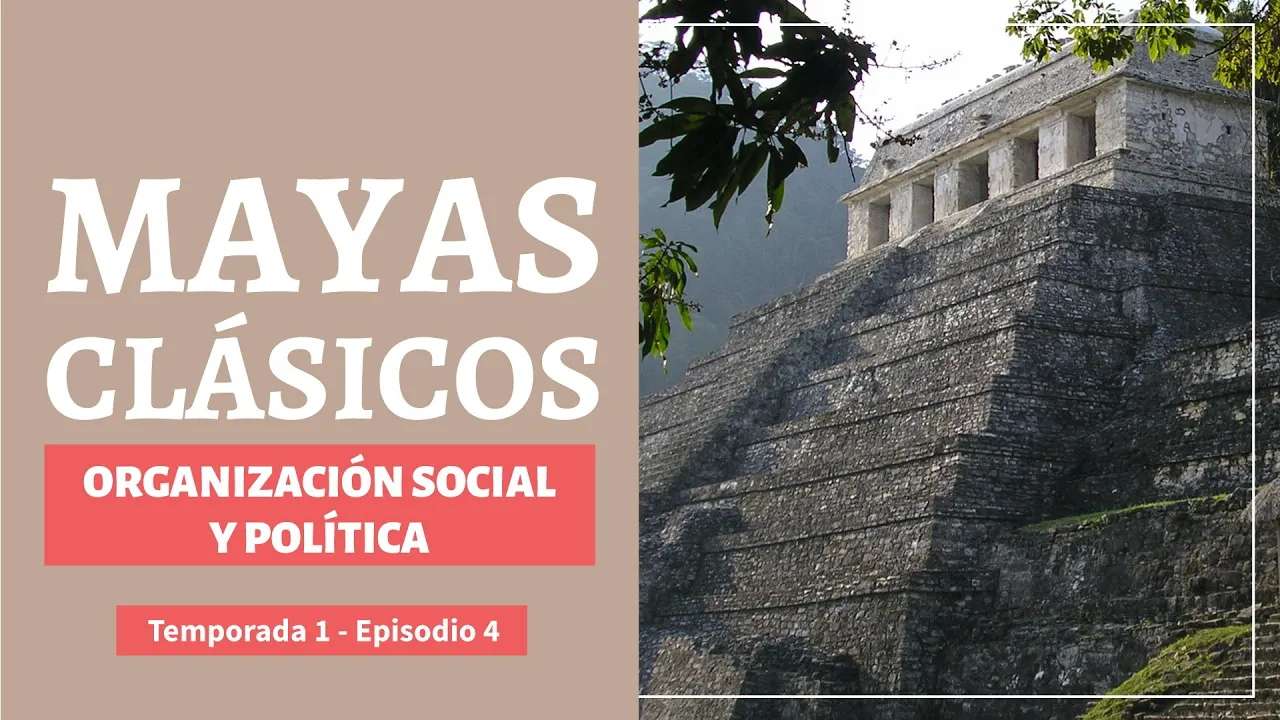
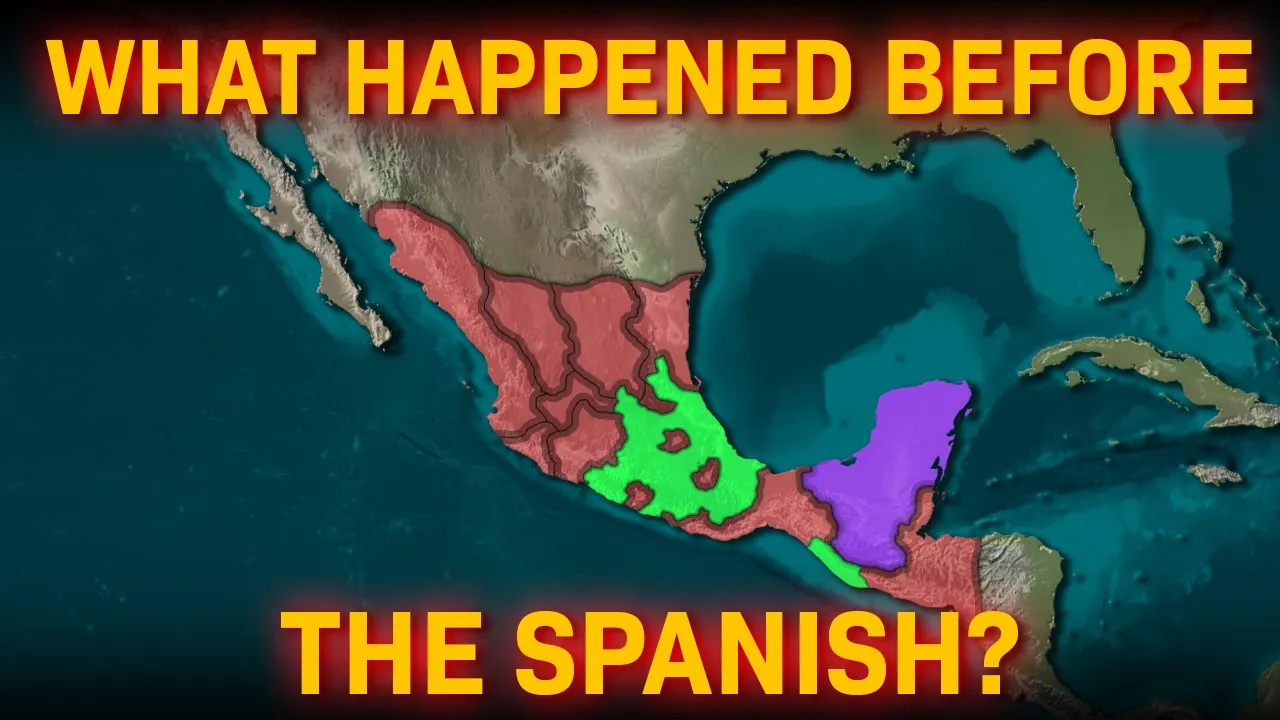




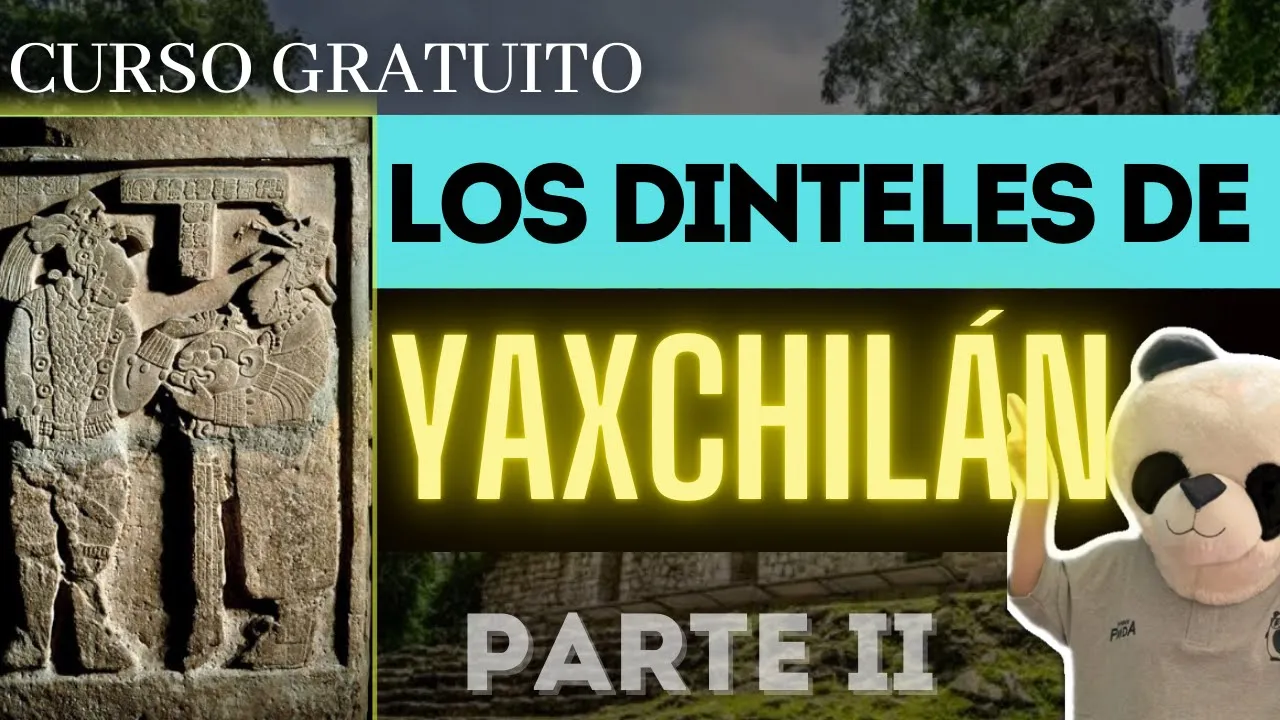



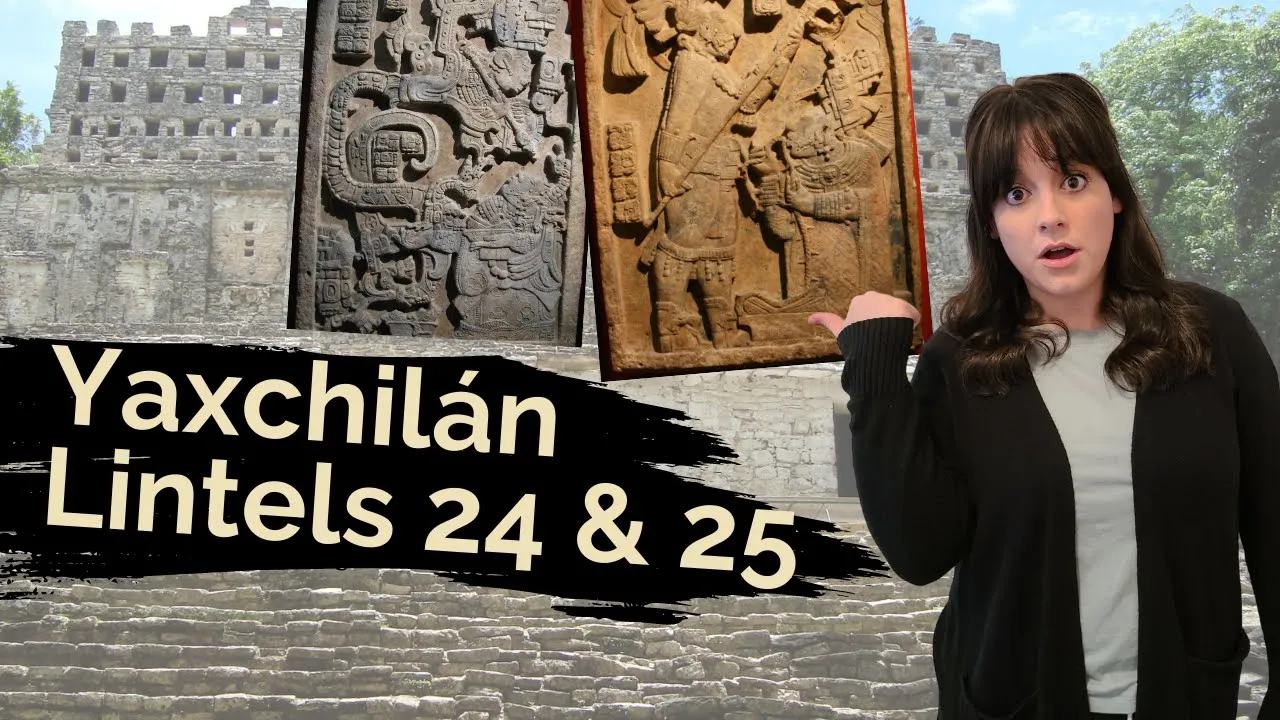






The Yaxchilán lintels from Structure 23 (Lintels 24, 25, and 26) demonstrate how Maya art functions within specific political, religious, and architectural contexts: these lintels, depicting King Shield Jaguar and Queen Lady Xook performing rituals including bloodletting and conjuring the war deity Aj K'ahk' O' Chahk, showcase the unprecedented prominence of women in Maya political dynasties while simultaneously challenging viewers to consider how architectural placement affects artistic interpretation—since lintels were meant to be viewed from within restricted spaces above doorways, requiring uncomfortable neck angles and liminal passage moments, rather than as standalone narrative images displayed on walls.
Teaching the Yaxchilán Lintels 24 and 25 with Dr. Caitlin Earley
Added:An understanding of the Classic Maya civilization's timeline, geography, and socio-political organization.
The religious and cosmological significance of ritual bloodletting (autosacrifice) in Mesoamerican cultures.
The basic function of architectural elements in Maya public works, specifically the placement and purpose of stone lintels within temple doorways.
Familiarity with the general role of royal women and queens in Maya dynastic politics and spiritual ceremonies.
Advanced analysis of Maya epigraphy, exploring how the hieroglyphic texts on Lintels 24 and 25 interact with the visual imagery.
Comparative studies of gender representations in Mesoamerican art, examining how women's power was depicted in neighboring city-states like Palenque and Piedras Negras.
Investigation into the historiography and ethical debates surrounding the removal, preservation, and display of Yaxchilán artifacts in European institutions like the British Museum.
Analysis of the political reign of Shield Jaguar II and Lady K'abal Xook to understand how artistic patronage was used to legitimize royal authority during periods of conflict.
4.8K views119likes46:13Original Release: 2022-02-09
- And again, I just wanna welcome everyone.
I am Lauren Kilroy-Ewbank.
For those of you who do not know me, I'm the dean of content and strategy at Smarthistory.
And I am really delighted to announce, or I guess I should say, welcome our speaker for today, Dr. Caitlin Earley, who is a professor at the University of Nevada in Reno.
And she teaches broadly on the art of Latin America with a particular focus on ancient Maya sculpture.
And she is going to be talking with us today about this very thing.
She'll be talking about lintels from Yaxchilan and really as with all of the webinars in this series, it is to hear from someone who is an expert about how we can think about incorporating things into our survey classes, or think about doing it in new ways and is an opportunity to reframe and rethink.
If people have questions, which I hope they do, if you could please put them in the Q and A instead of the chat, I would be very appreciative.
And we will get to them after Caitlin is done talking with us.
And at this time I'm going to turn over the screen to our speaker.
To you, Caitlin.
- Thanks, Lauren, and thanks to everyone at Smarthistory for the opportunity to do this today.
I am excited to talk about these Yaxchilan lintels.
So I'm gonna bring up some images to look at in just a minute, but I wanna just start with this question of, what's difficult about teaching the Yaxchilan lintels?
I think that this is something that I have certainly struggled with as a professor.
And I think there are a lot of things happening in these sculptures that require a lot of context.
So a lot of background information.
It's also easy to get caught up in the ritual or the religious elements of these scenes without considering context.
And so the goal for today, what I'd like to do, is a quick review of the lintels.
And then I want to think about two important thematic points.
So the role of women, to start and also understanding these lintels within their architectural context in Structure 23.
It's important to note right at the beginning that we're getting information about these lintels from ancient Maya art and writing.
So we are learning about Maya history as recorded by ancient Maya artists and scribes.
And we'll come back to this point throughout to think about how they are working to guide us through the sculptures that we're gonna look at today.
So I'm gonna go ahead and share my screen, to get started with these lintels.
So let's situate ourselves first.
So we are talking today about works from the site of Yaxchilan, which is right here in the center of the screen, I've circled it for you.
One important note when thinking about Maya sculpture is that the Maya were never a unified empire.
So in the late Classic period, which is the time period we're talking about, around 600 to 900 CE.
We're looking at a landscape made up of polities who are each ruled by a king, sometimes a queen and competing for tribute and power.
And they are embroiled in these long term confrontations.
And that's certainly true of Yaxchilan, which was warring for hundreds of years with its neighboring site of Piedras Negras and you can see that site just up to the north.
If we look at a map of the site itself, we can see where we're talking about.
Give me one sec, my PowerPoint's being glitchy.
Okay, so this is the site of Yaxchilan and we can see it's located right on the Usumacinta River, and we're talking today about lintels from Structure 23.
So Structure 23 is this one right here.
One point to note about the structures I'm talking about and also the lintels, these names were given to them by archeologists.
So we're not talking here about the ancient Maya names for these structures and sculptures.
These are much later applications.
So we're talking about Structure 23, and we can see that Structure 23 is located just off the Main Plaza in Yaxchilan.
So a little bit above, but really in the ceremonial core of this site.
So in a really important spot.
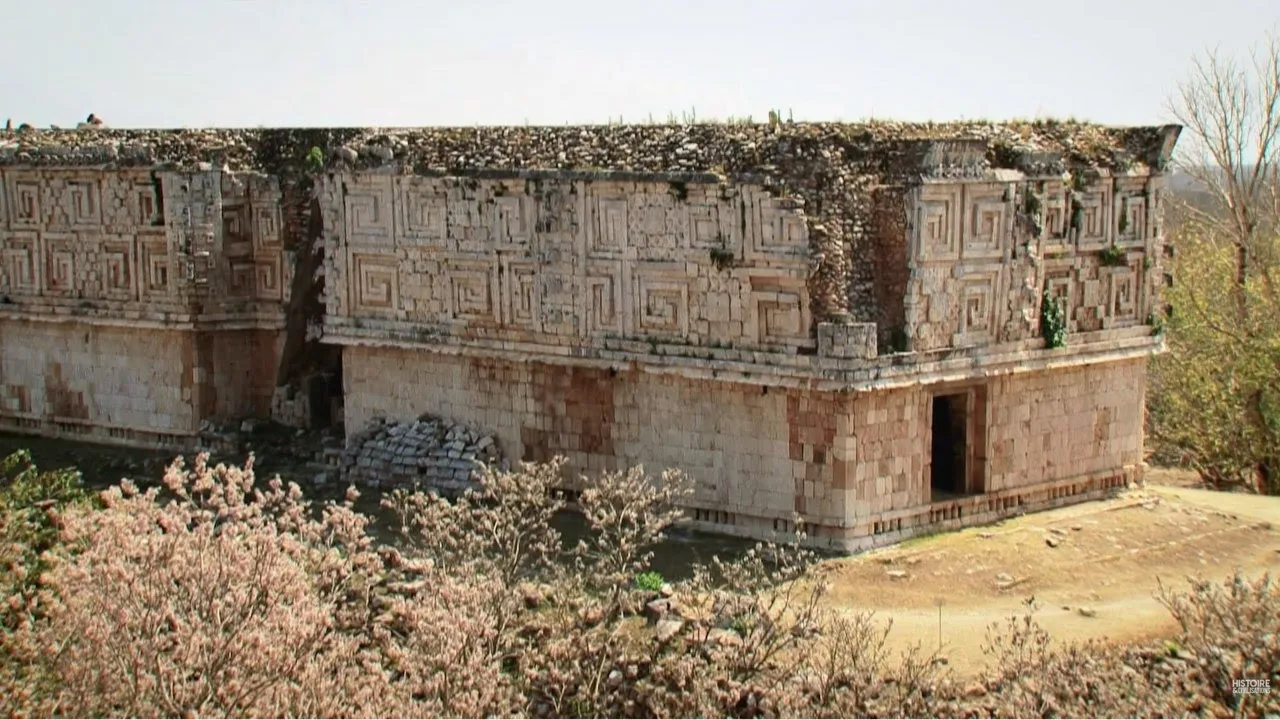
Structure 23 is in really bad shape today, but I'm going to show you Structure 33 which gives us some sense of what 23 might have looked like.
Now, structure three is a bigger and more elaborate building but it has this very typical Yaxchilan architectural type, which is this long skinny building with three frontal doorways.
And that's what Structure 23 looked like.
We can see in Structure 33 too, this is also kind of a typical thing in Yaxchilan, we have these large lintels above the doorways.
So we're gonna look today at the lintels from Structure 23.
So this is a kind of sketchy reconstruction of what Structure 23 might have looked like.
And there was a lintel above each of the three doorways in this building.
The lintels all feature two characters.
So they feature a woman named Ix K'abal Xook, or Lady Xook.
She's on the right side of each composition.
So here she is on Lintel 24, here she is on Lintel 25 and here she is on Lintel 26.
And then Shield Jaguar, who was the king of Yaxchilan also appears on all of these lintels.
So he is going to be on the left side of the lintels.
All of these sculptures were put into place to celebrate the dedication of this building in 726 CE.
And we will come back to the dating towards the end of our discussion today.
The lintels are carved in fairly high relief for Yaxchilan, and they would've been placed again, above the doorway.
So as you walked through the doorway, you would have the post of the doorway on either side, and then the lintel would've been above your head.
These would've originally been painted, and we can see some really nice remnants of paint on Lintel 24.
But one important point about the painting is that painting on these lintels, worked to highlight some details, but potentially to obscure other details.
So I'm showing you here a comparative image.
So this is a different lintel, probably from the site of La Pasadita in Guatemala, and it has really fantastic paint remaining on its surface.
And we can see that here, the artists have used paint to highlight certain parts of the image, and I'm thinking here particularly of the leg of this throne.
But other parts are kind of one wash of color.
So all of the glyphs up here are painted red.
So while the lintels of Structure 23 would've been painted, the paint probably would've highlighted some details and potentially obscured others.
Okay, so what is going on with these lintels?
Let's look first at Lintel 24 which I'm showing you here on the screen.
This lintel depicts a bloodletting ritual with the king on the left, and his consort, Lady Xook on the right.
We think this scene takes place at night.
And we think that for a couple of reasons.
The first is that Shield Jaguar is holding this big torch.
So this enormous thing is a torch.
We can see these flames kind of licking up.
off the top of this torch, we can see voliates in the back that probably represents smoke.
So he's holding a torch.
We also think this is taking place at night because of the color.
So you can see the remaining pigment on this lintel is this beautiful dark blue color.
And this seems to be a reference to a dark space.
So this is either happening in an interior location or it's taking place at night with this fiery torch and this dark blue background.
On the right side of the scene, we see Lady Xook, and she is participating in an act of bloodletting.
So in bloodletting, what she's doing is she is pulling a rope that has been studded with thorns or with pieces of obsidian.
And she's pulling that through her tongue.
The idea here is to produce blood, and blood would accumulate on paper.
So these diagonal things coming out of this kind of square blocky bowl at the bottom, this is paper.
And the idea is that she is pulling this rope through her tongue, she's producing blood, it drips on paper, and the paper is then burned.
And that is an offering to the gods.
So the gods can eat that.
That's something that helps to sustain the gods.
What's important about this bloodletting ritual and what I really try to convey to classes when I teach this lintel, is that this is all taking place within a broader Mesoamerican idea of reciprocity.
And the idea with reciprocity is that you have to take care of the gods in order for the gods to take care of you.
So that's why we see this type of ritual.
And this type of ritual, this pulling of the rope is something that was the particular prerogative of Maya royals.
So Maya kings and queens performed bloodletting and we have evidence of these rituals on stone sculpture like this one.
We think that while people throughout the Maya world performed acts of sacrifice as part of that relationship with the gods, kings and queens were particularly responsible for maintaining that relationship.
And so that's something that we're looking at here.
So Shield Jaguar is kind of lighting this scene with the torch, and Lady Xook is performing this act of ritual bloodletting.
Now, I want you to keep your eye on the bowl down here with the paper inside it, because we're gonna use that to kind of anchor our discussion for the next lintel.
So Lintel 25 was placed over the central doorway of Structure 23.
And we can see here is our bowl.
So Lady Xook is holding the bowl here, and we can see these same diagonal elements, these pieces of paper that are inside the bowl.
There's actually another bowl in this image down here.
So here's a bowl again with paper.
The implication here is that we're looking at the results of the previous scene or the results of bloodletting.
So blood has been spilled, it has been spilled onto paper that has been burned, and this is the result of that burning.
So what we're looking at here is Lady Xook.
She's on the right, kind of crouched down on the right side of the image.
And she's looking up at this enormous creature that is sort of part serpent part centipede.
It has two heads.
So here's a head down here, and we can follow the writhing body of this creature all the way up.
Here's our upper head.
And she is looking at a scene in which the upper head or the upper jaws of this creature are open and an individual is emerging from them.
So this is someone who looks human, they're wearing this enormous headdress and also a mask.
So what we're looking at here is kind of an X-ray vision of someone who's wearing a mask.
So here's the human face and here's the mask that he's wearing in front of it.
Now, what's going on here?
Well, the text helps us understand what's going on.
The text though, I should note, is written in something that we call mirror style.
So normally Maya inscriptions are gonna begin on the upper left up here.
This one actually begins on the upper right so it's written backwards.
And we'll talk a little bit about why that might be going on in a few minutes.
But the text is still legible, and what it tells us, and this is kind of an English paraphrase, it tells us that she, Lady Xook conjures the martial power of Aj K'ahk' O' Chahk.
Okay, so what does this mean?
Well, first she is conjuring.
The word for the glyph for conjuring in Maya hieroglyphic writing is TZAK, and I'm showing you a closeup of the drawing here.
And this is one of my favorite details of Maya hieroglyphic writing because the sign that Maya scribes used for this is a hand-grasping of fish.
So that's what we're looking at right here.
And this is speculative obviously.
We don't have anything that tells us exactly why this sign was chosen to convey TZAK, but it gives us this really wonderful avocation of maybe trying to catch something slippery, right?
Which makes a lot of sense if we think about what conjuring is.
So she is conjuring the martial power of AJ K'ahk' O' Chahk.
Who is this?
This is a patron deity of Yaxchilan.
So patron deity is like a local god.
A god who lives specifically in Yaxchilan, takes care of the Yaxchilan community and in turn is cared for by the Yaxchilan community.
So this is a local god.
And what we're looking at here is Shield Jaguar himself appearing in the guise of this patron deity.
This patron deity is associated with warfare.
And we know this from other inscriptions.
So we see this individual appear a lot in the art of Yaxchilan.
We can also tell this from some iconographic details.
So here is Shield Jaguar, and we can see he's holding this spear aimed, a little impolitely I think, at his consort, at Lady Xook in the bottom right.
And then we can see a shield right behind that spear.
So this is a scene where Lady Xook is conjuring the martial power, so warlike power of this patron deity of Yaxchilan.
What that tells us is that this lintel is about ritual, and conjuring, and the centrality of Lady Xook in these actions, but it's also about war.
And here, I think the political context is really important.
So these lintels are some of the first works of art to appear at Yaxchilan in almost, or a little over a hundred years.
We know stuff was happening at Yaxchilan in that 150-year period.
We know people were living there, we know this site was kind of up and running.
We just don't have any existing monuments.
One of the ideas about why that might be the case, is that Yaxchilan may have been subordinated to a foreign power in that time.
Now, one of the really exciting things about Maya art history and archeology is that a lot of our interpretations change as we get more information.
So check back in, and we'll see how that interpretation evolves over time.
What's important for us when we're thinking about this lintel and teaching this lintel, is that it is appearing at a particular moment when suddenly we have new monuments from Yaxchilan.
These lintels can be read as powerful statements on the part of the king that he is back on the scene.
He is calling upon the warfare deity of Yaxchilan.
He's getting ready essentially to kick some butt.
That is what we're supposed to get from this.
And the last lintel in this building, I should say the third lintel, the one over the right-hand doorway, really cements this idea.
So this is Lintel 26, and this really supports this idea of warfare stuff going on.
So what we're looking at here, is Shield Jaguar standing on the left.
He's wearing this sort of tunic or bib that we often see rulers wear to war in the late Classic period especially at Yaxchilan.
And he's holding, and it's not in great shape, but this is a knife that he's holding in his right hand.
Lady Xook is on the right side of this image and she is preparing to hand him these implements of warfare.
So she's gonna hand him his jaguar helmet, and we have other images from Yaxchilan of him wearing this helmet and standing over captives.
And then what she's holding here is a flexible cloth shield.
This is the type of shield that warriors carried into battle in the Usumacinta region.
So this is a lintel that really underlines this idea about warfare.
Now, combined, these lintels present the role of women as key to the success of this dynasty, both from a religious perspective and a political perspective.
And if we look at all the lintels, I think that becomes really clear.
So she is performing the bloodletting rituals, she is conjuring the patron deity and the power of war, and she is helping the king prepare for war.
She is described in the texts of this building as the owner of the building.
And in fact, there is another lintel on this building, it's around the side, on the right side of the building and it's all text, so it's no imagery, just hieroglyphic text.
But that lintel gives us a lot of information about her background and her lineage.
And it includes the fact that her dad was a sahal or a non-royal noble from the site of Yaxchilan.
So this is really an unparalleled example of the role of women in political dynasties in the late Classic Maya area.
We do not have other buildings that are quite like this.
At the same time, we're also talking about a privileging of information here.
So yes, Lady Xook is the protagonist in this building, right?
And that's unusual.
At the same time, this is an elite building.
And we're talking here about a building that probably had restricted access.
So not just anyone could walk through these doorways.
And this is where we get to a third, and I think really the most interesting point about these lintels which is their architectural context.
Because not only, was this a building with restricted access, we're talking here about lintels.
We as art historians, as people looking at these works, we hang these on the wall like pictures, right?
And the format of these lintels almost lends itself to that, right?
We have these beautifully composed scenes with like a little stone frame even, right?
It's really easy to put this vertically on a wall and think of it very much like a painting on canvas but that is not what these objects are.
So what's really key to understanding these works is understanding how they were meant to be viewed.
These are lintels.
They're really, really difficult to see.
So they're above your head when you walk through the doorway.
And for those of us who are teaching these objects, I would really recommend getting very clear on your class with what a lintel is.
If it's a small class in particular, you can even like tape something up on the doorframe.
I've done this, and see if people notice it coming through.
If they do notice it, ask them about their experience of looking at it.
Because to look at something on a lintel, as you walk through a door requires craning your head back, you're often uncomfortably close to it, especially in a structure like this one where the doorways would've been pretty low.
And as many of us can probably attest, doorways are not a good place to stop and carefully consider something above your head, right?
They're moments of passage, they're liminal space.
And so they're not a really good place to stop and consider something.
So these lintels were in a restricted building, in a place where it is almost impossible to really study them.
So the careful observation and analysis we've just done, ancient Maya viewers probably would not have been able to do that.
And so this placement poses some really important questions.
Why create this detailed, elaborately carved image and then place it in a spot where it's almost impossible to see?
Related to architectural context.
So we have to understand that these are lintels, that they're really difficult to see.
We also really like to read a narrative in these lintels.
And let me show you, I've actually forgotten about one of my images here.
I'm gonna show you this image that is Lintel 23, so that all-text lintel that's in the building... That's still in the building at Yaxchilan.
So just to give you a sense of what these lintels would've looked like.
They're really difficult to see.
Okay, so we also really like to read a narrative into these lintels.
And that is in fact, how I've presented it here to you today, right?
So this ritual takes place, you burn the paper, you go to war, right?
That's kind of the well-understood narrative about these lintels.
But this is a problem.
So the lintels themselves, and when we combine it with the other text in this building, tell us that that is probably not the order that we're supposed to think about these lintels in.
The first thing that hints at this are the dates.
So all of these lintels were put into the structure to celebrate the dedication of the building in 726 CE.
But all of the lintels depict, the undersides that we're looking at here, they depict a scene that happened in the past.
And the glyphs tell us when in the past that happened.
So while we started with Lintel 24, the glyphs tell us that the earliest scene probably in this series, is the one on Lintel 26 because this is a scene that happened in 681 CE on the date that Shield Jaguar took the throne.
So this happened upon his accession in 681 CE.
The glyphs also tell us that this scene on Lintel 25 of conjuring the war deity, that also happened in 681 CE while the ritual with our torch and our bloodletting happened much later.
So the glyphs tell us that this is a scene that happened in 709.
And then all of these lintels were placed into the structure in 726.
So right off the bat, the dates kind of challenge the narrative that we often impose onto these lintels.
The lintels themselves also suggest a different reading order.
So all of these lintels, and again, it's so easy to forget this because they look so much like self-standing images, right?
Especially when we put them up against the wall which is how many of them are displayed today.
But they all would've originally had writing on the outer lip.
So the outer face of the lintel.
And that writing also helps us understand how these lintels were meant to be seen and experienced.
So many Maya texts start with this one introductory glyph.
It kind of signals where to begin reading.
And that glyph is here in this series on the front of Lintel 26, and I've highlighted it for you here.
What that suggests is that viewers were asked to start with Lintel 26, that that's where we're supposed to kind of start experiencing these lintels.
In this proposed reading order or pathway of these lintels, and this is based on recent work by Claudia Brittenham.
You would start with Lintel 26, walk into the building, and then you would actually look at Lintel 25 on your way out of the building.
And I find this a really compelling analysis in part because it might help to explain that mirror text, that backward text on Lintel 25 that might be a sort of deliciously subtle way of telling us that we're supposed to read that lintel on the way out of the building, rather than on the way back into the building.
In this proposed progression, you would then walk back into the building experiencing Lintel 24, before heading back around to experience the end of this inscription which is on that all-textual Lintel 23.
So combined, the lintels suggest a specific reading order for experiencing these works.
And that reading order suggested by the sculpture is very different from the kind of left to right progression that I started with today.
So this has been a whirlwind tour of the lintels of Structure 23.
But what I really wanna emphasize here is that it's important that we understand these lintels as works that are about religion and ritual but all of that is happening within a political context.
They are about the important role of women within dynasties in the late Classic Maya world, but not just anyone would've gotten to see those images.
And they're also important works in terms of trying to understand them on their own terms.
So these are lintels that were not hang like pictures on a wall.
They resist the narrative structure that we sometimes impose on them.
And this is where I think the really needy stuff is in terms of these bigger questions in our history, in terms of connections to other works of art and other traditions.
And for those of you who are educators, I highly recommend using this as an opportunity for discussion.
These are lintels that not only tell us a lot about how the Maya saw their world, about the role of important women at Yaxchilan, but they also force us to look at how we're studying objects and what questions we're asking of them.
Okay, so that's what I have prepared for today.
I am happy to answer questions.
I'm gonna stop my screen share.
And then I think Kayla might have a copy of that Brittenham article that I mentioned. - It is.
So thank you, Caitlin, that was wonderful.
And the article that you mentioned is uploading.
We're going to be sharing with everyone.
It's just a large file and it's taking a little while, but it will be soon shared in the chat for anyone who would like to access it and read it.
This was wonderful and so helpful.
And I think that all the themes that you touched on are not only useful for thinking about this particular site and this particular place, but I mean, I love this idea that you mentioned about how we have to think more broadly about the broader idea of reciprocity for the gods.
I think that's something that my students get tripped up on frequently.
It looks like we're getting some questions but I had to share one amusing anecdote and that is that I loved that you really stressed the experiential nature to bring that into the classroom.
And I think that's something that can be so profoundly useful for students.
And one time I did a deed, post something on the ceiling with these exact objects in mind.
And I did have a student run into the wall.
So just, you know, (Caitlin laughs) safety first for everyone.
(laughs) They were looking up and not looking forward.
But let's turn to some questions here.
We have... So just a really straightforward question first and that was, what would this paper have been made from?
- The panels?
- [Lauren] The paper, that would have been burned.
- Oh, the paper was probably bark paper.
So I wanna say amate paper, but I wanna maybe look that up and get back to you 'cause it's not in the front of my brain.
But it would've been locally produced and we have really great evidence or we know that the Maya were producing a lot of books.
So books would've been a presence at least among the elite echelon at really every major late Classic dynasty.
We don't find a lot of them archeologically, unfortunately they're like sad piles of mush by the time archeologists get to them.
But we have really good evidence that such books existed.
And so my guess, and I would wanna look up and see if anyone's done more specific research on this, but my guess is that that paper would've been locally produced at a variety of Maya courts.
- That would make sense to me too.
We have a great question here.
I think you did such an excellent job of reminding us several times about how this was an elite building with restricted access.
And so have this great question about, were there other art messages placed for say, the general public?
How did rulers communicate their history and political propaganda to a kind of broader public?
- I love that question.
The more that I think about Structure 23, the more I think of it as sort of a sneak attack.
So yes, Lady Xook is so important in the lintels, but you can't see those lintels until you're almost in the building and not just anyone would've been able to walk into the building.
The other thing that I didn't get to today is that the glyphs on the outer edge, those glyphs mostly talk about the dedication of the building which is a really common thing to include in Maya inscriptions.
So those glyphs also don't give people approaching the building any sense about all of the Lady Xook content that's coming their way.
So I think that might have been a surprise potentially, to people walking into that building.
In terms of more public displays, I mean, kings were just all about how great they were, and how many captives they took, and how strong they are in battle, and so we tend to see that type of messaging on stelae.
So these kind of large, roughly door-shaped works of sculpture that were carved in low relief on one or both, or all faces.
And those typically talk all about the king, and like rituals that he performed, and wars that he did.
And so it's really, it's just... It's a lot of propaganda.
So it's all about how great the king is, and how much he pleases the gods, and how important his family is.
And so that's the type of imagery that we're used to seeing in public spaces in the Maya area and at Yaxchilan.
And I think that that also that contrast works to highlight what's so special about the lintels in Structure 23.
Because not only do they feature a woman, they seem to be these almost private moments, right?
We have this ritual that's taking place in the dark.
We have this private vision that we think that Lady Xook would have been encountering, but that's something that was really something she was seeing.
And then we have what I almost think of as this sort of touching moment, right?
This private moment where she's about to hand him all of his war stuff.
And in the stelae that are on the Plaza, he's wearing all of the war stuff.
But this is the moment right before that.
So it's the moment when his consort is handing him the things he'll need for that very public display.
So that contrast, I think really helps to bring out what's special about the lintels.
- That's a great explanation in terms of that contrast.
I loved how you just did that.
Okay, we're getting all sorts of great questions.
So we have someone who would love to hear more about the broader context or a broader discussion about whether it was common for women to perform blood rituals, and are there any other reliefs from this site or others that display that ritual?
- That's a great question.
So my understanding is that, yes, it would've been common for especially royal women to do this.
And I wanna emphasize that the bloodletting rituals we're seeing on these lintels, this is not something that like all women were doing.
So this is really a case where that relationship between the patron deities, the community gods and the community, it is the job of the king and his queens to maintain that relationship.
Essentially to sustain the gods.
And so the idea is that... And we have many images of men doing their version of the bloodletting ritual.
We don't have as many images of women doing that.
And they are particularly common at Yaxchilan.
And this is one thing where one of the things that I absolutely love about studying Maya art history is that in part, perhaps because it was never a unified empire, we have all of these different polities and we have different artistic traditions at different polities.
So there was something about Yaxchilan where the role of women was more emphasized than at other sites.
So in terms of stone sculpture, off the top of my head, and bloodletting, we really see that at Yaxchilan more than anywhere else.
We do get the sense that that's something that royal women were doing throughout the Maya area.
- That's great. - Yeah.
- Let's see, we have a question about color.
And I really appreciated that you actually mentioned that you can still see traces of the color because I know when I teach these or other examples that are now in museums, it is always a surprise to my students when I mention that these were colored.
And then if I show them one where you see like the comparative example you showed, it is clearer to them.
But I love that we can still see traces.
And so someone would like to know if there has been a full color analysis of all three of the lintels out there.
- That's a great question.
I want to say there has, but I would refer you to the Brittenham article that got shared to think a little bit more about that.
There are some wonderful folks doing research on colors in the Maya area, and I'm happy to provide some resources for that if folks would like some reading recommendations.
My guess, and again, check the Brittenham article for the details on this.
Lintels 24 and 25 currently live in the British Museum.
And if you're looking for more discussion points with your classes, why are they in the British Museum?
That's a really good thing to discuss.
They were taken there in the 1920s and they have been pretty extensively studied.
So my guess is that full color analyses have been done on those lintels.
Lintel 26, I'm not sure.
But again, I'm happy to provide resources for that.
- Let's see, we have, I think someone just wants some clarification maybe on how these were positioned in terms of vertical above the doorway or flat against the ceiling of the doorway.
- Okay, so thank you.
But yeah, that's important.
So they would have been flat against the ceiling.
So they would've been like flat that way as you walk through, and I'm gonna... Is it okay if I just share my screen again really quick? - Yes.
- Because I also had lots of questions about this, I think, and I had for a long time, and this diagram really helped me.
So this shows how the lintels would be positioned.
So you would walk through like right here, if you were walking through center of the building, and you would look up and the lintels would be... So the humans wouldn't be this way, they'd be this way.
And that's something that Claudia actually talks about in her article, it's like, not only are these positioned horizontally above your head, but you have to also like turn 90 degrees to read the glyphs and to really understand the composition.
So it's like, there's a lot of neck acrobatics that have to happen in order to read these.
I hope that cleared it up, that's a really good question.
- Yeah, and I think that point that you made and that she makes too, that they're not even just vertical as you're walking in, but twisted horizontally.
And so it really does... It's a really good opportunity, I think, to talk with students as you encouraged us to do of how would one experience these in some capacity or how would people have experienced them.
Let's talk about dates.
- Yeah. - How are the dates established in terms of these?
And maybe the same person was wondering if you could just speak a bit more about the current archeological study of the site.
- Sure. And I do wanna note too, I'm seeing a couple of things in chat.
Adrianna, thanks for this point about the paper.
And Marilyn, thank you.
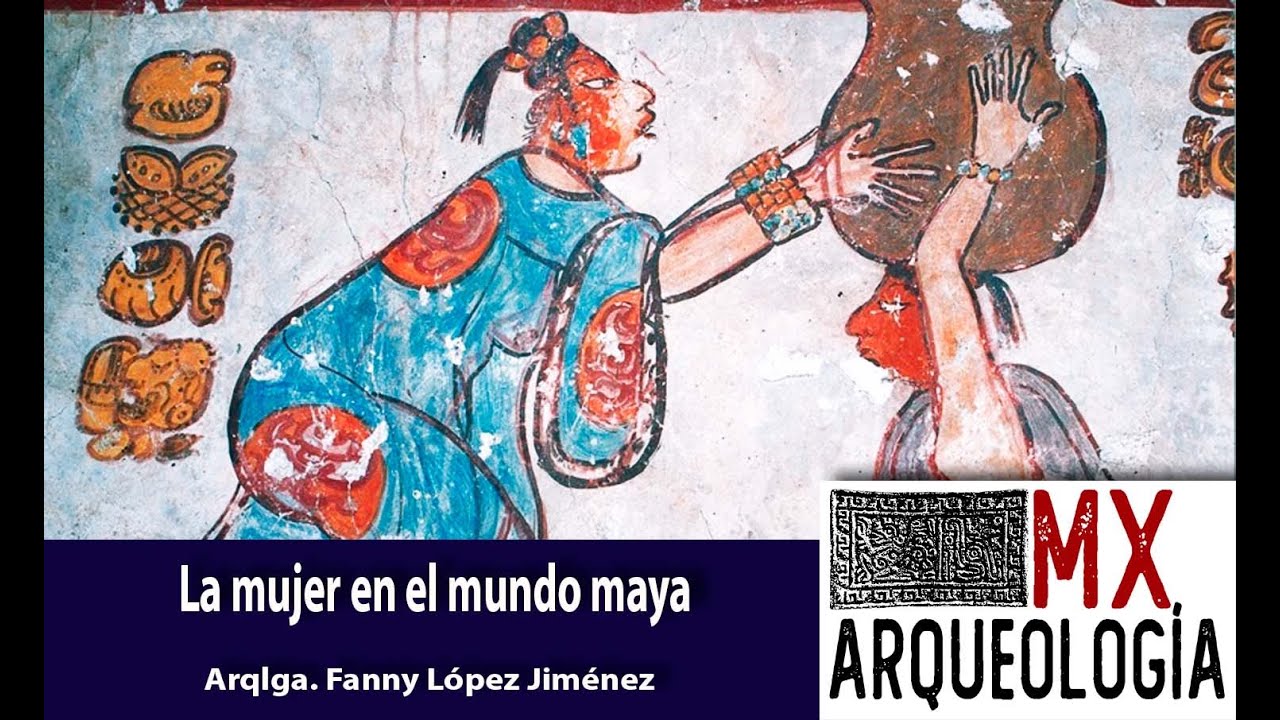
Yeah, so women at Bonampak in the murals there are bloodletting as well, thanks for these comments.
Okay, so dating. We have a correlation.
So the Maya are... Or Maya scribes very helpfully left us dates on many sculptures.
The question is how the Maya calendar correlates to the Gregorian calendar which is the one that we use today.
And so we have been able, and I'm speaking way broadly, right?
Like I had nothing to do with this.
But scholars have been able to come up with a correlation where we can figure out how those two calendars relate to one another.
That computation is called the GMT.
I think it's the Goodman-Martinez-Thompson correlation.
We don't need to worry too much about that except to say that scholars have been able to establish a link that enables us to understand how Maya dates relate to Gregorian dates.
And there are Maya date calculators, if you go online and just google Maya calendar conversion, you can see those and kind of see how the dates compare.
In terms of archeological work at the site, Yaxchilan is a really fascinating part of the Maya world because it has, and I think Lauren your Smarthistory essay mentions this, because the sculptural record from Yaxchilan is just so fantastic.
We have so many sculptures remaining from that site.
The archeology is a little bit more complex so that that center of Yaxchilan is pretty well understood.
But right now a lot of the really exciting work is happening not only in the center, but also around that area.
So trying to figure out how big the city was, and how people lived on the outskirts of Yaxchilan.
There's really cool work going on too that is looking into the relationship between Yaxchilan and Piedras Negras.
So that other big site that it was fighting with for many years.
And there are archeologists who are coming up with defensive fortifications and essentially finding these rings of smaller sites around Yaxchilan that would've sort of held the line against intruders.
So this is an area where there's a lot of work happening and it's pretty exciting to see.
So I would definitely expect a lot more information to be coming out in the next five or 10 Years.
- It's very exciting actually, just to see how our understanding is constantly shifting.
- Yeah.
- We're getting so many good questions.
Are you okay, Caitlin, to stay on a little bit longer?
Okay.
So we have a question about deorientation of the faces.
That the faces, the heads all seem to be on the left side.
And so someone wondering is this significant, facing east, is there any meaning that's been read into that?
- That's a really good question.
So I'm wondering if these are the faces in the glyphs or the faces in the imagery.
I know for the imagery, like if we're looking at the underside of these lintels, so Shield Jaguar is always on the left and that is a position of power so we would kind of expect the king to be on that side.
So there's some hierarchy being built into the way that these works are composed.
And you'll notice too, if you remember lintels 24 and lintels 25, Lady Xook is lower than the king as well.
So there is definitely hierarchy in terms of how they're positioning individuals in these compositions.
- Yeah.
And we have a couple of questions that are asking something similar, and that is that, what would've actually happened in this building? (laughs) Do we know? - This is... Yeah, this is such a good question. Okay.
So... The building, the texts on the building say that it is the building of Lady Xook.
And one of the ideas about what this building might have been, is that it could've been some sort of deity temple.
So a temple that was dedicated to a patron deity of Yaxchilan.
But this was sort of like women's space.
So that's one idea.
I should note too, and this is something that's also mentioned in the article that was shared.
We have the lintels from Structure 23, and I didn't show you a picture of Structure 23, but it's pretty sad looking today.
So the building itself is not in great shape.
But we know that there was stucco sculpture in the building, probably on the interior and the exterior.
So there would've been a lot of other imagery inside this building, and that would've helped us understand what the building was for.
And we just don't have that information today.
So today we have the lintels, they're in good shape because they're made of stone.
Other elements of the building don't survive to tell us exactly what would've been going on there.
I will say, and this is sort of spoiler-alerting the whole article.
But one of the really fascinating things about these lintels with that progression that Claudia has laid out.
And there's just so much to dig into here from an art history perspective, is that maybe what was important about those lintels is the ritual that they commemorated.
So the dedication of the building.
And the ritual is more important than the works of art themselves.
And this makes my brain go like a little liquid, I think, (Lauren laughs) coming from like an art history perspective where the object is king, right?
But one of the ideas here is that those works are important because they are the remnants of human action.
And it's the human action that was more important than the surviving objects which is a really different and wonderful lens to look at these works through.
So that doesn't answer your question at all.
We don't know what happened exactly in this temple, except that we know that at some point there were these dedication rituals and fire-entering rituals, which would've been pretty common.
The building next to this one may have been... There are texts inside that building that talk about the death of Lady Xook and rituals that happened in her tomb.
So this may have been a final resting place for her, that's also unclear.
So yeah, the answer is we don't know, but like a wonderful, we don't know.
We have lots of information (Lauren laughs) to kind of triangulate this and hopefully more information will emerge in the future as well.
- Oh, I love that idea that you just mentioned that we could think of them as an index of an action.
And of course that makes me think of more recent 20th century, 21st century art forms where we could kind of think more broadly about that idea across time and space which I'll have to remember that, file that away for future classes myself.
A couple of final questions, someone wants to know if you could elaborate about why the tongue for bloodletting?
What's the significance of the tongue?
- Oh gosh, (Lauren laughs) that's a great question.
And the answer is we don't know, as far as I'm aware.
These bloodletting rituals, as they existed in the Classic period targeted really sensitive parts of the body.
So I haven't gone into too many details, but the male version of this, like what kings did was they would pull, or they would pierce the foreskin of their penis.
And women would pierce their tongues.
So the best answer I can come up with as far as I know is just that these are sensitive parts of the human body.
It might be that the... I don't know, does the tongue bleed more?
I have no idea.
What I will say is that there's certainly sensitive parts of the human body and I think that might be tied into this idea of giving precious things.
- Yeah. And maybe it's also let as threatening, right?
Like your body is not necessarily at threat of death passing through those parts per se.
- Yeah. Yeah.
Sure. And it's not like, I don't know, piercing... I would imagine there are parts that would remain functional even after these rituals.
I mean-- - Yeah.
- Maya kings produced plenty of heirs so I'm assuming (indistinct). - (laughs) Yes.
- But yeah, that's a really great question.
And I would be curious to follow up on that whether people have looked into that in the colonial or the post-classic periods.
I think that's a really good question.
- Yeah. And so our last question here is about literacy.
And that of course, with all this writing, literacy must have been so important to understanding the lintels and the stelae and buildings themselves.
And so someone wants to know if there were schools for nobles, the general public, or something akin to like a university or religious school to facilitate that type of literacy.
- That's a great question too.
And again, tell me if this sounds familiar, I wish we had more answers for you.
(Lauren laughs) So for the Aztec, we have really good evidence that there were schools for especially noble young men to go learn various arts and learn reading and writing.
For the Maya, we don't have quite the same evidence.
Many of the inscriptions that we find today on monuments were written in a language that was sort of a court language.
So it wasn't necessarily the language spoken at the site.
We can think of this, or I often think about it as like, I guess even today, right?
Like English is sort of the global language.
Like if you wanna engage in international diplomacy, someone on your team probably needs English.
And same for French in the 19th century.
So many of the inscriptions were written in this kind of court language and it's unclear how much of the general populace would've been able to read them.
The guess is that reading and writing is something, or were actions that were really available to the elites, to a noble class.
And it's very unclear to what extent people who weren't part of that upper echelon could engage in reading things and writing things.
And that's a great question.
- Yeah. Well, Caitlin, thank you so much.
This has been so helpful and I hope helpful for all of you who have been able to join us.
And as always of course, very selfishly, it's always a pleasure to just sit and hear someone talk about the Maya.
I'm sure that if we didn't get to your question, or if people have a question, I'm sure that Caitlin would be more than happy to answer them.
You can forward emails to me, you can post questions maybe in our Facebook group, the Smarthistory Commons.
So if people have... If they wanna follow up, please do.
Just to be sensitive to time, we're going to end.
But again, thank you so much, Caitlin.
And for those of you who have joined us, oh, and she's even placed her email in the chat.
Thank you so much.
If you wanna email her directly.
And in two weeks from now, we'll have our next webinar.
So hopefully some of you will join us then, but for now I hope everyone has a wonderful rest of the day and thanks again, Caitlin.
- Thank you. Thank you all for coming.
- Yeah. Bye, everyone.
Up Next

19:08
Kinship Structures Explained: Anthropology of Family & Marriage
@anthrodorphins
104.5K views•2023-11-28

38:41
Astrobiology Through an Anthropological Lens: Field Insights
@georgiatechastrobiology
128 views•2021-04-14
4:45
Proxemics Explained: The Study of Personal Space
@Vox
536K views•2016-07-05
10:38
Psychology of Internet Trolling and Pranks Explained
@AzzyLand
10.7M views•2017-12-20
Related Study Plans & Knowledge Roadmaps
Structured learning paths in Anthropology
anthropology
Space Anthropology: Analogs, Culture & Habitats
01Foundations of Space Anthropology & Cosmic Imaginaries
02Extreme Isolation & Micro-Societies in Orbit
03Space Analog Habitats & Earth-Based Simulations
+ 2 more learning modules
15h5 modules
Explore Roadmap
anthropology
Legal Anthropology: Customary Law & Pluralism
01Foundations of Legal Anthropology and Social Justice
02Legal Pluralism: Coexisting Legal Systems
03Customary Law and Indigenous Dispute Resolution
+ 2 more learning modules
15h5 modules
Explore Roadmap
anthropology
Global Tourism: Gaze, Authenticity & Heritage
01Introduction to the Sociology of Tourism
02The 'Tourist Gaze' (John Urry)
03Staged Authenticity in Tourism
+ 3 more learning modules
14h6 modules
Explore Roadmap
anthropology
Modern Kinship (ART, Adoption & Chosen Family)
01Foundations of Kinship and Family
02Assisted Reproductive Technologies (ART) & Relatedness
03Transnational Adoption and Global Kinship
+ 2 more learning modules
12h5 modules
Explore Roadmap