




















This video examines two limestone lintels (Lintel 24 and Lintel 25) from Structure 23 at Yaxchilan, an ancient Maya city in Chiapas, Mexico, depicting Shield Jaguar and Lady Xook participating in sacred bloodletting rituals. Lintel 24 shows Lady Xook performing bloodletting by dragging a barbed rope across her tongue while her husband holds a lit torch, with glyphs indicating the date October 24, 709 CE. Lintel 25 depicts Shield Jaguar's ascension to the throne on October 24, 681 CE, where Lady Xook holds a codex with blood droplets and appears in a trance-like state as a mysterious figure emerges from a serpent's mouth. The video explains that bloodletting was a sacred Maya ritual for communicating with gods, that Mayan art employed idealized beauty standards featuring sloping foreheads, large noses, and jade/gold jewelry, and that the complex Mayan calendar system enabled precise dating of these ceremonial events.
Maya Bloodletting Rituals: Lintels 24 & 25 from Structure 23, Yaxchilan
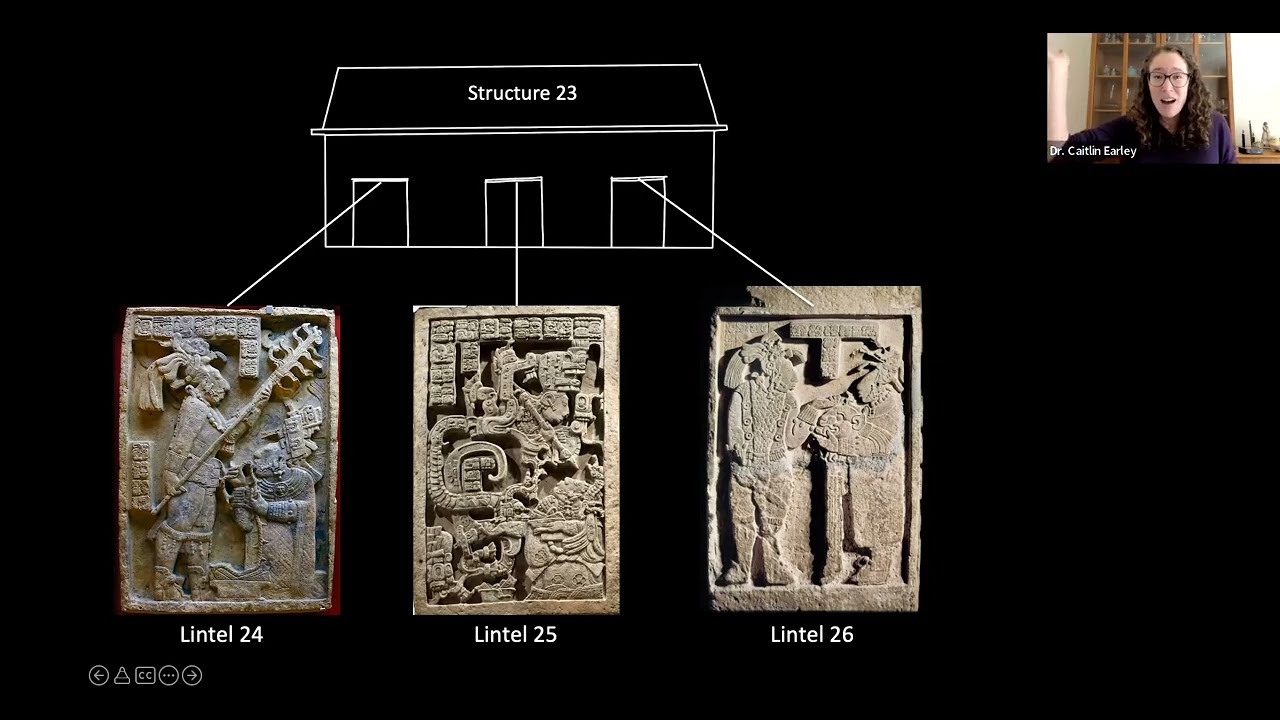
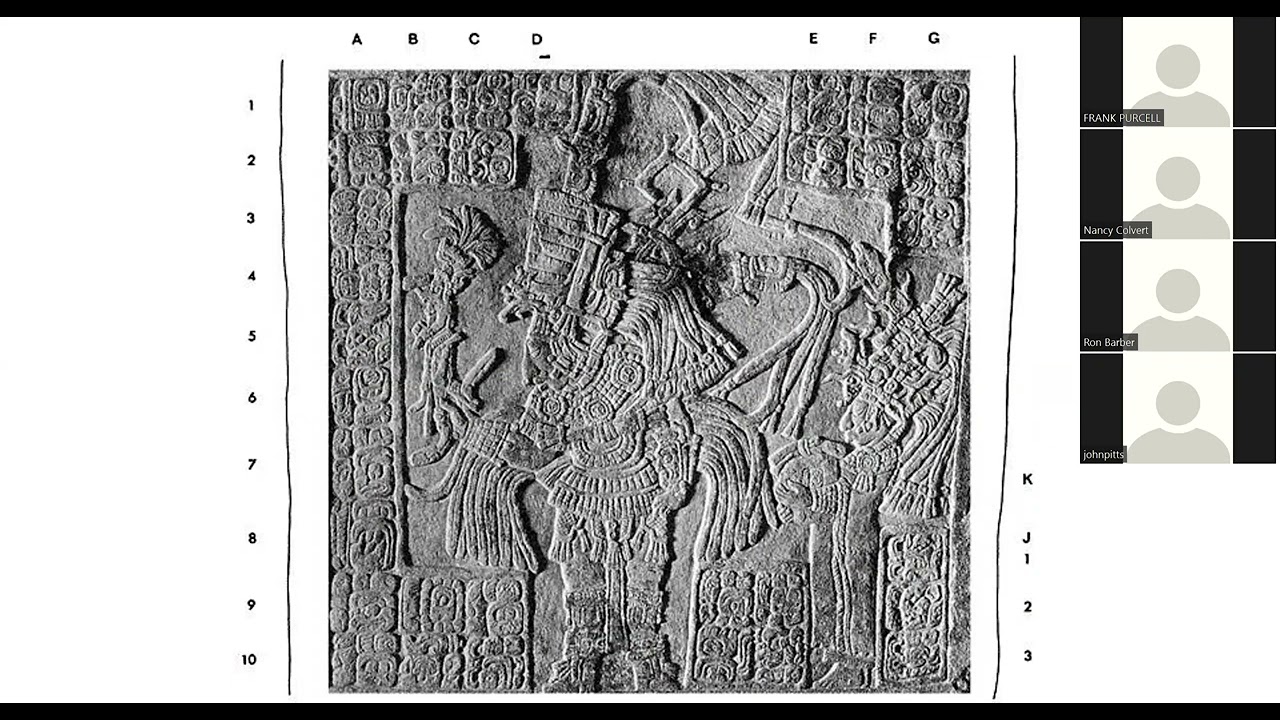
Added:Today I'm taking you guys to an ancient Mesoamerican site Yaxchilan, built by the Mayan civilization. We are going to study two figures - Lady Xook and her husband Shield Jaguar found in limestone carvings no bigger than four feet long and three feet wide. Real quick, before we get started please hit that subscribe button and the bell icon off to the side if you want to continue receiving notifications of when I post new art history videos each Thursday. One of the major architectural feats of the Mayan civilization is Yaxchilan, located on the southern banks of the Ucumicenta River in Chiapas Mexico. This place is so remote you have to take a boat to get to it. Now, this was created in the height of the Mayan civilization, and with over a hundred structures it's easy to see why. We're going to focus on one of these buildings today - Structure 23. This is known as a Yotoot, or if you want you can just say it's a palace building. It's located right in the center of Yaxchilan and was built by a man named Shield Jaguar. The reason that he was creating these buildings is perhaps he was trying to legitimize his rule. There's always those questions of who's in charge, who's supposed to lead, and a lot of times architecture is one of those power flexes that help people decide like, ah yeah, that guy's in charge. In Structure 23 on the left entryway above the door frame on the lintel, looking up at the ceiling, is a beautiful carving titled Lintel 24. Depicted here is Shield Jaguar and his wife Lady Xook participating in a very sacred ceremony known as bloodletting. Bloodletting was a really sacred ritual to the Mayans that allowed them to communicate with the gods and their spirits. Depicted in this scene you can see a long rope with sharp barbs or thorns off to the side which Lady Xook drags across her tongue. Little droplets of blood flow from her mouth and create rivlets on her cheeks and are caught in a bowl located near her knees. Side note, men used to do this on their genitals - ouch! Watching over Lady Xook is her husband Shiled Jaguar holding a lit torch. This may suggest that this ceremony was done either at night, in a dark windowless room, or some other sacred space. Let's zoom in on Lady Xook's costume. So what she's wearing here is an exquisitely woven weeple, and if you zoom in even further you can actually see the individual threads woven together to create this piece of cloth. You can see that so much care was put into this piece to honor this incredible woman. She's also shown in an idolized state, which means she's perfect, she is the ideal beauty, the height of perfection to Mayans at the time. The height of beauty was to have a long sloping forehead that connected to your nose in this nice vertical line, sloping foreheads, large noses, almond shaped eyes, and being adorned with jewelry made of gold and jade. This is Lady Xook in all of her perfected glory. Her husband is similarly attired and depicted. You can see that idealized beauty in his face and his structure, but you can also see how much he's adorned in gold and jade jewelry as well. Look at his headdress - it's immaculate, it shows power both military and political. And if you zoom in a little closer on that headdress you can see an actual head. Yup, that's a shrunken head. Definitely there to invoke fear in enemies, but also to promote power of the Mayan ruler. Side note, to make a shrunken head you remove the skull from the neck and then you just let the skin dehydrate for a couple of days. Off to the left side of the panel you can see some glyphs. Now these glyphs weren't translated until the 1960s, which is incredible because Yaxchilan was discovered in the 1800s, so they waited a long time to figure out what was actually being said here. But we found out that they're very descriptive. These picture-like squares tell us a couple of things. Mostly they tell us dates, and they tell us names of people involved in the scene, which is how we know this is Shiled Jaguar and his consort wife Lady Xook, and it's also how we know that the date of this panel was October 24th 709 ce. The Mayans are known for their really complex calendar system and if you were around in the year 2012, you can remember that we thought the world was going to end because this calendar system ended. This really complex calendar system gives us some really specific dates that tell us about really specific events that happened, including this next lintel we're going to look at. Lintel 25 is located in the central entrance to that same building, but here we have a little bit different scene being depicted. We still have our two main characters Lady Xook and Shield Jaguar. The date off to the side on this one though is in the year 681 in the month of October, which is the date and year that Shield Jaguar ascended to the throne so this is an important event that's being depicted here. You still see our famous Lady Xook kneeling in the same position, but this time in her hands she holds that bowl with those maybe pieces of paper or an open codex or book. You can see actual droplets of her blood on there signifying this is after the bloodletting scene. But look at her face - as you look at her face you kind of get this sense that she's in this trance-like moment. She's hallucinating. Now at this time there would have been a lot of blood loss and there would have been a lot of incense burning, so hallucinations were not uncommon during bloodletting scenes. Her eyes roll back to her head as her head tilts upward toward this image. Now what she's looking at here is a man emerging from the mouth of a serpent. You can see his body as it kind of curves down the side of the lintel, but there's this person coming out. Now we're not quite sure who this person is, but through the adornment and that incredible headdress we can almost exactly assume that this is someone of high importance. Now there's three hypotheses as to who this person could be the. First hypothesis is that it could be a spirit or a god of the Mayan culture, that makes sense. The second person it could be is Shield Jaguar coming out of the mouth of the snake, which makes sense because you know this is his party. The third hypothesis is that it's Lady Xook herself, and she's kind of having this double out of body experience. I love the idea that this could be Lady Xook in some sort of mirror trance. I love that connection to show her power, to show her royalty, to show her spiritual side. I love that idea, but the hypotheses that I think makes the most sense to me at least is that the figure is Shield Jaguar. Like I said, this is his party, this is his year, and there's a lot of connection throughout the globe of ruling kings and their connections to becoming gods. It just makes more sense. These would have been brightly painted in their full glory. You can see remnants of blue and red paint that really would have popped with the design. I love these pieces because of the stories they tell. You can see that the Mayans really tried to show their connections to each other, to their king, to their spiritual realm. This connection is what drives a lot of art throughout history and across the globe. If you found this video helpful, click that like button and comment below. I want to hear your thoughts on Shield Jaguar and Lady Xook. What did you find fascinating, what questions do you have, what connections did you make. Also remember to subscribe and hit the bell icon so you can be notified when each new art history video comes out on Thursdays. See you next time, where the art just keeps getting better.
Up Next
Joshua Reynolds: Discourses on Art - Intro & Discourse 1
@voncleggclassics5928
782 views•2021-04-10
The Mathematics of Perspective in Renaissance Art and Modern Applications with Sarah Hart
@GreshamCollege
29.8K views•2021-10-25
Ukiyo-e Art: History, Woodblock Printing & Influence
@japanathand
6.3K views•2023-06-08

Earliest Depictions of Jesus in Art: 10 Ancient Images Explained
@UsefulCharts
5.9M views•2022-06-03
Related Study Plans & Knowledge Roadmaps
Structured learning paths in Art History