Harlem Renaissance Art: Modernism & Heritage
Learning Goal: Explore the visual strategies of the Harlem Renaissance, analyzing how artists in the 1920s and 30s synthesized modernist aesthetics with African heritage and themes of migration and identity.
Prerequisites
- None. A basic understanding of early 20th-century global history and introductory art concepts is helpful but not required.
Estimated Study Time
- 8 Hours (including video view time, guided readings, and conceptual exercises)
Module 1: Historical Context & 'The New Negro' Movement
This module establishes the socio-political foundation of the Harlem Renaissance. You will explore how the Great Migration of millions of African Americans fleeing the Jim Crow South reshaped northern urban landscapes—particularly Harlem. You will also study the intellectual framework of the "New Negro" movement, championed by philosopher Alain Locke, which urged Black visual artists to reject caricature and look to their own African heritage and contemporary realities for creative inspiration.
Recommended Videos

- Why this video: This video offers an excellent curation of how the Great Migration directly populated Harlem and turned it into an epicenter of cultural and economic self-determination. It introduces the transition from rural Southern life to northern urban modernity, framing how visual artists began documenting this massive demographic shift.
- Knowledge Checkpoint:
- Explain the structural factors of the Great Migration that led to the development of Harlem as a cultural hub.
- Identify how early 20th-century African Americans redefined their collective image to counter racist caricatures in popular media.
- Describe the physical transition from southern rural environments to northern urban spaces as depicted in early renaissance art.

- Why this video: This comprehensive crash course places the visual arts in conversation with literature, poetry, and theater. It illustrates the interdisciplinary nature of the movement and outlines the central debates surrounding how Black identity should be visually represented to the world.
- Knowledge Checkpoint:
- Define the timeline and key geographic hotspots of the Harlem Renaissance.
- Discuss the role of interdisciplinary collaboration (writers, publishers, painters) in disseminating the visual culture of the movement.
- Describe the tension between using art for political activism versus celebrating raw daily life.

- Why this video: Led by scholar Dr. Eddie Glaude Jr., this lecture segment dives deep into Alain Locke's landmark 1925 anthology, The New Negro. It breaks down the philosophical shift from the "Old Negro" (characterized by subjugation and trauma) to the "New Negro" (characterized by self-respect, aesthetic maturity, and intellectual independence).
- Knowledge Checkpoint:
- Differentiate between the concepts of the "Old Negro" and the "New Negro" according to Alain Locke.
- Explain why Locke positioned the visual arts and literature as central tools for achieving civil rights and political recognition.
- Discuss the psychological shifts within the Black community during the 1920s regarding self-image and collective action.
Module 2: Synthesizing Modernism and African Art Motifs
This module analyzes how Harlem Renaissance artists pioneered a unique visual hybrid. You will study how these creators integrated traditional African sculptures and masks—which had already revolutionized European modernism via Cubism—directly back into their own narratives. In doing so, they reclaimed these ancestral visual systems, pairing them with the sleek, geometric angles of Art Deco and the spatial experiments of European Cubism to establish a foundational African American modernist aesthetic.
Recommended Videos
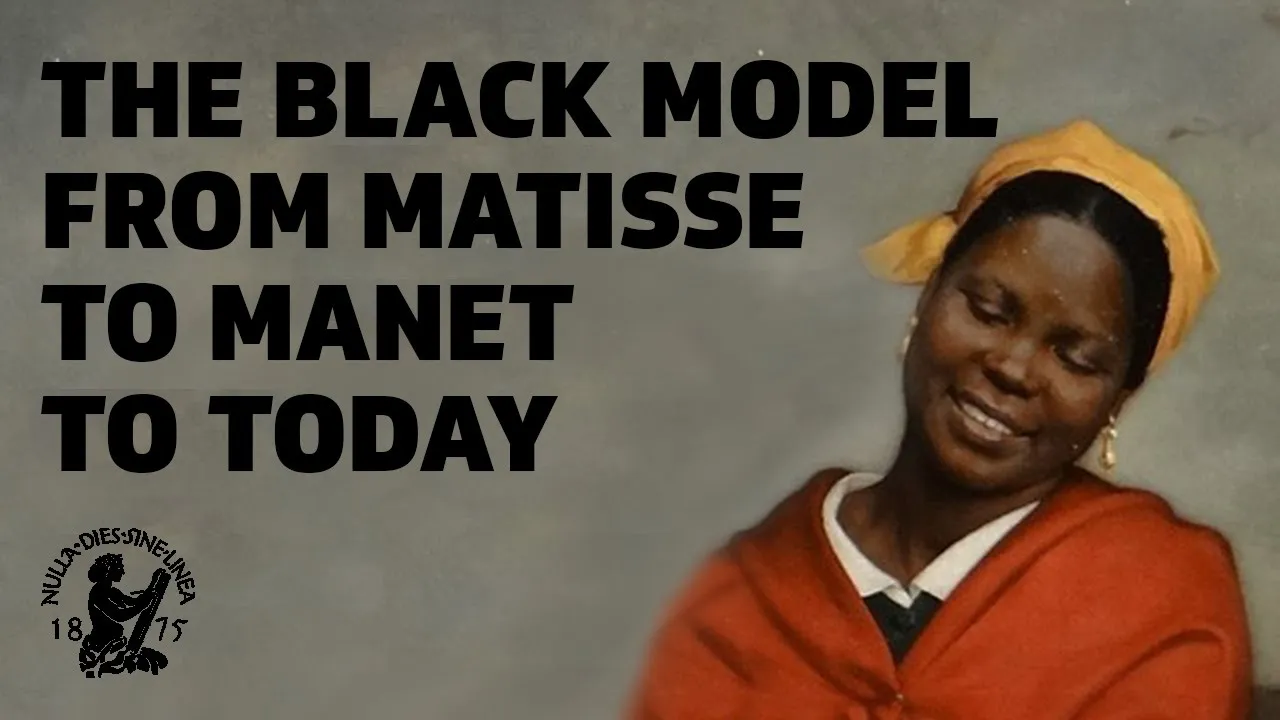
- Why this video: Renowned curator Denise Murrell provides deep critical context on the transnational dialogue between Parisian modernism and Harlem Renaissance artists. It exposes how Matisse, Picasso, and their contemporaries interacted with African aesthetic forms, and how Black artists subsequently traveled to Paris to study, reclaiming and recontextualizing those same motifs.
- Knowledge Checkpoint:
- Analyze the transnational exchange between the School of Paris and Harlem Renaissance artists.
- Describe how European modernists and African American artists approached West African artistic forms with fundamentally different intentions.
- Explain how the portrayal of the Black figure shifted when depicted by Black modernists vs. their white European counterparts.

- Why this video: This video focuses on how West African masks and carvings originally disrupted European perspective, leading to the birth of Cubism. Understanding how Picasso and Matisse used these forms is vital to appreciating how Harlem Renaissance artists later synthesized these exact geometries to represent their own heritage.
- Knowledge Checkpoint:
- Identify the visual hallmarks of West African sculpture (geometric reduction, dramatic symmetry) that influenced early modernism.
- Contrast the academic European style of painting with the abstract, multi-perspective approach inspired by African masks.
- Define the concept of "primitivism" and critique how early 20th-century European institutions categorized African works of art.

- Why this video: Dr. Murrell dives deeper into the specific Parisian exchanges, illustrating how Harlem artists used their time abroad to bypass American racial restrictions and develop sophisticated, global modernist styles.
- Knowledge Checkpoint:
- Explain why Paris became a crucial alternative training ground and exhibition space for African American artists in the 1920s.
- Identify visual links between French Cubist experiments and the graphic layouts of Harlem Renaissance magazines and murals.
🔍 Curriculum Note & Gap Recommendation: While these videos offer excellent structural and contextual overviews of transatlantic modernism, they lack close-up formal breakdowns of Aaron Douglas’s precise design choices. To supplement this, independently search for and analyze Douglas's illustrations for James Weldon Johnson's God's Trombones. Pay close attention to how he layers concentric circles of light (symbolizing spiritual and intellectual illumination), silhouettes figures to universalize the Black experience, and references Egyptian profiles to connect modern African Americans to ancient African civilizations.
Module 3: Pioneering Artists & Visual Strategies
This module focuses on the signature techniques, mediums, and formal languages of three monumental figures of the movement: Aaron Douglas, Jacob Lawrence, and Augusta Savage. Through close-up visual analyses, you will investigate how these artists materialized the tenets of the New Negro movement using painting, sculpture, and graphic illustration.
Recommended Videos
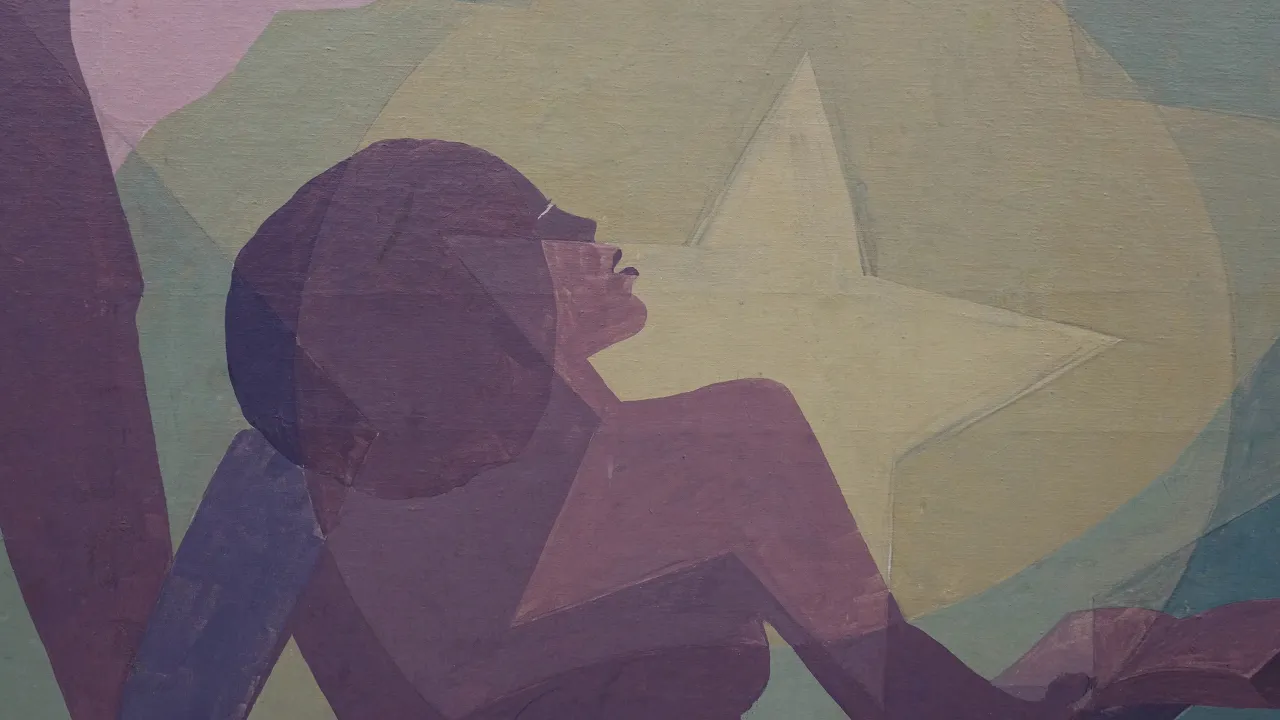
- Why this video: Using a focused formal analysis of Aaron Douglas's masterwork Aspiration (1936), this video demonstrates how he layered translucent, concentric circles of color to build a sense of historical progress, linking Egyptian architectural forms, labor, and higher education.
- Knowledge Checkpoint:
- Identify Douglas's signature color palette and explain how his use of monotone gradients creates depth.
- Analyze the symbolism of the star, the book, and the distant city in Aspiration.
- Describe the graphic silhouette technique and explain why Douglas avoided detailed facial features in his figures.
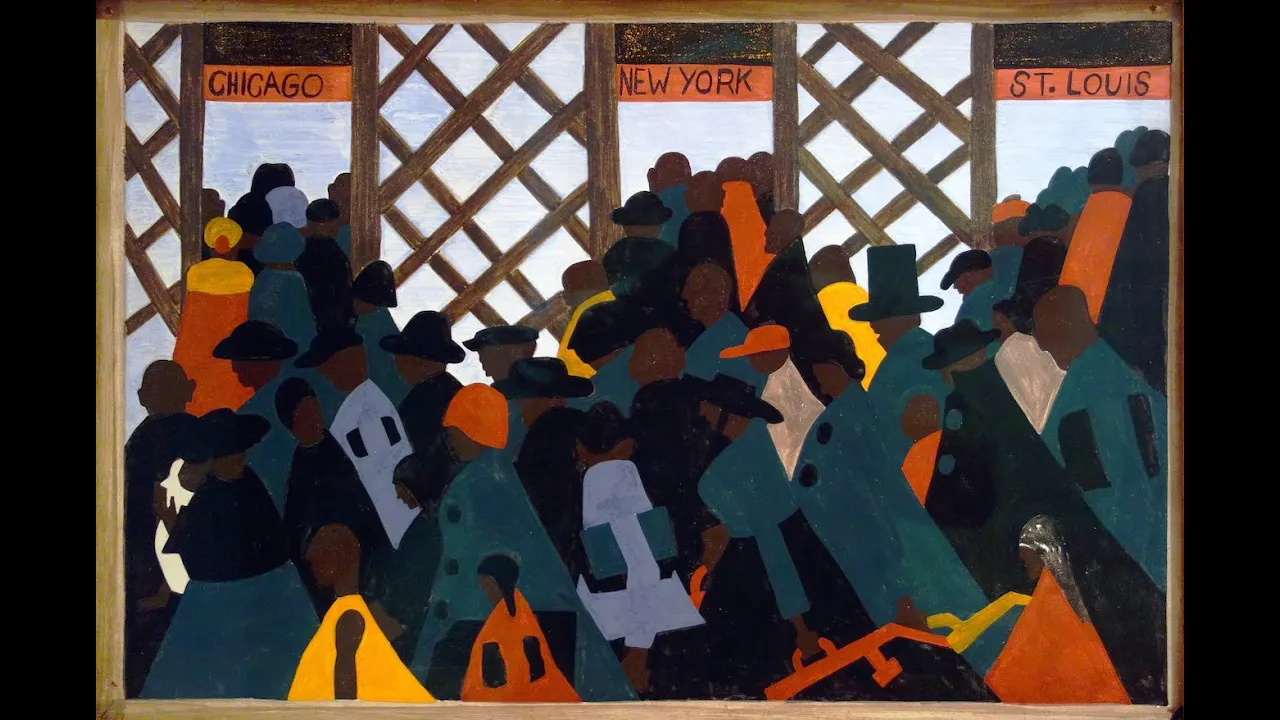
- Why this video: This video is a masterpiece of close-looking, detailing Jacob Lawrence's 60-panel Migration Series (1940-41). It walks through his visual strategies, specifically how he maintained cohesion across 60 panels by applying one color at a time across all boards, and how his use of dynamic cubist abstraction heightens the raw emotion of the historical narrative.
- Knowledge Checkpoint:
- Explain Lawrence's "one color at a time" tempera painting technique and its visual impact on the finished series.
- Analyze how Lawrence uses flat shapes, sharp diagonals, and negative space to convey both the physical movement and the systemic oppression of the migrants.
- Describe how the accompanying captions function alongside the images to create a unified narrative.

- Why this video: This PBS documentary profiles Augusta Savage, the pioneering sculptor who fought intersecting barriers of racism, poverty, and sexism. It highlights her community activism in establishing the Harlem Community Art Center and her ability to capture deep psychological complexity in her plaster and clay works, such as Gamin.
- Knowledge Checkpoint:
- Describe the tactile, expressive qualities of Savage's portrait sculptures and how she captured raw human emotion.
- Understand the tragic loss of her masterpiece The Harp (inspired by lift every voice and sing) due to financial constraints and its physical scale.
- Identify Savage’s contribution as an educator who trained the next generation of Black visual artists in Harlem.

- Why this video: This video offers a deeper dive into Aaron Douglas's early life and Kansas roots, tracking how his exposure to graphic design led to his ultimate title as the "Father of African American Art."
- Knowledge Checkpoint:
- Map Douglas's professional journey from the Midwest to Harlem, highlighting the impact of his early graphic design training.
- Explain how Douglas utilized publication covers (like Crisis and Opportunity) as public art galleries to bypass traditional museum gatekeepers.
Module 4: Depicting Migration, Identity, and Urban Life
This module examines how artists navigated and recorded the dualities of the modern Black urban experience. You will analyze how artists balanced the heavy trauma of historical Southern racism, sharecropping, and lynchings with the electric energy, jazz culture, economic struggles, and complex social hierarchies of newly formed Northern communities.
Recommended Videos

- Why this video: Focusing on Archibald Motley Jr.’s 1943 masterpiece Nightlife, this video explores how Motley utilized a vibrant, saturated palette of deep purples, pinks, and reds to capture the movement, syncopation, and energy of a Chicago Bronzeville jazz club.
- Knowledge Checkpoint:
- Analyze how Motley uses color theory—specifically high-intensity artificial light—to replicate the tempo and rhythm of jazz music.
- Explain how Motley depicted diverse skin tones in his paintings to deliberately highlight the internal social colorism and rich cultural diversity within the Black community.
- Define how Motley’s portrayal of urban spaces contrasted with rural representations of Black labor.

- Why this video: This comprehensive documentary tracks Lawrence's broader career, focusing on how his visual style evolved to chronicle both the struggles of migration and the quiet dignity of urban labor. It highlights how his work serves as both historical testimony and modernist formal experimentation.
- Knowledge Checkpoint:
- Describe the influence of Harlem’s physical environment (street corner speakers, library workshops, community centers) on Lawrence's visual education.
- Discuss how Lawrence depicted the physical strain and heroic scale of working-class laborers in urban centers.
- Identify the visual connections between Lawrence's simplified, expressive figures and the social realist murals of the era.

- Why this video: This video focuses on "Black Dandyism" and fashion as a visual strategy of self-fashioning during the Harlem Renaissance. It highlights how clothing, posture, and public presence were used as conscious artistic interventions to assert elegance, claim urban space, and challenge racialized caricatures.
- Knowledge Checkpoint:
- Define "Black Dandyism" and analyze how style served as a visual performance of class mobility and urban sophistication.
- Describe how photography (such as the studio work of James Van Der Zee) recorded this self-styling to project a modern, self-determined image of Harlem residents.
🔍 Curriculum Note & Gap Recommendation: While Nightlife is an exceptional study of Motley's work, the video pool is light on his wider depictions of middle-class domestic life and portraits. To gain a complete picture of his contributions, independently research his portraits (such as Mending Socks or The Jockey Club). Note how his classical academic training allowed him to depict the Black middle class with immense dignity and complex psychological depth, directly fighting the minstrel caricatures of his day.
Module 5: Legacy and Influence on Contemporary Art
This module maps the enduring legacy of the Harlem Renaissance. You will trace how these early 20th-century experiments in modernism, heritage reclamation, and social critique directly laid the groundwork for the mid-century Civil Rights art, the 1960s Black Arts Movement (BAM), and contemporary 21st-century artists who continue to use these visual strategies to challenge history.
Recommended Videos

- Why this video: This video bridges history and the present day, exploring how contemporary Black artists draw directly from the legacy of Charles White, Langston Hughes, and other renaissance masters. It highlights how today's artists utilize archival research to uncover and celebrate everyday individuals, carrying on the original activist spirit of the Harlem Renaissance.
- Knowledge Checkpoint:
- Trace how the "art as activism" ethos of the 1920s evolved into the contemporary practices of current visual artists.
- Describe how contemporary artists utilize archival research to reclaim forgotten Black histories.
- Explain the continuous lineage of portraying everyday, working-class people with dignity across different generations of Black art.

- Why this video: This lecture salon positions artist Romare Bearden as a crucial mid-century bridge. Bearden took the visual strategies of the Harlem Renaissance—particularly the translation of jazz rhythms, flat modernist planes, and community collage—and carried them forward, showing how the fragmentation of collage mirrored the complex, multi-layered nature of Black identity.
- Knowledge Checkpoint:
- Analyze how Romare Bearden utilized collage to translate the syncopated rhythms of jazz into physical, visual form.
- Describe how Bearden’s work served as a bridge between the early Harlem Renaissance and mid-to-late 20th-century modernism.
- Explain the concept of visual "riffing" and improvisation in modern Black painting and collage.

- Why this video: This conversational panel discusses how the radical art and literature of the Harlem Renaissance and the 1960s Black Arts Movement directly shape the structure, voice, and activism of contemporary poets, writers, and illustrators working today.
- Knowledge Checkpoint:
- Explain how contemporary creators use the rhythmic and structural lessons of Harlem Renaissance writers to format modern social justice work.
- Describe the historical line of influence from Harlem in the 1920s, to the Black Arts Movement in the 1960s, to modern youth-led justice movements.
🔍 Curriculum Note & Gap Recommendation: Although Romare Bearden and contemporary panels offer excellent conceptual links, there is a lack of deep-dive visual coverage detailing the transition to the 1960s Black Arts Movement (BAM). To fill this gap, independently search for works by the Chicago-based collective AfriCOBRA (such as Wadsworth Jarrell or Jeff Donaldson) and artist Emory Douglas (Minister of Culture for the Black Panther Party). Note how their use of "coolade colors," high-contrast graphic prints, and explicit political messaging evolved directly from the foundational design experiments of Aaron Douglas and early Harlem print culture.
Course Map
Key People Index
- Alain Locke (1885–1967): Philosopher, educator, and the first Black Rhodes Scholar. He edited the landmark 1925 anthology The New Negro, acting as the primary intellectual theorist of the Harlem Renaissance by steering Black artists to look to West African art and authentic Black life for inspiration.
- Aaron Douglas (1899–1979): Often called the "Father of African American Art." He developed a revolutionary graphic style combining European Cubist flat-plane division, Art Deco geometry, West African design, and Egyptian profiles to chronicle Black history from slavery to modern urban life.
- Jacob Lawrence (1917–2000): A master storyteller who gained national fame at age 23 with his 60-panel Migration Series. He used a highly unique style he called "dynamic cubism"—characterized by flat tempera applications, sharp diagonals, and high-contrast color rhythms.
- Augusta Savage (1892–1962): A trailblazing sculptor, educator, and activist. She fought deep institutional discrimination to establish the Harlem Community Art Center, mentoring legendary figures like Jacob Lawrence and creating highly expressive works in clay, plaster, and bronze.
- Archibald Motley Jr. (1891–1981): A classically trained Chicago painter famous for his vibrant, artificially lit depictions of Black urban nightlife in Bronzeville. His work is celebrated for its rich use of color and complex investigations of skin color variation within the Black community.
- Dr. Denise Murrell: Art historian and curator at the Metropolitan Museum of Art. Her scholarship (such as the Posing Modernity exhibition) redefined the field by exploring the complex, transnational exchanges between European modernists in Paris and Black Harlem Renaissance artists.
Final Self-Assessment
Complete this comprehensive self-assessment to verify your mastery of the visual strategies, context, and legacies of Harlem Renaissance art:
- I can articulate the socio-political factors of the Great Migration and explain how they enabled the concentrated growth of Harlem's art scene.
- I can define Alain Locke's concept of the "New Negro" and analyze how it directly transformed early 20th-century Black visual representation.
- I can explain how Matisse and Picasso engaged with West African art, and contrast their "primitivist" lens with the reclamation of these forms by Black artists.
- I can identify the visual characteristics of Aaron Douglas's style, including his use of flat silhouettes, monotone color gradients, and concentric circles of light.
- I can trace the thematic and historical narrative running through Jacob Lawrence's 60-panel Migration Series.
- I can describe the formal techniques Jacob Lawrence used to create unity and convey movement, trauma, and hope across multiple panels.
- I can explain the artistic and community contributions of Augusta Savage, outlining how her work as a sculptor and community educator shaped the movement.
- I can analyze how Archibald Motley Jr. used artificial light, high-saturation color palettes, and body postures to visually mimic the rhythm and speed of jazz.
- I can explain how Archibald Motley Jr. used color and paint to depict different skin tones, and discuss the social commentary behind this strategy.
- I can define "Black Dandyism" and analyze how fashion, photography, and personal style served as conscious political visual interventions in northern cities.
- I can explain how mid-century artists like Romare Bearden used collage to carry the spatial and rhythmic legacy of the Harlem Renaissance forward.
- I can trace the direct conceptual and visual connection between the graphic design strategies of the 1920s Harlem press and the radical print culture of the 1960s Black Arts Movement.