
















![[LỚP 12 ÔN THI] KỸ NĂNG BÌNH CHO BÀI VIẾT SÂU SẮC || HỌC CHUYÊN SÂU TRONG KHÓA LUYỆN ĐỀ](https://i.ytimg.com/vi/ZcUQL-sOH98/maxresdefault.jpg)
The Harlem Renaissance (1918-1930s) was a transformative cultural movement centered in Harlem, New York, where over 1.5 million Black Americans migrated during the Great Migration, creating the world's largest Black urban community; this period produced groundbreaking visual artists like Richmond Barthe and Aaron Douglas, literary giants including Langston Hughes, Zora Neale Hurston, and Countee Cullen, and musical innovators such as Duke Ellington and Billie Holiday, all of whom challenged racial stereotypes and created authentic representations of Black American life that continue to influence American arts and letters today.
Harlem Renaissance: Arts, Letters & Culture | Black History
Added:The Great Migration: Understanding the mass movement of millions of African Americans from the rural South to urban Northern cities in the early 20th century.
Jim Crow Laws and post-Reconstruction Era: The socio-political climate of systemic racism, segregation, and disenfranchisement that prompted Black migration.
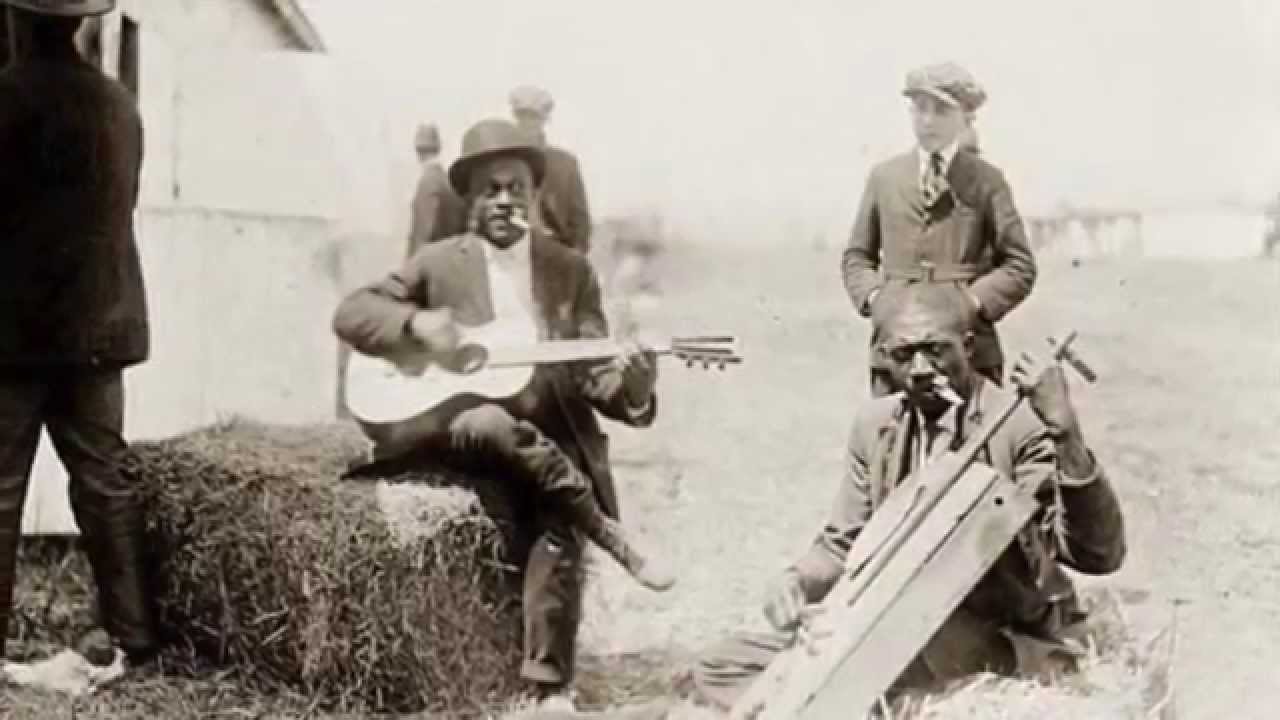
The origins of Blues, Ragtime, and early Jazz: The foundational musical traditions that paved the way for the auditory landscape of the Harlem Renaissance.
The concept of 'The New Negro': Alain Locke's influential philosophy advocating for Black self-determination, racial pride, and artistic expression.
The Civil Rights Movement: How the cultural empowerment and intellectual legacy of the Harlem Renaissance laid the groundwork for the mid-20th-century political struggle.
The Négritude Movement: Exploring the global impact of Harlem Renaissance literature on French-speaking Black intellectuals and writers in Africa and the Caribbean.
The Evolution of Jazz and the Swing Era: Analyzing how innovators like Duke Ellington and Louis Armstrong transformed jazz from a localized movement into a global phenomenon.
Deep-dive literary analysis: Examining the specific themes of double consciousness, gender, and regional dialect in the works of Zora Neale Hurston and Langston Hughes.
585.1K views8.3Klikes12:37Original Release: 2021-11-19
Hi, I’m Clint Smith and this is Crash Course Black American History. The Harlem Renaissance, also known as the New Negro Movement, was an outpouring of artistic production and expression that took place from shortly after World War I and lasted into the mid-1930s. It was one of the richest, most vibrant, and most culturally generative artistic periods in American history and the work that emerged from that period continues to shape the landscape of American arts and letters today. In this episode, we’re going to explore some of the writers, artists, and musicians who turned Harlem into a world-renowned hub of art and culture, and delve into the factors that brought them all together in the first place.
Let’s start the show!
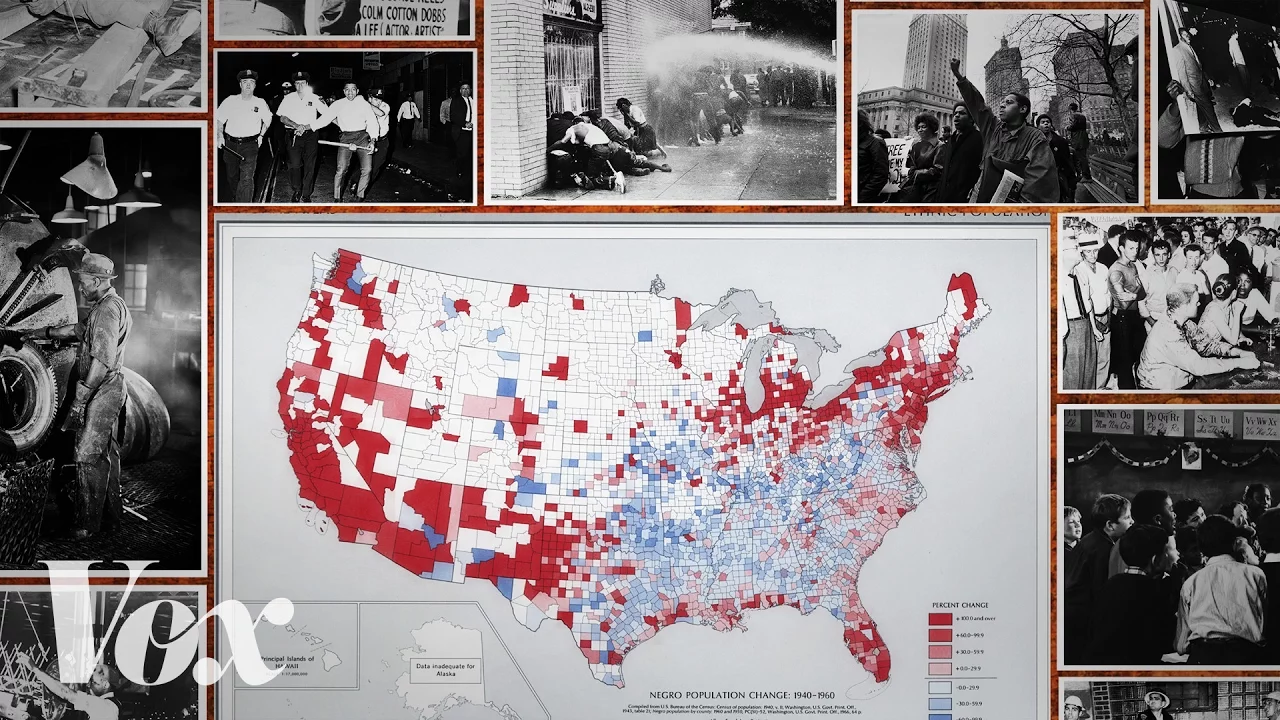
So a few episodes ago we discussed the Great Migration, the decades when many Black Americans moved to the north for better economic opportunities and to escape domestic terrorism in the South. We also talked about the Red Summer of 1919, where Black veterans were targeted by White Supremacist groups, police officers, and mobs upon their return from World War I. As these things were happening, more and more people in the Black community became increasingly politicized. They were tired of being treated as second-class citizens, and many began more forcefully advocating for their civil and political rights. Large cultural shifts can not only serve as a catalyst for social and political change, but they can also spark new forms of creative and artistic expression. By the time the First Great Migration was over, over 1.5 million Black Americans had moved to the North, with 175,000 of them settling into Harlem - a single neighborhood in New York City.
Even though Harlem was only three square miles, this influx of Black Americans turned this small area into the largest concentration of Black people in the world. These communities developed new forms of expression that were so unique, so moving, and so unlike anything America had ever seen before that Harlem gained both national and international attention.
And this explosion of artistic creation wasn’t just limited to Harlem, it also flourished in cities like Chicago, Cleveland, Los Angeles, and Washington DC. We can separate much of the work into three categories: Visual Arts, Literary Arts, and Musical Arts. There were so many incredible visual artists who contributed to the Harlem Renaissance. One of them was sculptor Richmond Barthe, who enrolled at the Art Institute of Chicago to study oil painting, despite not having any formal training or a high school education. While there, however, he was drawn to sculpting and ended up creating work that portrayed the beauty of the Black body. Photographer James Van der Zee, provided some of the most complete documentation of African American life during this era, especially the emerging Black middle class in New York. Muralist and artist Aaron Douglas used Egyptian and West African sources in his art to depict segregation and race. His innovative techniques drew the attention of Black intellectuals, like W. E. B. Dubois, who would ask him to provide illustrations for their journals. And there was Meta Vaux Warrick Fuller, an interdisciplinary artist and sculptor who portrayed the Black American Experience using African themes. Born in Philadelphia, Pennsylvania, she said her work was “of the Soul, rather than the figure.” She was the first African American woman to receive a U.S. government commission for her art. And of course the Harlem Renaissance included the literary arts. Let’s go to the Thought Bubble. Langston Hughes was one of the most famous poets of the day. He was born in Joplin, Missouri in 1901 and lived in a variety of places across the United States from Illinois to Ohio to New York City - where he spent a year at Columbia University. He also traveled abroad to Europe and Africa while working as a seaman. In 1926, he published his first book of poetry, The Weary Blues, while living in Washington DC. He finished his education at Lincoln University in Pennsylvania, which was a historically black university where he felt like he had more support than he did at Columbia. Langston Hughes’ poetry was unique because it reflected both his personal experience as a Black man living in America and the experiences of working-class Black people across the country.
He strived to reflect what he thought of as the authentic Black American experience, and refused to make Black life look happier or less painful than it actually was for so many. And because of this, Hughes had many critics. Many Black intellectuals believed that Hughes was portraying Black Americans in a bad light. But in his autobiography, Hughes responded: “The Negro critics and many of the intellectuals were very sensitive about their race in books. (And still are.) In anything that white people were likely to read, they wanted to put their best foot forward, their politely polished and cultural foot—and only that foot." Hughes wasn’t daunted by the criticism, and believed that his work showed Black life, and America, for what it was. He wasn’t interested in hiding anything, from anyone.
Thanks Thought Bubble. Hughes wrote in his essay, The Negro Artist and the Racial Mountain, “We younger Negro artists who create now intend to express our individual dark-skinned selves without fear or shame. If white people are pleased we are glad. If they are not, it doesn’t matter. We know we are beautiful. And ugly too.” One of my favorite poems of his is entitled, Harlem, which goes: “What happens to a dream deferred?
Does it dry up like a raisin in the sun? Or fester like a sore— And then run? Does it stink like rotten meat? Or crust and sugar over— like a syrupy sweet?
Maybe it just sags like a heavy load.
Or does it explode?” Langston Hughes was one of many famous Black writers during the Harlem Renaissance. In fact, there were so many, that a special issue of the Survey Graphic - a social science and culture journal - was produced in 1925 to commemorate the impact of Harlem on the American literary landscape. It featured scholarly writings in history and sociology from some very important figures in academia and research. One was James Weldon Johnson - a lawyer, poet, and activist who is best known for co-writing “Lift Every Voice and Sing,” which is now known as the Black National Anthem. Additionally, he was an active participant in the NAACP and served as its first Black Executive Secretary from 1920 to 1930. Another writer featured in this special issue was Arthur Schomburg (also sometimes known as “Arturo”).
Schomburg, a pioneer in the area of Black History, was an Afro-Puerto Rican man who developed one of the most significant collections of printed material about the Black Diasporic experience in the world.
His collection was acquired by the New York Public Library and the collection grew into what would become the Schomburg Center for Research in Black Culture. The famous issue of the Survey Graphic also included work from Walter White - a lynching investigator who attempted to secure passage of a federal anti-lynching bill - as well as poems by writers like Claude McKay and Countee Cullen. McKay and Cullen were both cornerstones of the Harlem Renaissance literary scene, but with divergent approaches. Cullen--who many scholars believe was the person Langston Hughes was being critical of in The Negro Artist and the Racial Mountain essay--embraced colorblindness in his work and wrote in a prose that appealed to Eurocentric literary sensibilities. McKay, a Jamaican immigrant, proudly wrote poetry in his Jamaican dialect in addition to what he called “straight English.” One of McKay’s most famous poems, If We Must Die, speaks to the rising sense of Black militancy in many parts of the Black community. It goes: If we must die, O let us nobly die, So that our precious blood may not be shed In vain; then even the monsters we defy Shall be constrained to honor us though dead! The editor of this historic issue of the Survey Graphic was Alain Locke. Locke, the first Black American to earn a Rhodes scholarship, received both his undergraduate degree and PhD in Philosophy from Harvard.
He would go on to teach at Howard University and publish a book called The New Negro, a manifesto and collection of essays that embodied the spirit of the movement and expounded upon the importance of the Harlem Renaissance. Locke highlighted even more Black literary geniuses - folks like Gwendolyn Bennett and Zora Neale Hurston.
Bennett was a writer, editor, and poet who studied art in the United States and abroad. She was also assistant to the editor at Opportunity, which was the major publication of the Urban League and published many writers during the Harlem Renaissance. Hurston, who wasn't fully appreciated until after her death, was a writer known for her efforts to preserve the folklore of Black Southern life. She wrote often about the nuanced experiences of Black women, best exemplified in her most well-known work, the book Their Eyes Were Watching God.
We’ll learn more about her in a few episodes! In the area of music, blues and jazz revolutionized the American landscape. Blueswomen singers such as Ma Rainey, known as “The Mother of Blues” and Bessie Smith, known as “The Empress of Blues,” used their remarkable voices to express their highs, their lows, their challenges, and their victories making their way through life in the United States as Black women.
They especially focused on the stories of working-class Black life. And both women also played an important role in exposing larger audiences to the music coming out of Black communities. Another important jazz musician during this period was Duke Ellington. He helped popularize big band style jazz music in the United States and produced many concerts at Carnegie Hall in New York City. Other legendary musicians of this era included Eubie Blake, one of the first Black Americans to compose a major Broadway Musical, and Billie Holiday, whose song “Strange Fruit” is credited with being the first protest song of the Civil Rights era.
In fact many modern forms of music are influenced by blues and jazz - including rock, pop, country, and Hip-Hop. We are just scratching the surface of the artistic outpouring of the Harlem Renaissance! There are so many artists that we could have talked about today and more that we’ll talk about in the episodes to come. But what’s clear is that Black Americans have made countless contributions to the cultural, artistic,musical, and literary landscape of this country. We can see it everywhere. And as a writer like myself, I know that my work is only possible because of the path that was laid by these remarkable people. And who knows, maybe I’ll start painting or pick up a little bit of trumpet playing on the side...or maybe not.
Thanks for watching. I’ll see you next time! Crash Course is made with the help of all these nice people and our animation team is Thought Cafe. Crash Course is a Complexly production and if you'd like to keep Crash Course free for everybody forever, you can support the series at Patreon, a crowdfunding platform that allows you to support the content that you love. Thank you to all of our patrons for making Crash Course possible with your continued support.
Up Next

29:26
The New Negro Movement & the Harlem Renaissance Explained
@metmuseum
12K views•2024-02-22

33:02
The Great Schism of 1054: Causes and Consequences
@SacredCathedrals
113.5K views•2026-02-19

12:28
European Protests of the 1960s: Crash Course European History #45
@crashcourse
314.5K views•2020-06-20
17:05
Understanding the Cold War: Superpower Conflicts and the Road to Détente
@OverSimplified
46.1M views•2019-01-24
Related Study Plans & Knowledge Roadmaps
Structured learning paths in History
history
Byzantine Iconoclasm: Theology, Art & Politics
01Foundations of Byzantium and Early Christian Images
02The First Iconoclasm: Leo III and the Crisis of Images
03Empress Irene, Nicaea II, and the Second Iconoclasm
+ 2 more learning modules
9h5 modules
Explore Roadmap
history
Iranian Revolution (Causes, Events & Legacy)
01The Pahlavi Dynasty and the Roots of Discontent
02The Spark of Rebellion and the Rise of Khomeini
031979: The Fall of the Shah and the Climax of the Revolution
+ 2 more learning modules
8h5 modules
Explore Roadmap
history
Mali Empire: Mansa Musa, Trade & Timbuktu
01Foundations of the Mali Empire
02The Trans-Saharan Gold and Salt Trade
03The Reign and Pilgrimage of Mansa Musa
+ 1 more learning modules
6h4 modules
Explore Roadmap
history
1947 Partition: Politics, Borders & Legacies
01Foundations of British India and the Divide
02The Political Negotiations and the Mountbatten Plan
03Drawing the Boundary: The Radcliffe Line
+ 2 more learning modules
8h5 modules
Explore Roadmap