

























Michelle Alexander argues that mass incarceration in the United States functions as a new caste system, comparable to historical systems of racial and social control, where the criminal justice system labels people of color as criminals and then engages in all the practices that were once legally allowed against African-Americans under Jim Crow, effectively creating a permanent second-class status for poor people of color through legal discrimination in employment, housing, voting, and other areas of daily life.
Michelle Alexander on Mass Incarceration: The New Jim Crow Lecture
Added:Understanding of the historical 'Jim Crow' laws, segregation, and racial disenfranchisement in the post-Reconstruction American South.
The origin, evolution, and legislative history of the American 'War on Drugs' initiated in the late 20th century.
The sociological definition of a 'caste system' and how it differs from a class-based social structure.
Basic mechanics of the US criminal justice system, including mandatory minimum sentencing, plea bargaining, and felony disenfranchisement.
The concept of systemic and institutional racism, specifically how policies can produce racially disparate outcomes without explicit racial bias.
The concept of 'civil death' and the collateral consequences of felony convictions on employment, housing, and voting rights.
The economics of mass incarceration, including the roles of the prison-industrial complex and private prison corporations.
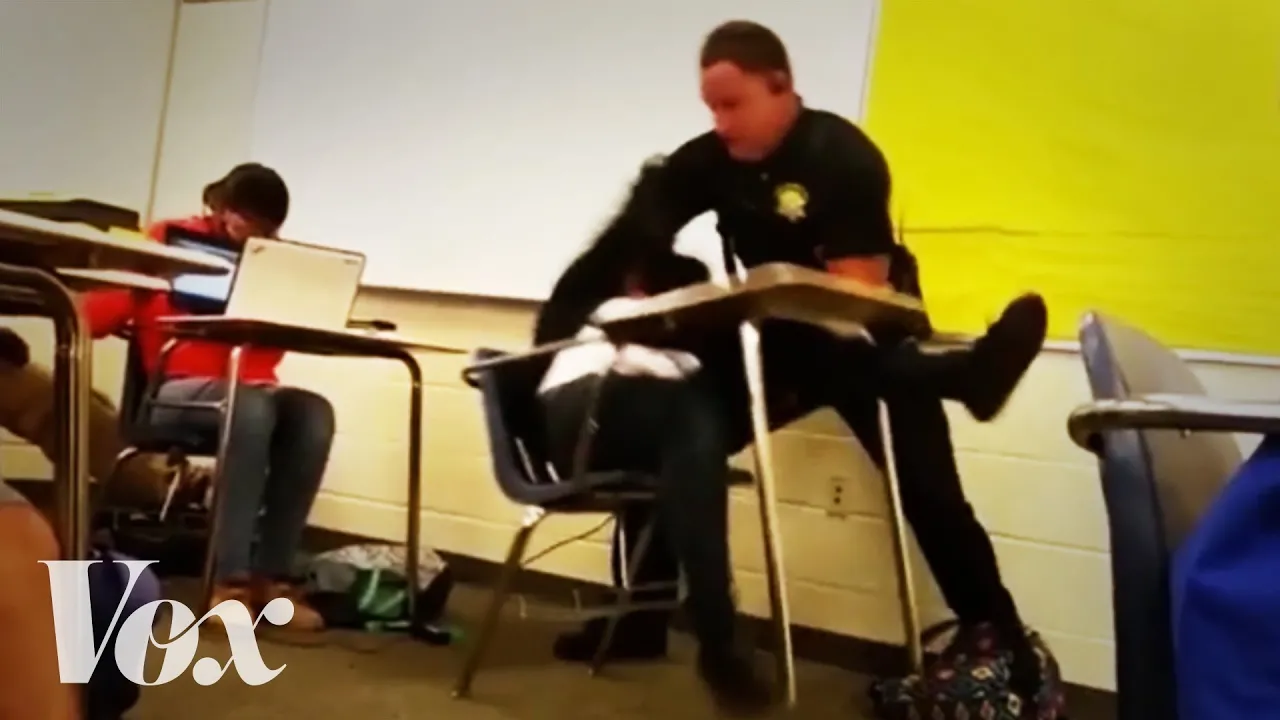
The 'school-to-prison pipeline' and how disciplinary policies in public schools funnel minority youth into the criminal justice system.
Comparative analysis of global incarceration rates and rehabilitation-focused justice systems (e.g., Scandinavian models).
Strategies for criminal justice reform, such as restorative justice, decarceration, and the prison abolition movement.
1.8M views24.3Klikes1:10:32Original Release: 2013-03-15
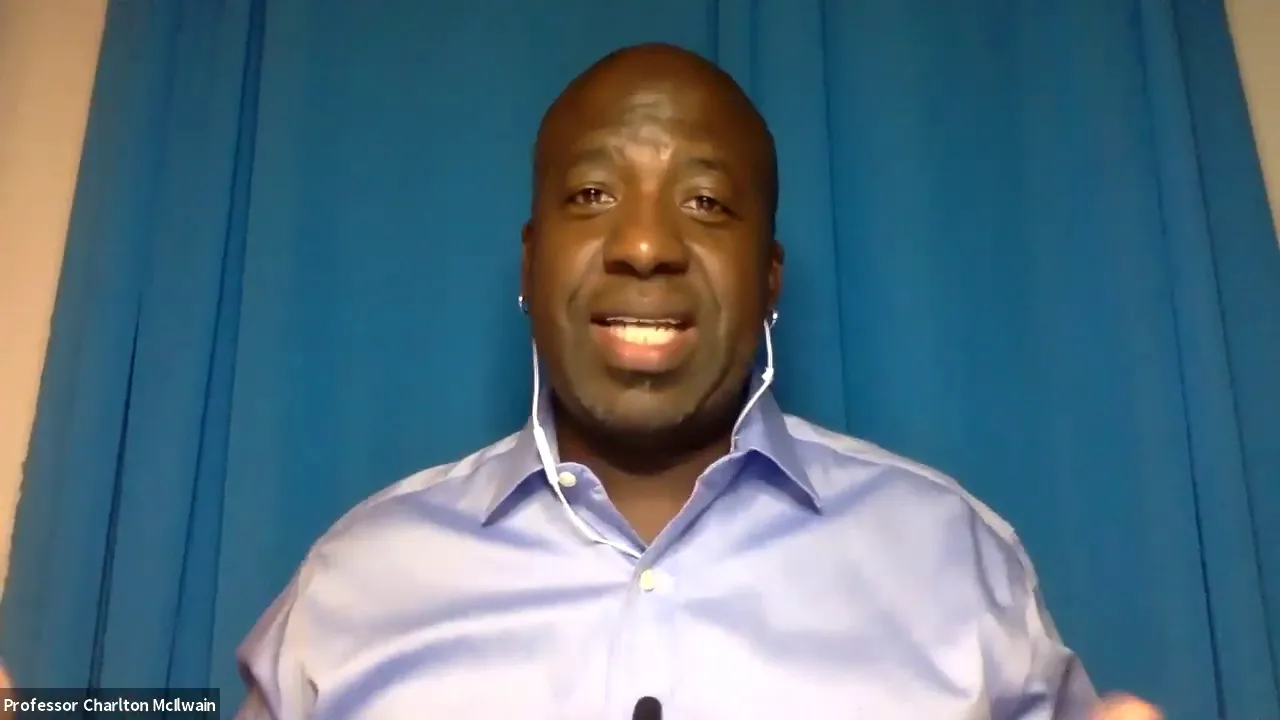
good afternoon thank you thank you so much for having me here today it's really an honor to be here and I'm thrilled to see so many of you here eager to join in meaningful dialogue meaningful conversation about this system of mass incarceration in the United States A system that has decimated so many of our communities destroyed so many families and literally turned back the clock on racial progress in the United States it seems fitting um that this dialogue would be taking place during Black History Month a time when many Americans pause to consider if only briefly our nation's racial history our racial present and our Collective future and this year marks the 150th anniversary of the Emancipation Proclamation and so it seems more than appropriate to reflect on the meaning of that Proclamation indeed the meaning of emancipation in this era of mass incarceration and this year also marks the 50th anniversary of the March on Washington 50 years have passed since Dr King delivered his soaring I Have a Dream speech I Have a Dream it is a dream deeply rooted in the American dream and so in reflecting on where we stand today 150 years after the emancipation Proclamation and 50 years after the March on Washington I'm going to take Martin Luther King Jr's advice and tell it straight As Dr King put it quite bluntly just months before his death after the Civil Rights victories had already been won after the Civil Rights bills had already been passed he said quote I do not see how we will ever never solve the turbulent problem of race confronting our nation until there is an honest confrontation with it and a willing search for the truth and a willingness to admit the truth when we discover it and so in that vein I'm going to do my best to tell the truth the whole truth about race in America today it is a truth that many Americans will deny just as they were eager to deny the truth about slavery and Jim Crow in their days but the truth is this we as a nation have taken a wrong turn in our stride toward Freedom we've betrayed Dr King's dream and perhaps nowhere is it more obvious than right here in the city of Chicago in this great City President Barack Obama's Hometown a vast new Ral undercast has emerged though their plight is rarely mentioned on the Evening News occasionally we hear about the homicide rate the violence that has been spinning out of control not everywhere but in certain spaces certain places certain communities defined largely by race and class 108 young people were killed in this city last year alone hundreds more were killed with scarcely any notice in the media just another black man gunned down another body in the street when hadia Pendleton was killed though the national media took notice at least for a moment she was a 15-year-old girl in the wrong place of the wrong time according to the police the killing of hadia Pendleton an honor student shot dead just days after she performed at President Obama's Inauguration became a symbol of the city's stubbornly High homicide rate and something of a pawn she became something of a pawn in the National debate over gun control now I am grateful very grateful that we are having a national debate about gun control and for the moment at least politicians and the media are paying attention to the deaths of black and brown school children not just white children killed by deranged Mass murderers but I am deeply Disturbed that in this National debate about violence and gun control there is little honest discussion of why truly why some communities are War zones While others are not for while I support gun control and background checks and all the rest let me be very clear about that I think we have got to admit that the reason that some communities are War zones and some are not is not at bottom about the number of guns in those communities after all I live in a community where I've come to learn that many of my white neighbors own guns but my neighborhood is safe at bottom what makes a community safe is not the number of guns but the number of good schools the number of good jobs the number of educational opportunities the numbers of opportunities people have for living a decent life those are the numbers that matter most when it comes to violence and in Chicago as in so many other cities and communities Across America a choice has been made it is a deliberate choice and it is a choice that has been made over and over and over again rather than good schools we have been willing to build high-tech prisons rather than create jobs and invest in the communities that needed most we have embarked on an unprecedented race to incarcerate that has left millions of Americans permanently locked up or locked out William Julius Wilson has written an excellent book about the changes that have occurred in Chicago and other communities around the country entitled when work disappears and in that book he cites statistics showing that when you control for joblessness when you control for joblessness the racial disparities and violent crime disappear in other words if you compare white jobless men with black jobless men rates of violent crime are roughly the same men who are jobless particularly chronically jobless are more likely to be violent Now joblessness does not excuse Violence by any means most people who are jobless do not resort to violence but what we know and what is no secret is that communities that are plagued by exceedingly high levels of joblessness are likely to be violent but a shift occurred here in Chicago and in communities Across America urban communities beginning in the late 50s early 60s into the 1970s where work disappeared it used to be that fact factories would be located in urban areas near segregated black communities so those factories could have quick and easy access to cheap black labor in fact as late as 1970 More than 70% of all African-Americans working in the Chicago area held Blue Collar jobs factory jobs almost overnight those jobs vanished by 1987 the industrial employment of black men had plummeted to 28% due to de-industrialization globalization technological advancement factories closing down jobs moving overseas hundreds of thousands of people overwhelmingly black men found themselves suddenly jobless trapped in racially segregated jobless communities trapped economic collapse occurred in urban areas across the country now we could have responded to this crisis to this literal depression occurring in cities like Chicago and Baltimore and Philadelphia and Detroit and Beyond we could have responded to this crisis this economic collapse this literal depression with an outpouring of care compassion and concern we could have responded with bailout packages economic stimulus programs we could have provided job training particularly to young people coming up in these communities so they could make the rough transition from an industrial economy to a service-based economy but no we chose a different Road a road more familiar when it comes to matters of race we chose the road of division punitiveness and despair we as a society ended the war on poverty and declared the War on Drugs black men found themselves suddenly disposable no longer necessary to the functioning of the US economy precisely at the same moment that a backlash was brewing against the Civil Rights Movement a backlash that made it convenient for politicians to demonize Black black men as criminals as shiftless as unwilling to work and so this War on Drugs was declared and black men found that they were no longer needed to work in the fields no longer needed to labor in factories and they found themselves scapegoats pawns and political games the enemy me in a new war and we're rounded up by the millions locked up and then permanently locked out and now decades later we stand back and say what's wrong with these people why are they killing each other why is there so much violence in these communities that we have abandoned communities where good schools cannot be found but high-tech prisons are a drive away what's wrong with them I think the deeper question the more profound question is what is wrong with us why have we been silent for so long well I've been asked to share with you the them P of my book the new Jim Crow mass incarceration in the age of color blindness and I think the title of the book pretty much speaks for itself I argue that today in the so-called era of color blindness and yes even in the age of Obama and even right here in Obama's Hometown something akin to a cast system is Alive and Well in America the mass incarceration of poor people of color in the United States is tan amount to a new cast system when that shuttles our children from decrepit underfunded schools to these brand new high-tech prisons it is a system that locks poor people overwhelmingly poor folks of color into a permanent second class status nearly as effectively as earlier systems of racial and social control once did in my view this new system is the moral equivalent of of Jim Crow now I'm always very willing very happy to admit that there was a time that I didn't think this way that I rejected this kind of talk out of hand a time when I viewed Advocates and activists who were calling the drug war or mass incarceration the new Jim Crow I thought they were exaggerating engaging in hyperbole in fact there was a time when I thought that people who made those kinds of claims and those kinds of comparisons were actually doing more harm than good to efforts to reform our criminal justice system and Achieve greater Racial equality in the United States but I finally woke up and I woke up after years of working as a civil rights lawyer and Advocate representing victims of racial profiling and police brutality and investigating patterns of Drug law enforcement in poor communities of color and attempting to assist people who had been released from prison as they faced one closed door after another one legal barrier to their supposed reentry after another trying to assist people reenter into a society that had never shown much use for them in the first place that I had a series of experiences that began what I call my Awakening I began to awaken to the reality that our criminal justice system now functions more like a system of racial and social control than a system of crime prevention and control as I state in the introduction what has changed since the collapse of Jim Crow has less to do with the basic structure of our society than the language we use to justify it in the era of color blindness it is no longer socially permissible to use race explicitly as a justification for discrimination exclusion and social contempt so we don't rather than rely on Race we use our criminal justice system to label people of color criminals and then engage in all the practices that we supposedly left behind today it is perfectly legal to discriminate against criminals in nearly all the ways in which it once legal to discriminate against African-Americans once you're labeled a felon the old forms of discrimin ation employment discrimination housing discrimination denial of the right to vote exclusion from jury service suddenly legal as a criminal you have scarcely more rights and arguably less respect than a black man living in Alabama at the height of Jim Crow we have not ended racial cast in America we have merely redesigned it but it took me a while to get to that place and like a lot of people I was in deep denial even as I was working as a social justice Advocate as a civil rights lawyer I thought I knew what was going on I was Disturbed I was even appalled by the high numbers of black men cycling in and out of our prisons and jails but I thought well that can be explained by the high rates of poverty and bad schools and broken homes the legacy of inequality somehow it didn't occur to me that black folks had been poor for a long long time and uneducated for a long long time but nothing like the system of mass incarceration had ever existed before somehow it was easy for me to rationalize what I saw because of the prevailing myths about this system of mass incarceration that are fed to us in countless ways that I was fed in many respects in law school and that were fed through the media but I had one experience that finally began to open my eyes that shook me to my core it involved a young African-American man who was about 19 years old who walked into my office and forever changed the way I viewed not only our Criminal Justice System but how I viewed myself as a civil rights lawyer and Advocate and at the time I was directing the racial Justice project for the ACLU in California we had just launched a major campaign against racial profiling by the police we called it the dwb campaign or the driving while black or brown campaign and we had created a hotline number for people to call if they believe they had been stopped or targeted by the police on the basis of race and we put this hotline number up on billboards and Oakland and communities like San Jose and Sacramento urging people to call the hotline number if they believe that they've been stopped or targeted by the police on the basis of race and in fact within the first few minutes that we announced this hotline number on the evening news we received thousands of calls our system crashed temporarily we had to expand our capacity to deal with the volume of calls that we were receiving and so I was spending my day interviewing one young black or brown man after another another who had called the hotline to report discriminatory stops or searches or abuse by the police and it was very late in the day late in the afternoon and I was getting tired not eager to go through yet another round of interviews and this young man walks in carrying a stack of papers thick stack of papers about this thick he had taken detailed notes of his encounters with the police in Oakland over about a 9month period per of time he had descriptions of every stop every Frisk every time his car was pulled over and searched he had descriptions of every encounter as well as names of witnesses who was there who could corroborate what the police said and what they did and on top of that he had names of officers in some cases even badge numbers of officers he just had an unbelievable amount of documentation in detail about this pattern of stops searches harassment he had been experiencing by the Oakland Police and the stories he was telling or corroborated by other stories we had heard coming out of his neighborhood about what the police were were doing there and so I started to think to myself well maybe he's the one maybe he's the one maybe he can be our name plaintiff in the class action suit were planning to file against the Oakland Police Department alleging pattern of practice of profiling and discrimination and so started to get excited and I started asking a bunch of questions more questions get more details and think Yes actually he's a good-looking young man he'll do well on the media the jury will like him he's well spoken thinking he's the one and then he said something that made me pause and I said um what did what did you say what what did you say did you just say you're a drug felon we had actually been screening people um with felony records when people would call our hotline number we would send a form to them to fill out asking them a bunch of questions about their experiences with the police including have you ever been convicted of a felony we believed we couldn't represent someone as a name plff in a racial profiling suit if they had been convicted of a felony because we knew that if we did law enforcement and the media would be all over us saying well of course the police should be keeping their eye on him he's a felon he's a criminal and we knew that we wouldn't be able to put someone with a felony record on the stand as a name plain if in a racial profiling case without them being cross-examined for an hour in front of the jury about their prior criminal history thus distracting the jury's attention away from the law enforcement conduct and turning it in a trial about young man's prior criminal past and so we have been screening people with prior criminal records and he had not marked it on his form checked the metaphor box and so I'm sitting there looking at him saying did you you know did you just say you're a a drug felon and he gets quiet and he says finally yeah yeah you know I'm a drug felon I'm a drug F but let me tell you what happened to me let me tell you what happened Polie planted drugs on me they said at me and my friend they they beat us up they framed us he starts telling me this long story about how he been framed by the police the police planted drugs on them beat them up and I'm just saying oh I'm sorry I am sorry I'm not going to be able to represent you if you have a felony record and I tried to explain to him why that was the case and how I could understand that why would seem unfair or wrong he keeps trying to give me more information more details now he's giving me the names of those officers their badge numbers who can corroborate that story and I just I am sorry I am sorry I am not going to be able to represent you then he starts insisting upon his innocence I'm innocent I'm telling you I just I just took the deal I just took the plea deal because they told me if I just took the deal that I could just walk I wouldn't I would have to do a day in prison if I just took the took the deal I just get felony probation that's it it would just be felony probation and and that's it I was innocent but I I didn't want to do the time I was scared to go in prison I just I just took the deal but I'm telling you I didn't do it I'm telling you the truth I am sorry I cannot represent you and then he becomes enraged and he says to me you're no better than the police you're no better than the police the minute I tell you I'm a felon you just stop listening you just can't even hear what I have to say he says what's to become of me what's become of me says I can't get a job anywhere because of my felony record anywhere so I I can't I can't even get housing so I can't even get access to public housing because of my drug felony where am I supposed to sleep so you know I sleep in my grandma's basement at night because nowhere else will take me in said how am I supposed to take care of myself as a man said I can't even get food stamps I can't even get food stamps to feed myself what's it become of me he says good luck finding one young black man in my neighborhood they haven't gotten to yet they've gotten to us all already and he snatches all those papers up all those notes and just starts ripping them up into tiny little pieces he's throwing them in the air it's just snowing white paper in my office he walks out yelling to me you're no better than the police I can't believe I trusted you well several months after that I'm doing a public access television show that was broadcasting live out of his neighborhood I was doing Public Access TV because we were trying to organize several thousand people to get on buses and go to the state capital to protest the governor's refusal to sign racial profiling legislation and so we had been holding Town Hall meetings up and down the state been doing a big media campaign and it was just a couple of days before the demonstration and I was doing Public Access TV in his neighborhood trying to urge people to get on the bus and go to the demonstration well immediately after that show goes off the air was broadcasting live the minute goes off the air he comes bursting into the studio carrying this dirty potted plant and he comes rushing up to me and he's emotional on the verge of tears and he comes rushing up to me and he thrust this plant in my arms and he says I'm just here to tell you I'm sorry just here to tell you I'm sorry I've been seeing you on the news I've been seeing you out there trying to fight for our people trying to do the right thing and I shouldn't have treated you like that I shouldn't have spoken to you like that so I would have bought you some flowers but I still don't have any money so I snatched this plant off my grandma's from porch here hands it to me and then he turns around and takes off he goes running out of the building and I go chasing after him he jumps into this broke down car and disappears well several months after that I'm in my office I open up the newspaper and what's on the front page the Oakland writers police Scandal is broken turns out that a gang of police officers otherwise known as a drug task force had been planting drugs on suspects beating Folks up in his neighborhood and who's identified as the main officer one of the main officers charged with planting drugs on suspects and beating Folks up well it was the officer that he had identified to me as planting drugs on him and beat up him and his friend and it really was only then I'm embarrassed to say that it was really only then that the light bulb finally started to go on for me and I thought to myself he's right about me I am no better than the police the minute he told me he was a felon I just stopped listening I couldn't even hear what he had to say and that was the beginning of me asking myself some hard questions of myself as a civil rights lawyer and advocate how am I actually replicating the very forms of discrimination marginalization and exclusion I'm supposedly fighting against and I also started asking some questions about the system itself why was it that we hadn't been able to find a single black man from his neighborhood they hadn't gotten to yet what was really going on and that was the beginning of my journey of asking s and others a lot of hard questions doing an enormous amount of research and listening more carefully to the stories of those cycling in and out of our prison system and what I learned in that process was that my great crime wasn't in refusing to represent an innocent man my great crime was in imagining that there was some path to racial Justice that did not include those we view as guilty and I also learned some facts that blew my mind I learned there are more African-American adults under Correctional control today in prisoner jail on probation or parole then were enslaved in 1850 a decade before the Civil War began I learned that as of 2004 more black men were disenfranchised than in 18 1970 the year the 15th amendment was ratified prohibiting laws that explicitly deny the right to vote on the basis of race now of course during the Jim Crow era po taxes and literacy tests operated to keep black folks from the polls well today in some states felon disenfranchisement laws accomplish what pole taxes and literacy tests ultimately could not a black child born today has less of a chance of being raised by both parents par than a black child bornn during slavery and this is due in no small part to the mass incarceration of black men the first article to appear in the mainstream press I believe about this was in the ecomist magazine entitled how the mass incarceration of black men harms black women and in the article was explained that the majority of black women in the United States including about 70% of black professional women are unmarried and that this is due largely to the mass incarceration of black men which takes them out of the dating pool the years they would be most likely to commit to a partner to a family but what's worse is that by branding them criminals and Felons at early ages often before they're even old enough to vote they're rendered permanently unemployable in the legal job market for the most part virtually guaranteeing that most will cycle in and out of prison sometimes for the rest of their lives now this isn't a phenomenon that affects just some small segment of the African-American community no to the contrary in major urban areas in the United States today more than half of working age African-American men now have criminal records and are thus subject to legalize discrimination for the rest of their lives it was reported a number of years ago that here in Chicago right here in Chicago if you take into account prisoners if you actually count them as people and of course you know prisoners are excluded from poverty statistics and unemployment data know thus masking the severity of racial inequality in the United States but if you actually count prisoners as people in the Chicago area nearly 80% of working age African-American men have criminal records and are thus subject to legalize discrimination for the rest of their lives these men are part of a growing undercast not Class cast a group of people defined largely by race relegated to a permanent second class status by law now I find that today when I tell people that I now that I now finally believe that mass incarceration is like a new Jim Crow a new cast likee system people react with this shock disbelief they say how can you say that how can you say that our criminal justice system isn't a system of racial control it's a system of Crime Control and if black people just stop running around committing so many crimes you would have to worry about being locked up and then stripped of their basic civil and human rights but there in lies the greatest myth about mass incarceration namely that's been driven simply by crime and crime raids it's just not true our prison population quintupled within a 30-year period of time not doubled or tripled but quintupled within a 30-year period of time we went from a prison population of roughly 300,000 to we're now have an incarcerated population of well over 2 million the highest rate of incarceration in the world but this can't be explained simply by crime or crime rates during that 30-year period of time time when our incarceration rates quintupled crime rates in the United States fluctuated they went up they went down they went back up again went down again and today as bad as crime rates are in places like Chicago nationally crime rates are at historical lows but incarceration rates have consistently soared most criminologists and sociologists today will acknowledge that crime rates and incarceration rates in the United States have moved independently of one another incarceration rates especially black incarceration rates have soared regardless of whether crime is going up or down in any given Community or the nation as a whole so what explains the sudden explosion and incarceration rates the birth of a prison system unprecedented in world history if not simply crime and crime raids well the answer is the War on Drugs the get tough movement that wave of punitiveness that washed over the United States drug convictions alone just drug convictions alone accounted for about 2third of the increase in the federal prison system and more than half of the increase in the state prison system between 1985 and 2000 the period of our prison system's most dramatic expansion drug convictions have increased more than a th% since the drug War began I mean to get a sense of how large a contribution the drug war has made to mass incarceration consider this there are more people in prisons and jails today just for drug offenses than were incarcerated for all reasons in 1980 now most Americans violate drug laws in their lifetime most do you don't have to raise your hand but the enemy in this war has been racially defined not by accident this drug war has been waged almost exclusively in poor communities of color even though Studies have consistently shown now for decades that contrary to popular belief people of color are no more likely to use or sell illegal drugs than wife that's right or sell now that defies our basic racial stereotyp about who a drug dealer is if you picture a drug dealer in your mind who do you see there was actually a study conducted on this subject in the mid 1990s a national survey people were asked close your eyes and picture in your mind a drug criminal more than 95% of respondents pictured an African-American less than 5% pictured someone of any other race or ethnicity so when Americans think of drug crime and Drug criminals they typically think of black folks but the reality is is that people of all Races and ethnicities use and sell drugs in fact where significant differences in the data appear some studies suggest that white youth are more likely to engage in illegal drug dealing than black youths [Applause] drug markets are fairly segregated by race black folks tend to sell to blacks whites tend to sell to each other drug markets are even segregated by class University students sell to each other right drug dealing happens in all communities of all colors but those who do time for drug crime are overwhelmingly black and brown in some states like Illinois 80 to 90% of all drug offenders sent to prison have been one Race African-American now I know that many people when they actually see the disparities see the data will say yeah that's a shame that's a shame but you know we need to get tough on them them in the hood because that's where the violent offenders are that's where the drug kingpins are we need a war on them in fact in my experience many people seem to imagine that the War on Drugs was declared in response to the emergence of crack cocaine in Interstate communities and the related violence in fact for a long time I believed that but it's just not true the current drug war was declared by President Ronald Reagan in 1982 before crack began to ravage inner city communities and spawn a wave of violence president Richard Nixon was the first to coin the term a War on Drugs but President Ronald Reagan turned that rhetorical War into a literal one and at the time he declared his drug war drug crime was actually on the decline not on the rise and less than 3% of the American population even identifi drugs as the nation's most pressing concern so why declare an a out War on Drugs when drug crime is actually declining not on the rise and American public isn't too much concerned about it at the moment well the answer is from the outset the War on Drugs had relatively little to do with genuine concern about drug addiction or the harms of drug abuse and much to do with politics racial politics numerous historians and political scientists have now documented that the War on Drugs was part of a grand Republican party strategy known as the southern strategy of using racially coded get tough Appeals on issues of crime and Welfare to appeal to poor and workingclass whites particularly in the South who are anxious about resentful of fearful of many of the gains of African-Americans in the Civil Rights Movement now I think to be fair we have to acknowledge that poor and workingclass whites really had their world rocked by the Civil Rights Movement now wealthy whites could send their kids to private schools give their kids all of the advantages that wealth has to offer but poor and working class whites many of whom were themselves struggling for survival many of whom in the South were themselves illiterate they faced a social demotion it was their kids that might get busted across town to go to a school that they believed was inferior it was their kids and themselves who were s forced to compete on equal terms for limited jobs with this whole new group of people they've been taught their whole lives to believe were inferior to them and then to make matters worse from their perspective affirmative action programs created the perception that black folks were now leapfrogging over them on their way to Stanford Yale Harvard University of Chicago and off to Corporate America and this state of affairs created an enormous amount of fear anger resentment anxiety but it also created an enormous political opportunity pollsters and political strategists found that thinly veiled promises to get tough on them a group not so subtly defined by race could be enormously successful in persuading poor and working-class whites to defect from the Democratic New Deal coalition and join the Republican party in Dr was part of the effort to flip the south from Blue to Red with coded racial rhetoric and getting tough on crime and and Welfare in the words of HR halderman president Richard Nixon's former Chief of Staff he described the strategy this way quote the whole problem is really the blacks the key is to devise a system that recognizes this while not appearing to well they did and a couple years after the drug war was announced crack began to ravage inner city communities and the Reagan Administration seized on this development actually hiring staff whose job it was to publicize inner city crack babies crack dealers the so-called crack and crack related violence many people in here may be too young to remember that there was a time when our television sets were saturated with news about crack babies and crack dealers and images of black men and handcuffs and orange jumpsuits and courtrooms as communities were swept and raided the demon drug crack hit the news and as drug crime and Blackness became conflated in the media a wave of punitiveness swept over the United States legislators started passing harsh mandatory minimum sentences for minor drug crime sentences harsher than murderers receive in many other Western democracies and soon Democrats began competing with Republicans to prove they could be even tougher on them than the Republican counterparts and so it was President Bill Clinton who escalated the drug war far beyond what his Republican predecessors even dreamed possible and it was the Clinton Administration that champion the laws Banning drug offenders from federal financial aid for schooling upon release Banning drug offenders and people with criminal records from public housing it was a Clinton administration that championed the federal law denying food stamps to people with drug felonies to a large extent so many of the rules laws policies and practices that constitute the basic architecture of this new cast system were championed by a Democratic Administration desperate to win back those so-called wh swing voters folks who had defected from the Democratic Party in the wake of the Civil Rights Movement but of course there were more than a few black politicians and black voices that were saying get tough too the crack epidemic in particular had created violence that was spinning out of control and Fe with sweeping many communities about what this drug was doing and one thing that has become abundantly clear to poor communities of color is that if you ask for good schools you aren't likely to get them you ask for jobs or economic investment you won't get that either but what we've learned is that the one thing poor folks of color can ask for and get are police in prisons but it seems we got more than we bargain for for now here we are decades later with millions of people cycling in and out of prison trapped in a Perpetual undercast now I find that still many people are familiar with this racial history will say well that's a shame too but we still need to get tough on them declare a war on them because that is where the violent offenders are and the drug King Pins what people don't realize that this drug war has never never been focused primarily on rooting out the violent offenders or the drug kingpins Federal funding in this war has flowed to those state and local law enforcement agencies that have boosted the sheer numbers of drug arrests it's become a numbers game state and local law enforcement agencies have been rewarded in cash through programs like the Edward burn Memorial grant program for the sheer numbers of people arrested for drug offenses virtually guaranteeing that law enforcement will go looking for the so-called loow hanging fruit stopping frisking searching as many people as possible to boost their numbers up and the results have been predictable the overwhelming majority of people arrested in the drug war have been arrested for nonviolent relatively minor offenses in fact in the 1990s the period of the greatest escalation of the drug war nearly 80% of the increase in drug arrest were for marijuana possession the drug less harmful than alcohol or tobacco and at least if not more prevalent in middle class white communities and on college campuses as it is in the hood but by waging this drug war almost exclusively in the hood we've managed to create a vast new racial undercast in an astonishingly short period of time now where has the US Supreme Court been in all of this well far from resisting the rise of mass incarceration the US Supreme Court has eviscerated Fourth Amendment protections against unreasonable searches and seizures the US Supreme Court has granted the police license to stop fris search just about anyone anywhere as long as they get consent and what is consent well consent is when a police officer walks up to young man the officer has one AR hand on his gun and says son will you put your arms up in the air so I can Frisk you see if you got anything on you kid says uhhuh that's consent and that young man just waved his fourth amendment protections against unreasonable searches and seizures the police did not have to have a shred of evidence no Reasonable Suspicion no probable cause nothing to engage in that search and that encounter and while that may seem like no big deal just an inconvenience momentary humiliation that gets played out over and over and over and over again the nework Police Department reported that in one year alone one year alone they stopped and fris more than 600,000 people in one year alone overwhelmingly black and brown men but the US Supreme Court through a series of decisions between beginning with mesy versus Kemp and then Armstrong versus United States has ruled that we cannot challenge these racial disparities now in a court of law the court has ruled that it does not matter matter how overwhelming the statistical evidence might be of discrimination the court has ruled explicitly that it does not matter how severe the racial disparities are unless you can offer proof of conscious intentional bias T amount to an admission by an officer they acted with discriminatory intent you can't even State a claim for race discrimination in our criminal justice system today so many of the racial profiling cases that I was bringing 10 years ago or more can't even be filed today the court has closed the courthouse doors to claims of racial bias at every stage of the criminal justice process from stops and searches to plea bargaining and sentencing this is made it virtually impossible to challenge bias in our system today because after all in this so-called era of colorblindness most officers like the rest of us know better than to State our racial biases out loud most police officers know better than to say well yes your honor I stopped him I Fred him because he was black most most police officers know better than to State their stereotypes or their biases or the racial motivations out loud but more importantly so many of the biases and stereotypes that drive law enforcement decision-making today operate on such an unconscious level that many well-meaning well-intentioned mened officers can't even admit to themselves their biases a well-meaning officer trying to do right do his job sees a group of young black kids walking down the street their pants are sagging bit officers that thinks I'm going to jump out Frisk them see if they got anything on them thinking they're doing their job same officer see a group of young white kids walking down the street in their neighborhood we never occur to them to jump out Frisk them have them lying spread eagle up against the wall never occurred to them now that officer may not be meaning those black kids any harm but those discretionary biased decisions play themselves out over and over again hundreds of thousands of times guaranteeing huge racial disparities in our system which the US Supreme Court has ruled we cannot even Challenge in a court of law but of course being swept into the system with little hope of challenging the bias that got you there is only just the beginning of the Odyssey for so many because once you're branded a criminal or felon you're ushered into a parallel social Universe in which many of the basic civil and human rights supposedly one in the civil rights movement no longer apply to you discrimination is legal countless aspects of your daily life for the rest of your life you've got to check that box on employment applications asking have you ever been convicted of a felony doesn't matter how long that felony may have happened ago it doesn't matter if it was weeks years decades ago for the rest of your life you got to check that box knowing your application is likely going straight to the trash many people say oh you're making excuses for people you're making excuses I mean when you get out of prison it may be hard it may be tough but if you really apply yourself you know you just hustle get out there look for for a job you can you can a good job you could get a job at McDonald's or something well getting a job at McDonald's is is no easy feat if you have a felony record and in so many of the communities to which people who are branded felonies return there are no jobs to be found in McDonald's or elsewhere and some people say to me well you know people could start their own businesses or something become entrepreneurs I said well most people coming out of prison don't have a whole lot of money to invest in a new business but even if they did hundreds of professional licenses are off limits to people who have been branded felons in my state in Ohio you can't even get a license to be a barber if you've been convicted of a felony housing discrimination perfectly legal public housing may be off limits to you private landlords routinely discriminate against people with criminal records as I mentioned under federal law you're deemed ineligible for food stamps for the rest of your life if you've been convicted of a drug felony fortunately many states have opted out of this ban Federal ban on food stamps but it Remains the case that thousands of people can't even get food stamps to survive because they were once caught with drugs what are folks released from prison expected to do You released from prison can't get a job you're barred from housing even food stamps food may be off limits to you what do we expect them to do well apparently what we expect them to do is to pay hundreds or thousands of dollars in fees fines court costs accumulated back child support which continues to acre while you're in prison and then in a growing number of states you're expected to actually pay back the cost of your imprisonment and if that isn't enough well get this if you're one of the lucky few the very few who actually manages to get a job out of prison straight out of prison up to 100% of your wages can be garnished to pay back all those fees fines court costs accumulated back child support what are folks expected to do I say when we step back and take a look at this system as a whole what does it seem designed to do seems designed in my view to send folks right back to prison which is what in fact happens the vast majority of the time about 70% of people released from prison return within a few years and the majority of those who return in some states do so in a matter of months because the challenges associated with mere Survival on the outside are so immense now most of the types of crimes that land people back in prison following their release are crimes of of survival or even less infractions on their parole or probation failure to pee in the cup to meet with your probation officer on schedule that can land you back in prison or crimes of survival like theft shoplifting passing badge checks or crimes of Despair like drug addiction and drug abuse but of course some people released from prison also commit crimes of violence now we claim to care a whole lot about violence and yet we have created a system which virtually guarantees that millions of people will be unable to work will be locked out of the legal economy there will be set a drift we create masses of jobless people stuck in a perpetual undercast and nowhere is that more obvious than right here in Chicago Chicago has been Ground Zero in the drug war it was recently reported that more than 70% of all criminal cases in Chicago involve a Class D Felony drug possession charge the lowest level felony to put the situation here in Chicago in some perspective and to put the violence here in Chicago in some perspective consider this the parents of the young men who are members of gangs today the parents of those young men were themselves targets of the drug war in the 1980s and into the 1990s in 1999 only 992 black men received a bachelor's degree from Illinois State universities while roughly 7,000 black men were released from State Prison that year just for drug fences alone they are the parents of the young men who now find themselves trapped in the undercast too often venting their rage and frustration on one another a 50-year-old African-American man told me recently a story about when he was in in prison he was in federal prison he had been sentenced to 18 years for a crack offense and when he left when he left home he had young sons and just as he was preparing for release for his federal prison term his sons began to join him behind bars and it wasn't just his sons but the neighbors sons all the boys on the Block were coming in too the generational cycle had begun as Father and Sons found themselves trapped cycling in and out of the system now we have millions of people trapped in the system estimated more than 60 million people with criminal records in the United States today cycling in and out what do we do where do we go from here now my own view is that if we're serious about ending this if we're serious about dismantling mass incarceration indeed dismantling this entire cast likee system that views people as disposable we're serious about this not nothing less than a major social movement will do and if you're tempted to believe yes you're tempted to believe that something less we do that we can Tinker with this machine somehow and get it right few reforms here or few reforms there and get this get this machine humming back on track again consider this if we were to return to the rates of incarceration we had in the 1970s or early 1980s Before the War on Drugs and the get tough movement kicked off we'd have to releast four out of five people who are in prison today four out of five more than a million people employed by the criminal justice system would lose their jobs most new prison construction has occurred in predominantly white rural communities communities that are quite vulnerable economic now many of these communities have been sold on prisons as an answer to their economic woes and very often the benefits that prisons preside these communities are grossly exaggerated and some communities prisons have turned out to be a net loss but nonetheless communities Across America have now come to believe that their economy depends on prisons they need the jobs those prisons Across America would have to close down private prison companies Now list on the New York Stock Exchange and doing quite well they would be forced into bankruptcy this system is now so deeply rooted in our social political and economic structure that it's not going to just fade away it's not going to just downsize out of sight without a major shift in our public Consciousness an upheaval a fairly radical shift on our part I know there's many people who say this is just dreaming Pie in the Sky there is no hope of ending mass incarceration in America just as many people resigned to Jim Crow in the South and said yeah it's a shame but that's just the way that it is I find that many people of all colors view the millions cycling in and out of our prisons and jails as just an unfortunate but inalterable fact of American Life well I am quite certain that Sojourner Truth Ella Baker Dr King Malcolm and the many others who risk their lives to end earlier systems of racial and social control would not be so easily deterred so if we if we are going to honor them we have got to be willing to pick up where they left off and do the hard work of movement building the hard work of movement building movement building that I believe must be on behalf of poor people of all colors in 1968 Dr King told Advocates that the time had come to shift from a civil rights movement to a human rights movement he said meaningful equality cannot be achieved through civil rights alone without basic human rights the right to work the right to housing the right to Quality Education Without basic human rights he said civil rights are an empty promise so on honor of all those who labored to end earlier systems of racial and social control I hope that we will dedicate ourselves to building a human rights movement and mass incarceration a movement for education not incarceration for jobs not jails a movement that will end all these forms of legal discrimination against people labeled criminals discrimination that denies them their basic human rights to work to shelter and to food now what do we need to do to build this movement to build upon the work that is already being done in so many communities including here in Chicago I think we have got to insist upon telling the truth truth the whole truth we got to be willing to admit out loud that we as a nation have managed to rebirth a cast likee system in this country and we've got to be willing to tell this truth in our churches in our schools in prisons in re-entry centers we got to be willing to tell this truth so that a Great Awakening can occur because unlike the old Jim Crow there are no signs alerting you to the existence of this new cast system the whites only signs are gone whites only signs are gone but there's new signs that have popped up on employment applications housing applications letting you know who The Unwanteds Who The Untouchables now are but the lack of signs the lack of visibility poses a real problem for us in movement building cuz prisons are out of sight out of mind if you aren't directly impacted by this system you don't have a loved one behind bars if you're middle class Liv in a good neighborhood you're white you can live your whole life and have no idea of what is really going on I live my life as a civil rights lawyer not fully understanding what was going on so if we we are going to engage in movement building we have got to make visible what is hidden in plain sight we've got to pull back the curtain and help others to see what we have been willingly blind to for so long and that means Consciousness raising it means having difficult conversations in churches in schools in all kinds of settings forcing people to deal with reckon with what we as a nation have done again but of course just a lot of talk isn't going to be enough we've got to be willing to get to work and in my view that means being willing to build an underground railroad for people released from prison an underground railroad for those who are trying to make a genuine break for real Freedom opening our schools opening our doors of employment opening our homes opening our heart Hearts to people who need desperately need not just support finding work and housing and food and they need that but who also need love who also need acceptance who need to know that we believe in them and are willing to stand with them as they make a genuine break for real freedom but of course just building an underground railroad is not going to be enough either shuttling a few to Freedom one by one just as in the days of slavery it wasn't enough to just build an underground railroad and Usher a few to Freedom you had to be willing to work for abolition I believe that today we have got to be willing to work for the abolition of the system of mass incarceration as a whole and that means ending the War on Drugs once and for all just end it we have spent a trillion dollars now waging this drug war since it began a trillion dollars we're constantly being told we don't have enough money to pay our teachers we don't have enough money for job programs for economic investment in the communities that needed most but apparently we had a trillion dollars to blow and we spent it locking people up rather than investing in the communities that needed it most so it's time to shift to a public health model for dealing with drug addiction and drug abuse and stop criminalizing what is ultimately a public health problem for some and we've also got to end all these forms of legal discrimination against people release from prison discrimination that denies them basic human rights to work to shelter and to food but last but not least we have got to shift from a purely punitive approach to dealing with violence and violent crime in our communities to a more rehabilitative and restorative approach yes one that Tak seriously the interests of the victim the offender and the community as a whole so we have got a lot of work to do and if it feels like too much it feels like it just can't possibly all be done I think we've got to keep in mind that all of these rules laws policies and practices that comprise this system of mass incarc ation they all rest upon One Core belief and it is the same core belief that sustained Jim Crow it is the belief that some of us some of us are not worthy of genuine care Compassion or concern and when we effectively challenge that core belief all of this begins to fall like dominoes a multi-racial multi-ethnic human rights move M must be born one that takes seriously the dignity and Humanity of all people and it's got to be multi-racial and multiethnic because although this War on Drugs was clearly born with black folks in mind it is a war that has destroyed the lives of people and communities of all colors and the same racially divisive get tough politics and rhetoric that help to birth this drug war is now leading to another prison building boom this time aimed at suspected illegal immigrants so we have got to collect connect these dots and build a multi-racial multiethnic movement on behalf of all of us but before this movement can truly get underway I believe a Great Awakening is required we have got to collectively awaken from this colorblind Slumber that we've been in to the realities of race in America and we've got to be willing to embrace those labeled criminals not necessarily all their behavior but them their humanness for it has been the refusal and failure to recognize the dignity and Humanity of all people that has been the sturdy Foundation of every cast system that has ever existed in the United States or anywhere else in the world it's our task I firmly believe to end not just the War on Drugs not just mass incarceration not just any one policy or practice but to end this history and cycle of creating cast likee systems in America thank you so much for having me tonight and I'm happy to take any questions thank you thank you thank you thank you thank you
Up Next

104:08
Just Mercy: Race & Criminal Justice with Bryan Stevenson
@StanfordAlumni
5M views•2017-06-27

6:55
Understanding Copyright and Fair Use in the Digital Age
@techquickie
144.1K views•2016-07-22
5:27
Forensic Phonetics: Speaker Identification in Legal Cases
@nptel-nociitm9240
539 views•2025-03-19

24:42
Police Interrogation Tactics: False Confessions & Legal Reform
@LastWeekTonight
7M views•2022-04-18
Related Study Plans & Knowledge Roadmaps
Structured learning paths in Law
law
Analyzing Mergers: Clayton Act & FTC Rules
01Introduction to Antitrust Law and Market Competition
02Corporate Mergers and Section 7 of the Clayton Act
03Defining Markets and Measuring Concentration (HHI)
+ 2 more learning modules
10h5 modules
Explore Roadmap
law
Self-Defense Law: Imminence & Castle Doctrine
01Foundations of Self-Defense Law
02Imminent Threat & Reasonable Belief
03The Principle of Proportionality
+ 3 more learning modules
12h6 modules
Explore Roadmap
law
Defamation Law: First Amendment & Actual Malice
01Introduction to civil torts and the First Amendment
02Elements of Defamation: Libel and Slander
03Public Figures vs. Private Individuals
+ 2 more learning modules
8h5 modules
Explore Roadmap
law
Hearsay Rule: Trial Evidence & Exceptions
01Introduction to Trial Evidence & Courtroom Basics
02Demystifying Hearsay: The Core Definition
03Non-Hearsay: Exclusions Under FRE 801(d)
+ 3 more learning modules
14h6 modules
Explore Roadmap