
















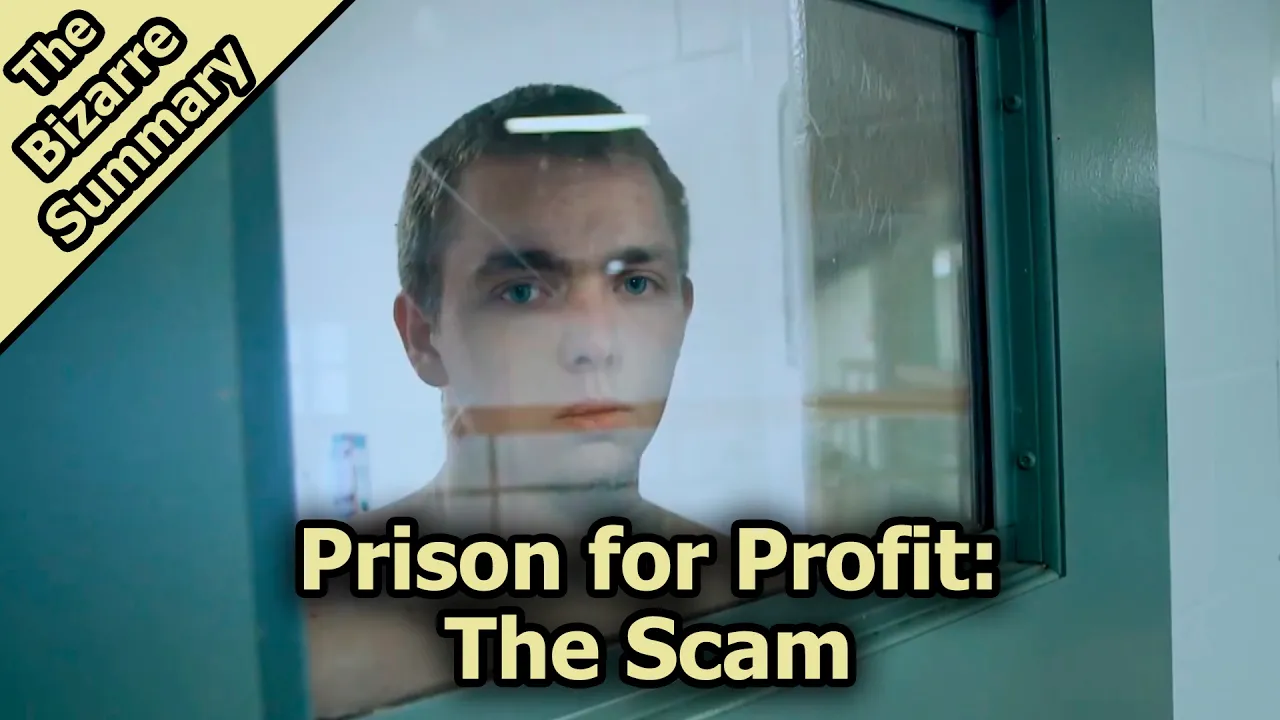









Private prisons create perverse incentives because their profit motive directly conflicts with public safety goals: they have no incentive to rehabilitate prisoners (since profit comes from incarceration, not rehabilitation), they maintain occupancy rates through contracts requiring 80-100% capacity regardless of crime rates, and they lobby against reforms that would reduce incarceration. This system extends beyond private prisons to include the broader prison industrial complex, which is an $80 billion industry encompassing telecom, healthcare, food services, and community corrections, all driven by profit incentives that prioritize locking people up over public safety.
Private Prisons and Perverse Profit Incentives in the Prison Industrial Complex
Added:The distinction between public services and private enterprises, specifically how public safety goals contrast with profit-maximization models.
A foundational understanding of the history of mass incarceration, particularly in the United States from the late 20th century to the present.
The economic concept of 'perverse incentives' and the principal-agent problem, where an agent's motivations do not align with the public interest.
The basic structure and flow of the criminal justice system, including policing, sentencing laws (such as mandatory minimums), and correctional facilities.
An in-depth analysis of lobbying practices and campaign contributions by private prison corporations to influence sentencing laws and immigration policies.
Comparative research on recidivism rates, rehabilitation success, and safety conditions between publicly managed and privately operated prisons.
The role of private contractors in related sectors of the justice system, such as bail bonds, electronic monitoring, and prison healthcare services.
Proposed policy solutions and legislative efforts aimed at decarceration, contract termination with private operators, and the implementation of restorative justice frameworks.
497K views22.8Klikes52:50Original Release: 2022-08-10
(ceremonious music) - Welcome news freaks.
Are you feeling freaky for news, you disgusting freaks?
Well, if you are, I have some freaky news for you, you (beep)disgusting freak.
Shame on you.
Here's some news.
Okay, so listen, we kind of sort of accidentally spent our entire production budget on last week's episode on Jordan Peterson and also a bunch of scratch tickets.
So we're running a little bit shy on funds at the moment.
Production wallet is a bit light.
I mean, we did win four bucks on one of those crosswords tickets.
So that's cool.
Also, Katy's informed me that she is on an impromptu research assignment for the next few weeks in The Bahamas, but thankfully, she left detailed instructions on how we can increase our profit margin by cutting costs.
So this week, there won't be any costumes or props or, it says poop breaks.
Also, the title monkey has been replaced by a title squirrel, not sure why that's cheaper, and we fired the actor who plays Warmbow, which is my hand.
So we fired my hand.
So it's this gonna be me and you, but don't you worry.
I am still going to be mainlining news straight into your veins.
Give me your arm so I can stab you and that thin metal tube of news.
(cellphone dings) Ooh it's Katy.
Let's see, "Hey, foreskin, I landed us a new sponsor for today's episode.
Read this ad copy right now, or else."
And then an emoji of a guy handcuffed to a radiator.
Did not know they had that emoji.
Okay, well, looks like I got some ad copy here for something called CoreCivic, pretty innocuous name, so far so good, and their tagline is, "Better the public good."
Great, we are civic minded here on the showdy and we love bettering the public good.
Don't we folks?
All right, here we go.
Hi, "Some More News" viewers.
It's me, foreskin Cody Johnston, and I'm here to personally endorse CoreCivic, America's largest private prison corporation.
Katy's already threatening me so I guess I'll keep... Okay, if you're like me, Cody Johnston, you've always dreamed about profiting off of suffering and misery, like some kind of soul vampire.
Wait, there's no way they actually wrote that.
Like, it's the actual ad copy?
And thanks to a loophole in The Constitution, you can even legally use slave labor to reduce costs and increase your profit, exclamation point, exclamation point, exclamation point.
Hahahaha, no one can stop us, not even this deep (beep) host reading our ad.
What a (beep) asshole.
Use promo code evil to get started today.
That's promo code E-V-I... You know what?
I have a better idea.
Why don't we do an episode about private prisons?
That could rake in the bucks, right?
Think of it as a prelude to a three-part series of videos centered around how specific industries within our economy put the quest to make money over the general welfare of human lives.
Think of it like that, if you feel like it, and because that's what it is.
Do we have a title?
(drum beats) Okay, I now see why the squirrel was cheaper, wow.
Well, for starters, it's worth noting that the problematic relationship between capitalism's quest for profit and our criminal justice system, those far beyond private prisons we have, and probably will again, talked about all of those other examples, but the very concept of private prisons as in corporations that make a profit by incarcerating our fellow citizens on behalf of the state is a particularly egregious example of the perverse incentives created within a system that should be designed to promote the public good.
When you stand back from it, it's pretty wild that such a thing exists at all.
As of 2019, 8% of the total state and federal prison population was held in private prisons.
At first glance, that number might seem a little low until you consider the fact that America has by far the highest prison population and incarceration rate in the world.
And so, according to the sentencing project, that 8% number equates to 115,428 people incarcerated in a private prison in 2019.
If you ask me, that sounds like a whole bunch of people.
That's more than the population of Burbank.
Of course, those Holly-weirdo libs should be in prison anyway.
So it's good that it's the size of Burbank.
Anyway, little something for our rural conservative audience.
Did you like it?
No?
Well, we'll try again harder later.
Anyway, private prisons are a $4 billion industry that makes hundreds of millions of dollars in profit annually and compensates its CEOs millions of dollars per year.
It's no different than a restaurant chain or the podcasting industry, which is when you think about it, everyone's prison, but even more significantly, the prison industrial complex as a whole is an $80 billion industry that has even more far reaching consequences than just private prisons alone.
And don't worry, we'll get to that.
I know you were worried that we won't get to that, but we will so don't worry, but for now, on behalf of today's sponsor, CoreCivic, whose tagline again is, "Better the public good," we're going to start off by taking a look at private prisons specifically and ask the question, "So private prisons actually better the public good by making our society safer?"
Do you have a guess for what the answer to this question might be?
Okay, I'll just tell you, but mute this video if you hate spoilers, all right?
The answer is no.
You can unmute now.
You can unmute now!
Un, unmute, unmute, unmute!
Okay, you're back.
Also, I feel like it goes without saying, but in case you're some kind of (beep) Ted, none of what we're going to say is in any way a defensive public prisons.
Series abuses take place in all prisons, whether they be private or public or that Ban-hole from the "Batman" pictures, nor is this a defense of the government's role and the travesty that is our current criminal justice system.
In fact, it's probably safe to assume that we here at the Showdy Showdown are generally unhappy with our current criminal, let's call it punishment system.
Boo to that, et cetera.
Boo, cetera.
But we are honing in on private prisons because they not only exhibit the most distilled manifestation of the cruel absurdity of our current system, but they also help maintain that status quo because of their influence on politics and policies.
But before we get into all of that, it might be worth asking the question, "How did private prisons even begin?"
Because again, it's pretty gush dang whack, and or schwag that we allowed for an industry that literally makes money by locking up human beings in cages.
The answer to why is a bit complicated.
I mean, actually, it's just racism and capitalism, but we can certainly expand upon that even though that's pretty much it.
Again, money be damned.
We're doing a whole show for you.
(ceremonious music) Yeah, yeah, we all have nuts to hoard.
The sad truth is that the use of for-profit prisoner detention goes back to before we were even really a country.
Private prison ships were used by both the British and the colonies during the American Revolution for prisoners of war.
Following the abolition of slavery, an exception was made in the Thirteenth Amendment to provide for slavery by another name through a system called convict leasing.
This allowed private companies to lease convicts for profit.
No doubt inspired by this history, the modern iteration of private prisons in America truly began with the revelations of one of the great pioneers of profit, a man named Tom Beasley.
In 1983, this former chair of the Tennessee Republican party co-founded the company CCA or Corrections Corporation of America.
Why 1983, you ask?
And why do a bunch of other terrible things also happened to start in 1983, you also ask?
Well, that just so happens to be a couple years into the administration of one of the very best worst presidents in American history, this adorable little Raisin man.
Show me a graph of something getting worse in America over the last 50 years, and it probably started in the early 80s.
And so it's not a coincidence that when Ronald Raisin Reagan became president, the era of mass incarceration really ramped up into overdrive.
Fueled by the racism of the war on drugs that began under Nixon and then supercharged by Reagan, the era of mass incarceration provided a rapidly expanding market for profiteers like Tom Beasley, and because many citizens and politicians were wary of the massive price tag that would come along with the expansion of the prison system created by these policies, private prison companies presented a possible solution.
To quote an interview with Beasley from an "Inc." magazine article, "The idea is so foreign to most people's experience.
Their first impulse is to say only the government can do it because only the government's ever done it.
But their second reaction is that the government can't do anything very well.
You just sell it like you were selling cars or real estate or hamburgers."
For good measure, he added, "I just love it.
We're the best thing that ever happened to corrections since they stopped beating 'em."
To be clear, he's talking about prisoners there, you know, people or hamburgers.
BT-dubs, Corrections Corporations of America eventually changed its name in October of 2017 to CoreCivic.
Today's sponsor, CoreCivic, better than literally beating them.
So ultimately, the private prison industry's sales pitch became that the private sector is more efficient than the government and can save the taxpayer money on the cost of incarceration.
In other words, don't worry your pretty little heads off about the consequences of the war on drugs or mass incarceration policies because we're gonna make it so cheap that you won't even notice the expense, and let's be honest, most people didn't really care in the first place.
Here's Tom Beasley speaking at a public hearing on the privatization of prison management at the President's Commission on Privatization in 1987.
- I don't think it stretches the point too much that use this committee room as an illustration of why the public sector needs the private sector involvement to solve what's going on in corrections today.
I was in here 20 minutes ago and the room was full.
It's almost empty now because nobody really cares very much about correction.
As a matter of a political constituency, nobody ever got elected on a corrections platform.
The public wants them locked up, they want the key thrown away, but they don't wanna be charged with it, and they don't want any facilities built close to 'em.
I have discovered in four years in this business that that what's reflected in this meeting room today by the audience that's here is reflected legislatively across this country and every level relating correction.
That's why it's been in trouble for 40 years.
That's why it's going to continue in trouble if it doesn't utilize the resources that private sector's offering.
- That's right, Tom Beasley, nobody ever got elected on a corrections platform, except that's like one of the main reasons a whole bunch of people got elected in like one of the most significant and devastating aspects of American politics over many decades.
And so while he is very obviously wrong about that particular claim, is he right that the public sector needs the private sector involvement to solve what's going on in corrections today?
No, and I have to admit that the rest of this video is basically just a bunch of minutes of different ways of answering no to that question, but don't turn that YouTube dial because the more important question to ponder and what this video will be examining is why the answer is no, and here is where we start to delve into the specifics of the private prison industry's business model and the inevitable consequences that derive from the inherent incentives within that model.
And we will do that after these ads, which we still have to do on top of our prison sponsor, I guess.
Wow, we must really need the money.
(cellphone dings) Oh, text from Katy, probably.
Yep, all right, "Does absence still make you see fun little dudes or should I also get some masculine as well?"
(cellphone dings) Oh, it looks like she meant to text that to her mother or not me.
No worries, enjoy your research trip.
What were we doing?
Oh, ads.
- Hey there, little fella.
The world can be overwhelming at times.
You gotta get that coin running around everywhere, punching random blocks to get mushrooms, wearing the same overalls every single day.
This is tough.
It's always eat well when there's always so many pipes to squeeze through, and luckily, there's AG1 by Athletic Greens.
They are the category-leading superfood product that brings comprehensive and convenient daily nutrition to everybody, and what I mean by that is that they take all the essential vitamins you need for your day to day life and put 'em all together in one single drinkable drink like drink.
One could say that it's a drink and that now is the time for me to take a drink.
Mm-hm.
Just one tasty scoop of AG1 contains 75 vitamins, minerals, and whole food source ingredients.
The special blend of high quality bioavailable ingredients and a scoop of AG1 work together.
They work together to fill all the nutritional gaps in your diet, support energy, and focus, and aid with gut health and digestion.
That way, you can focus on more important things like, like, you know, for example, that one dream that you had about throwing vegetables at ghost-faced gnomes.
It's hard to explain, you had to be there, and right now, Athletic Greens is gonna give you an immune supporting free one year supply of vitamin D and five free travel packs with your first purchase if you visit athleticgreens.com/morenews today.
Again, simply visit athletic greens.com/morenews to take control of your health and give AG1 a try.
Drink it up. (speaks in foreign language) (playful music) - Hey, you, you like bread, don't you?
Why, you're probably eating a whole loaf of bread right now.
Don't lie to me.
Admit that you're eating an entire loaf of bread while watching this.
It's okay, I also ate an entire loaf of bread before recording this ad, but here's the dilly.
(burps) Just kidding.
I'm eating bread from Wildgrain.
Wildgrain is the first bake from frozen box for artisanal bread.
What's great is that they use only clean ingredients like unbleached flour and utilize a slow fermentation process that's both healthier and taste better.
They also offer rolls and pastries and even handmade pastas.
I had the little peach bites, they're delicious.
All the carbs you love, but healthier than your average supermarket bread.
Sometimes, I make little figures out of bread and give them entire stories before eating them.
The surviving bread mourns the eaten bread.
What else is going on?
Oh yeah, so this is like a delivery service, you see.
You sign up at wildgrain.com/morenews and choose which type of box you want to receive and how often.
It's easy to reschedule, skip, or cancel, and with every new member, Wildgrain donates six meals to The Greater Boston Food Bank.
That's neat.
I give my bread figures Boston accents sometimes.
Hungry already?
For a limited time, you can get $30 off the first box plus free croissant in every box when you go to wildgrain.com/morenews to start your subscription.
You heard me, free croissant in every box and $30 off your first box when you go to wildgrain.com/morenews.
That's wildgrain.com/morenews or you can use promo code more news at checkout.
Ah, and we're back.
If you recall, we were talking about the business model of private prisons, but before we do that, let's take a brief moment to contemplate what the goal of the criminal justice system should be.
It's a little subjective, but in this humble news dude's opinion, the criminal justice system ought to be designed to promote public safety.
That's the point, right?
Laws are made to make sure society doesn't devolve into some sort of awesome chaos.
And so our justice system is there to enforce those laws in a way that makes everyone safer and happier and more willing to eat sloppy joes.
It's all about pushing those sloppy joe's, read The Constitution, but if that was truly the goal of this system, some of the things you might expect would be efforts to prevent harm from being caused in the first place.
For example, the victims of a crime would see some kind of support and effort to repair the damage done to them and avoid any cycle of violence.
You would also expect to see rehabilitation measures being done for the people who inflicted that harm.
Some kind of system designed to effectively reintegrate them into society, not just so they don't hurt more people, but because they are also human beings with loved ones who are deeply impacted by the absence.
You'd also expect that a system devoted to public safety would endeavor to reduce the overall number of people incarcerated in the first place.
Prison would be the last resort because of the damage it inflicts on people.
In all honesty, you would probably entirely reimagine the system from the ground up in a complete paradigm shift about the very nature of the word safety, but at the very least, you would try to do these things that I just mentioned, you know, until we get those pale minority report weirdos, then it's all pre crimes baby.
So let's compare that to the business model of private prisons.
To put it simply and succinctly, this industry enters into contracts with the government agencies to make as much money as they can by locking up as many human beings as they can in cages.
Basically, the more people they lock up, the more money they make.
What could possibly go wrong?
And that's not a rhetorical question.
I'm actually going to tell you what could possibly go wrong.
Let's start with their primary selling point, that private prisons are more efficient.
This is actually a really weird and wildly inappropriate word to use when you are talking about this issue, but it's really just another way of saying that they are cheaper.
So are they?
No, they are not.
Studies have shown that this is a dubious claim at best, not only do private prisons save little to no money in the short term, they actually cost more money and harm to our society in a variety of other ways over time, which is partially due to the fact that private prisons have higher recidivism rates.
Meaning prisoners detained in private prisons are more likely to re-offend after their release and go back to prison, which is not that surprising considering the fact that a formerly incarcerated person going back to prison is good for a private prison's profit margin.
They have literally no incentive to rehabilitate a prisoner or set them up for successful reintegration into society because again, I don't know if I can stress this enough, but I'll try.
They make profit by locking up human beings in cages.
The same way Coca-Cola wants us to lust for brown sugar water, private prisons want people to go to prison.
That's their Coke.
(ceremonious music) These high recidivism rates might be due to the fact that private prisons are overcrowded and understaffed and that their prison guards are undertrained and underpaid, leading to significantly higher levels of violence because if your goal is to squeeze out as much profit as you possibly can from a system, cramming prisoners into your facility makes perfect sense and cutting costs on the number of staff and spending less on their training and pay makes ever perfecter sense.
But these practices make a lot less perfecter sense for society as a whole, particularly when your goal ought to be promoting public safety.
Also, I feel like this doesn't get said enough, but an act of violence happening inside a prison still like counts as a public safety issue.
Those are still people in there.
So if you had a really peaceful city with an extremely violent prison, that is not actually a peaceful city, and because private prisons are motivated by profit, they're incentivized to cut costs wherever they can, which turns out to be very costly for society.
In fact, nearly every negative outcome that you would expect from the privatization of a system is present in the private prison industry.
For example, the private prison industry has the advantage of legally profiting off of a literal slave labor for the operation of their prisons.
I'm not figurative with the word literal there.
I'm literally saying literal slave labor.
It turns out that the Thirteenth Amendment banned slavery and involuntary servitude, except as a punishment for crime, where of the parties shall have been duly convicted.
Now, I won't dwell on this point because frankly, the entire prison system exploits the labor of inmates, but there is something uniquely reprehensible for a private entity to profit off of slavery in (beep) 2022, but again, I'd say all slavery is a no go for me, ah?
If you're into slavery, I probably don't want to be your friend.
Unsubscribe, get outta here.
Also, private prisons keep inmates in prison longer without reducing future crime.
One of the reasons why is that many of the contracts these companies enter into with state governments include occupancy guarantee clauses.
As Mother Jones wrote in 2013, many of these contracts quote, "Included occupancy requirements mandating that local or state governments keep those facilities between 80 and 100% full.
In other words, whether crime is rising or falling, the state must keep those beds full."
And since the state A.K.A. you, is paying for the prison beds regardless of whether or not they're occupied, there is no incentive to reduce the prison population.
In fact, the government has an incentive to fill these private facilities to maximum capacity at all times.
These occupancy requirements continue to be a part of private prison contracts to this day and it's just one of the many shady ways this industry rigs the system in favor of bolstering their profit margins, and when incarceration is the currency, it's not that surprising that literal corruption is a part of the business plan.
- "Kids for cash," that's what authorities say was the bottom line of a diabolical plan.
Even more shocking were the identities of the two men behind it.
- They were men in black, men with the power to take away your freedom and your future.
Jim Avila reports that they're accused of using that power to get rich, rich on the backs of children.
- That's right.
This industry also includes the detention of children, kids in cages if you will.
One of America's favorite things to cage, it seems.
We love trapping them kids.
Right behind mass murdering kids with AR-15s and forcing kids who have been raped to carry pregnancies to term.
America (beep) hates kids.
But we love profit.
If only kids (beep) money, then maybe we'd love them more.
Luckily, you can make all sorts of money off of children, you know, if you're corrupt about it.
In these so-called Kids for Cash scandal, two Pennsylvania judges named Michael Conahan and Mark Ciavarella imposed harsh sentences on thousands of children in order to receive millions of dollars in kickbacks from private juvenile detention facilities in the state.
They even used their power to defund the county facility in a successful effort to remove the publicly run competition to the private facilities that were paying them.
One 15-year old girl was sentenced to three months in a juvenile detention center for making fun of her vice principle on MySpace, a determination made less than a minute into the hearing.
Another 13-year old boy was sentenced for trespassing into a vacant building, and a 17-year old boy was sentenced to five months of boot camp for helping his friends steal DVDs from Walmart, and even if those DVDs were "Battlefield Earth", "Catwoman", and "Crash", that's still really harsh.
Wait, no, no, no, not the one about a group of symphorophiliacs who get off during car crashes.
That one's kind of interesting.
That's the one, the Oscar winning film about how racist cops are actually okay because they'll pull you from a car crash after sexually assaulting you.
Is that why they called it "Crash"?
Because of the crash scene?
Very silly, anyway, harsh punishment.
Even if they stole that really Hollywood film about racism, the punishment should be like a stern talking to about how shoplifting is bad and racism can't be solved within an invisible cloak or whatever the (beep) was happening in that film or they should be forced to watch "Crash" but like the good Cronenberg one.
That'll (beep) them right up.
Ultimately, both judges were convicted of their crimes and given lengthy prison sentences, but the representatives of the detention facilities that paid them were given a slap on the wrist and the private companies themselves, PA Child Care, Western PA Child Care, and Mid Atlantic Youth Services are still operating today.
They've got like LinkedIn accounts and Facebook pages, and PA Child Care even has a handful of reviews on Google.
It has a unanimous one-star rating by the way.
Wonder what that's about, hmm?
But unfortunately, customer reviews have very little impact when your clientele has no choice about whether or not they want to use your services, which actually brings up a larger question, if locking up people against their will on behalf of the state is supposedly part of the free market, who exactly are the customers in that situation?
Which brings us to a brief segment that asks the question I literally just asked.
(drum beats) This is one of the ways the private sector's solution to incarceration really breaks down because part of the sales pitch of the free market is that it offers consumers choices through competition.
The theory is that consumers, customers, clients, whatever you want to call 'em, cash injectors, wallet daddies, sloppy joe holes, et cetera, get to try out various products or services and decide which ones they like best, and likewise, businesses compete for the attention of consumers and try to make their products or services the very best and set them at the optimal price point in order to win out in the marketplace.
But in the case of private prisons, we run into some serious problems with that model because who exactly is the customer in this scenario?
The prisoner certainly gets no choice in the matter.
They don't get to shop around and decide what prison they would like to go to, and yet, they are the individuals in most direct contact with the service being provided.
I guess you could argue that the customers in this situation are the voters and taxpayers, but there's so little transparency in the private prison system due to the observed contracts that they negotiate with government agencies that the voters have very little insight into what they are actually paying for, like a lot of stuff taxpayers pay for, which means that private prisons have very little incentive to improve their services on behalf of the voters who essentially have to go off of the word of the politicians they elect to represent them.
So I suppose you could say that the lawmakers who theoretically represent their constituents are the customers, but the quality of service provided by private prisons has no impact on them whatsoever, and because of the lack of transparency, they are not likely to suffer any consequences for substandard performance, and considering many of these lawmakers are getting campaign contributions directly from the industry, I wouldn't exactly trust their Yelp reviews.
So when you look at it this way, the relationship between private prison contractors and elected representatives is more akin to a business partnership or more accurately and precisely, they are co-conspirators.
All this is to say that the notion that the tenants of capitalism and the supposed benefits they provide are in any way relevant to a system like incarceration within a society is a total and complete farce.
Thus concludes our segment- (drum beats) Doing a real bad job, squirrel.
I want you to know that.
And so, as we just referenced, even when private prisons aren't increasing their profits through explicit corruption, you better believe that they are rock hard for squeezing every last drop of profit they can through their soft corruption efforts.
Soft corruption, being stuff that is technically legal, but like shouldn't be.
It's the Mormon soaking equivalent of getting away with misdeeds.
Do not Google that.
It's, of course, highly unethical and often involves conflicts of interest.
You know, things like corporate lobbying within our totally (beep) up campaign finance system.
Like for example, how private prison corporations spend millions of dollars annually to influence the outcomes of elections in order to promote policies that will improve their bottom line, which is a reminder, dependent on incarcerating the largest number of people for the longest amount of time.
So it's probably not at all surprising to learn that private prison corporations were one of the largest special interest groups lobbying against the legalization of marijuana.
The other groups are police unions, alcohol and beer companies, pharmaceutical corporations, and prison guard unions.
Basically, anyone who stands to lose money if weed becomes legal.
Seems like a bad country we have here.
And so the private prison industry, not only profits off of our current system, but they have also helped shape it and they continue to protect and maintain it.
And so of course, they aggressively push back against efforts to reform it.
Here is a direct quote from CCA's annual report in 2014, "The demand for our facilities and services could be adversely affected by the relaxation of enforcement efforts, leniency in conviction or parole standards, and sentencing practices or through the decriminalization of certain activities that are currently prescribed by our criminal laws.
For instance, any changes with respect to drugs and controlled substances or illegal immigration could affect the number of persons arrested, convicted, and sentenced, thereby potentially reducing demand for correctional facilities to house them.
Legislation has been proposed in numerous jurisdictions that could lower minimum sentences for some non-violent crimes and make more inmates eligible for early release based on good behavior."
And so all of these policies designed to reduce mass incarceration and therefore improve society are direct threats to the profit margins of private prison corporations like CCA, later known as CoreCivic.
Remember to use promo code evil, that's E-V-I-L for the discount.
Now, you might have noticed a mention of illegal immigration in that quote.
Well, it turns out that immigration detention is just one of the many other tendrils of this industry beyond the scope of private prisons, and while private prisons only make up roughly 8% of our total prison population, 79% of detained immigrants are held in facilities that are privately owned or operated, and frankly, we could do an entire episode on this subject alone, but the larger point for now is that the private participants in this marketplace have stuck their sticky fingers in nearly every orifice of the carceral system, hot.
And here's where we talk about the prison industrial complex, less hot.
But first, an ad break, hot again.
- Call me weird, but personally, I like to be comfortable while I sleep at night.
It gives me better dreams.
Like last night, I dreamt that I kept stepping on this bug that had a beard, but it kept coming back.
It probably didn't mean anything profound, but you know, it was fun.
And what helps me get that bug stomp and sleep going is the silky smooth bedsheets from Boll & Branch.
In fact, their sheets actually get better with every wash like the dream I had, where I kept throwing a bearded mannequin into a wall.
You see, Boll & Branch uses the very best thread quality possible, the highest quality in the world even.
Their products are also 100% free from toxins like pesticides, from aldehydes, and other harsh chemicals, all of which equaling a divine sleeping experience, simply divine.
I once dreamt that I, myself, grew a beard, and then that beard kept asking me for better working conditions and so I shaved it off and I fed it to a horse, and then the horse became president. (laughs) Anyway, check out these bedsheets.
Boll & Branch will give you a 30-night risk free trial with free shipping and returns on all orders.
So get 15% off your first set of sheets when you use promo code morenews at bollandbranch.com.
That's boll, B-O-L-L, and branch, just branch,.com.
Promo code, morenews.
- Ah, a bug!
And we're back, and we were just about to talk about the prison industrial complex, a sort of amorphous term that is often thrown around without a clear definition, like woke or public nudity, but I assure you, this is a very real thing that has very real consequences.
This is how Bianca Tylek, Executive Director of Worth Rises described the prison industrial complex on the "Justice in America" podcast.
- [Bianca Tylek] The prison industrial complex is a $80 billion industry made up of essentially 12 sectors.
That's how we divide the entire space, and those sectors can range from telecom to healthcare to food and commissary to community corrections to prison labor and programs.
There's all these very specific verticals essentially within the prison industrial complex, corporations that work in each of them that together make up this massive industry.
- You see, it would be one thing if this problem with profit motive was exclusive to private prisons, but it super isn't.
In fact, there are many public prisons and jails that are ostensibly run by the state, but nonetheless outsource many of their operations to private entities, and as you can imagine, that comes along with some pretty bad consequences.
Prison food is an obvious example.
There's a reason that the mere mention of prison food instantly elicits an innate gag reflex.
In addition to terrible food and small portions, there have been countless instances of maggots and feces being found in the meals supplied by private food service providers.
So yeah, they're obviously trying to save money by providing small amounts of (beep) food.
In some cases, literally (beep) food, but then add on top of that the fact that oftentimes, the private company that supplies the meals is the same vendor operating the commissary.
At that point, you basically have a (beep) sandwich.
- Many correctional officers and inmates have shared their observation of the declining quality of meals.
The food vendor is also the supplier of the commissary packages leading some to ask if the food quality is creating more sales of high price, optional snacks.
- Folks, that's what we call a monopoly and or a conflict of interest or some other fancy term, a sloppy joe supremacy.
Whatever the technical phrasing that one, the point is that the food services company makes the same amount of money per prisoner regardless of how disgusting their meals are, and yet, the more disgusting their meals are, the more business they drive to their high priced commissary services.
Imagine if McDonald's also provided all of our country's gastroenterologist centers.
We'd probably put a stop to that the moment we could get off the toilet.
Another example of something that is extremely (beep) up is what happened when prisons and jails started introducing video conferencing services for visitations with inmates.
On the surface, that seems like an incredibly valuable service that would help make it easier for families to visit with their loved ones who are incarcerated until you contend with the fact that many prisons and jails simply replaced in person visits with these glitchy video calls at significant cost to prisoners and their families.
By replacing in person visits with expensive video calls, these private companies were essentially extorting families to pay them money in order to see their loved ones.
Also, it's way less dramatic for Batman to confront the joker over Zoom.
(gibbering) Tell me what... (gibbering) Joker, or whatever.
And it's worth noting, according to a study by researchers with the Minnesota Department of Corrections, just one visit reduces a person's chance to commit a new felony by 13%.
So you'd think that would be a top priority for our prison system.
You know, considering all the harm to society that results from a person re-offending, but then you remember that the system is not designed to better the public good, but to better the private profit, and of course, telecommunications in general is a significant way that these private companies make money off of incarcerated people.
According to Michael Sainato of "The Guardian", "Two companies, Securus and GTL, control more than 70% of the market for prison calls.
These companies have won contracts across the us by awarding kickbacks and commissions to jail and prison facilities and boosted profits by adding consumer fees and including extra services into phone contracts."
In that article, author, Michael Sainato, describes the impact this arrangement can have on a family, writing, "Tori Brito spends hundreds of dollars every month on phone calls just to speak with her husband who is currently imprisoned at a state prison in Waupun, Wisconsin."
Even though Tori Brito's husband is in a state prison, she's paying a private company to stay in touch with her husband at significantly higher rates than the standard phone call, and, you know, she can't exactly change plans.
According to "Washington Post", "All told, the correctional telecom industry rakes in more than $1.4 billion annually from prisoner phone calls.
That cost is generally passed on to the families of incarcerated people who are disproportionately low income and disproportionately people of color.
More than one third of families with incarcerated relatives go into debt to cover the cost of staying in touch."
Maybe it's just me, but that sounds bad, and like maybe our definition of the word criminal needs some amending to include gouging the families of prisoners, and don't get me started on the privatized healthcare services inside prisons.
Okay, actually, you can get me started on that.
Wind me up and let me go!
My nipple is a crank.
Now, we actually talked about this in our recent episode on sheriff departments, but it's worth reiterating that the private healthcare and medical services inside prisons and jails are literally killing prisoners.
Reuters found that death rates in jails where private contractors run the medical care was 18 to 58% higher than those run by public agencies, and it is clear that this disparity is due to the perverse influence of the profit motive and the absurd contracts that companies and government agencies enter into in order to ensure those profits.
According to the "New Yorker", "Sometimes, contracts include provisions that increase a company's potential profit if it holds down transfers to hospitals or to other outside providers."
Which is why it's not surprising that many of the countless horror stories you'll find about prisoner medical care in prisons and jails by private companies are often scenarios that could have been prevented had the prisoner simply been transferred to a hospital.
Sadly, the (beep) up nature of for-profit companies providing healthcare and prisons and jails is just the knife's edge of the larger private healthcare system failure nationwide.
And you know, the disconnect between what the goals of a healthcare system ought to be and incentives that profit motive creates within that system is pretty much the same dynamic at play within the prison industrial complex.
In fact, we should probably talk about that at some point, and you know what, we will do it next week.
(ceremonious music) The point I'm making here is that the prison industrial complex goes far beyond private prisons and is present within nearly every aspect of our carceral system and has successfully fought off critics, weathered scandals, and continued to expand its reach.
Much like cockroaches and viruses, this industry has proven to be incredibly resilient and adaptable, and even as some cities and states have started to search for alternatives to prison amidst a growing recognition of the costs, the prison industrial complex has made sure to get their piece of the pie, which in some ways is even more terrifying because just when activists and critics of mass incarceration have started to make some incremental progress in reducing prison populations, these private companies quickly pivoted their efforts into cornering the market on what is known as community corrections.
This is defined as the supervision of criminal offenders in the resident population as opposed to confining offenders in secure correctional facilities.
So this growing market includes probation, parole, reentry programs, drug treatment and testing, ankle bracelet monitoring, et cetera.
In fact, according to The Sentencing Project, today's sponsor, CoreCivic, has embraced the community corrections sector by investing $270 million in the acquisition of halfway houses, which are often used as a transition point between prison and release.
Lauren-Brooke Eisen, author of the book, "Inside Private Prisons", writes, "The private prison industry's segue into community corrections doesn't sit well with advocates and academics who study these companies.
Critics caution that the bottom line focus of publicly traded corporations will undercut decades of work by criminal justice reformers to shrink the size and scope of the us correctional system."
She goes on to quote Senior Staff Attorney at the ACLU, Carl Takei, who believes that, "Relying on a private prison company to help end mass incarceration is like asking a drug dealer to help curb your addiction.
This is vertical integration, not real reform."
Like seriously, this is literally (beep) Chief Wiggum in a fake mustache.
And it honestly feels like how capitalism functions as a whole.
Soda companies buy up sparkling water, big tobacco turns to vape products, Stark Industries gets put in charge of damage control and cleanup, #VULTUREWASRIGHT.
And while you could argue that this is just corporations rightfully changing with the times and embracing progress, it's far more likely to pollute the progress with even more conflicts of interest.
In fact, in 2018, 28% of prison and jail admissions were due to parole and probation violations.
These arbitrary and overly harsh supervision regimes have led people back into us jails and prisons, not necessarily because of re-offending and committing more crimes, mind you, but because of breaking the draconian rules set forth by the terms of probation and parole.
In some cases, this landed people in jail or prison even though their original offense carried no prison time.
Increasingly, probation and parole services are administered by private companies, and much of the cost for these community corrections services, such as ankle bracelet monitoring, are shouldered by the offenders and their families themselves through something called offender funded justice.
And of course, due to the financial strain imposed by the system, it all but guarantees that these offenders will become re-offenders because, you know, poverty is directly connected to crime rates.
And of course, having people go back to prison is a perfectly acceptable outcome for these companies who are happy to lock you back up in an understaffed and violent private prison, serve you (beep) food that propels you to buy overpriced snacks while providing you (beep) healthcare and forcing you to pay exorbitant rates to communicate with your loved ones, all so they can squeeze out as much money as they can to boost their bottom line because they are, for some (beep) reason, a business.
And so when it comes to the industry's recent push to become a major player in community corrections, the main point is, as Eisen concludes, "These companies now have a financial incentive to trap as many people as they can for as long as they can, monitoring them through ever more sophisticated surveillance."
That's right, trap.
It's a really good word for it because that's basically the same service that prisons provide.
Trapping people.
There is no reason whatsoever to believe that the same profit incentives that have led private prisons to be ineffective and violent hell scapes would not be just as prevalent in the community correction space.
In the end, no matter how much they try to dress it up, as long as there's money to make, they will just be prisons by another name.
(ceremonious music) Bottom line is that the ideal circumstances for private prisons to thrive in a business sense would be for our society to become a crime-infested hell scape where the penalties for any offense, no matter how minor, came along with a lengthy prison sentence and where the formerly incarcerated population habitually re-offended at higher rates and went straight back to prison.
On the other hand, the circumstances that would cause private prisons to go out of business would be a utopian society where human beings needs were met.
Conflicts were handled with an emphasis on accountability and the healing of survivors and rehabilitation was prioritized over punishment.
Also, Sloppy Joe Sundays, as The Constitution speculates, read The Constitution, it's in there.
Do it now, pause the video, come back.
Thank you for coming back.
Did you read about the sloppy joe and The Constitution?
I bet you did.
All right, that world may never come, but we should always try for it, right?
And it really says something that every step in that direction would be detrimental to the profit margin of the prison industrial complex, and any industry you can say that about perhaps shouldn't be an industry.
Doesn't seem controversial to say that if a business is making money off of misery, even if you regard that business as necessary, you still shouldn't want it to be influencing politicians or holding much power, right?
And I would argue that the private prison and a larger prison industry is absolutely unnecessary at that.
I started out this video by saying the larger issue within our criminal justice system is mass incarceration, and that's true, but one of the biggest roadblocks to reforming that system is the influence of the prison industrial complex.
Beyond the fact that the profit motive inherent in the private system incentivizes mass incarceration or that the industry's lobbying efforts maintain the current model, the promise of the efficiency provided by the private market lets all of us off the hook because ultimately, we are the customers.
And if the myth that the free market shields us from the very real costs of mass incarceration continuing to persist, then we have no incentive to do anything to change it.
And so once we recognize this reality, the question is, what the hell do we do about it?
Well, for his part, Joe Biden signed an executive order that would phase out the Department of Justice's use of private prisons, but that only pertains to federal contracts.
States can still do whatever the hell they want.
Also, Obama signed a very similar executive order at the tail end of his presidency and that was almost immediately rescinded under the Trump administration.
I mean, just look at the stock prices of private prison companies after the election of Trump.
We could very well be using essentially these same graphic about this topic in 2024 when discussing some nightmare DeSantis-Palin presidential ticket.
And even though Biden vowed to close federal private prisons, prison companies are finding loopholes to keep them open.
This industry is like a Hydra, you cut off one head and two more sprout up.
And so we need to be like Hercules and his nephew, Lolaus, who used a flaming torch to cauterized the wounds after every swipe of Hercules' sword to prevent the new heads from popping up, and then when the giant crab emerges, we need to be prepared to smash him with our club.
In this case, the-the crab is, the crab is... Maybe it's still just unrelated giant crab.
How big are crabs getting these days?
The point is, we need to be even more relentless in protecting the safety of our society than they are in protecting their profits.
We need to be the sand and their socks, the taint itch that they can't quite reach, the mosquito buzzing around in their nostrils.
We need to become the Hydras.
(ceremonious music) Okay, nope, that feels wrong too.
Look, forget about crabs and Hydras.
That's my bad.
Also, I kind of blame the squirrel, and between you and me, we're gonna let the squirrel go after this episode.
We need to prove Tom Beasley wrong is my point and fill every seat where this issue is being discussed.
We need to show that the public does care about incarceration policy.
We need to scrutinize every line of every contract and demand more transparency and more accountability.
We need to ostracize any politician that takes a dime from this insidious industry.
We can start with Marco Rubio, who is up for reelection in 2022 and has a long history of getting loads of cash from this industry.
Stop ignoring Charlie Crist's incessant text messages and (babbles).
(sighs) (beep) Chuck.
Well, took a little bit less than Marco Rubio.
That's technically something.
Democrats in general are still slightly better on this issue and many other issues.
So do what you will with that information in the voting booth should you find yourself in one.
You know, I don't really care.
I'm not your mom, but I might be your dad.
Of course, voting is your state part of the equation.
Everything we do in between matters just as much, if not more, which is why I'm going to do my part right now.
I, Cody Johnston, am dropping CoreCivic as a sponsor.
They have been an insidious force in our society for decades and they're (beep) evil.
And so I'm taking a stand and- (cellphone dings) Just text me in the middle of the show.
Hold on, all right.
Okay, looks like CoreCivic actually dropped us as a sponsor five minutes into this video.
Actually, makes sense.
And they're suing us for defamation.
I can just ignore that though, you know?
Doesn't count if you don't reply.
(cellphone dinging) Uh, text from Katy, "Did you do an episode about how our sponsor was evil?
You realize we're going to have to take drastic efforts to make up for the lost ad revenue?"
And then an emoji of a man chained to a radiator, having his blood siphoned and sold on the black market.
Very detailed emoji, wow.
I'm sure it's fine.
I'm sure she'll calm down and we will figure out how to make back our money in a mature and reasonable way.
No need to make a big thing of... What the... What?
What does that mean?
What's to be continued?
There's nothing to be continued.
Don't you dare go to the credits!
(ceremonious music) Is this it?
Is this, this is the continued part?
This is like post credit sort of thing?
Like there's more.
There's two more episodes on the theme of profit motives in industries that are bad.
Oh, really?
Oh, how exciting for you.
Mm, delicious squirrel blood.
It's clear, look it up.
That's the end of the video.
So do all the YouTube (beep) you know.
(beep) like and (beep) subscribe, (beep) it.
Mother (beep).
We got a podcast called "Even More News".
We got this show is also available as a podcast if you prefer that way to consume media.
We have merch if you like stuff with other stuff on it, and the patreon.com/somemorenews, and we've got a brand new store to sell squirrel blood.
So you don't like it?
(beep) you.
Hmm. (gags)
Up Next
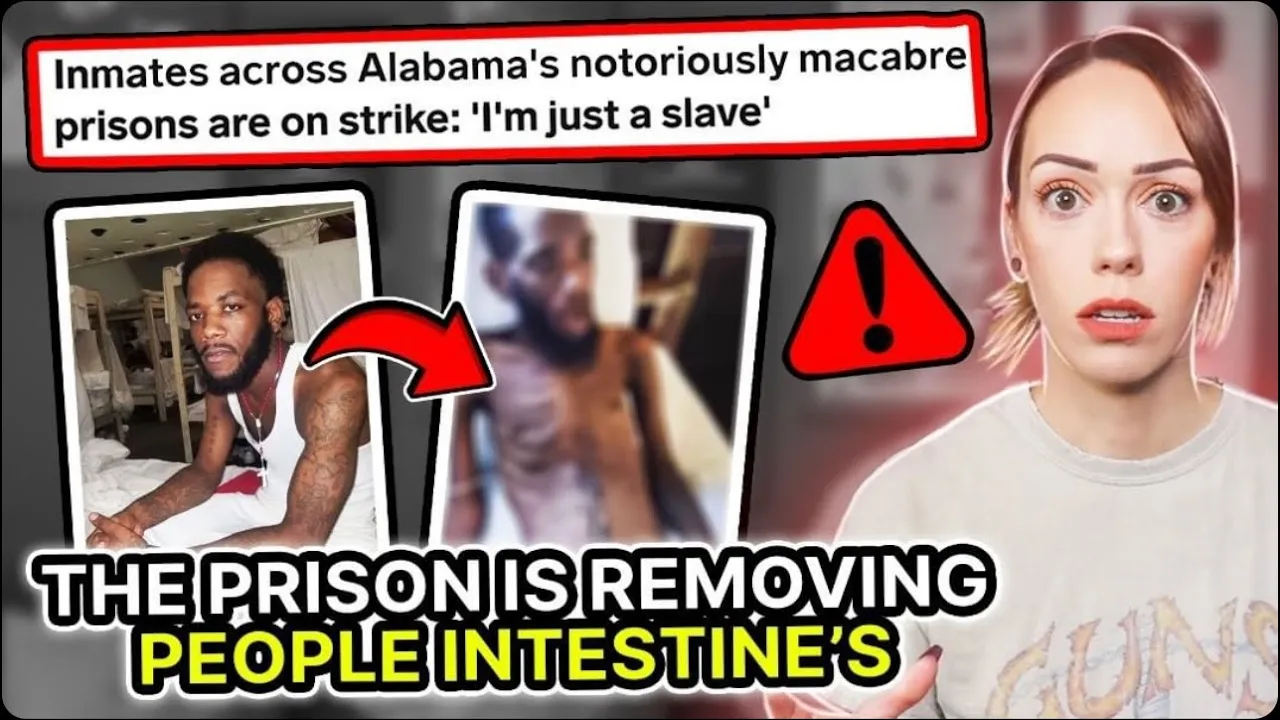
22:58
Alabama Prison Crisis: For-Profit Abuse & Reform
@JessicaKent
81.3K views•2022-10-04

12:54
Triumph of Orthodoxy Icon: Byzantine Art & History Explained
@BenCallan
2.1K views•2024-08-06

9:49
FastAPI vs Flask vs Django: Choosing the Right Python Web Framework
@TechWithTim
302.5K views•2024-05-26

1:42
Game of Thrones Opening Credits: A Cinematic Analysis
@gameofthrones
46.3M views•2011-04-18
Related Study Plans & Knowledge Roadmaps
Structured learning paths in General & Interdisciplinary Studies
general-studies
Elevator Engineering: History, Physics & Cities
01From Hoists to Safety Brakes: The Dawn of Vertical Lift
02Hydraulic vs. Traction: The Engineering Physics of Elevators
03Modern Speed, Safety, and Algorithms
+ 2 more learning modules
12h5 modules
Explore Roadmap
general-studies
Rubber: Material Science, History & Geopolitics
01Origins of Natural Rubber & Mesoamerican History
02The Chemistry of Natural Rubber & Vulcanization
03The Geopolitics of the Rubber Boom & Colonization
+ 2 more learning modules
12h5 modules
Explore Roadmap
general-studies
Containerization: Evolution, Logistics & Trade
01Ancient Trade & Bulk Cargo: Amphorae to Barrels
02The Industrial Revolution & Cardboard Packaging
03The Containerization Revolution: Malcom McLean
+ 2 more learning modules
12h5 modules
Explore Roadmap
general-studies
Textile Tech: Evolution, Labor & Global Impact
01Pre-Industrial Textiles: Handloom & Cottage Industry
02Mechanization: The Spinning Jenny to the Power Loom
03The Factory System & Global Labor Transformation
+ 2 more learning modules
10h5 modules
Explore Roadmap