
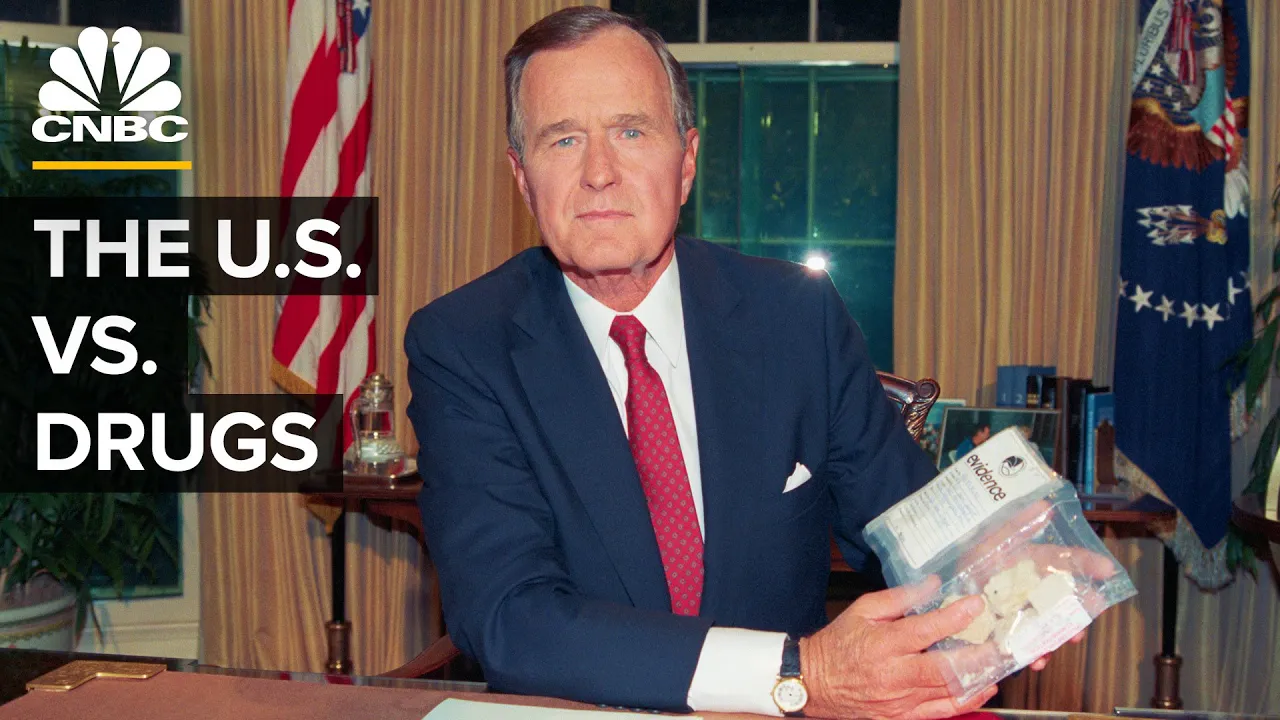
















America has the world's largest prison population (2.3 million inmates) due to the War on Drugs and mandatory minimum sentences enacted in the 1980s, which dramatically increased incarceration rates from 110 to over 700 per 100,000 people; this punitive approach has proven counterproductive as it has not reduced drug use but instead shifted resources away from violent crime prevention, destroyed community-police relationships, and created a system where prosecutors wield excessive power while judges lose sentencing discretion, ultimately demonstrating that prohibitionist policies fail to achieve their stated goals of public safety and drug-free communities.
Mass Incarceration in America: Reforming the US Prison System
Added:Understanding the basic structure of the US criminal justice system, including the division between state and federal jurisdictions.
Historical context of the 'War on Drugs' initiated during the Nixon and Reagan administrations.
The concept of sentencing guidelines and the role of legislative branches versus judicial discretion in determining prison terms.
An awareness of basic systemic disparities and demographic trends within US law enforcement and sentencing.
Analysis of contemporary legislative reform efforts, such as the First Step Act and the decriminalization of specific substances.
The economics of the prison-industrial complex, including privatization of prisons and the use of inmate labor.
Alternative justice models, specifically restorative and transformative justice, compared to the current retributive system.
The challenges of societal reintegration (re-entry) for formerly incarcerated individuals, focusing on recidivism and civil disenfranchisement.
176.6K views1.8Klikes1:25:33Original Release: 2022-04-07
when we think of prisons if we bother to think of them at all that is there is a tendency to see them as institutions completely divorced from human society the justice department said today the inmate population of federal and state prisons in this country is at an all-time high the public sees a need for more prisons because crime is the number one concern of the people in this state too many inmates and not enough space another crime another criminal in a country already fed up with people stocked up like cordwood in our prisons there's a population explosion in america overcrowding in this country's jails and prisons populations [Music] a shocking new number was released today and it deserves our undivided attention one out of every 100 americans is now behind bars locked up in prison or in jail the most important thing is to talk from your heart if you have more than one child give it like an overall message but then do an individual one to each child throw them a kiss talk to them about what you do daily the rest should be just you if you've written a poem we've had people pray we've had people sing one guy showed his little boy how to shoot a basketball be creative okay these are gifts to your children and your families okay any questions the families are punished right along with the offender people don't think so but the collateral consequences of somebody's incarceration affects not just that whole family but it affects the whole community it affects you as an individual whether you know it or not and whether you know that person or not that's incarcerated you're paying for them you should care i have background in film and video as a producer and i thought there's got to be something i can do so why not combine my career and my experience with the prison system and come up with something for these kids when a parent looks in that camera they're looking at their child and if they can look at them and say you know this isn't your fault you did nothing wrong it means a lot and for many of these men and women it's the first time they've really taken responsibility which is huge and that's a first step in recovery of any kind anytime is to take the responsibility for it but even when i'm far away this love i have will stay and wrap itself around you every minute of the day i just want you guys to know that i'm gonna do the best i can to stay out of this place and uh continue striving with my life i'm i've missed you guys all a lot i'm glad this is the last christmas i'm gonna have to spend away from y'all i just want you guys to know that i miss y'all can't wait to be with y'all that's it i love y'all take care come on i love y'all bye bye nice job modern prisons are an invention of quakers uh quakers had this idea that if you gave people an opportunity to silently reflect to become penitent leading to the term penitentiary that they would reflect upon their misconduct and be reformed the first practical use of it was really in the united states in philadelphia try to provide positive change and change someone's behavior but it was partly as a movement to get away from corporal and capital's punishment to come up with something better the problem in the thing that people forgot was going into a monastery voluntarily and isolating yourself in order to to to pray and think is very different than being pushed into a cell by the state one of the things that seems to be true in the history of prison systems is that the philosophies change but the buildings remain so you have these massive buildings that are these major expenditures and very often just used as essentially human warehouses you would occasionally get people that would try different kinds of experiments in education and therapeutics in some way in inmate self-government but usually they were fairly quickly overwhelmed by the crowding in the system or because they were politically unpopular from 1920 until 1970 this whole half century of american history the rate of incarceration was roughly level at about 110 per hundred thousand and this is a broad span of our history this is you know the roaring twenties in prohibition the depression and all the social change there world war ii the post-war economic boom the the 50s the explosion of suburbia the 60s and all the social turbulence during this whole period the rate of incarceration is roughly level in the united you st the policies of police departments and prosecutors and judges operating all over the country in local and state level and then in 1970 this all changes so that by now the rate of incarceration nationwide is over 700 four hundred thousand the rate of incarceration for african americans is over four thousand per hundred thousand and so you have to wonder you know how does what changed why did this half century of stability get up ended with this dramatic increase in incarceration in the united states america's public enemy number one in the united states is drug abuse once the federal government decided that we were going to have war on drugs they were able to then take a lot of money from the federal budget and then send it out to states and localities i realize the need for money to deal with this problem i am glad that in this administration we have increased the amount of money for handling the problem of dangerous drugs seven full it will be 600 million dollars this year more money will be needed in the future virtually everybody thought the drug war was the number one issue and so you had politicians in both parties and you know district attorneys and elected sheriffs everybody wanted to get in to drug cases and get aggressive about it first i am recommending legislation making the penalty for all illegal trafficking in hard drugs a life sentence in prison the issue before the u.s supreme court today mandatory life sentences for possession of large quantities of drugs that is the law in michigan california governor pete wilson signed that state's new three strikes and your outlaw it requires a sentence of life prison without parole for at least 25 years for anyone convicted of a third violent felony most of american policing is done at the state and local level so although the federal government may have expanded you may have seen bigger budgets for the dea and the fbi and their drug investigations the bigger impact was the sending of federal dollars down to state and local police departments where they could hire more officers hire more prosecutors and once you do that hiring then they start arresting more and more and more people start coming into the system and then you've got to expand the prison capacity new laws to punish them new agents to arrest them new prosecutors to convict them and new prisons to hold them we moved to trenton when i was very young when we moved here we moved you know to miller homes we used to always run up and down the hallways of course it was the project so sometimes we would sneak up on the roof which was the top floor 12th floor and you know look out and of course that was very scary as a young child but you know when you're living in the projects there's only so much stuff that you can get into my brother was tragically killed when he was ran over by the truck and i remember specifically going to the corner where it happened at and seeing all the blood because they left all the blood still in the street the traumatic experience of losing my only brother in that truck accident i know it had done something to me but you know drugs were my escape that time was hard all the way around because my son was doing drugs my nephews was doing drugs my nieces was doing drugs my sisters were doing drugs it was like an epidemic of drug abuse and i cannot explain it i cannot explain my feelings because i at that time i didn't know how i felt you know i was sad because i felt like they was running their lives but there was nothing i could do about it to change their lifestyle so that was it most historians look at the origin of the war on drugs as something of president nixon with his speeches and his creation of of the dea and other agencies in the 1970s but the war on drugs as we understand it with ignore enormous caseloads and and then filled up prison population is really a feature of the 1980s under president reagan drugs are menacing our society they're threatening our values and undercutting our institutions they're killing our children under reagan there was a tremendous increase in federal spending for anti-drug activity cabinet level efforts and congress creating very powerful new laws all of what we understand of the war on drugs today is really a creation of the 1980s on day two of his new campaign against drugs the president backed up his tough talk with action we're getting tough on drugs and we mean business it's almost like overnight we had this great idea hey what if we go after the users and that's what we did we started going after the users and the prison population soared because obviously they're far more users than our operations major operations and we started treating um sick people people who were addicted to these drugs like criminals after my brother passed away i kind of withdrew from a lot of things i didn't talk as much i was very quiet um probably as early as my teenage years um 12 13 years old you know i started sneaking and drinking a little bit here and there started smoking marijuana at a very young age i started all selling drugs and you know he came right along with it you know family you tend to trust family once i started selling loose joints i graduated to selling nickel bags and then i graduated to sell half ounces in the houses so it was a slowly progression of um me wanting more money me wanting to do more um that i progressed from the legal side of shining shoes and cleaning windows to the illegal side of selling loose joints and nickelbacks well when i first saw him it was in the hallway and i used to be a hall patrol monitor and i was stationed right in front of his locker so when i knew that he was coming to his locker i would put my hands up and like block his way so he would have to say excuse me or something and um after that we started talking we got to know each other you know after walking her home many times and hanging out over at her house um you know my home wasn't really a home compared to her house margaret grew up with her parents both her parents home in a nice decent house great mother great father something that i didn't have and i started you know just being around her a lot and being around her family a lot the next thing he knew you know i was pretty much you know once we started going together i was pretty much living at her house at the age of 14 15 years old i was pretty much staying there because my mom was on drugs she you know as long as she knew where i was at she really didn't have a problem with it but i kind of started you know living in a stand with margaret at a very young age by the time i was 16 17 i was fully engulfed in the drug game and um trenton is only but so big trend is only 7.5 square miles so a lot of rumors have started spreading along to the trenton detectives back then they had two detectives that work the high school and they kind of got to know me very well and um i guess they relayed that information to the trenton narcotics and they started watching me and following me around and stuff like that and i remember the first time that they um that they raided my house i wasn't there but my mother was there and i was um i think i just turned 17.
and um they locked her up and i got a phone call saying that you know your mother was locked up and they wanted you to turn yourself in so eventually i turned myself in at 17 and let my mother go and i first time he ever going to jail i went to the youth house because i wasn't 18. i was only still still a juvenile we were still in high school and we missed the prom and he missed graduation when i got out i remember the detective telling me that you know as soon as i turned 18 that they was going to come back and get me and if i didn't straighten up my life that first experience would be nothing compared to my other experiences in jail because then i would be over 18 and i would be going into an adult facility the recent deaths of athletes lend bias and don rogers have made drug abuse a political issue glenn bias gone to high school here in washington went to the university of maryland which is right here inside the beltway and bias was their star the world champion celtics used their first round draft choice to pick bias to play for them after his graduation this morning len bias was dead a cardio respiratory arrest no one knows why yet there are reports that traces of cocaine were found in bios's system the speaker of the house is from boston tip o'neill and people are stunned all over the country how did this happen here we are inside the dc beltway congress just went crazy and emotionally started ramping things up and creating tough long crime policies related to drugs last week house democrats said they would come up with a legislative package and they criticized the president for failing to fund anti-drug efforts unfortunately there has been a failure to recognize the vital urgency of this problem but at the white house they say they got to this issue first no there's no politics going on here i mean five years ago i've been doing this for five years chris the president has talked up a good argument in declaring war but he certainly hasn't put together much of an arsenal politicians in both parties say people are so concerned about drugs right now that no one in washington can afford to be seen as ignoring the problem in july 1986 when the democratic leadership figured out that this was a big issue and they wanted to make it this central issue of the election they only had four weeks until the august recess which is when people are going to go off and campaign so that's a very short period of time and you're asked they were asking committees that had nothing to do with drugs small business merch marine and fisheries post office and civil service you know everybody is supposed to kick in every house chairman who's a democrat is going to contribute to this big you know stew of legislation that's going to be brought to the floor right after labor day so this is an incredibly short period of time to write very complicated laws no hearings no research no prison impact analysis racial impact analysis nothing it was done as way too much legislation is done in this country very thoughtlessly and if you're moving very very fast and you don't have time to get the considered impact from people who are going to have to live with and carry out this law you're going to make mistakes we made mistakes my birthday was september 12 1980 i turned 18.
they came back and locked me up and caught me with drugs september the 16th so they kept that promise that they made to me and um fulfilled that promise so once again um at the age of 18 i was back in jail you know facing numerous drug charges this time because of my juvenile record it was evident that i was going to do some time this time and when he came home you know he got a job he was on the right track and then he just started back doing drugs selling drugs and at that time we separated even though i remember my first bid and i know the pain that i put my my growth and then and my family through and everything my father and stuff like that um by 1988 it had become a complete distant memory for me um and sometimes drugs have a way of masking your memory i knew jail was bad i knew i never wanted to go back again but when you hooked on drugs you just don't think about it you just don't want the money you want everything else that come along with it because when you're at that level in the streets you can lose your life and sometimes drugs help you forget that that part is still out there i could just focus on the money so i can get high and i can float away i remember talking to my grandmother and having that conversation with her about my life and how far i had fallen she said to me you know tracy i'm going to always pray for you and i'm going to pray that you change your life around and one of the things that she said that stuck with me was that you know god is going to find you in your darkest hour and only then when you realize who you truly are and i heard her but i really didn't hear her and i left her house that thanksgiving dinner and went right back out into the streets i remember going to new york i'm the cop and coming back from new york coming down route one coming through union county we had drugs in the car and we had a gun in the car and i remember being stopped at a light and getting out and switching drivers i got around to the passenger side and she took the driver's seat and um not knowing that it was a cop car right behind us so once again i didn't want to go to court i wasn't going to trial i told my lawyer that you know we just have to try to get all the charges pushed together get me one sentence let me go do my time and hopefully straighten out my life but i remember specifically the judge the citizen judge telling me that now i'm a two-time loser and he said tracy you were convicted in 1980 and now you're convicted again in 1988.
he said come back before me for the third time and the third time is going to be a charm for you the direction to a judge to sentence can be done in two ways you can say judge here's a crime and for this crime you could impose a sentence anywhere in this range from probation to some term of year's imprisonment the other way is to say judge you must impose some minimum number of years or months of imprisonment and go up from there so a mandatory minimum is a sentence where no matter how minor the role of the offender no matter how insignificant a violation of this crime it is a minimum term must be imposed so i have all this and then we get into personal data of the family you'll see as you read this this gets really right down to the nitty gritty removed from the home at six years old and placed in foster care attempted suicide several times during childhood starting at age seven and where this individual was placed in the course of the juvenile activity what their physical condition is uh what their mental and emotional health is in this case we have some diagnosis of all kinds of problems this takes quite a while for a pre-sentence officer to put this together but i certainly have a pretty good idea what i'm dealing with substance abuse lots of that in this particular case methamphetamines education that's a little bit short employment you know here there and everywhere but not much financial condition that's usually real skimpy and then this is the five year minimum maximum 40 years guideline range 168 to 210 that's the initial guideline range and what the what the sentencing options are bureau prisons what they charge to keep them which never means anything to us and then mr heinke signed his name on this 30-page pre-sentence report so i have this whole thing to look at i finished this there's not much more i need to know about this individual more than i ever wanted to know mandatory minimum sentences are not new they've been on the books in this country for 200 years and there are about 190 of them or something and if you look at them they read like the crime du jours so you can see what the public was concerned about and then congress took that concern and translated it into law intellect sentencing legislation so piracy on the high seas in like 1790s got you life without parole robbing banks and crossing state lines in 1934 was you know 10 years in prison skyjacking in the 70s was 10 or 20 years in prison um and so you can see that the you know what was what the headlines were the headlines were translated into a mandatory sentence and so in the 80s when drugs became a big deal and lots of concern about drugs it was in the top three of public concern congress reacted by by creating new mandatory minimum sentences for drug crimes i started work for the house judiciary committee in november 1979 i had just turned 30 very young lawyer not quite four years of experience practicing law to work rewriting the entire federal criminal code for father dyan and the chairman of the criminal justice subcommittee a few months later drynen announces he's not running for reelection and is out of congress within 14 months and so i was traded in the beginning of 1981 to the house crime subcommittee to congressman hughes the new incoming chairman where my responsibilities were writing federal law dealing with drugs gun control money laundering organized crime pornography and a host of other issues in the 1950s the practice of giving mandatory sentences as a deterrent became fairly widespread by the 1970s the consensus was they weren't fair and didn't work and there was no reduction in drug crimes so a great many of the mandatory terms were dropped well now they're back when i was asked eric give us a mandatory minimum proposal in this week in august as this is being put together i said okay let's see what the justice department is defining as the highest level traffickers and we'll give them these mandatory sentences these were hundreds of thousands of doses of drugs a month for at least six months so when i bring this back to the subcommittee in our markup congressman ron masoli from louisville kentucky looks at this and says well wait a minute we don't have drug dealers that big in louisville we're not going to use the statute removal now no one said turned to ron and said ron you know nobody goes to louisville to do a dope deal it ain't miami it's not houston you know you should be glad you're not going to need this and move but instead it was oh yeah yeah ron's right yeah uh these these high-level traffickers they're too high-level eric bring us something else it's all based on one factor your sentence you know how what was the drug and how much of it did you have and that determines your sentence so culpability no longer really plays a major role in a first a person's sentence when the crime carries a mandatory minimum what congress sent to president reagan was five-year mandatory minimum five grams of crack cocaine a gram's like a sweet and low packet ten years minimum is 50 grams of crack cocaine that's like the weight of a candy bar these are tiny quantities it goes back to the analogy of a traffic ticket with a 100 cost up or down good attitude batted attitude doesn't make any difference it's 100 and it's that same kind of theory that's supplied over into these mandatory minimums in these serious crimes we don't care what your attitude is we don't care how much education you had we don't care what the ameliorating circumstances where you did it so therefore uh and and a lot of us human nature doesn't work quite that way and that's why we we say wait a minute wait a minute wait a minute this this is not what we this is not what we're here for we're here as judges trained dedicated to look at the whole picture and come to adjust result the thing that mandatory minimum sentences do is they completely remove the judge from the sentencing equation and so a person who has never laid eyes on you some legislator in washington sitting on capitol hill is determining your sentence by saying well if the person has you know 50 grams of methamphetamine it's a five year sentence so it's like really i mean who do you want to determine your sentence someone you've never seen or who has never seen you or the judge who's in the courtroom and has as most the most information they can about your case i think the fear and the flexibility is your liberal judges are going to give a lower sentence and your hard-nosed judges are going to give a high sentence and therefore we're going to have variances and i say variances come with people certain variances come with people certain communities are different than other communities there are some community more liberal communities and they have more liberal judges get let them get what their community wants you know um it's it's it's we're all frail human beings trying to do the best we can and one can sometimes look at a sentence of mine and say why in the world did he do that well they weren't here they didn't see what i had to look at maybe my eyes would look at it differently than others but i have a colleague that has a reputation for being a little more liberal than i but when i compare that colleague sentences to mine roughly no that person's not anymore if i'm if i'm conservative and they're liberal that doesn't work when you compare the actual sentences um because the actual sentences in this particular case that person's is sometimes heavier than mine but it all depends on the facts of the case that we we approach it with and that's where it should be that's where it should be because sentencing should be individualized when president reagan signed the mandatory minimums in 1986 the federal prison population was 36 000 now it's well over 200 000 this is a growth that no one could have imagined mass incarceration in the u.s is really unique in human history there's no democratic nation that's ever tried to have such a massive social experiment as we've done in incarceration we have more prisoners than any other country in the world ever by rate and numbers i mean i find it a bit disturbing that we have more prisoners than china and they have a billion more people than we do i don't think it gives people enough pots when they hear that we have 25 percent of the world's prison population and only 5 of the world's population in other words we are way over incarcerating compared to any other country in the world [Music] here's the thing that i think the public really doesn't understand about jailing in the united states is that it's not just detention anymore that's what it used to be it used to be just about detention but now in addition to detention we are now the largest mental health facility in your community wherever you live if you go to the jail they are a mental health facility because there's no place in the community that will take care of the certain kinds of population who who have a mental illness and violate the law in addition to that we're a hospital in the community we have to meet all the hipaa regulations for being a hospital in order to provide inmate medical care in addition to that according to the federal government we have to be a school for people who are under the age of 21 who are learning disabled we have to provide an equivalent high school education a ged will not suffice so a team has to come in do an assessment and provide equivalent education so we're not just about detention we're a hospital we're a mental health facility and we're a school and we have to do all of those things in one package with all of the unique different types of characteristics and individuals that are in here it's a very very comprehensive mission today to be in corrections i think originally the purpose of prison is to put people that are dangerous and are a threat to the society in a place that keeps them away from us for some period of time either until they've redeemed themselves or been deemed unfixable but we are so far beyond that original model we really do seem to think that we can solve our social ills by simply incarcerating people i had allowed somebody to use a storage unit of mine and the police found it and they came after me i ended up literally holding the bag i knew nothing about the criminal justice system you know here i was this middle-class mom career never even a parking ticket and it was quite a surprise when we went to court and i got that kind of time for marijuana i was charged with possession of marijuana with the intent to distribute and i got a conspiracy charge i received a total of 55-year prison sentence the judge suspended all but six i was fortunate enough to make first parole and i actually served in prison 14 months and came home these are the cards that we put in with the messages and asked the families to respond so we've gotten some really good responses and this one was um three fem three members of the family viewed it um and we asked what were the ages of the children who saw and she put just one age she put six um she says extremely meaningful for the daughter of the mother who is incarcerated she loved it we all did and this one said what did the message mean to your family to know their family was okay that's a huge part these children want to know that their family is okay their mom or dad's okay there's just so much i want to say to you because i know it's been three years since you've seen me uh i miss you all so much and i greatly appreciate everything you have done for me nothing's your fault just erica nothing jaw's fault and anyone else in the family that i've done that y'all may feel that you're in the fault it's been me i've grown up a lot in this time these last three or four years growing up a lot no just want to say that i love you bye merry christmas they sent this me to um one year administrator segregation and administrative segregation is 23-hour lock-up you're locked up for 23 hours each day you come out for a half-hour shower and a half-hour wreck i've never been a violent person um at that time i was treated like one of the worst violent persons in the world i remember going into that cell and i believe it was maybe a 5x8 cell and once that door closed i knew i was going to be there for the next year it's just an experience that it is going to make you or break you you're going to come out a better person or you're going to come out a worship person than you were before you went in being in the hold of the experience that i had i wouldn't wish on anybody when you're locked up for 23 hours only thing you can do is think my words of my grandmother just kept playing over and over again in my mind and those words was that god was going to find me in my darkest hour and only then would i realize who i truly was and when i kept hearing that i kept saying i am at my darkest hour i am at my lowest point and um i think right then i realized that i had reached my lowest point in life and that the only other way for me to go from here was up another crime another criminal in a country already fed up with both freedom his rights politicians say the solution is simple crack down the reason the criminal justice system isn't working is that we're not sending enough people to jail and keeping there long enough the people are saying in a very general way that they want to lock these rascals up and keep them there for a long time during the 1980s there was a major shift in the congress and in state legislatures about how long sentences should be the public was alarmed by increasing rates of crime from the 1970s and early 80s and they wanted longer sentences they wanted cracking down and that's what happened across the board for all kinds of crimes not only the mandatory minimum drug sentences congress in 1984 established a u.s sentencing commission made up of seven members four had to be federal judges no more than four from one party a very bipartisan effort and those members were given the instructions to create a sentencing guideline systems for all crimes not just drugs um any federal crime and it would give the judges a starting point and then they would go up or down on a grid depending on the culpability of the defendant and a few other factors at the same time congress decides to jump in with the mandatory minimums of 1986. so before the sentencing guidelines have really been shaped we now have long mandatory sentences for low-level drug offenses so the sentencing commission now has to build guidelines on top of the mandatory minimums so that a consequence was that drug trafficking that might not have been so serious let's say trafficking in 10 kilos of crack cocaine now got you a life sentence under the sentencing guidelines the effect of all those sentencing laws was not just to increase the sentences that people were exposed to so that people were serving longer time in prison than they did before it was also to take the discretion away from the sentencing discretion away from judges and juries and shift it over to prosecutors it didn't eliminate discretion it just gave prosecutors the power to determine what your sentence was going to be by making charging decisions and even by bargaining over what the facts of your case were so it didn't mean that discretion was eliminated from the system it just put the prosecutors in charge prosecutors can negotiate with you behind closed doors it's not open to the public it's not reviewable there's no appeal available in the way that you negotiated with and they can basically say to you if you plead guilty or if you cooperate and you give us other names we'll cut you a deal and we'll you know we'll only charge you with one of these charges instead of these three and you'll get five years instead of 15.
so all of that goes on behind closed doors and they say to you if you don't cooperate with us if you don't agree we're going to file a motion because you have a prior from 10 years back we're going to file a motion call in 851 and if you go to trial and lose your five year sentence is going to be doubled to 10.
well your 10-year sentence is going to be doubled to 20. or we can even if you've got two priors it'll put you in prison for life but all the decision about how they charge these what charges they bring knowing what the sentences will be that's all done behind closed doors it's absolutely not open to the public it's not open to review by a court even and so the the power of the prosecutor is huge in determining sentences today and i think i don't think prosecutors are per se bad people but i think power is seductive and they have a lot of power and they like it and they get to not just rack up a victory a win but they can also say and he's going to prison for 25 years amy was born in 1960 and she was very very shy but by the time she got in high school people confided in her she played basketball she made good grades high school that we went to was 7th through 12th grade i was kind of the little tag along sister amy and my brother were friends and i mean my sister were friends but i just kind of watched her she was um always really friendly always really nice this is a small town and everybody knows everybody if she got in trouble we'd know about it pretty soon i had what i consider an idyllic childhood at some point when i'm in college i meet a guy that works for southwest times record the newspaper there in in fort smith arkansas and he asked me if i would be a subject for him to go out and take some modeling photos we went to like several locations and he instilled in me that i really ought to pursue a modeling career or consider it my mother says did you did you know amy ralston moved to dallas oh my gosh no you know mom what's what's she thinking what's she going to do and so well i think she's going to model so i created a little portfolio before i went to dallas that i could show to the modeling agencies i was on a double date wasn't really interested in the guy that i'd been set up with and sandy approached me and asked me if um i'd like to go out and i rejected his offer and he looked so deflated so i said well you know if you can remember my phone number you can call me sure enough he called a week or so later we went on a date he was well read well traveled well educated graduated stanford law school had gone to princeton theology school so it was it was very appealing to be around somebody who i was frankly very impressed with and so fascinated with and eight months later we were getting married at the dallas arboretum and all of our family and friends were there and it was at that point seemed like a dream come true there were red flags before we got married there were there were frankly there were red flags all along the way sandy has what i consider to be a a dual personality and that this other character would emerge whenever he drank i literally had to do something radical the only remedy to remove him from my life was for me to leave dallas i had to leave dallas and i'd leave all my friends behind and completely um move to a different city amy finally left sandy but he wouldn't leave her i just kept saying you know let's be friends let's be friends he wanted it to be more so he told me that he was going to europe and then i never heard anything for a while the word got back to me that he'd been arrested i hadn't been in dallas in over a year so the only thing i knew to do was to book a flight and go to dallas and see if i could go through the house listen to the answering machine and try to piece this thing together and eventually you think you're going to find out more information and while i was in the dallas house the phone rang and it was sandy's german legal counsel who had been assigned to the case in germany and at that time he gave me very thin details but said that sandy had been arrested for manufacturing ecstasy and that he wanted me to retain an attorney for him there in dallas it was a pretty interesting revelation but i did there was money in the safe that was in the house in dallas and i took that money and i retained an attorney to go over and meet with sandy in germany seven months after sandy's been arrested and i pull into the garage my car is rushed by law enforcement people who are screaming and have a gun out and they're pointing it at my face i'm being told you know you're in hot water we know that your husband was arrested we know you know we know you visited him in germany and they said we know you have information and all you have to do is just tell us what you know and i wasn't going to say anything because i'm literally watching these people destroy my home this isn't somebody that i really want to confide in so i it wasn't very long after that that my lawyer explained to me um exactly what it is that my prosecutor wanted they wanted her to wear a wire [Music] and and try to implicate other people people she didn't even know and she was she refused to do it she said i don't know these people and i'm not going to do this and this prosecutor said you either cooperate and i'm paraphrasing now you either cooperate or we'll ruin your life i was in los angeles and it was march of 1991 and i go over and i look out the window and there they are so i was arrested that day her father and i wanted her to plea bargain but uh i understand she amy is not going to implicate somebody and make a criminal out of them when she doesn't even know just to save her own skin that's that's not my daughter so she wouldn't do this and as a result they ruined her i could not plead guilty to everything that they accused me of so i pled not guilty and ultimately i was convicted for conspiracy and i received a 24-year sentence there's a way in which you have to see the conspiracy law as a very important tool of law enforcement if the crime is selling drugs and some man in miami sells 20 kilos of cocaine to an undercover agent you want to ask who is the seller working for where does the money go if the money goes back to a drug lord in colombia who's going to keep the proceeds he's in the conspiracy even though he actually wasn't there when the sale took place he's a conspirator and so part of the goal of the conspiracy law is to make sure that the most senior level of those in the criminal organization are justly punished the problem is when you flip it around and the lowest level people in the criminal organization get punished just like they're the kingpin and that's the big problem in the way in which the conspiracy laws are being applied i end up in federal prison in dublin california i realized that i would need to spend a lot of time in the law library and i needed to familiarize myself with my case and everything that had gone wrong if you furthered the conspiracy one step you're guilty for everything in the conspiracy no matter when you entered the conspiracy it could have been on the last day so because i had collected some money i technically was guilty of conspiracy and was held responsible for everything that everybody else had done and my sentence my 24 years was established based on the sum total of all the ecstasy that sandy had manufactured that's where my years came from my years didn't come from things that i did it came from three point some million tablets of ecstasy that he had manufactured puts me on the chart at this level which is 24 years that's how a judge sentences you based on a chart you end up being subject the way the sentencing laws apply to conspiracy you end up being subject to being punished for all the conduct that everybody in the conspiracy has been involved in so the idea of proportional punishment can be lost if this triggers a mandatory sentence one of the most controversial things about the way the federal criminal justice system works now is something called the trial penalty and so it's just become standard practice that prosecutor will go to a defendant and say you know you've been charged with a crime and you're either going to plead guilty and cooperate or we're going to crush you and so the defendant is confronted with the with a favorable offer for a plea agreement if he pleads guilty and potentially decades in prison if he exercises his constitutional right to go to trial um because he's not going to get any uh credit for accepting responsibility if he goes to trial prosecutors have a lot of discretion to add charges to people you know this falls under the category of like throwing the book at somebody sometimes they have that discretion and they do not want people exercising their right to a jury trial so they will threaten people and the courts have upheld this tactic it's not like they're doing something under the table but if people insist on the right to a jury trial they face the prospect of the judge imposing a mandatory minimum sentence or the prosecutor's adding charges and that's the type of pressure that they face and why so many do plead guilty to add insult to injury um while i'm incarcerated for 24 years he comes back to the u.s and goes before the same judge that sentenced me to 24 years and he got three years probation because he cooperated and snitched out everybody the person who comes in early and cooperates usually ends up with a lower sentence than the person in the conspiracy who walks up two days before the trial and tenders plea that sentence will be different even though they may be situated the same it's just plain different and those are the yings and the yangs of the sentencing process that the court has not a whole lot of control over and the us attorneys and the prosecuting attorneys have control over but it does result in a different sentence when you are facing a mandatory minimum drug sentence there is only one way out you must offer substantial assistance to the government in the prosecution of someone else that means you've got to work for the government it means you've got to set up someone else you need to give information to the government that leads to the prosecution of others when you're facing something like 20 or 30 years you have people that are do things they never thought they would do which is turn in their friends testify against friends sometimes they will even make up false information to testify falsely against people just in order to get themselves out from under the terrible legal situation that they are in the pressure to provide information is huge and coercive and un-american but that's the way mandatory minimums are set up my mother calls me and she said well i need to tell you something and i'm thinking the worst she said well amy is featured in glamour magazine she's been in prison for a number of years and why that was such a catalyst was suddenly we had something tangible to hand to people the community found out and my brother got involved and of course my father and senator bumpers and senator pryor and everyone started actually looking into the case and seeing well what could have possibly happened here this just doesn't seem right my story and case started gaining momentum and we got i think up to 15 politicians who wrote letters supporting my clemency when i read it i was i was sympathetic to her because i thought that her husband was the primary a driver of the offense she was clearly had a subordinate role in the offense and she was caught up in the web of these conspiracy laws that that are extremely broad ranging and you don't have to do very much to be to get yourself stuck in a case like that i went to my case manager's office and walked in the door and she said she was in a frenzy and she said you know where are you going to release to and i was like what do you mean and she said where are you going to live when you get out of prison and i said well i guess with my parents for a while and she said because i've got to set you up on probation and i said why and she said you're going home and i couldn't process it i was just like and so um my reaction was um i think i was sitting down so i stood up and i sat down and i stood up and i sat down and i said what do you mean and she said you've gotten executive clemency president clinton has ordered you out and you have to be out today by five o'clock the president had granted her petition and she was home that afternoon that evening they let her out that day it was really great because we always got bad news in there nobody ever got good news and [Music] it was really nice to have all the women walking me across the compound and there was that moment on the compound of victory but it was really hard too because you have to leave you have to leave so many people behind we can confidently say today that we are finally beginning to win the war against crime now is the time to show drug users that we mean to reach our goal of a drug-free generation in the united states you will be put away and put away for good three strikes and you are out the primary mission of the drug war as stated by the nixon administration is to create a drug-free society that's what it's all about that's why we spend the billions of dollars and incarcerate millions of people is to create a drug-free society and we've been at this now good and hard for 40 years trillions of dollars into it no end in sight really and when a reasonable person says how much closer are we to creating a drug-free society you begin to realize that perhaps we've been given a mission here that is impossible to achieve as we relate to these drug laws we went out and arrested anyone we could find who were either using drugs or selling drugs and you try to personally remove yourself from that no this is just our job this is what we do and we have no idea of how we're affecting society you don't think about that it lines up perfectly with alcohol prohibition when you look at alcohol prohibition the richest man in the country was al capone he controlled it if you tried to get in his market he would kill you there were all some kinds of you know sub-factions they tried to to manufacture it in their bathtubs and stills it was unsanitary he didn't know what it was cut with sometimes it had antifreeze people would drink this and go blind people would drink it and get cirrhosis kids would die in the crossfire it sounds all too familiar because it's exactly what's happening on the streets today in the united states when it comes to gang violence in the drug war the dea has said the majority of gang violence in the united states is over illegal drug marketplace disputes fighting for that territory we saw violent crimes go through the roof as these criminal gangster organizations fought one another so we're seeing that type of phenomenon today in our major metropolitan areas like los angeles the crips against the bloods and of course the horrendous violence that we're seeing in mexico and in places like south america as these very rich powerful cartels fight one another you know as a police officer for many years i i policed and really thought nothing about the effects of of my work but when i retired from the maryland state police in 1999 and started working for the baltimore police department as a commander of training that very year had a good friend of mine ed toadley who was working undercover for the maryland state police he was working on a safe streets campaign with the fbi on a task force and he was assassinated by a drug dealer where he was buying cocaine from him that made me stop and think for a while it drew me right to the violence of this business a lot of people blame drugs and not prohibition when this this is really the problems the violence around drugs what is destroying cities and communities is much more prohibition than it is the actual drug one of the problems that we have with drug prohibition is so lucrative of a business you can make so much money in such little time and the difference between arresting someone for dealing drugs and arresting someone for committing rapes or burglaries when you arrest a rapist or someone committing burglaries you know what the rape stop the burglaries stop when you arrest wrestling for dealing drugs doing drugs doesn't stop on that corner you just create a job opportunity for someone else to come in and unfortunately when that job is filled there's usually some fighting going on some shooting and people get hurt drug enforcement is relatively an easier kind of crime to prosecute because the government gets to control the commission of the crime you pick your target you trick them when to show up if you're the government you actually maybe provide drugs to the case on ordinary kinds of crime you've got to investigate what happened who did it you've got to gather evidence law sometime after it happened so that the challenge of investigating robbery murder burglary those take lots of resources and there's much lower return you you you just you can do lots and lots of investigations and never find the target we evaluate you as a police officer many times on a number of arrests that you made so the more rest that you make the better your evaluation the better your evaluation or quicker you're going to get promoted also if you're out there making arrests you can work more overtime work more overtime you get more money it's very easy to make large numbers of arrests in black and poor communities because the drug dealing occurs when our street corners out in the open and it's very easy for any one to go in any police officer go in and just scoop up a large number of people on any given day we need to change the incentives for our police officers the other piece of it is with drug cases there's asset forfeiture you can get all the property that's associated with the drug trafficking offense the cars the real estate the airplanes and that money goes into your agency's budget so you get a very powerful economic incentive to do this kind of work especially when times are hard the emphasis of our criminal justice system should be on violent offenses this is what most people are concerned about they want murderers apprehended they want murders and rapes solved and they want these people taken out of the community and locked away in prison so that our communities can be safe i think a significant problem in policing is the limited resources that we have and if you look at the data in the late 1960s before the drug war we were solving nine out of ten murders in this country we made arrests for nine out of ten murders in this country today that number is six out of ten and those numbers are similar for other violent crimes such as rapes and robberies and we know it's directly related to us being misdirected within the law enforcement community focusing on drug crimes i mean we have better technology we have computers we have dna we should be solving more murders we should be better at that another significant piece here is that the relationship between police and community has been broken it's severely broken and that's because we go into these communities looking for drugs every day at 70 of what we do every day illegally searching people searching their cars racial profiling and because of this conflict we don't get the information we need from the community to solve crimes any police officer any chief who knows his business will tell you that we cannot be effective in preventing and solving crime without the cooperation of the community we've lost it completely so i was a colonel in the war on drugs during the 1980s when i worked for the u.s congress writing these drug laws overseeing the drug enforcement administration going to their secret intelligence center going to their laboratories watching what they were doing and at a certain time you begin to say is this strategy capable of working are we going to uh stop the drug traffickers well it's many years later and the answer is clearly we have not you look at mexico and the drug traffickers are running amok you look at the headlines and we're having heroin overdose epidemic it's worse than it's ever been [Music] um what we've been doing is not working and i would suggest it can't work it can't work for a very important economic reason which is that the harder you squeeze the drug traffickers and try to create a scarcity the more valuable you make the drugs and the more valuable you make the drugs the more people who will come in to make those profits if the price of anything goes up more people are going to go into it so that the very economics of what you're trying to accomplish guarantees more people are going to sell drugs it's illogical it's fundamentally illogical it's irrational to think the drug enforcement can stop the supply of drugs because it doesn't make any economic sense i don't know what the criminal justice world would be like without the war on drugs my only experience of it has been during the war on drugs i mean i started fam in 1991.
the war on drugs really heated up in the 80s kept rolling through the 90s you know it sort of started tapering off in the 2000s but it's still alive and well it was like a pounding thunder of anti-drug hysteria in 1986 we must do something anything and that meant grasping at straws and not looking ahead at what the costs are going to be or what might be effective while i was on the hill i increasingly became convinced that the war on drugs was a mistake it was uh counterproductive and i wanted to put my energy into ending it and so in january 1989 i started the criminal justice policy foundation and that has been the opportunity for me for the last 25 years to mobilize different kinds of strategies to end drug prohibition a lot of it has been through other organizations i helped start families against mandatory minimums in my office i'm still very active with students for sensible drug policy and with law enforcement against prohibition and so a lot of my work is advocacy strategizing you know what are the ways to change drug policy and reform the criminal justice system there are countless numbers of people who are in prison for inconceivably long sentences for being minor minor offenders in the drug trade these are just a handful of you know files from families against mandatory minimums where these people you know james belt life sentence uh danelle clarke 35 years timothy tyler life sentence uh sharonda jones life sentence this is not an aberration this is the lifeblood this is the typical case this is the typical pattern you know clarence aaron who's out in numerous cases i mean these are all excessively long cases these are you know do you see colombian drug lords here do you see mexican chapel guzman you've seen the mexican drug lords here no i was so glad to to start to work my way out of the prison um so going to clinton house was a halfway house you were halfway home but you were still in prison um so when i got to clinton house i already already had some experience in doing roofing i had a roofing background um i caught my old balls up he was in the halfway house at the time and i think someone i don't know what company had him doing roofing and his mother came to me and asked me would i buy him a pair of shoes that he needed to do his roofing and he just blossomed he just blossomed from there when i came out of prison and and and he had a job and he says hey cuz he came by man nice to see you home and i said yeah you know all the time my mind was thinking maybe i can get me some money you know cause i heard he got a job i'd give me some money and i can get up and running but me with that old stinking thinking was trying to get him to come in because i can't trust nobody he said man i don't i'm not living like that no more and i really didn't believe that because i couldn't see myself disconnecting myself from it so i couldn't believe it for nobody else but he showed me he didn't tell me he showed me he stayed loyal and cut it out for real and that's what i admired him most about him because he was in a bad place like i was i was so happy to be at work and be there have the ability to work again that i never missed a day i was always there i was always there an hour early before anybody else get there um so in essence i was hungry i was hungry to work i was hungry to to be free and had the ability to change my life around so all those things made me a good employee and and i think he's seen that in me and um and he allowed me to to work my way up from labor and to mechanic to form into supervisors within a number of a matter of a couple years and then that's when he just made his mind up and said that he was going to go in for you know going to business for himself and that's how it all started i just really felt that i had what it took to be an entrepreneur and to be successful so i quit my job and i was fully fledged into business and i believe my first year in business i made about 30 some thousand dollars in my first year and um i remember investing back into the business and buying tools and buying ladders so i'm growing the business and i think my second year i probably did about 80 some thousand third year i did about a hundred seven thousand so i'm slowly but surely progressing so now i'm up to a half a million dollars a year next thing i know i'm up to 700 000 a year and then early 2000 1999 early 2000 i finally went over the million dollar mark i said wow you know i never thought that i would own a million dollar business a person has to have a dream you know they have to want to do better for themselves you can bring a person out of prison and they can have nothing and they can make something of themselves if that's what they want but if you have low self-esteem you don't think good about yourself so when you come out you're not going to think good so you're not going to get better so when you start thinking that i'm better than this then that's when you can overcome the obstacles that are in your way at the time that's blocking you from a dream but you have to have that dream you have to want to better for yourself and that's hard for people that are coming out of prison not having the ability to number one get a job not have an ability to redeem yourself i think that's where the recidivism rate goes through the roof because you have people that are coming home from jail that are looking for opportunities and i know they're looking for opportunity because my office is located on martin luther king boulevard a lot of them come to my office i hear so many times guys tell me trace i just need the opportunity chase i just need a job tracy i don't want to go back to what i used to do tracy if you just give me a chance i'll prove to you that i'm you know i got value in me and that hurts you know when you look at a lot of these guys i know for a fact a lot of guys are good people everybody that goes to prison is not a bad person so when you look at folks that i know that want to change their life that are just looking for an opportunity to change their life but never get it it's hard not to go back to where you know you can make a dollar and i've seen it happen so many times you know i've seen guys that say tracy i tried i couldn't get a job so here i am back out in the streets here i am back to doing what i've always done when you lived a certain way for so long and came as far as he did he came a long way that needs to be put out there because a lot of people don't know how to break the chains from this street thing that thing get a hold of you that thing will hold you until you die to be on that boulevard for me is to be that beacon of hope of um no matter where you come from no matter what you've done you can come out of that because that same boulevard i sow drugs on directly across the street from where my officers used to sit a bar called the nightlife that i've sold drugs out of that bar for a number of years inside and out so to have my business on martin luther king boulevard and to show people that yes i was that once drug dealer that ran up and down the street and sold drugs and did all that stuff there i'm now a changed person and i'm now somebody that they can expire to also executive clemency was a bittersweet victory to be honest with you because it didn't take me very long after i got out and the excitement and the exhilaration wore off that i realized that i may be free but so many of my friends and other people aren't and as long as they're not then i'm not really so i started the can do foundation which is clemency for all non-violent drug offenders to try to continue to help some of the women i left behind i did time with danielle barbara mary richardson they've all done well over 20 years these are all guys who are serving life these are for pot he's for lsd i have just got back from washington dc i was there for a fundraiser about the whole clemency project that's happening and in fact i took all these guys to the front in front of the white house and uh anyway there's several of them that i stood out in front of the white house advocating for their clemency when i started practicing law almost 40 years ago there were about a half a million people in prison and today there are 2.3 million people in prison the rate of incarceration the number of people in prison per 100 000 has gone up from about a hundred and thirty hundred and forty to over seven hundred per hundred thousand there's enormous increase in the number of people we're locking up in our society in the course of my professional career billions of dollars have been poured into the prison expansion not only of the federal prison capacity but billions have been sent to satan local governments to expand their prison capacity and during the 1990s we were building on average a prison a week and as soon as these prisons were built it's important to emphasize they were immediately filled up with prisoners and even today many of our prison facilities are operating beyond their design capacity if you compare the us with other industrialized nations canada western europe we lock up our citizens at five to ten times the rate of those other nations it's not that we have five or ten times the rate of crime of those other nations but we have consciously chosen to have a much more punitive approach uh to crime than other comparable nations have and that's the result that we see in mass incarceration america is supposed to be the land of the free and when you discover how many people that are being locked up in our prisons it should make people sit up and take notice i often get asked you know how did you feel you know how do you feel now you know having written federal laws that are probably the most unjust federal laws that have ever been written you know 15 000 people go to prison every year with you know getting these mandatory sentences you know so this is 20 years this is you know uh 300 000 people who've gotten these mandatory sentences i played a role in writing um it's horrifying if i'd been a better attorney maybe i could have uh if i've been craftier maybe uh by taking they might not have been as bad i'm grateful that i've had the opportunity now since 1989 to try to end these laws fortunately you know many former prisoners many prisoners who write to me are grateful for the work that i'm doing and i take a great deal of solace that i'm in a position where i can sort of help try to end these mandatories what keeps me going are the children and the love that the parent has for their child and the love that the child has for their parent the children's love is pretty unconditional pretty unconditional and they don't stop loving you just because you're behind bars my name is brett jelico 126 3706. my first encounter with the prison system started pretty young um lifestyle of drugs you know started early the thing with me was i got out in february i think it was 2012. within three months i got out paid my court fines paid my restitution paid uh child support paid everything i was at zero um i started my own business i got a vehicle i had tags had license and everything in october that year i decided to smoke some weed and i thought the worst case scenario if i go to probation office is that i have to go to a program where i'd be urine test regularly or go to naa meetings well the reality of the fact is a dirty urine is a violation and the probation officer i had was new and she was a stickler for the law and she violated me there on the spot i went like a little child i couldn't believe i had i made all this work i'm like i have all this to show you look at all this i've i've done it she's like you've done a lot but you're still using drugs and it's against the law i got sentenced to four years for a dirtier analysis it's a lot watching your children grow up and miss you and wave and say bye daddy as they're walking out of a visit it's just it doesn't get easy you know what i'm saying and as you get older you think you become more accustomed to this but it never under any circumstances gets easier hey guys how are you doing um first off uh zen i want to say thank you for spending as much time as you do at the house watching everybody my mom's at work i know you miss out on playtime i know you miss out on a lot of things so i just wanted to start off by saying thank you um i'm proud of you for wrestling um i'm glad you're sticking with it i know you're getting sore but just like i said try to stick with it and uh you know but you're the man of the house do the best you can take out the trash try to stick to your manners i love you and i'm so very proud of you and your haircut looks wonderful i'm glad you're growing up so fast from 7 to 13 you've really grown up and i'm sorry i'm not there to guide you as much as i like but you're turning out pretty good and i'm very very proud of you i really am now all i don't know siren my baby i love you and i miss you very much uh recently you just got uh honor roll i'm so very proud of you i know you worked hard mom was telling me how you were doing and you're just growing up so fast knucklehead my little knucklehead brody all right once you know i love you and i miss you very much i have a book here it says when i miss you there's a bunch of books that i went through and this is the one that i thought would be more appropriate so anytime you think of me you're missing me there's a there's a guinea pig who's gonna do the same things with his mom when she goes to work i love you and i miss you all and i hope to see you soon daddy loves you bye i think that's good it was a little harder to thought because of the fact that so many of us have lived for 30 years in this box of mandatory sentences and federal sentencing guidelines and you know the drug war we have to start breaking out of that box and thinking about a world without the outside of those confines if you're interested in reducing the injustice and reducing mass incarceration you have to go to the root of the problem which is too many laws on the books and what is the primary problem there as far as prioritizing which laws ought to go first the top of my list is the drug laws because i think we're in another situation where it's very similar to the days of alcohol prohibition where the government has just declared millions and millions of people to be criminals and that's what they've done with these drug laws so the we have to move away from the drug war the same way in which we moved away from alcohol prohibition there will be some problems when that's done but that's far and away the primary problem that needs to be addressed their danger of looking at one outrageous case after another can blind you to the broader perspective that there are so many of these cases that these are actually the typical pattern this is the system it is broadly unjust and that it is so wasteful it's so counterproductive it's so inefficient one has to be outraged why does it continue why are we unable to stop promptly more efficiently a policy that's been going on since 1986 of locking up so many low-level offenders and treating them as major kingpins that's a very deeply disturbing indictment that we're willing to waste so much treasure and inflict so much harm and cause so much injustice in a society where our credos are about liberty and justice for all [Music] so [Music] do [Music] you
Up Next
11:39
School-to-Prison Pipeline: How Zero Tolerance Changed Education
@RETROREPORT
71K views•2016-10-02

12:54
Triumph of Orthodoxy Icon: Byzantine Art & History Explained
@BenCallan
2.1K views•2024-08-06

9:49
FastAPI vs Flask vs Django: Choosing the Right Python Web Framework
@TechWithTim
302.5K views•2024-05-26

1:42
Game of Thrones Opening Credits: A Cinematic Analysis
@gameofthrones
46.3M views•2011-04-18
Related Study Plans & Knowledge Roadmaps
Structured learning paths in General & Interdisciplinary Studies
general-studies
Elevator Engineering: History, Physics & Cities
01From Hoists to Safety Brakes: The Dawn of Vertical Lift
02Hydraulic vs. Traction: The Engineering Physics of Elevators
03Modern Speed, Safety, and Algorithms
+ 2 more learning modules
12h5 modules
Explore Roadmap
general-studies
Rubber: Material Science, History & Geopolitics
01Origins of Natural Rubber & Mesoamerican History
02The Chemistry of Natural Rubber & Vulcanization
03The Geopolitics of the Rubber Boom & Colonization
+ 2 more learning modules
12h5 modules
Explore Roadmap
general-studies
Containerization: Evolution, Logistics & Trade
01Ancient Trade & Bulk Cargo: Amphorae to Barrels
02The Industrial Revolution & Cardboard Packaging
03The Containerization Revolution: Malcom McLean
+ 2 more learning modules
12h5 modules
Explore Roadmap
general-studies
Textile Tech: Evolution, Labor & Global Impact
01Pre-Industrial Textiles: Handloom & Cottage Industry
02Mechanization: The Spinning Jenny to the Power Loom
03The Factory System & Global Labor Transformation
+ 2 more learning modules
10h5 modules
Explore Roadmap