

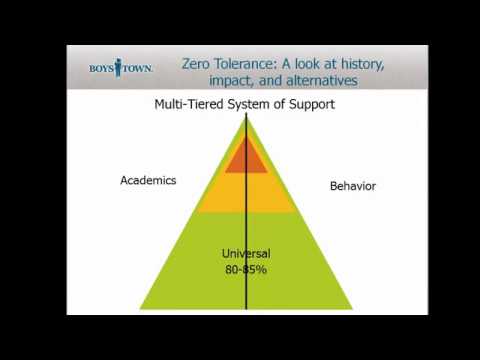



















Zero tolerance discipline policies, implemented in U.S. schools starting in the 1980s in response to rising violence, disproportionately affected African American and Latino students, leading to increased suspensions, expulsions, and arrests for minor infractions, ultimately contributing to higher dropout rates and greater involvement in the criminal justice system; this prompted a policy reversal beginning around 2014, with schools shifting toward restorative justice approaches that prioritize relationship-building and academic consequences over punitive measures.
School-to-Prison Pipeline: How Zero Tolerance Changed Education
Added:The historical context and legislative origin of 'Zero Tolerance' policies in the United States, such as the Gun-Free Schools Act of 1994.
Fundamental sociological concepts of systemic racism and implicit bias, particularly how they manifest in institutional decision-making.
The traditional structure and distinct roles of the public education system versus the juvenile justice system.
Basic statistical understanding of disciplinary disparities, specifically how suspension and expulsion rates historically differ by race and socioeconomic status.
Restorative justice practices in schools as an alternative to punitive disciplinary measures.
The sociology of mass incarceration and the broader concept of the 'Prison-Industrial Complex' in the United States.
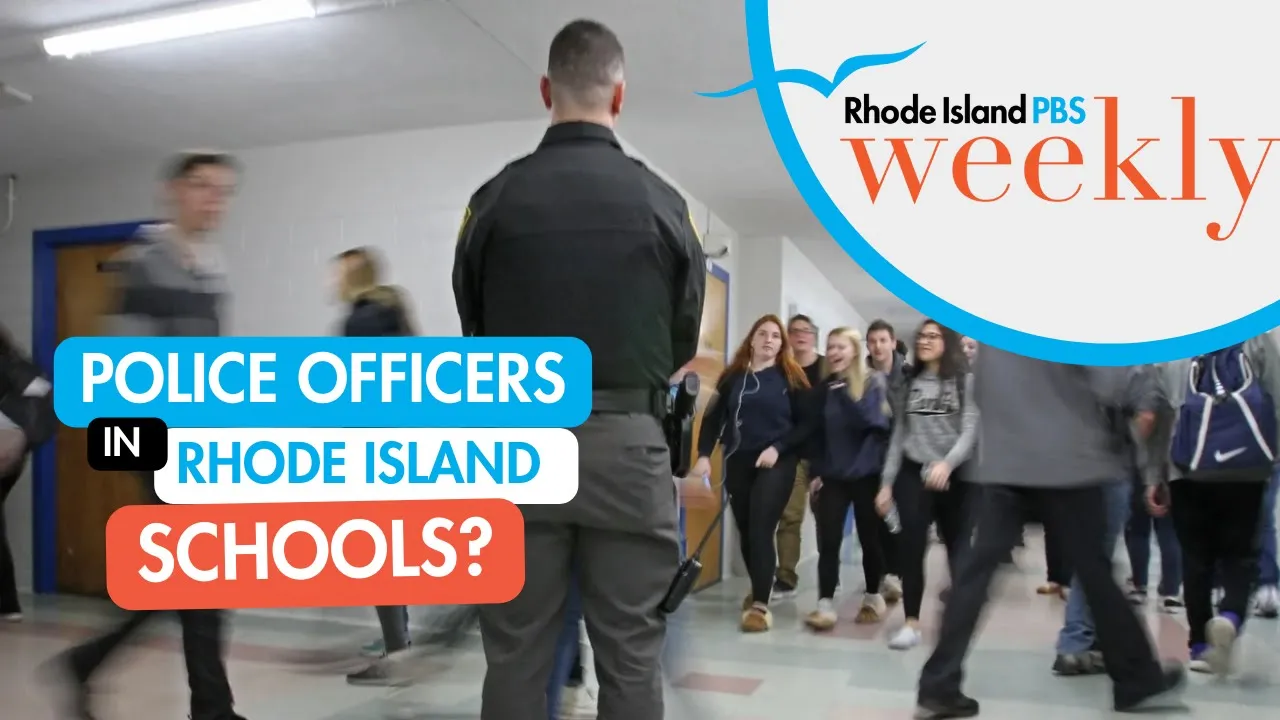
The role and impact of School Resource Officers (SROs) and the policy debates surrounding police presence in educational environments.
Trauma-informed pedagogy and mental health interventions as preventative measures to support at-risk youth.
71K views857likes11:39Original Release: 2016-10-02
A school officer throwing a twelve-year-old student to the ground.
Cell phone video shows the deputy grabbing the student around the neck.
A school police officer hitting and kicking a young man.
A series of violent encounters between students and police has been making national news… and raising questions about the role of police in schools.
Eight-year-olds in handcuffs, students suspended for stick figure drawings.
We’re putting in their minds that they’re criminals and that may be what we wind up with.
How did we get here?
Thirty years ago, many schools were fed up with crime and violence.
Just about every month there’s a gun, some type of gun.
And the government called for more police, and “zero tolerance” for violence at school.
Zero tolerance means you don’t put up with anything.
If the student broke the rules you wouldn’t tolerate it.
You’d just put them out.
We’re going to get rid of, we’re going to forget, we’re going to warehouse these “bad kids,” in a way that we’d never done before.
We have a connection between our school system and criminal justice system that did not exist before and that I don’t think should exist now.
Just one more victim of a violent crime wave sweeping many of the nation’s public schools… In the 1980s, news reports were filled with schools that appeared to be on the verge of chaos, places not of learning but of fear and violence.
Rape, arson and attempted murder.. It’s dangerous even to go to school now.
And Eastside High in Paterson, New Jersey, was considered one of the worst.
The meanest, toughest school in North Jersey.
Drugs, dropouts, trouble.
Kids would get jumped and beat up for their sneakers, their coats, their bombers.
Zatiti Moody was a student at Eastside when a principal named Joe Clark became a symbol of a tough new approach to discipline.
You’re caught in the hallway without a pass that means suspension.
The school is in despair and there’s kind of hopelessness all around you.
But he was fighting for our right to have an education free from interference.
I'm going to carry this bat and any drug pusher I see trying to enter into those 35 doors I'm going to beat the hell out of him!
But Clark also did something even more controversial to get the school under control.
He forced out some 300 students because as he saw it, they were the hardcore trouble-makers.
He had the kids in the auditorium.
And he said, you are under-credited; you are over-aged.
You will never graduate from this high school.
And he had the guard walk them to the door.
There are some people you are not going to save, they are incorrigible.
Removing those students -- that was a bold approach to education.
He became a national icon.
Joe Clark is one of the best-known school principals in America.
The Rambo of public education.
And a movie based on Clark made the power of strict discipline part of popular culture.
These people are all drug dealers and drug users -- you are all expurgated.
By the time “Lean on Me” came out, Clark had clashed with the school board over his tactics, but tough discipline was spreading to other schools, as reports of gun violence were starting to rise.
Last year alone there were 35 violent deaths in schools.
One student shot and killed another in a hallway.
Kids killing or being killed has emerged as a potential national crisis.
We’re not talking about kids who were doing routine kinds of bad things in school.
These were kids with guns who were murdering other kids.
There was a real concern that we were just losing, losing control as a society.
We have got to be tough.
We have to take those young people who are in essence predators, even at a young age, and separate them from the rest of society.
By the mid ‘90s, when Eric Holder was Deputy Attorney General, “getting tough” in schools had already become national policy: the federal government mandated immediate expulsion for anyone who brought a gun to school.
The policy came to be known by a single phrase.
Zero tolerance.
Zero tolerance.
Zero tolerance for guns and drugs in schools.
People were looking for ways to put up rings around schools to reduce the possibility that violent crimes could occur.
Then, in 1999, a mass shooting captured national attention.
It’s happened again.
A mass shooting at an American school.
Columbine High in Littleton, Colorado; it has been a horror.
Columbine added fuel to the push for more school security.
Parents across the country are demanding to know what their schools are doing to keep their children safe.
The federal government devoted hundreds of millions of dollars to adding more police in schools.
There was the need in some neighborhoods for a police officer presence to be there.
The hope was to make schools safer. To make our nation safer.
Ten years later, Eric Holder came back to government, this time as Attorney General.
He began to look at the impact of ‘zero tolerance’ policies. It turned out school violence had already started to fall before the policies were fully implemented. But the effect of zero tolerance on students was startling.
Some of the numbers that were presented to me, I actually thought had to be wrong.
For years, schools had been suspending more than three million students a year.
And it wasn’t just for guns.
Seven-year-old Lamont Agnew was kicked out of the second grade for 45 days for bringing toenail clippers to class.
And with more police in schools, the police were handling more discipline problems and arresting tens of thousands of students.
Investigations would find that in some schools, the most common charge was disorderly conduct, like kicking a trash can.
Things that were routine infractions when I was growing up and might have landed you in the principal’s office, you ended up in a police precinct. I don’t remember one kid in the time that I was in the public schools in New York City who ever got arrested.
And Holder saw something even more troubling in the data.
Black kids are three times more likely to be suspended or expelled than their white counterparts. They are much more likely to be treated harshly for the same conduct.
If you are suspended or expelled you are much more likely to drop out. If you drop out you are much more likely to become involved in the criminal justice systems. And this has a huge, huge impact on the lives of young people.
Zero tolerance changed Jeremy Hudson’s life when he was 12. He says one day before school he helped his mom poke a hole in her belt with a multi-tool.
It consists of pliers, nail filers, a can opener, a corkscrew. I went to school that day and I'm sitting in class and it fell out of my pocket.
Under the school district’s zero tolerance policy, it was considered a weapon.
He was expelled and arrested.
Took me in handcuffs, took me to the police station and I was at the police station until like two o’clock in the morning.
He was sent to another school but he soon stopped going, ran away from home, and was later arrested a few more times, including for stealing a car.
I think I would have had more opportunities if that one incident was handled a little bit differently.
I wouldn’t have had a juvenile record. I think my life would have took a different path.
He now works with the families of other young people who have been arrested.
Most of my kids I work with, man, their problems come from school.
The reality is, kids are kids. They do things that are disruptive. They do things that are bad sometimes. We put in place a series of zero tolerance policies that might have been aimed at gun violence, but that had a much more all encompassing effect.
In 2014, Holder worked with the Department of Education to issue new guidelines warning schools that it was time to rethink discipline.
A routine school discipline infraction should land a student in the principal`s office not in a police precinct.
My view of things has, has probably evolved. But that’s only because of my willingness to accept facts.
I thought that, what are we doing to public education and why are we permitting this to happen? And if we’re setting that kind of example I can’t tolerate it. I can’t be a part of it.
Bertie Simmons has been taking a different approach to discipline since she became principal of Houston’s Furr High.
What we attempt to do is to restore relationships. Have an opportunity to go and talk through their problems calmly.
Problems that can’t be resolved are sent to a student court, which recently sentenced two students accused of falsifying permission slips.
Jurors, these two young men have been charged... The consequences are academic. We don’t give punitive kinds of consequences.
The court has decided we’re going to have you do a two-page research paper on the consequences of forgery.
Simmons credits the discipline policy with transforming Furr High into an award-winning school. The graduation rate was 57 percent when she arrived in 2000.
It’s 90 or plus now. If you just treat people with kindness, it’s far better than being so punitive.
Today many schools across the country are moving away from zero tolerance, but some say they still need strict discipline. At Joe Clark’s old school, Zatiti Moody is now co-principal. When he started, he moved dozens of the most disruptive students out of the school and sent them to alternative schools for kids with behavior problems.
Disrupting the class, disrupting the teacher, disrupting the lesson, that’s the worst crime you can commit in our school.
But, now, he’s also trying to do things differently.
It’s more than just getting tough. I think a kid who-who causes this type of disruption, who takes away from the environment, needs more school, not less school.
You can’t educate unless you have order in your school. And Clark was able to that.
He felt the best thing was to move the students out. Back then, there were no alternatives.
And that was a disservice to, really, a generation of students.
I think the pendulum swung too far in the wrong direction in the, in the 1990’s. I don’t think there’s any question that fear drove a substantial part of this policy making. And led to these, these policies that we are trying to understand now. And in many cases trying to, to unravel.
Up Next

79:49
School-to-Prison Pipeline: US Zero Tolerance Policies in Schools
@ENDEVRDocs
67.6K views•2021-11-17

12:54
Triumph of Orthodoxy Icon: Byzantine Art & History Explained
@BenCallan
2.1K views•2024-08-06

9:49
FastAPI vs Flask vs Django: Choosing the Right Python Web Framework
@TechWithTim
302.5K views•2024-05-26

1:42
Game of Thrones Opening Credits: A Cinematic Analysis
@gameofthrones
46.3M views•2011-04-18
Related Study Plans & Knowledge Roadmaps
Structured learning paths in General & Interdisciplinary Studies
general-studies
Elevator Engineering: History, Physics & Cities
01From Hoists to Safety Brakes: The Dawn of Vertical Lift
02Hydraulic vs. Traction: The Engineering Physics of Elevators
03Modern Speed, Safety, and Algorithms
+ 2 more learning modules
12h5 modules
Explore Roadmap
general-studies
Rubber: Material Science, History & Geopolitics
01Origins of Natural Rubber & Mesoamerican History
02The Chemistry of Natural Rubber & Vulcanization
03The Geopolitics of the Rubber Boom & Colonization
+ 2 more learning modules
12h5 modules
Explore Roadmap
general-studies
Containerization: Evolution, Logistics & Trade
01Ancient Trade & Bulk Cargo: Amphorae to Barrels
02The Industrial Revolution & Cardboard Packaging
03The Containerization Revolution: Malcom McLean
+ 2 more learning modules
12h5 modules
Explore Roadmap
general-studies
Textile Tech: Evolution, Labor & Global Impact
01Pre-Industrial Textiles: Handloom & Cottage Industry
02Mechanization: The Spinning Jenny to the Power Loom
03The Factory System & Global Labor Transformation
+ 2 more learning modules
10h5 modules
Explore Roadmap