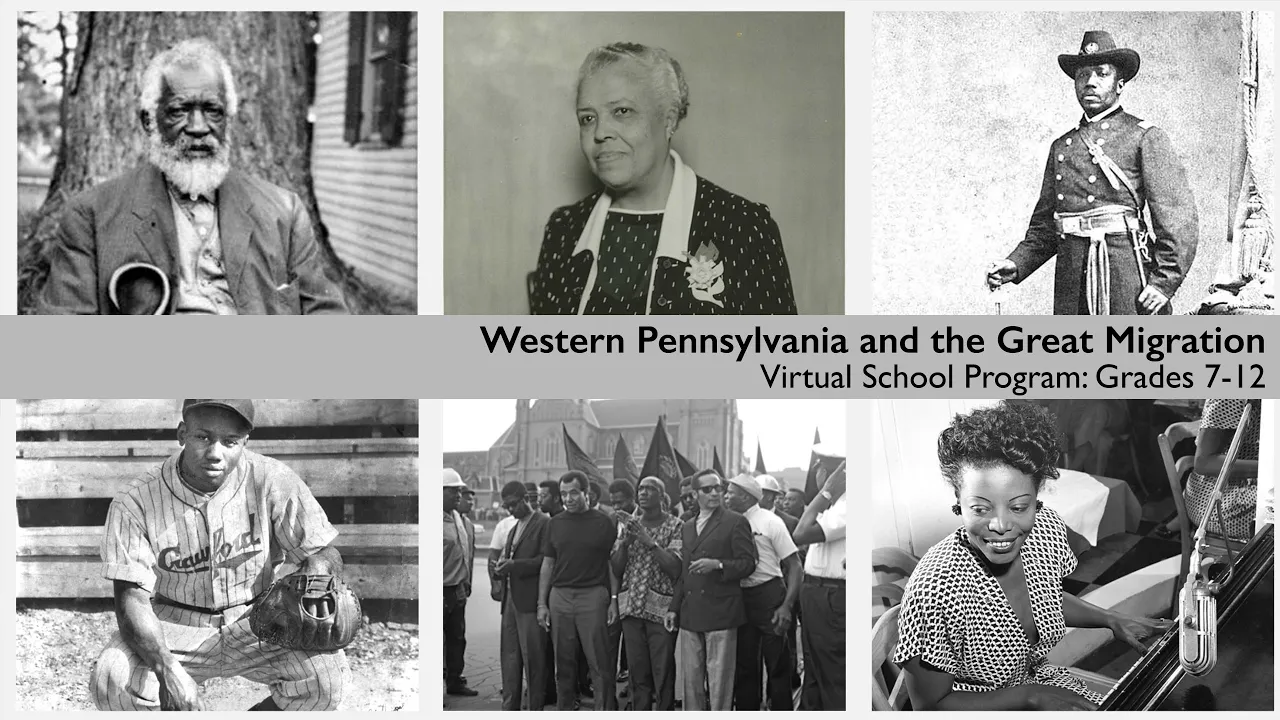


















Jacob Lawrence's sixty-panel tempera series The Migration Series (1940-41) documents the Great Migration of six million African-Americans from the agricultural South to industrial Northern cities during the early 20th century, using modernist visual techniques of flat color and geometric shapes to capture the complex social, economic, and racial dimensions of this transformative historical event, including the push factors of Southern racism and Jim Crow laws, the pull of Northern industrial jobs, the harsh realities of discrimination in both regions, and the profound changes in African-American life and community structure.
Jacob Lawrence: The Migration Series | Art History Explained
Added:Historical context of the Great Migration, including the socio-economic push factors (Jim Crow laws, lack of opportunity) and pull factors (industrial jobs in the North).
The origins and cultural significance of the Harlem Renaissance, which fostered African American artistic expression in the early 20th century.
Basic concepts of Modernism and Social Realism in American art, specifically how art was used to document and critique social reality.
The concept of narrative art, or how visual artists use sequential images to tell a cohesive story over time.
An in-depth exploration of Jacob Lawrence's broader body of work and his unique artistic style, often referred to as 'dynamic cubism'.
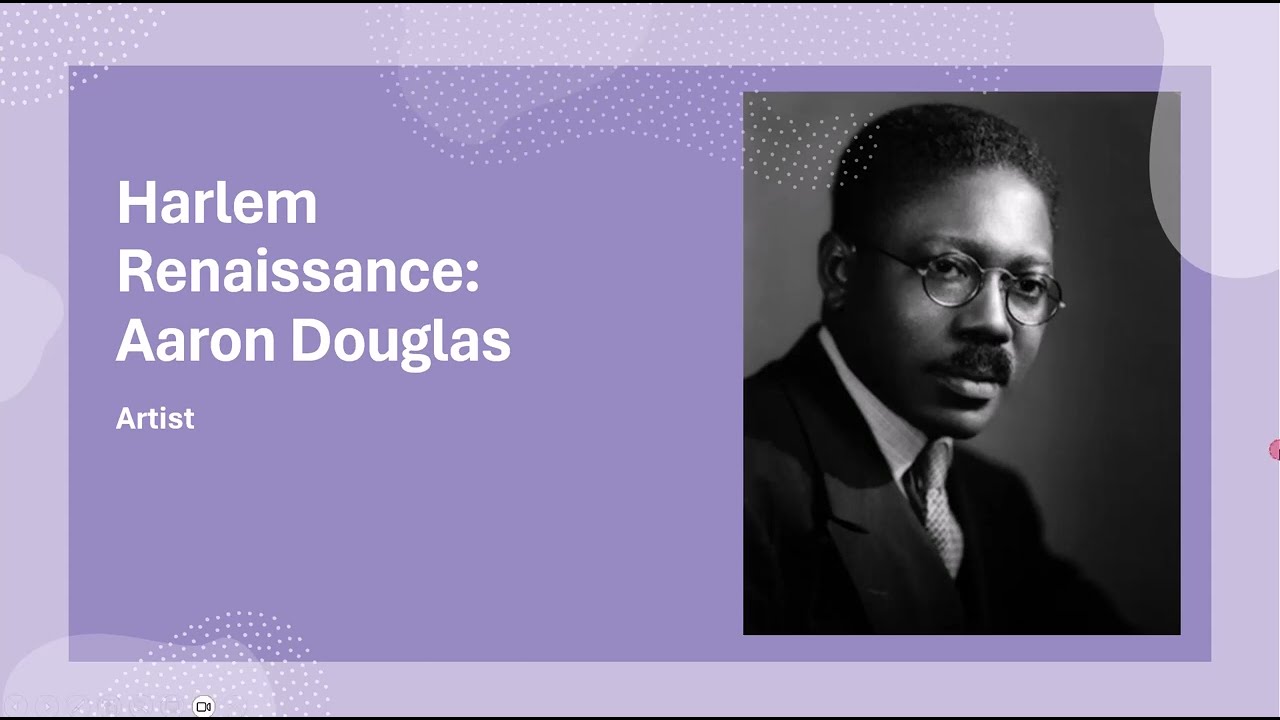
Comparative analysis of other prominent artists of the Harlem Renaissance, such as Romare Bearden, Elizabeth Catlett, and Aaron Douglas.
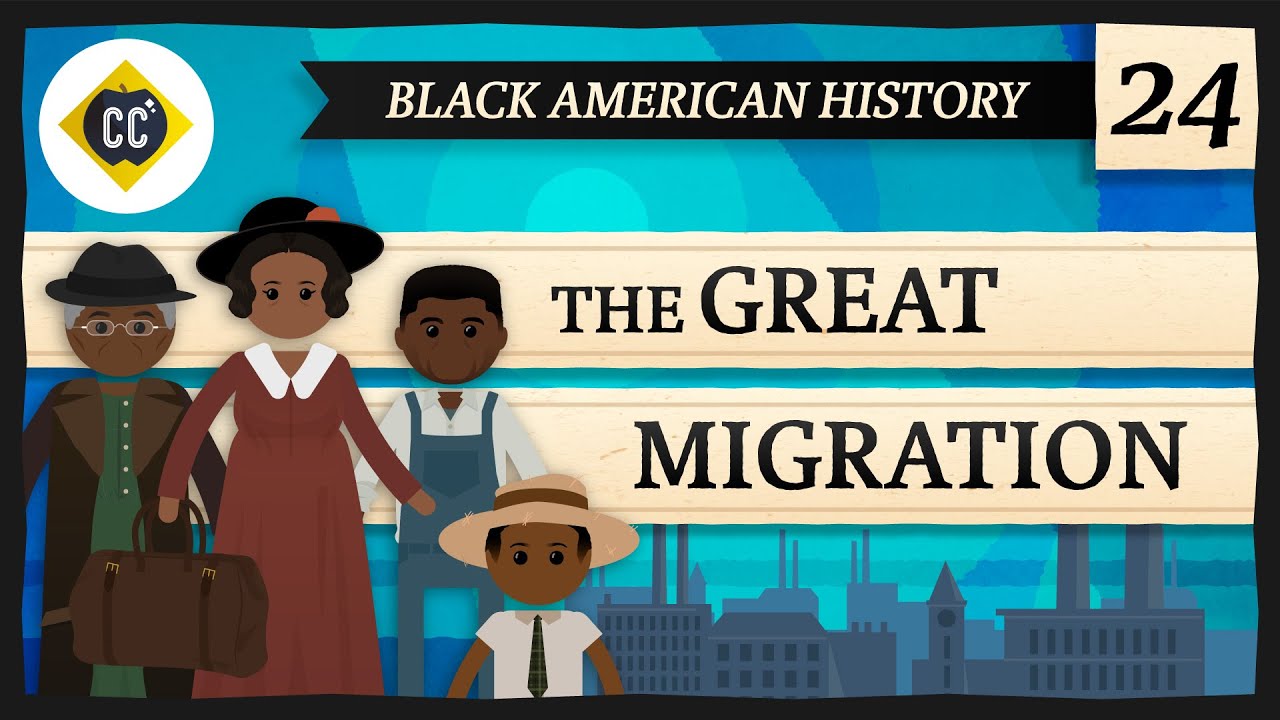
Investigation into the long-term sociological and cultural impacts of the Great Migration on American music (jazz, blues), literature, and urban demographics.
A study of other multi-panel narrative cycles in art history, ranging from Renaissance frescoes to modern political murals and graphic novels.
139.8K views963likes11:25Original Release: 2015-04-11
[music] We're in the Phillips Collection in Washington DC, and we're looking at a series of small paintings by Jacob Lawrence.
-This is actually a series of paintings.
There are sixty of them. Half are here in the Phillips Collection.
The other half are in the Museum of Modern Art.
-Actually MoMA has the even numbers, and the Phillips has the odd numbers.
And that was an arrangement that the artist agreed to because these were so sought after.
-He was young when he painted these, and so it's a remarkable achievement for a very young artist.
-And they document one of the most important historical events in American history: the migration of African-Americans from the agricultural South into the industrial North at the end of the 19th and especially in the first half of the 20th century.
So what precipitated this was not only the extreme racism and Jim Crow laws in the South, but also a dearth of labor in the North, that is northern industrial companies had jobs to fill.
-Six million people are estimated to have moved during these waves of migrations, and Lawrence's family was one of them.
-So people moved to New York just like Lawrence's family did, but people also moved to Chicago, to St. Louis, to Pittsburgh, to all these industrial centers.
-You have to imagine that life was really bad in the South for people to pick up, take all their belongings, move their families, and there must have been the hope of a much better life in the North, and I think there was in many cases, but there was also significant hardship.
-And racism in the North as well.
-And the great thing about this series is that Lawrence captures the complexity of what happened to people's lives when they moved.
-He does that not only by this brilliant use of color and very stark composition using tempera on hardboard, but he also does it through his titling which is almost a kind of poem that weaves its way throughout these images.
-When we look at the paintings, we see geometric shapes; we see flat areas of color, and there's something spare about both the words and the images that's a big part of their power.
-Well he was really careful when he produced this.
He had done a tremendous amount of research at the Schomburg Center in Harlem.
This entire series really is about movement.
It really is about change.
The very first panel and the very last panel have to do with train stations and the movement of people.
So since this was conceived as a series, let's take a moment to go through all sixty, and to look at the panels in relationship to their titles which are so crucial.
-During the world War, there was a great migration north by Southern Negroes.
-The world war had caused a great shortage in Northern industry, and also citizens of foreign countries were returning home.
In every town, Negroes were leaving by the hundreds to go North and enter into Northern industry.
-The Negro was the largest source of labor to be found after all others had been exhausted.
-The Negroes were given free passage on the railroads which was paid back by Northern industry.
It was an agreement that the people brought North on these railroads were to pay back their passage after they had received jobs.
-The trains were packed continually with migrants.
-The Negro, who had been part of the soil for many years, was now going into and living a new life in the urban centers.
-They did not always leave because they were promised work in the North.
Many of them left because of Southern conditions, one of them being great floods that ruined the crops, therefore, they were unable to make a living where they were.
-Another great ravager of the crops was the boll weevil.
-They were very poor.
-In many places, because of the war, food had doubled in price.
-The railroad stations were at times so over packed with people leaving that special guards had to be called in to keep order.
-Due to the South's losing so much of its labor, the crops were left to dry and spoil.
Among the social conditions which were partly the cause of the migration was the injustice done to the Negroes in the courts.
-Another cause was lynching.
It was found that where there had been a lynching, the people who were reluctant to leave at first left immediately after this.
-Although the Negro was used to lynching, he found this an opportune time for him to leave where one had just occurred.
The migration was spurred on by the treatment of the tenant farmers by the planter.
-The migration gained in momentum.
-There had always been discrimination.
-In many of the communities, the Negro press was read continually because of its attitude and its encouragement of the movement.
-Families arrived at the station very early in order not to miss their train North.
-Another of the social causes of the migrants' leaving was that at times they did not feel safe, or it was not the best thing to be found on the streets late at night.
They were arrested on the slightest provocation.
-And the migration spread.
-Child labor and a lack of education was one of the other reasons for people wishing to leave their homes.
-After a while, some communities were left almost bare.
-And people all over the South began to discuss this great movement.
-Many men stayed behind until they could bring their families North.
-The labor agent who had been sent South by Northern industry was a very familiar person in the Negro counties.
-The labor agent also recruited laborers to break strikes which were occurring in the North.
-In every home, people who had not gone North met and tried to decide if they should go North or not.
-After arriving North, Negroes had better housing conditions.
-The railroad stations in the South were crowded with people leaving for the North.
-People who had not yet come North received letters from their relatives telling them of the better conditions that existed in the North.
-The Negro press was also influential in urging the people to leave the South.
-They left the South in large numbers, and they arrived in the North in large numbers.
-They arrived in great numbers into Chicago, the Gateway of the West.
-The Negroes that had been brought North worked in large numbers in one of the principal industries, which was steel.
-They also worked in large numbers on the railroad.
-Luggage crowded the railroad platforms.
-The migrants arrived in great numbers.
-The South that was interested in keeping cheap labor was making it very difficult for labor agents recruiting Southern labor for Northern firms.
In many instances, they were put in jail and were forced to operate incognito.
-They also made it very difficult for migrants leaving the South.
They often went to railroad stations and arrested the Negroes wholesale, which in turn made them miss their trains.
-In a few sections of the South, the leaders of both groups met and attempted to make conditions better for the Negro, so that he would remain in the South.
-Living conditions were better in the North.
-They arrived in Pittsburgh, one of the great industrial centers of the North in large numbers.
-Industries attempted to board their laboring quarters that were oftentimes very unhealthy.
Labor camps were numerous.
-As well as finding better conditions in the North, the migrants found very poor housing conditions in the North.
They were forced into overcrowded and dilapidated tenement houses.
-Housing for the Negroes was a very difficult problem.
-They also found discrimination in the North although it was much different from what they had known in the South.
-Let's stop for a moment and take a look at this image.
-Well this is one of my favorites, because one really has a palpable sense of the effects of racism and discrimination.
-We have this gold barrier; you have this rope that separates the people on the right from the people on the left in a spare field which is upended refusing a linear perspective giving us this exterior bird's-eye view.
-That gray background is entirely flattened.
The figures are silhouetted in these dark colors.
There's a real sense of isolation between the figures.
Well the figures on the left, the whites, are really separate.
The figure at the top left is facing away from the people on the other side of the barrier.
-And he looks rather haughty to me in the way that he looks up and out.
-And the man below him is clutching his newspaper ignoring the play setting before him, and he seems to be completely lost in his own thoughts, but more than that, because of the size of his hands, he seems to be almost clutching that newspaper defiantly refusing to acknowledge anybody else in his environment.
-There's a real economy to everything here in terms of the shapes and the lines, and yet there's so much expressiveness.
-And because Lawrence makes the figure on the upper right so small we get a real sense of distance and a sense of the isolation of that figure.
Look at the way that the artist leads our eye from top to bottom.
Our eye falls down with a kind of increasing momentum, and he brings us, almost like a pinball machine, back and forth, zig zagging, following the line of the barrier, but also alternating between the figures on either side of that barrier.
-And if we follow that barrier down all the way to the lower right, look how much we can tell about that figure.
From such economy of form, we can tell that this is a female figure, that she's older.
Lawrence has painted her head lower than her shoulders so she seems stooped over the table as she eats her food.
-And the hat that she wears covers her so completely, her head is almost out of a bell.
It's interesting that the white figures are the only people who have their facial features depicted.
The African-Americans are given form and personality really by the contours of their bodies.
-I feel so much more sympathy for the figures on the right, for the African-American figures.
Those figures on the left really do seem aloof and almost menacing.
-Let's go back to the series.
-Race riots were very numerous all over the North, because of the antagonism that was caused between the Negro and white workers.
Many of these riots occurred because the Negro was used as a strike breaker in many of the Northern industries.
-In many cities in the North where the Negroes have been overcrowded in their own living quarters, they attempted to spread out.
This resulted in many of the race riots and the bombing of Negro homes.
-One of the largest race riots occurred in East St. Louis.
-The Negroes who had been North for quite some time met their fellowmen with disgust and aloofness.
-One of the main forms of social and recreational activities in which the migrants indulged occurred in the church.
-The Negro is being suddenly moved out of doors and cramped into urban life contracted a great deal of tuberculosis.
Because of this, the death rate was very high.
-Among one of the last groups to leave the South was the Negro professional who was forced to follow his clientele to make a living.
-The female worker was also one of the last groups to leave the South.
-In the North, the Negro had better educational facilities.
-In the North, the Negro had freedom to vote.
-And the migrants kept coming.
-What's fascinating is that Lawrence is bringing a visual vocabulary that is clearly well versed in modernism to a subject that in the United States really is an expression of the modern condition, of this modern migration, of industrialization, of real upheaval.
-And by the vocabulary of modernism, you're referring to the flatness of the forms, the reductiveness that we see here.
But we normally think about modernism as dispensing with subject matter with narrative.
-And yet here subject matter is beautifully woven into these stark images.
[music]
Up Next

6:41
Aaron Douglas: Harlem Renaissance Artist from Topeka
@TopekaLibrary
12.7K views•2010-12-28

114:18
Christian Iconography: History, Theology, and Meaning | Fr. Panayiotis Papageorgiou
@Trisagionfilms
58.8K views•2020-02-21

10:26
Redgrave's The Sempstress: Victorian Social Realism, 1846
@smarthistory-art-history
3.2K views•2011-10-22

16:34
Earliest Depictions of Jesus in Art: 10 Ancient Images Explained
@UsefulCharts
5.9M views•2022-06-03
Related Study Plans & Knowledge Roadmaps
Structured learning paths in Art History
art-history
Gothic Cathedrals: Engineering, Light & Society
01The Birth of the Gothic: Romanesque to Suger's Vision
02The Structural Triad: Pointed Arches, Ribbed Vaults, and Flying Buttresses
03Theology of Light: Lux Nova and Sacred Geometry
+ 2 more learning modules
14h5 modules
Explore Roadmap
art-history
Pre-Raphaelites: Realism, Symbolism & Critique
01The Victorian Art Establishment and Academic Formula
02The Founding of the PRB and Radical Realism
03Medieval Revivalism and Literary Symbolism
+ 1 more learning modules
8h4 modules
Explore Roadmap
art-history
Street Art: From Subways to Art Market
01Subcultural Origins in Philadelphia and New York (1970s)
02The Subway Era and Style Wars (Late 1970s - 1980s)
03The East Village Scene and Early Gallery Crossover
+ 2 more learning modules
10h5 modules
Explore Roadmap
art-history
Classic Maya Art: Iconography, Glyphs & Ritual
01Foundations of Classic Maya Visual Culture
02Deciphering Maya Hieroglyphs & Text-Image Integration
03Sacred Geography and Cosmological Architecture
+ 2 more learning modules
14h5 modules
Explore Roadmap