











![Les clés du regard [8 ]- Georges de La Tour (nouvelle version)](https://i.ytimg.com/vi/Kf93vq4y5cU/maxresdefault.jpg)
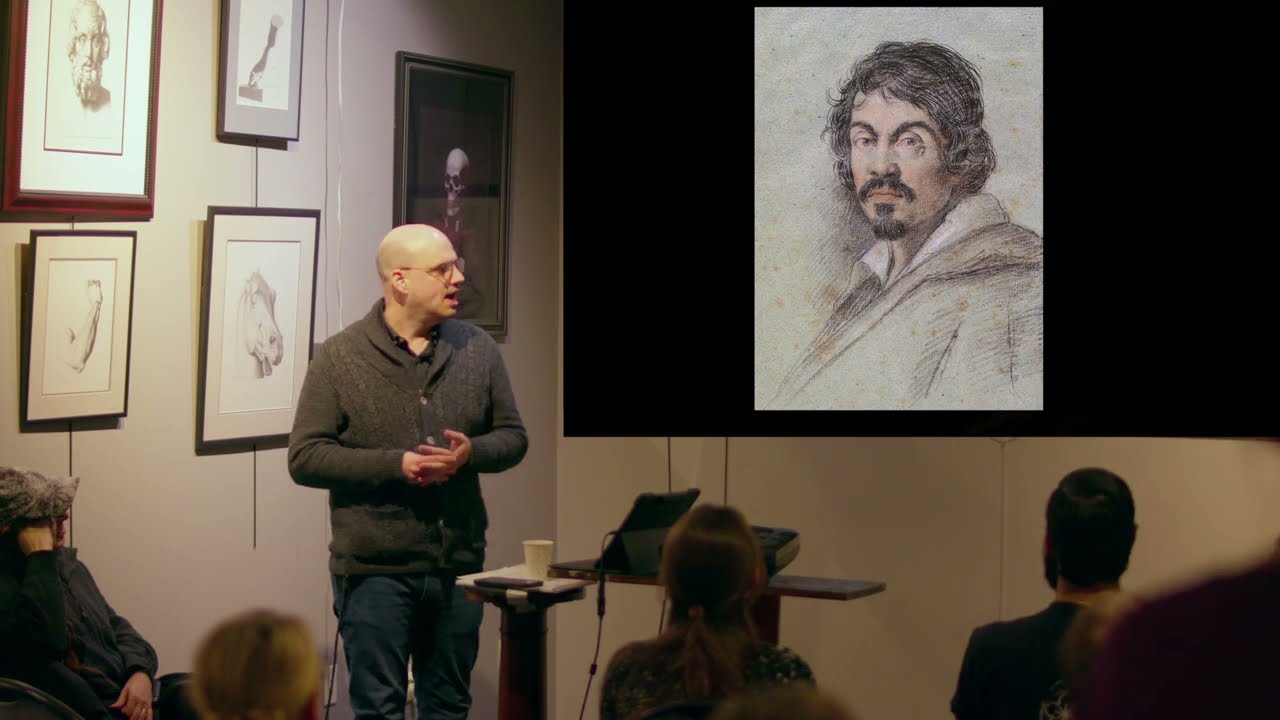








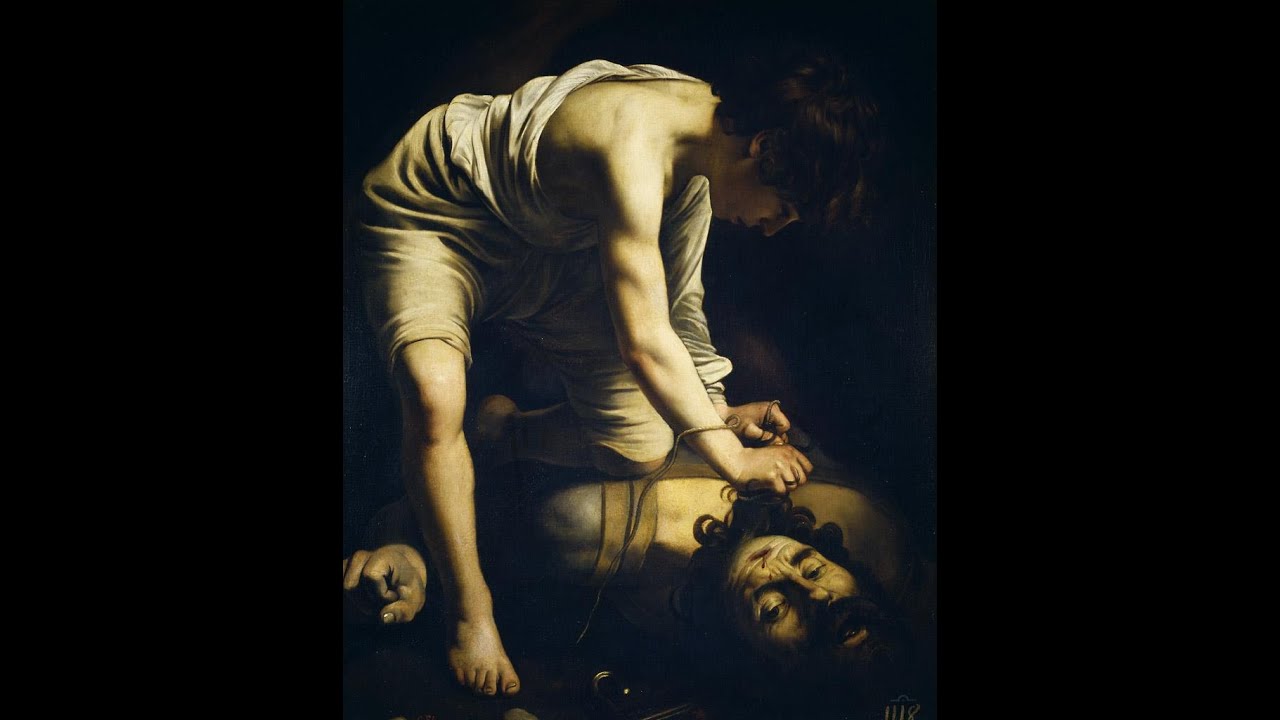
Caravaggio (Michelangelo Merisi da Caravaggio, 1571-1610) was a revolutionary Italian Baroque painter whose innovative style evolved from early genre paintings emphasizing nature and expression to sophisticated religious works characterized by dramatic chiaroscuro lighting and intense emotional realism. Born in Milan to a mason father who died when he was six, Caravaggio trained briefly with Simone Peterzano before arriving in Rome around 1592 in poverty, surviving by painting hackwork until his breakthrough came in 1599 with the Contarelli Chapel commissions. His mature masterpiece 'The Supper at Emmaus' (1601) exemplifies his dramatic use of light to convey narrative meaning, while his final works like 'Salome receives the Head of John the Baptist' (c. 1609-10) show a shift toward more expressionistic handling and muted palettes. Despite his brief career of only about 18 documented years and controversial personal behavior, Caravaggio profoundly influenced European art through his direct approach to painting nature and his innovative use of light, though he fell into oblivion after his death in 1610 until rediscovery in the early 20th century.
Caravaggio's Life & Artistic Evolution: A National Gallery Guide
Added:Hello, my name is Letizia Treves, and I'm the curator of the later Italian and Spanish pictures, here at the National Gallery.
And, by popular demand, today I'm going to talk to you about Caravaggio And Caravaggio's an artist who's as well known for his art, as he is for his bad behaviour.
And the purpose of today's talk is really to talk you through his life, so it is a lot about the biography of the artist, but I'm going to use the pictures that we have here to illustrate why he was so famous then, and so innovative in his style.
And the National Gallery is extremely lucky to have three major works by Caravaggio.
One from each of the distinct phases of his career, so it's the, sort of, perfect place to give you this talk, if you like.
So, Caravaggio was born in Milan in 1571.
His name is Michelangelo Merisi, but he is known as Caravaggio after the small town to the east of Milan, from which his parents came, and where he spent quite a few years during his childhood, as well.
His father was a mason, a muratore, and he died when Caravaggio was just six years old.
And there's been speculation as to whether Caravaggio was, sort of, launched in that career before he became a painter but there's really no evidence for that.
What we do know is that when he was 13, he was sent to Milan, and he signed a four-year apprenticeship with an artist called Simone Peterzano an artist from Bergamo, who'd worked in Venice, and who sort of styled himself as Titian's pupil And he works with him for four years, and we have a contract, but we don't have much else.
But one can imagine that in the workshop he learnt the rudiments of drawing, he learnt how to grind colours, how to prepare canvases.
He may have learnt how to paint in fresco, although he is not a fresco painter, later on in his career.
And after these four years with Peterzano, there's a sort of mystery.
We don't really know what happened to him until 1592, and that is when he goes to Rome, almost certainly in 1592, around the age of 20.
And this is the problem with Caravaggio - there's very little documentary evidence Of course, it's been scrutinised and read in many, many different ways, and it's very fragmentary, and so we've tried to reconstruct his life on the basis of the documents, but, really, we rely enormously on the biographers, who wrote about him, which, of course, do provide conflicting information sometimes and often have their own slant on Caravaggio.
So even that has to be sort o taken with a pinch of salt.
But Caravaggio arrives in Rome, he's about 20, and, of course, now we know he became a very famous artist.
But when he arrived he was a nobody.
He arrived and he really was desperate, destitute.
He jumped from one workshop to another. He painted hackwork.
We know he produced these, sort of, heads. Three heads a day for no money.
He lived with someone called Pandolfo Pucci, who he nicknamed Monsignor Insalata, Mr Salad, because, apparently, that's all he ate under his roof.
He was given very meagre food.
But the biographers do agree on certain points of these early years.
It seems that he arrived, and somehow worked in the workshop of a Sicilian painter called Lorenzo Carli.
We know nothing about him, really.
And no paintings can be attributed to him from this time.
And then he worked in two other workshops, Antiveduto Gramatica and Cavalier d'Arpino.
And what we know about these two experiences is that for Antiveduto he painted heads, and for d'Arpino he painted flowers and fruit.
And this is important because these two formative experiences really help in understanding the early group of works that Caravaggio produced.
And we know from the biographers, that having, sort of, jumped from one workshop to another, he then decided to launch himself as an independent artist, but really struggled.
I mean, he was, as I said, destitute.
He was painting pictures for the open market.
I mean, artists at this time either worked within a workshop framework, or they were patronized by a wealthy patron, who would sometimes house them in their palazzo, and would protect them, as well.
Of course, Caravaggio had neither of those two things at this at this point in his career.
So, he produces works for the open market, and manages to catch the eye of influential patrons that way.
And we know that one of these pictures that he produced was the 'Boy bitten by a Lizard', which we have here in the National Gallery.
There's another version of this picture in the Fondazione Longhi which is generally attributed to Caravaggio, but is not unanimously accepted.
And, as you can see, remember what I said before about his formative years.
So, here there's the combination of a beautiful still life, with these, sort of, half-length figures, and you can see how those formative experiences might have led to this kind of picture.
But this is a very original and novel kind of picture for its subject matter, and that's almost certainly what attracted the attention of these patrons in Rome.
It's a, sort of, genre subject that, of course, one might have seen in northern Italy, and even in northern Europe, but really was very new to Rome.
And this picture has been read in many different ways.
It's been read in, sort of, a poetic vein, looking at literature and poetry of the time.
It's been read as an allegory, an allegory of the sense of touch.
It's also been read as an allegory of the sort of pains that hide behind beauty, the pains of love, the lizard hidden amongst the sensuous fruit, you know.
But, actually, I think the most convincing reading is perhaps the most straightforward, which is just really it's a study in expression.
This, kind of, moment of surprise, of unexpected pain, and he's, sort of, shrinking away.
But it's a fascinating picture.
Before he was bitten by the lizard, what was this boy actually doing?
You know, he has this flower behind his ear.
It's been read in a, sort of, homoerotic vein, as well, and there is something very sensual and sensuous about this picture.
And of this early group of paintings, of youths and boys, which I should say are often based clearly on live models, and on people that Caravaggio knew.
Sometimes they also include his own portrait.
We know he used his own image, because he couldn't afford models.
He couldn't afford to pay models.
And this picture has also been read as a self-portrait, although, generally, now that's discounted.
I personally don't think it's a self-portrait.
I'm sure you know this picture and if not, do come and look at it more closely.
The really striking element of these early works is the quality of the still life.
This fruit, you can just pick these cherries up - it's good enough to eat.
And the combination of that with these, sort of, sensual youths, quite androgynous-looking, and rather ambiguous to read.
It's an odd subject, and you can imagine it would have spurred interesting and lively conversation, if it was hanging on a cardinal's wall or in, sort of, elite circles.
And as well as this sort of picture of a youth, there's a famous picture in the Borghese, of a boy holding a basket of fruit, as well, where, once again, still life plays a very important role in these early pictures.
He also painted, sort of, street scenes, famously the 'Cardsharps', you know, card players cheating, hiding cards behind, another man behind signalling, or fortune tellers.
These were highly theatrical scenes, but things one would have seen in everyday life in the streets of Rome at the time, but incredibly novel, to, sort of, elevate these genres in a way to, sort of, history painting.
You know, still life was really the lowest form of painting in around 1600 but yet Caravaggio really manages to elevate that.
He famously said that painting still lives required as much artistry as painting the figure, which, you know, to us today doesn't seem such a sort of dramatic thing to say, but at the time it was really quite a novel approach.
But what he means is the importance of nature, of looking around, and so this was his real innovation.
It was looking at nature and painting still life, but also using live models, and he was also criticised for this later on his career, you know, for the fact that he didn't select the best in nature, he just painted exactly what was in front of him.
But it was really the sort of most original aspect of his art.
So, these early pictures brought Caravaggio to the attention of powerful and influential patrons in Rome, principally the Cardinal Francesco Maria del Monte, who then invites Caravaggio to live with him in his palazzo, so he now is looked after, protected.
For about five years.
And also the Marchese Vincenzo Giustiniani, another key figure in Rome at the time.
And they start buying pictures by him, they start commissioning pictures from him, and, you know, he's certainly far more comfortable within quite a short space of time.
But the real breakthrough for his career comes in 1599.
He receives the commission to paint the pictures today in the Contarelli Chapel in San Luigi dei Francesi, and you have to remember these genre paintings were for a private patron, and also for a private environment.
They were hanging in these palazzi, and they were accessible to only a few people, an elite, if you like.
But suddenly this is his first public commission, and it's the first time that his art can be seen in the public domain, if you like, is accessible to artists, and people visiting Rome.
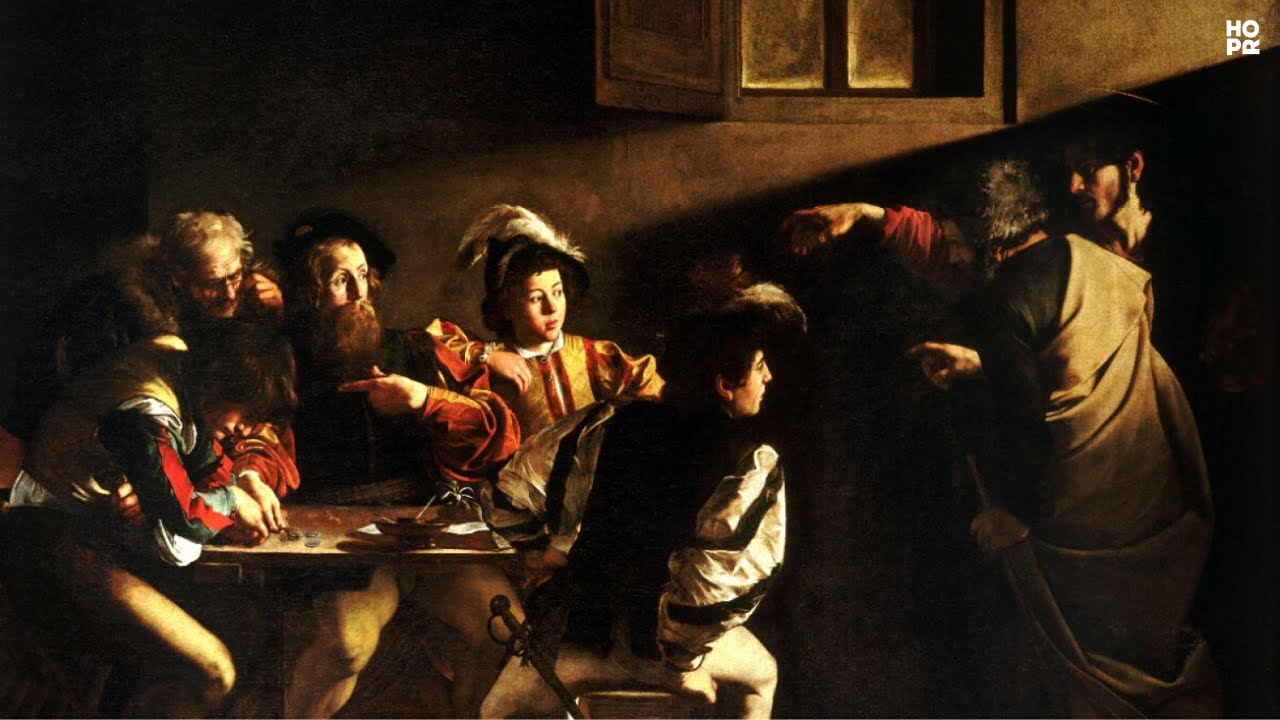
And when these pictures were unveiled, and you can still see them today in the Contarelli Chapel, 'The Calling of St Matthew', and 'The Martyrdom of St Matthew', when they were unveiled, I mean, it caused a real sensation.
We know from the biographers, people flocked to Rome to see these pictures.
And, of course, it was part of an artist's training.
You would go to Rome, and you would look at classical antiquity, and you would also look at contemporary art being produced.
Artists from all over Europe were coming to Rome, and so very quickly Caravaggio's fame and reputation really went far beyond the confines of Rome itself with these public paintings.
Shortly after the Contarelli Chapel, he was commissioned to paint pictures in Santa Maria del Popolo, in the Cerasi Chapel.
Again, these are private commissions, these are private patrons.
It's not the church itself commissioning him.
But these pictures were finally on view in public.
That's why, in a way, there's a delayed public reaction to Caravaggio's art.
He'd been in Rome for a number of years, but 1600 is a key moment.
And the result of that is that he's hugely sought after, and as well as del Monte and Giustiniani, who I've referred to, there are three brothers, the Mattei, who are very wealthy bankers in Rome, and they commission Caravaggio three paintings in the course of two years, and we know that because we have documents, and he goes to live in one of the brother's palazzi.
And one of those pictures is 'The Supper at Emmaus' that we have here in the National Gallery.
This is painted in 1601, and, for me, it sort of shows he's really at the height of his career.
He's riding on a wave, you know, on the crest of the wave.
He's incredibly famous at this point, and he's already developed as an artist.
I mean, you can see just by comparing the two pictures either side of me, there are, sort of, awkwardnesses, particularly in the anatomy of this boy, and the way the shoulder doesn't quite work.
You can see there's a sophistication already in 'The Supper at Emmaus'.
The other extraordinary thing about his art, not just using of live models, is, of course, his use of light, which is what he's now also most famous for.
But what was extraordinary about his use of light is it's using the light in a way, not just for, sort of, the aesthetic enhancement of the picture, but the light always really underpins the meaning in his pictures.
So, here we have the risen Christ.
Instead of showing him on the road to Emmaus, where he meets two disciples, who don't immediately recognise him, they invite him to supper, and here they are at supper.
And this is the moment that Christ blesses the bread, and the disciples realise that they're sitting with the risen Christ.
And he's chosen the culminating moment in the narrative, and this is what Caravaggio's so... so brilliant at doing.
It's a familiar subject, but he represents it in a completely novel way, with a, sort of, freshness of vision, as well.
And, as I say, he chooses the culminating moment in the narrative, and the light is essential in conveying the story here, because it's the light of recognition.
This is the moment the disciples have recognised him.
This one's leaping out of his chair. His elbow's jutting out.
The other one has, sort of, spread his arms in surprise.
And the innkeeper, completely oblivious to what's happening, remains in the dark.
You know, his face is in shadow, because he hasn't seen the light, if you like.
And this wonderful light, not only underlines the message behind the picture, if you like, and really enhances the message within, it's, of course, very theatrical, very dramatic, and the way he crops the composition is very theatrical.
This, sort of, half-, three-quarter length cropping brings you right into the picture space.
You are no longer just a passive viewer, you are taking part.
You're a participant in this picture.
Not just because their elbows are jutting out into your space, or their arms are being thrust out into your space, but, of course, this brilliant device of the basket of fruit.
You know, you're so tempted to just push it back.
It's so precariously balanced on the edge of this table.
And it's even more vivid, because, actually, this picture is so carefully worked out.
When we did x-rays and infrareds, there are almost no changes in this picture, except for one, and that is that the apostle on the right, originally his knee was in front of the tablecloth, and what he did was he changed it, and put it behind the white cloth.
And, of course, it's obvious why he did that.
It's to emphasise the projection of his arm, and, of course, the projection of the basket, because it makes it so much more vivid, this basket falling into our space.
The still life here, again, is sublime.
It's developed beyond the still life in the 'Boy bitten by a Lizard'.
And, once again, this fruit is, you know, good enough to eat.
You can smell it and you can touch it almost.
The picture was, clearly, greatly admired.
It sort of encapsulates everything that people admired in Caravaggio, but it was also criticised.
One of the biographers, Bellore in 1672, criticised it for showing Christ unbearded.
I mean, he is shown youthful and unbearded, which is certainly unusual, and a little unorthodox.
I mean, Michelangelo did that in the Sistine Chapel in 'The Last Judgement', so Caravaggio wasn't the first.
In fact, he may have well been trying to reference that in a, sort of, subliminal way.
But it was also criticised for the fruit, saying, "This fruit couldn't possibly be in season at the same time and at Easter time, when this episode took place."
And I find that amusing because it's almost Bellore's irritation, that it's so convincing, and, you know, Caravaggio's really tricking us into believing this fruit exists in this basket.
He says, "Of course, it couldn't exist at all at once in one basket at this time of year."
But, in a way, that encapsulates also how polemical Caravaggio was.
His whole approach to art was very different from other artists.
He may have received sort of traditional training in the workshop of Peterzano, but his approach was very much no drawing, there are no drawings that exist, although one has to assume, with a composition like this, there must have been preparatory drawings that now no longer exist.
And he very much painted directly, you know, in front of the models, positioning them, using these strong light sources.
And this was an incredibly novel way of painting.
Very unlike normal studio practice at the time.
This picture also, sort of, exemplifies these kind of religious history paintings that Caravaggio became so famous in doing, but also so... so good at, which were essentially for a private clientele, predominately of religious subjects, religious subject matter, intended for palazzi.
But sort of painting these religious pictures almost like history paintings.
There's a real timeless quality about these pictures, I think, and that's largely also to do with, I think, the light, this use of light, because the still life brings this picture into our own reality, if you like.
It's so realistic. We feel that it's in our time.
And yet the, sort of, light encompassing the picture does, kind of, give it this very timeless, eternal quality.
So, 1601, as I said, he's riding the crest of the wave.
This is really the moment for Caravaggio in Rome, and the commissions just keep coming, mainly from private collectors, from private patrons, some for altarpieces, for their own chapels within churches, but a great deal of these sorts of religious history pictures.
But this is also when fame slightly gets to his head, and he really does get into quite a lot of trouble from about 1602 to 1606.
We can tell from the police records.
You know, he's constantly called in.
You know, carrying a sword without a licence.
You were not allowed to walk around Rome with a sword.
If you were under the patronage of someone like the Cardinal del Monte in his household, fine, but not around the streets of Rome, and certainly not threatening people with it.
But, once again, I suppose Caravaggio's become this cult figure, and everyone looks at him slightly in isolation.
And I can assure you he was not alone in doing this.
Many artists at the time were caught and arrested on the same things, really.
But there are these famous episodes.
In 1603 Caravaggio's involved in a very, sort of, vicious libel trial.
His contemporary and rival, Giovanni Baglione, accused Caravaggio and others of writing some very scurrilous verses about him, and, sort of, posting them all round Rome.
And this trial is actually beautifully documented, and it's the only time we hear Caravaggio's own words, if you like, from his own mouth, because he's in the witness box, as it were, and it's written down what he thinks about art, who he befriends, who he knows in Rome, and it's a really useful piece of information, but it is one of the very few bits of information we have about him.
In 1604 there's a famous episode where he's at the Taverna del Moro, and the waiter brings him a plate of artichokes.
Four of them are cooked in oil, four of them are cooked in butter, and when Caravaggio receives the plate, he asks the waiter, "Which are butter and which are oil?"
Then the waiter says, "Why don't you smell them and find out?"
He picks up a plate, throws the plate at the waiter, cuts him, threatens him with his sword, and the waiter runs straight to the police.
And his testimony, it's interesting because you get a view, if you like, of Caravaggio, but, again, he's not alone.
It was a very violent place, Rome, in 1600, 1610, and artists were not the only ones, you know, getting up to these sorts of tricks.
1605, his landlady sues him because, in fact, Caravaggio had wounded a notary, and then had escaped from Rome.
He'd run to Genoa for a few months.
He came back to find he couldn't get into the house he'd rented, and his landlady said, "Well, I've seized all your possessions, because you hadn't paid me rent for six months.
You've also damaged my ceiling, and I'm not letting you in."
So, he starts throwing stones at her window, and we know this again, because there's a trial, and her testimony.
And so we know he's in quite a lot of trouble.
At this point he's not resident in a wealthy patron's home either.
But you can feel that, you know, he... We know one of the biographers, in fact, says, "Well, he paints for a bit, for a couple of weeks, and then he wanders about Rome, strides about Rome with a sword on his hip for a month or two."
So, he obviously has, sort of, surges of productivity, and then really ended up getting into trouble.
And you feel slightly that it's slightly spiralling out of control, and, of course, it's all heading towards the famous incident in 1606, where he gets into a scuffle with Ranuccio Tomassoni, and wounds him fatally, and following this murder, he runs from Rome.
And then he's, really, on the run.
I mean, pretty much for the last four years of his life.
He first goes to Naples for a few months, and then makes his way to Malta, where he's actually made a Knight of the Order of Saint John.
A great thing to be granted, if you like.
Paints some wonderful pictures there, including the famous 'The Beheading of Saint John the Baptist', in Malta, sort of, in exchange, if you like, for the knighthood.
But also gets into trouble there. Gets imprisoned.
Manages to escape from prison.
Clearly someone helping him on the inside.
Makes his way to Sicily.
Moves around Sicily, and makes his way back to Naples.
And all this because he really wants to get back to Rome, and he's waiting for the Papal Pardon after the murder of Tomassoni.
You feel, in a way, through his art, as well, that there is a sort of... he's running.
His art definitely changes key.
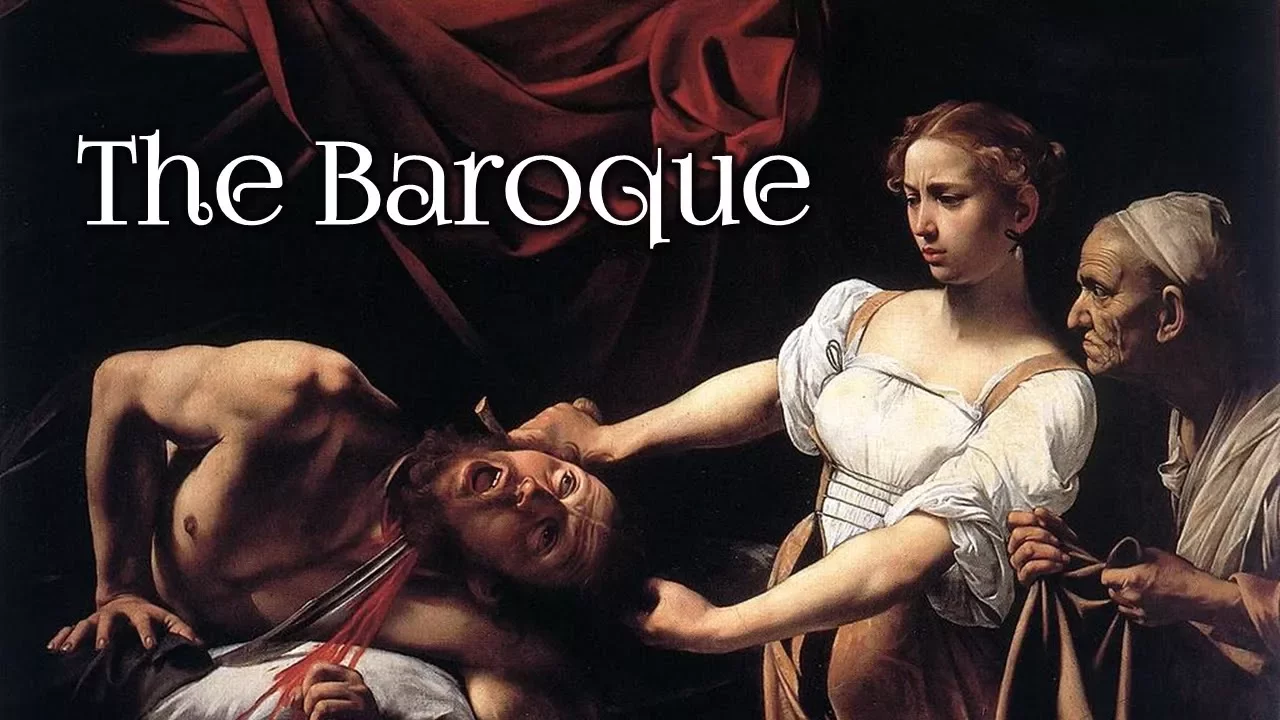
Once again, we're very lucky here to have an example of his late works, 'The Salome receives the Head of John the Baptist'.
And you can see how different that picture is from everything else, you know, that I've spoken about so far.
It's pairing it down to its bare essentials.
The palette is much more muted.
The brushwork, you know, it's really moved away from the very descriptive approach in these early works, particularly in 'The Supper at Emmaus', this beautifully refined brushwork.
Here, the handling is much broader.
It's much more expressionistic, if you like, and there's a real emphasis on the kind of rhetoric, on gesture and expression.
Also, this kind of zooming in on a scene, I think, you know, makes it all the more powerful.
This is Salome, who Herod said, "What is your wish? I'll grant you anything."
And she says, "I want the head of John the Baptist," so he's beheaded.
And here you have the brutal executioner thrusting forward, rather like this man thrusts his arm out, he thrusts the head forward, and he's dropping it into the salver, into the platter.
And the Baptist's mouth is still open, whether he's emitting a scream, or it's his last breath.
It's a very moving thing, and that's right in the front of the picture.
Here you have a beautiful basket of fruit.
There you have this decapitated head, right in front.
And I find it a very moving picture, partly through the way he's applied the paint.
As I said, it's very broadly painted.
You can feel there's more kind of expression in the way he actually lays the paint on the canvas.
And, you know, there's no sense of background at all.
I mean, here, of course, you have a, sort of, sense they're in a kind of neutral place - there's a wall with a light behind, and so on, but here they're really in darkness.
And I think it's all the more effective for it. Much more theatrical.
And so the brutality of the executioner, thrusting this head forward, is an interesting counterpoint to the really quiet figure of the old maid.
She's so sorrowful. She's so introspective.
That head in shadow, sort of, looking down.
And these are types.
You know, by this point, it's generally believed that he wasn't using live models in the way that he was earlier on, positioning models.
These types reappear in other pictures of this date.
Although, of course, they must be inspired by people around him, I don't think he positioned them in the same way that he would have done, in this very orchestrated way, in the earlier pictures.
I find very moving this juxtaposition of the youthful and beautiful Salome with the old maid, you know, sort of looking in two different directions.
I mean, it's a picture that, at first glance, looks so simple, but there's great complexity here, I think, and you can read it in so many ways.
And I find Salome, overall, is so enigmatic.
She demanded to have the head of John the Baptist, and what is she feeling here?
She's looking away, and, you know, is it disgust, you know, the, sort of, bloody head?
I mean, she's holding platter with her white cloth, almost like she can't bear to hold it with her bare hands.
But there's a sort of melancholic expression, so, I mean, I read, sort of, regret almost there and shame at having requested such a thing.
But, you know, these three heads, in a way, are heads of expression, which, sort of, brings us back right to the beginning.
This is what Caravaggio was so good at doing, and communicating expressions through his figures, through light.
And here the palette is so subdued.
You have colour in these pictures, but this really is very limited.
It's a black-and-white picture, more or less.
This picture was probably painted in Naples, as I said, the second stay in Naples, while he was on the run......while he was trying to make his way back to Rome.
Now, it seems that he heard that a Papal Pardon had been released, so he boarded a boat in Naples, on its way to Rome, with paintings to present to Scipione Borghese, the Papal nephew.
And the boat stopped at Porto Ercole, where he was arrested.
And, in fact, there was a misunderstanding.
He was thought to be someone else.
And when he was finally released, the boat had disappeared, his pictures had disappeared, and desperate he set out on foot to make his way back to Rome.
And he caught a fever, and there he died.
A very solitary death, a very lonely death, and he was 39.
And it's interesting to remember that, because for an artist of such fame, you think of people in a similar sort of league - you know, Titian, Rubens, Rembrandt, particularly Titian and Rembrandt - they painted well into old age, and they had incredibly vast active workshops, churning out pupils.
I mean, Caravaggio was essentially quite a, sort of, solitary figure.
He had no workshop in the traditional sense to speak of.
I mean, he must have had students, and one or two have been identified, you know, helping him prepare pigments, particularly once he'd reached fame and success.
But he had no traditional workshop, you know, of a master, sort of, teaching his pupils the rudiments of drawing and painting, and so on.
And he moved around a lot, but he essentially stayed within Italy and Malta.
You know, Titian, Rubens, they moved across various courts in Europe.
And it's interesting because the geographical confinement of Caravaggio of course, didn't stop his fame spreading, because, of course, Rome was this magnet for artists at that time.
But, you know, one has to remember, in terms of documented activity, we only have about 18 years of a, kind of, career that we know of.
And it's incredible that he had such a lasting impact on artists at the time.
Artists, as I said before, came to Rome, as part of their training, if you like.
They came to look at antiquity, contemporary art, and, of course, artists from all over Europe.
There were an enormous number of Dutch, Flemish and French artists in Rome in the period of Caravaggio's lifetime, but also in the decades immediately following.
And this, of course, helped spread his fame well beyond Rome itself.
These artists came to Rome, spent a few years studying the art there, working there, Honthorst, Ter Brugghen, Baburen.
I mean, some of these even stayed in the palazzi of Caravaggio's own patrons, and then they went back to Utrecht or to Flanders, or wherever they came from, and they would carry back Caravaggio's style, and also interpret it in their own way.
And so his style, really, got propagated across Europe in very many different ways.
Of course, every artist took something different from Caravaggio.
Northern artists were particularly struck by his use of nature and of live models.
That's more in line with their own tradition of painting.
I mean, the use of light, of course, had a huge impact on art in the 17th century.
But, of course, that changes.
You know, one thinks of Caravaggio, having invented the candlelight scene, he never painted a single candle.
It's extraordinary, because we all think that.
But, of course, these candle-lit scenes, that one associates with him, of course, derive from his very singular use of light.
But they're, sort of, taken to a whole new level, and, of course, Georges de La Tour takes it, really, to a great level of sophistication and theatricality.
But he probably never even went to Italy, he never saw a Caravaggio.
So, there are, sort of, misconceptions a bit about Caravaggio's influence on artists in his own day.
But also his influence had a, sort of, ripple effect across Europe, I think, became diluted, because, of course, an artist would go to Rome, and then would absorb things from Caravaggio, go back to where he'd come from, and, in a way, amalgamate that into their own style.
This is something I'm interested in, and this autumn, we're going to be having an exhibition here, that opens in October, called 'Beyond Caravaggio', and that's going to be looking at, not Caravaggio in isolation, but very much at the impact that he had on art across Europe, really, in those, sort of, first 30, 40 years of the 17th century.
Caravaggio dies. As I said, he dies in 1610. He's 39.
And yet he has this enormous impact on art immediately.
And, in fact, in a way, it really, sort of, balloons after his death.
You can see that collectors are desperately scrabbling, trying to by pictures by him, and pictures by his followers, commissioning pictures by his followers, And more and more of these works are being produced just for the open market.
There's clearly a huge demand for them. But it's all over.
By the middle of the century, by about 1630 in Rome, and by the middle of the 17th century across Europe, Caravaggio and Caravaggism, which is this, sort of, artistic phenomenon, has been called Caravaggism, is really out of favour, and, you know, Caravaggio really falls into oblivion, and I don't think people really know that.
Now he's such a famous figure, but he was only really rediscovered in the early 20th century.
You know, it's relatively recent times, culminating in a really important exhibition in Milan in 1951, which presented, for the first time, all known works by Caravaggio and the Caravaggisti, by his followers.
And it's only really in the last, sort of, 60, 70 years, if you like, that an enormous amount of interest has been applied to Caravaggio, and, of course, now to those artists known in his circle.
But I hope that through these three pictures, I've been able to tell you a bit about Caravaggio's life, but also, I think, here in the National Gallery you can see just how his style develops over time.
These three pictures are so different, and, in a way, reading them alongside the biographical details of the artist's life, are really key, you know, from the importance of nature and expression in the early works, to the great sophistication of his mature works.
And you can see in a picture like this just how original he must have seemed to his contemporaries.
And then the late pictures, which, of course, were the subject of an exhibition here a few years ago, 'Caravaggio: The Final Years'.
They're, sort of, on a different emotional key, I think.
Thank you very much.
Up Next

Renaissance vs. Baroque: Key Differences in Art History
@OtisCollege
45.3K views•2012-08-08

Christian Iconography: History, Theology, and Meaning | Fr. Panayiotis Papageorgiou
@Trisagionfilms
58.8K views•2020-02-21

Turner: Master of British Landscape Art | Documentary Analysis
@NationalGalleryofArtUS
339.2K views•2014-05-30

Earliest Depictions of Jesus in Art: 10 Ancient Images Explained
@UsefulCharts
5.9M views•2022-06-03
Related Study Plans & Knowledge Roadmaps
Structured learning paths in Art History