







![The ITALIAN Renaissance, EXPLAINED [AP Euro, Unit 1 Topic 2 (1.2)]](https://i.ytimg.com/vi/7y-zYnr3xoI/maxresdefault.jpg)



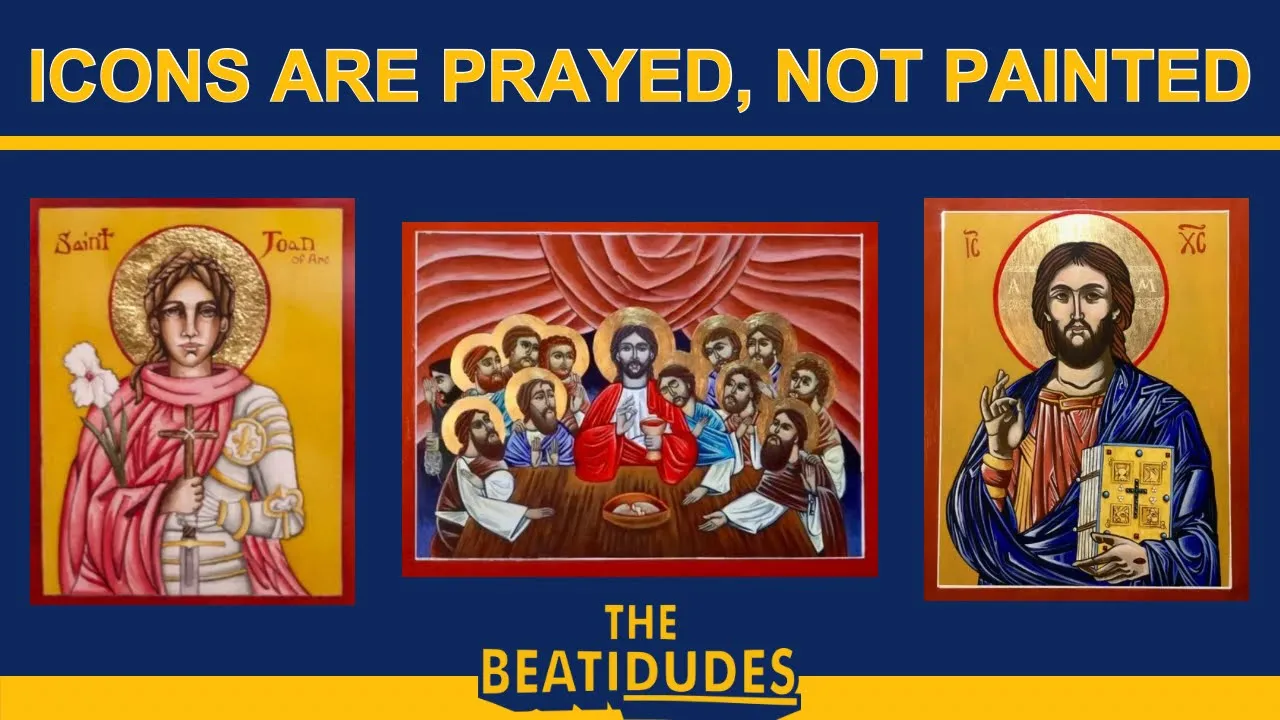


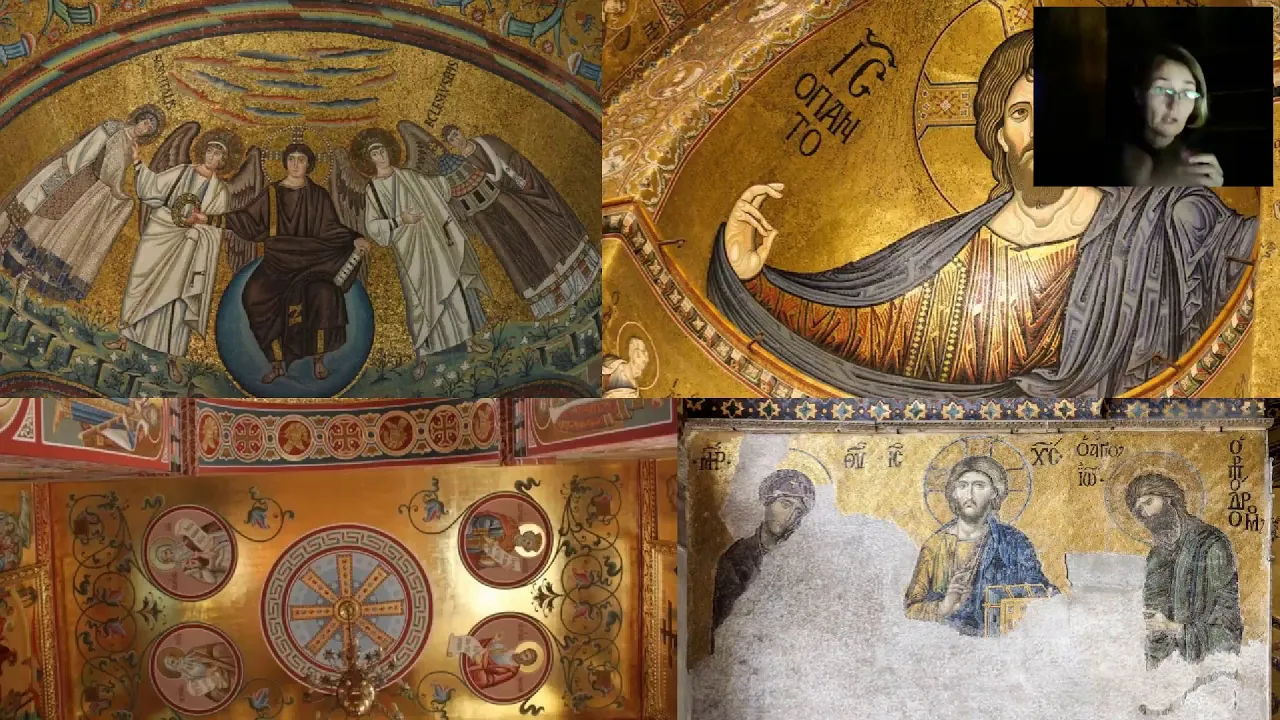

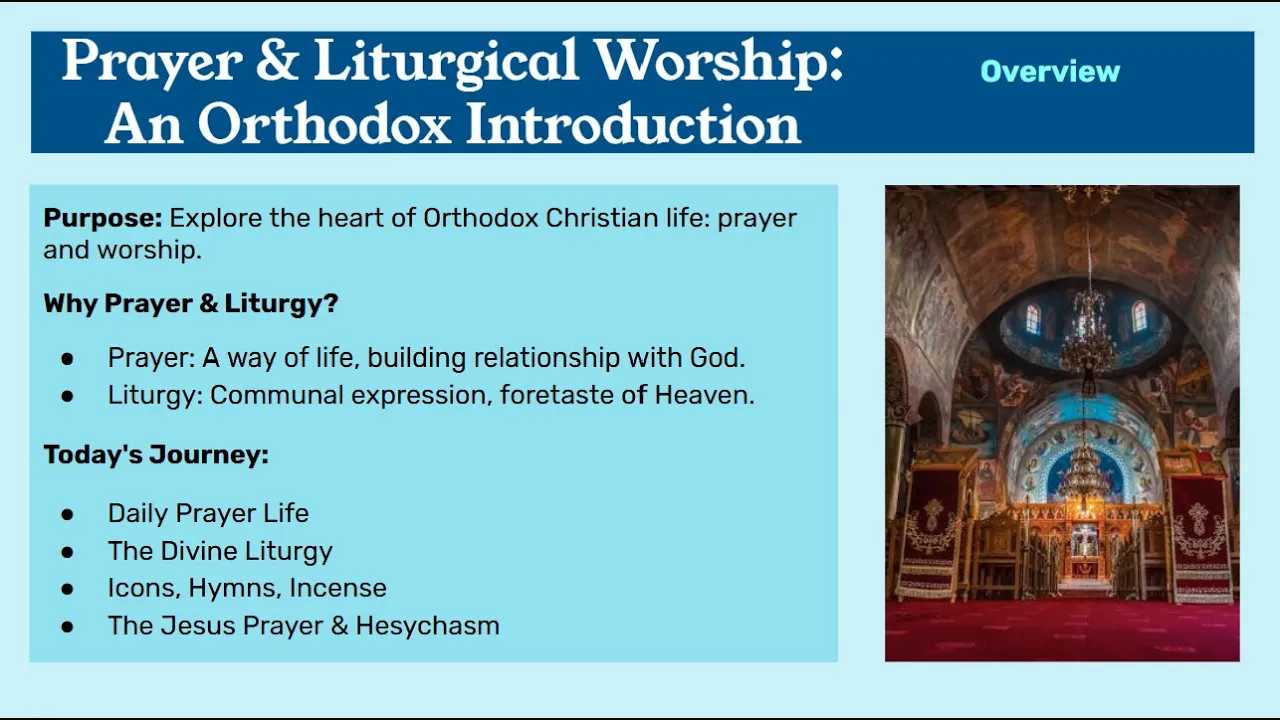




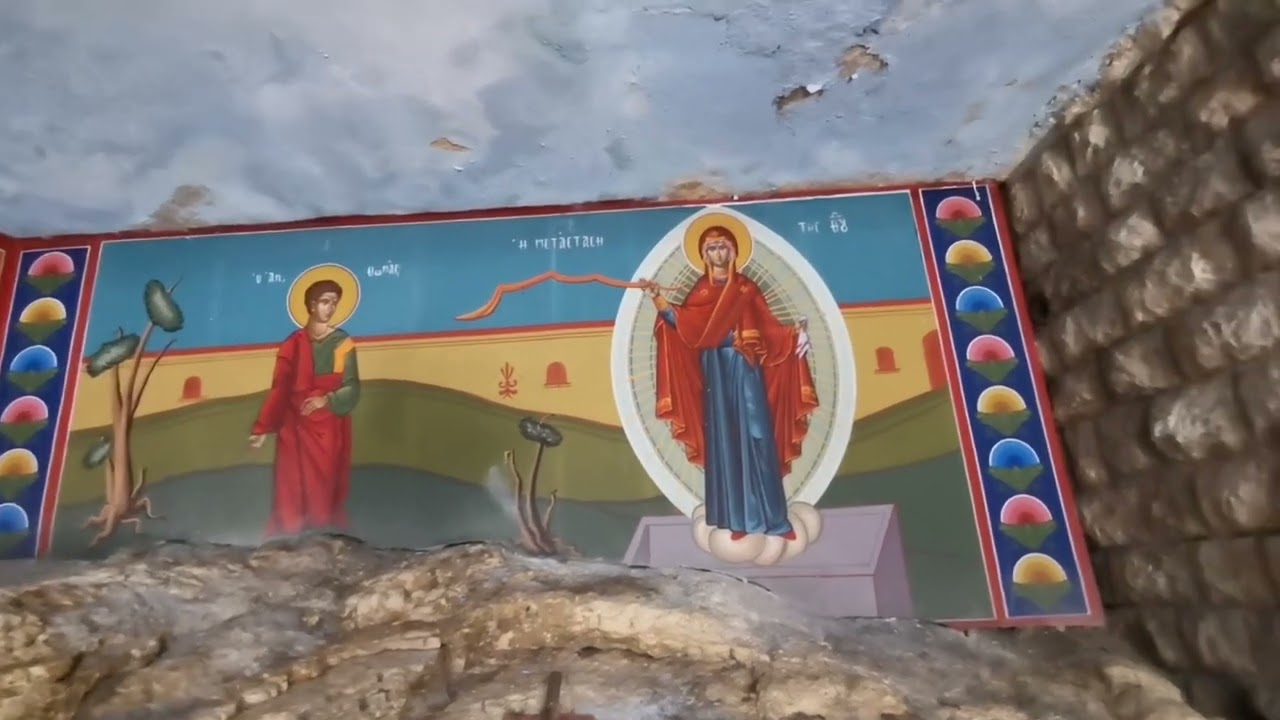


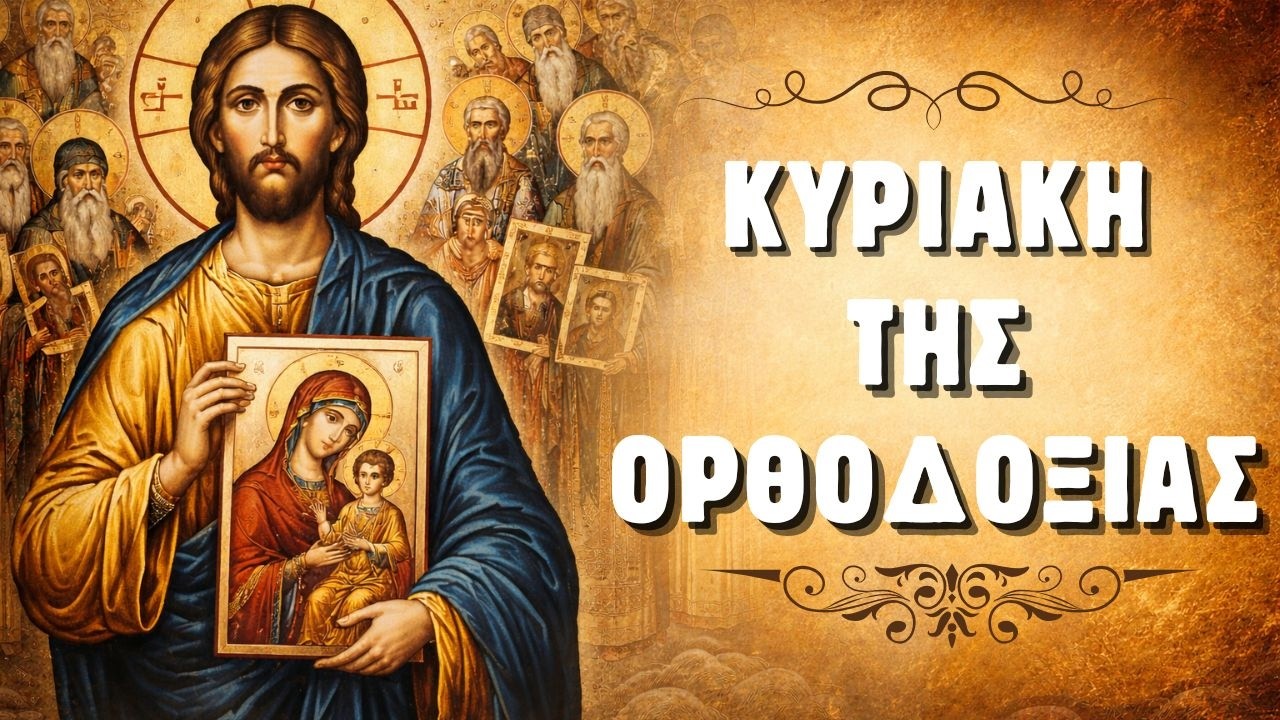
Byzantine icons function as 'windows to heaven' that serve as two-way channels between the divine and human realms, where the Incarnation of Christ makes it possible for icons to capture His human nature and become vehicles for both human veneration and divine power; this theological foundation explains why icon painting remained largely unchanged for 12 centuries, as the established archetypes of Jesus, Mary, and Saints were considered sacred and unchangeable, yet Greek iconographers maintained profound creativity by expressing spiritual values through visually appealing classical Greek artistic traditions, ultimately influencing Western art through the Crusades and figures like El Greco.
Byzantine Icons: Theology in Color | Holy Image Holy Space
Added:The historical rise and cultural context of the Byzantine Empire and its division from the Western Roman Empire.
Core tenets of Eastern Orthodox theology, particularly the doctrine of the Incarnation, which underpins the depiction of the divine.
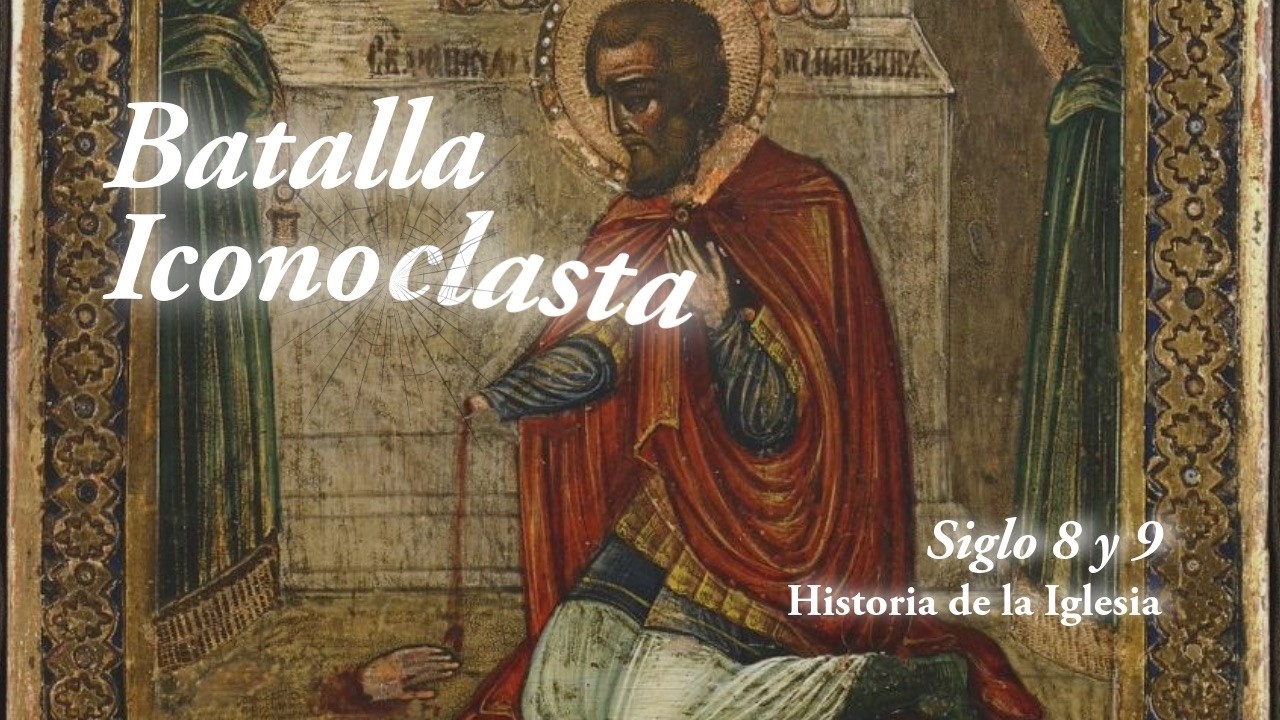
The historical Iconoclastic Controversy (8th and 9th centuries) and its resolution regarding the veneration of images.
The fundamental shift in medieval art from classical naturalism to symbolic and spiritual representation.
The specific artistic techniques of icon painting, such as the use of egg tempera, gold leaf, and the concept of 'writing' rather than drawing an icon.
The theological semiotics of specific colors (such as gold for divine light and blue for humanity) and the use of inverse perspective.
Comparative analysis of Byzantine iconography with Western medieval and Early Renaissance art movements.
The architectural role and liturgical placement of icons within Orthodox sacred spaces, particularly on the Iconostasis (icon screen).
1.9K views39likes28:31Original Release: 2012-11-06
[Music] Greek Orthodox telecommunications presents holy image holy space icons and frescos from Greece part two a theology in colors last week we began our tour of holy image holy space icons and frescos from Greece under the inspired guidance of Dr Gary Vian the assistant director for curatorial Affairs at the Walters Art Gallery in Baltimore Maryland this week we are completing our visit to this ambitious exhibit which began its 2-year tour of America at the Walters holy image holy space documents the role of Byzantine icons in in the development of Western panel painting and specifically in the formation of such famous Masters as Al Greco by evoking the artistic historical social and religious context from which the icon emerged icon painting has changed little in the past 12 centuries after the archetypes for the images of Jesus Mary and the Saints were established alterations were deemed in aent why change the image if the biblical figures did not change thus copying the archetypes was seen as a way of serving and emulating the figure represented in the icon I think when people walk through an exhibition like this and they never seen Byzantine iconic art something strikes them and that is that from the 11th century to the 16th to the 17th century you're seeing the same themes St Nicholas appears again and again and again and he to be recognizable if he's not recognizable it will not be an icon now the idea is that if St Nicholas appears to be St Nicholas over hundreds and hundreds of years where is creativity where is Art isn't it just copying again and again and again isn't it boring well it's not boring at all uh you only need uh look carefully and you'll find that St Nicholas is not the same from Century to Century and that some icons are profoundly creative and profoundly exciting as works of art and how do you explain this uh what well do they go to to draw out this this this great spiritualism and great aesthetic sensitivity well my guess is that this is this is the way it is because the Greeks remain Helen they remain very close to their classical Greek roots and they love to give expression to spiritual values in ways that are visually very very appealing now it doesn't mean that the icon is in a functional religious way any better because an icon once it's recognizable will function as an icon but over and beyond that they add a dimension of beauty to it that makes it a wonderful work of art at the same time during their sixth and seventh centuries there was a growing belief that Holy objects relics and holy places could Channel and deliver Miracles their substance was believed to be sacred these relic icons included the aop not made by human hands and the pilgrim evier or blessings the aop were the first icons the most famous being the melon of Eesa a cloth used by Christ on which his face was miraculously imprinted and a portrait of the Virgin Mary painted by the Apostle Luke the pilgrim of L were portions of Earth wax or oil which had been Sanctified by country act with a holy person or Relic and then mechanically impressed with a stamp that carried an appropriate image of the source of the sanctification it's often said that an icon is a door to heaven or a window to heaven and this is is uh comprehensible I think when one realizes that the Incarnation uh demands really theologically that that Christ became human he had both a Divine and a human nature and an icon can cap cap that human nature no claim is ever made that the icon actually captures the Divinity of of Christ but is human side and somehow if you have that it's a Channel or window through which you can reach the Divine and that all makes good sense uh what is often not appreciated is that the window goes both ways and by that I mean that an icon is a door or window whereby the Divine can exercise its power on Earth and to be very specific in the history of Christianity and in icon history specifically one finds that icons are doing Miracles very often and so you find that someone who believes profoundly in an icon will use it as a vehicle for communication through veneration to the deity and the deity will respond by performing or exercising a miracle through the panel painting itself and so it's a two-way street St athanasius the great wrote that God became man so that man could become God the whole purpose of our life is to lead us from birth through baptism and ultimately through death and then resurrection and during the course of our life the Church offers us assistance through the sacraments through the religious services but also one tremendous form of spiritual assistance that a person receives is through iconography icons have been known in the history of our church to do miraculous kinds of things and I don't think people need to Marvel about that because an icon really is an extension of Heaven an icon is a way in which we as humans who walk upon this Earth can reach out and touch the Divine so if an icon is a portable icon and moves itself about from place to place as we have known has happened if an icon is to bleed if an icon is to weep if an icon is to be a source of miraculous power I find that a true strengthening of my faith I find that as a special message from God that he is working through the holy images which we have made from our own hands he is working through those images to touch the hearts and The Souls of our people the long history of these miraculous icons and their ability to heal also tells us that God is using these as a healing tool I find that people should look at those Miracles which happen with icons as a strengthening of the faith and an Enlightenment of the soul the rapid spread of icons throughout the Byzantine Empire faced bitter opposition and in 726 ad iconoclasm erupted attacks were made against the representations of Christ as a man for it was believed that icons encouraged idolatry and cheapened the intellectual understanding of Christ who was more than mere man the iconoclasts thought that icons of Christ were unable to convey the full Christian message of the nature of the Trinity and they saw the true image of Christ as the Eucharist those who supported icons believed that the image of a holy person partook of the divine nature of the personage and was therefore not merely an object because Christ became man and is worshiped the manifestation of him does Homage to His Image iconoclasm is a puzzle in and of itself and at first it appeared to me or it seemed to me and I think to many others that that there was always this this nagging feeling in Byzantium that icons were wrong that somehow this was a a recollection of a pagan past and it just shouldn't exist and after all there is the Commandment of Moses that Thou shalt make no graven image and I think much of the literature on iconoclasm is directed toward explaining why it was that uh that people did revolt against images and and eventually why the The Cult of icons went out but I think as one begins to understand what icons really are all about One realizes that iconic clasm was for doomed to fail because uh essential to Orthodoxy is the conviction that man that Christ was both man and God and that the in Carnation brought Divinity into corporeal form and if that's true then the icon has to exist because to deny the icon the possibility of showing the face of Christ would be to deny that he actually was a man upon the Earth that he did walk on earth and he did behave like a man and eventually died as a man on the cross so in the end one realizes that Orthodoxy without the icon is impossible and it's not as if theologians are trying to apologize for an inclination that that the Greeks have to to venerate images images have to be there they're implicit in the Incarnation itself the Orthodox Church in my opinion went through this controversy that we call the iconoclastic because it needed to come to a true definition of the role of icons in the church there were those who wanted icons there were those who didn't there were those of course who abused icons I feel though that controversy is necessary often to evolve oneself into the reality of Truth so the iconoclastic controversy really wrenched the church apart but in doing so also gave the theologians an opportunity to really reflect upon the role of the icon in the church it gave people who loved icons an opportunity to reflect upon the true value of them and they fought in order to persevere and to reinstate icons in the churches the truth of Orthodoxy always conquers whatever controversy comes and I think that the true sense of Orthodoxy in the case of what icons are and what they mean to us eventually was to overcome the controversy which preceded the final solution and once the final solution came then people wanted to find a way not only to reinstate the icons but then developed the whole scheme of orthodox understanding of the position of icons in the Church of the theological role that they were to play in the Church of the tremendous teaching influence they were have having in the life of the church and we because of all that preceded it we saw a true kind of definition that came prescribing where and how and what iconography was meant to be the veneration of religious images was already to deeply ingrained in the Byzantine Spirit to be banished forever and in the year 843 ad icons reemerged once and for all triumphant from that year forward Orthodoxy could not be Orthodoxy without the holy image an elaborate scheme of mural decoration mosaics and frescos began to develop with the end of iconoclasm many have called the icon a theology in color [Music] the notion that that Byzantine artist Theology and colors seems strange to people at first but the more you think about it the more sense it makes because because there's such a close match between the way art will manifest itself in the painted panel in the icon and the belief that lies behind it and it's almost true as well to say that that an icon is writing in Gold because it's it's such a close match between the Gospels and the way gospels Express themselves in the painted panel and I guess uh I guess I've often thought and I think I'm saying it more now to people on taking through this exhibition that that if the art didn't exist it would have to be invented to match the belief and if the belief didn't exist it would have to be invented to match the art what a wonderful blend that is after the fall of Constantinople to the Turks in 1453 the production of holy images gradually moved North to Russia and the Slavic lands and West primarily to the island of creit in Greece even though the manufacturer of icons became in a sense industrialized creativity was not compromised this is evident in an anonymous panel of the seven sleepers of Ephesus from Creek Circa 1500 ad here are seven young men who have just fallen asleep and the artist obviously loves to be be creative on the first level he's creative in the way that these fellow sleep because one of them is scratching his neck and one of them has his hand over his mouth one of them has put his nose down into his cape another one's head is sort of crooked backwards as if he's if he's snoring you can almost hear them snoring and then at the upper left of the panel is this funny little basket clearly a kind of napsack that they took with them on their hike and right along the top of this basket are five little olives black olives you know you can imagine that they that they haven't had a chance to eat their lunch yet so you see these things and you see a man who obviously loves to paint he just likes to have fun because the story doesn't demand this level of creativity and we don't know who he was he probably did these every 12 or 14 days he did another one but even under those circumstances of anonymity and a kind of businesslike production he could be extremely creative icon painters remained Anonymous until the early 13th century one of byzantium's first first icon painters known by name was Angelos aotos Angelos moved to creit from Constantinople shortly before the fall of the Byzantine Empire there he established the roots of a splendid tradition of post Byzantine icon painting the creeton school which was to flourish uninterrupted almost down to modern times the Virgin caroa signed by the hand of Angelos is an unusual late Byzantine portrait of the Virgin and child for the first time their relationship is very intimate and emotional their cheeks are touching and the baby is grasping his mother's huge head and shoulders and is pressing his own head sharply backward to get as close to her as possible the gesture is so spontaneous that somehow his left sandal has fallen off his foot as we become increasingly aware of VIs icons and their sophistication in the 11th and 12th century it has become increasingly clear that the great painters of the early Italian Renaissance and by that I mean chimoy and duio the great painters of Northern Italy around 1300 could not have existed as artistic personalities without the Byzantine icon and in this exhibition uh we have a wonderful panel panel of uh the Archangel Gabriel that has a gentle quality to to the oval face a kind of M eyes that when you see that for the first time you think this is Italian looks very Italian somehow because you think of Duo and people are very surprised when they're told that this panel painting and we don't know who painted it but it was probably done on Cyprus was painted more than 100 years before Duo was born now that's a raw piece of information that it takes a little while for most people to digest uh what this means is that that not only does duio uh do something something that the byzantines had done earlier but that the byzantines were the source for duo and the mechanism whereby the the force of the icon was brought to bear on the west were were the Crusades because now for the first time vast numbers of bantine uh icons were being seen by by Catholic Latin painters and patrons and they're seeing paintings that are big and powerful and this is something totally different from anything they they had encountered before in they're going back and they're trying to imitate them and it took them a while I'd say maybe three or four generations before they could really capture some of that spirit and this is the basis of the Italian Renaissance because from Duo and Chim boy eventually blossomed Raphael and Michelangelo and you know it's funny that that people look toward the root for the roots of the of the Renaissance around 1300 in Northern Italy with duo in fact they're seeing the base of the tree and the roots go much much deeper and they're all bantine Greek and Orthodox dominicos theopus the renowned El Greco was born a Christian Orthodox Greek on the island of CIT in 1541 by his mid-20s El Greco had become a successful icon painter leaving for Venice in 1567 at the age of 26 he was at the top of the trade of Icon painting and thanks to an icon from the Baki Museum in Athens which is in our exhibition we see him painting in that way uh because it's a portrait of uh St Luke painting the first portrait of the Virgin and child and on the easel is a wonderful Creon icon really very conservative Byzantine icon of the Virgin and child so you see that this was how he could paint and how he was painting when he was still on the island of creed and yet at the at the same time you you begin to sense in the in the figure of St Luke in that icon the dynamism kind of visual aggressiveness both in pose and the use of light and the use of shading that will come to characterize his later work and he starts to look already more like tishan and tetto than like a Greek icon painter now leave that all aside and then go to the very end of his career he died on in uh in Spain in 1614 and toward the end of his life he painted quite a number of canvases of Apostles and quite a number of portraits of Christ and some of these portraits are remarkably Byzantine remarkably icon likee in the way that the figure is organized and the way that the background is shut out so that you really as a viewer have to confront that figure directly you can't escape from it and even those uh portraits that are are typically Catholic like our wonderful St Francis here at the Walters uh where in the figure is not looking at the viewer as an icon would nevertheless it has a level of spirituality to it that seems to transcend what's going on in his own generation in Western Europe and one begins to understand how all this can happen when you look back through his history and you go back to cre in the 1560s when he really had achieved that sense of spiritual intensity and it never left him it's it's there all the time the the feeling of icon never really left El greo over the doors of this Cathedral there is inscribed something which I find very appropriate and that says that the doorway to Heaven is really the entrance to the church when we enter the church we are really entering heaven we are to be removed from the cares of the world we are to come into a womb like secure comfortable setting that permits us to really Savor spirituality and we as Orthodox Christians know that one of the true ways we Savor our Orthodox faith is through the Magnificent artwork that we call iconography in this Cathedral we have now begun to place iconography which we feel is truly fitting to the Orthodox church we have selected a man now who is doing major work within the cathedral and iconographer named George Pap matu who I consider to be a man who captures truly through his iconographic presentations the kind of spiritual quality that we need George papastamatiou is a third generation iconographer from Samos Greece after learning the basics of Icon painting particularly the Renaissance style from his family George studied with the renowned ftis cond from whom he learned the bizantine style of Icon painting St Demetrius is a combination of the techniques of the Macedonian and cretan schools it is intended to be an iconostasis icon and its size is analogous to that of the other eight or nine icons that will compose the easis of St Demetrius in Sagano Michigan the icon is painted on canvas that has been prepared with titanium and gesso and is going to be painted with acrylics after the sketching on the canvas we fill in the basic colors so that we can evaluate what the final look may be then following the Byzantine Technique we highlight in the appropriate places to provide dimensionality to the form we can characterize byzantin art as being purely geometric beyond that the artist can use 20 to 25% of his own talent and personality in order to combine the Byzantine tradition and the style or spirit that he feels represents him best after priming the wood and sketching an outline the most important task is the pressing of the gold leaf on the background it must be covered by pure gold leaf because on one hand it adds to the aesthetic value of the icon but most importantly the gold represents the Brilliance of the Kingdom of Heaven in the old times the iconographer faced serious problems in the Gold Leaf process they had to produce their own Gold Leaf whereas today Science and Technology have given us the luxury of having the gold on paper which is pressed onto the specially treated wood when the process is completed it is buffed and made shiny then varnished in order to be protected gold remains unaltered forever its substance doesn't change and after many centuries it becomes sweet and yellower creating a union between Byzantine art and the architecture color and light that exists in our Greek Orthodox Churches was the most challenging aspect of Georgia's work within the United States I focused my efforts here at the Cathedral on combining Byzantine art with the existing architectural line in order to create harmony with the pre-existing iconography the only available spaces for the placement of byzantin icons that can complement the rest of the architectural structure is the plat this is because the church doesn't have a dome so we gave greater emphasis to the virgin's particular rendition by obeying the existing structure I placed her in the given space within a circle supported by Angels which resulted in having Jesus held by his mother in the center of the circle to represent in a sense the pantoc who doesn't exist on the ceiling did nothing contradictory to the traditions we simply adjusted the size shape and space to the existing needs I think that in today's world we have begun to understand that we need to go back to True Byzantine art forms we have perhaps to some degree brought other art forms into the church but now realize that the spiritual image that we call an icon has to have quality about it which truly transport us from Earth to heaven and I believe in the iconography that we have presented here we have that kind of methodology we need to assist the worshipper to enter the kingdom of God holy image holy space icons and frescos from Greece continues its tour of the United States in Miami Florida at the center for the Fine Arts November 1988 through January 1989 the Kimble Art Museum Fort Worth Texas February through April 1989 the MH the Young Memorial Museum in San Francisco California April through July 1989 the Cleveland Museum of Art Cleveland Ohio August through October 1989 and the Detroit Institute of Art Detroit Michigan November 1989 through January 1990 oh the preceding program was brought to you in part by grants from the Acme sponge and shami Company Incorporated amch Enterprises Incorporated and the century Broadcasting Corporation this has been a Greek Orthodox telecommunications production
Up Next
60:06
Byzantine Cyprus: Painted Inscriptions at Panagia tou Arakos
@HellenicTV1
272 views•2016-01-16

114:18
Christian Iconography: History, Theology, and Meaning | Fr. Panayiotis Papageorgiou
@Trisagionfilms
58.8K views•2020-02-21
7:48
Ukiyo-e Art: History, Woodblock Printing & Influence
@japanathand
6.3K views•2023-06-08

16:34
Earliest Depictions of Jesus in Art: 10 Ancient Images Explained
@UsefulCharts
5.9M views•2022-06-03
Related Study Plans & Knowledge Roadmaps
Structured learning paths in Art History
art-history
Gothic Cathedrals: Engineering, Light & Society
01The Birth of the Gothic: Romanesque to Suger's Vision
02The Structural Triad: Pointed Arches, Ribbed Vaults, and Flying Buttresses
03Theology of Light: Lux Nova and Sacred Geometry
+ 2 more learning modules
14h5 modules
Explore Roadmap
art-history
Pre-Raphaelites: Realism, Symbolism & Critique
01The Victorian Art Establishment and Academic Formula
02The Founding of the PRB and Radical Realism
03Medieval Revivalism and Literary Symbolism
+ 1 more learning modules
8h4 modules
Explore Roadmap
art-history
Street Art: From Subways to Art Market
01Subcultural Origins in Philadelphia and New York (1970s)
02The Subway Era and Style Wars (Late 1970s - 1980s)
03The East Village Scene and Early Gallery Crossover
+ 2 more learning modules
10h5 modules
Explore Roadmap
art-history
Classic Maya Art: Iconography, Glyphs & Ritual
01Foundations of Classic Maya Visual Culture
02Deciphering Maya Hieroglyphs & Text-Image Integration
03Sacred Geography and Cosmological Architecture
+ 2 more learning modules
14h5 modules
Explore Roadmap