Abstract Expressionism: Gestural vs Color Field
Learning Goal: Contrast the energetic gestural abstraction of the New York School with the meditative, spatial qualities of Color Field painting in post-World War II American art.
- Prerequisites: None (An open mind for abstract visual forms and modern history is recommended).
- Estimated Total Study Time: 8 Hours
Module 1: Foundations of the New York School
This module explores the historic shift of the global art capital from Paris to New York City following the devastation of World War II. You will learn how European artists fleeing Nazi persecution influenced a generation of American painters, leading to the rise of Abstract Expressionism and the iconic group of painters known as "The Irascible 18."

Why this video
This video provides crucial socio-political context, tracking how post-war trauma and anxiety birthed Abstract Expressionism in New York. Crucially, it highlights how pioneering women artists like Lee Krasner, Elaine de Kooning, and Helen Frankenthaler broke into this male-dominated environment.

Why this video
This segment directly addresses the Paris-to-New York transition. It explains how a ruined, post-war Europe ceded its cultural dominance to America, allowing New York to emerge as the new undisputed global powerhouse of modern art.
Why this video
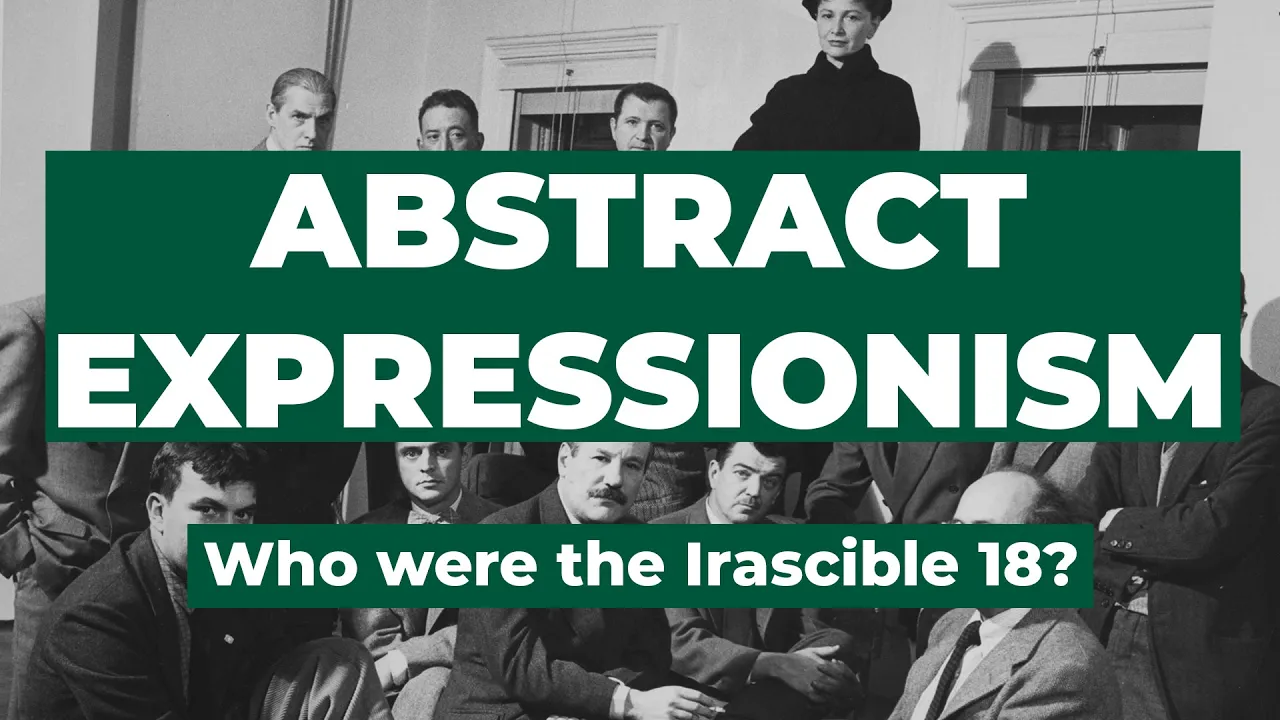
To truly understand the "New York School," you must meet its core agitators. This video introduces "The Irascible 18," the coalition of artists who protested conservative museum exhibitions, effectively solidifying Abstract Expressionism as a unified, revolutionary force in America.
Knowledge Checkpoint
- Explain why the center of the global art world shifted from Paris to New York after World War II.
- Identify who "The Irascible 18" were and what they protested.
- Detail how European artistic traditions (such as Surrealism) merged with the American mindset to foster post-war abstraction.
Module 2: Gestural Abstraction: Energy and Action Painting
This module unpacks "Action Painting," a dynamic branch of Abstract Expressionism that treated the canvas not as a window to a scene, but as an physical arena in which to act. You will analyze the raw, athletic choreography of Jackson Pollock and the visceral, paint-layered figurative abstractions of Willem de Kooning.
Why this video
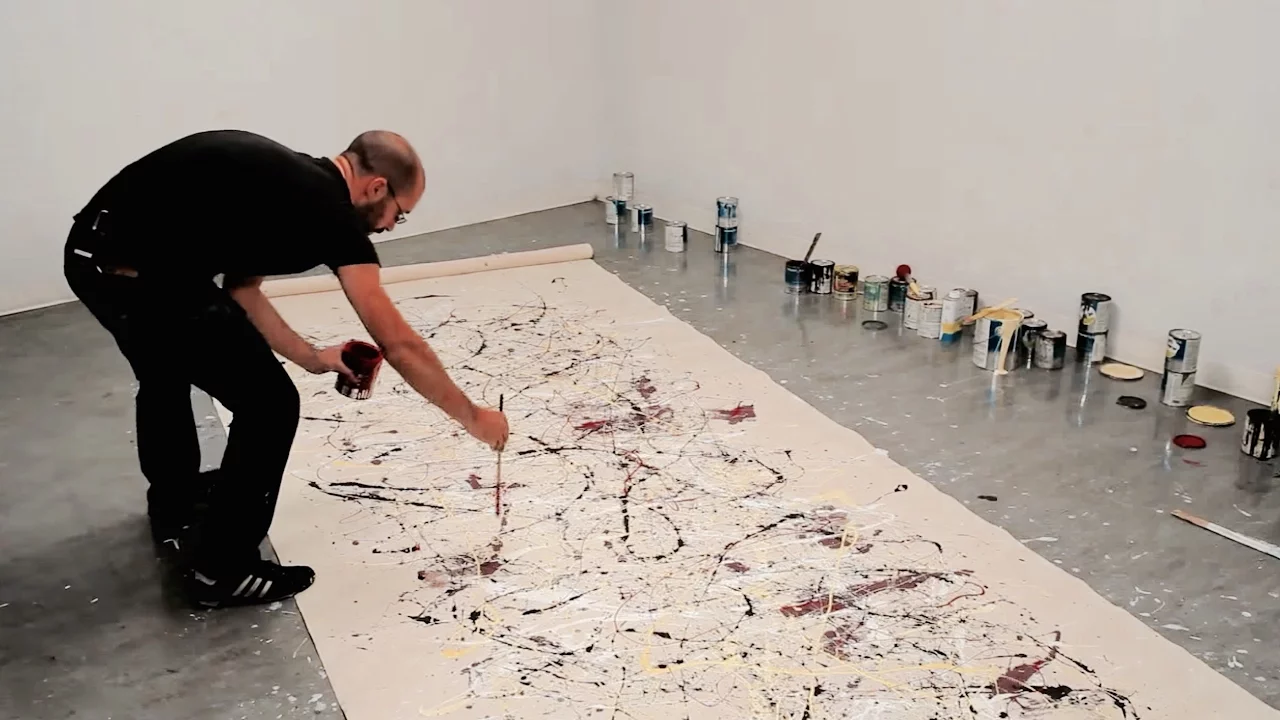
Presented by MoMA, this video offers a masterclass in Pollock's technical process. By watching Corey D'Augustine reconstruct Pollock's methods, you will understand how using household alkyd enamel, sticks, and hardened brushes allowed Pollock to completely abandon easel painting.
Why this video
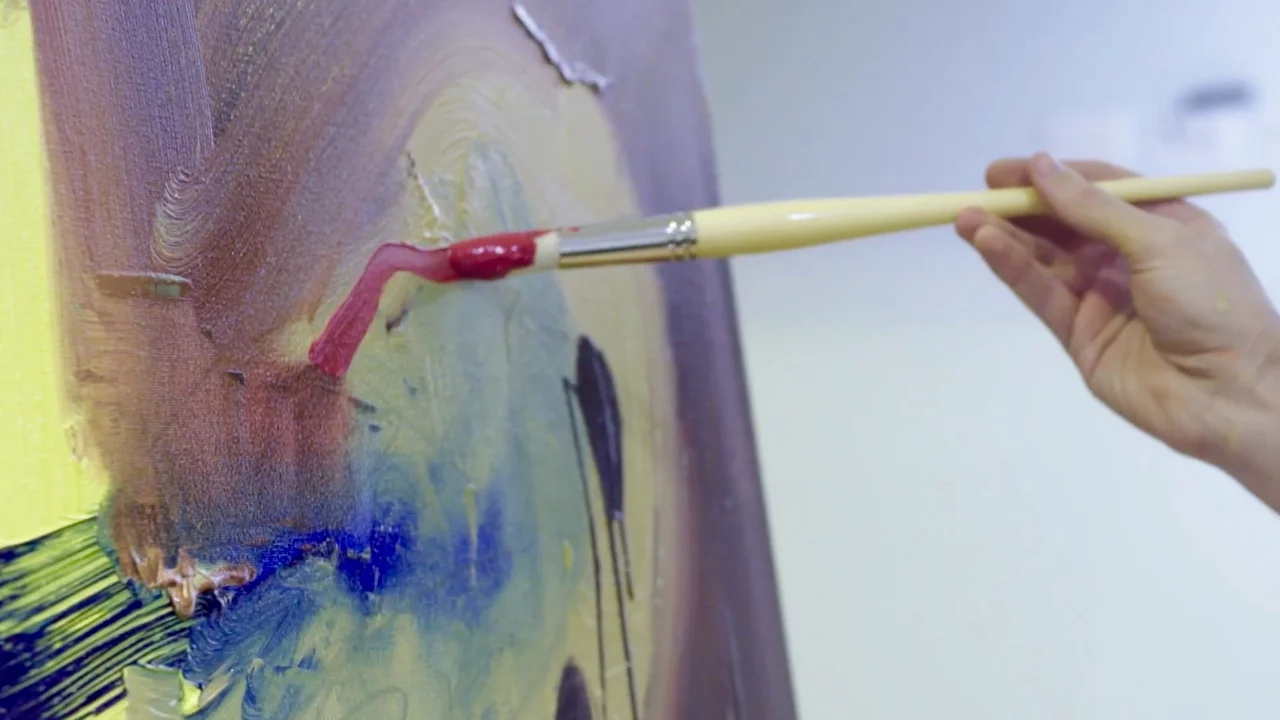
Willem de Kooning's gestural abstraction differed greatly from Pollock's. This physical reconstruction demonstrates how de Kooning manipulated the viscosity of oil paints using safflower oil, water, and solvents to create thick, wet-on-wet brushmarks that crackle with kinetic energy.
Why this video
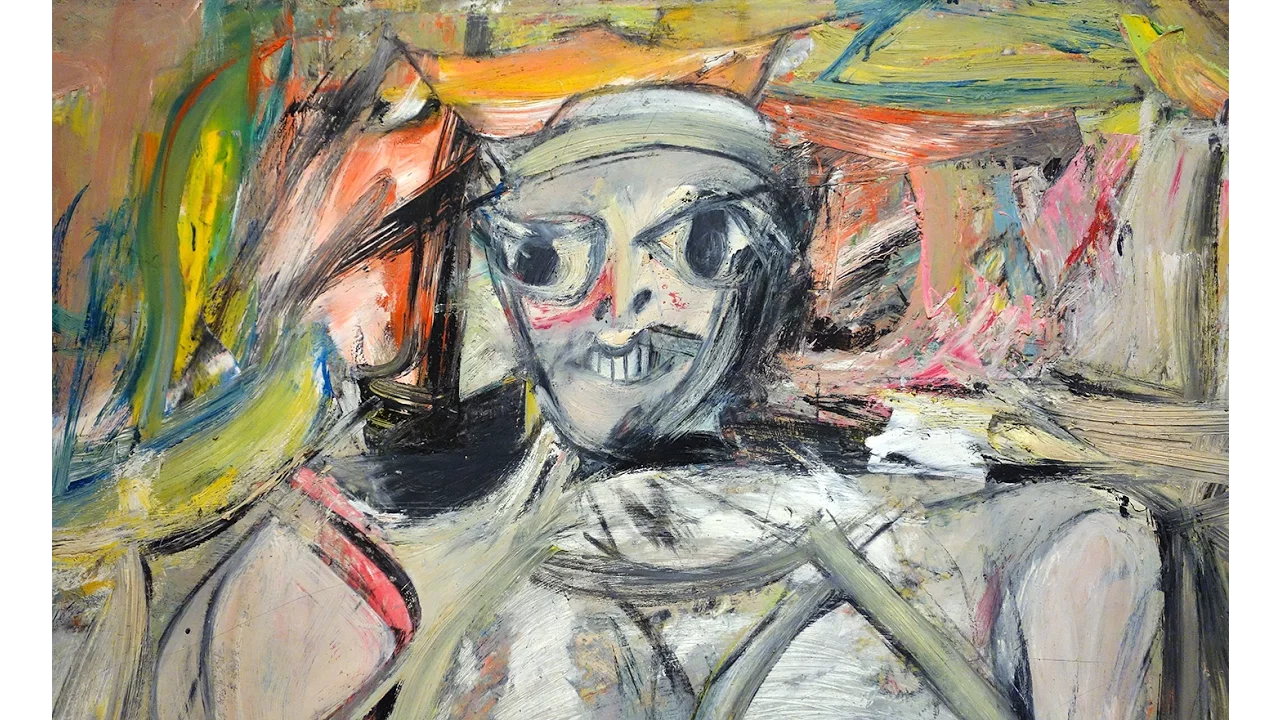
This Smarthistory analysis of de Kooning's legendary masterpiece, Woman, I, addresses the complex relationship between pure abstraction and figuration. You will see how energetic brushwork, aggressive scraping, and clashing colors convey intense emotional urgency.
Knowledge Checkpoint
- Define "Action Painting" and describe how it redefines the role of the canvas.
- Contrast Pollock's horizontal, floor-bound "drip" process with de Kooning's vertical, easel-bound gestural brushwork.
- Explain how de Kooning's Woman, I bridges the gap between figurative painting and total abstraction.
Module 3: Color Field Painting: Sublime and Meditative Spaces
In sharp contrast to the aggressive gestures of Action Painting, Color Field painting explored the spiritual, quiet, and sublime properties of color. This module covers Mark Rothko's floating color blocks, Barnett Newman's monumental "zips," and Helen Frankenthaler's revolutionary "soak-stain" technique.
Why this video
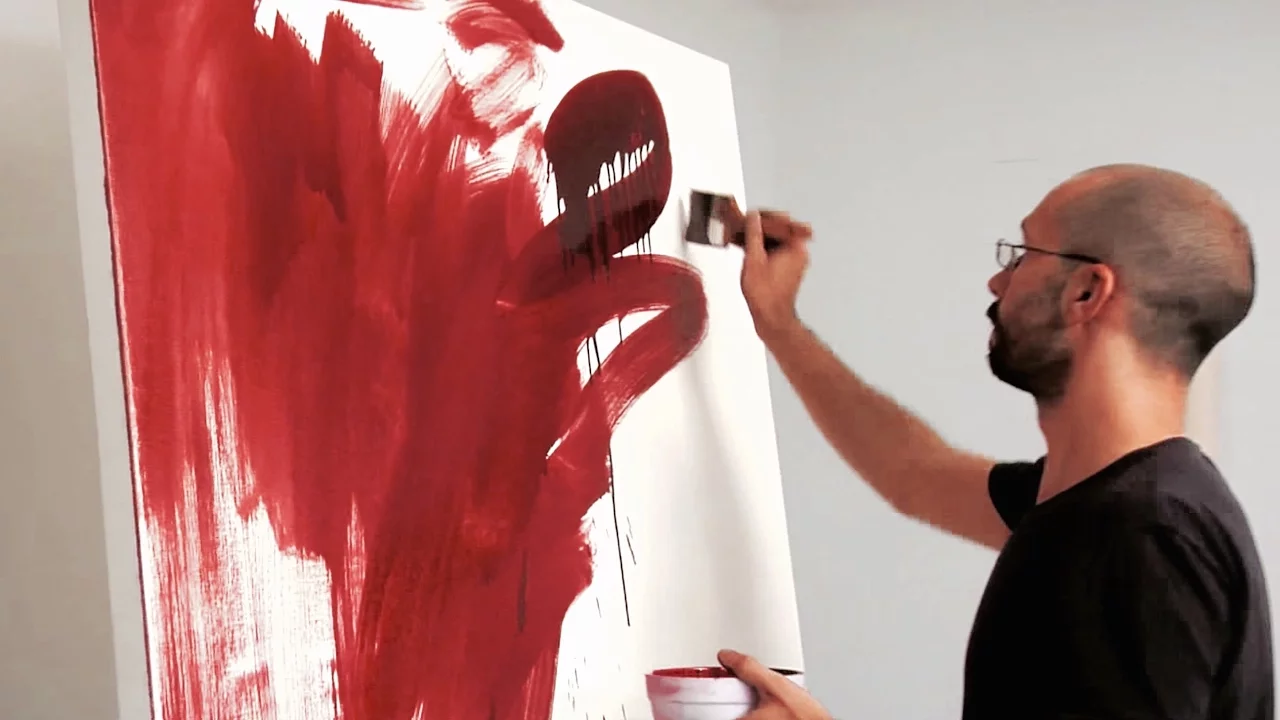
Mark Rothko’s meditative fields were not simply painted flatly. This MoMA video shows how Rothko built depth using multiple thin, translucent washes of paint and a "turpentine burn" technique to make his rectangular fields appear to float and vibrate.

Why this video
Barnett Newman used "zips"—vertical lines of color that slice across huge canvases to unify the composition. This technical guide explains how Newman used masking tape, varied paint textures, and massive physical scale to evoke the feeling of the "sublime."

Why this video
This video fills a vital gap by exploring Helen Frankenthaler's "soak-stain" technique. You will learn how she thinned oil paint with turpentine and poured it onto raw, unprimed canvas, allowing the paint to merge with the fabric rather than sit on top of it. This revolutionary approach laid the groundwork for Post-Painterly Abstraction.
Knowledge Checkpoint
- What is Helen Frankenthaler’s "soak-stain" technique, and how does it change the physical relationship between paint and canvas?
- Define Barnett Newman’s "zip" and explain how it differs from a simple decorative stripe.
- Describe the intended emotional and spiritual response to Mark Rothko's floating color fields.
Module 4: The Critical Divide: Action vs. Contemplation
This final module contrasts the two paths of Abstract Expressionism through the lenses of the mid-20th century's most influential art critics. You will explore Clement Greenberg's strict formalism and defense of medium specificity alongside Harold Rosenberg's celebration of "Action Painting" as an existential act.
Why this video
This historical documentary highlights the intense theoretical debate between Clement Greenberg and Harold Rosenberg. It clearly frames Rosenberg's focus on the existential action of the artist against Greenberg's objective, formalist demands.

Why this video
This animated guide simplifies Clement Greenberg's complex theories. It explains his core philosophies: medium specificity (art must only do what its medium allows) and flatness (paintings must embrace the 2D surface of the canvas instead of trying to look 3D).

Why this video
This scholarly lecture steps back from the strict "either/or" narrative of Action vs. Color Field. It shows how mid-century artists successfully combined gestural action with quiet color fields, proving that the boundary between these two styles was often fluid in practice.
Knowledge Checkpoint
- Explain Clement Greenberg's concept of medium specificity and why he valued flat, two-dimensional fields of color.
- Detail Harold Rosenberg’s concept of the canvas as an "arena" and why he prioritized the artistic process over the final aesthetic product.
- Contrast how a Gestural painting (e.g., Pollock) and a Color Field painting (e.g., Rothko) express emotion differently.
Course Map
Key People Index
- Jackson Pollock: The pioneer of the "drip technique." He laid unprimed canvas on the floor to paint from all four sides, embodying Harold Rosenberg's "Action Painting" ideal.
- Willem de Kooning: A master of gestural abstraction who blended violent brushwork and scraping with recognizable, figurative elements.
- Mark Rothko: A leading Color Field pioneer who layered thin washes of oil paint to create floating, glowing rectangular fields designed to evoke deep human emotions.
- Barnett Newman: A Color Field philosopher who used vertical lines ("zips") to cut through flat, saturated color fields to explore the spiritual "sublime."
- Helen Frankenthaler: The inventor of the "soak-stain" technique. She thinned paint to stain raw canvas, bridging the gap between gestural energy and the flat color fields of late Modernism.
- Clement Greenberg: The primary champion of Formalism. He believed that "good" modern art must strip away narrative and focus entirely on the flat surface of the canvas.
- Harold Rosenberg: The existentialist critic who coined the term "Action Painting," arguing that the final painting is simply a physical record of the artist's real-life action.
Final Self-Assessment
Test your understanding of the material by completing the following checklist:
- I can describe how the trauma of World War II and the flight of European avant-garde artists to New York birthed Abstract Expressionism.
- I can identify "The Irascible 18" and explain their role in pushing abstract art into mainstream institutions.
- I can explain the physical steps of Jackson Pollock's drip technique, including his choice of tools (sticks, turkey basters) and paint types (alkyd enamels).
- I can explain how Willem de Kooning's Woman, I balances gestural mark-making with representation.
- I can describe Helen Frankenthaler's "soak-stain" technique and explain how it differs from traditional brushwork on primed canvas.
- I can define Barnett Newman's "zip" and explain how it interacts with the physical scale of his canvases.
- I can analyze Mark Rothko's layering process and explain how he made his colors appear to float.
- I can summarize Clement Greenberg’s theories of formalism and medium specificity.
- I can summarize Harold Rosenberg's view of the canvas as an "arena."
- I can contrast the raw, athletic energy of Action Painting with the quiet, meditative atmosphere of Color Field painting.