















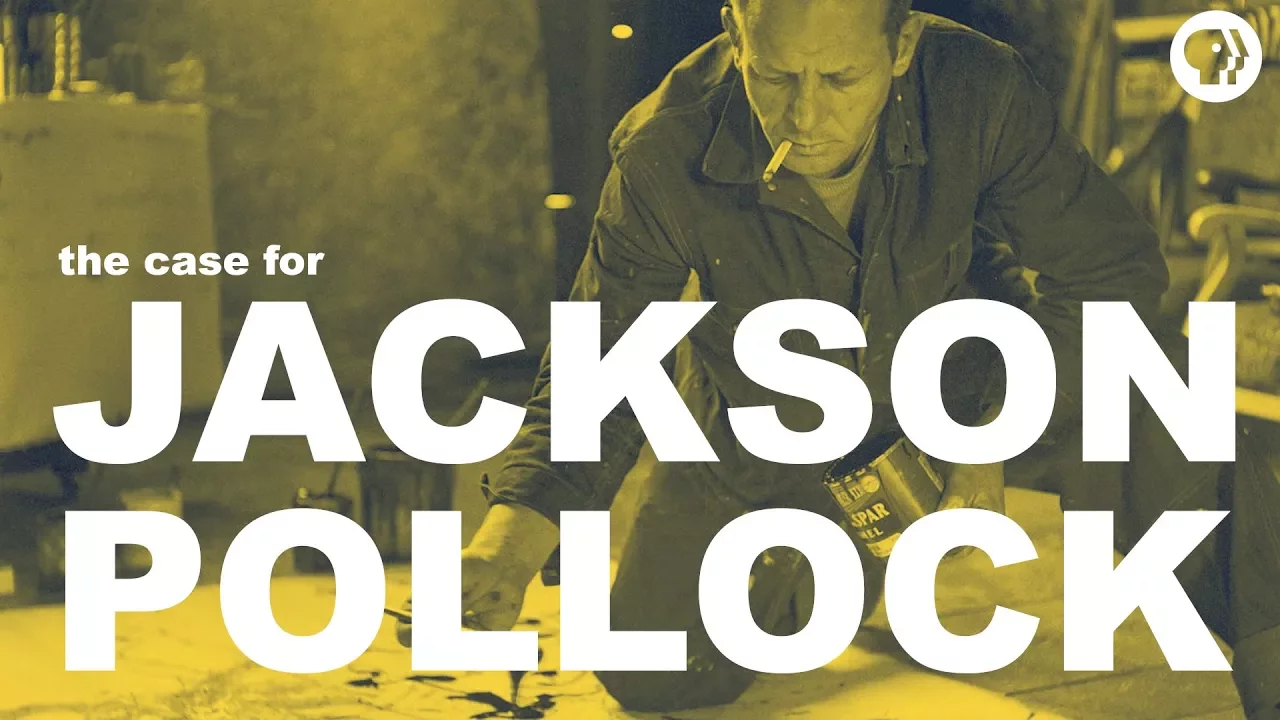










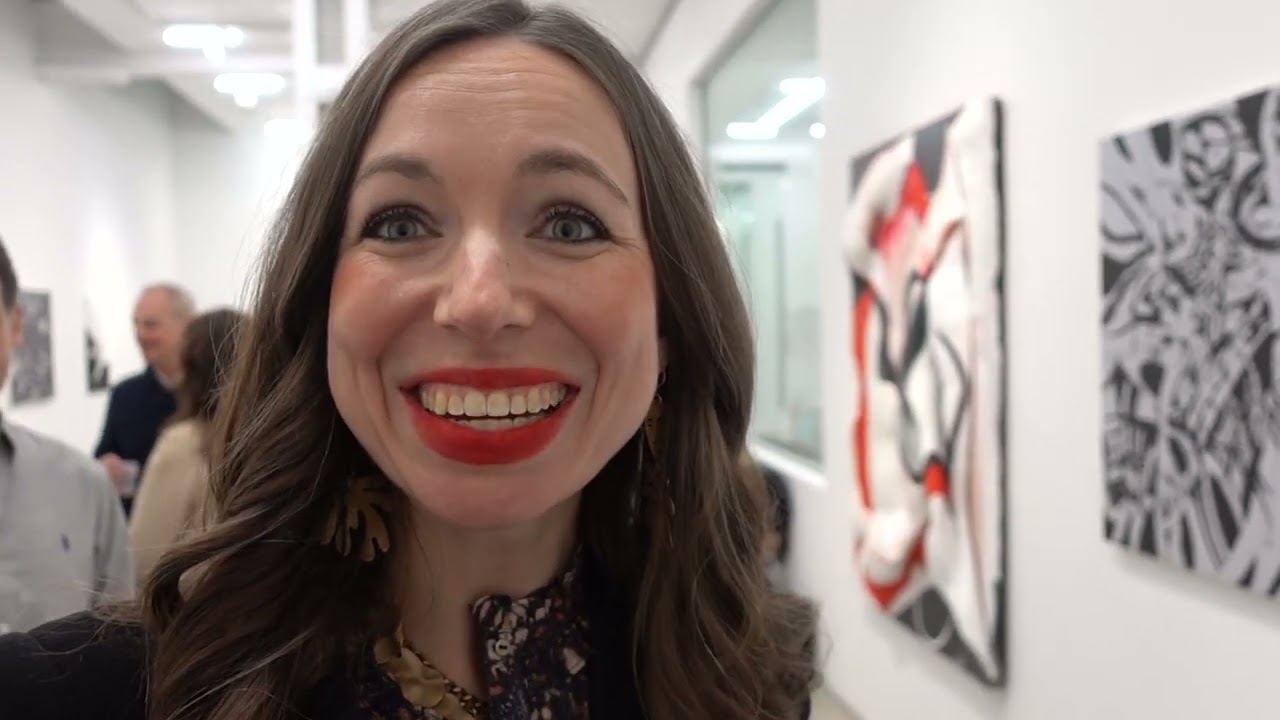
In the 1950s, Abstract Expressionism became a battleground between two leading critics: Harold Rosenberg championed 'action painting' as an expressive, performative event emphasizing gesture and emotion, while Clement Greenberg advocated for formalism, viewing painting as a medium that strips away all extraneous elements to achieve pure painterly form; despite their ideological rivalry, both critics were New York-based Jewish intellectuals with Marxist backgrounds who shared a rejection of kitsch and mass culture, and their debates fundamentally shaped how we understand the movement's legacy.
Abstract Expressionism: Greenberg vs Rosenberg on Painting
Added:An understanding of the core characteristics of Abstract Expressionism and its key figures, such as Jackson Pollock, Willem de Kooning, and Mark Rothko.
The historical context of post-World War II America and how the geopolitical climate contributed to the rise of New York as the center of the art world.
The fundamental differences between representational (figurative) art and non-representational (abstract) art.
A basic familiarity with the concepts of formalist art criticism, particularly the ideas of composition, medium, and pictorial space.
An in-depth reading and analysis of Clement Greenberg's seminal essays, including 'Avant-Garde and Kitsch' and 'Modernist Painting'.
An exploration of Harold Rosenberg's influential essay 'The American Action Painters' and his existential view of the canvas as an arena.
An investigation of how subsequent movements, such as Minimalism and Pop Art, emerged as direct rebellions against Abstract Expressionism and Greenbergian formalism.
An analysis of how the 'form versus gesture' debate influenced the transition from Modernism to Postmodernism in art history.
The practical application of these two critical frameworks (formalism vs. action) when analyzing and writing about contemporary abstract artworks.
1.2K views19likes13:51Original Release: 2016-06-30
we're in the rothko room at the tate and we can see immediately that these paintings are quite different from some of the Abstract Expressionism that we've looked at before particularly the work of Jackson Pollock there there's a great deal of incidents and expression and movements and gesture these paintings by contrast are very subdued indeed this room is deliberately kept dark you go in you can't see very much at first and then as your eyes adjust you see more or more of these rather calm but perhaps also tragic and angst-filled paintings so it's strange that this one term Abstract Expressionism binds up such very different practices that of Pollock and Rothko and each of them have their different critical champions Harold Rosenberg was the champion of expressive painting of action painting as he put it of a painting where you could see the emotional gestures on the surface of the of the picture for client Greenberg the painting itself the finished painting is all a medium which realizes itself through the paint surface itself in the 1950s abstract expressionism became a battleground and not just because of conservative reactions as you might expect but among its best-known supporters was it as art critic Clement Greenberg thought primarily abstract a matter of flat finished painterly form or was it as his rival Harold Rosenberg put it mostly expressionist a matter of action emotion and self exploration and how did it relate to what surrounded it the rapidly growing culture of consumerism advertising and TV soap in New York at this time surrounded by a highly conformist mass culture there is this very small elite art world of the avant-garde the critics were a part of this Clement Greenberg the art critic had serious worries about the future of art it had changed so much in so little time and in the 1930s was still changing who could keep up would it aren't even mean anymore Greenberg needed to figure all this stuff out because that was his job modernism is a problem because it asks this question literally yes Rosenberg and greenberg could be found in the same room together they famously just liked each other and battled a good deal with each other and disparaged each other in print but if they were together in this room and we could get them to politely discuss their differences then they would have two very different kinds of readings of these paintings Rosenberg talks about Rothko's cultic religious qualities he sees him as an artist who roams back over the history of art freely indeed he talks about the history of art as being like an open prairie across which the covered wagons of Vanguard theory might wander picking what they want for Rosenberg American painting of this kind offers a sharp break with the European practices which apparently led into it it's really something quite different and it's part in part something quite different because it's fixed on the painting as an event as something which is built up through exploration through gesture through performance in a sense the painting the finished product is only important as a transcription of that series of events Greenberg offers a view of art history which becomes for a time in credit persuasive and powerful is a dialectical view of art history in which nothing is ever quite finished with as with Hegel whose final synthesis was the ideal of the bourgeois German state Greenberg thinks we've almost reached the final synthesis of painting - painting has become stripped back to become itself and you could see that in these Roscoe's here we get rid of subject matter we get rid of conventional composition we arrive basically at a paint surface a flat calm Apollonian vision of what painting should be Harold Rosenberg saw paintings like this as the antithesis of what he called action painting so he does register very much there's a huge difference between this and the work of Jackson Pollock for example but nevertheless he would see Rosco's work as the trace of emotional transcriptions an embodiment of a number of psychic and collective crises he says that Roscoe's tablets like shapes remind him of ancient stone tablets from which the inscriptions have been erased by time rather beautiful poetic description but one which Greenberg would rule out of our criticism Greenberg would look at Rosenberg and say oh well this is just extraneous philosophy extraneous psychology it's got nothing to do with the painting itself although Greenberg and Rosenberg were ideological enemies a lot of things bound them up together they were both new york-based Jewish intellectuals who both had a Marxist past and they both had a horror of kitsch and mass culture this is the art season in New York at the Metropolitan the Guggenheim the new Whitney Museum Museum of Modern Art and here at the elegant Wally F art galleries where art lovers see a show that marries art with fashion this abstraction called capital and number one is not a painting and it's not on canvas it's printed on cap rollin nylon and can be worn green becomes maturity as a critic in 1939 with a very well known essay upon garden kitsch which attempts to separate hours or perhaps find a synthesis in culture between what we now think of as fine art or high art on the one hand and what is thought of as popular art or Kitsch to use this German term of Greenberg's on the other what do you call a painting of a horse that's just you know a regular painting of a horse it's about the horse it's not about paint well if it was made in the 20th century Greenberg would call it kitsch it's regressive we've moved on if you're still making pretty pictures of horses you are living in the past so why was anyone still painting horses well because that's what people like Greenberg's idea a kitsch it's anything that's that's popular is to be condemned tap-dancing the Hollywood movers pulp fiction John Steinbeck is regarded as a Finnish author I mean we would never follow that line of thinking today but it is I agree that there's a certain not just a sobriety but it's almost a severity to the art that he prioritizes and I suppose it manifests itself at its most kind of glaringly severe in the work of Barnett Newman Greenberg sees Barnett Newman ultimately is the enfant terrible of abstract expressionism from the mid-1950s we're standing in front of Barnett Newman's painting Eve of 1950 Newman wants us to think about this painting in terms of the sublime and Sublime's being opposed to the beautiful so something which encourages the viewer to be full of all at the immensity of the painting the evenness of the performance but for there still to be variation in there for us to see this as a human product now this painting might look especially from a distance like an industrial product and it does have some affinity with a modernist business towers of New York but it is in fact a hand-painted object and if you look closely you can see in the place where this stark stripe joins the orange red color field that it's unevenly painted it's done by hand and little bits of canvas showing through in the gap between the dark stripe and the field in the early days harold Rosenberg's ideas about gesture and expression and painting as an event seemed best to capture what was going on in much of abstract expressionism but as the painting evolves it undergoes a kind of avant-garde subtraction becomes more and more simple so not the angst-ridden turmoil of the early Abstract Expressionists but something karma something with a feeling of an ending to it now Clement Greenberg wanted of his art a her galleon terminus right it's the end in a sense of development well one looks at color field painting much colorful painting but particularly something like Barnett Newman and I think you can see a vision of that the Phillies were long and I wrote thought-out during that time and educated myself in public and wrote many things and I'm not ashamed up and and but it still seemed to me that that same state of affairs obtained they were a few dollar a few people who unions on the one I took seriously and I know others who think somewhere earth and they out of darkness as far as art was concerned and out in the darkness because they've been interest in mm nothing re-connect Greenberg was a very unusual critic and that he was very hands-on he was someone who knew the artists that he supported personally he got close to them he was socialize with them and more than that you would go into their studios and give them advice his support was immensely important to the establishment of Pollock's reputation you don't really think Jackson's good the press he takes good pictures he thought because he's got a vision and the other process and I was disturbed by that man has made in Surabaya what Greenberg does for Pollock is to put him in a particular caste Oracle situation to say if we look at the history of European avant-garde painting we can see that there's a development there a formal stripping away of things which are extraneous to the medium of painting and when we finally get to in thinking about this dialectical development then we arrive at American painting at large-scale mural like abstract painting so instead of Pollock's work being seen as ridiculous crazy marks which nobody can read on a canvas suddenly it becomes far from that a product of a kind of historical development and even historical inevitability and is absolutely built into the history of art and thus it's absolutely clear that it should be hanging in museums in a prominent place
Up Next

55:56
Reframing Abstract Expressionism: Hartigan & Herzbrun Lecture
@americanuniversitymuseum
16.2K views•2020-09-24

114:18
Christian Iconography: History, Theology, and Meaning | Fr. Panayiotis Papageorgiou
@Trisagionfilms
58.8K views•2020-02-21
7:48
Ukiyo-e Art: History, Woodblock Printing & Influence
@japanathand
6.3K views•2023-06-08

16:34
Earliest Depictions of Jesus in Art: 10 Ancient Images Explained
@UsefulCharts
5.9M views•2022-06-03
Related Study Plans & Knowledge Roadmaps
Structured learning paths in Art History
art-history
Gothic Cathedrals: Engineering, Light & Society
01The Birth of the Gothic: Romanesque to Suger's Vision
02The Structural Triad: Pointed Arches, Ribbed Vaults, and Flying Buttresses
03Theology of Light: Lux Nova and Sacred Geometry
+ 2 more learning modules
14h5 modules
Explore Roadmap
art-history
Pre-Raphaelites: Realism, Symbolism & Critique
01The Victorian Art Establishment and Academic Formula
02The Founding of the PRB and Radical Realism
03Medieval Revivalism and Literary Symbolism
+ 1 more learning modules
8h4 modules
Explore Roadmap
art-history
Street Art: From Subways to Art Market
01Subcultural Origins in Philadelphia and New York (1970s)
02The Subway Era and Style Wars (Late 1970s - 1980s)
03The East Village Scene and Early Gallery Crossover
+ 2 more learning modules
10h5 modules
Explore Roadmap
art-history
Classic Maya Art: Iconography, Glyphs & Ritual
01Foundations of Classic Maya Visual Culture
02Deciphering Maya Hieroglyphs & Text-Image Integration
03Sacred Geography and Cosmological Architecture
+ 2 more learning modules
14h5 modules
Explore Roadmap