














![뉴욕 메트로폴리탄 뮤지엄에 직접 다녀왔습니다 | 전원경 세종사이버대학교 교수 [전원경의 아트앤더시티 시즌 2]](https://i.ytimg.com/vi/mIwwQS1DnyE/maxresdefault.jpg)


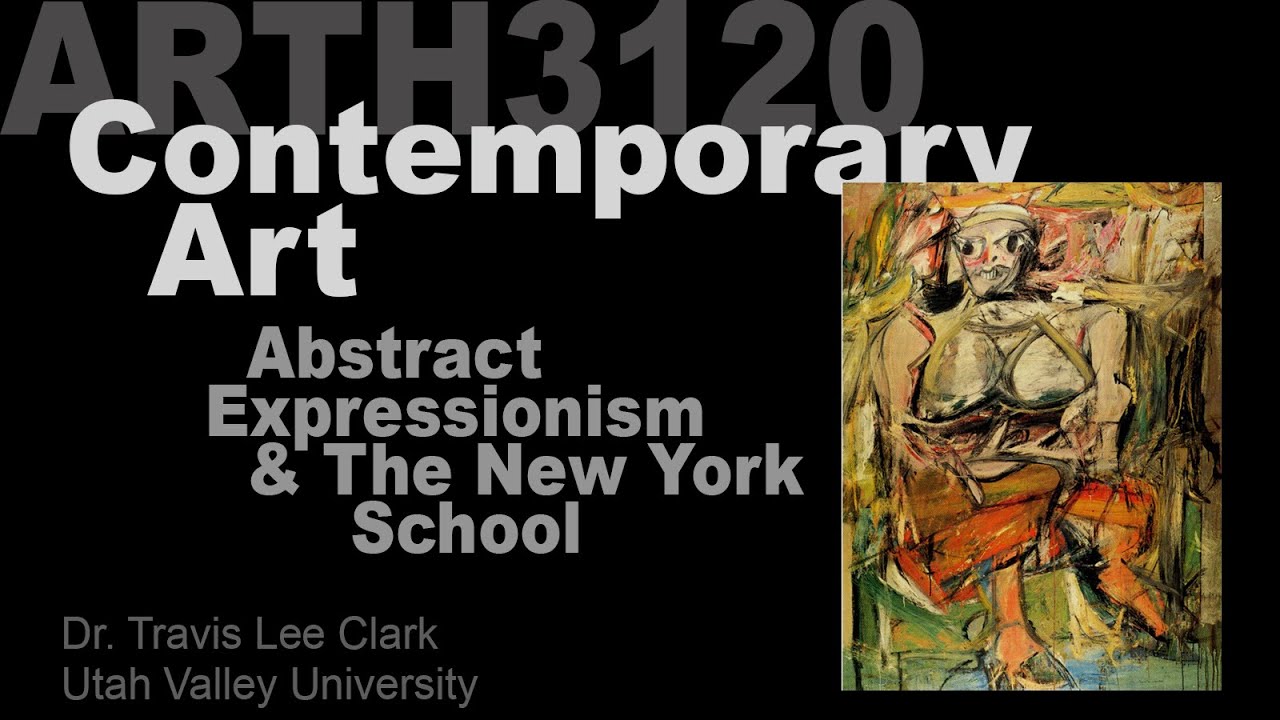
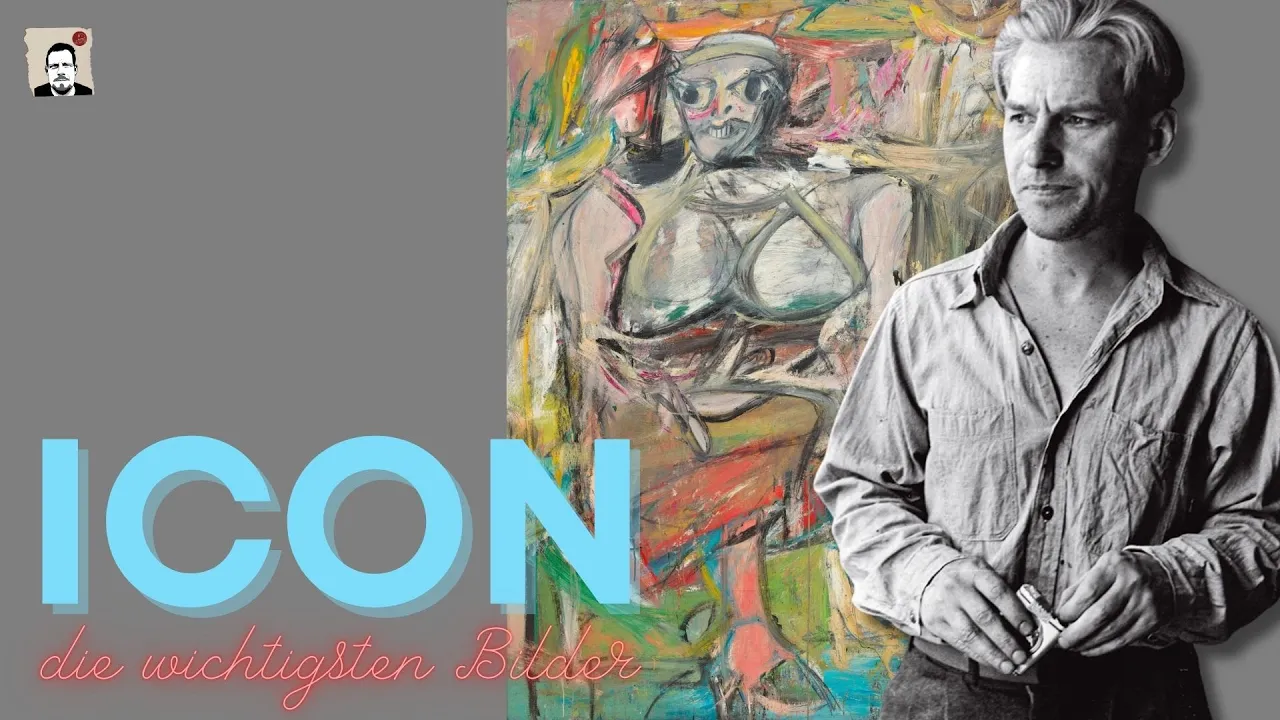
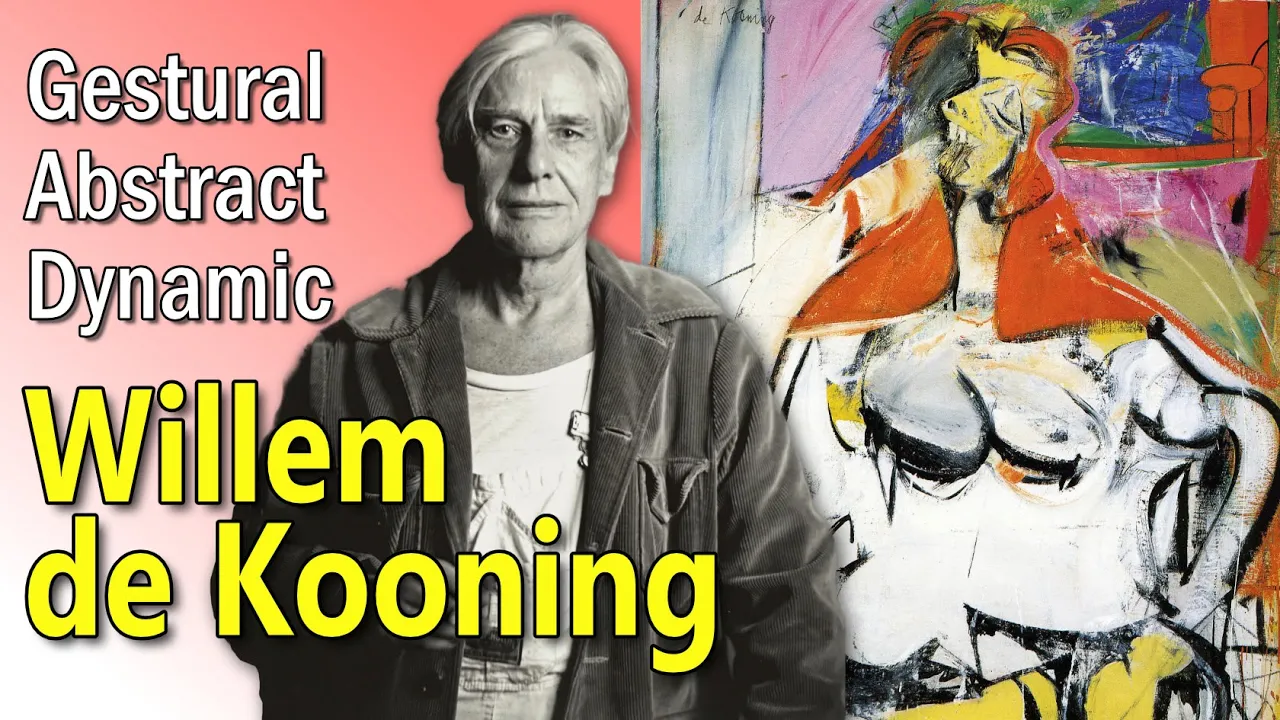
Willem de Kooning's Woman, I (1950-52) exemplifies Abstract Expressionism's tension between abstraction and figuration, where the artist's aggressive, calligraphic brushwork and dissonant colors challenge traditional representation while maintaining a recognizable female figure; de Kooning, trained in traditional academic methods, transformed commercialized female imagery from post-war American culture into a powerful exploration of how the human figure can exist within an abstract field, refusing to present a coherent form while simultaneously constructing it for the viewer.
Willem de Kooning's Woman I: Abstract Expressionism Explained
Added:Understanding the basic tenets of Abstract Expressionism and the emergence of the New York School in the post-WWII era.
The concept of gestural abstraction (or 'Action Painting') and how it prioritizes the physical act of painting.
The historical shift from strict figurative representation to abstraction in early 20th-century modern art movements (such as Cubism and Surrealist automatism).
Familiarity with formal art analysis terminology, particularly relating to brushwork, impasto, composition, and color theory.
Analyzing the feminist art history critiques and debates surrounding the representation of the female body in De Kooning's 'Woman' series.
Exploring the transition from Abstract Expressionism to Neo-Dada and Pop Art, notably exemplified by Robert Rauschenberg's conceptual piece 'Erased de Kooning Drawing' (1953).
Conducting a comparative analysis between De Kooning's aggressive figuration and the pure abstraction of contemporary peers like Jackson Pollock or Mark Rothko.
Investigating how 1950s American media, pop culture, and billboard advertising influenced the visual motifs in De Kooning's work.
108.9K views772likes4:24Original Release: 2016-10-07
(light piano music) - [Steven] We're in the Museum of Modern Art in New York looking at Willem de Kooning's Woman, One from 1950-52.
- [Beth] So this painting took a long time to paint.
De Kooning worked on it over a number of years, and that's really evident when we look at the surface of the painting, which looks like layers and layers of different textures of paint, some thin and drippy and some thick and matte.
- [Steven] In fact, some of his friends, when they spoke about this painting, remember that de Kooning actually had worked on a whole series of images of a woman on the same canvas and would work on it until the painting fell apart.
And then he would basically wipe it away and start over again.
So, his objective was not a finished product.
- [Beth] But instead process.
The quickness of the brushstrokes, which are so visible, imply the painting was made quickly.
- [Steven] The brushwork is almost calligraphic and muscular and tough.
The paint is thick.
And look at the colors that he's using.
They are so garish.
And, as if the brilliant pinks, and orange, and yellows up against muddy passages of flesh tones wasn't enough, he's also put a border of silver on the right side.
- [Beth] The colors seem to be intentionally difficult, those fleshy, pink-y, peachy tones, but also olive green that feels really dissonant.
- [Steven] Willem de Kooning is one of the central abstract expressionists.
He was friends with Jackson Pollock.
He was spending time with Mark Rothko.
And yet here's a man who goes back to the human figure.
And large-scale, seated female figure goes all the way back in the history of art to the Madonna.
This is sacred art that has been brought into the 20th century and made profane.
- [Beth] And commercial.
The eyes, the emphasis on her breasts, I start to see the relationship to images of pinup girls, sexualized images of women with thick lipstick, teeth showing, and wide grins, and mascara, and eyeliner.
- [Steven] It's such an interesting moment in American history.
GIs coming back from the war.
The representation of the woman, either on the silver screen or on a movie poster.
- [Beth] Taking on the sexualized, eroticized images of women, she comes forward toward us.
She's overwhelming in her size.
She fills up the canvas.
- [Steven] And it's important to remember that Willem de Kooning was one of the few artists of the abstract expressionist generation that had been trained in a very traditional way.
- [Beth] He could draw as well as any academically-trained artists going back to the 19th century.
- [Steven] It's about finding an art that is still meaningful in a sea of reproductive technologies, where visual images are bombarding us.
And it's about what the tradition of the figure means in an art world that has turned to abstraction.
- [Beth] I find myself looking at the figure and trying to find it.
Where is her right arm?
Does it hang down by her side?
Does it come across her lap?
Where are her legs or her thighs?
- [Steven] So, he's constructing that body for us.
But he's also refusing to allow it to exist in any coherent way.
So, given a kind of abstract field, how do we populate that with the human figure?
Where does she exist?
Part of the tension is that the painting is essentially an abstract field.
If he had pushed the painting a little bit further and the figure had dissolved, it's the abstract field of the canvas that would have asserted itself and precluded the space for the figure to exist.
This is a painting right on the edge, where the figure is still able to maintain itself in space, even given the hazards of the abstraction in which she exists.
- [Beth] There is something about that space between abstraction and figuration that has to do with the fact that this is a male artist painting a female figure.
She's overwhelming.
- [Steven] De Kooning has taken the desire of the male viewer for the pinup, for the commercialized female figure in contemporary visual culture and used that as a kind of fuel for this painting.
- [Beth] The paint is aggressive and energetic.
Her eyes are bulging.
Her teeth are bared.
There is aggression in this painting.
- [Steven] This was improvisation.
This was a kind of experimentation.
This was a kind of discovery.
As this contemporary representation of the female figure, it is also about how that work is made.
(light piano music)
Up Next
11:42
Abstract Expressionism: The Irascible 18 Explained
@Shawn.Grenier
134.2K views•2020-01-31

114:18
Christian Iconography: History, Theology, and Meaning | Fr. Panayiotis Papageorgiou
@Trisagionfilms
58.8K views•2020-02-21

10:26
Redgrave's The Sempstress: Victorian Social Realism, 1846
@smarthistory-art-history
3.2K views•2011-10-22

16:34
Earliest Depictions of Jesus in Art: 10 Ancient Images Explained
@UsefulCharts
5.9M views•2022-06-03
Related Study Plans & Knowledge Roadmaps
Structured learning paths in Art History
art-history
Gothic Cathedrals: Engineering, Light & Society
01The Birth of the Gothic: Romanesque to Suger's Vision
02The Structural Triad: Pointed Arches, Ribbed Vaults, and Flying Buttresses
03Theology of Light: Lux Nova and Sacred Geometry
+ 2 more learning modules
14h5 modules
Explore Roadmap
art-history
Pre-Raphaelites: Realism, Symbolism & Critique
01The Victorian Art Establishment and Academic Formula
02The Founding of the PRB and Radical Realism
03Medieval Revivalism and Literary Symbolism
+ 1 more learning modules
8h4 modules
Explore Roadmap
art-history
Street Art: From Subways to Art Market
01Subcultural Origins in Philadelphia and New York (1970s)
02The Subway Era and Style Wars (Late 1970s - 1980s)
03The East Village Scene and Early Gallery Crossover
+ 2 more learning modules
10h5 modules
Explore Roadmap
art-history
Classic Maya Art: Iconography, Glyphs & Ritual
01Foundations of Classic Maya Visual Culture
02Deciphering Maya Hieroglyphs & Text-Image Integration
03Sacred Geography and Cosmological Architecture
+ 2 more learning modules
14h5 modules
Explore Roadmap