












![뉴욕 메트로폴리탄 뮤지엄에 직접 다녀왔습니다 | 전원경 세종사이버대학교 교수 [전원경의 아트앤더시티 시즌 2]](https://i.ytimg.com/vi/mIwwQS1DnyE/maxresdefault.jpg)


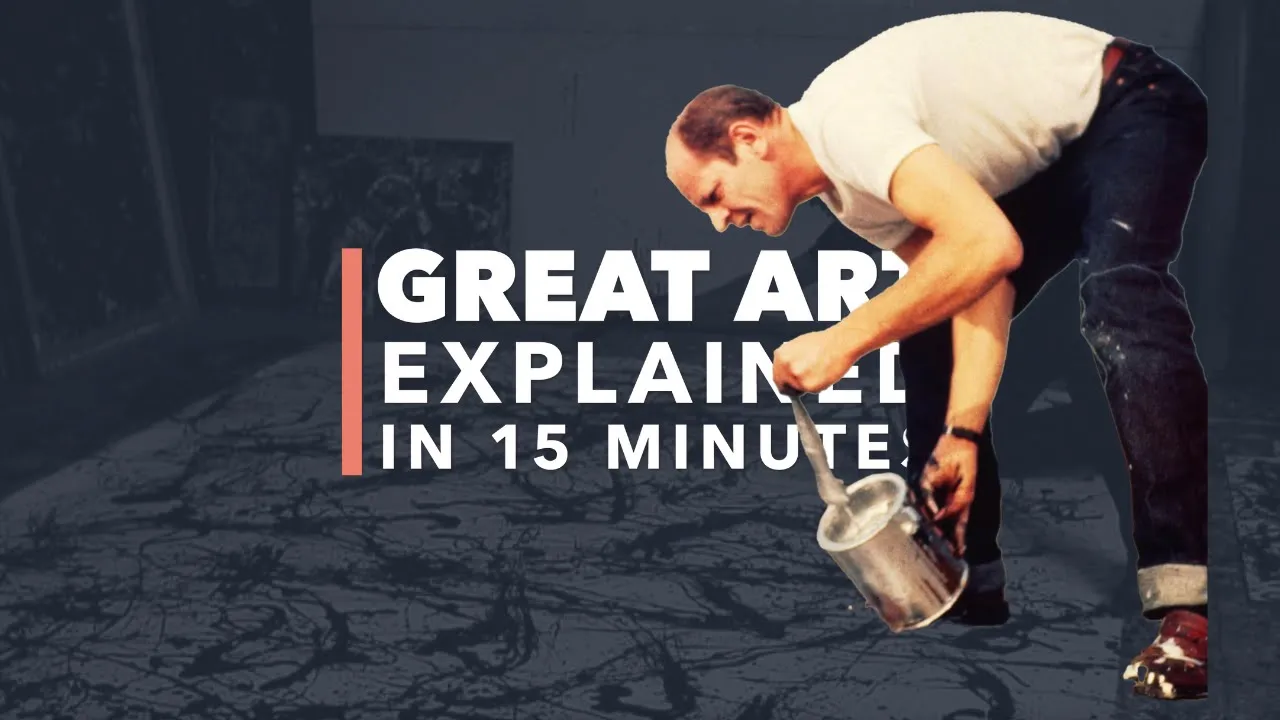
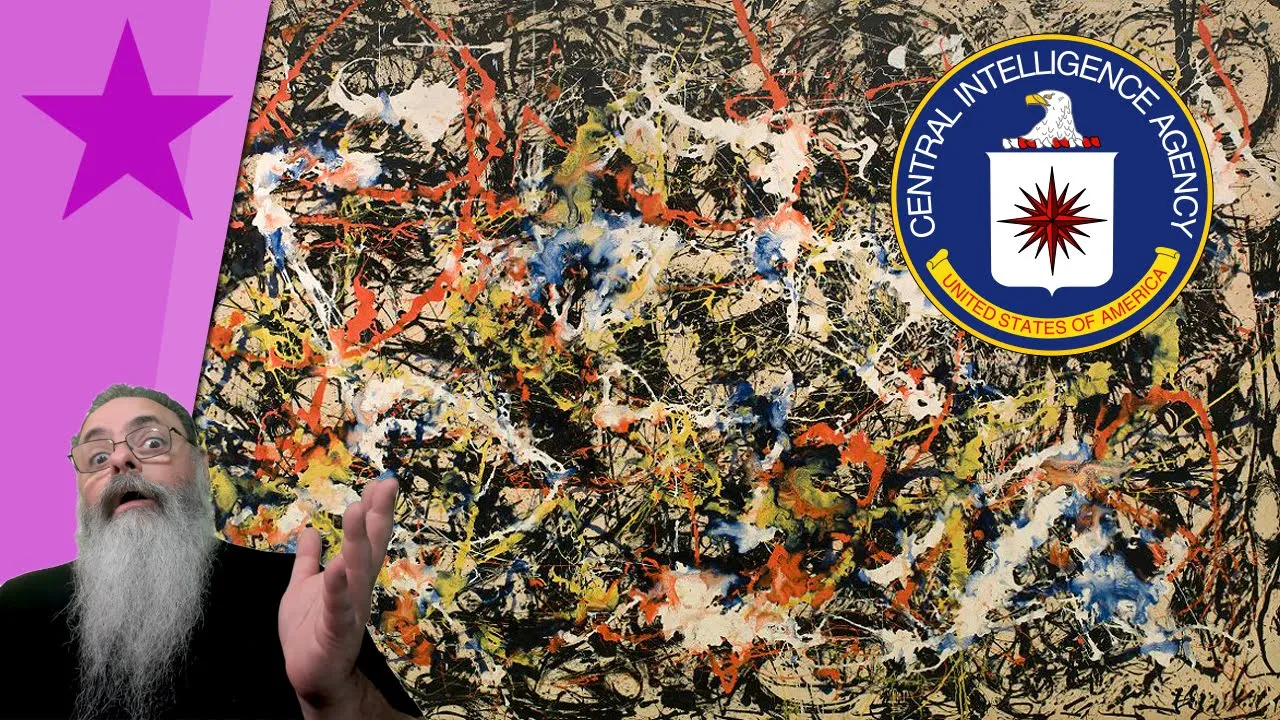






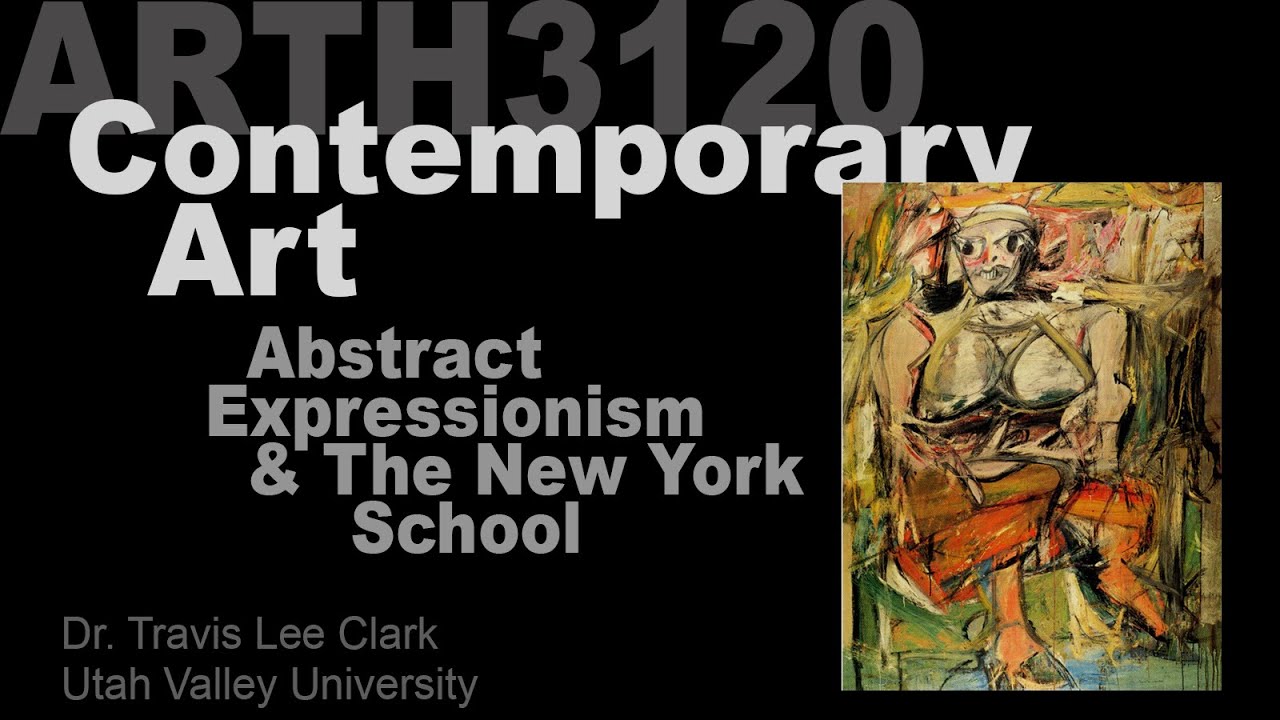
Abstract expressionism emerged in post-WWII America as a revolutionary art movement that broke from traditional forms, with Jackson Pollock embodying this shift through his innovative drip painting technique that transformed the act of painting into a physical, gestural expression of emotion and inner turmoil, drawing influences from Native American sand painting, Mexican muralists, and Jungian psychology while being championed by Peggy Guggenheim and later enlisted by the CIA as a tool for Cold War propaganda to promote American cultural values.
Jackson Pollock: Myth, Art, and Abstract Expressionism
Added:Understanding of Surrealism and the concept of 'psychic automatism,' which heavily influenced Pollock's approach to unconscious creation.
The historical context of post-World War II America, specifically the shift of the international art world's center from Paris to New York.
The fundamental distinction between figurative/representational art and non-representational/abstract art.
The role of prominent mid-20th-century art critics, such as Clement Greenberg and Harold Rosenberg, in shaping artistic discourse.
Exploration of Color Field Painting (e.g., Mark Rothko, Helen Frankenthaler) as the primary stylistic alternative to Pollock's gestural abstraction.
The emergence of Pop Art and Minimalism in the late 1950s and 1960s as direct, rebellious reactions against Abstract Expressionism.
Investigation into the 'Cultural Cold War,' examining how the US government used Abstract Expressionist art as geopolitical propaganda to promote American freedom.
The transition of 'Action Painting' into the physical realms of Performance Art, Happenings, and the Japanese Gutai movement.
298.2K views8.6Klikes26:18Original Release: 2025-06-13
This video is sponsored by Opera Air Browser with built-in mindfulness tools designed to help you find balance between peace of mind and your projects.
See details at the end of this video.
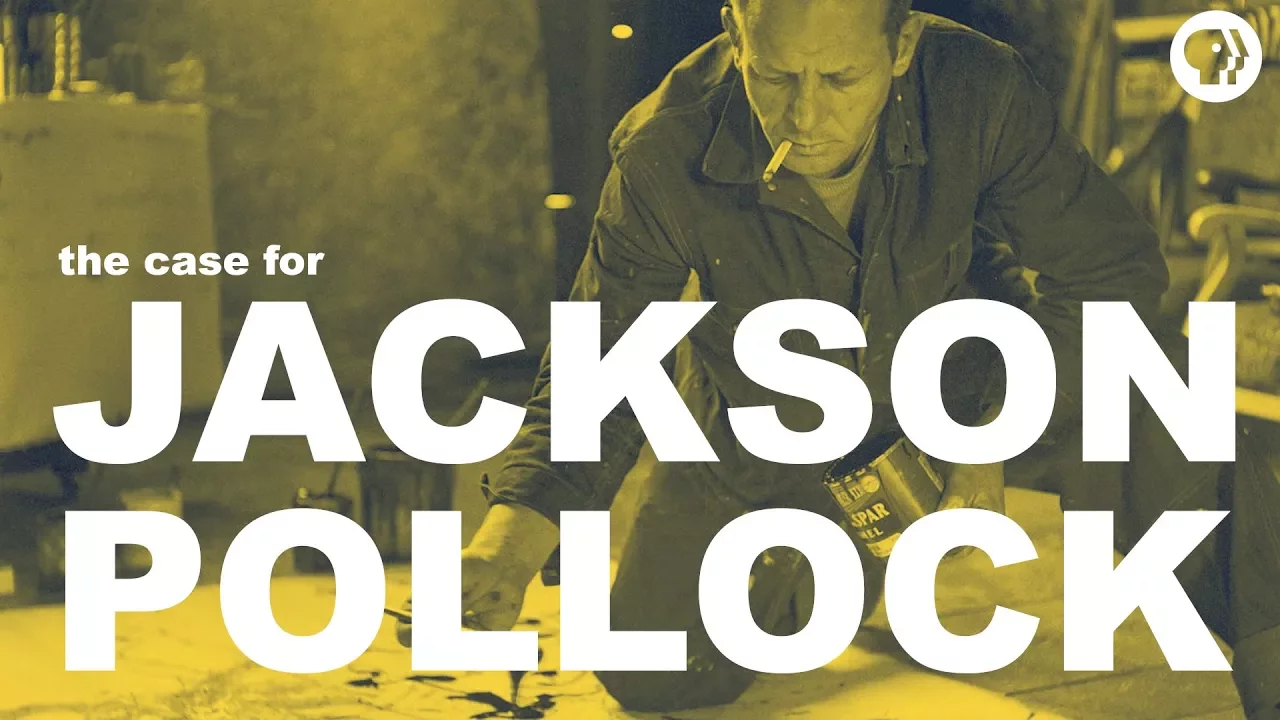
[Music] Jackson Pollock has been called a genius, a fraud, a misogynist, a drunk, and a revolutionary.
In one extraordinary summer, he created a painting that captured the energy and ambition of a world remade. New needs need new techniques and the modern artist have found new ways and new means of making his statement.
It was a world emerging from the chaos of global conflict and the balance of power was shifting. Europe's old cultural dominance was fading as a new center, political, economic, and artistic, was emerging in America along with the first truly American art movement, abstract expressionism. In a converted barn in a sleepy fishing town on Long Island, Pollock stood over a vast canvas laid on the floor, dripping, flicking, and splattering paint. To the untrained eye, it looked chaotic, random even. But it wasn't. He wasn't painting just anything. He was painting everything. His inner turmoil, the trauma he couldn't put into words, the energy and the pulse of his time.
Pollock would emerge as the quintessential artist, embodying in every way the existential uncertainty of the postwar era. and he would do it through a radical break from traditional form and technique. In this film, I look at just what abstract expressionism means. I look at the myths surrounding Pollock and modern art itself. I look at his influences including the social realism of the 1930s and4s, Native American art with its emphasis on performance, ritual and gesture, and the Mexican muralists whose use of unconventional materials and experimental techniques shaped his approach. And I look at how he went from this to this.
If a person consistently reads and advocates the views expressed in a communist publication, he may be a communist. I also look at a lesserk known story of how art became an unlikely player in the Cold War and the global contest of ideas. How abstract expressionism was enlisted as an unknowing agent in a shadowy propaganda war bankrolled by the CIA to tell the story of freedom and capitalism.
[Music] After the Second World War, most of Europe was in ruins. Cities bombed, infrastructure destroyed, economies shattered, partly broken, completely broke. For decades, Paris had been the beating heart of the art world. It was, after all, where modernism was born. But now, America, largely untouched by war and rising as a political and economic power, saw a chance to assert itself culturally, too. New York, already home to a growing community of artists, intellectuals, and immigrants fleeing fascism, was buzzing with energy.
Galleries, museums, and collectors were beginning to take modern art seriously, and Manhattan emerged out of the ashes of Europe as the new global cultural capital. Many of the US artists who helped shape this new movement were children of the depression. Their formative years have been shaped by poverty and hardship. Their suffering grew into determination and ambition for something better and something new. The world had changed and so had humanity's understanding of itself. It seems to me that the modern painter cannot express this age, the airplane, the atom bomb, the radio in the old forms of the Renaissance or of any other past culture. Each age finds its own technique. Art needed new forms, new voices, and new ways of seeing to reflect that transformation.
This search for a new technique, a new language of art gave rise to what we now call abstract expressionism.
But to understand how radical it was, we need to take a step back.
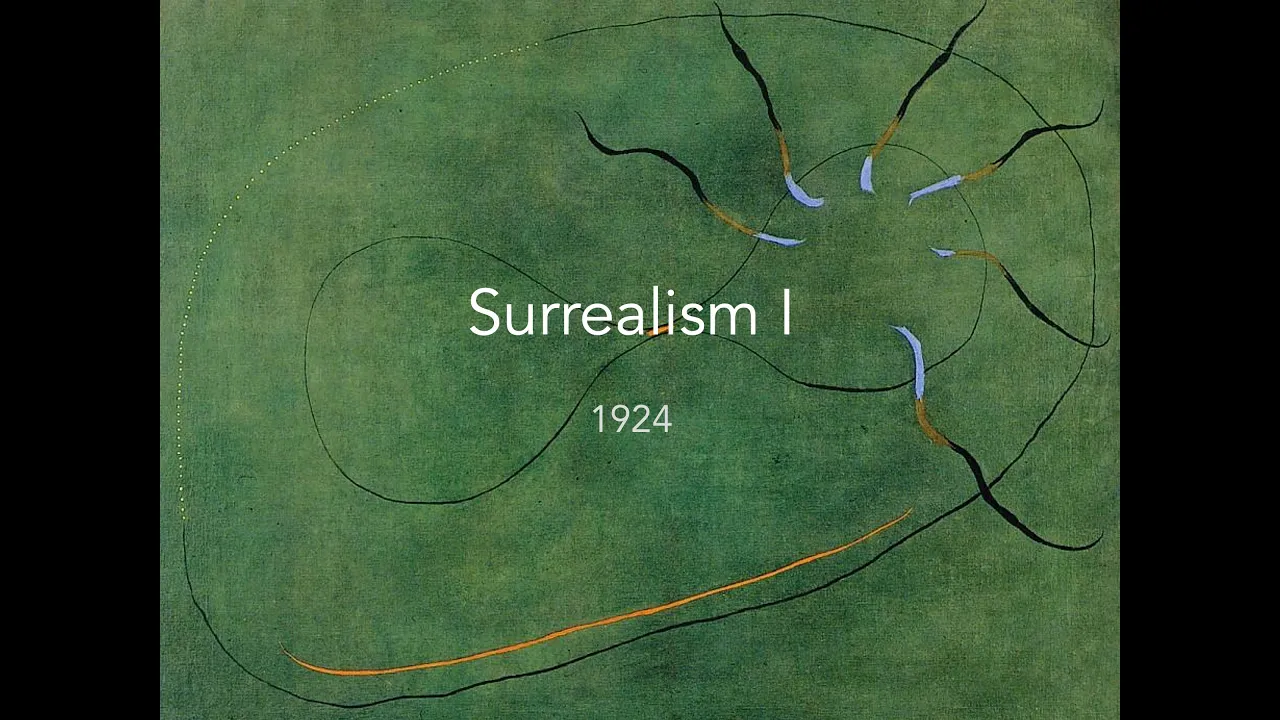
In the 19th century, artists use powerful symbols, storms, shipwrecks, ruined castles to express emotion. As photography was used more and more widely to depict the world as it looked outwardly, artists took to expressing their inward responses to the world. In the early 20th century, the surrealist took things a step further, using dream imagery and automatism to connect with the unconscious mind. Abstract expressionism took this trajectory to its logical extreme. It completely removed recognizable objects. The goal wasn't to show how an object or place feels. It was to depict feeling itself.
At the time, it was seen as an attack on painting, a deliberate deconstruction of western artistic traditions. The problem is we want things to make sense. We want lines to go somewhere. We want recognizable iconography and we want art to say something. Abstract art fights against all that, making life just a little more difficult. And what's wrong with that? These paintings, more than any other, need you to stand in front of them, to be surrounded by their presence, their energy, and their scale rather than look through an electronic device. In real life, we can clearly see the gestures in the application, trace the rhythm of movements across the canvas, even feel what it was that inspired the artist. And in that sense, the artist is present with us in the room. A Pollock painting isn't a picture of chaos. It's a depiction of a feeling.
This can be hard to grasp.
Abstract painting often meets resistance. It's too open, too ambiguous.
But we can use a musical analogy.
Think of a piece of instrumental music.
It doesn't tell a story with words or pictures. It's just sound, pure abstraction. Technically, it's just vibrations of air. Mathematics made audible. Yet somehow it stirs memories, moves us to tears, makes us want to dance, or reminds us of love.
A minor chord can feel sad. A major chord uplifting.
A major 7th makes us feel anticipation.
Abstract expressionism, like music, speaks in a language beyond words. The choice of color, the nature of a mark, the layering of paint, all these things combined to evoke feelings. It's visual music. That's what makes these artists so exciting. They were attempting to do something nobody had done before. Paint emotion itself.
If we take the music analogy further, we can look at how Pollock worked. He was a huge jazz fan. And we could say that he painted in the same way a jazz musician improvises, spontaneous, physical, and intuitive. Like a John Cold Train solo, his paintings are full of rhythm, energy, and feeling. We may not be able to explain why these sounds or shapes affect us. We simply feel it. And there's something even more ancient in his approach. Think of the stencled handprints on cave walls. Those early human marks made by blowing pigment through a hollowedout bone and flicking paint around a hand pressed to stone.
They're not portraits or stories, just raw presence, a declaration, I was here.
Pock splatters echo that same impulse, direct physical urgent. We may not always understand those gestures, but like music or the first marks in a cave, we feel their impact in our bodies.
Before we interpret, we experience.
[Music] I was born in Cody, Wyoming, 39 years ago.
Paul Jackson Pollock was born in 1912 in the American West. the youngest of five brothers in a family that moved often and struggled financially. As the baby of the family, he was pampered and indulged by his mother. But his early life was also marked by instability and the frequent absence of his alcoholic father. His mother was a strong and ambitious woman full of ideas and big plans, and she encouraged her boys to have an interest in art. Three of them did indeed go on to become full-time artists. Jackson was a rebellious child with a tendency to resist authority, and he was expelled from more than one school. His father, who he idolized, was a man with strict views about masculinity and a strong work ethic. It was his father who introduced Jackson to alcohol very early on. And so, by the time he was 15, he was already drinking heavily. Jackson's struggles with alcoholism intensified in the 1930s and continued throughout most of his adult life. It would eventually lead to his early death. His father left for good while he was still a teenager. And Jackson, often described as sensitive and intense, seems to have spent much of his life craving his absent father's approval and trying to live up to an ideal that was always just out of reach.
Even from a young age, Pollock had struggled to express his feelings. He was described by his classmates as strange and inarticulate, and he began to exhibit signs of depression and volatility in his teens.
Growing up in the rural American West, a landscape still shaped by the frontier myth, Pollockch came to be seen as a tough, raw, and unrefined American figure, a cowboy painter. part truth and part invention. It was a myth that he encouraged as it fed into larger narratives about American identity and masculinity in the post-war era. Far from being a cowboy or a country hick, Pollock was in fact deeply immersed in art history and theory. Curious about ideas, he had an extensive arts education.
In 1928, age 16, Pollockch, now living with his mother in Los Angeles, began to study painting at the Emanuel Arts High School. Then, in the fall of 1930, Pollock followed his brother Charles, to New York City, where he enrolled in the Art Students League under his brother's teacher, the Regionalist painter, Thomas Hartbenton.
It was a difficult time for the young artist, unsure of his path and his identity, perhaps reflected in this early self-portrait.
Around this time, Pollockch began engaging more deeply with Native American art, particularly the sand painting rituals of the Navajo. He was fascinated by the way materials were shaped on the ground and the physicality of making art using rhythm and gesture.
These experiences offered early glimpses of the energetic physical relationship with materials that would later define his work. His teacher, Benton, was best known to the public as the leader of the regionalist movement in American art, which opposed European modernism and focused on scenes of the American heartland. not someone who at first you would see as an influence on Pollockch and yet he had a profound and lasting effect on his young student both technically and psychologically even though Pollock would later move far beyond Benton style. We can clearly see Benton's influence in Pollock's 1934 painting going west. Benton emphasized rhythmic sweeping lines and structured composition and these were skills Pollock carried into his later abstract work. Benton was a muralist making public artworks and this large-scale approach helped prepare Pollockch for working on massive canvases of his own like mural his first major commission.
When asked about Benton's influence on his work, Pollock dismissed it as something against which to react. But there is a clear connection in the rhythm and flow, the vigorous lines and vibrant colors of their paintings. And even at the height of Pollock's drip painting era, you can still see traces of Benton's structural influence. In 1940, the Museum of Modern Art in New York had a major Picasso exhibition, giving Pollock the opportunity to really study the man who, like most young artists at the time, he idolized, but who he eventually came to resent.
Pollock's early work clearly shows the influence of Picasso in his use of geometric structures, fragmented figures, and a focus on the human form.
But something rarely discussed in the Pollock Picasso debate is the influence overall of analytic cubism on him and in particular the interlacing line work and sense of perpetual motion we find in works like this which like Pollock's later works have a more free form approach and are liberated from a rectal linear grid. He and other artists in New York would however begin to break away from the dominance of European influences and look closer to home. In 1936, Polica participated in a workshop run by Mexican muralist David Alfaro Squeros whose influence was less stylistic than it was technical.
Squertos encouraged the participants to experiment with industrial paint and lacquers, adding sand, dust, and other materials, even suggesting that they sprayed, poured, and dripped paint onto canvases. Another great Mexican muralist Pollock admired was Joseé Clement Arosco, whose large, raw, and fearless murals are intensely emotional, often filled with violence, human struggle, and existential themes.
Orosco gave Pollock permission to be intense to explore psychological and mythological depth and to use gesture and scale in bold and powerful ways.
Possibly we can look to Orosco as the dominant aesthetic influence in this period. But it was above all the scale and the sense of immersion that Pollock picked up from the Mexican muralists.
How we as viewers physically engage with large images. What is important here is that all of these influences marked a shift away from oceanic or African art that had fascinated the previous generation of artists to art that was closer to home to Native American sandpainting and Mexican muralists to regionalist works and towards an American identity.
The Works Progress Administration was launched late in 1935 as the key agency in the federal work program to employ able people from relief roles. Sensitive fingers of artists are poorly suited to manual labor. And in finding suitable work for musicians and other artists, the WPA has contributed greatly to the culture of America. Some of this work is done on canvas, but much of it is created on the walls of our schools, libraries, and other public buildings in the form of mural paintings. From 1935 to 1942, Pollockch was employed by the Works Progress Administration or the WPA to create paintings, murals, and sculptures for public buildings, giving him a modest but steady income. The WPA was a government program created in 1935 as part of President Franklin D.
Roosevelt's New Deal with a goal to provide jobs and economic relief during the Great Depression by funding public works projects. It became a launchpad for a generation of American artists like Philip Gustin, Ashil Gorki and Mark Rothkco, many of whom shaped modern art in the decades that followed. and it supported a diverse range of voices across styles, races, and regions at a time when few other institutions did.
But despite the structure of the WPA work, Pollock's drinking worsened, and his bouts of depression deepened. He was fired more than once from projects and his reckless behavior was causing problems for everyone around him. type of dreams as we have uh and this experience and others led me then to the hypothesis that there is an impersonal stratum in our psyche. While all these influences are important in the story of Jackson Pollock, the theories of Carl Gustav Jung need to take credit as a motivating force within his development. In 1939 during treatment for acute alcoholism he began undergoing Yungian psychotherapy with Dr. Joseph Henderson during which he produced 69 drawings now known as the psychoanalytic drawings. The sessions with Henderson had a powerful effect giving him another kind of vocabulary one he could use in his paintings in expressing inner emotional or spiritual states through abstraction.
Sigman Freud had a profound impact on the surrealist art movement. But almost all the abstract expressionist artists were devotees of Jung, a student of Freud who broke away by proposing a broader view of the unconscious that included a collective unconscious, a shared reservoir of archetypes and myths common to all humanity that appear in folklore, dreams, art, and religion across all cultures.
Jung saw the artist as someone who brings unconscious material into consciousness for the collective.
Pollock, often described as a modern shaman, channel deep collective energies through his body and movements, tapping into a shared human ancestry. His iconic drip technique served as a physical manifestation of this process, allowing instinct and gestures to guide the creation of art rather than deliberate design. The collective unconscious made visual.
Yungian therapy gave Pollock a language and method for integrating his inner turmoil into his creative process, but it didn't teach him how to truly care about the women who angered his life throughout his chaos. Re-examining these relationships deconstructs the heroic male narrative and offers a richer, more accurate view of how art movements evolve. In 1942, he was still an upandcoming artist who was sadly becoming known in New York as a volatile, abusive drunk. When into his chaotic life came the person who more than any other made Jackson Pollock the icon that he is. Lee Kraner was already an established artist on the New York scene when in late 1941 she noticed a name on a gallery list that she didn't recognize.
Well, I had never heard the name Pollock and the fact that he was in the area painting abstractly was more than I could take. So, I made inquiries, got his address, went up and met, introduced myself and saw his work. They quickly became a couple and within a few months they were living together. Kraner introduced Pollockch to art theory and to the New York avantgard, helping him connect with influential figures in the art world. It wasn't an easy partnership. Pollock was a difficult man. Over time, Kraner reduced her own artistic ambitions to prop up Pollock's career. She believed he had something extraordinary that he would be an important part of art history and so made a decision to put his work first and anyway managing the fallout from his reckless conduct and heavy drinking became a full-time job. It was Kraner who arranged for a meeting with the important and influential art collector Peggy Guggenheim at their apartment. And despite Jackson nearly not making it after passing out drunk earlier in the day, Kraner dragged him back to meet Guggenheim. Her persistent paid off and in 1943, Jackson Pollock became the first modern American artist to get a solo show at Guggenheim's prestigious gallery, Art of This Century. That same year, Guggenheim commissioned him to paint a huge mural for the entryway of her New York apartment. This was to be a turning point both for him and in terms of art history. The romantic legend says that initially Pollock was paralyzed with fear of the enormous blank canvas but then suddenly painted the whole thing in a single night. This is not true as restorers discovered layers of work that proved Pollock worked on the piece for weeks or even months. Another legend is that when he delivered it, it was too big for Guggenheim's hallway and Marcel Duchon cut it down to fit. Also not true. Whatever the truth is, Pollockch took every influence on him up until this point and really poured himself into this painting. It is a stupendous, unending, vast mass of color, shapes, and abstract patterns that pull you right into the canvas.
It's a triumph. A few years later, Pollock told a friend that when he was painting the mural, he was inspired by the movement of stampeding horses, possibly a memory from his childhood in the American West. And we can definitely make out some horselike figures throughout the painting. Pollock also visited an exhibition of action photography that same year in the Museum of Modern Art in New York, which has also been cited as a possible reference for the mural. There certainly is a resemblance to the time-lapse photographs of that exhibition. And both his work in this period and the act of painting itself was deeply tied to motion, rhythm, and gesture. All concepts shared with photography and film. Mural was energetic and experimental, but still semifigurative.
That was about to change.
And now for a quick ad. Keeping up a YouTube channel is a demanding task, and it's why so many of us YouTubers burn out. I have always been aware of this, but still struggled to be able to wind down and turn off from my work. I can't tell you how many times I've forgotten to take a break from my work. I knew I had to do something. I recently downloaded the Opera Air browser on my laptop to help me cope with stress and my well-being. To begin with, the design is simple, intuitive, and clutter-free, so no unnecessary stress there. It has a take a break feature, which includes different kinds of exercises, but my favorites are breathing exercises and neck exercises designed to help me reduce stress and release the tension from my body. I usually set reminders each 60 minutes, and then when my body battery is low, I get subtle reminders to take a break. I do a short meditation once a day, too. Opera also has a boost feature. More than 20 soundsscapes designed to enhance focus, relaxation, but also creativity.
My favorite one is focused calm because the music clears my head. One feature I didn't expect but really love is the daily inspirational quotes that pop up when I open the browser. It's such a simple thing, but it gives me a little spark of positivity every morning.
Something to set the tone before I dive into work. I have to say the Opera Air browser makes a change in your day-to-day routine and helps me keep balance between my work and well-being so I don't get burnt out. You can download it now using the link in the description below.
Up Next

3:06
Roy Lichtenstein: Pioneering American Pop Art | Tate Modern Retrospective
@Channel4News
82.2K views•2013-02-18

114:18
Christian Iconography: History, Theology, and Meaning | Fr. Panayiotis Papageorgiou
@Trisagionfilms
58.8K views•2020-02-21

18:32
Botticelli's Birth of Venus: Renaissance Art Analysis
@GreatArtExplained
1.2M views•2022-02-18

16:34
Earliest Depictions of Jesus in Art: 10 Ancient Images Explained
@UsefulCharts
5.9M views•2022-06-03
Related Study Plans & Knowledge Roadmaps
Structured learning paths in Art History
art-history
Gothic Cathedrals: Engineering, Light & Society
01The Birth of the Gothic: Romanesque to Suger's Vision
02The Structural Triad: Pointed Arches, Ribbed Vaults, and Flying Buttresses
03Theology of Light: Lux Nova and Sacred Geometry
+ 2 more learning modules
14h5 modules
Explore Roadmap
art-history
Pre-Raphaelites: Realism, Symbolism & Critique
01The Victorian Art Establishment and Academic Formula
02The Founding of the PRB and Radical Realism
03Medieval Revivalism and Literary Symbolism
+ 1 more learning modules
8h4 modules
Explore Roadmap
art-history
Street Art: From Subways to Art Market
01Subcultural Origins in Philadelphia and New York (1970s)
02The Subway Era and Style Wars (Late 1970s - 1980s)
03The East Village Scene and Early Gallery Crossover
+ 2 more learning modules
10h5 modules
Explore Roadmap
art-history
Classic Maya Art: Iconography, Glyphs & Ritual
01Foundations of Classic Maya Visual Culture
02Deciphering Maya Hieroglyphs & Text-Image Integration
03Sacred Geography and Cosmological Architecture
+ 2 more learning modules
14h5 modules
Explore Roadmap