![All About the Renaissance [Full Program]](https://i.ytimg.com/vi_webp/rCz7qxmO2hA/maxresdefault.webp)


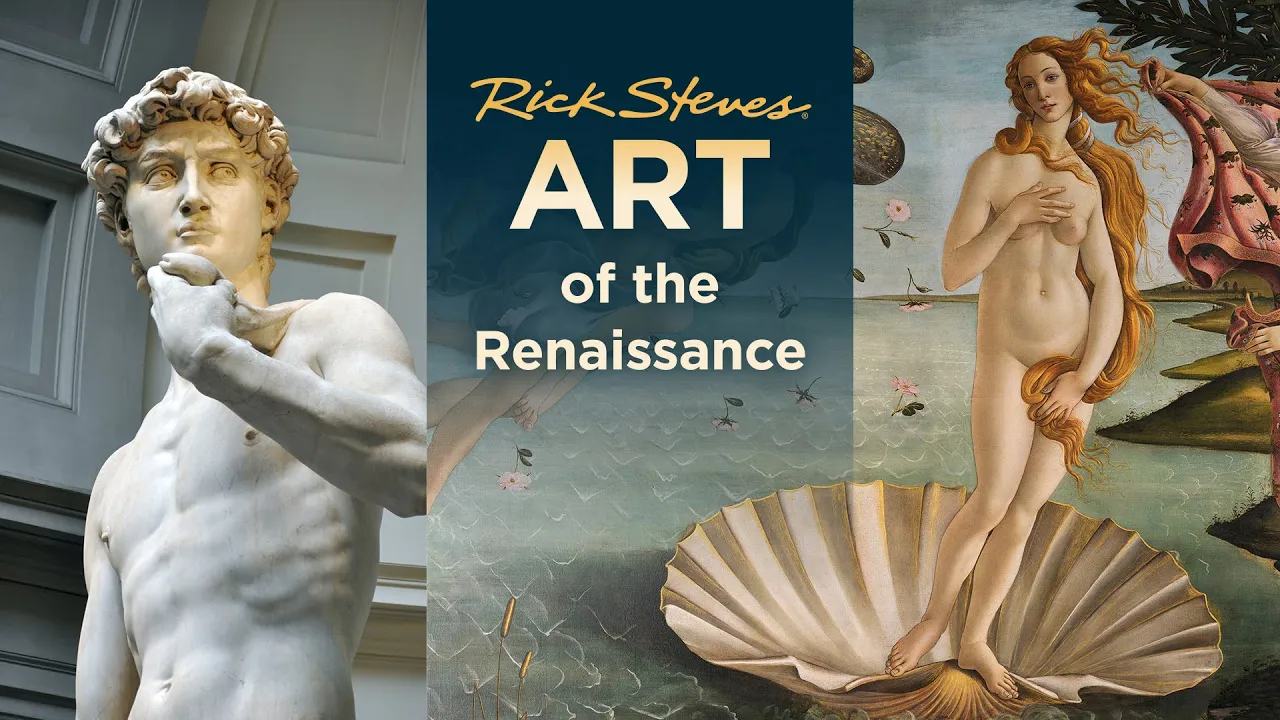


















Sandro Botticelli's The Birth of Venus (c. 1485) represents a revolutionary shift in Western art by being one of the first Western paintings since classical times to depict a non-religious scene featuring a near-life-sized female nude, celebrating the human form rather than portraying nudity as shame or sin; this groundbreaking work emerged from the Renaissance Humanist movement that emphasized individual human worth and secular beauty, bridging Medieval Gothic art with emerging Renaissance ideals through its mythological narrative of Venus's birth from sea foam, sophisticated use of egg tempera technique, and symbolic Christian-allegorical interpretations that made pagan mythology acceptable to contemporary Christian audiences.
Botticelli's Birth of Venus: Renaissance Art Analysis
Added:The historical context of the Italian Renaissance, specifically the cultural shift from medieval theology toward humanism.
Familiarity with classical Greco-Roman mythology, particularly the myth of Venus (Aphrodite) and her origins.
The role of artistic patronage in 15th-century Florence, especially the influence of the Medici family.
Basic art history terminology such as tempera paint, iconography, perspective, and composition.
The philosophical framework of Neoplatonism and how Marsilio Ficino's ideas influenced Botticelli's allegorical imagery.
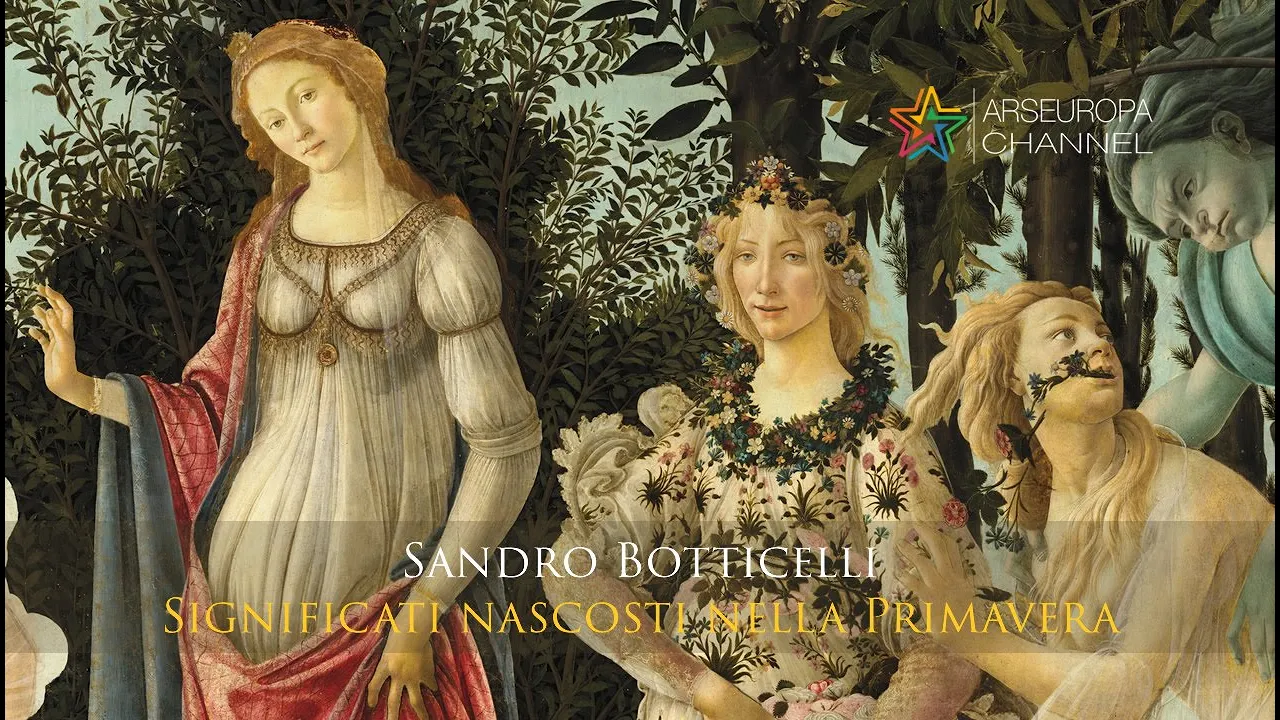
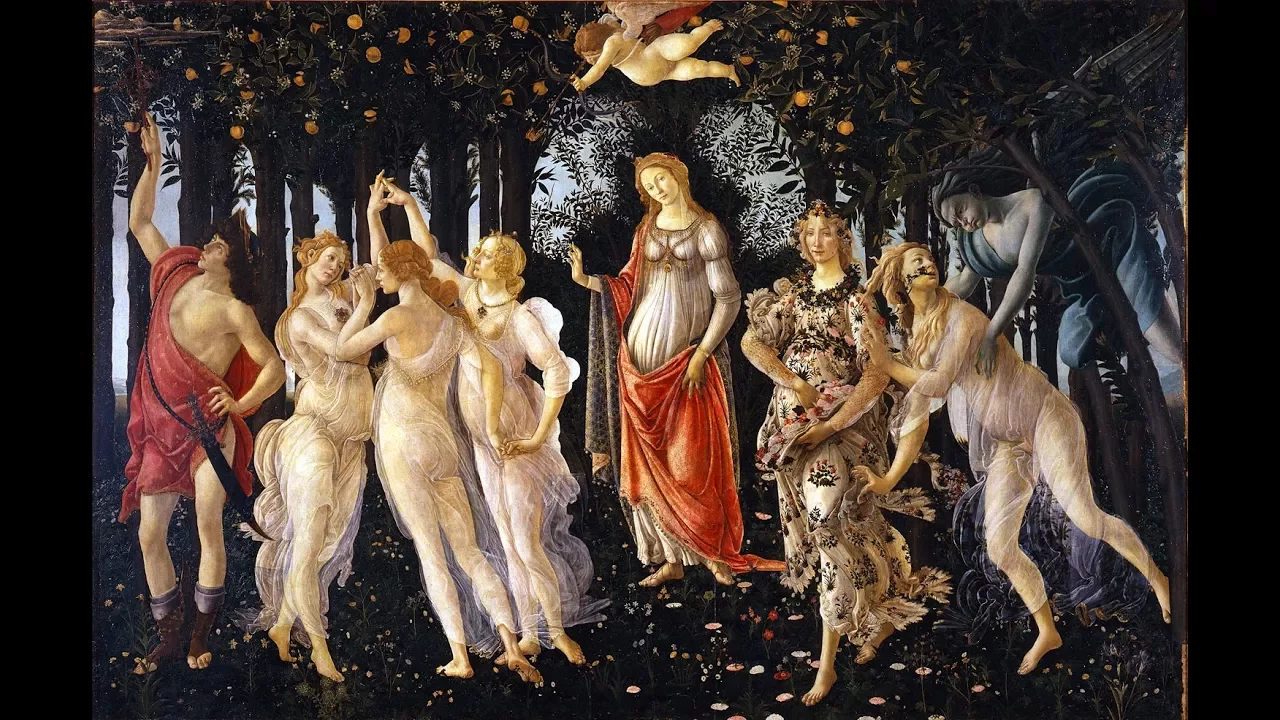
A comparative study of Botticelli's companion masterpiece, 'Primavera', to analyze thematic and stylistic continuity.
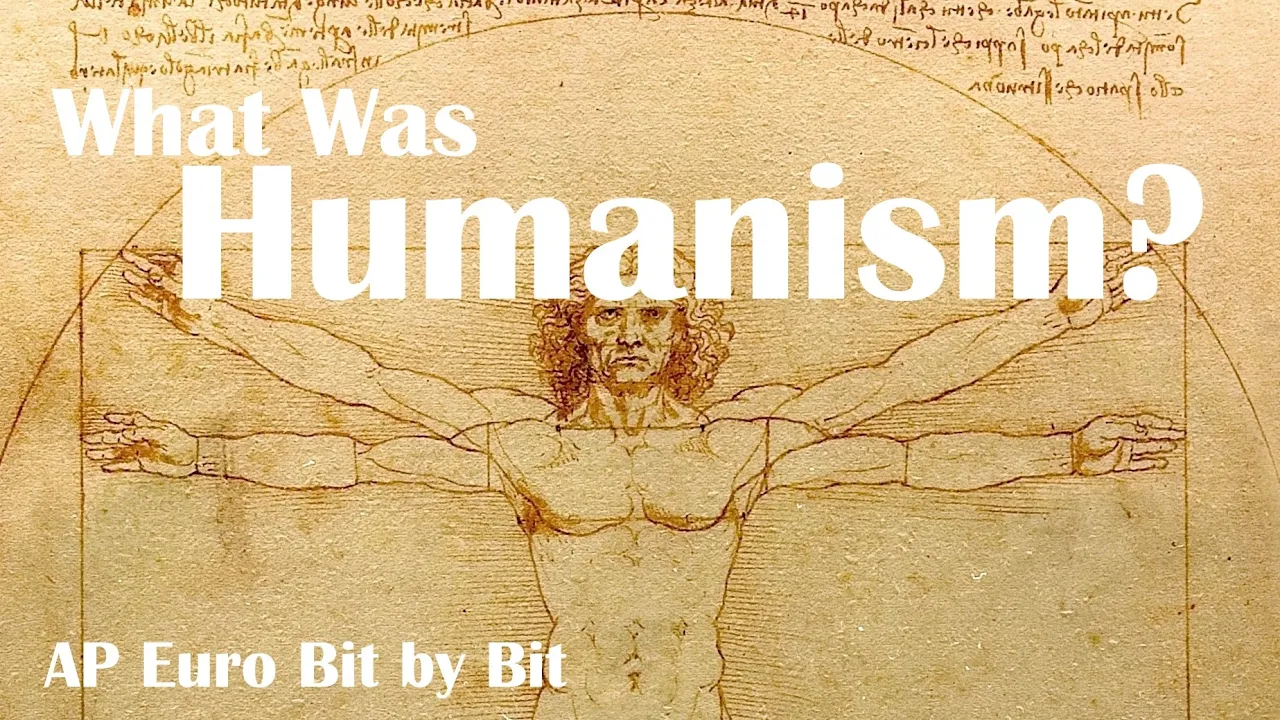
The evolution from Early Renaissance aesthetics to High Renaissance style, comparing Botticelli's poetic forms with the anatomical realism of Da Vinci and Michelangelo.
The political and religious crisis in Florence led by Girolamo Savonarola, and its drastic impact on Botticelli's later, more conservative artworks.
The reception history of the painting, tracing how it transitioned from obscurity to becoming one of the most recognized icons of Western art.
1.2M views37.3Klikes18:32Original Release: 2022-02-18
Sandro Botticelli's poetic sense of beauty captivated the Florentine court, but it was his subject matter which distinguished him from other artists. He was one of the first Western artists since classical times, to depict non-religious scenes. The idea that art could be for pleasure and not just to serve God, was new and radical. When Botticelli revealed his latest painting in Florence in 1485, he also revealed a dramatic shift in western art. Botticelli's inclusion of a near-life-sized female nude was unprecedented in Western art. This wasn't Eve being expelled from the Garden of Eden, shamed by her nudity. It wasn't the naked hordes sent to Hell in Dante's Inferno. In fact this wasn't nudity as a symbol of shame at all - or even sin - or wickedness. This was a celebration of the naked human form, this was a celebration of sex.
Renaissance translates as "Rebirth" and although dates are debatable, we can start in Florence around the 14th century, when a renewed interest in ancient Greco-Roman culture led to an intellectual and artistic rebirth. A rise in Humanist philosophy, and radical changes in ideas about religion, politics and science. Ideas that would turn art on its head. New ways of thinking spread throughout Europe inspired by ancient cultures, that focused less on religion and more on the possible achievements of mankind. It was regarded as the beginning of the "individual", the end of the middle ages, and the start of modernity. In this period artists relied entirely on wealthy patrons. Luckily for us the Medici banking family were the wealthiest of them all. Botticelli's patron was Lorenzo de' Medici, who dominated Florence's political and cultural life. He was a cultured, intelligent man, who spoke Latin and Greek. He was also a Humanist. Renaissance Humanism was not anti-Christian or atheistic, it was a revival of moral philosophy. A move to purify and renew Christianity, Rather than the "collective", emphasis was placed on free-will the value of individual human beings and their capacities. Without this new way of thinking, it is doubtful we would have had artists like Botticelli, Michelangelo and da Vinci. Humanism would radicalise art, artists and subject matter. Botticelli would bridge the gap between Medieval Gothic art and the emerging Humanism. We can see the different styles in these two images. The first is late Gothic, the period that preceded the Renaissance. It is heavily stylised and flat, flesh tones are pallid, expressions are vacant and it is unemotional. The second, a work that inspired the young Botticelli, shows three-dimensionality, the figures are more human, more fleshy. Mary is a mother not just a saint and Jesus is a realistic child. It is an image we can relate to and empathise with. It wasn't just style though, Religious art had dominated the medieval period and the Renaissance gave artists like Botticelli freedom to explore new subject matters... albeit within a Christian framework. Narrator: "The island where Aphrodite the Greek goddess of love was born out of sea spray on this very beach" The story of the goddess of love and beauty starts with a castration. The god Saturn castrated his father Uranus and then threw his genitals into the sea. Out of the seafoam an unbelievable beauty emerges fully formed - Venus. The first thing to say is that the painting does not represent venus's "actual birth" but rather the next part of the story, when Venus arrives on the island of Cyprus on a shell. If we take the characters one by one, the male figure on the far left is Zephyr, the warm spring winds. He is blowing Venus ashore. Zephyr is locked in an embrace with his wife Chloris, who herself is blowing gentle breaths. Roses fall around them - each with a golden heart. According to legend rose's first grew at Venus's birth. We have seen both these characters before - in the earlier mythological Venus painting by Botticelli, "Primavera", Zephyr raped Chloris and married her, and then turned her into Flora, the goddess of flowers. A woman welcomes Venus with a red cloth covered in daisies. She is likely to be one of the "Horae" or personifications of the seasons, summer in this case, as her dress is decorated with cornflowers and primroses, and at her feet are anemones. All summer flowers. Hora wears a rose girdle and has a necklace of myrtle, a plant sacred to the goddess Venus, an aphrodisiac, and a symbol of love. Then there is Venus herself, also known as Aphrodite to the ancient Greeks. Botticelli has painted her twice before, for "Primavera" and "Venus and Mars". This time she is naked: The first full female nude of a non-biblical character. Botticelli was probably inspired by an ancient marble statue in the Medici's collection, now known as the "Medici Venus", the first ever female nude sculpture in classical art. Her modest pose is known as "Venus Pudica", a stance where a nude female uses her right hand to cover her breast, while her left hand tries to hide her pubic area. It is a pose that makes voyeurs of us all. The word "Pudica" in latin not only means "genitalia", but also translates as "Shame". We just don't see this coy sexually suggestive pose with male statues, either in antiquity or during the Renaissance. Naked men were associated with active heroism, but women were passive sexual objects. In many ways the statue was a blueprint for a pose that would have a cultural and artistic impact felt across western art for the subsequent two and a half thousand years. The influence of sculpture statue-like pose, but she has alabaster skin. She is unreal, an idealised figure not bound by natural laws. Botticelli painted a dark line around the contours of her body making it easier to see her pale body against the equally pale background, and emphasizing the marble-like quality of her flesh. Venus's figure is elongated in the Gothic style, she appears graceful but she is not quite central and her weight isn't evenly distributed. The shell would tip over if she placed her full weight on the edge like she does, but this is not the real world. It has been said that Venus has what is called "The Gothic sway", a pre-Renaissance variation on the Contrapposto pose, which places the weight of the body on the forward stationary leg, creating an elegant curved pose often seen in Madonna figures, a theme we will come back to. The wind deities are in an impossible convoluted embrace and like all the characters, appear weightless with very little depth. They are all in the foreground, all on the same pictorial plane, which creates an intense theatricality, and none of the figures cast shadows. This is not a mistake, but heightened realism. If we compare this earlier painting by Botticelli to The Birth of Venus, we see true realism - depth, shadowing and action taking place on different pictorial planes. As far as the devoutly Christian Botticelli was concerned his religious paintings were "actual reality", history even, and he painted them as such. Whereas with his mythological works, he is letting the viewer know "stylistically" that what they are looking at is a product of imagination. What we are seeing here, is movement and energy not seen before. Venus, pushed by the wind is about to step off her shell onto the shore. Her hair is blowing in the wind, the Hora rushes forward with a billowing cloak, roses fly through the air, the orange trees rustle and drapery flaps around the bodies. It is a movement and energy found on ancient Roman reliefs. Then there is the background. In contrast with all the flowers that surround the four characters, the little bays we see along the shore are pretty barren. The suggestion is that once Venus steps ashore, the land will blossom. Botticelli is not interested in replicating nature, but rather in creating a dreamscape. The contrast between the green of the sea and the paleness of venus is wonderful. The waves are mere gestures - a flick of the wrist. The flowering orange grove references the sacred garden of Hesperides in Greek myth. The detailing is exquisite, every blossom is tipped with real gold, which is used throughout the painting for highlights. Botticelli trained as a goldsmith before he took up painting and his strong outlines and ornamented decorative elements reflect that. There is a peculiar detail in the painting which is these bulrushes. Out of place as they don't grow in salt water. It is almost certainly a subtle phallic reference to the discarded member of Uranus that created Venus. An in-joke for those clever Florentines. When botticelli painted The Birth of Venus, approximately 10 percent of western paintings were non-religious, and of that 10 percent the vast majority were portraits. Mythological paintings were a whole new art form, so it makes sense that a devout Christian like Botticelli would incorporate familiar references. Botticelli knew the philosopher and priest Marcilio Ficino whose mission was to combine ancient philosophy with Christianity. His idea of a "Celestial Venus" as opposed to the pagan goddess, had her as a stand-in for charity and love. I don't think it is a disguised Christian allegory, but in art history terms there are familiar references that are worth examining. If we look at this standard composition of the baptism of Christ, you can see what i mean Ghiberti's work had a semi-naked figure in the middle, two flying angels on the left, and John the baptist with an outstretched hand. In this baptism we see the same almost nude, motionless figure in the centre, a pair on the left hand side and once again John the Baptist echoing the Hora. Then we can look at this painting of the Virgin Mary, Botticelli painted a couple of years later. It has a comparable composition, the two women are strikingly similar, and it would appear that he used the same model. Mary, like Venus, is dominated by the scallop shell. In christian symbolism it represents "Baptism" and "Resurrection". In pagan symbolism the shell is a representation of fertility or female sexual organs. It is entirely possible that Botticelli was depicting Venus as an emblem of sacred or divine love. A familiar Renaissance trope. Part of Botticelli's genius was to take a pagan story, a nude female, and make them acceptable to contemporary Christian thinking. In this period paintings were generally done on wooden panels, but this is on canvas. Suggesting the painting was almost certainly made for a country villa, rather than a townhouse. Canvas was cheaper, easier to transport and was considered less formal. It was originally painted on two separate canvases which were then stitched together. Botticelli used the egg tempera technique for The Birth of Venus, a primary method of painting until after 1500 when it was superseded by oil painting First you break an egg yolk into a container, then you add some water to make it easier to use, you dilute your pigment with water, and add it to the egg yolk. Different quantities for different applications. For the body of Venus, Botticelli used a very thin layer of tempura, giving more luminosity and a pronounced radiant appearance. Tempura was perfect for Botticelli's paintings, which are known for their elegant qualities of line and shape. Rather than shading wet-on-wet which you cannot do with tempura, you can see how the golden colour of Venus's hair is achieved by light and dark rhythmic lines, to suggest texture. He also added pure gold highlights. Here you can see he used delicate cross hatching rather than the blending you would get with oil painting. Tempura is a difficult technique, but centuries later artists still use it. So why? Because it has a graphic quality and a luminosity you don't get in oil, and unlike oil paint it will not yellow or fade. The egg dries to form a solid protective coat, so colour remains clear bright and pure over time. We don't know for sure who commissioned the birth of venus but it was probably the de-facto ruler of Florence, Lorenzo de' Medici and destined for the Medici villa Castello. Primavera was commissioned by Lorenzo as a wedding gift for his cousin, also called Lorenzo, and in 1550 the art historian Giorgio Vasari saw both paintings at the villa, so it's a strong possibility, The Birth of Venus was commissioned as a companion piece to Primavera - a wedding gift. The paintings show two very different aspects of Venus but both are in line with Renaissance thinking. The aforementioned philosopher and theologian Marcilio Ficino described Venus's "Dual nature", as both the celestial goddess that inspired intellectual love, and the earthly goddess that celebrated the power of procreation. And I think "procreation" is the key to this painting. Noble families like the Medici didn't marry for love, they married for power, accelerated by important arranged marriages. The function of women was their ability to procreate, and the new bride's arrival into the Medici bed chamber is paralleled by the arrival of Venus on Cyprus, who will bring life to a barren island. So in a way the birth of venus is an image celebrating "Sex", but not in an erotic or sensual way. I've always been struck by how venus is strangely "asexual" and her nudity is clinical. And maybe that's because she represents sex as a necessary function. Sex for procreation, the ultimate goal in a dynastic marriage. On february the 7th, 1497 a huge bonfire was lit in the centre of Florence. Books on poetry and classical texts were burned,along with paintings, sculptures, mirrors and musical instruments. Anything considered frivolous was burned. Florence had fallen under the spell of the extraordinary Dominican friar Geronimo Savonarola, whose "fire and brimstone" sermons mesmerised thousands in the city. After a 60-year reign, the powerful Medici family had been driven out of Florence by a mere priest. One who was determined to rid the city of the Medici's "sinful" influence. One of Savonarola's most enthusiastic followers was Botticelli, who according to some, willingly threw some of his own paintings into the bonfire. We are fortunate that his greatest mythological works survived, only because they were held at the Villa de Castello - beyond the reach of both Savonarola's followers and Botticelli himself. After Savonarola's death, Botticelli was increasingly seen as old-fashioned and irrelevant. Commissions dried up, and it was the beginning of a sad decline into obscurity. He was at the height of his powers when he painted The Birth of Venus, but by the time of his death in 1510, he was all but forgotten. The Medici's had moved on to a new generation of artists. With The Birth of Venus, Botticelli really did produce a work of art that was revolutionary, a work that changed the course of art history, and one that still looks intensely modern to 21st century eyes. In fact The Birth of vVnus is as influential now as it was five centuries ago. It is one of the most recognisable images in the world. The ancient Gods may have given birth to Venus - but Botticelli gave her life.
Up Next
78:34
Monet's Giverny: Inside the Impressionist's Garden & Home
@anneandersonartanddesignhi3497
363 views•2024-08-09

8:22
Maya Bloodletting Rituals: Lintels 24 & 25 from Structure 23, Yaxchilan
@ArtHistorywithAlder
6.2K views•2021-03-18

26:18
Jackson Pollock: Myth, Art, and Abstract Expressionism
@GreatArtExplained
298.2K views•2025-06-13
30:51
Caravaggio's Life & Artistic Evolution: A National Gallery Guide
@nationalgallery
2.5M views•2016-03-03
Related Study Plans & Knowledge Roadmaps
Structured learning paths in Art History
art-history
Classic Maya Art: Iconography, Glyphs & Ritual
01Foundations of Classic Maya Visual Culture
02Deciphering Maya Hieroglyphs & Text-Image Integration
03Sacred Geography and Cosmological Architecture
+ 2 more learning modules
14h5 modules
Explore Roadmap
art-history
Abstract Expressionism: Gestural vs Color Field
01Foundations of the New York School
02Gestural Abstraction: Energy and Action Painting
03Color Field Painting: Sublime and Meditative Spaces
+ 1 more learning modules
8h4 modules
Explore Roadmap
art-history
Harlem Renaissance Art: Modernism & Heritage
01Historical Context & 'The New Negro' Movement
02Synthesizing Modernism and African Art Motifs
03Pioneering Artists & Visual Strategies
+ 2 more learning modules
8h5 modules
Explore Roadmap
art-history
The Sublime: Romantic & Hudson River Landscapes
01Introduction to Romanticism and Landscape Painting
02The Philosophy of 'The Sublime'
03European Romanticism and the Terrifying Sublime
+ 2 more learning modules
12h5 modules
Explore Roadmap