Roy Lichtenstein (1923-1997) was the founder of American pop art who transformed everyday commercial imagery from advertisements and comic books into high art, using distinctive print-like dots, primary colors, and industrial black lines; his work challenged viewers to recognize how even our most personal dramatic moments are shaped by the media we consume, while maintaining a fresh, timeless quality that bridges contemporary and historical contexts.
Roy Lichtenstein: Pioneering American Pop Art | Tate Modern Retrospective
Added:Deep Dive
Understanding of the Post-WWII historical shift from Abstract Expressionism to Pop Art as a reaction to elite art culture.

Pop Art’s Relationship To Abstract Expressionism
130
Pop art emerged in the 1950s-1960s as a reaction to abstract expressionism, inspired by popular culture, commercialization, and mass advertising, while abstract expressionism focused on emotional abstraction; both movements reflected the shifting art center from Paris to New York and the rapid cultural changes of the era, including the Vietnam War, rock and roll, civil rights movement, and television's growing influence.
Click to watch →

Pop Art (1). Características y el pop británico
1.2K
Pop Art originated in England in the mid-1950s as a reaction against Abstract Expressionism, which was characterized by complex, gestural, and abstract languages that were difficult for the general public to understand. This reaction led to a demand for art that was more legible, accessible, and easier to comprehend. The movement's emergence coincided with a broader social desire to move away from the intellectual elitism of abstract art toward something more immediately engaging and understandable.
Click to watch →
![[AULA] Linha do Tempo da História da Arte](https://i.ytimg.com/vi_webp/SEyhdqLQ6lA/maxresdefault.webp)
[AULA] Linha do Tempo da História da Arte
47.3K
After World War II, the artistic center shifted from Paris to New York. Abstract Expressionism emerged as a mixture of Expressionism's subjective emotional representation with abstraction. The process became one of the most important parts of the artist's work. American culture, consumerism, capitalism, media, television, celebrities, advertising, and brands became important sources of inspiration, with Andy Warhol being the most important example of this Pop Art approach.
Click to watch →
![[서양미술사 강의] 추상표현주의에 반대하며 등장한 팝아트 ! 팝아트 등장배경에 대해 알아보자! Abstract Expressionism & Pop Art](https://i.ytimg.com/vi_webp/QoJW3zECBD4/maxresdefault.webp)
[서양미술사 강의] 추상표현주의에 반대하며 등장한 팝아트 ! 팝아트 등장배경에 대해 알아보자! Abstract Expressionism & Pop Art
25.9K
Pop Art emerged in the 1950s as a direct reaction against Abstract Expressionism, which was seen as too complex and inaccessible to the general public. While Abstract Expressionism emphasized the artist's inner emotions, non-representational forms, and the act of painting itself, Pop Art embraced mass culture, consumer goods, and popular icons to create art that anyone could understand and enjoy. This shift reflected broader societal changes including the rise of mass consumption, television, and the migration of European artists to New York after World War II.
Click to watch →
현대미술 한방에 정리(복잡한 현대미술사조 거의 다, 영혼을 갈아 넣은 영상)
363.4K
Abstract Expressionism emerged after World War II in New York, representing American artistic leadership during the Cold War. Artists like Jackson Pollock and Willem de Kooning pioneered action painting and gestural abstraction. Tachisme emerged in France as a response to geometric abstraction, emphasizing emotional expression over rationality. Postmodernism rejected Modernism's rationality, academic rigor, and elite-centered approach, embracing irrationality, diversity, and accessibility. Neo-Dada emerged as a postmodern movement influenced by Dadaism, with artists like Jasper Johns and Robert Rauschenberg challenging traditional artistic categories. Pop Art emerged in America after World War II, reflecting the country's dominant position in popular culture. Andy Warhol used silkscreen printing to create mass-produced images of celebrities and consumer products. Op Art focused on visual illusion and perception. Nouveau Réalisme emerged in Europe as a response to Abstract Expressionism, with artists like Yves Klein creating provocative performances.
Click to watch →
Deep Dive
Familiarity with the concept of 'high' vs. 'low' culture and how mass media, advertising, and comic books influenced 20th-century visual art.

El cómic: de Arte para el consumo a formas pop.
1.4K
The visual resources and training available to comic artists and fine artists are fundamentally the same. The distinction between 'high' and 'low' culture in visual arts is increasingly artificial. Both types of artists draw from the same visual vocabulary and techniques, with the difference lying in context and presentation rather than fundamental artistic capability.
Click to watch →

Trenton Doyle Hancock
669
Artists often draw inspiration from both high and low art without feeling the distinction. Hancock cites influences including Philip Guston (for pink), Ralph Bakshi (Lord of the Rings animated version), and Marvin Glass (toy designer for Mousetrap, Lite-Brite, Rock'em Sock'em Robots). He never allowed himself to be corrupted by the distinction between high and low art, treating comic books and encyclopedias as equally valid sources of artistic inspiration. This approach involves studying the quality and execution of both fine art and popular culture, demonstrating how artists can build visual vocabularies from diverse sources.
Click to watch →

How Art and AI Shape Meaning Today with Dr. Rebecca Marks!
832
Propaganda art (like Soviet propaganda) is designed for mass consumption with simple lines, symmetry, clear colors, and archetypal figures (heroes, mothers) that appeal to the optimistic side of the human brain. This visual simplicity makes it attractive and easy to understand, concealing darker realities. Before mass media, people had limited access to art - a medieval peasant might only hear music occasionally at taverns or cathedrals, making such experiences truly spellbinding. Walter Benjamin's concept of 'aura' refers to this sense of presence and uniqueness. The distinction between high and low culture (like poetry vs. push pin games) comes from Jeremy Bentham's utilitarianism - if art's purpose is to make people feel good, then all art is equally valuable. However, this distinction often has classist elements: 'high culture' requires understanding context and historical knowledge, while 'low culture' is more accessible.
Click to watch →

Will Gompertz & Cornelia Parker: Lichtenstein's Wall Explosion
3.4K
Pop artists including Roy Lichtenstein, Claes Oldenburg, and others deliberately sought to marry high culture (fine art) with low culture (popular media like comics). At the time, using cheap comics or everyday objects was considered demeaning for serious artists. This cultural bridge challenged traditional hierarchies in art by elevating mass-produced commercial materials to the status of fine art, making a social commentary on consumer culture and mass production.
Click to watch →
The Rise and Fall of the Mainstream Media
373K
For much of history, especially in Europe, there was a pretentious-seeming idea of high and low culture— theater and politics and grand tours for the aristocracy, drink and ballads and sports for the working classes. Politicians kept outsiders at bay with complex cultural practices about what's proper. The 20th century modernist and post-modern artistic movements were known for mixing high and low culture—Andy Warhol used consumer images in art, Marcel Duchamp famously used urinals as art. Novels and films became more about everyday life drawing on everyday motifs and themes. The internet has amplified this movement, and desperate to distinguish themselves from pompous metropolitan elites, new elite figures tend to draw from popular culture and present themselves as ordinary.
Click to watch →
Deep Dive
Basic knowledge of commercial printing techniques, particularly the mechanical Ben-Day dot process used in mid-century pulp magazines and newspapers.
Thursday's at the Museum: Pop Art
793
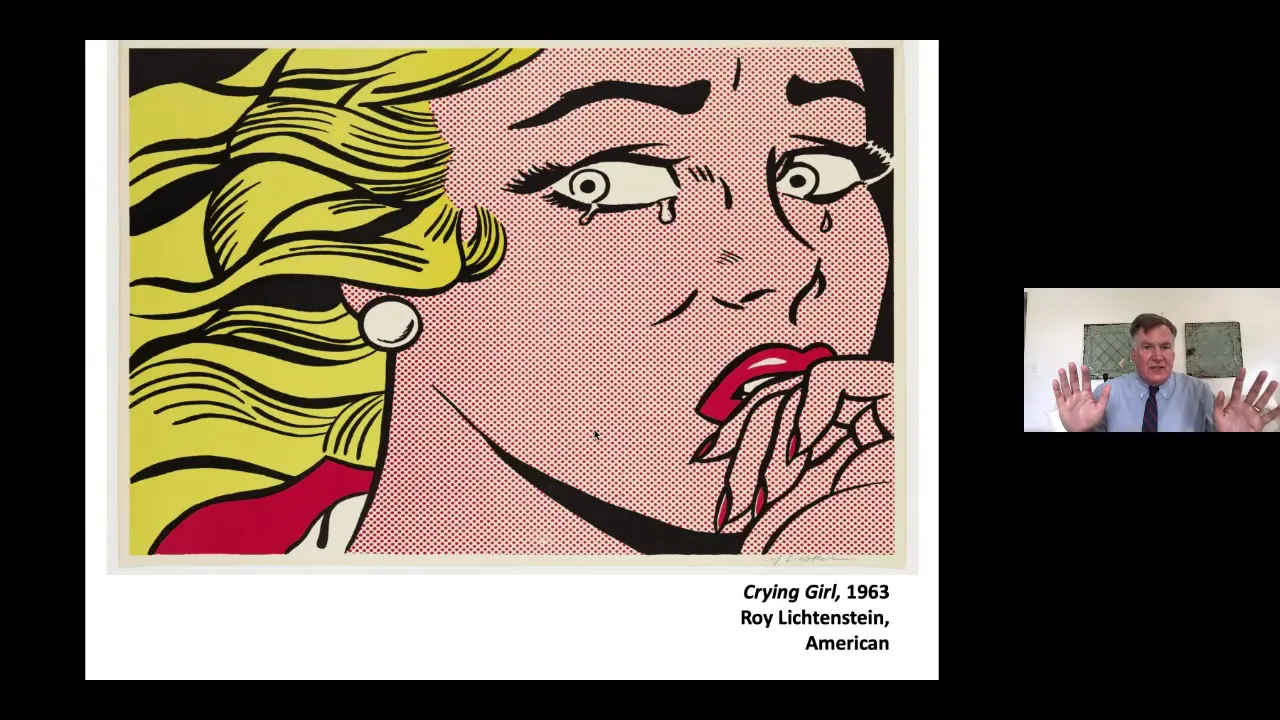
Ben Day dots are a commercial printing technique created by Benjamin Day in the 1890s used to create mid-tones or tones in printed images. In traditional offset lithography, ink is applied as solid color areas with blank areas remaining white. However, Benjamin Day could not create tone qualities using this method. Roy Lichtenstein uniquely used these dots not just to create tone but made them an integral part of the artwork itself, transforming something typically invisible in newspaper pictures into a visible artistic element.
Click to watch →

The Comic Book Origins of Weird West
581
Ben Day dots are a printing technique named after Benjamin Henry Day Jr., developed when early printers could only use four colors: cyan, magenta, yellow, and black (CMYK). The process involves placing these four primary colors in images as a series of tiny dots, which creates shading and secondary colors without requiring additional ink colors. This technique became the defining visual style of Sunday comic strips and pulp magazines from the mid-20th century, giving comics their distinctive textured appearance.
Click to watch →

How to paint Roy Lichtenstein's "Ben Day" dots (and other things Lichtenstein).
16.3K
Ben Day dots are a printing technique named after Ben Harry Day Jr., son of publisher Ben Henry Day, developed in graphic design and commercial art around 1979. The technique converts photographs into dot patterns for mass production, using multiple screens (one per color) to create tonal variation through dot size and spacing. Larger, closer dots produce darker tones; smaller, spaced dots create lighter tones. This commercial process allowed cost-effective reproduction of images in newspapers and comics, with each color requiring its own printing plate.
Click to watch →
History of Color Printing with Cliff Meador
631
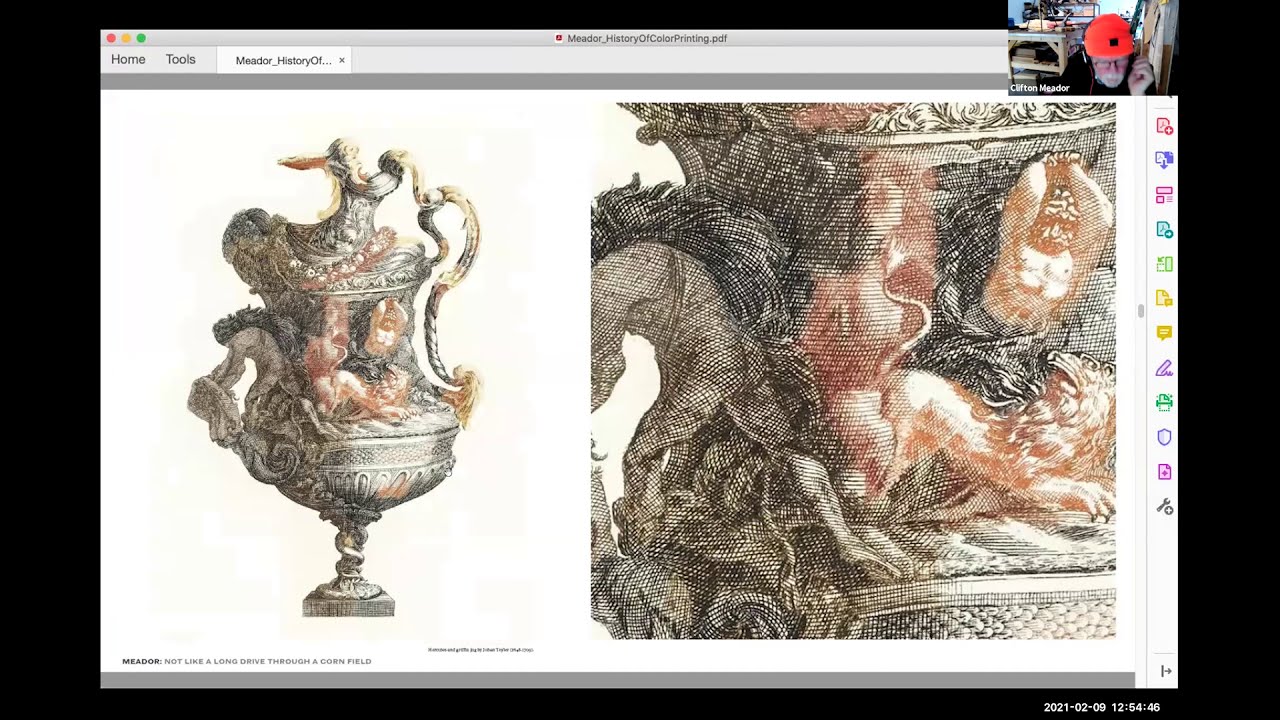
Benday dots were a mechanical process for producing tone in printing. A mat of gelatin pyramids was completely inked up, and a substrate was placed on top. Pressing down against the gelatin mat compressed the pyramids, making bigger dots. This was a completely mechanical way of making halftone dots to produce tone. The process was used for color printing with a black key line and applied three-color yellow, blue, and magenta red separations.
Click to watch →
THE ART & IMAGINATION OF WINSOR McCAY
57.8K
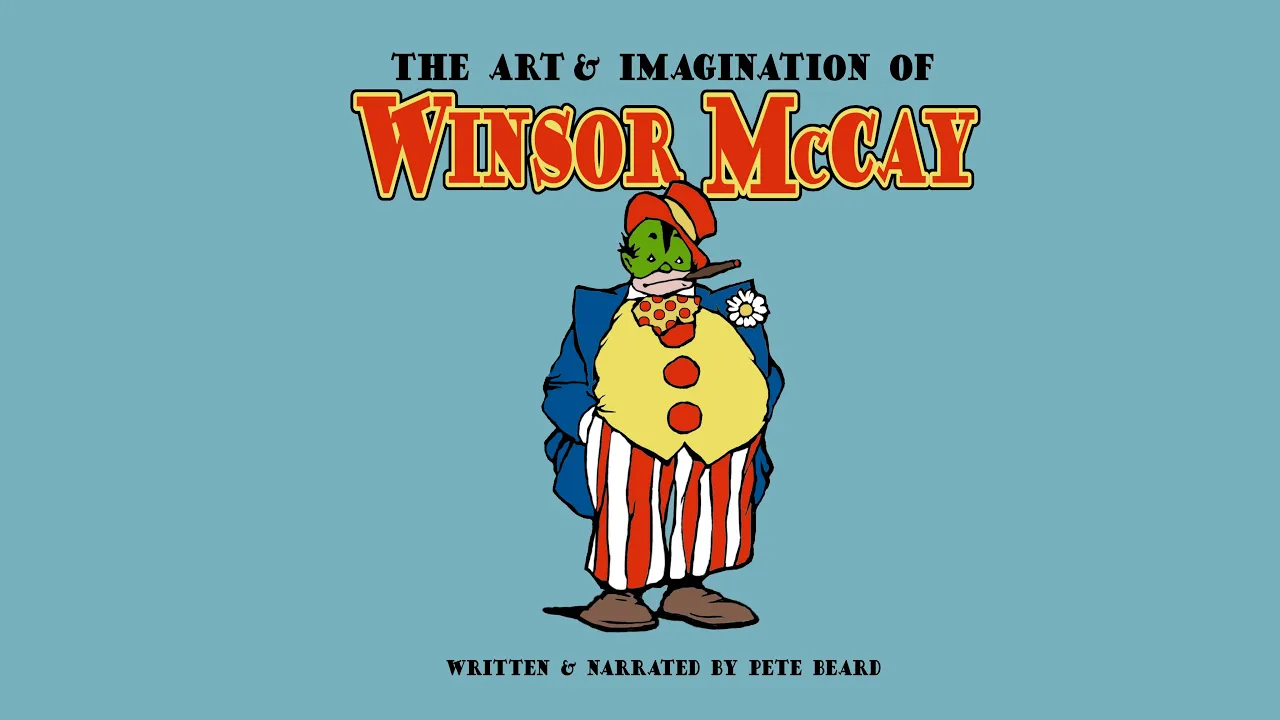
The Herald used the Ben Day process for color printing, which involved using solid and dot screen areas carefully to create an illusion of full color. McCay would draw artwork as black and white line only and provide precise complicated instructions regarding colors used. This printing technology allowed newspapers to reproduce color images economically, and McCay's mastery of this system enabled him to create visually striking color comics despite the technical limitations of the era, demonstrating how artists adapt to and work within technological constraints.
Click to watch →
Deep Dive
Awareness of artistic appropriation—the practice of taking pre-existing objects or images with little or no transformation applied to them.

LESSON X: ART APPRECIATION
3.2K
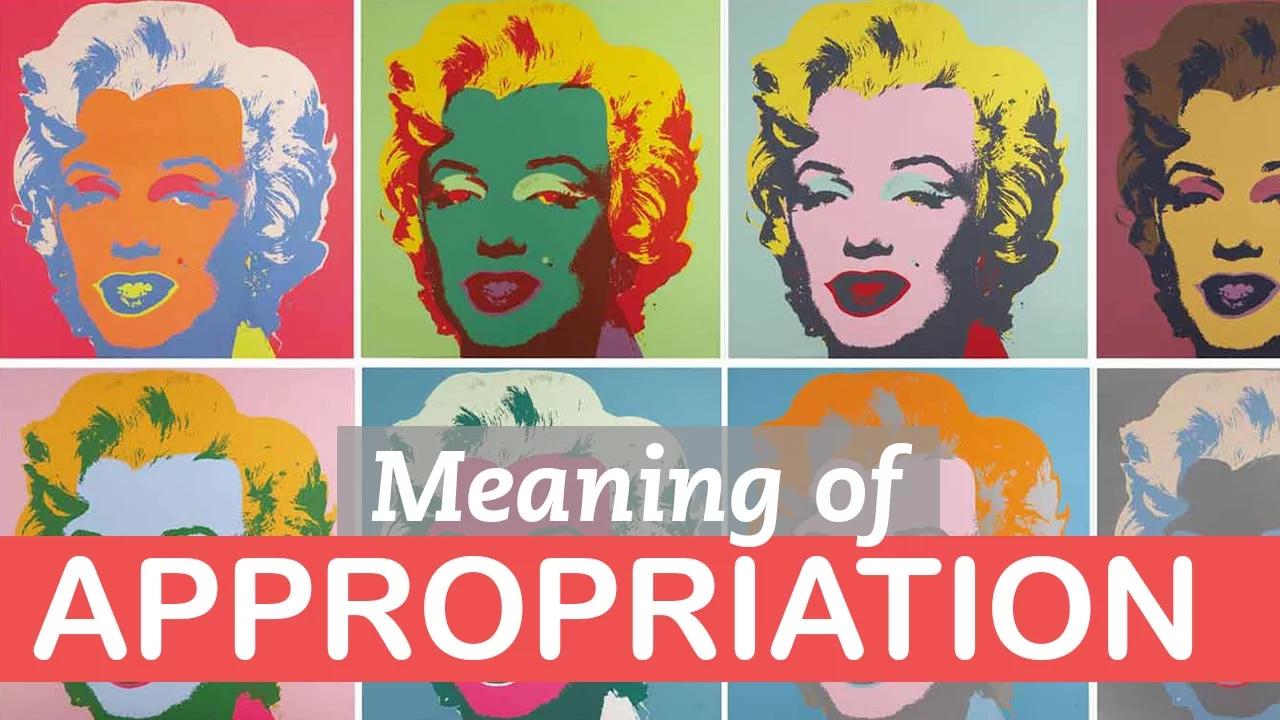
Appropriation art is the use of pre-existing objects or images with little or no transformation applied to them. The use of appropriation has played a significant role in art throughout the 20th century and has continued as a valid art form to the present. In visual arts, to appropriate means to properly adopt, borrow, recycle, or sample aspects or the entire form. Appropriation is the concept that the new work recontextualizes whatever it borrows to create the new work. In the past decade, there has been a considerable rise in court cases citing plagiarism, highlighting the controversial nature of appropriation art.
Click to watch →
The Meaning of Appropriation in Art | Art Terms | LittleArtTalks
67.1K
Artistic appropriation is the practice of using pre-existing objects or images in art with minimal transformation, a technique employed by artists from Manet and Picasso through Duchamp's famous Fountain to the Pop Art movement, which challenges traditional notions of originality, authorship, and authenticity by recontextualizing familiar images from popular culture.
Click to watch →

Appropriation In Art Explained
27.2K
Artistic appropriation refers to the practice where artists use pre-existing images or objects in their own work. This borrowing of existing material and placing it in a new context is called re-contextualization, which can be compared to how DJs sample musical content to create new songs. The concept raises fundamental questions about whether creating art can be considered theft, and whether appropriation is acceptable or constitutes plagiarism.
Click to watch →

Young Researchers Workshop - CEOS #14
130
Appropriation art is defined as the practice of using pre-existing objects with little or no transformation and reusing them in new contexts. A key example is Sherrie Levine's work, which visually identical photographs by Walker Evans but recontextualized to make feminist statements about undervalued voices. The practice raises questions about originality and authorship, as the artist dismisses every creative act in their work while claiming the reused objects gain new meanings through their presentation.
Click to watch →

Narrative, Appropriation, Borrowing & Ownership | Part 1
492
Appropriation in art refers to using pre-existing objects and images with little transformation, intended to recontextualize artwork and recognize source material. It can be traced back to Cubism, with Picasso and Braque's 1912 collages introducing real objects like newspapers. The impact relies on audience interpretation, and excessive transformation may diminish intended meaning. Surrealism also used appropriation extensively, as seen in Dalí's Lobster Telephone, where the lobster's tail over the telephone mouthpiece reveals unconscious desires. These examples demonstrate how artists borrow from existing materials to create new meanings while maintaining connection to source materials.
Click to watch →
Prerequisite Knowledge
- Concept 01Understanding of the Post-WWII historical shift from Abstract Expressionism to Pop Art as a reaction to elite art culture.
- Concept 02Familiarity with the concept of 'high' vs. 'low' culture and how mass media, advertising, and comic books influenced 20th-century visual art.
- Concept 03Basic knowledge of commercial printing techniques, particularly the mechanical Ben-Day dot process used in mid-century pulp magazines and newspapers.
- Concept 04Awareness of artistic appropriation—the practice of taking pre-existing objects or images with little or no transformation applied to them.
Subsequent Learning
- Step 01In-depth comparison of Lichtenstein's techniques with other pioneering Pop Artists, such as Andy Warhol's silkscreening or Claes Oldenburg's soft sculptures.
- Step 02Critical analysis of the ethical and legal debates surrounding copyright, intellectual property, and the unrecognized comic book artists whose work Lichtenstein adapted.
- Step 03Examination of the Neo-Pop art movement of the 1980s and beyond, evaluating the legacy of Lichtenstein on artists like Jeff Koons and Takashi Murakami.
- Step 04Investigation into institutional curation and how retrospectives at major galleries like Tate Modern shape the canon of modern art history.
Pop Art Legacy
Artistic Insight
Pop Art Legacy
0:03Playing Section
- 1
Explores Lichtenstein's 1960s pop art revolution and graphic style.
- 2
Highlights his shift from expressionism to comic-inspired imagery.
- 3
Notes public shock at blending high art with popular culture.
The Plagiarism Debate and the Exploitation of Comic Creators
While Roy Lichtenstein is celebrated as a pioneer of Pop Art, a significant and enduring critique accuses him of plagiarism and the exploitation of uncredited comic book artists. Detractors, including comic book advocates and the original artists themselves (such as Russ Heath and Irv Novick), argue that Lichtenstein's work was not merely transformative 'appropriation,' but direct, uncompensated copying of their intellectual property. Critics highlight a stark double standard: the elite art world elevated Lichtenstein to fame and fortune for 'elevating' commercial art, while the original creators of those iconic images remained underpaid and unrecognized. This perspective challenges the narrative of Lichtenstein's singular genius, reframing his legacy as one of opportunistic exploitation that commodified the labor of working-class illustrators without providing due credit or financial compensation.
Deep Dive
In-depth comparison of Lichtenstein's techniques with other pioneering Pop Artists, such as Andy Warhol's silkscreening or Claes Oldenburg's soft sculptures.
Snap, Crackle, POP - 5 important Pop Artists
5.4K
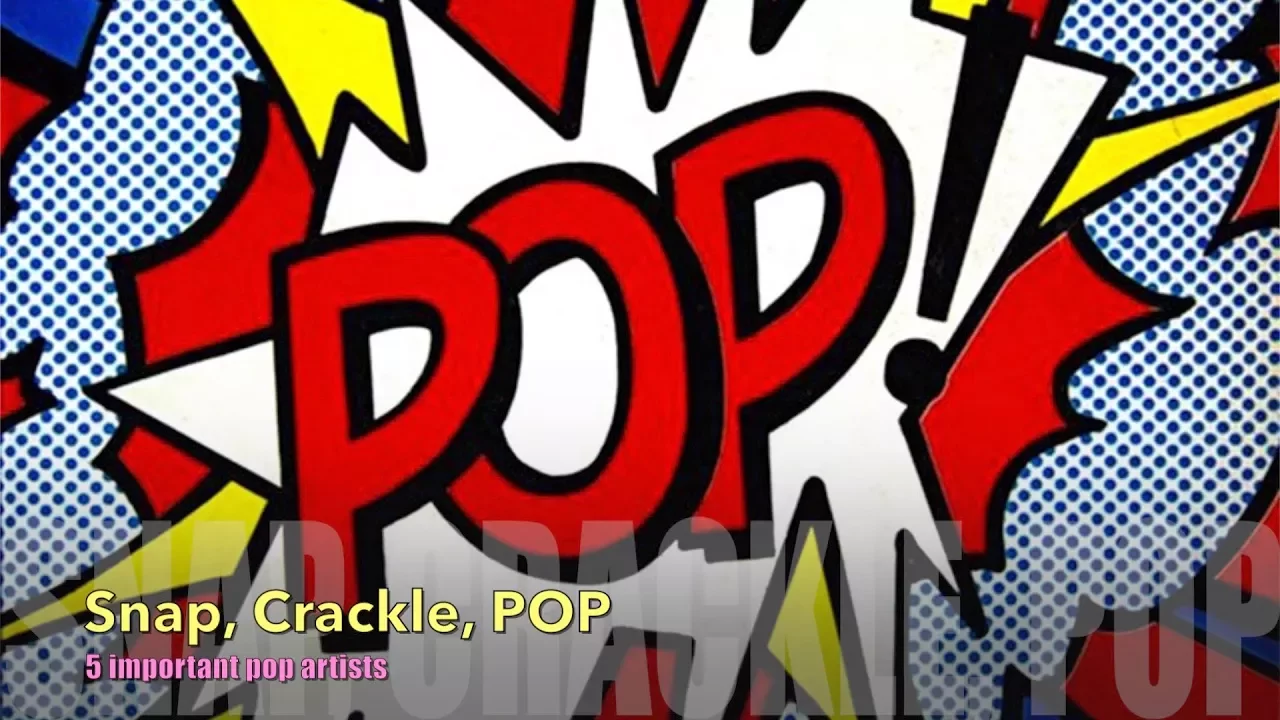
Pop art is an art movement where artists transformed everyday objects and popular culture into significant artistic statements, as demonstrated by five key artists: Pauline Boty (British pop artist using images from popular British culture), Andy Warhol (who painted common items like Brillo boxes and Coke bottles, as well as celebrities), Roy Lichtenstein (who reproduced comic book images on large canvases), Marisol Escobar (who created folk art-inspired sculptures of groups of people), and Claes Oldenburg (who pioneered soft sculpture of everyday objects). These artists challenged traditional art by elevating mundane items to the status of fine art, reflecting the consumer culture of their time.
Click to watch →

POP ART: contesto storico, artisti e opere più importanti | ARTE CONTEMPORANEA IN PAROLE POVERE
26.1K
Pop Art emerged in Britain in 1955, coined by scholars to describe mass media and consumer product imagery; it critiques consumer society by presenting everyday objects directly in artworks, using techniques like decontextualization and series production, with key figures including Richard Hamilton (whose 1956 collage 'Just What Is It That Makes Today's Homes So Different, So Appealing?' is the movement's manifesto), Andy Warhol (who famously painted Campbell's Soup Cans and pioneered serigraphy), Roy Lichtenstein (who painted comic-style images), Claes Oldenburg (who created giant sculptures of everyday objects), and Italian artists like Michelangelo Pistoletto and the Scuola Romana di Piazza del Popolo.
Click to watch →
Roy Lichtenstein Read Aloud
10.1K
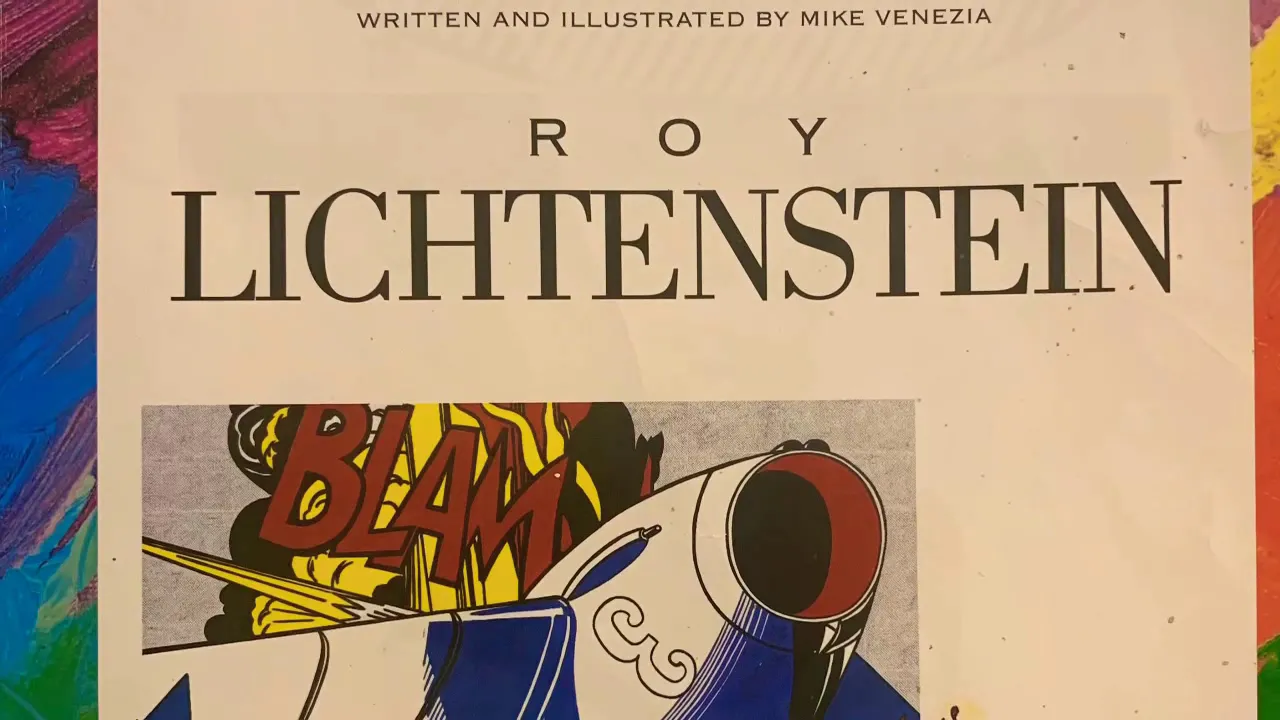
Roy Lichtenstein (1923-1997), born in New York City, was a pioneering American artist who helped create the Pop Art movement alongside contemporaries like Andy Warhol and Claes Oldenburg; he transformed everyday commercial images from comic books, newspaper advertisements, and bubblegum wrappers into high art by incorporating distinctive Benday dots (a printing technique invented in 1879) and using flat colors, bold outlines, and simplified compositions, thereby bridging the gap between popular culture and fine art.
Click to watch →

Claes Oldenburg
820
Claes Oldenburg (1929-2022) was a Swedish-American artist who pioneered Pop Art and soft sculpture, transforming everyday objects into monumental vinyl sculptures filled with rubber that challenge traditional sculpture's rigid material conventions, while encouraging public interaction and participation in his works displayed in open public spaces.
Click to watch →

Биография арт / Энди Уорхол / король ПОП-АРТа
133.9K
Andy Warhol (1928-1987) was a pioneering American artist who transformed commercial illustration into fine art through his iconic Campbell's Soup paintings and mass-produced silk-screen works, becoming the definitive figure of the Pop Art movement and the most commercially successful artist in auction history with nearly $400 million in sales.
Click to watch →
Deep Dive
Critical analysis of the ethical and legal debates surrounding copyright, intellectual property, and the unrecognized comic book artists whose work Lichtenstein adapted.
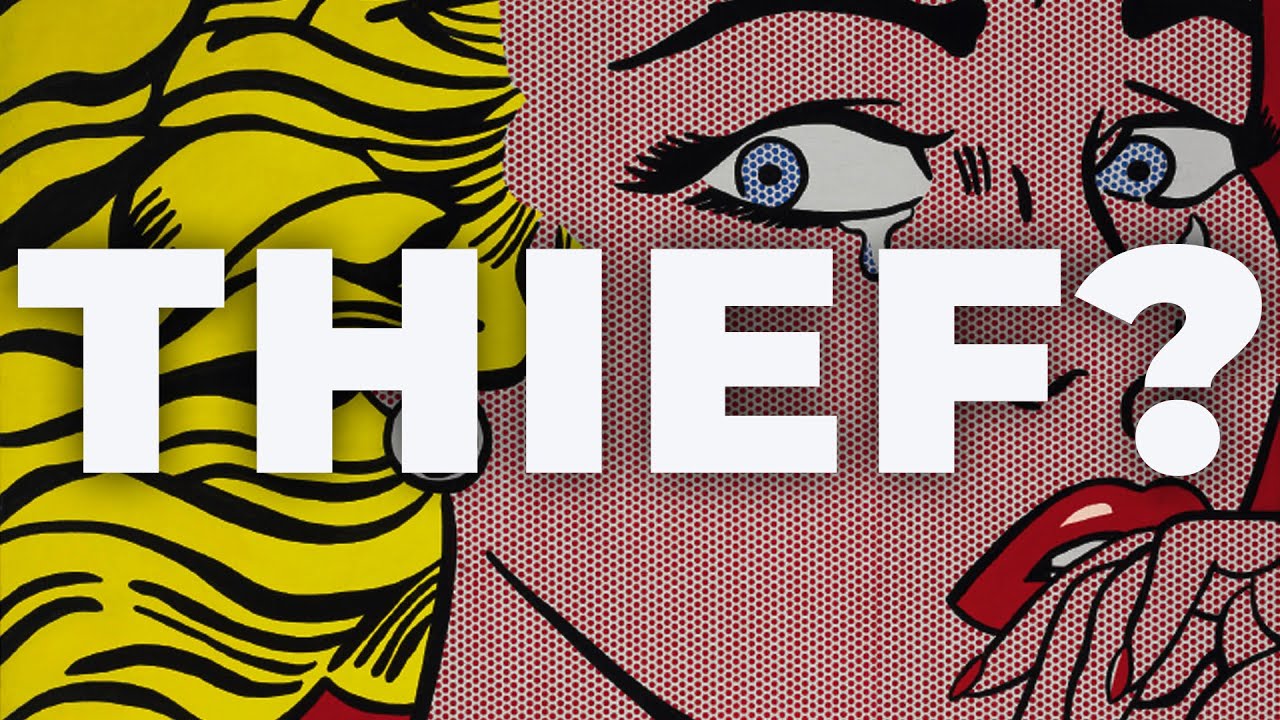
Art Theft and Appropriation in Fine Art History
72.4K
Roy Lichtenstein's comic book appropriations may lack transformative material changes compared to Manet, Monet, Picasso, or Jorn, but they are transformative in context. He made comics larger, transforming them from casual commodities into rarefied artworks. Like Duchamp's Fountain, Lichtenstein forces viewers to reconsider what constitutes art by confronting them with blown-up comic images they normally ignore. However, unlike Duchamp who recontextualized a non-art object, Lichtenstein undermined the authorship of comic book artists who are undeniably artists today. The key distinction lies in hierarchies between low and high art and who receives artist status—comic book artists versus soup can designers or urinal makers. Despite potential harm to comic artists' authorship claims, Lichtenstein's work enabled crucial conversations about art, originality, and artistic boundaries.
Click to watch →
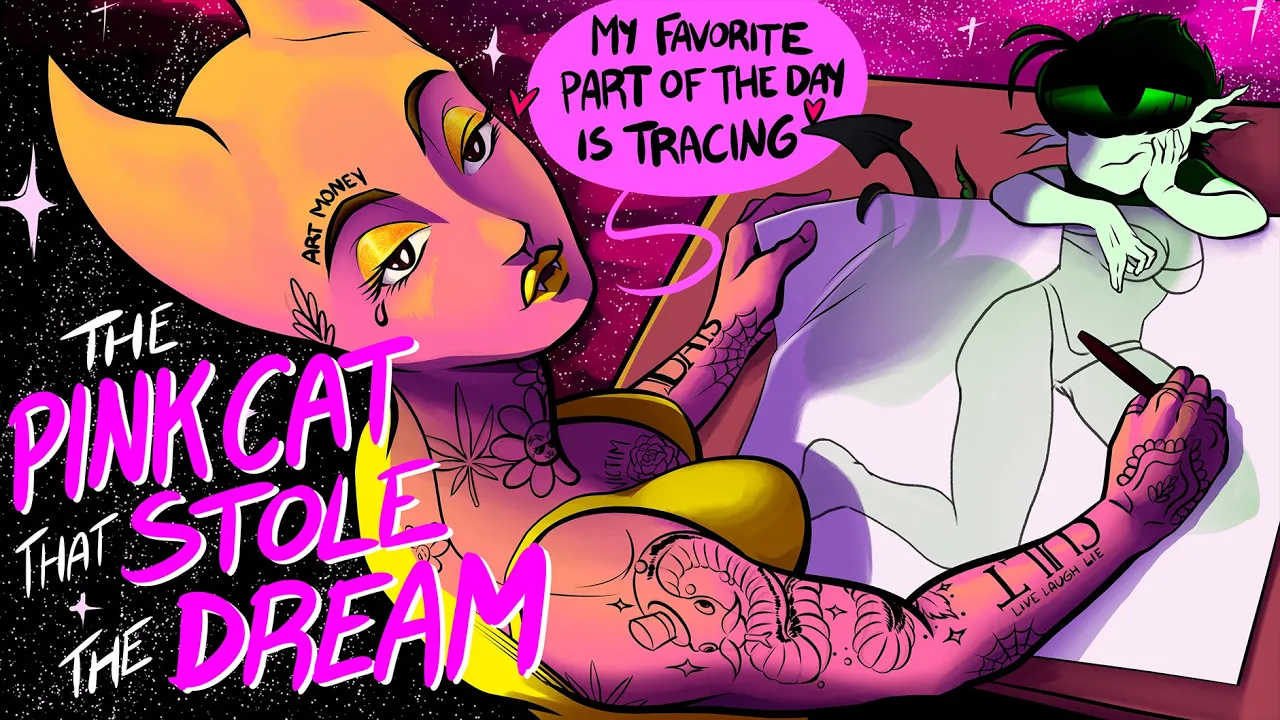
The Pink Cat that Stole the Dream
539.6K
Roy Lichtenstein's estate has gone on to issue copyright infringement notices to artists appropriating from the same original source, which is hypocritical to say the least. This gives the impression that Lichtenstein has the right to steal from these artists, but nobody else is allowed to. David Barcelona created a project deconstructing Roy Lichtenstein and made efforts to find most of Lichtenstein's sources.
Click to watch →

The Art Angle Podcast: How Roy Lichtenstein Became a Super-Villain to Comic Book Artists
1.8K
Roy Lichtenstein, a pioneering Pop artist in the early 1960s, used comic book imagery as inspiration for his brightly colored paintings, creating groundbreaking work that challenged the dominance of abstract art. However, the subject of his source material has become unexpectedly controversial. His painting 'Nurse' sold for $1.7 million in 1995 and then for $95 million in 2015, making it one of the most expensive paintings ever. Christie's auction house described the imagery as coming from a 'comic romance novel' but failed to credit Arthur Petty, the actual comic artist who drew the original panel. This omission represents a broader pattern of disrespect toward comic art in the fine art world. Prominent comic artists including Dave Gibbons (Watchmen), Art Spiegelman (Maus), and Neil Gaiman (The Sandman) have criticized how museums fail to acknowledge the comic book artists who inspired Lichtenstein, viewing him as a thief who copied hard-working artists without naming them. The fundamental question emerges: where does artistic appropriation cross into theft?
Click to watch →

CREATOR LEGENDS: RUSS HEATH 9/29/1926 - 8/23/2018 #creatorlegends
184
Comic book artists developed innovations like adapting cinematic close-ups to still images and developing dynamic interactions between image, caption, and speech bubbles. When artists draw content and designers add to it, credit should be given to everyone involved. The comic industry has shifted toward creator-owned materials, where artists seek to retain rights to their work. Russ Heath created a six-panel comic commenting on Lichtenstein's borrowing and promoted the Hero Initiative. In a 2006 Boston Globe interview, Heath stated Lichtenstein never even had him over for a cocktail, and after Heath died, he said 'I guess I'm out of luck, that bastard Lichtenstein.' This personal response reflects Heath's frustration with how his work was used without proper acknowledgment.
Click to watch →

#daftpina #antoons #animation Daft Bed feat. Failed Artist Desperate for Drama
348
The creator discusses the history of artistic appropriation, comparing Roy Lichtenstein and Andy Warhol. Lichtenstein reappropriated comic book images, blowing them up to wall size and elevating them into art. Despite controversy about plagiarizing comic artists without credit, Lichtenstein enjoyed worldwide acclaim and his works sold for tens of millions of dollars. Warhol was famous for art traced from other works, most notably the Campbell's Soup Can series. He created nearly identical images for products, people, and other artwork, including the Mona Lisa and Marilyn Monroe series. Warhol faced one copyright lawsuit but settled, and the publicity was good enough for the company that suing could hurt their image. The creator argues that if these artists are celebrated, then tracing in parodies should also be acceptable.
Click to watch →
Deep Dive
Examination of the Neo-Pop art movement of the 1980s and beyond, evaluating the legacy of Lichtenstein on artists like Jeff Koons and Takashi Murakami.
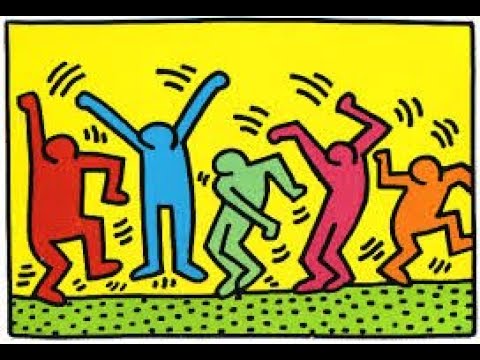
ARTE NEOPOP
2.1K
Neo-pop art emerged in the 1980s as the successor to 1960s pop art, characterized by the use of everyday objects and popular culture imagery, absence of formal manifestos, and the goal of provoking social, cultural, or political reactions; key artists include Keith Haring (known for accessible subway graffiti art), Jeff Koons (renowned for complex porcelain sculptures and colorful installations), Takashi Murakami (creator of Superflat and iconic characters like Mr. DOB), Wang Guangyi (who addressed China's political contradictions through ironic posters), and Romero Britto (who created colorful portraits for major brands and celebrities).
Click to watch →

Лекция Ирины Кулик «Рой Лихтенштейн — Такаси Мураками»
41.9K
Both Roy Lichtenstein (American pop art pioneer) and Takashi Murakami (Japanese Superflat artist) transformed comic book culture into high art, but through fundamentally different cultural lenses. Lichtenstein, working in 1960s America, used comic strips as a 'reduced artistic language' to explore abstraction and art history, while Murakami, working in 1980s-2000s Japan, drew from manga and anime to create a 'superflat' aesthetic that reflects Japan's unique cultural identity shaped by post-war American influence. Both artists employed comic book's flat, reproducible style as a meta-language to discuss high art, but Lichtenstein's approach was more conceptual and analytical, while Murakami's is more playful and culturally hybrid, combining traditional Japanese elements with contemporary pop culture.
Click to watch →

FLORECITA DE TAKASHI MURAKAMI: ¿QUÉ SIGNFICA? | ANÁLISIS DE OBRA | HABLEMOSARTE
32.7K
Takashi Murakami is one of the most important artists in contemporary art, with work appearing on album covers, fashion runways, and brand merchandise. Born in Tokyo in 1962 to a taxi driver father and textile designer mother, he grew up in post-WWII Japan, a period of reconstruction and conservative mentality. He studied traditional Japanese painting at the National University of Fine Arts in Tokyo, learning techniques that became the foundation for his style. Traditional Japanese art features bidimensional elements with minimal light and shadow, creating a flat, wallpaper-like appearance evident in pop culture like Super Mario Bros and anime. While Japan developed its Superflat aesthetic in the 1980s-1990s, the United States experienced industrialization, mass media, and hyper-consumerism. Artists like Warhol, Keith Haring, Roy Lichtenstein, Jeff Koons, and Damien Hirst became major inspirations. Murakami's work represents a unique hybrid combining traditional Japanese elements with American pop culture ideology, characterized by oversaturation of colors and industrialized processes. Despite criticism, his work has sold for millions of dollars across multiple mediums. Each element carries a story, playing with contrasts between Western and Eastern influences. In traditional Japanese art, flowers represent love, hope, femininity, beauty, delicacy, and prosperity, but Murakami employs them as caricatured versions with eyes and smiles similar to cartoons.
Click to watch →
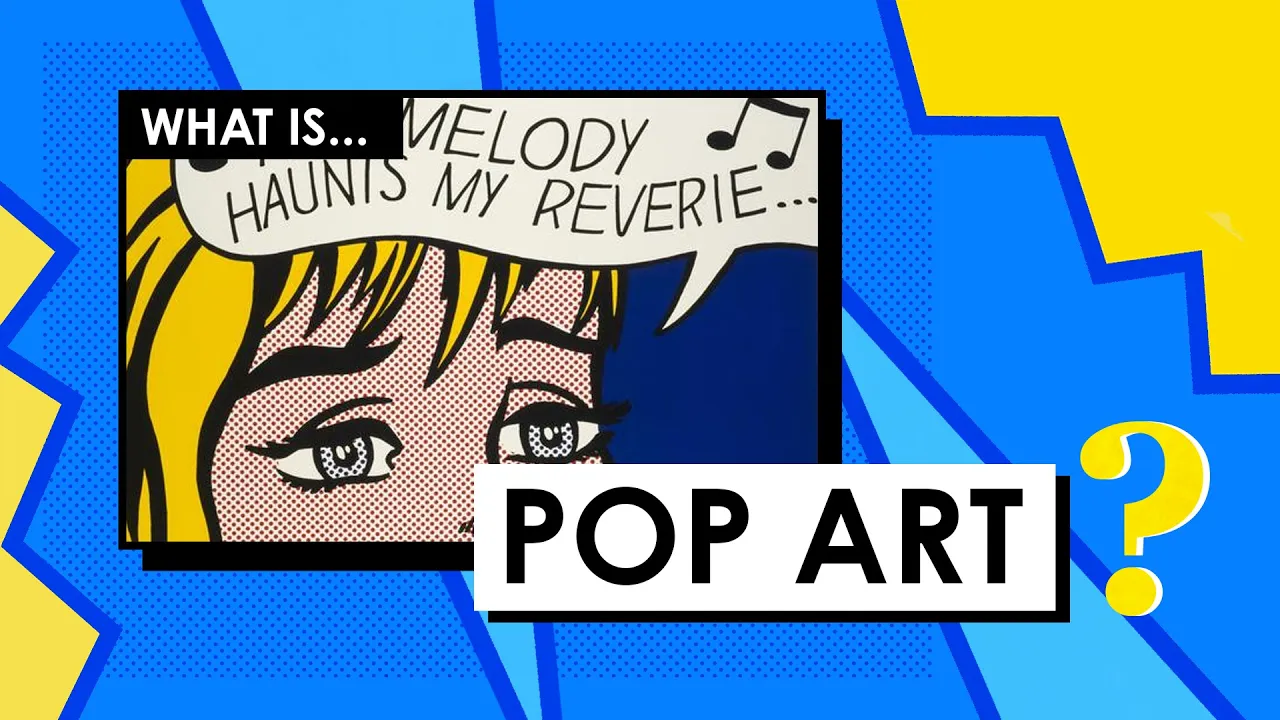
What is Pop Art? Art Movements & Styles
469.1K
Pop Art emerged in the 1950s when the Independent Group in London, led by Eduardo Paolozzi, challenged traditional art by incorporating mass media images into their work; this movement later flourished in America with artists like Roy Lichtenstein (who used comic book imagery) and Andy Warhol (who employed silkscreen printing to reproduce celebrity portraits), ultimately influencing contemporary Neo-Pop artists such as Jeff Koons and Damien Hirst, whose celebration of banality and mechanical processes continues to shape modern art and commercial design.
Click to watch →
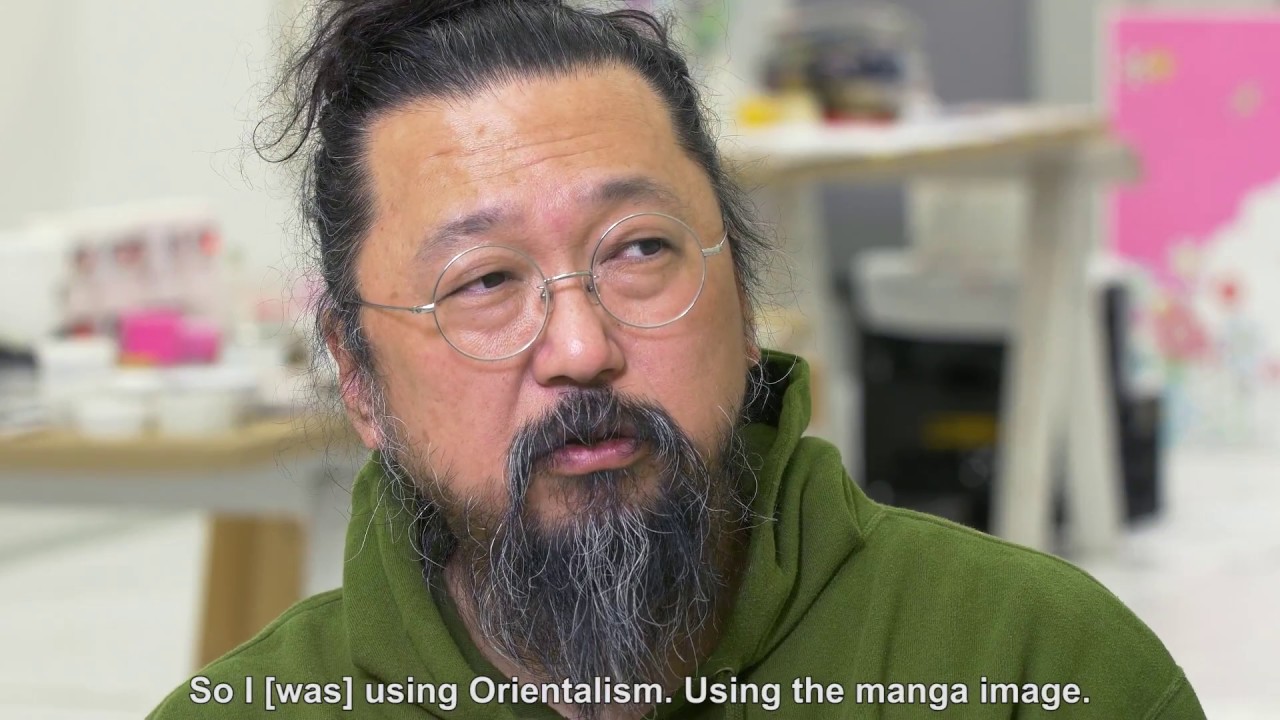
Takashi Murakami
467K
Takashi Murakami, a Japanese artist who gained prominence in the Western contemporary art world in the late 1980s, developed the 'Superflat' artistic philosophy that challenges Western distinctions between high art and low art by embracing Japanese cultural traditions where such boundaries never existed; his work combines traditional Japanese techniques like Buddhist-inspired AR Hots paintings with modern pop culture references and collaborations with figures like Kanye West and Louis Vuitton, using industrial-scale production methods to create enormous paintings that flatten hierarchical distinctions in the art world.
Click to watch →
Deep Dive
Investigation into institutional curation and how retrospectives at major galleries like Tate Modern shape the canon of modern art history.

(Part 3) M+ Matters- ‘Global Museums’ Collection and Display Strategies Today’
390
When Tate Modern opened in 2000, the hang was experimental and town-bound, changing over time with a five-year cycle of displays to avoid replacing one canon with an alternative canon. They realized it was difficult to critique the known unless placed in a familiar, reassuring place. The 2006 rehang put at the heart of each group of galleries something more conventional within art histories—areas where the collection was really strong. The four hub galleries related to classic moments: birth of abstraction, redefinition of humanity after WWII, minimalism, and surrealism.
Click to watch →
Frances Morris - 'Looking at the Past Through the Lens of the Present'
741
Modern museums must move beyond traditional linear, Western-centric art historical narratives toward polycentric, network-based approaches that recognize the interconnected, non-linear nature of artistic influence across global contexts and diverse communities, thereby democratizing access to art history and making collections more representative and engaging for contemporary audiences.
Click to watch →

Terry Atkinson, broadcast from Lanchester Gallery Projects
566
Major cultural institutions like the Tate may refuse to publish research or host exhibitions challenging institutional narratives, even when publicly funded. Curators build careers spanning decades across multiple museums and dealerships (Conde Nast, Anthony d'Offay, Marian Goodman, Gagosian), creating deep entanglements between curatorial judgment and commercial gallery networks. This institutional capture means that scholarly inquiry and artistic judgment become shaped by market relationships. The shift from art schools to university departments represents broader institutional transformations that prioritize funding and market alignment over artistic independence and critical discourse.
Click to watch →
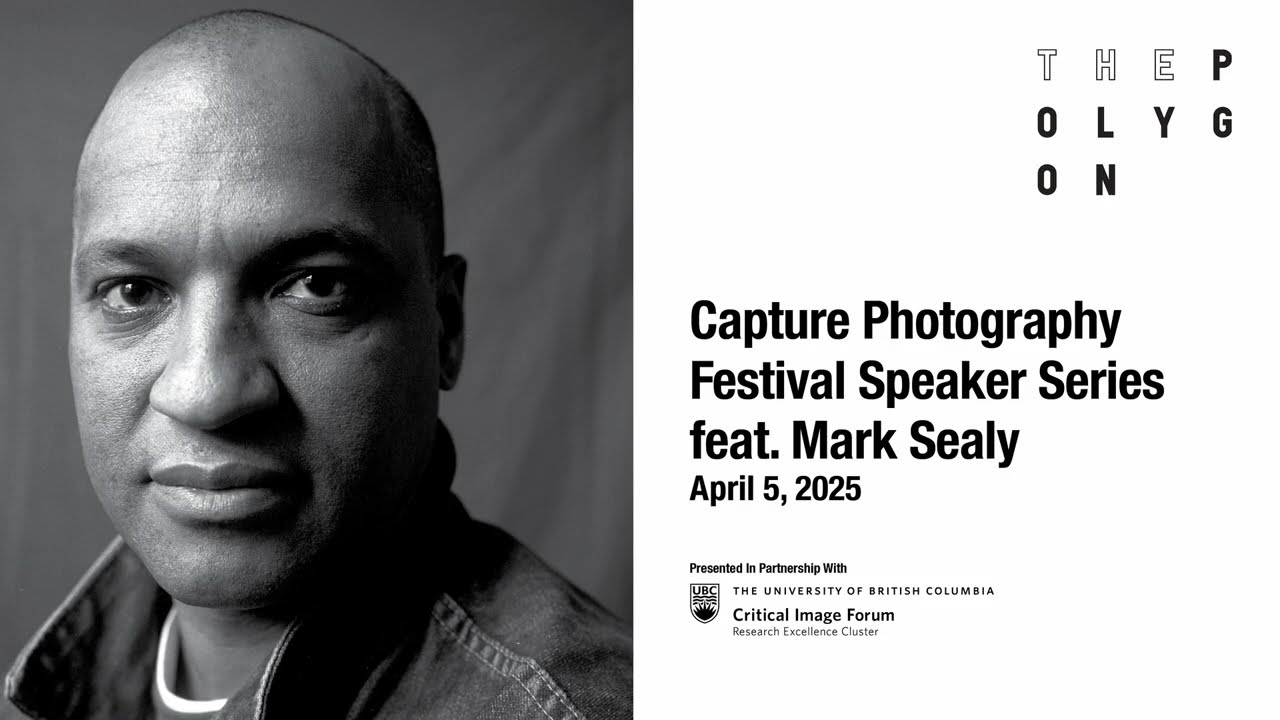
Mark Sealy - Capture Photography Festival Speaker Series
117
Art history experiences periodic 'cultural turns' every few decades, particularly since post-WWII, where Western cultural institutions reflect on their ideological positions and consider who has been excluded or marginalized. Artists like Rotimi Coyote represent these cultural shifts, and it often takes approximately 30-40 years after an artist's death before their work can genuinely be recognized through a retrospective lens. The distinction between 'survey' and 'retrospective' matters because surveys bring material into the public sphere for the first time, while retrospectives commemorate those who have passed. Curating exhibitions from private archives requires forensic examination of contact sheets, looking for chinographs, pen marks, and indications of artistic intention—a multi-year process involving dating work through codes and identifying both selected and rejected material. Organizations serving marginalized artists must navigate complex internal dynamics while building infrastructure, requiring both inclusive practices and strategic positioning to secure resources for sustained operations.
Click to watch →

A Look At The Tate Modern, London
4.9K
Tate Modern is an art gallery in London, housing the United Kingdom’s national collection of international modern and contemporary art. It is part of the Tate group, which includes Tate Britain, Tate Liverpool, and Tate St Ives. The gallery is situated in the former Bankside Power Station in the Bankside area of the London Borough of Southwark. It is among the largest museums of modern and contemporary art globally. Access to the permanent collection displays, which occupy most of the gallery space, is free of charge, consistent with other UK national galleries and museums. However, admission tickets are required for major temporary exhibitions. In 2020, Tate Modern ranked third globally in visitor numbers among art museums and was the most visited art museum in Britain. The nearest transport links are Blackfriars railway station and London Underground station, located approximately 0.5 kilometers from the gallery.
Click to watch →
Pop Art Legacy
Artistic Insight
Pop Art Legacy
0:03- 1
Explores Lichtenstein's 1960s pop art revolution and graphic style.
- 2
Highlights his shift from expressionism to comic-inspired imagery.
- 3
Notes public shock at blending high art with popular culture.
The Plagiarism Debate and the Exploitation of Comic Creators
While Roy Lichtenstein is celebrated as a pioneer of Pop Art, a significant and enduring critique accuses him of plagiarism and the exploitation of uncredited comic book artists. Detractors, including comic book advocates and the original artists themselves (such as Russ Heath and Irv Novick), argue that Lichtenstein's work was not merely transformative 'appropriation,' but direct, uncompensated copying of their intellectual property. Critics highlight a stark double standard: the elite art world elevated Lichtenstein to fame and fortune for 'elevating' commercial art, while the original creators of those iconic images remained underpaid and unrecognized. This perspective challenges the narrative of Lichtenstein's singular genius, reframing his legacy as one of opportunistic exploitation that commodified the labor of working-class illustrators without providing due credit or financial compensation.
Understanding of the Post-WWII historical shift from Abstract Expressionism to Pop Art as a reaction to elite art culture.
Familiarity with the concept of 'high' vs. 'low' culture and how mass media, advertising, and comic books influenced 20th-century visual art.
Basic knowledge of commercial printing techniques, particularly the mechanical Ben-Day dot process used in mid-century pulp magazines and newspapers.
Awareness of artistic appropriation—the practice of taking pre-existing objects or images with little or no transformation applied to them.
In-depth comparison of Lichtenstein's techniques with other pioneering Pop Artists, such as Andy Warhol's silkscreening or Claes Oldenburg's soft sculptures.
Critical analysis of the ethical and legal debates surrounding copyright, intellectual property, and the unrecognized comic book artists whose work Lichtenstein adapted.
Examination of the Neo-Pop art movement of the 1980s and beyond, evaluating the legacy of Lichtenstein on artists like Jeff Koons and Takashi Murakami.
Investigation into institutional curation and how retrospectives at major galleries like Tate Modern shape the canon of modern art history.
82.2K views315likes3:06@Channel4NewsOriginal Release: 2013-02-18
he was the founder of American pop art in the 1960s his canvases turning the stuff of advertisments and comic books into some of the 20th Century's best known works now London State modern is holding the biggest retrospective of Roy lien Stein's work for more than 20 years Jane deth has been to meet Roy Lenin's Widow for an insight into the show and the artist you'll recognize a lonstein even if you don't know the painter's name the print-like dots the primary colors the industrial black lines its graphic and its [Music] cult these exclusive pictures show Roy lonstein working in his studio in the '90s Jazz in the background a spinning easel before him he wanted his paintings to be perfect from any angle it was pop art but it was proper art Roy lonstein Broke Free of the breathless brushstrokes of expressionism and his work took people aback they thought it was vulgar people were shocked you you'd come out of this sort of um very Brushy expressionist moment in American art and suddenly you were dealing with these sort of surface level images that were from popular culture so the avagard suddenly became involved with with popular culture this painting look Mickey was created after lien Stein's son pointed to a cartoon and bet his dad he couldn't paint as good as that it turned out he could he played with all sorts of images of popular culture but they're only superficially superficial they speak of grand themes of war and love even as they dare us to take them for real lonstein painted works that looked like they'd been copied from comic books he was saying saying Even in our moments of personal high drama we're actually just imitating the media we consume we might think we're living desperately original lives but are we Dorothy lonstein shared the artist's life for 30 years because he was basically uh a rationalist and uh kind of a humanist and uh but he did have this ironic sense of life the female nude is Iconic but Roy lickstein pays tribute to tradition while toying with it I actually do think that Roy's paintings tend not to look housebroken I mean I think they tend to look very fresh as if they really could have been done in contemporary times as well as God now 50 years ago gasp Roy lonstein was a master at making us take a fresh look he said himself the things I parody I admire
Up Next

7:09
Andy Warhol, Campbell's Soup Cans: Why Is It Art? | Art History
@khanacademy
317.5K views•2012-08-30

114:18
Christian Iconography: History, Theology, and Meaning | Fr. Panayiotis Papageorgiou
@Trisagionfilms
58.8K views•2020-02-21
7:48
Ukiyo-e Art: History, Woodblock Printing & Influence
@japanathand
6.3K views•2023-06-08

16:34
Earliest Depictions of Jesus in Art: 10 Ancient Images Explained
@UsefulCharts
5.9M views•2022-06-03
Related Study Plans & Knowledge Roadmaps
Structured learning paths in Art History
art-history
Gothic Cathedrals: Engineering, Light & Society
01The Birth of the Gothic: Romanesque to Suger's Vision
02The Structural Triad: Pointed Arches, Ribbed Vaults, and Flying Buttresses
03Theology of Light: Lux Nova and Sacred Geometry
+ 2 more learning modules
14h5 modules
Explore Roadmap
art-history
Pre-Raphaelites: Realism, Symbolism & Critique
01The Victorian Art Establishment and Academic Formula
02The Founding of the PRB and Radical Realism
03Medieval Revivalism and Literary Symbolism
+ 1 more learning modules
8h4 modules
Explore Roadmap
art-history
Street Art: From Subways to Art Market
01Subcultural Origins in Philadelphia and New York (1970s)
02The Subway Era and Style Wars (Late 1970s - 1980s)
03The East Village Scene and Early Gallery Crossover
+ 2 more learning modules
10h5 modules
Explore Roadmap
art-history
Classic Maya Art: Iconography, Glyphs & Ritual
01Foundations of Classic Maya Visual Culture
02Deciphering Maya Hieroglyphs & Text-Image Integration
03Sacred Geography and Cosmological Architecture
+ 2 more learning modules
14h5 modules
Explore Roadmap