












![The Shock of the New, Pt. 7: Culture as Nature ~ Robert Hughes [DOC 1980]](https://i.ytimg.com/vi_webp/5_e5VL8Zlho/maxresdefault.webp)




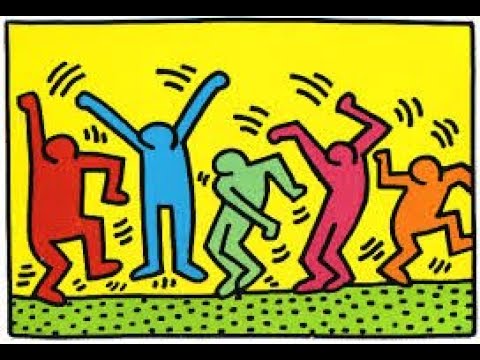


Andy Warhol's Campbell's Soup Cans (1962) exemplifies how modern art transforms everyday objects into meaningful works by relocating them from commercial contexts to museums, thereby challenging traditional notions of artistic value and elevating mundane subjects to cultural significance through conceptual framing.
Andy Warhol, Campbell's Soup Cans: Why Is It Art? | Art History
Added:Understanding the rise of post-WWII American consumer culture, mass production, and the boom in advertising.
Familiarity with Marcel Duchamp and the Dada movement, particularly the concept of the 'readymade' which challenged traditional definitions of art.
A basic grasp of Abstract Expressionism, the dominant avant-garde art movement of the 1940s and 1950s that Pop Art reacted against.
The historical distinction between 'high art' (fine art gallery standards) and 'low art' (commercial illustration and graphic design).
An exploration of Warhol's silk-screening techniques and his studio, 'The Factory,' which questioned the role of the artist's hand in creation.
The transition from Modernism to Postmodernism, focusing on art historical themes of irony, simulation, and pastiche.
Comparative analysis of other key Pop Art figures, such as Roy Lichtenstein, Claes Oldenburg, and James Rosenquist.
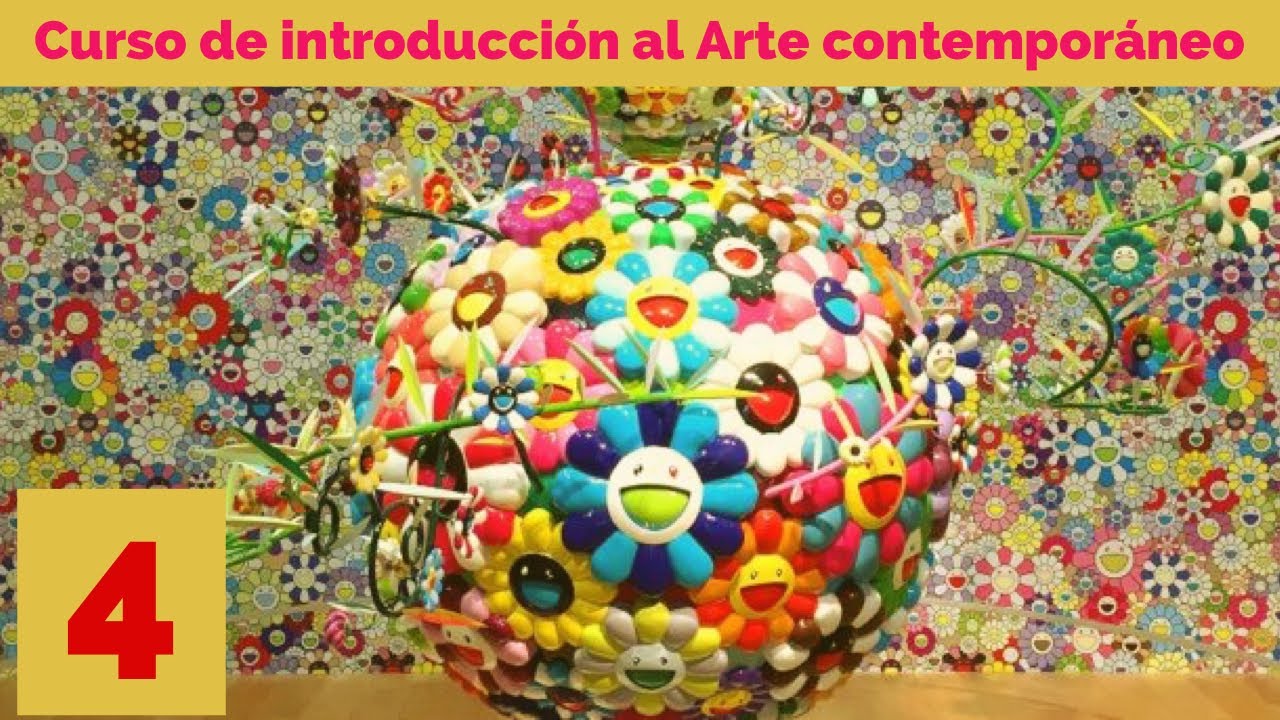
Investigation into Neo-Pop and contemporary artists like Jeff Koons and Takashi Murakami, who continue to blur the lines between art and commercialism.
317.5K views1.3Klikes7:09Original Release: 2012-08-30
(piano playing) Steven: We're looking at one of the single canvases from a series of canvases of the Campbell Soup Cans by Andy Warhol from 1962 at the Museum of Modern Art.
And one of the really important questions that comes up about, especially modern art, is well, why is this art?
Sal: When you ask me that a bunch of things kind of surface in my brain.
It does evoke something in me so I'm inclined to say yes, but then there's a bunch of other things that say well, if I didn't see this in a museum and if I just saw this in the marketing department of Campbell's Soup, would you be viewing it differently?
Steven: Because it's advertising then. Sal: Yes.
Steven: But in the context of the museum or in the context of Andy Warhol's studio, it's not quite advertising, right?
Sal: Even if it's the exact same thing. Steven: Yeah.
Sal: And the idea here is by putting it in the museum it's saying look at this in a different way.
Steven: Well that's right, it really does relocate it, it does change the meaning, it does transform it, and that's really one of the central ideas of modern art is that you can take something that's not necessarily based in technical skill, because I don't think you would say that this is beautifully rendered. Sal: Right.
Steven: But it relocates it and makes us think about it in a different way.
Sal: And so, I guess he would get credit for taking something that was very, almost mundane, something you see in everyone's cupboard, and making it a focal point like you should pay attention to this thing.
Steven: I think that's exactly right and I think that he's doing it about a subject that was about as low a subject as one could go.
I mean cheap advertising art was something that was so far away from fine art from the great masters and then to focus on something as lowly as a can of soup, and cream of chicken no less, right? (laughs) Sal: A lot of it is, if he did it 50 years earlier, people would have thought this guy's a quack and if he did it now they'd think he was just derivative and... It was really just that time where people happened to think this was art.
Steven: I think that that's right.
In 1962, what Warhol is doing is he's saying what is it about our culture that is really authentic and important?
And it was about mass production, it was about factories.
He in a sense said let's not be looking at nature as if we were still an agrarian culture, we're now an industrial culture.
What is the stuff of our visual world now?
Sal: I think I'm 80 percent there.
I remember in college there was a student run art exhibit and as a prank a student actually put a little podium there and put his lunch tray.
He put a little placard next to it, you know, lunch tray on Saturday or something is what he called it.
So he did it as a prank and everyone thought it was really funny but to some degree it's kind of a sign that maybe what he did was art.
Steven: Well I think that's why it was funny because it was so close, right?
Sal: And to some degree when someone took a lunch tray and gave it the proper lighting and gave it a podium to look at it and wrote a whole description about it, I did view the lunch tray in a different way.
That's kind of the same idea, that something that's such a mundane thing but you use it everyday.
I mean, what would you say to that?
Was that a prank or was that art?
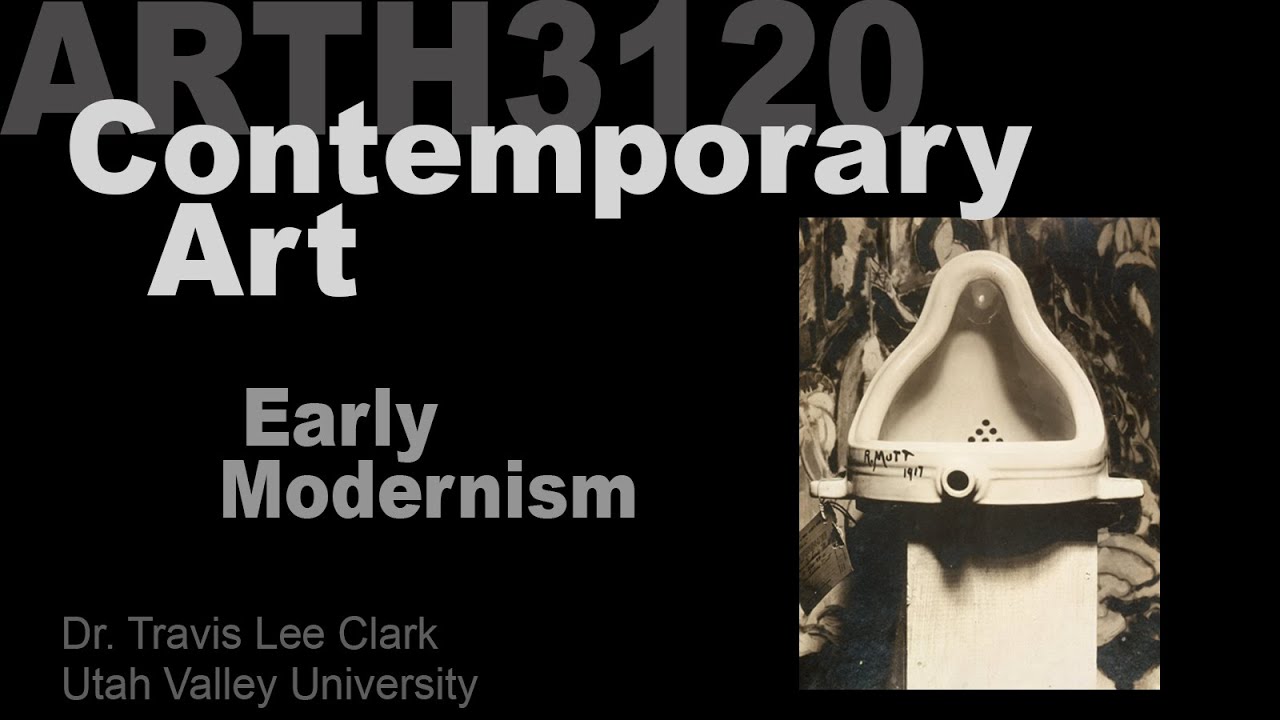
Steven: I think it is a prank but it's also very close to some important art that had been made earlier in the century.
He had license to do that because of somebody named Marcel Duchamp.
In fact, Warhol had in a sense the same kind of license to not focus on the making of something, not focus on the brushwork, not focus on the composition, not focus on the color, but focus on the refocusing of ideas.
Sal: And the reason why we talk about Warhol or Duchamp or any of these people is that, as you said, it's not that they did something technically profound.
Obviously Campbell Soup's marketing department had already done something as equally as profound, it's more that they were the people who looked at the world in a slightly different way and highlighted that.
Steven: Well I think that that's right.
Warhol is also very consciously working towards asking the same questions that the prankster at your school was asking.
He's saying can this be art?
And in fact he's really pushing it.
Look at the painting closely for a moment.
This is one of the last paintings that he's actually painted.
He's really defined the calligraphy of this Campbell's, he's really sort of rendered the reflection of the tin at the top.
But then he stopped and he said, I don't want to paint the fleur de lis.
You see those little fleur de lis down at the bottom.
I don't want to paint those.
So he actually had a little rubber stamp made of them and actually sort of placed them down mechanically.
What does that mean for an artist then, to say I don't even want to bother to paint these?
I'm just going to find a mechanical process to make this easier.
Warhol is doing something I think which is important which is reflecting the way that we manufacture, the way that we construct our world.
Think about the things that we surround ourselves with, almost everything was made in a factory.
Almost nothing is singular in the world anymore.
It's not a world that we would normally find beautiful.
Sal: I don't know, sometimes I feel and correct me if I'm wrong, that a decision was made that Warhol was interesting or great and then people will interpret his stuff to justify his greatness.
That oh look, he used a printer instead of drawing it which shows that he was reflecting the industrial or whatever, but if he had done it the other way, if he had hand drawn it or hand drawn it with his elbow you know, or finger painted it or something people would say oh isn't this tremendous because we normally would see this thing printed by a machine and now he did it with his hands.
How much do you think that is the case or am I just being cynical?
Steven: Well no, I think that there's value in a certain degree of cynicism and I think that in some ways what we're really talking about here is what does it mean to be an avant-garde artist?
What does it mean to sort of change the language of art and to try to find ways that art relates to our historical moment in some really direct and authentic way?
Sal: And maybe it's easy for me to say this because I remember looking at this when I took 5th grade art class, Andy Warhol and all of that, so now it seems almost not that unique but in '62 what I'm hearing is that Warhol was really noteworthy because he really did push people's thinking.
Steven: I think that Warhol was looking for, in 1962, a kind of subject matter that was completely outside of the scope of that we could consider fine art.
One of his contemporaries, Roy Lichtenstein, was asked what pop art was and he said, "Well we were looking for subject matter that was so despicable, "that was so low, that nobody could possibly believe that it was really art."
And I think you're right, I think now we look at it and it's so much a part of our visual culture that we immediately accept it.
But I think that it's really interesting to retrieve just how shocking and radical that was.
Sal: This is fascinating.
It seems like there's a lot of potential there, that stuff that's pseudo-art made for other purposes, for commercial purposes but if you kind of shine a light on it, in the way that a light has been shone on this, that it does... In your mind would that cross the barrier into being art?
Steven: Well I think that, you mentioned before, that if somebody was doing this now it would feel really derivative.
And I think that that's right.
I think it underscores just how hard it is to find in our culture now, ways of making us see the world in new ways.
Sal: Fascinating.
(piano playing)
Up Next
35:08
Art Theft and Appropriation in Fine Art History
@Shawn.Grenier
72.4K views•2023-06-03

114:18
Christian Iconography: History, Theology, and Meaning | Fr. Panayiotis Papageorgiou
@Trisagionfilms
58.8K views•2020-02-21
7:48
Ukiyo-e Art: History, Woodblock Printing & Influence
@japanathand
6.3K views•2023-06-08

16:34
Earliest Depictions of Jesus in Art: 10 Ancient Images Explained
@UsefulCharts
5.9M views•2022-06-03
Related Study Plans & Knowledge Roadmaps
Structured learning paths in Art History
art-history
Gothic Cathedrals: Engineering, Light & Society
01The Birth of the Gothic: Romanesque to Suger's Vision
02The Structural Triad: Pointed Arches, Ribbed Vaults, and Flying Buttresses
03Theology of Light: Lux Nova and Sacred Geometry
+ 2 more learning modules
14h5 modules
Explore Roadmap
art-history
Pre-Raphaelites: Realism, Symbolism & Critique
01The Victorian Art Establishment and Academic Formula
02The Founding of the PRB and Radical Realism
03Medieval Revivalism and Literary Symbolism
+ 1 more learning modules
8h4 modules
Explore Roadmap
art-history
Street Art: From Subways to Art Market
01Subcultural Origins in Philadelphia and New York (1970s)
02The Subway Era and Style Wars (Late 1970s - 1980s)
03The East Village Scene and Early Gallery Crossover
+ 2 more learning modules
10h5 modules
Explore Roadmap
art-history
Classic Maya Art: Iconography, Glyphs & Ritual
01Foundations of Classic Maya Visual Culture
02Deciphering Maya Hieroglyphs & Text-Image Integration
03Sacred Geography and Cosmological Architecture
+ 2 more learning modules
14h5 modules
Explore Roadmap