![[AULA] Linha do Tempo da História da Arte](https://i.ytimg.com/vi_webp/SEyhdqLQ6lA/maxresdefault.webp)


![A arte depois de 1945 | Leitura Coletiva "Arte Moderna" - Argan [18]](https://i.ytimg.com/vi/j2c2_3uR048/maxresdefault.jpg)




















![SON[I]A #254 Griselda Pollock](https://i.ytimg.com/vi/41qKa3rfs9Q/maxresdefault.jpg)
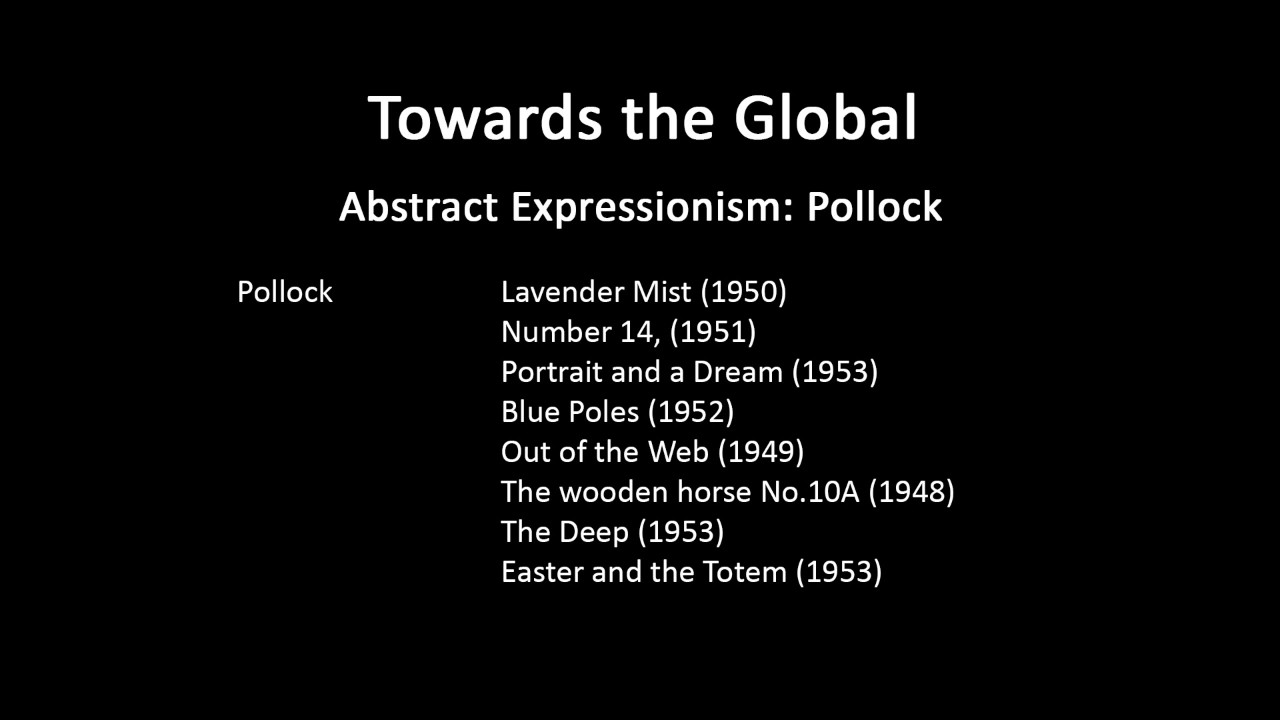
Abstract Expressionism, which emerged in post-WWII New York as a response to trauma and anxiety, was pioneered by three remarkable women—Lee Krasner, Elaine de Kooning, and Helen Frankenthaler—who overcame significant gender-based discrimination to make foundational contributions to this movement that shifted global art centers from Paris to New York; Krasner developed her distinctive 'Little Images' series and later expanded into monumental works after her husband Jackson Pollock's death, while de Kooning innovated modern portraiture and Frankenthaler invented the influential 'Soak Stain' technique, yet all three faced decades of being overshadowed by their male contemporaries despite their crucial roles in establishing Abstract Expressionism as the dominant art movement of the 20th century.
Abstract Expressionism in New York: Three Female Pioneers
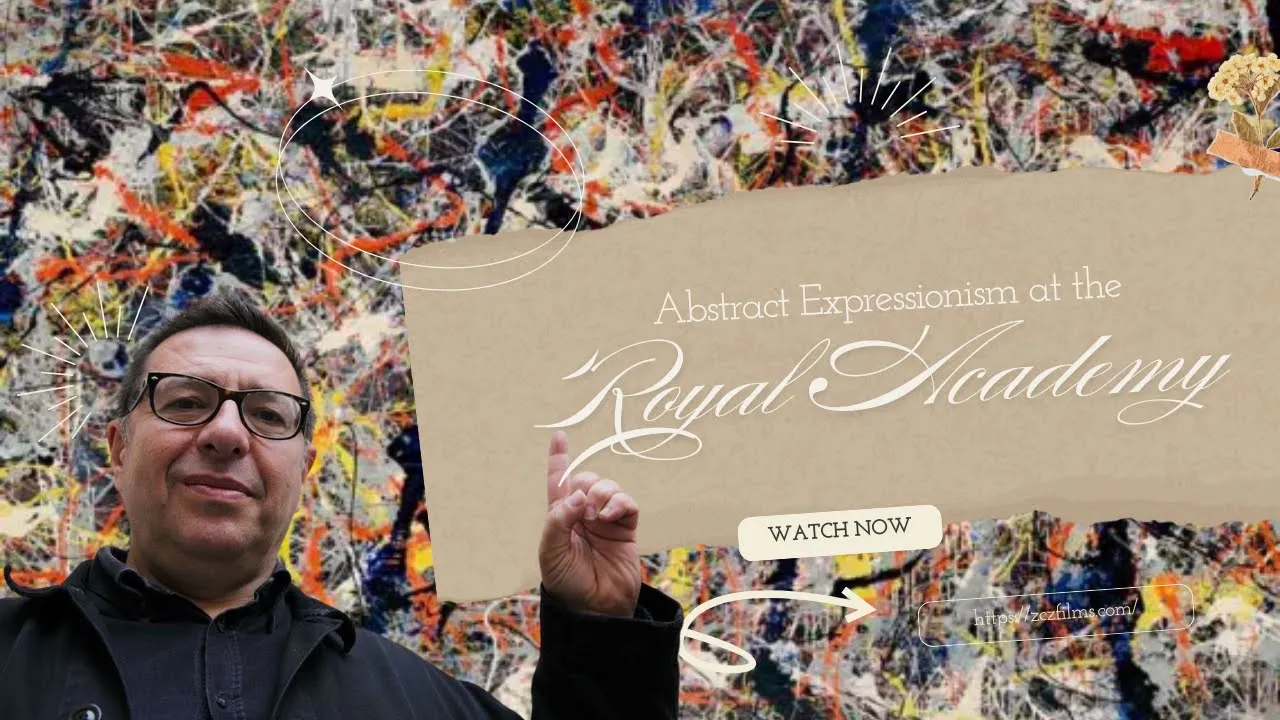
Added:In 1942 an art exhibition opened in New York City pairing emerging talents from America with French giants of the art world. It was one of those shows that would change everything, and in the process shift the art world's focus from Paris to New York. European artists like Georges Braque and Willem de Kooning were shown alongside American artists like Lee Krasner and Jackson Pollock - or as the press called him "Jack the Dripper", who became an overnight sensation. The movement that emerged, Abstract Expressionism was both physically demanding and visceral, attracting paint-splattered macho figures. It was a slower start for their wives, equally brilliant artists and pioneers. The 1950s was an era when a woman's place was in the home, and for them it would be an uphill struggle for recognition, financial success, and critical acclaim. In this film we look at Abstract Expressionism, its origins in New York City and works in three lesser-known museums by three artists.
Abstract Expressionism would emerge from a post-war mood of anxiety and trauma. These were artists, who like the surrealists before them, had a profound interest in the unconscious mind. They produced work that may have been abstract but was also emotional expressive and universal.
Despite their differences, the physical act of painting united them. The work they produced came straight from the gut. It was an art form that was monumental in scale and an expression of the individual. It would run alongside (and be inspired by) that other great improvisational American art form - Jazz. Then in 1951 a group of artists including Jackson Pollock, Willem de Kooning, and Mark Rothko, organized a group show. It was a pivotal moment in American art that showed the cultural landscape had changed forever. 72 artists would show including 11 women. Lee Krasner, Elaine de Kooning and Helen Frankenthaler were among them. In this period female artists were tolerated at best and dismissed at worst. It was however a decade of change, and there was a simmering discontent with traditional gender roles, and the status quo. Bohemian New York, a hotbed of creative energy was a place where female artists had more freedom to thrive.
An opulent 50-room mansion built for financier Felix m Warburg, became the Jewish museum in 1947, the first in the U.S. It now houses work by Marc Chagall, Alfred Stieglitz and several important pieces by Lee Krasner, including this early self-portrait and a painting from her "Little Images" series.
Krasner was already producing critically acclaimed abstract art in the 1930s, and was a significant artist long before her future husband - Jackson Pollock - appeared on the scene. It was around this time, she started to be aware of being pigeonholed as a female artist.
"You know, there's nothing unusual about being a woman and being an artist. It's when the "seat" moves from Paris and shifts into New York. That's when I'm first aware of being "a woman". She knew everyone: Critics, collectors and artists alike. She went dancing in jazz clubs with Piet Mondrian, and was totally entrenched in avant-garde New York. Then she met Jackson Pollock.
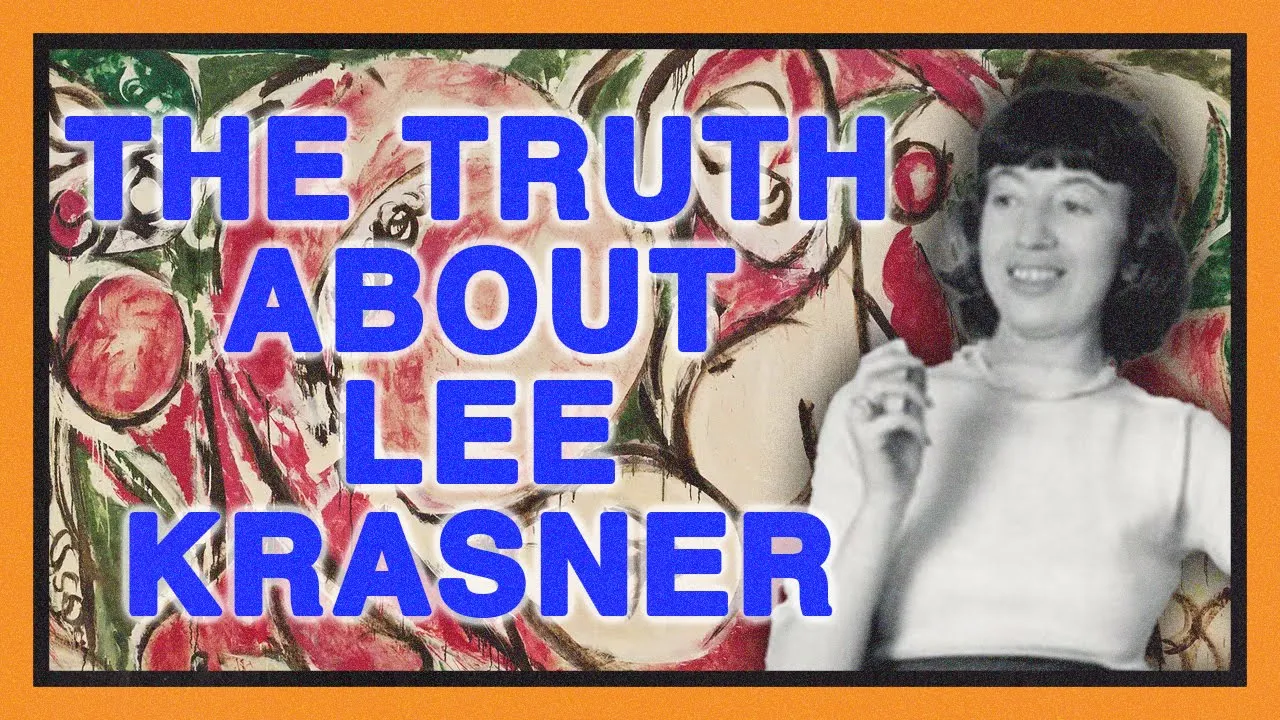
In that landmark show of 1942. Pollock's paintings were shown alongside her own, and Krasner was blown away. It is said that, without Krasner, there would never have been a Jackson Pollock. She nurtured his career and was also responsible for introducing him to many collectors, critics, and artists. In 1945 she married Pollock and they moved out to Springs., Long Island, in the hope, the isolation from New York would stop his heavy drinking and womanizing - unfortunately it didn't. For a while it was all about painting. Their devotion to it, only matched by their devotion to each other. Pollock took over a vast barn as his studio, blasting out jazz records. Krasner worked in a tiny bedroom. As his work got bigger hers got smaller, and she began her breakthrough "Little Images" series. These were paintings brimming with energy that she improvised on her table, or the floor, in an attempt to get away from an "easel aesthetic". They were intimate paintings with rich textures, she loosely structured in a grid.
It is a myth that Krasner gave up her career for Pollock, but the vast amount of time she spent promoting Pollock's art, dealing with his excessive drinking, and his numerous affairs, meant her artistic output dwindled. Seen as the golden couple of Abstract Expressionism, behind closed doors their marriage was disintegrating. Pollock died at the age of 44 in a drunken car crash. He was with his lover, Ruth Kligman, who survived. Krasner was traveling solo in Europe at the time. After his death, Krasner moved into the barn studio and the scale and energy of her paintings changed radically.
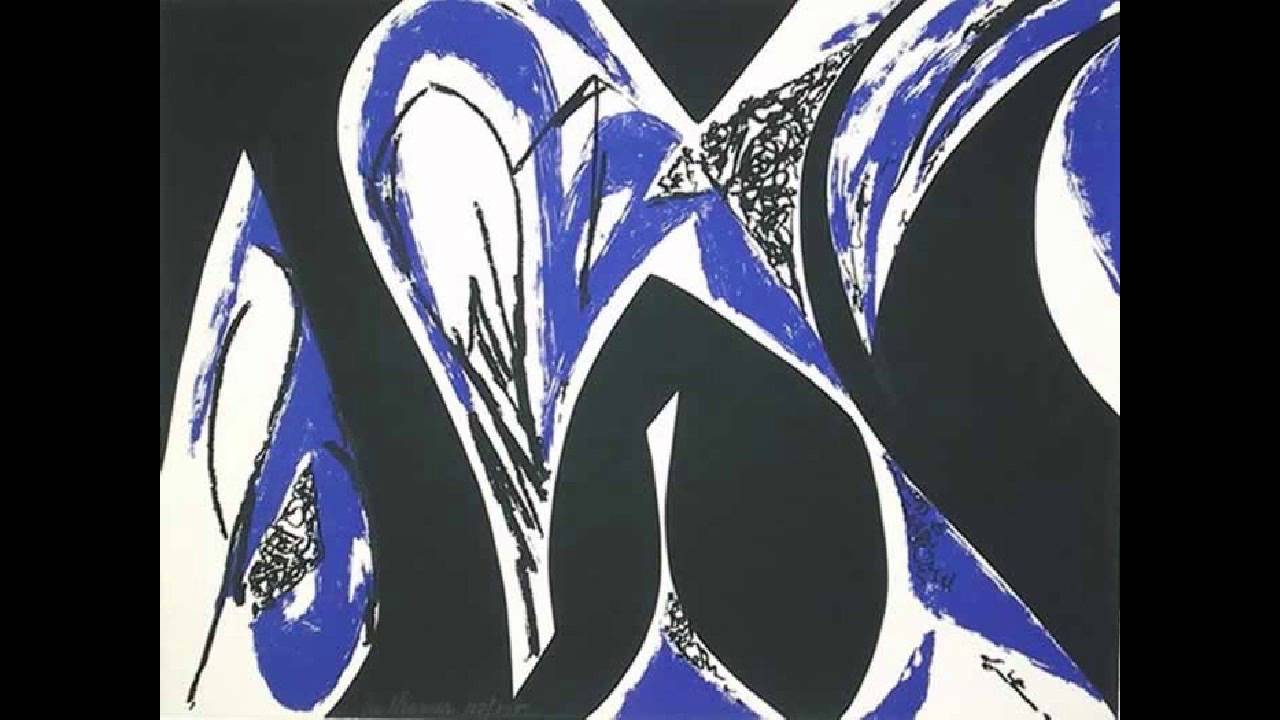
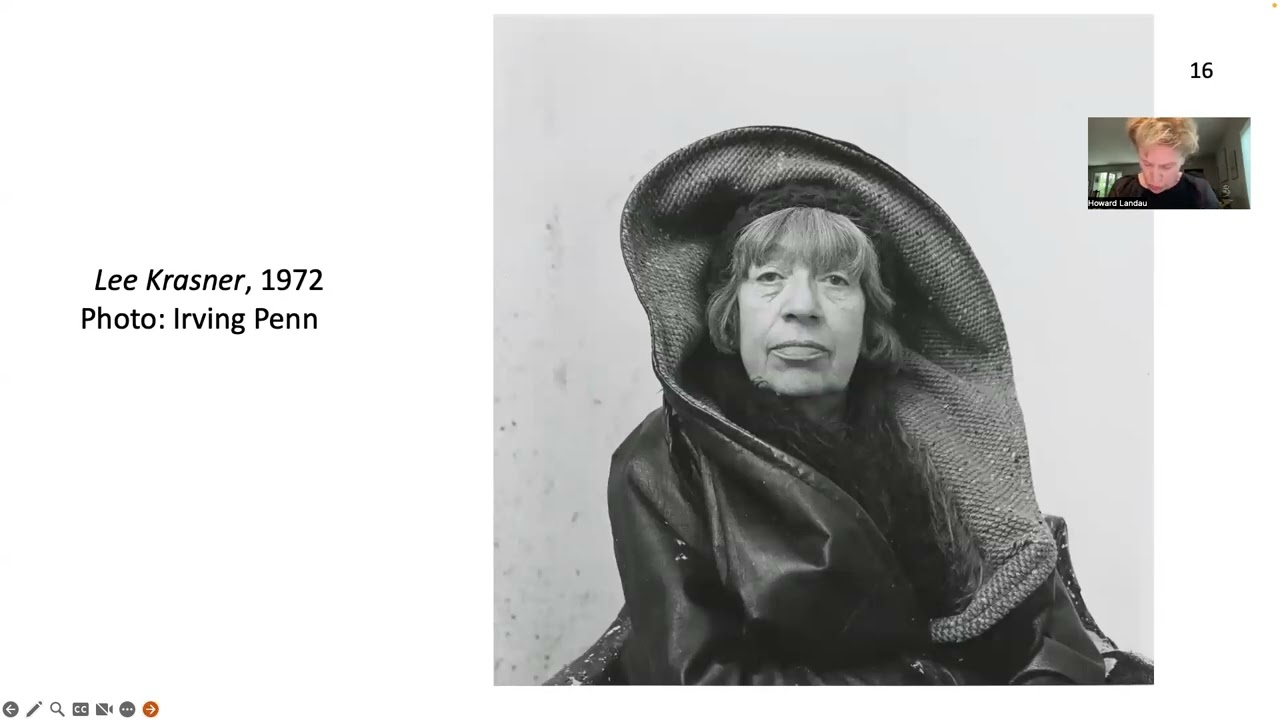
No longer restricted to working on small canvases she now used her whole body to physically create huge works, that use sweeping gestures and spontaneous brushwork in a new free way of thinking. Her huge contribution to Abstract Expressionism was overshadowed for years by the work of her husband, but in her later career she found a language all of her own. Despite critical success, it would be another ten years after Pollock's death before Krasner had her first proper solo show. And in 1984 she finally got a retrospective at the MoMA in New York. A show she had hoped for for so many years, but by then she was using a wheelchair and was in a lot of pain. Six months later she would be dead, but at least by the time she went, she knew she was already acknowledged in art history as one of the founders of Abstract Expressionism. "In terms of what other people think, I can't do anything about that" The Grey Art Gallery is part of New York University, and has a collection of over 5000 works. As well as Pablo Picasso's monumental public sculpture, they have pieces by Arshile Gorky (who is seen as the father of Abstract Expressionism), Sonia Delauney, Helen Frankenthaler and Willem de Kooning. This work by Elaine de Kooning, is a highlight.
From an early age, she had seen reproductions by female artists like Rosa Bonheur and Elizabeth Vigée LeBrun, on the walls of her childhood home In 1938, Elaine met the struggling Dutch artist Willem de Kooning. He was 34 and she was 20. It was said to be love at first sight, and they married five years later. Refusing to be defined as just "Mrs. de Kooning", she became a political activist, an esteemed art critic, a teacher, and a painter known for her abstract portraits. The de Kooning's were also considered a "golden couple", but in fact, their marriage was also falling apart, and they separated in 1957. A lack of success, a series of affairs on both sides, and an excess of alcohol, meant their marriage was over... for now. This painting of a bull is on display at the Grey Gallery. It was done a year after they separated, following a visit to Mexican bull fights. It is a subject of machismo we know well via Picasso and Hemingway. The work bursts with energy, and it places de Kooning firmly within the Abstract Expressionist movement. She created a series of drawings, watercolours, and paintings of bulls, using gestural brush strokes set against swathes of bright pastel colour fields. These works are a great example of her gift for capturing the essence of movement... of gesture. VO: "I want gesture, any kind of gesture. Gentle or brutal, joyous or tragic, the gestures of space soaring, sinking, streaming, whirling. The gestures of light flowing or spurting through colour".
Abstract Expressionism got White House "official approva"l in 1962, when she was commissioned to paint President John F Kennedy. The new modern art form was seen by many to parallel the energy powering JFK's "new frontier", into a future that would take men to the moon.
Her reputation for having "The fastest brush in town" came in handy, as during her sessions Kennedy's aides endlessly came and went.
VO: "He was extremely restless, he read papers, talked on the phone, jotted down notes, crossed and uncrossed his legs, shifted from one arm of the chair to the other" She would paint male subjects in "provocative" poses.
VO: "In the past women painted women and men always painted the opposite sex, and I wanted to paint men as sex objects" Elaine often painted faceless men, and this portrait she painted of her husband has barely any face at all, just a smudge on the canvas. Perhaps her erasure of him is "revenge by paintbrush"?.
In 1976 - now sober - Elaine reconciled with Willem de Kooning, after he reached out to her. Despite the respect the art world had for her, her painting career hadn't taken off, and he was now a world famous artist. She would spend the rest of her life caring for him and organizing his career. Although not a household name when she died in 1989, Elaine de Kooning's immense talent as a portraitist was recognized in 2015, by a major exhibition at the national portrait gallery in Washington, and her work continues to receive critical re-evaluation and find its place in art history. the Brooklyn Museum was planned to be the largest art museum in the world, but financial issues stopped that.
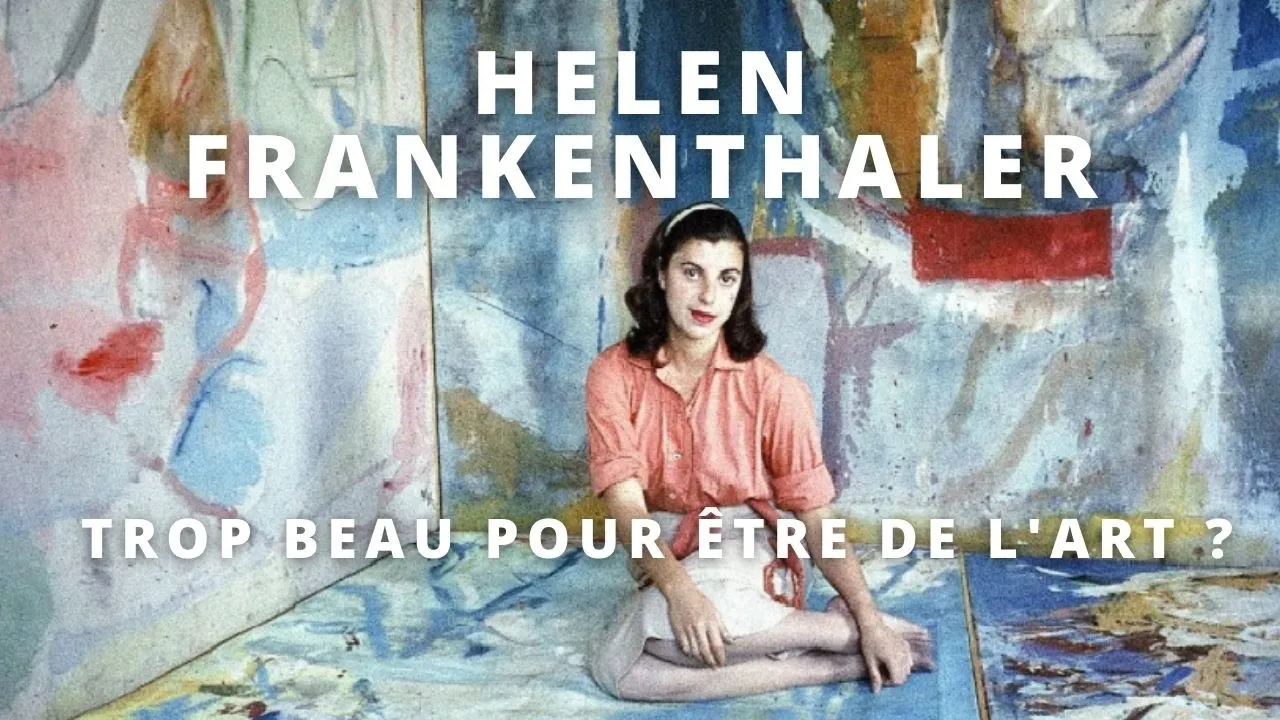
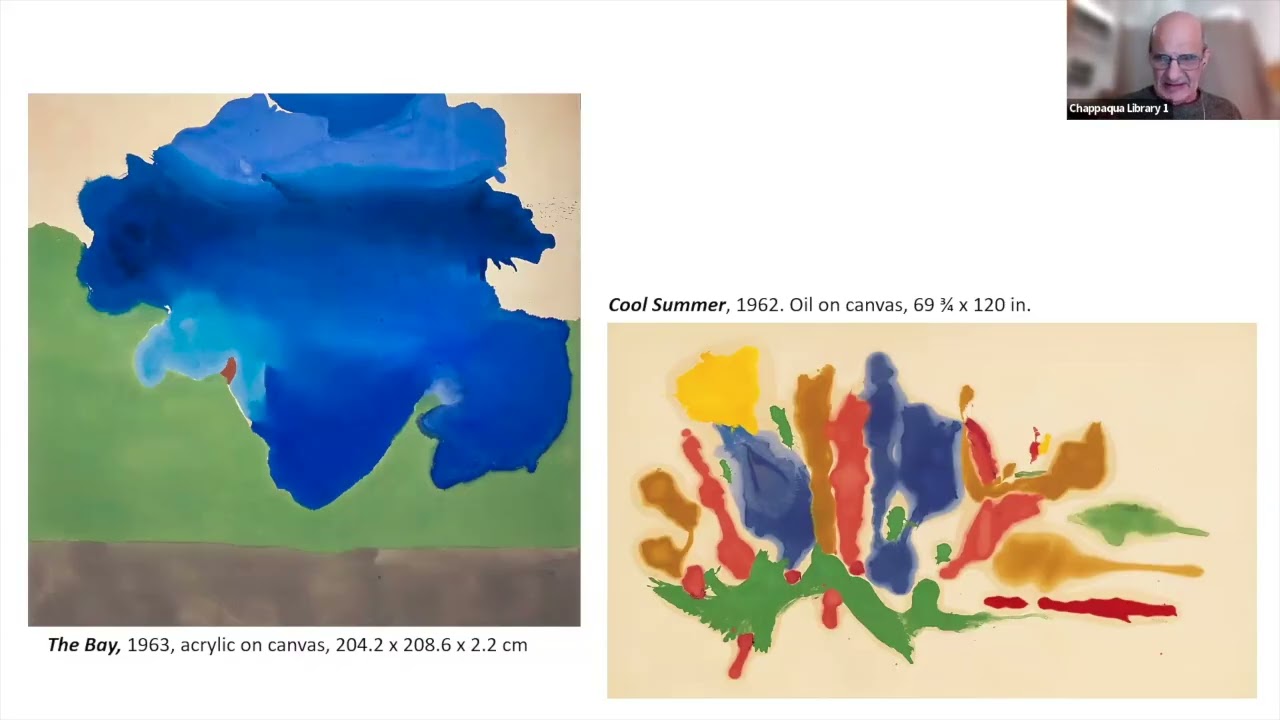
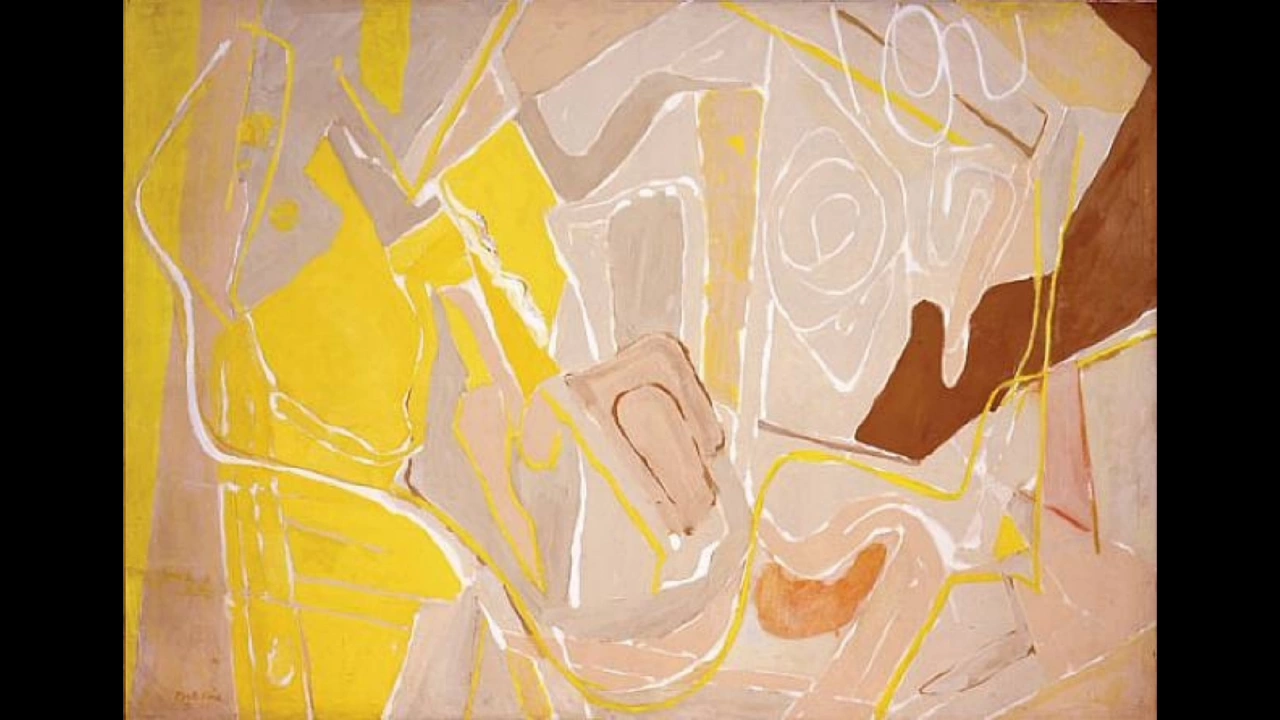
It now houses a superb collection of American art, including Judy Chicago, Edward Hopper, Norman Rockwell and Georgia O'Keeffe. Frankenthaler was born to a wealthy Manhattan family and could afford to study art from a young age. She attended the prestigious Bennington art college in Vermont. In 1951 Frankenthaler saw Jackson Pollock's show at Betty Parsons Gallery. VO:"When i saw that Pollock show, it was staggering. I must have felt: This is where I belong" Inspired, she took Pollock's "drip and pour" method one step further. Like pollock she placed the canvas on the floor and worked by improvisation, but rather than drips and squirts, she would thin oil paint with turpentine, to create transparent watercolour-like washes, and make entire pictures on raw unprimed canvas, by "staining". Resulting in images that seem to float in space. Using this technique, she created a work in 1952 so original, it launched a new type of painting which became known as "Soak Stain" and made her name. Helen Frankenthaler's breakthrough painting, "Lorelei" is at the Brooklyn Museum. Its emphasis on energy over composition was seen as an innovative break from centuries of Western painting traditions, and brought her critical support. Frankenthaler played a crucial role in the evolution of colour field painting, which emerged out of the attempts by several artists in the late 1940s to devise a modern "mythic" art that would do away with any suggestion of illustration. In her twenties she was already considered the bridge between the first and second generation Abstract Expressionists. Her lover, the art critic Clement Greenberg, introduced her to what became known as "The New York School": Willem and Elaine de Kooning, Jackson Pollock and Lee Krasner, Barnett Newman and Robert Motherwell - her future husband. Unlike Krasner and de Kooning she was never overshadowed by her famous husband, and was already well established by the time she married Motherwell in 1958. In 1960 she had her first museum show at the Jewish Museum, and in 1966 she represented the U.S. at the prestigious Venice biennale, a full 10 years before her husband took part. She was given a Whitney Museum retrospective in 1969 and a Museum of Modern Art retrospective 20 years later. Frankenthaler is considered one of the most important artists of our time. She took the language of Abstract Expressionism and expanded it. As an artist she influenced entire generations, and would outlive Motherwell, the de Kooning's, Krasner, and most of their friends.
VO: "There's a basic vocabulary, and within that a lot of risks, a lot of hurt, a lot of joy, a lot of catharsis, a lot of guilt, and a lot of bad pictures, and a lot of radiant pictures.
De Kooning, Frankenthaler, and Krasner were three artists who refused to be pigeonholed as female artists.
Unlike the male Abstract Expressionists who took on a masculine and heroic narrative, the work of these artists, was often described as "feminine", "lyrical" or "delicate". Words which were loaded and often used negatively. Krasner reinvented herself after Pollock's death and is shown globally, de Kooning reinvigorated modern portraiture and Fankenthaler invented an influential new painting technique. Commercially it would take decades before they were seen on the same level as their male contemporaries, and although in their lifetime they avoided questions about their gender, they certainly paved the way for the next generation of female artists. All three artists would eventually be recognized for their crucial role in the Abstract Expressionists, a movement that made New York the centre of the contemporary art world.
Up Next
Learn Willem de Kooning's Action Painting Techniques | MoMA Studio
@themuseumofmodernart
1.9M views•2017-04-05

Triumph of Orthodoxy Icon: Byzantine Art & History Explained
@BenCallan
2.1K views•2024-08-06

FastAPI vs Flask vs Django: Choosing the Right Python Web Framework
@TechWithTim
302.5K views•2024-05-26

Game of Thrones Opening Credits: A Cinematic Analysis
@gameofthrones
46.3M views•2011-04-18
Related Study Plans & Knowledge Roadmaps
Structured learning paths in General & Interdisciplinary Studies