![[AULA] Linha do Tempo da História da Arte](https://i.ytimg.com/vi_webp/SEyhdqLQ6lA/maxresdefault.webp)






![[MoMi 43차] 모더니즘 vs 포스트모더니즘 - 1부](https://i.ytimg.com/vi_webp/ZohOwHNF4rs/maxresdefault.webp)






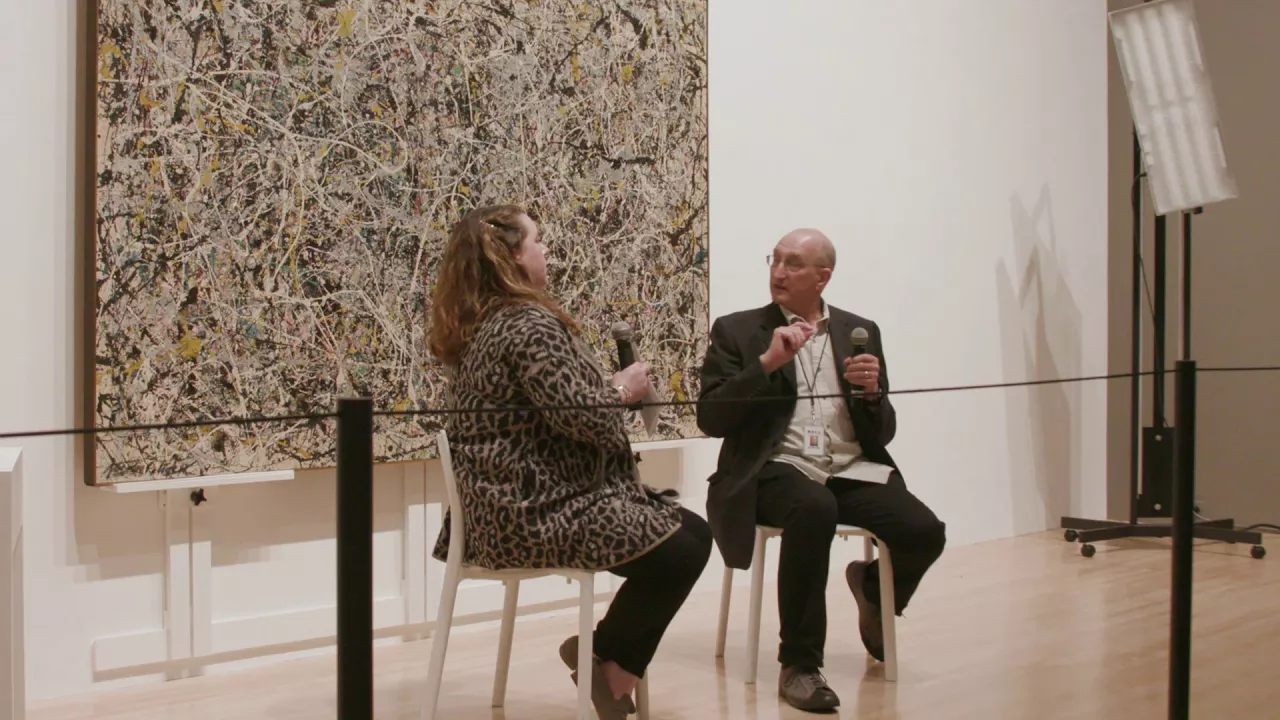


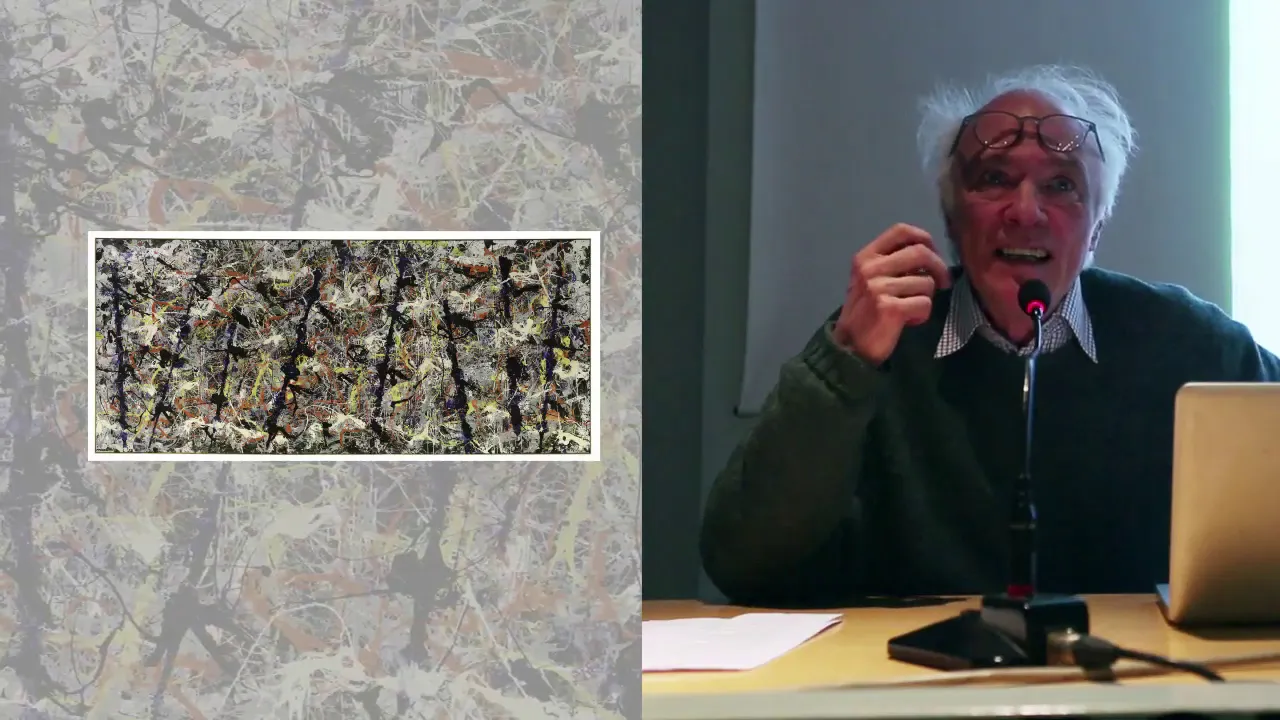





Jackson Pollock revolutionized painting by placing canvases on the floor and using unconventional tools like sticks, turkey basters, and hardened brushes to pour, drip, and splash fluid alkyd enamel paint, creating dynamic, all-over compositions where lines exist autonomously rather than merely delineating forms; this action painting approach transformed painting into a performative, physically immersive experience that influenced generations of artists.
Jackson Pollock's Action Painting Technique | MoMA In the Studio
Added:An understanding of Abstract Expressionism and the shift of the art world's center from Paris to New York post-World War II.
Familiarity with traditional painting techniques, specifically easel painting, to contrast with Pollock's unconventional methods.
Basic knowledge of artistic composition, particularly how focal points and negative space traditionally guide a viewer's eye.
An introduction to modernism and the rejection of representational art in favor of pure abstraction.
The theoretical writings of critics Harold Rosenberg (who coined 'Action Painting') and Clement Greenberg on medium specificity.
The conservation and preservation challenges associated with modern artworks that use non-traditional materials like industrial house paint and sand.
How Pollock's physical, performance-like process paved the way for subsequent movements like Performance Art, Happenings, and the Japanese Gutai group.
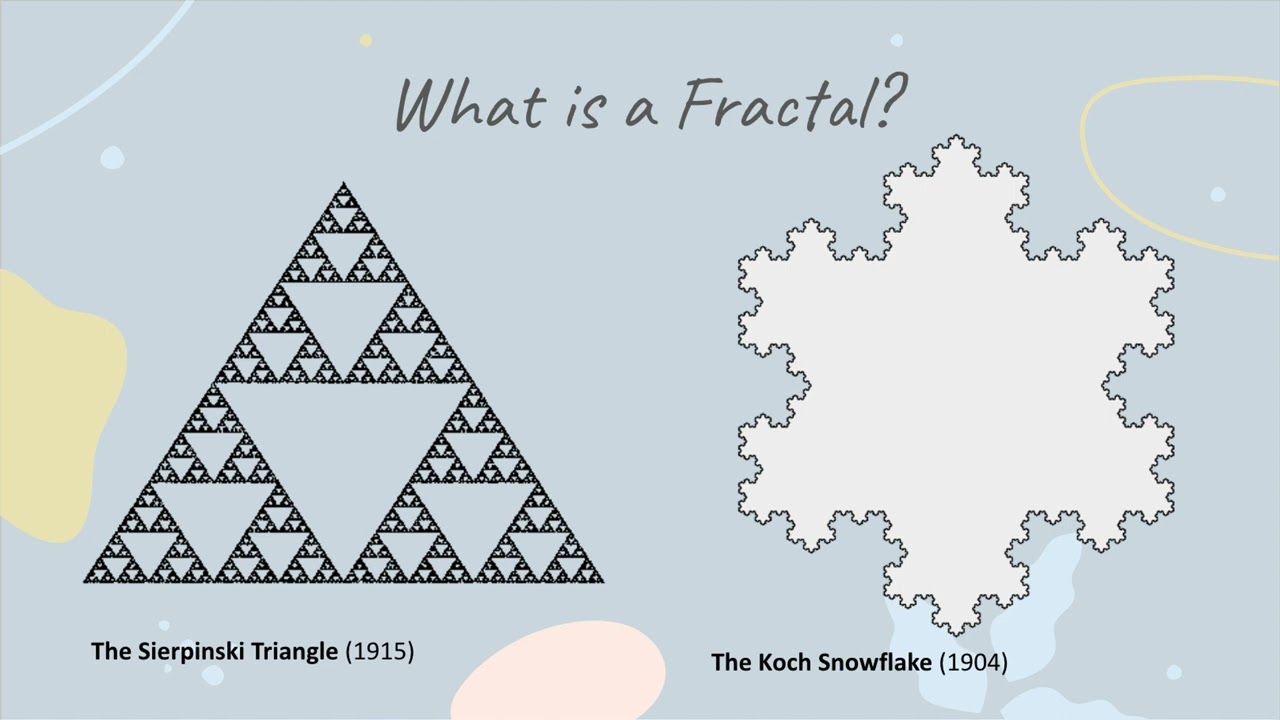
The application of physics and chaos theory (such as fractal analysis) to analyze the patterns in Pollock's drip paintings.
1.6M views9.8Klikes4:01Original Release: 2010-10-24
Voiceover: Three years prior to the making of this painting, Pollock was working on a small easel painting.
He had struggled on it for a while, and he decided to take that painting off the easel, place it on the floor, and then pour some paint on the surface to finish it.
>From this deceptively simple decision, an entire set of creative possibilities opened up to Pollock, and he spent the next five years of his career exploring them.
Now, in the studio, let's see exactly how Pollock worked.
Placing the canvas on the floor, Pollock no longer remained in physical contact with the canvas while painting.
Instead of using conventional artist brushes to push or smear liquid paint across the surface of the painting, Pollock now used things like sticks, even turkey basters or dried paint brushes, hard as a rock, that he variously dripped, drizzled, poured, or splashed paint onto the canvas below him from.
Pollock used very fluid alkyd enamel paints, the kind of paint you could paint your car with, the kind of paint you could paint your radiator with.
Because the paint was so fluid, Pollock essentially drew in space, so that drawing elements would happen quite literally in the air, before falling down to the canvas below, sometimes thick, sometimes thin.
A rhythm of poured paint would develop across the surface of the painting.
Now, if you know that the painting was painted on the floor, if you know that the paint has a very low viscosity, you can very easily imagine the kind of physical activities that would go into the making of this type of painting.
Art historians, at the time, coined this kind of painting, action painting, because of this very idea that you could imagine quite viscerally the actions that went into the making of the painting.
Now, specifically, we're talking about the actions of almost a dancer.
You can imagine Pollock's feet shuffling around the painting.
You can imagine rotations of the elbow and of the shoulder, variously launching or slowly drizzling paint onto the canvas below.
For Pollock, the drama of making this painting on the floor meant that not only physically but emotionally he could be in the painting, stepping into the canvas, but also losing himself in almost this trance-like or zone-like type of painting process.
Looking at the paint below you on the surface of the canvas, reacting to it, and adjusting whatever gestures you have to create this painting.
Now, traditionally in painting, people would compose one shape according to another one.
A little bit of red here, according to a little bit of blue there, according to a lot of yellow over here.
Well, for Pollock, he threw that out the window, as he did so many things.
Rather, Pollock is composing one line in juxtaposition with another one, and not in any haphazard way, but rather in an all over way, and this all-overness, if you will, becomes key for Pollock.
Since looking at this painting, there's no one spot for your eye to rest.
Traditionally, line had been used quite literally to delineate forms, to draw the outlines of forms, which would be filled in.
You can imagine landscape paintings.
The lines define the mountains, clouds, and so on.
Well, here the line is not defining anything.
Line becomes here autonomous, and for the first time is liberated from its historical role in painting of describing other shapes.
In 1950, the drama of making this painting was actually captured by a photographer and film maker, so that the performance of making this painting captured the public's imagination as never before.
Not only that, but other artists were profoundly influenced by this radically new way of working, not only painters, but, well, performance artists can be traced back to this very very formative moment, very important moment in American art history.
Up Next

15:21
Abstract Expressionism in New York: Three Female Pioneers
@GreatArtExplained
201.7K views•2022-07-29

12:54
Triumph of Orthodoxy Icon: Byzantine Art & History Explained
@BenCallan
2.1K views•2024-08-06

3:49
Barnett Newman's Painting Technique: Vir Heroicus Sublimis Analysis
@themuseumofmodernart
258.4K views•2010-10-24

1:42
Game of Thrones Opening Credits: A Cinematic Analysis
@gameofthrones
46.3M views•2011-04-18
Related Study Plans & Knowledge Roadmaps
Structured learning paths in General & Interdisciplinary Studies
general-studies
Elevator Engineering: History, Physics & Cities
01From Hoists to Safety Brakes: The Dawn of Vertical Lift
02Hydraulic vs. Traction: The Engineering Physics of Elevators
03Modern Speed, Safety, and Algorithms
+ 2 more learning modules
12h5 modules
Explore Roadmap
general-studies
Rubber: Material Science, History & Geopolitics
01Origins of Natural Rubber & Mesoamerican History
02The Chemistry of Natural Rubber & Vulcanization
03The Geopolitics of the Rubber Boom & Colonization
+ 2 more learning modules
12h5 modules
Explore Roadmap
general-studies
Containerization: Evolution, Logistics & Trade
01Ancient Trade & Bulk Cargo: Amphorae to Barrels
02The Industrial Revolution & Cardboard Packaging
03The Containerization Revolution: Malcom McLean
+ 2 more learning modules
12h5 modules
Explore Roadmap
general-studies
Textile Tech: Evolution, Labor & Global Impact
01Pre-Industrial Textiles: Handloom & Cottage Industry
02Mechanization: The Spinning Jenny to the Power Loom
03The Factory System & Global Labor Transformation
+ 2 more learning modules
10h5 modules
Explore Roadmap