The Sublime: Romantic & Hudson River Landscapes
Learning Goal: Investigate the representation of the 'Sublime' in 19th-century Romantic landscape painting, contrasting European romanticism with the nationalist landscapes of the Hudson River School.
- Prerequisites: None (An introductory understanding of art history terms is helpful but not required).
- Estimated Total Study Time: 12 Hours
Module 1: Introduction to Romanticism and Landscape Painting
This module introduces the profound shift from Neoclassical order to Romantic emotionalism in late 18th- and early 19th-century art. You will explore how landscape painting, once considered a minor decorative genre, was elevated to a powerful vehicle for individual expression, human emotion, and spiritual exploration.
Recommended Videos

- Why this video: This video provides a structured foundation for the Romanticism movement, highlighting how artists rejected Enlightenment rationalization and Neoclassical symmetry to champion individual emotion, raw nature, and imaginative freedom.

- Why this video: This classic documentary episode offers a deep-dive, contextualizing Romanticism within the broader historical milieu of the late 18th and early 19th centuries, highlighting key artists' reactions to both political revolutions and rapid industrialization.
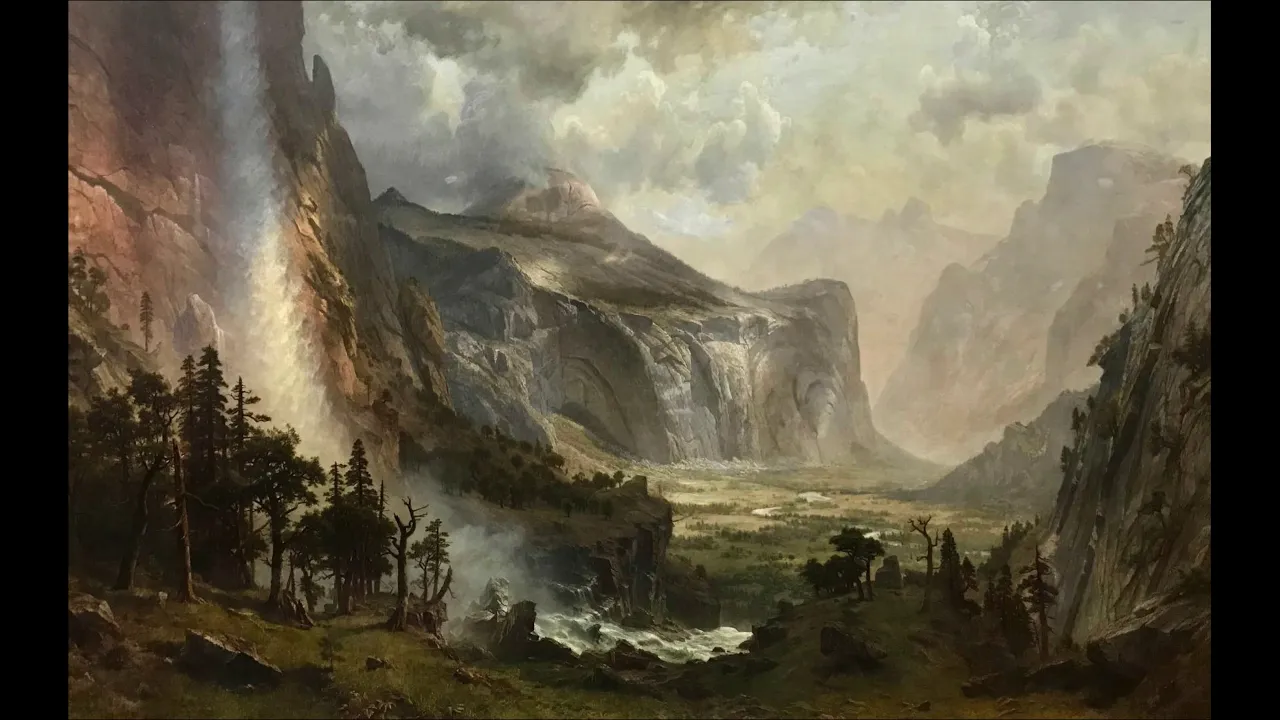
- Why this video: A concise overview of how landscape painting transformed over time, emphasizing how its rise as an independent, respected art genre directly coincided with the onset of the Romantic era's obsession with nature and the human psyche.
Module 1 Knowledge Checkpoint
- Explain the key differences in artistic intent between the Neoclassical style and the emerging Romantic movement.
- Identify the historical events (such as industrialization and political revolutions) that spurred artists to seek solace and expression in nature.
- Understand why landscape painting was previously marginalized in artistic hierarchies and how Romanticism helped elevate it.
Module 2: The Philosophy of 'The Sublime'
This module investigates the core philosophical theories of the Sublime that revolutionized how 19th-century artists approached nature. We will focus on Edmund Burke's physiological theories of terror, awe, and pain, and touch upon Immanuel Kant's theories of cognitive overwhelm and reason.
Recommended Videos

- Why this video: This short, animated introduction succinctly outlines Edmund Burke's distinction between the "Beautiful" (which is soft, smooth, and physically pleasing) and the "Sublime" (which is vast, terrifying, and deeply awe-inspiring).
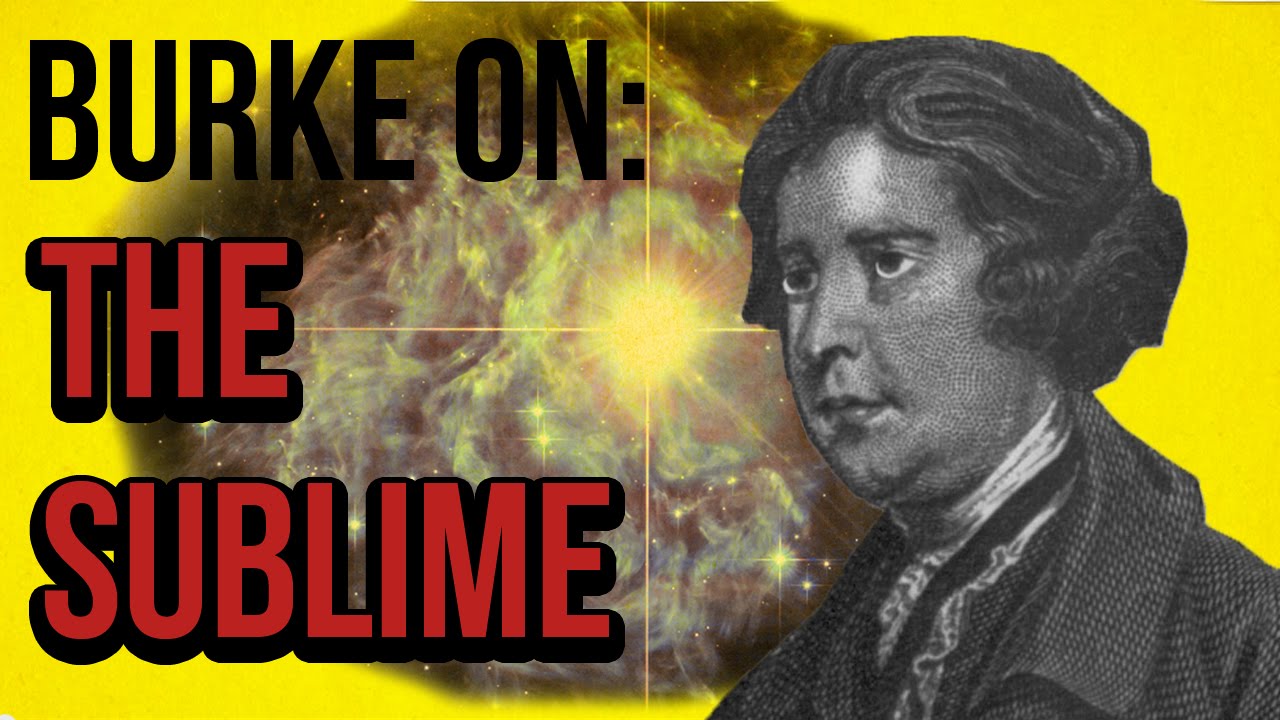
- Why this video: This video explores the psychological dimensions of Burke's theories, detailing how experiencing vast natural forces and immense artistic scale puts our personal problems into perspective and triggers a state of therapeutic insignificance.

- Why this video: A deeper academic exploration of how the human mind processes cosmic vastness, highlighting the transition from classical models of nature's beauty to Immanuel Kant's rigorous treatment of the sublime as a distinct philosophical concept.
⚠️ Curriculum Note on Philosophy Gaps: While the provided videos offer excellent introductions to Burke's theories of the physiological sublime, there is a lack of deep, systematic comparison with Immanuel Kant's distinction between the mathematical sublime (confronting infinite scale) and the dynamical sublime (confronting infinite physical power).
Recommended Independent Search Queries:
- "Kant vs Burke sublime philosophy art history"
- "Immanuel Kant Critique of Judgment mathematical and dynamical sublime"
Module 2 Knowledge Checkpoint
- Differentiate between Edmund Burke's definitions of "The Beautiful" and "The Sublime."
- Explain how "terror" can lead to pleasure/delight under Burke's framework (provided the observer is at a safe distance).
- Describe the mental shift associated with Kant's view of the sublime, where the mind initially feels overwhelmed by nature but ultimately triumphs through rational contemplation.
Module 3: European Romanticism and the Terrifying Sublime
This module shifts the focus to Europe, exploring how painters like Caspar David Friedrich in Germany and J.M.W. Turner in England used dramatic weather, vast landscapes, ruined architecture, and atmospheric light to represent existential awe, spiritual isolation, and the insignificance of humanity.
Recommended Videos
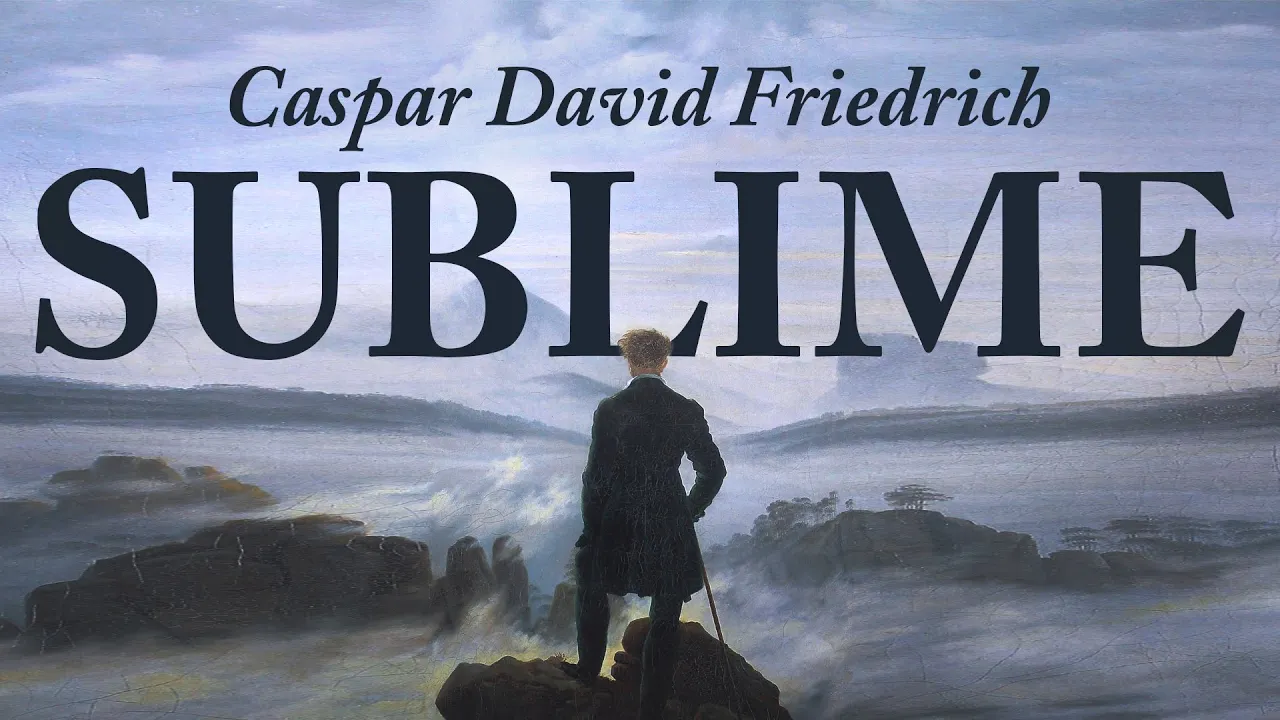
- Why this video: An excellent examination of how German Romantic Caspar David Friedrich constructed visual narratives to elicit the feeling of the sublime, helping the viewer confront mortality and the infinite.
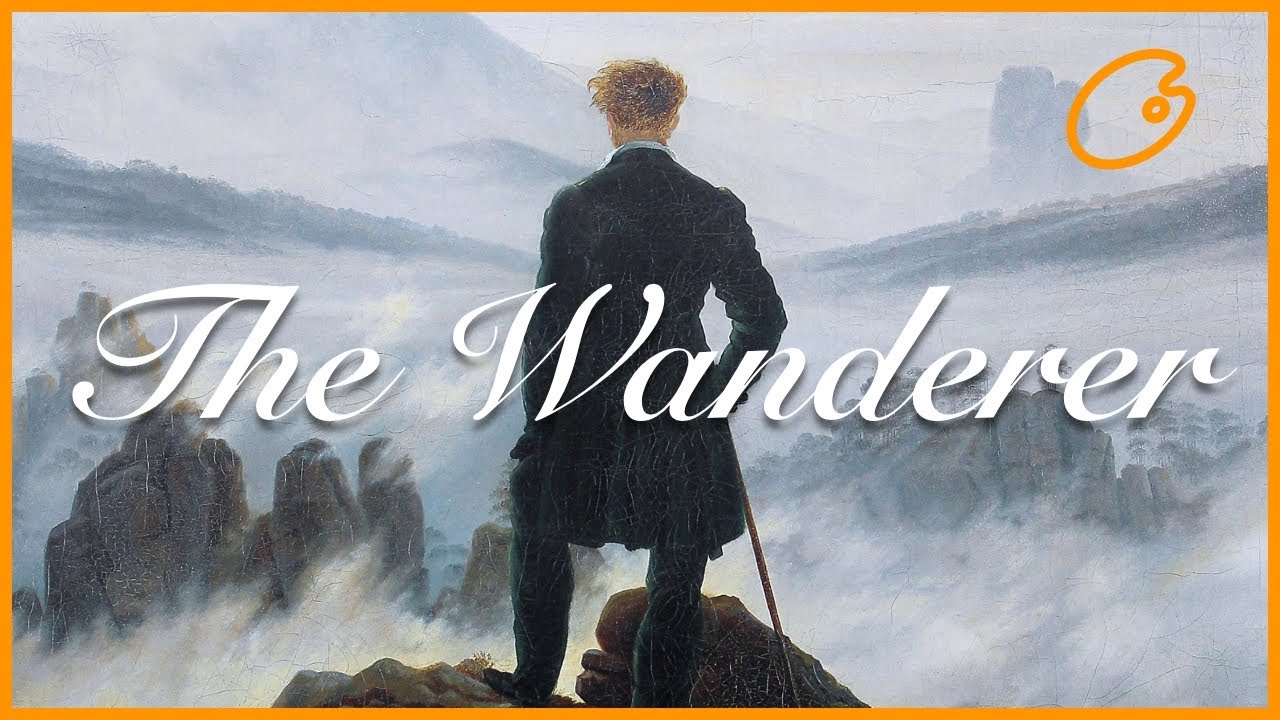
- Why this video: A focused visual and thematic analysis of Friedrich's masterpiece (Wanderer Above the Sea of Fog, 1818). This video unpacks the use of the Rückenfigur (the figure seen from behind) as a vehicle for viewer projection and existential reflection.
- Why this video: Published by the Tate, this video explains how British master J.M.W. Turner revolutionized the depiction of light, wind, and stormy sea waters, capturing the terrifying power of nature and transforming marine and historical painting.
Module 3 Knowledge Checkpoint
- Define Rückenfigur and explain its visual and philosophical purpose in Caspar David Friedrich's paintings.
- Analyze how J.M.W. Turner used dissolved form, swirling light, and dramatic atmosphere to convey Burke's concept of the terrifying sublime.
- Discuss how European Romantic painters used ruins or storms to convey human insignificance and the passage of time.
Module 4: The Hudson River School and the American Wilderness
This module turns to the United States, examining the Hudson River School founded by Thomas Cole. Unlike the existential, often melancholic European sublime, the "American Sublime" was deeply tied to national identity, divine providence, and the concept of Manifest Destiny.
Recommended Videos

- Why this video: A comprehensive, scholarly lecture covering the trajectory of the Hudson River School from 1825 to 1875. It illustrates how artists celebrated the American wilderness as a unique proof of divine favor and a source of national pride.

- Why this video: This highly engaging and deeply informative video tracks the life and creative development of Thomas Cole. It highlights his transition from documenting the wild landscapes of New York to painting monumental, moralizing historical allegories.
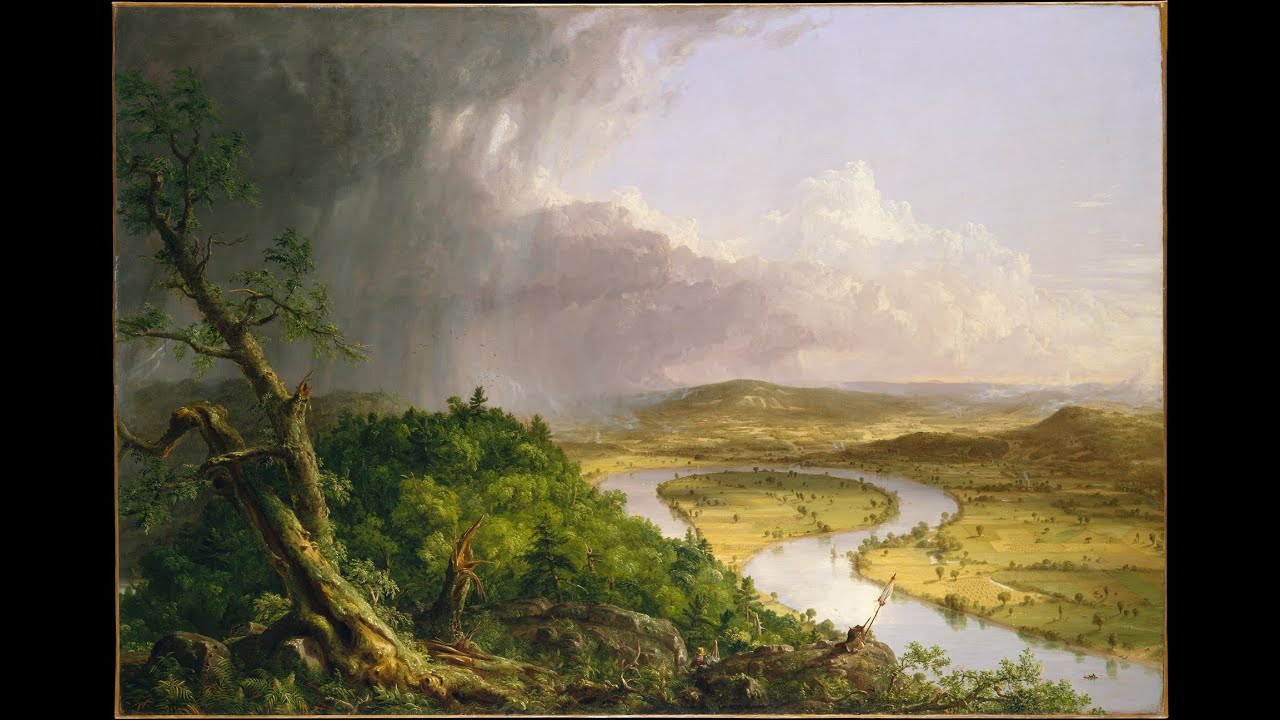
- Why this video: An in-depth visual analysis of Thomas Cole's seminal work, The Oxbow (1836). The video breaks down the composition, contrasting the untamed wilderness (the sublime) with cultivated farmlands (the beautiful), reflecting the complex national debate over westward expansion and ecological preservation.
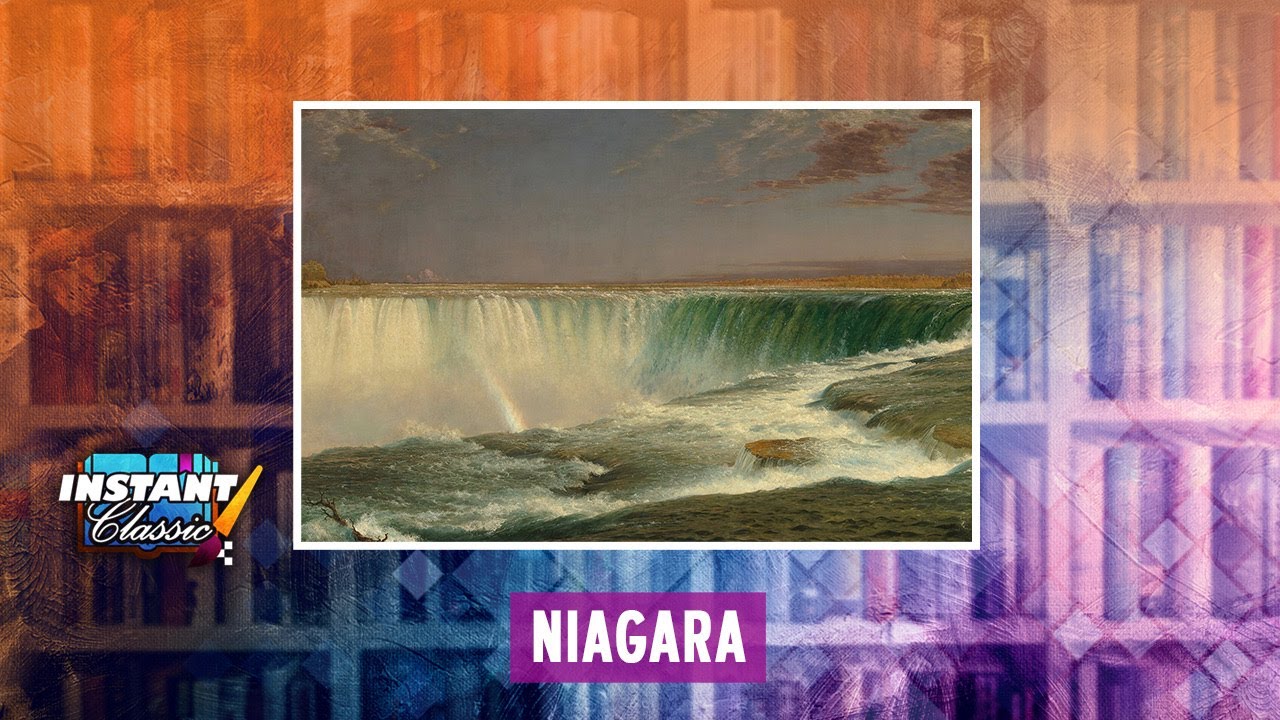
- Why this video: This video focuses on Thomas Cole's most famous student, Frederic Edwin Church, and his monumental painting Niagara (1857). It analyzes how Church used immense horizontal canvases and omitted any visible foreground to place the viewer directly on the edge of the roaring, terrifyingly powerful water.
⚠️ Curriculum Note on Church Gaps: While the included video on Church's Niagara is a valuable breakdown of his composition, academic video essays detailing his other massive global/nationalist works (such as Heart of the Andes or Cotopaxi) are sparse in the public domain.
Recommended Independent Search Queries:
- "Frederic Edwin Church American Sublime painting analysis"
- "Frederic Edwin Church Heart of the Andes details and themes"
Module 4 Knowledge Checkpoint
- State the primary mission of the Hudson River School and how it differed from European art academies.
- Explain how Thomas Cole's The Oxbow serves as a political and philosophical commentary on Manifest Destiny and industrial progress.
- Describe the visual techniques Frederic Edwin Church used in Niagara to trigger a physical experience of the sublime in the viewer.
Module 5: Comparative Analysis: European vs. American Sublime
In this synthesis module, you will directly contrast the two regional approaches to the sublime. You will examine the differences between the existential, introspective, and tragic "European Sublime" and the nationalist, optimistic, and spiritual "American Sublime." Finally, we will trace the visual legacy of the American Sublime into modern narrative media.
Recommended Videos

- Why this video: This lecture segment provides an excellent transitional bridge, showing how European painters used the sublime to convey human vulnerability in an ancient, indifferent world, while American painters adapted those same visual theories to promote westward expansion and national destiny.

- Why this video: Delivered at the Smithsonian American Art Museum, this comprehensive lecture traces the origins of the "American Sublime" in 19th-century landscape painting, demonstrating how these works codified a national secular religion centered on pristine, monumental wilderness.

- Why this video: To understand the modern legacy of these 19th-century movements, this highly-viewed video demonstrates how modern developers use the composition, lighting, and ideological framing of the Hudson River School (specifically the romanticized, glowing "American West") to craft emotional resonance in digital environments.
⚠️ Curriculum Note on Comparative Gaps: While the videos above outline key conceptual shifts, direct slide-by-slide academic video comparisons of European paintings (e.g., Friedrich) with American counterparts (e.g., Cole/Church) are rare.
Recommended Independent Search Queries:
- "European sublime vs American sublime comparison lecture"
- "Existential sublime vs national sublime art history"
Module 5 Knowledge Checkpoint
- Contrast the theological undertones of the European sublime (often focusing on mortality, transience, and a hidden God) with the American sublime (focusing on raw wilderness as Eden, divine covenant, and natural bounty).
- Discuss how lighting is used differently to convey meaning (e.g., Friedrich's cold, misty, spiritual horizons vs. Bierstadt or Church’s warm, golden, expansionist light).
- Explain how the romanticized visual aesthetic of the 19th-century American Sublime continues to influence modern visual media, such as video games and national park photography.
Course Map
This map outlines the conceptual and chronological progression of your study. Modules 1 and 2 establish historical and philosophical contexts, Modules 3 and 4 dive deep into regional applications, and Module 5 synthesizes the two traditions while tracing their legacy into the present day.
Key People Index
| Person | Context in this Curriculum | Key Ideas / Works |
|---|---|---|
| Edmund Burke <br>(1729–1797) | Anglo-Irish philosopher who established the psychological foundation for Romantic aesthetics. | Author of A Philosophical Enquiry into the Origin of Our Ideas of the Sublime and Beautiful (1757); associated the sublime with self-preservation, terror, vastness, and obscurity. |
| Immanuel Kant <br>(1724–1804) | German Enlightenment philosopher who intellectualized the experience of the sublime. | Author of the Critique of Judgment (1790); argued that the sublime is not in nature, but a cognitive response where human reason triumphs over nature's infinite scale (mathematical) or power (dynamical). |
| Caspar David Friedrich <br>(1774–1840) | Preeminent German Romantic landscape painter. | Master of the Rückenfigur technique. Landmark works include Wanderer Above the Sea of Fog (1818) and Abbey in the Oakwood (1809), which represent spiritual contemplation and human mortality. |
| J.M.W. Turner <br>(1775–1851) | British Romantic painter known as "the painter of light." | Mastered the depiction of nature's violent, atmospheric forces (storms, avalanches, rough seas) to capture the terrifying, physical experience of the sublime. Landmark work: The Fighting Temeraire (1838). |
| Thomas Cole <br>(1801–1848) | British-born founder of the American Hudson River School. | Pioneered American landscape painting as moral and political narrative. Landmark works: The Oxbow (1836) and the five-part series The Course of Empire (1833-36). |
| Frederic Edwin Church <br>(1826–1900) | Prominent student of Thomas Cole; known for his monumental, highly detailed canvases. | Mastered the "American Sublime" on a heroic scale, traveling globally to paint vast, dramatic natural wonders. Landmark work: Niagara (1857). |
Final Self-Assessment
Use this comprehensive checklist to test your mastery of the curriculum goals.
- I can articulate the fundamental transition from the Neoclassical "rule of reason" to the Romantic "triumph of emotion."
- I can explain why landscape painting went from being viewed as a decorative, low-tier genre to a premium vehicle for philosophical and national expression.
- I can explain Edmund Burke's distinction between the "Beautiful" (smooth, small, delicate) and the "Sublime" (vast, rough, terrifying).
- I can contrast Burke’s physiological view of the sublime (rooted in physical survival and safety) with Immanuel Kant's cognitive view (rooted in human reason surpassing nature's scale).
- I can define the term Rückenfigur and analyze how Caspar David Friedrich used it to foster human identification with nature.
- I can identify J.M.W. Turner's key stylistic elements (dissolving form, intense swirling light, storm motifs) and link them to Burke's concept of the terrifying sublime.
- I can define the core goals of the Hudson River School, noting its founding by Thomas Cole and its base in New York.
- I can analyze Thomas Cole's The Oxbow to show how composition represents both the untamed wilderness (the sublime) and agricultural development (the beautiful).
- I can explain how the concepts of Manifest Destiny and divine providence were expressed through the "American Sublime," utilizing warm, spectacular, golden lighting.
- I can contrast the European sublime's focus on existential isolation, ruins, and human insignificance with the American sublime's focus on optimism, national promise, and clean wilderness as a "new Eden."
- I can identify how 19th-century landscape composition and lighting principles are still deployed in modern media forms like open-world video games (Red Dead Redemption 2) and outdoor media.