JMW Turner revolutionized British art by transforming traditional marine and historical painting through his innovative focus on light, atmosphere, and dramatic compositions; unlike earlier artists who prioritized precise subject matter, Turner used imaginary scenes like 'The Shipwreck' and historical narratives such as 'Ancient Rome Agrippina Landing' to explore how sunlight, mist, and atmospheric effects could dissolve solid forms into ethereal visions, creating immersive vortex-like compositions that drew viewers into the painting itself.
JMW Turner's Shipwreck and Ancient Rome at Tate Britain
Added:Deep Dive
An understanding of the Romanticism art movement, which emphasizes emotion, individualism, and the awe-inspiring power of nature.

Romanticism Art Movement - A Short Lecture by Peter Mackie & Christina Rogers
476
Romanticism is an 18th-century European artistic and intellectual movement characterized by emphasis on emotion, individualism, dreams, imagination, and the supernatural, which emerged partly as a reaction against the Industrial Revolution and Enlightenment rationalism; it encompasses painting, literature, music, and poetry, featuring themes of nature's power, human suffering, Gothic imagery, and glorification of the past, with notable artists including Goya, Caspar David Friedrich, and William Blake, and its influence continues in contemporary art and cinema.
Click to watch →

Romanticism Art Movement: Key Figures and Lasting Influence
38K
Romanticism was an artistic and literary movement that emerged in the late 18th century and dominated the first half of the 19th century, representing a dramatic break from the Enlightenment's Neoclassicism by emphasizing individualism, emotion, imagination, and self-expression over logic, scientific observation, classical influences, harmony, and humanity's triumph over nature; it spread across Europe and the United States, influencing literature, music, painting, and architecture, with key themes including nature's sublime power, the solitary genius figure, national identity, and exotic Orientalism, and it paved the way for later movements like Impressionism while leaving lasting legacies in modern art.
Click to watch →

Frank Dicksee, Romanticism, Pre-Raphaelite La Belle Dame sans Merci Art History Documentary Lesson.
2.6K
Romanticism was characterized by its emphasis on emotion and individualism, idealization of nature, suspicion of science and industrialization, and glorification of the past with a strong preference for the medieval rather than the classical. Intense emotion was considered an authentic source of aesthetic experience, placing new emphasis on such emotions as fear, horror, terror, and awe, especially experienced in confronting the new aesthetic categories of the sublime and beauty of nature. The German painter Caspar David Friedrich summed up the importance the Romantics placed on emotion with the remark that 'the artist's feeling is his law.' Romanticism assigned high value to the achievements of heroic individualists and artists whose examples would raise the quality of society, promoting individual imagination as a critical authority and allowing freedom from classical notions of form and art.
Click to watch →
Let's discover the Romanticism beauty and intensity
354
Romanticism was an artistic, musical, and intellectual movement originating in Europe around the late 18th century that emphasized pure natural and instinctive emotions—both positive and negative—rather than artificial love; it emerged as a reaction against Enlightenment rationalization, scientific mechanization, and industrialization, which reduced individuals to mere parts of society; instead, Romantics celebrated intense emotions like apprehension, powerlessness, horror, and terror, often inspired by nature's sublime beauty (high mountains, volcanoes, storms), representing a return to humanity's deeper instinctive dimension.
Click to watch →

romanticism simplified || Art History
147
Romanticism is an 18th-century literary, artistic, and philosophical movement characterized by a reaction against neoclassicism and Enlightenment, emphasizing imagination, emotions, and individuality over reason and logic. The movement originated as a direct opposing viewpoint to Enlightenment, which prioritized rationality and symmetry. Romanticism favored emotions, fluidity, and personal expression, believing that experiencing nature and life through one's emotional side is fundamental to the human experience. In visual art, Romanticism explored the supernatural, the relationship between mankind and nature, and strong emotions. Key characteristics include soft, pleasing landscapes and dramatic depictions of human struggle against nature. Famous works include The Nightmare by Henry Fuseli (1781), Wanderer above the Sea of Fog by Caspar David Friedrich (1818), and The Raft of Medusa by Théodore Géricault (1818-1819). Unlike movements defined by technique, Romanticism leaned heavily into morals and principles, producing art featuring nature, the paranormal, and passionate human experiences.
Click to watch →
Deep Dive
The philosophical concept of 'The Sublime' (specifically Edmund Burke's theories), which describes the feelings of awe, terror, and greatness inspired by nature.
The Sublime: Edmund Burke's Philosophy of Awe and Insignificance
442.5K
Edmund Burke proposed that the sublime is a pleasurable experience that makes us feel insignificant in the face of overwhelming natural forces or grand artistic works, paradoxically helping us gain perspective by humbling our ego and reminding us of our place in the larger scheme of things.
Click to watch →

Edmund Burke on the Sublime: A Philosophical Inquiry
230K
Edmund Burke, an 18th-century philosopher, argued in his book 'A Philosophical Inquiry into the Origin of Our Ideas of the Sublime and Beautiful' that the sublime differs fundamentally from beauty: while beautiful objects are small, smooth, delicate, and attractive (like a blue bill or a doll), sublime objects are vast, gloomy, dark, and threatening (like cliffs, mountains, or thunderstorms). Unlike beauty which produces pleasurable feelings, the sublime overwhelms us with terror while paradoxically still delighting us—because experiencing the sublime activates our basic self-preservation instincts and exercises the nerves that would save our lives in genuinely dangerous situations. This theory had a profound influence on Romanticism, the artistic movement that celebrated the untamed power of nature.
Click to watch →

The Harry Styles of It All
306.5K
Philosopher Edmund Burke defined the sublime as a blend of terror and admiration, distinguishing it from beauty which consists of well-formed, aesthetically pleasing objects. According to Burke, the sublime has the power to compel and destroy us, while beauty merely pleases. This philosophical inquiry into the origin of our ideas of the sublime and beautiful was published in 1757 and marked the transition from neoclassical to romantic art styles. The sublime celebrates the vastness and unimaginable largeness of nature and how humans are not in control of it.
Click to watch →

The Romantics - Nature (BBC documentary)
462K
The sublime was more than just beauty of a sunset—it was about awe and terror. The natural world was dangerous without convention, society, or God. The sublime is man lost in the immensity of nature. The key to the sublime was the ability to lose yourself, experiencing no horizons and no sense of confinement. It represented longing to be free.
Click to watch →
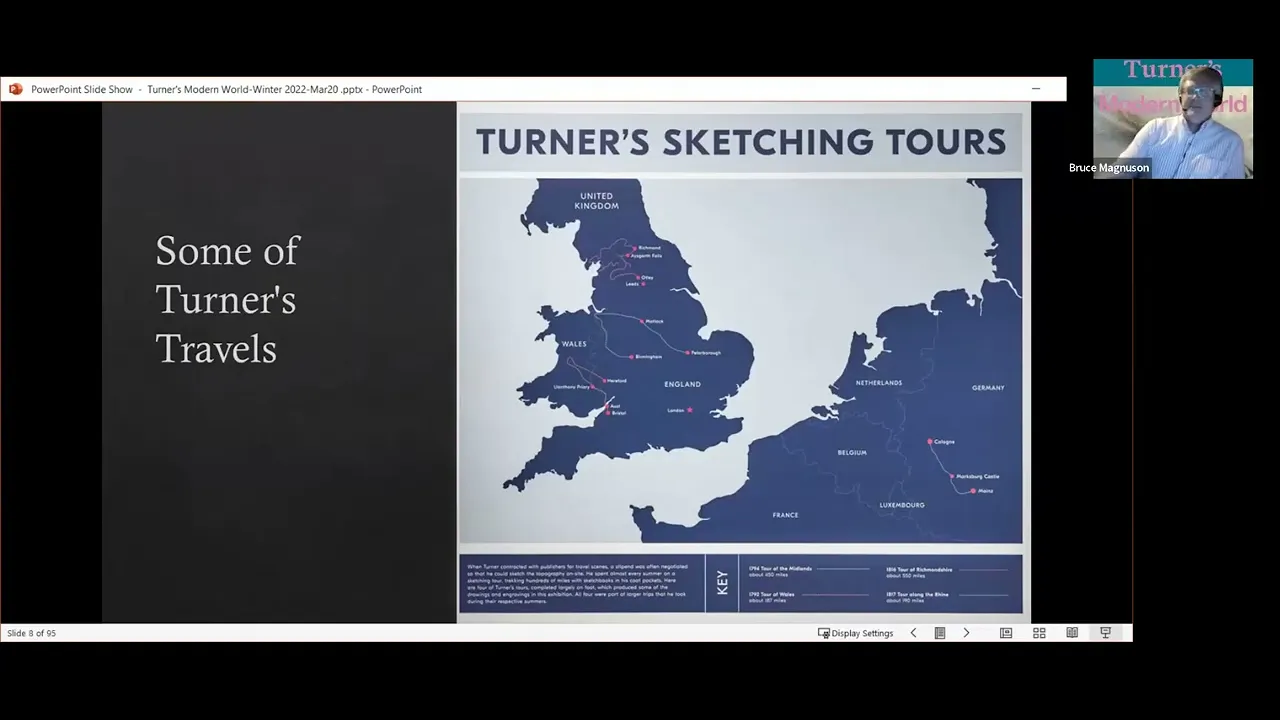
Turner's Modern World, presented by Bruce Magnuson
188
Edmund Burke's 1757 philosophical treatise defined the sublime as an artistic effect producing the strongest emotion the mind can feel. Whatever is terrible or operates analogously to terror is a source of the sublime. In landscape painting, this manifests through sea storms and mountain scenes that evoke human insignificance before nature's vast power. Burke argued that experiencing the sublime makes us feel small, helping put daily irritants into perspective. This psychological corrective reduces egoism and pride, potentially increasing tolerance and reducing fixation on immediate concerns.
Click to watch →
Deep Dive
Basic historical context of the 19th-century British Maritime Empire, explaining the cultural obsession with sea voyages, trade, and shipwrecks.

BBC Shipwrecks Britains Sunken History 1of3 Home Waters to High Seas 720p HDTV x264 AAC MVGroup org
28.9K
Shipwrecks have profoundly shaped Britain's history, destiny, and national character. While Britain conquered the sea through glorious naval victories that built a huge empire, shipwrecks represent a less well-known maritime phenomenon that has been lodged deep in the nation's psychological makeup. Britain's island geography and global maritime ambitions made the country more prone to shipwrecks than practically anywhere else. The Goodwin Sands off the coast of Kent represent the largest concentration of shipwrecks anywhere in the world, having terrified sailors since the 16th century. The Great Storm of 1703, the only bona fide hurricane to ever hit Britain's shores, sank 13 warships and 40 merchantmen on the Goodwin Sands, killing 2,000 men. The Mary Rose, Henry VIII's flagship, sank on July 19, 1545, during a battle with the French Fleet, taking almost 400 men to their deaths. This sinking revealed that Britain was not yet ready to sail the seven seas and conquer the world, as Henry VIII's Navy was built for flag waving and prestige more than for fighting.
Click to watch →

25 Blood English
244
The English are the Maritime Empire, constant and shipwreck. They have safety or hope only with the Lady of the Ship. Without her, they have nothing. The ships and the sea represent the English identity as a maritime power. The language is used to communicate with Mars, converse with spirits, report the behavior of sea monsters, describe horoscopes, observe disease and signatures, evoke biography from the wrinkles of the poem, and release tragedy from fingers. The usual pastimes and drugs and features of the press include scrying, observing disease and signatures, evoking biography from the wrinkles of the poem, and tragedy from fingers.
Click to watch →

Why the British Empire Controlled the World - and Lost It Faster Than Expected
318
England's relationship with the sea had by the late 16th and 17th centuries developed into something that might fairly be described as a vocation. The defeat of the Spanish Armada in 1588, part luck, part weather, part the genuine skill of English sailors and the quality of English ship design, had established England as a naval power of the first rank. Over the following century, the English Navy fought the Dutch three times over control of maritime trade routes, and one each time, or at least one enough, to establish the principle that English ships would not be pushed around on the world's oceans. The Navigation Acts of the 17th century mandated that goods imported into England and its colonies had to be carried on English ships. This was in effect a massive government subsidy for the English shipping industry. By the early 18th century, England, Great Britain after the 1707 Act of Union, had the largest and most capable navy in the world. The Royal Navy was the single most important institution in the history of the British Empire. Without it, nothing else was possible. The colonies could not have been established. The trade routes could not have been protected. The empire could not have been defended. The Navy of the 17th and 18th centuries was in many ways a deeply unpleasant institution. Its sailors were often pressed into service—literally kidnapped from ports and coastal villages by press gangs empowered by law to take any man they found and make him a sailor whether he liked it or not. The conditions aboard ship were cramped and dark and smelled of bilge water and tar and unwashed bodies. The food was terrible—hardtack biscuit full of weevils, salt pork that had been in the barrel for months, beer that was marginally safer than the water it replaced. The discipline was brutal—flogging with a cat-o'-nine-tails was a routine punishment. Death by disease was far more common than death by enemy action. Yet men served because the pay was regular, which in an economy where many people worked seasonally or uncertainly, was genuinely valuable. They served because the Navy offered a kind of adventure and a kind of belonging that was hard to find elsewhere. They served because they had been pressed and had no choice. Over time, as the Navy became more established, because the traditions and the culture of the sea had become a real thing, a genuine identity, a way of being in the world that many men were proud of.
Click to watch →

Empire of the Seas. 4/4 HD
416.9K
No was this blind worship of Nelson more apparent than at a new barracks built in Portsmouth in 1903. The officer mess was designed like a religious space—a shrine to Britain's naval greatness. The ceiling featured massive oak beams shaped like HMS Victory's hull, and the walls depicted epic murals of all the greatest moments in British maritime history, with Nelson prominently displayed. This room told you so much about the Royal Navy at the start of the 20th century—the way its officers were surrounded by images of a glorious past. The problem was these victories were 100 years old and the world had moved on. Britain was no longer the only modern industrial power. The technological lead that the country had enjoyed for so much of the 19th century had been lost as the Industrial Revolution spread, ushering in a new era of aggressive national rivalry.
Click to watch →

Why the UK will Lose the 2030s
428.3K
The foundation of the British Empire was deep-water navigation and naval power. In the late 1800s, England had an especially potent Navy that enabled it to project military force globally at chosen times and locations, keeping its military ahead of competitors. Economically, this naval dominance allowed Britain to switch trade partners at will, enriching the British population. As technology advanced, the skilled English Navy expanded globally, seizing control of global trade networks. Between 1600 and 1800, the Portuguese lost control of South Asia and the Far East to the Brits, while English colonies supplanted competitors in Africa, India, Singapore, and Hong Kong. This maritime-oriented culture proved ideal for empire-building, crafting the greatest empire ever seen before.
Click to watch →
Deep Dive
Familiarity with the 'Grand Tour' tradition, where European artists and aristocrats traveled to Italy to study classical Roman ruins and mythology.

The Grand Tour
8.9K
The Grand Tour was a traditional trip undertaken by wealthy young Englishmen (and occasionally women) in the 17th and 18th centuries, lasting several years, designed as the final step in their classical education to prepare them for participation in government and civic life; the journey typically began in England, crossed the English Channel to France, then proceeded through Italy—the birthplace of Western Civilization—where travelers explored Rome's ancient ruins, the Coliseum, the Roman Forum, and later Pompeii and Herculaneum after 1730, before visiting Florence and Venice; this exposure to classical antiquity, art, and culture broadened their horizons and ultimately influenced the development of neoclassicism in England and Northern Europe, with the practice later adopted by Germans and Americans.
Click to watch →
Le patrimoine, c'est quoi?
702
The Grand Tour, practiced from the 16th century onwards, was an initiatory journey undertaken by young aristocrats through European empires (Holy Roman Empire, British, Russian, American, French). These travels to discover countries like Italy and Greece inspired artists, painters, writers, and scientists such as Velázquez, Hubert Robert, Chateaubriand, and Lamartine. This travel phenomenon served to study ancient Greeks and Romans, and was amplified after the identification of Pompeii and Herculaneum in 1733, which moved the nascent Romantic movement to venerate ruins as vestiges of the past.
Click to watch →
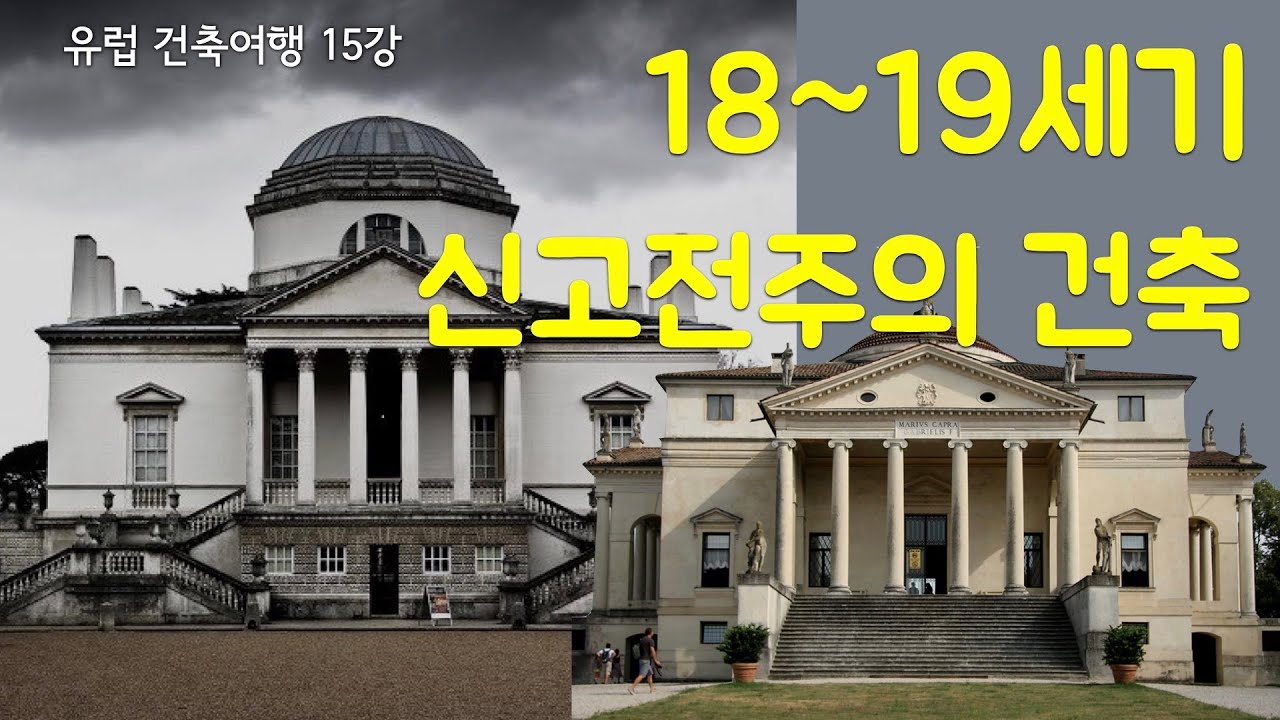
팔라디오를 추종하는 영국의 신고전주의 건축 (유럽건축 15강)
1.6K
The Grand Tour was a centuries-old tradition where European aristocrats traveled to Italy to receive classical education. Before traveling, they studied ancient Greek and Roman foundations and French language. The journey typically lasted two years, following routes from London through Paris to Rome. This tradition served as a crucial pathway for intellectual development, with figures like Adam Smith (who served as a tour guide) using these experiences to produce major works like 'The Wealth of Nations.' The Grand Tour established Italy as the center of European artistic learning, with most artists and architects traveling there to study before returning home. This pattern of study abroad created a network of cultural exchange that spread Italian artistic innovations across Europe.
Click to watch →

Conferencia Grand tour: viajar para conocer
382
The Grand Tour was considered essential for becoming a cultured man, particularly for learning Renaissance Greco-Roman art. The German hellenist Winckelmann was the major promoter of Italian travel, inspiring Goethe. The discovery of Pompeii and Herculaneum by the famous archaeologist (Kubier) added to the tour's appeal. Travelers visited Venice, Florence (including the Uffizi Gallery), and Rome, which offered a world in itself with its treasures and the intoxicating mixture that filled young artists' hearts.
Click to watch →

EUROPA: PAESAGGI TRADIZIONALI - GEOGRAFIA
179
The Grand Tour spread beyond aristocracy to wealthy bourgeoisie and many artists and writers, who found it useful for encountering famous works and antiquities, as well as finding new employment opportunities at European courts. In Rome, increased commissions from the Pope allowed many foreign artists to find work during their travels. Among aristocrats, it became fashionable to be painted as souvenirs of their journeys, with landscapes of visited locations. With the rise of realistic landscape painting, many artists traveled to find exotic inspiration. From the 1700s, Rome became the main destination of the Grand Tour due to its natural, artistic, and cultural beauties. Goethe's publication of his travel diary 'Journey to Italy' (1813-1817) further popularized Italy, which was declared 'the beautiful country' and became the ideal model of beauty.
Click to watch →
Prerequisite Knowledge
- Concept 01An understanding of the Romanticism art movement, which emphasizes emotion, individualism, and the awe-inspiring power of nature.
- Concept 02The philosophical concept of 'The Sublime' (specifically Edmund Burke's theories), which describes the feelings of awe, terror, and greatness inspired by nature.
- Concept 03Basic historical context of the 19th-century British Maritime Empire, explaining the cultural obsession with sea voyages, trade, and shipwrecks.
- Concept 04Familiarity with the 'Grand Tour' tradition, where European artists and aristocrats traveled to Italy to study classical Roman ruins and mythology.
Subsequent Learning
- Step 01Analyzing Turner's influence on the Impressionist movement, specifically how his revolutionary rendering of light and atmosphere paved the way for Claude Monet.
- Step 02An investigation into Turner's experimental techniques and use of media, including his innovative use of watercolor techniques in oil painting and unstable pigments.
- Step 03A comparative study of J.M.W. Turner and John Constable, examining the contrasting approaches of 'The Sublime' versus the 'Picturesque' in 19th-century British landscape painting.
- Step 04Exploration of the role of art institutions and curation, specifically looking at how Tate Britain manages, preserves, and displays the extensive Turner Bequest.
Turner's Shipwreck
Rome & Light
Turner's Shipwreck
0:05Playing Section
- 1
Analyzes Turner's dramatic imaginary shipwreck scene.
- 2
Highlights the vortex composition and energetic painting style.
The Post-Colonial and Materialist Critique of Turner's Sublime
While curator-led exhibitions often celebrate J.M.W. Turner’s seascapes and Roman reconstructions for their revolutionary atmosphere and aesthetic genius, critical theorists offer a more skeptical perspective. This counterpoint argues that Turner’s work aestheticizes human tragedy and imperial expansion, effectively sanitizing the brutal realities of British maritime dominance and colonial exploitation. His dramatic shipwreck scenes and nostalgic depictions of Ancient Rome can be viewed not merely as sublime masterpieces, but as ideological tools that reinforced British imperial identity. By framing maritime disasters and fallen empires through the lens of the romantic sublime, Turner's art often distanced contemporary audiences from the actual human cost of the transatlantic slave trade, labor exploitation, and imperial warfare that funded the very wealth of his elite patrons. This perspective urges students to look past the beautiful, atmospheric brushwork to interrogate how Turner’s art functioned within the geopolitical and capitalist context of the British Empire.
Deep Dive
Analyzing Turner's influence on the Impressionist movement, specifically how his revolutionary rendering of light and atmosphere paved the way for Claude Monet.
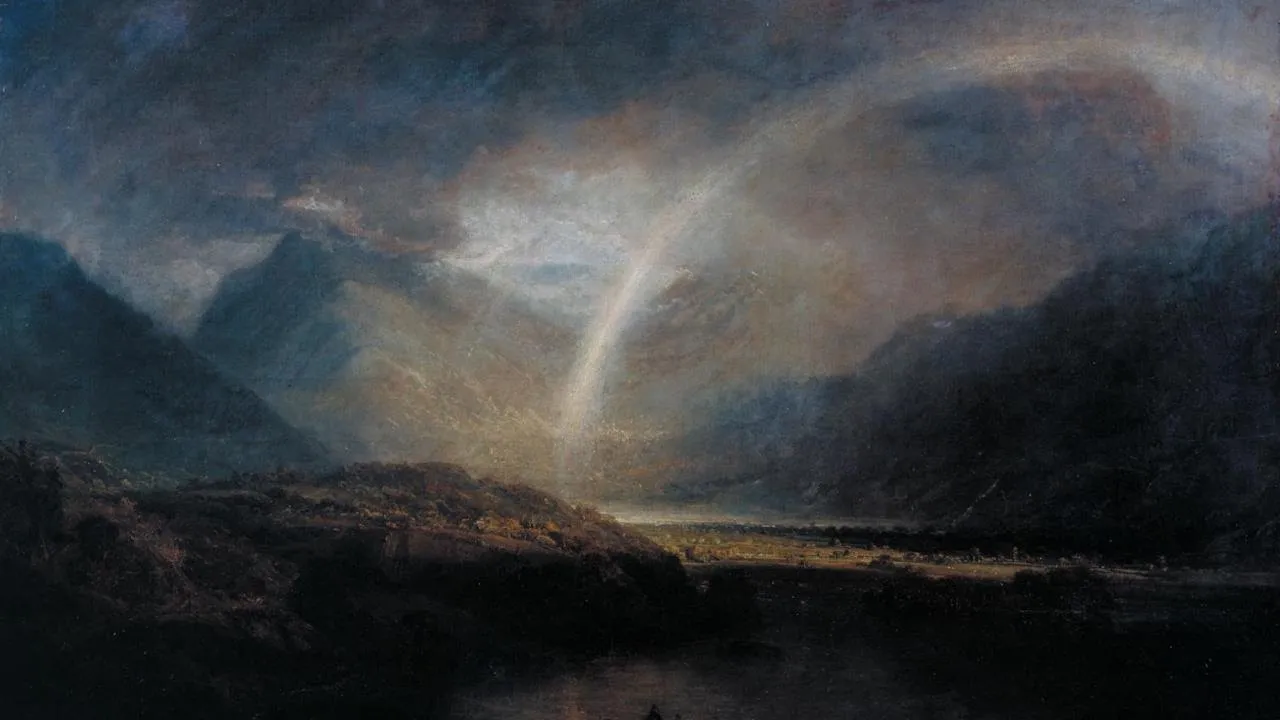
Гениальные художники. Тёрнер - Моне. Часть І
1K
William Turner's revolutionary approach to painting light and atmosphere directly influenced Claude Monet and Camille Pissarro during their 1870 visit to London, where Turner's exhibition served as a direct precursor to Impressionism; this artistic transmission demonstrates how Turner's innovative techniques in capturing natural light and color transformed the trajectory of Western art, establishing a foundational connection between Romantic landscape painting and the Impressionist movement.
Click to watch →
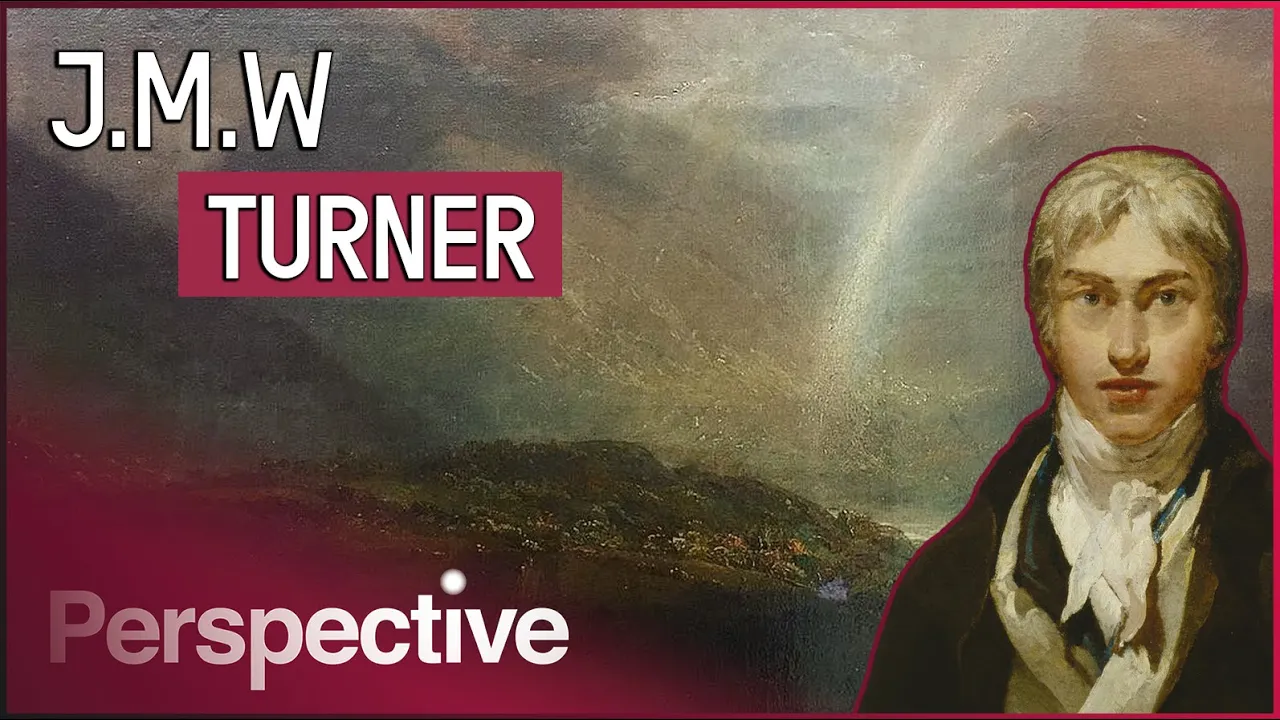
The Curious Case of J.M.W Turner's Later Works | Raiders Of The Lost Art
152.2K
Only two decades after Turner's death, his paintings found a whole new group of devotees on the continent—the Impressionists, who were particularly taken with his later works that had once proved so controversial. In terms of mindset, Turner was a real precursor to the Impressionist movement. He was looking at natural effects, atmosphere, light effects, changing feelings during the day, shadow, darkness, and how color affects the rendering of what you're seeing. This was a similar approach to the Impressionists. Monet in particular discovered Turner when he fled to London in 1870 because of the Franco-Prussian War and became heavily influenced by Turner as well as Whistler. Monet was looking at the effect of light and color and atmosphere at different times of the day, which became completely intrinsic to his work.
Click to watch →

PODCAST # 32. The History Of Oil Painting & Portrait Painting ~ Live At The Chapel In Bruton
181
J.M.W. Turner profoundly influenced French Impressionism through his revolutionary approach to light and atmosphere. Young Claude Monet studied Turner's works extensively at the National Gallery in London, describing Turner not merely as an influence but as a 'force of nature.' Turner's paintings dissolved traditional forms, depicting cathedrals as blue at dawn, gold at noon, and violet by evening, while water transformed into mirrors of light. When Monet fled Paris during the Franco-Russian War and arrived in London as a refugee in 1870, he described learning to see truly there—not in Paris but in London's smog-filled atmosphere. Turner's abstract storms of light established the conceptual foundation for modern painting.
Click to watch →

Staring into the Sun, and Other Ways of Capturing Transcendence
631.3K
Impressionism emerged from Turner's revolutionary approach to light. In 1872, Monet painted 'Impression, Sunrise' from his hotel room, depicting the Seine through industrial smog with visible brushstrokes. When critic Louis Leroy mocked the work as mere 'impressions' in 1874, the term stuck. Historian Michael Zimmermann frames Impressionism as a new way of seeing, prioritizing light and color over contour drawing. Monet's paintings were based on 'the light spots imprinted on the retina,' capturing pure vision. This movement transformed art by emphasizing transient effects of light over permanent forms.
Click to watch →
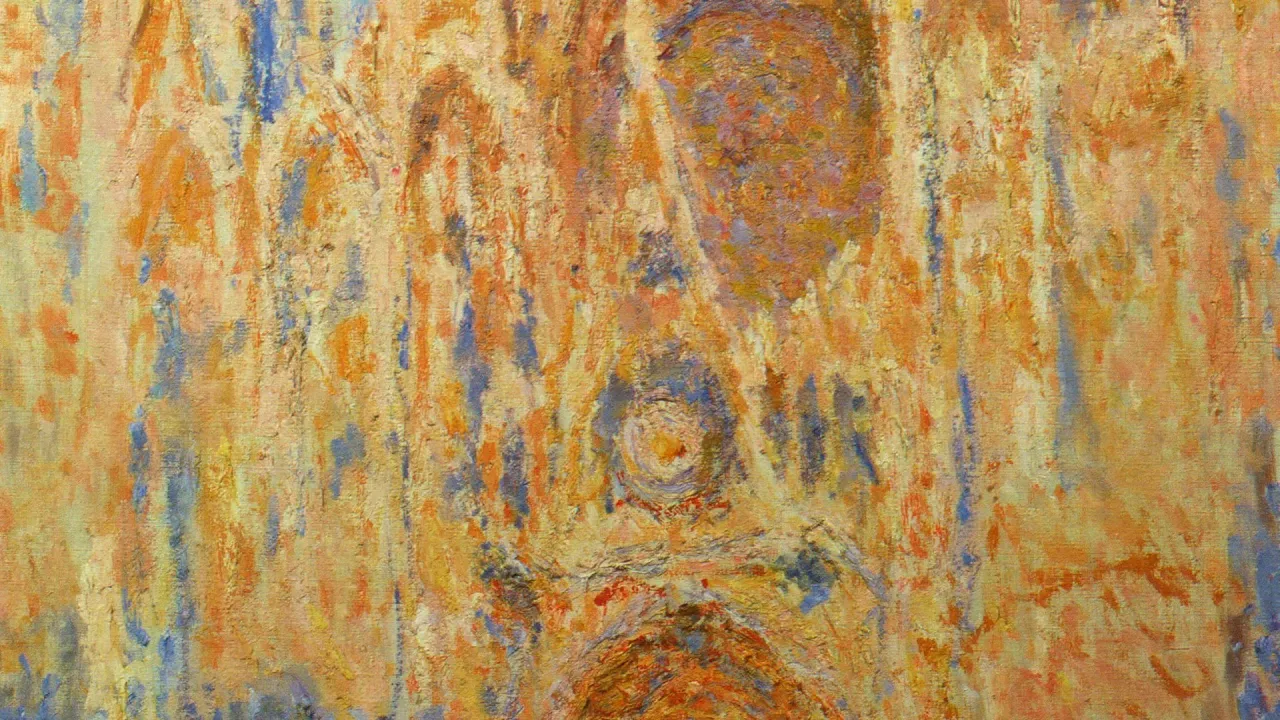
Гениальные художники. Тёрнер - Моне. Часть VII
694
William Turner, the British Romantic painter, pioneered the liberation of painting from realistic representation by focusing on capturing the fleeting effects of light and atmosphere, a revolutionary approach that profoundly influenced Claude Monet during his 1870 visit to London; Turner's emphasis on depicting the ephemeral qualities of light—whether as tangible golden hues or blinding brilliance—established a foundational methodology that Monet and subsequent Impressionists adopted to capture transient visual impressions, ultimately paving the way for abstract art movements like those of Pollock and Rothko.
Click to watch →
Deep Dive
An investigation into Turner's experimental techniques and use of media, including his innovative use of watercolor techniques in oil painting and unstable pigments.
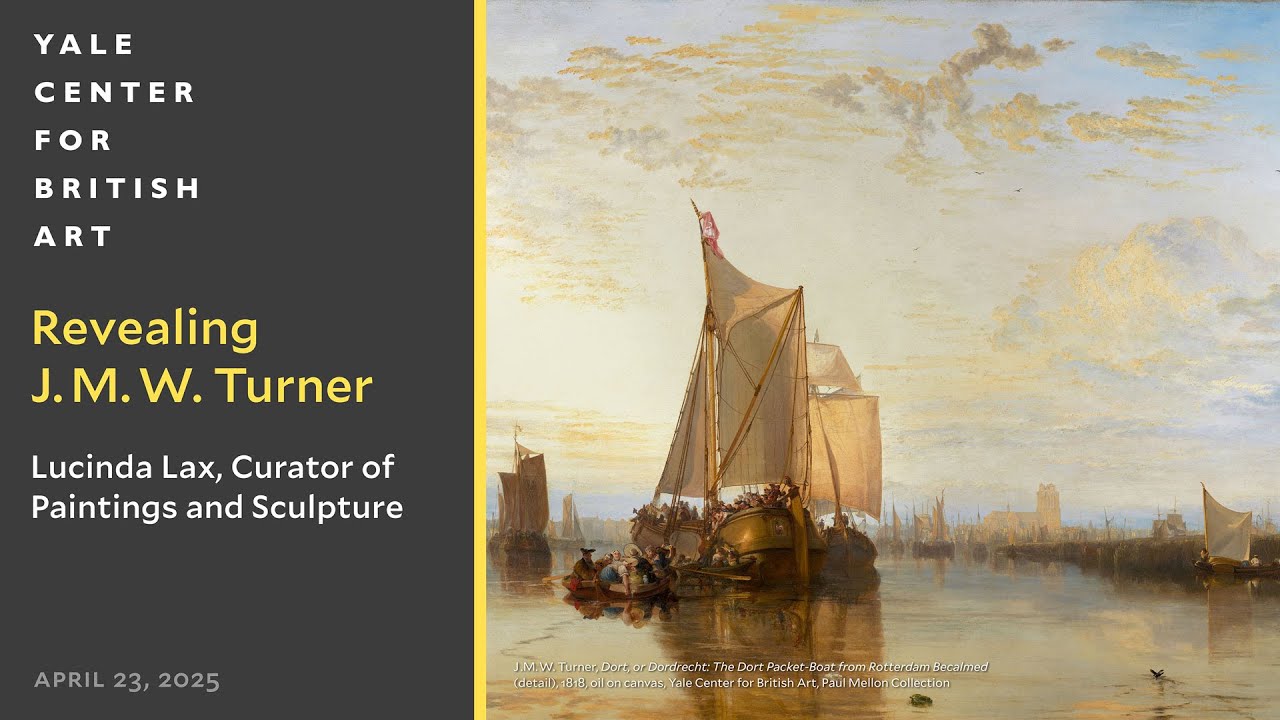
Exhibition Opening Lecture: Revealing J. M. W. Turner at the Yale Center for British Art
1.2K
Turner used his materials in highly experimental ways that distinguished his technique from contemporaries. He applied oils almost like watercolors, watering them down to create thinner glazes that could be manipulated with greater flexibility. Conversely, he thickened watercolors to create more opaque layers. He used the end of his paintbrush to scrape through paint surfaces in both watercolor and oils, even in print production. This distinctive crossover between media represents innovative experimentation. Turner was a spontaneous draftsman who made copious drawings recording observations economically. He had extraordinary capacity to work with imagination to relive experiences and reconceive them. He kept multiple canvases in his studio and often worked on several paintings simultaneously, setting some aside for extended periods. This approach—combining meticulous preparation with spontaneous execution—enabled his extraordinary inventiveness and capacity to experiment, making him very much caught in the moment with his works.
Click to watch →
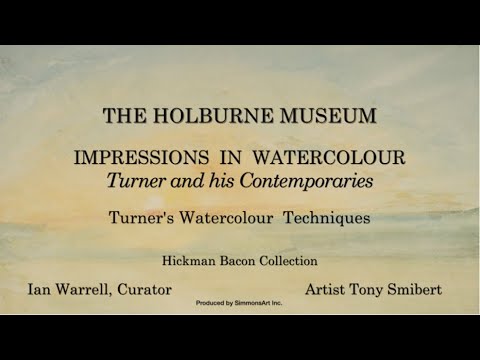
Impressions in Watercolour - Turner's techniques
43K
J.M.W. Turner employed a distinctive watercolour technique beginning with broad warm washes (yellow ochre, light red), progressing to cool colors (cobalt blue), then darks, lights, and finally details; he worked without taping his paper, using methods like pouring wet paint, scratching, and lifting light areas with damp brushes or tissue to create luminous landscapes, where negative space and controlled chaos transformed into coherent imagery.
Click to watch →

What Makes JMW Turner A Master Of British Art
339.2K
Turner revolutionized painting through experimental techniques developed throughout the 1820s. He laid down broad areas of primary color to denote forms, moving away from detailed outlines toward emotional expression. His depiction of the burning Houses of Parliament in 1834 exemplified this approach, using liquid splotches of red, gray, and blue in dramatic conflict. His 1835 version showed the catastrophe from the South Bank amid crowds watching their government consumed by flames. Throughout the 1830s-1840s, his expressive brushwork and indistinctness baffled critics. His late watercolors from 1841 represent supreme achievement—explosions of color with poetic haziness obscuring topographical detail. Unfinished paintings like 'Norham Castle Sunrise' reveal his stretching of color and technique to abstraction's threshold, fundamentally transforming Western painting.
Click to watch →

Painting Week 6
116
Joseph Mallord William Turner (1775-1851) was a great of the English landscape tradition whose sustained study demonstrates observation of the world combined with engagement with materials. He pushed boundaries of what was possible and was willing to experiment with anything he touched, including watercolor, oil, and pencil sketches. Turner was willing to use techniques from any medium and apply them across different painting types, such as using watercolor techniques in oil paintings and vice versa. His works often began with very similar beginnings but would develop into different ends, representing a constant evolving exploration of the world around him.
Click to watch →

JMW Turner's Norham Castle Masterpiece at Tate | Tate Britains Great Art Walks
3.8K
Turner employed watercolor techniques in his oil paintings, especially in later pieces. He was famous for working wet into wet, being impatient and wanting quick results. He worked on wet paper without time to correct, creating fluid gestural marks. This was unusual at the end of the 18th century when watercolors were considered oil paintings' poor relation. His paintings operate differently at different distances—unlike 17th century works with specific viewing distances, Turner's paintings can be experienced close up as exciting surfaces, revealing different aspects as viewers move back and forth.
Click to watch →
Deep Dive
A comparative study of J.M.W. Turner and John Constable, examining the contrasting approaches of 'The Sublime' versus the 'Picturesque' in 19th-century British landscape painting.
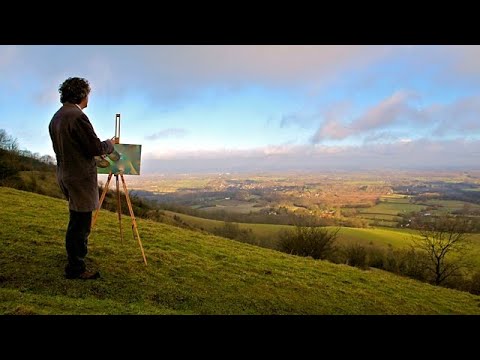
This Green and Pleasant Land - The Story of British Landscape Painting (2011)
1.3K
In the early 19th century, Britain found itself with two powerful but contrasting visions of its landscape. John Constable was totally immersed in England, staying there all his life, while William Turner was completely immersed in the world beyond. Constable offered a vision of rural contentment—an endless summer of reassuring tranquility—that continues to represent a golden age in English psyches. Turner, by contrast, pursued ever more dramatic light effects and sublime landscapes, eventually painting the same subjects that had inspired him as a child. Their contrasting approaches—one rooted in local observation and emotional connection, the other in global ambition and technical innovation—defined the trajectory of British landscape painting for generations. Constable died in 1837, while Turner continued developing revolutionary techniques until his death in 1851, proclaiming that 'the sun is God.'
Click to watch →

Turner and Constable paintings
162
J.M.W. Turner and John Constable were contemporary British landscape painters (active around 1775) with fundamentally different artistic personalities and styles: Turner was a fiery, self-made artist who traveled extensively across Europe and painted dramatic, powerful scenes of nature's forces (like storms and shipwrecks), while Constable was a more domestic, pastoral painter who stayed in England, married with children, and focused on tranquil rural scenes with meticulous attention to natural details like clouds and skies. Their contrasting approaches reflect their personalities—Turner's work is described as powerful and dramatic (like Beethoven's Fifth Symphony), while Constable's is more tranquil and pastoral (like a Mozart string quartet). Both artists influenced future generations, with Constable's work particularly inspiring the Impressionists Monet and Pissarro.
Click to watch →
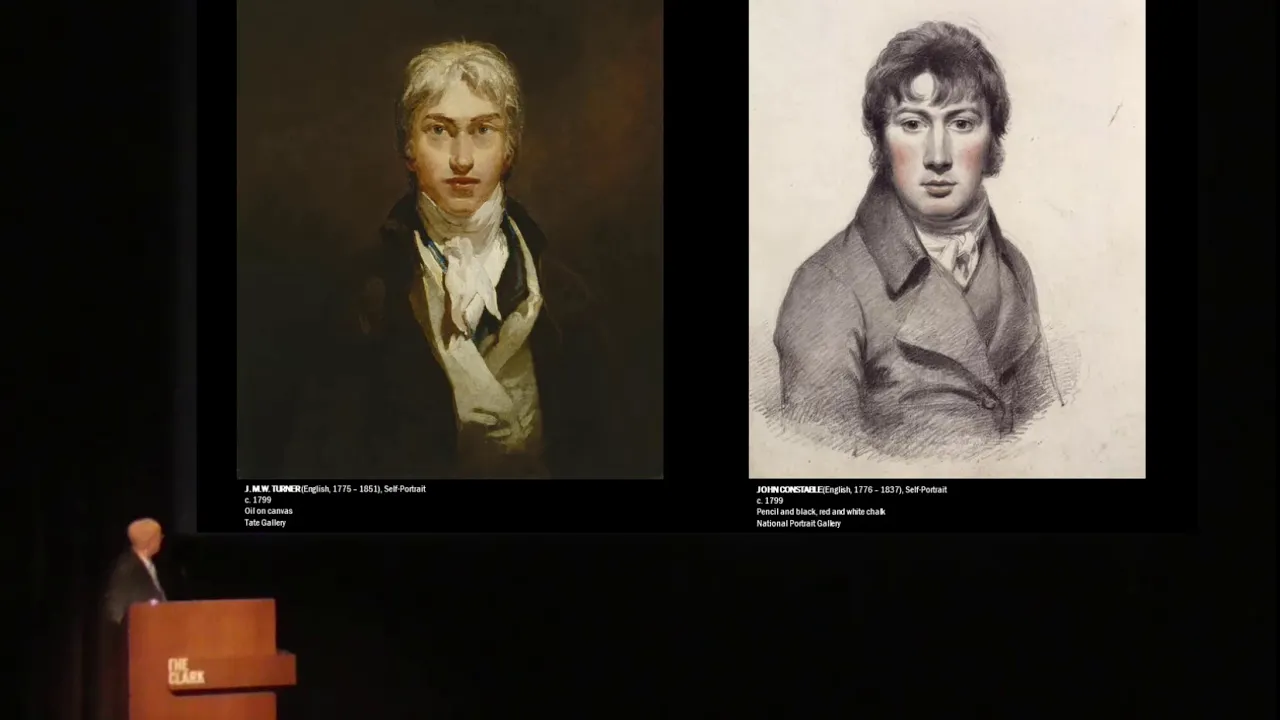
Turner and Constable: A Lecture from Director Olivier Meslay
8.5K
J.M.W. Turner and John Constable, two preeminent 19th-century English landscape painters associated with London's Royal Academy, developed radically different artistic philosophies and techniques despite their shared institutional affiliation; Turner, who traveled extensively across Europe and employed watercolor for rapid, atmospheric impressions, approached landscape as a spectator seeking grand historical and sublime subjects, while Constable, who remained rooted in his Suffolk countryside, used meticulous oil sketches to capture intimate, everyday scenes with scientific precision, ultimately achieving greater international recognition in France where his influence transformed European landscape painting.
Click to watch →
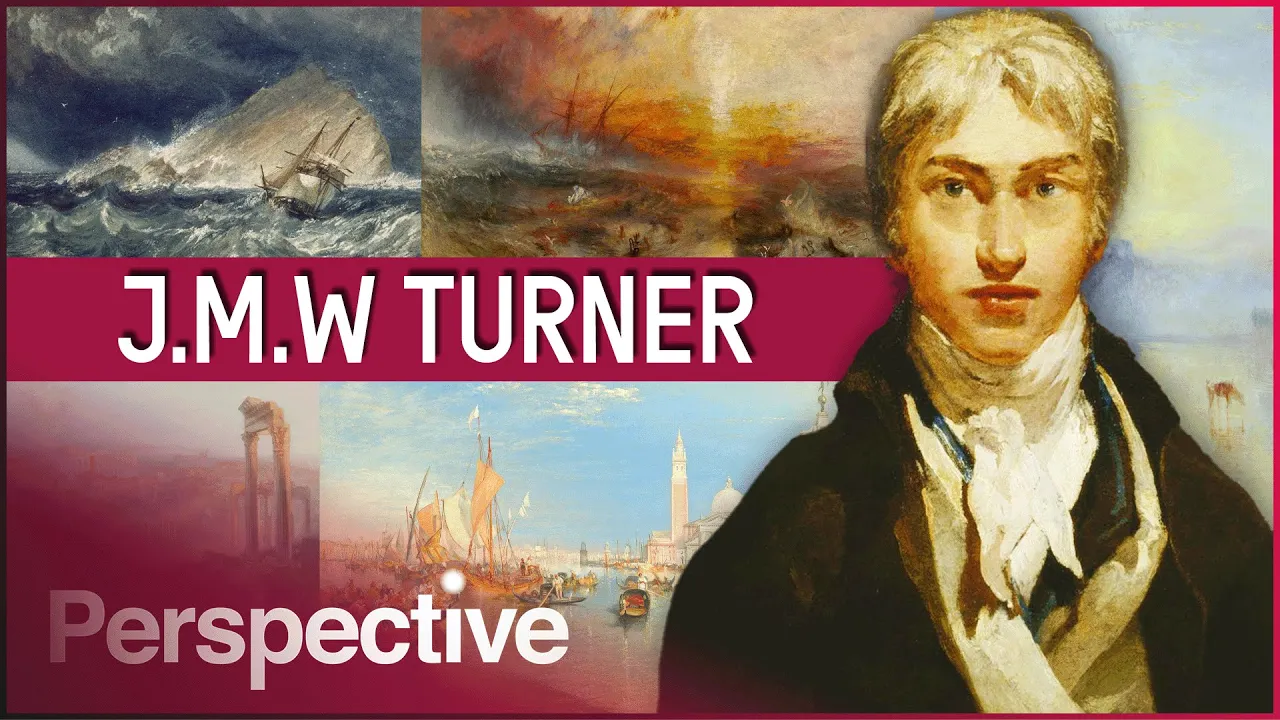
The Genius Of Turner And His Groundbreaking Watercolour Paintings | Great Artists
154.3K
Turner's achievement as a landscape artist rivaled John Constable's work. Their approaches differed significantly: Turner continued in the academic tradition of idealized landscapes executed by Old Masters, while Constable depicted the small area of Suffolk's Stour Valley where he grew up. Turner traveled extensively across Great Britain from his teens, seeking inspiration everywhere, whereas Constable never left England.
Click to watch →

Τζον Κόνσταμπλ (Constable) / Ουίλιαμ Τέρνερ (Turner) – Αφιέρωμα
101
William Turner (1775-1851) and John Constable (1776-1837) were two pioneering British Romantic landscape painters whose contrasting artistic approaches—Turner's luminous, atmospheric 'painter of light' style versus Constable's realistic, emotionally charged depictions of the English countryside—revolutionized landscape painting and established new standards for the genre, with their rivalry celebrated as a 'conflict between fire and water' that elevated landscape art to a position of primary importance in art history.
Click to watch →
Deep Dive
Exploration of the role of art institutions and curation, specifically looking at how Tate Britain manages, preserves, and displays the extensive Turner Bequest.
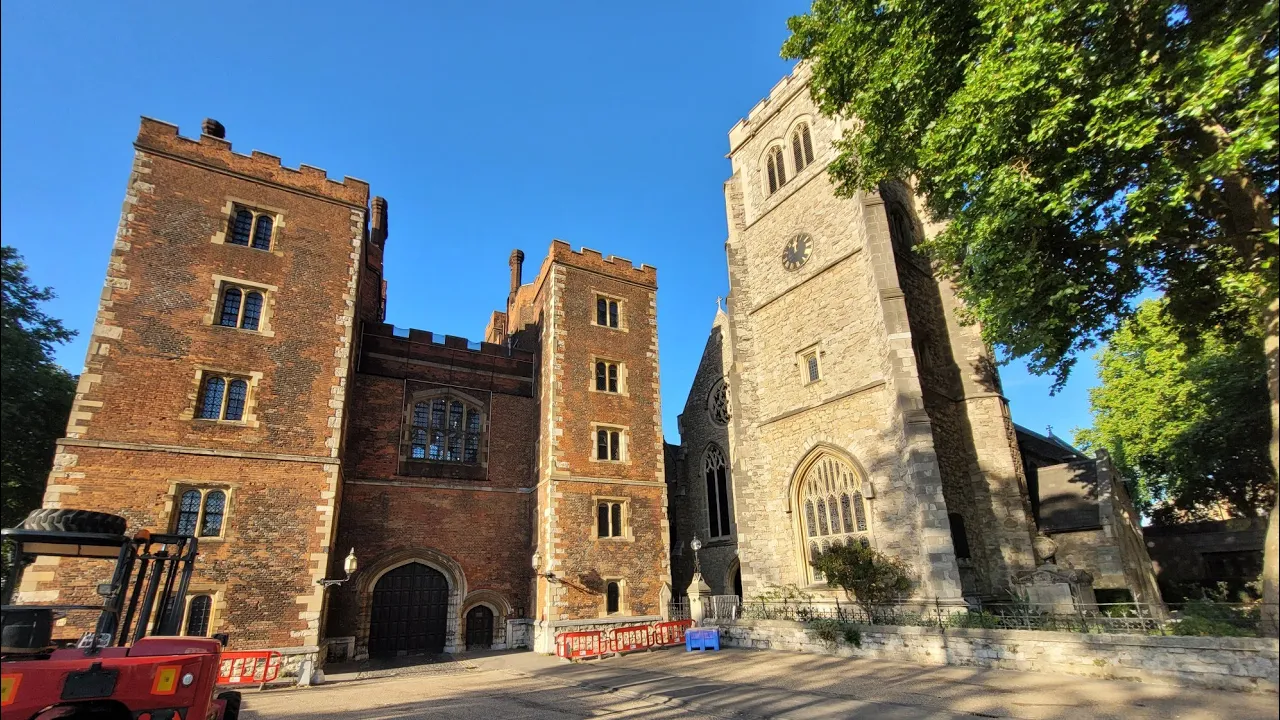
Palaces, Prisons & Pineapples: Millbank Walking Tour
731
Tate Britain's origins trace to Sir Henry Tate's 1897 bequest of modern British art worth £6 million today. Using bricks from demolished Millbank Prison, the gallery opened July 21, 1897, by the Prince of Wales. Extended to house J.M.W. Turner's vast collection, it became Britain's premier art institution. During both World Wars, collections were evacuated underground for protection. The gallery now encompasses four Tate institutions sharing a collection, hosts the annual Turner Prize, and offers free admission. This evolution—from penal architecture to cultural sanctuary—symbolizes London's transformation of difficult urban spaces into centers of artistic and intellectual life.
Click to watch →
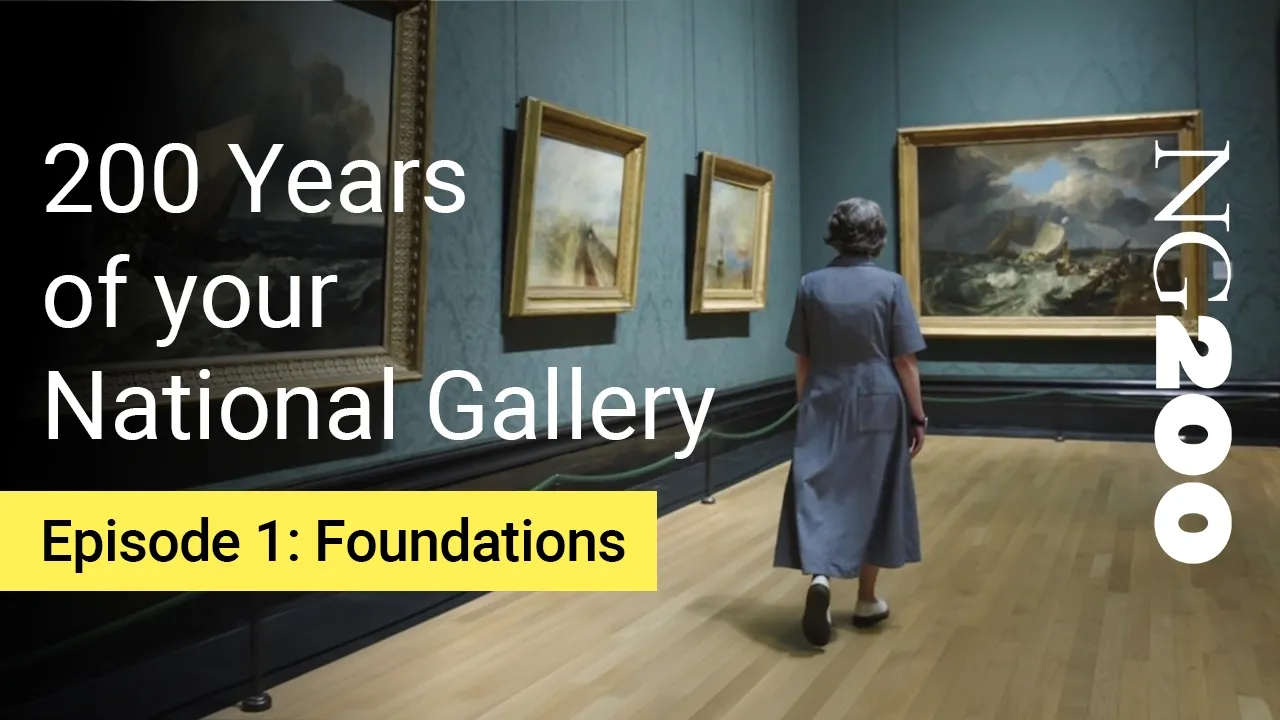
Full Documentary: 200 Years of the National Gallery Ep1 - Foundations (1824-1900)
159.3K
When J.M.W. Turner died in 1851, he donated nearly 300 oil paintings and around 30,000 sketches and watercolors to the National Gallery, adding British works to what had been primarily a continental European collection. Most of these works are now housed at Tate Britain, founded in 1897 as the National Gallery of British Art. However, the National Gallery displays seven magnificent Turners including 'Dido Building Carthage' and 'Sun Rising Through Vapor,' alongside paintings by Claude. The most famous Turner painting in the collection is 'The Fighting Temeraire.'
Click to watch →
Как я влюбилась в Лондон: искусство, еда и магия города
3K
This segment explores Tate Britain, one of London's most famous museums tracing British art from origins to modernity. The presenter describes the museum's peaceful atmosphere with silence, light, and spaciousness, contrasting it with crowded tourist sites. The segment focuses on William Turner, considered Britain's greatest romantic artist with his portrait on British currency. Turner's collection at Tate Britain includes his famous palette and masterpieces dissolving into sunlight, mist, and sea foam. The presenter notes Turner's influence on other artists and the museum's role in preserving this artistic legacy.
Click to watch →
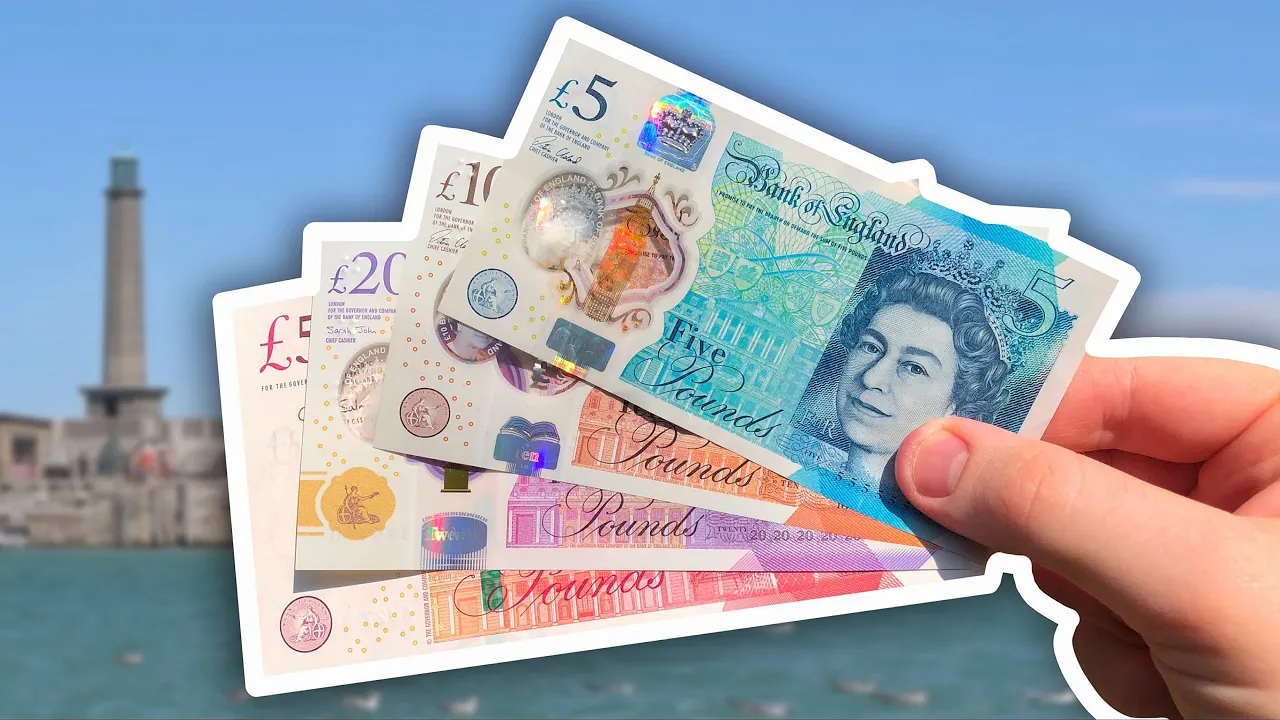
I Visited Every Place on the UK Banknotes
482.4K
J.M.W. Turner, one of the greatest painters of all time, trained at the Royal Academy of Arts and later became an associate. Tate Britain, located downriver from the Houses of Parliament, boasts the world's largest collection of Turner's work. The gallery's spiral staircase, completed in 2013 as part of a £45 million renovation project, appears as a symbol on the ten-pound note. The transparent window shape on the note is officially declared to borrow from the design of the famous fountains in Trafalgar Square.
Click to watch →
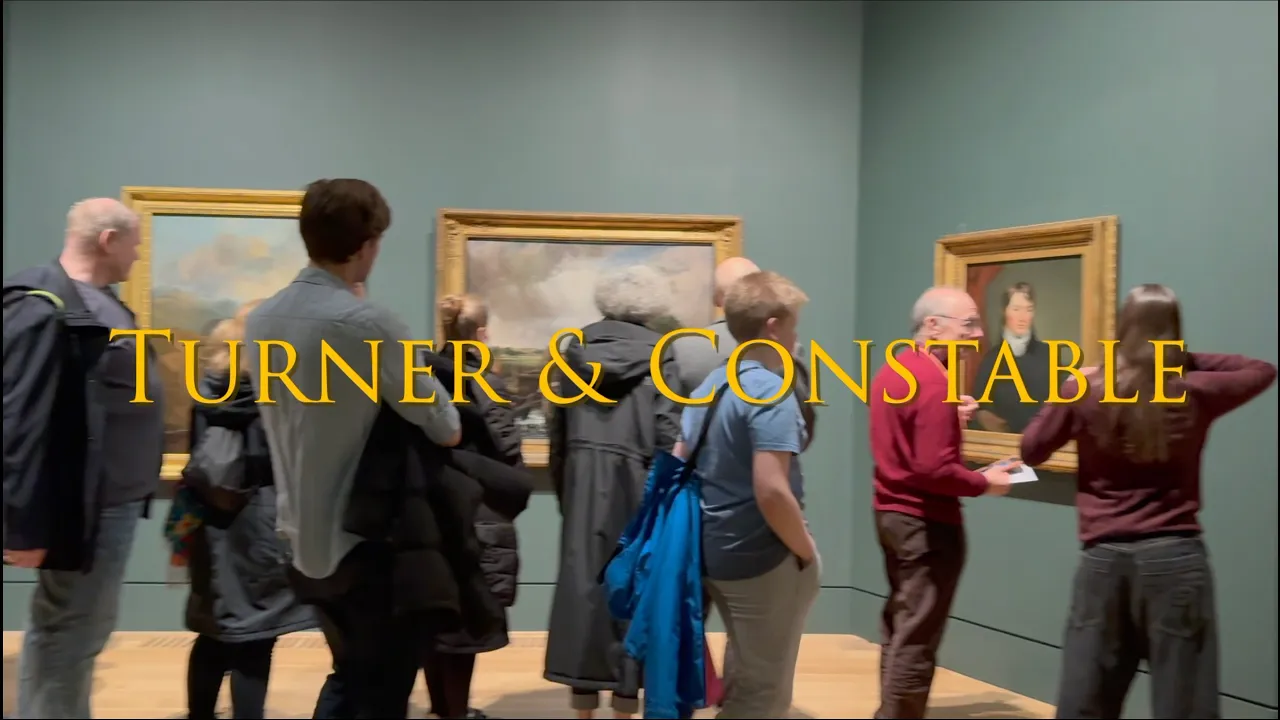
"Turner & Constable". Exhibition at Tate Britain (2026)
1.2K
The 'Turner & Constable' exhibition at Tate Britain (November 27, 2025 - April 12, 2026) explores how the Earth, Sky, and Human form a sacred triad in art, revealing that true masterpieces require a keen eye to perceive the artist's vision beyond surface-level impressions.
Click to watch →
Turner's Shipwreck
Rome & Light
Turner's Shipwreck
0:05- 1
Analyzes Turner's dramatic imaginary shipwreck scene.
- 2
Highlights the vortex composition and energetic painting style.
The Post-Colonial and Materialist Critique of Turner's Sublime
While curator-led exhibitions often celebrate J.M.W. Turner’s seascapes and Roman reconstructions for their revolutionary atmosphere and aesthetic genius, critical theorists offer a more skeptical perspective. This counterpoint argues that Turner’s work aestheticizes human tragedy and imperial expansion, effectively sanitizing the brutal realities of British maritime dominance and colonial exploitation. His dramatic shipwreck scenes and nostalgic depictions of Ancient Rome can be viewed not merely as sublime masterpieces, but as ideological tools that reinforced British imperial identity. By framing maritime disasters and fallen empires through the lens of the romantic sublime, Turner's art often distanced contemporary audiences from the actual human cost of the transatlantic slave trade, labor exploitation, and imperial warfare that funded the very wealth of his elite patrons. This perspective urges students to look past the beautiful, atmospheric brushwork to interrogate how Turner’s art functioned within the geopolitical and capitalist context of the British Empire.
An understanding of the Romanticism art movement, which emphasizes emotion, individualism, and the awe-inspiring power of nature.
The philosophical concept of 'The Sublime' (specifically Edmund Burke's theories), which describes the feelings of awe, terror, and greatness inspired by nature.
Basic historical context of the 19th-century British Maritime Empire, explaining the cultural obsession with sea voyages, trade, and shipwrecks.
Familiarity with the 'Grand Tour' tradition, where European artists and aristocrats traveled to Italy to study classical Roman ruins and mythology.
Analyzing Turner's influence on the Impressionist movement, specifically how his revolutionary rendering of light and atmosphere paved the way for Claude Monet.
An investigation into Turner's experimental techniques and use of media, including his innovative use of watercolor techniques in oil painting and unstable pigments.
A comparative study of J.M.W. Turner and John Constable, examining the contrasting approaches of 'The Sublime' versus the 'Picturesque' in 19th-century British landscape painting.
Exploration of the role of art institutions and curation, specifically looking at how Tate Britain manages, preserves, and displays the extensive Turner Bequest.
18.5K views111likes3:45@TateOriginal Release: 2013-10-23
[Music] we're standing here in the claw Gallery which was built to house the collection of paintings by jmw Turner who is really one of the most important artists in Tate's collection this is the Shipwreck which Turner exhibited in 185 it's one of his largest early pictures and it shows a dramatic scene at Sea and it's of course completely imaginary we don't know that Turner was ever caught in a shipwreck like this he's he's had to imagine everything but he's done so with amazing Vigor and and the way in which he's painted the sea with all the froth and spray and the waves circling around is really quite extraordinary Turner was aware of an earlier tradition of marine painting going back to 17th century artists many of whom were Dutch but he's completely reanimated it here and brought it to life for his own time the beginning of the 19th century and the whole composition functions as a kind of Vortex Turner was very interested in these sweeping and circling compositions throughout his life but they also when one looks at these pictures have the effect of drawing the viewer in as well so that we become almost part of the [Music] subject this painting is called ancient Rome agripina Landing with the ashes of germanicus which is perhaps rather a daunting title today but the story story of agripina was very well known to Turner's generation it's a story from Roman history and it's all about the dedication of a widow agripina whose husband had died at Antioch possibly poisoned possibly murdered but she was absolutely devoted to him and she brought his ashes back to Italy not in fact to Rome as Turner shows in the picture but to brindisi and he'd been reading the wrong book he'd been reading Roman history which told the story slightly wrong and got the place of her arrival uh incorrect but that doesn't matter he's used the picture as a chance to reconstruct the architecture of ancient [Music] Rome sometimes the stories that Turner is telling in his pictures are quite hard to find or to discern because the main interest for him was the background the subject the landscape or in this case the architecture by the time Turner painted the picture one of his main interests was light and atmosphere and the effects that sunlight Mist atmospherics had on solid form and it's wonderful I think to see how this great vision of the ancient city seems to be both emerging and dissolving into [Music] mist
Up Next
12:23
Thomas Cole: The Course of Empire and American History
@OverlySarcasticProductions
206.7K views•2024-08-02

114:18
Christian Iconography: History, Theology, and Meaning | Fr. Panayiotis Papageorgiou
@Trisagionfilms
58.8K views•2020-02-21
7:48
Ukiyo-e Art: History, Woodblock Printing & Influence
@japanathand
6.3K views•2023-06-08

16:34
Earliest Depictions of Jesus in Art: 10 Ancient Images Explained
@UsefulCharts
5.9M views•2022-06-03
Related Study Plans & Knowledge Roadmaps
Structured learning paths in Art History
art-history
Gothic Cathedrals: Engineering, Light & Society
01The Birth of the Gothic: Romanesque to Suger's Vision
02The Structural Triad: Pointed Arches, Ribbed Vaults, and Flying Buttresses
03Theology of Light: Lux Nova and Sacred Geometry
+ 2 more learning modules
14h5 modules
Explore Roadmap
art-history
Pre-Raphaelites: Realism, Symbolism & Critique
01The Victorian Art Establishment and Academic Formula
02The Founding of the PRB and Radical Realism
03Medieval Revivalism and Literary Symbolism
+ 1 more learning modules
8h4 modules
Explore Roadmap
art-history
Street Art: From Subways to Art Market
01Subcultural Origins in Philadelphia and New York (1970s)
02The Subway Era and Style Wars (Late 1970s - 1980s)
03The East Village Scene and Early Gallery Crossover
+ 2 more learning modules
10h5 modules
Explore Roadmap
art-history
Classic Maya Art: Iconography, Glyphs & Ritual
01Foundations of Classic Maya Visual Culture
02Deciphering Maya Hieroglyphs & Text-Image Integration
03Sacred Geography and Cosmological Architecture
+ 2 more learning modules
14h5 modules
Explore Roadmap