![Manifest DESTINY [APUSH Review Unit 5 Topic 2] Period 5: 1844-1877](https://i.ytimg.com/vi/ACaigPuJa3k/maxresdefault.jpg)
![Manifest Destiny, Explained [APUSH Review]](https://i.ytimg.com/vi/JVrwXC0AnIk/maxresdefault.jpg)










![Amerzone: The Explorer's Legacy REMAKE [Gameplay ITA] - Il rituale dell'uovo e l'arrivo nelle paludi](https://i.ytimg.com/vi/Jno-upJTbPc/maxresdefault.jpg)






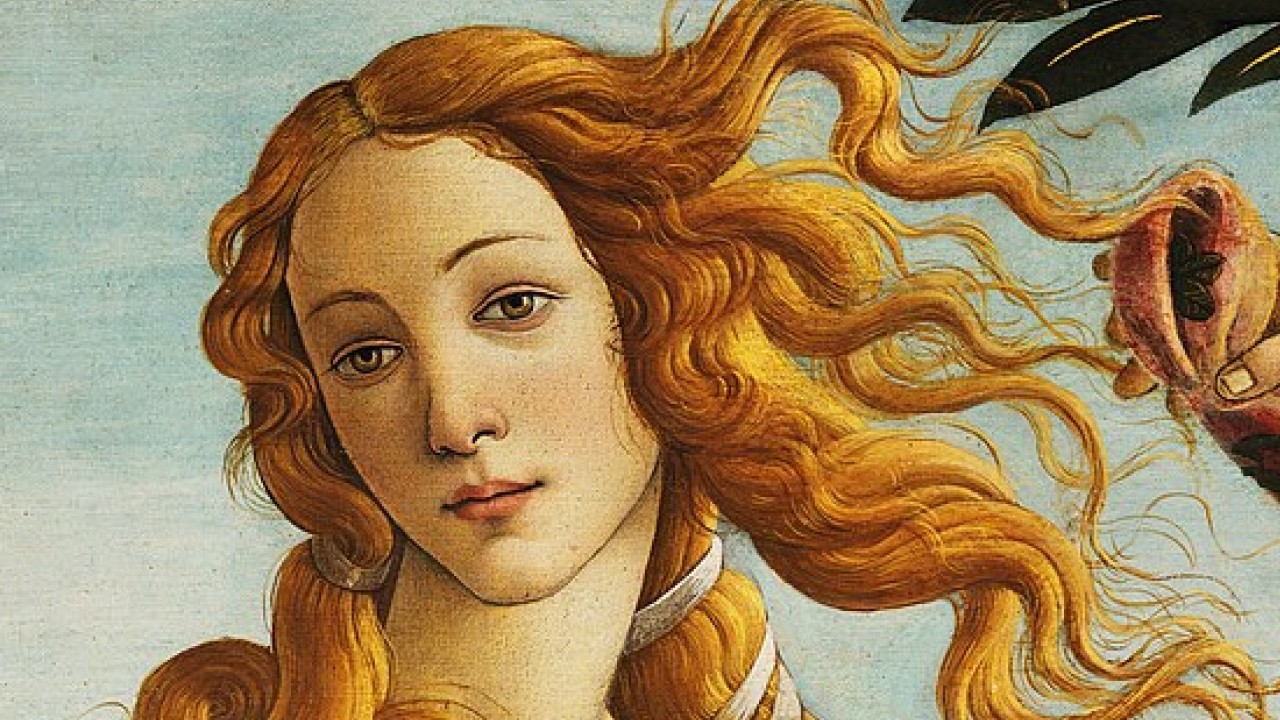





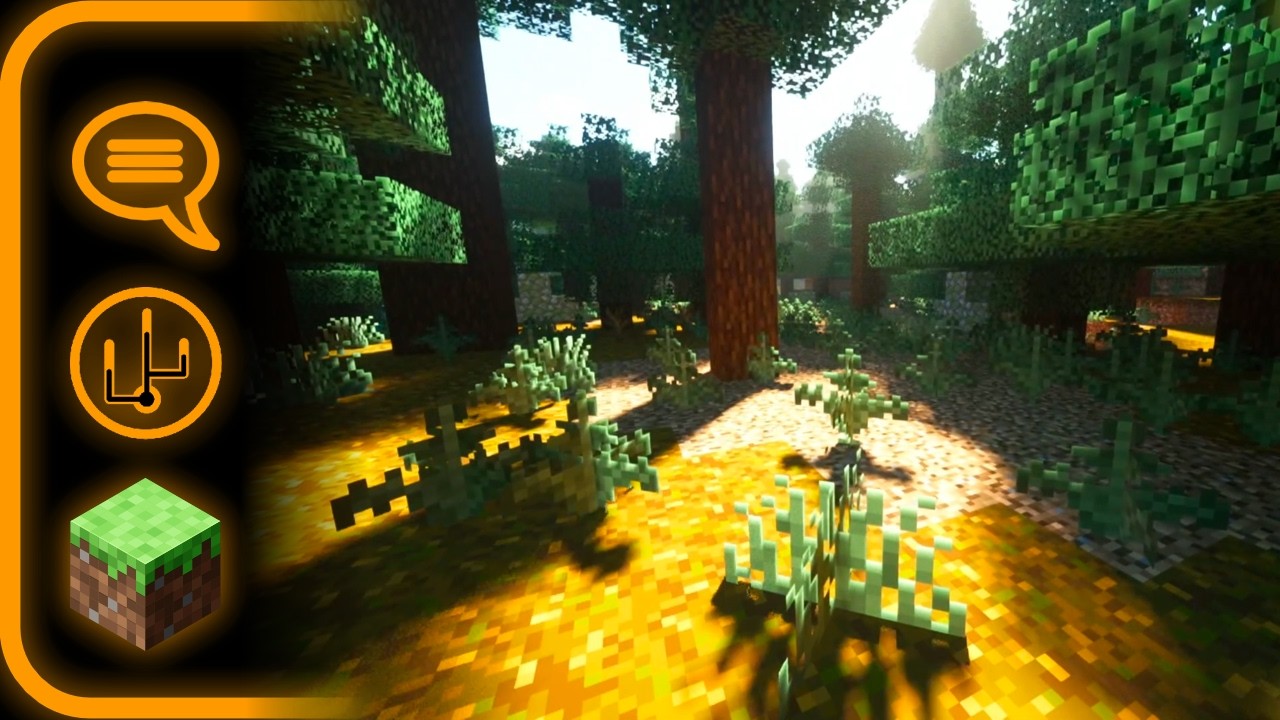

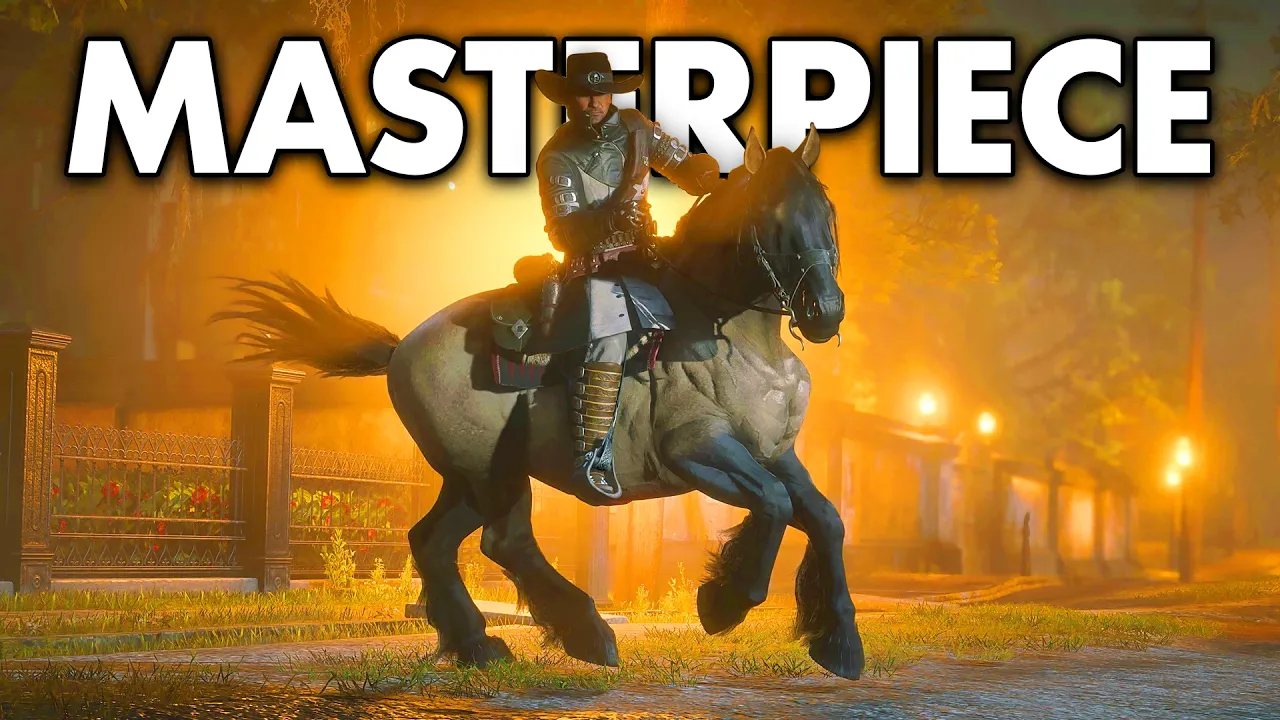
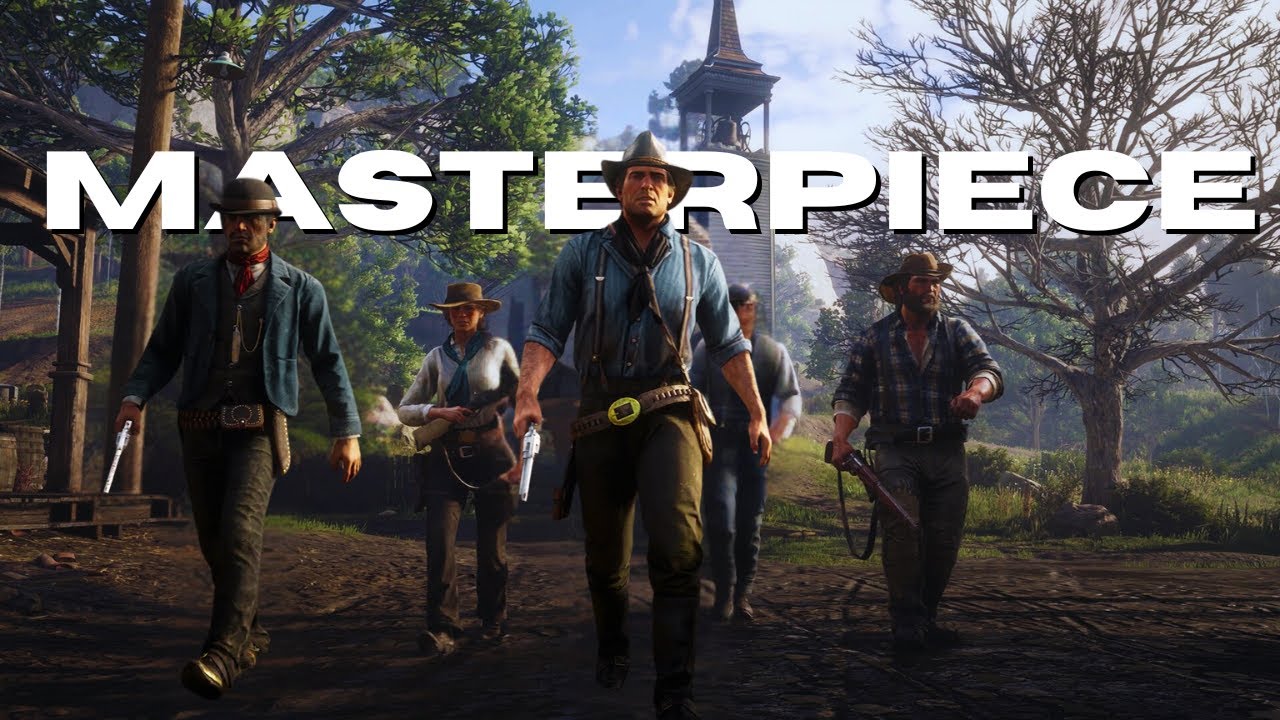
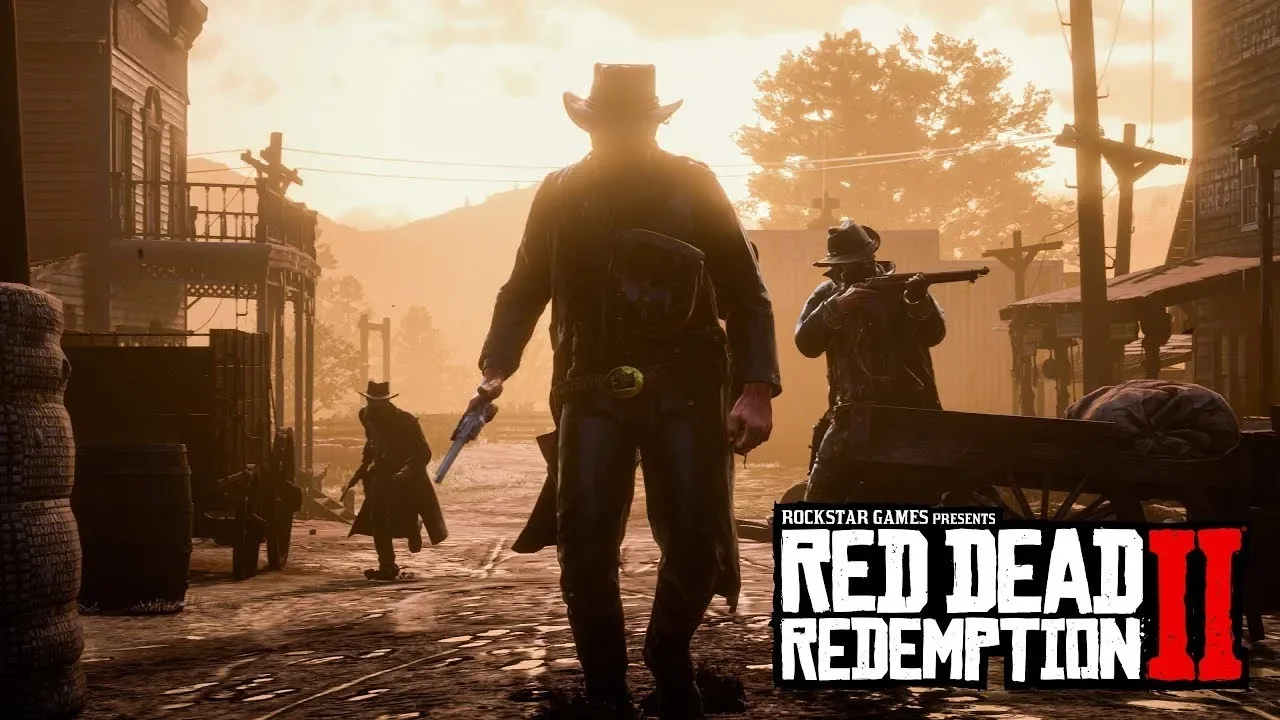
Red Dead Redemption 2's landscapes, while not directly inspired by the Hudson River School of Art, share striking similarities with 19th-century American landscape paintings because both use compositional techniques like dark foregrounds and light backgrounds to create depth and immersion, and both serve as cultural artifacts that shape public perception of the American West, with the Hudson River School's paintings helping to establish the romanticized image of the frontier that persists in modern media.
Romanticism and Manifest Destiny in Red Dead Redemption 2's Landscapes
Added:Understanding the 19th-century American concept of Manifest Destiny and its ideological role in westward expansion.
Familiarity with the Hudson River School art movement, including key figures like Thomas Cole and Albert Bierstadt, and their depiction of the American wilderness.
A foundational grasp of aesthetic theories, specifically 'the Sublime' (the mixture of awe and terror in nature) and 'Luminism' (the use of light to convey spiritual tranquility).
Basic knowledge of Red Dead Redemption 2's setting, narrative themes of the fading frontier, and its realistic environmental design.
Exploring the critical deconstruction of colonialist narratives and environmental exploitation in video game storytelling.
Studying the evolution of environmental art and landscape design in video games as a modern continuation of classical art movements.
Investigating how other interactive media utilize national myths (such as the American Frontier or the Bushido code) to shape player immersion and ideology.
Analyzing the technical rendering of light, weather, and atmospheric effects in game engines to evoke emotional states analogous to Romanticist painting.
131K views6.4Klikes8:25Original Release: 2018-12-14
This is Red Dead Redemption 2.
And this is a landscape painting of the American west.
Here’s another.
Rockstar has said that their game wasn’t inspired by these paintings.
or anything else for that matter.
But you don’t have to look hard to see more than just geographical similarities.
And there is a reason for that.
But we need to start at the beginning.
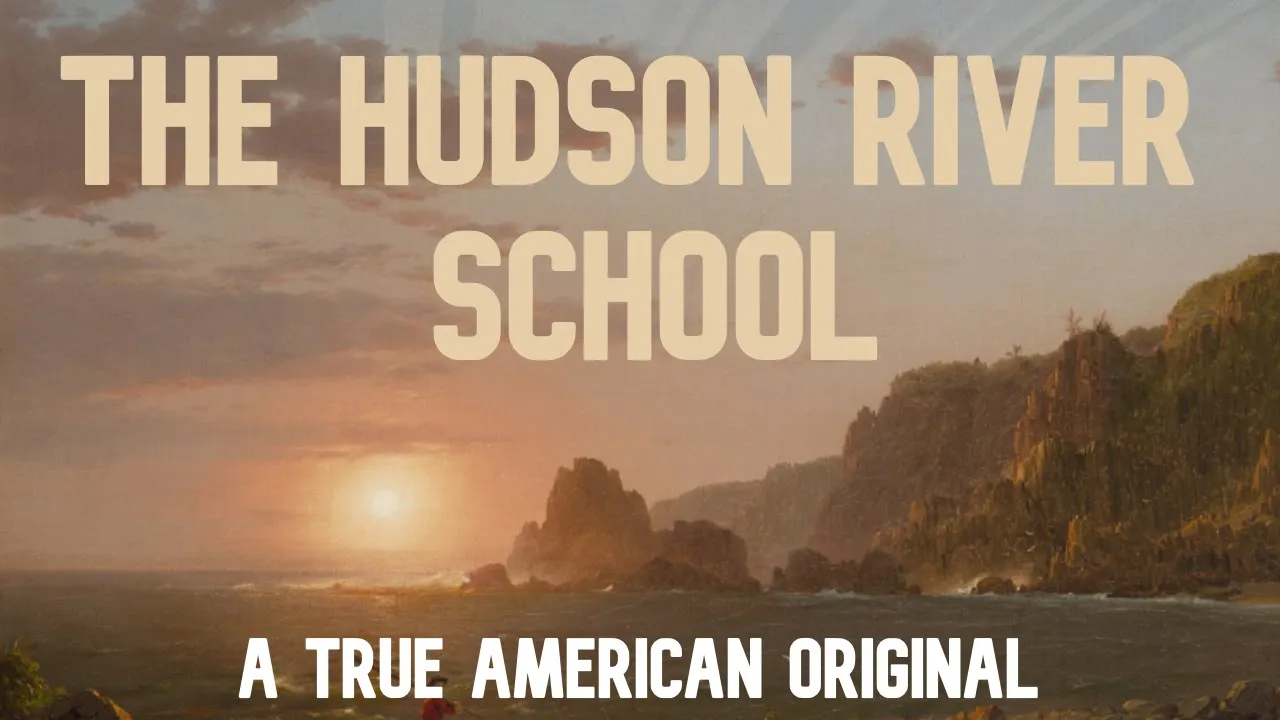
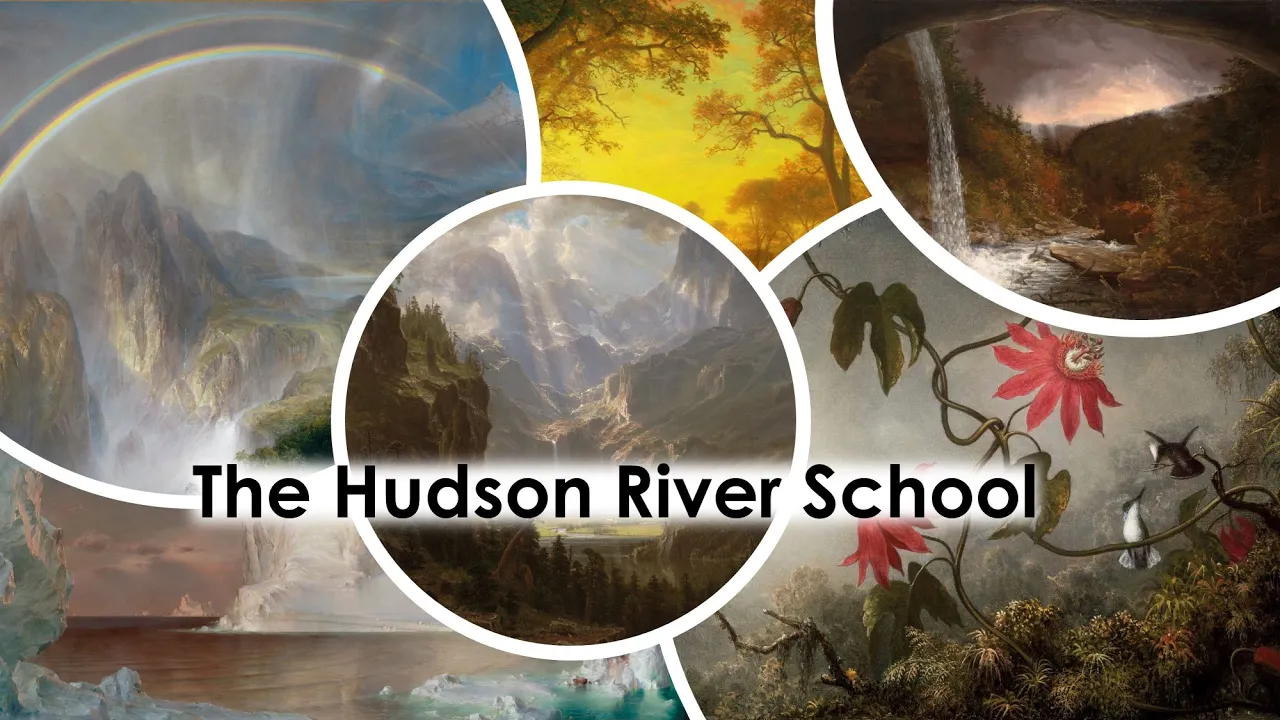
The Hudson River School of Art was an artistic movement started in the 1800s in the Hudson River Valley.
It was known for depicting uniquely American landscapes.
so, naturally, it was started by an immigrant: Englishman Thomas Cole.
Cole’s detailed depictions of wilderness reflected a very British philosophy of nature: the sublime.
The sublime isn’t beauty, per se.
Rather, it highlights nature’s irregular forms and tremendous, frightening power.
Cole’s paintings were ‘realistic, ’but not necessarily accurate.
He painted what he called a higher style of landscape… This is Wendy Ikemoto, the Associate Curator of American Art at the New York Historical Society.
Landscape was not used to represent a particular place but to carry allegorical meanings.
So, for example, sunrise and sunset, fall foliage, all of that would be used to symbolic effect, to carry a narrative about the rise and fall of civilizations.
Other Hudson School artists took even greater liberties with their landscapes, like in this depiction of Native Americans in Wyoming… that becomes Kansas just by removing the background mountains.
Decades later, Rockstar North’s artists did kind of the same thing: the landscapes in Red Dead Redemption 2 are composites of an idyllic American wilderness, rather than an exact replica.
After Cole’s style caught on, a second generation of artists rose to prominence, and many of them looked beyond the Hudson Valley to the West.
Frederic Edwin Church, Cole’s one and only pupil, along with Albert Bierstadt, a German explorer/painter, and Thomas Moran, who’s paintings helped Yellowstone become a national park, would eventually broaden the movement’s subject matter well beyond the Eastern United States.
And it wasn’t just the geography that had changed: Church and Bierstadt in particular were involved with an artistic movement called Luminism, named for its use of light.
Luminist artists were artists who focused on atmospheric effect.
So the subject, you could say, of a luminist painting is the light itself, it's the atmosphere.
The ‘Luminists’ of the Hudson River School used light to accentuate natural forms, to lend a heightened, ethereal air, … or to create a greater sense of depth.
as in Solitary Oak, by Asher B. Durand.
You see that he is depicting the background mountains in light values… whereas everything in the foreground is of dark value.
That difference in value combined with differences in scale were used to create an illusion of depth on the flat surface of the canvas.
This use of light is also critical to achieving the sense of scale you get from the landscapes in Red Dead Redemption 2.
Just like in the paintings, the foreground is depicted in dark values, while the background is depicted in light values.
In both cases, the artists rendering these places were trying to capture how we see light in the real world.
These second generation Hudson River School painters also incorporated natural weather and atmospheric effects into their art.
Take this famous painting of the Rocky Mountains by Albert Bierstadt.
Look at the way the clouds cast shadows, leaving pockets of bright light and overwhelming darkness.
It makes this painting look alive, like a moment frozen in time.
Red Dead 2 was designed with a similar approach, using light, weather, and atmospheric effects to create a more immersive environment.
In fact, immersion was a big part of the Hudson River School movement.
These were not meant to be polite paintings, they were meant to invade your peripheral vision, so that it felt like you were stepping into the landscape, so that the landscape felt immersive.
These painters wanted the people who saw them to feel like they were there.
Which is why so many of these paintings were absolutely gigantic, some of them approaching 12 feet long.
This was also one way to convey the monumentality of the western american landscape.
Church and Bierstadt traveled the country showcasing their works to thousands, charging a quarter a head.
Many viewers would actually take opera glasses to view his paintings, and take a journey through the various elements of the work, with a key in hand, pointing out the various key elements.
Another way to look at it: these were paintings that needed a Prima guide.
But yhen customers bought a chance to view these big paintings, they were also buying something else: a fantasy vision of the West.
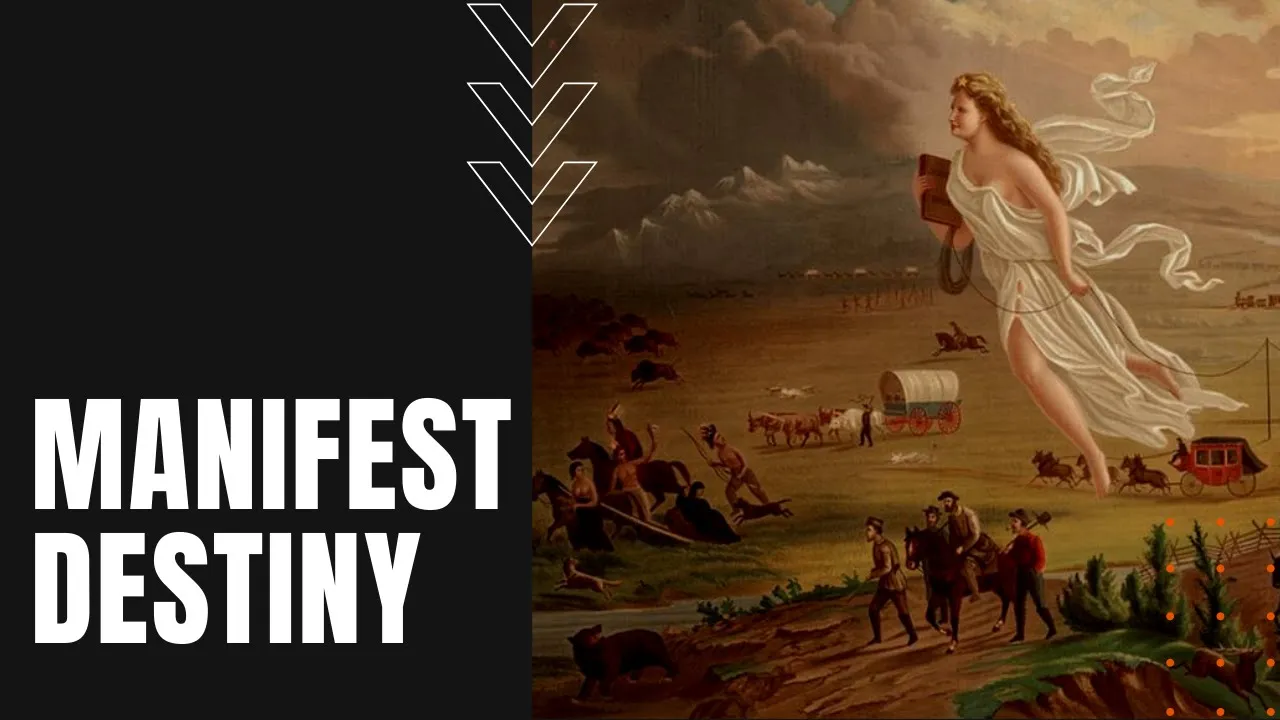
Which goes by another name: Manifest Destiny.
Manifest Destiny, of course, was the widely held 19th century belief that it was the divinely sanctioned and inevitable destiny of white American settlers to spread across America.
and paintings helped to not only form, but also to perpetuate that ideology.
The Hudson River School presented the west as something divine.
Holy temples of nature.
Gardens of Eden.
An untouched work of God, just waiting to be put to good use by American settlers.
These paintings didn’t just document a feeling: they aided and abetted it.
One important thing to remember about art in my opinion is that it is not a passive reflection or document of history, but it is rather an agent of history, and the connection between the Hudson River School and Manifest Destiny is a prime example of that.
Asher B. Durand’s “Progress” provides one of those examples.
On one side, Native Americans are depicted as hunter-gatherers in a wild, unkempt forest.
On the other side are white settlers, who have tamed the wilds and carved out trails for their wagons.
And in the distance, they’ve built a railroad: the ultimate sign of progress, and a common motif in this genre.
Other artists of the era simply pushed Native Americans aside… and weren’t subtle about it.
And that’s if they were depicted at all.
Manifest Destiny was the reason white settlers felt entitled to the West, and it was the justification for the forced relocation and genocide of Native American peoples.
Red Dead 2 does not ignore this.
But even as it portrays them sympathetically, it still leaves Native Americans as a side story, part of the white main character’s redemption arc.
The fact that the game presents Native Americans this way is a reflection of how enduring this image of the West is.
From paintings and books, to movies and tv, it became the image of the west most Americans knew.
And Red Dead Redemption 2 can’t avoid telling the story of the West that still lives in our public consciousness… A story that was dictated in part by the Hudson River School.
It doesn’t matter that the game wasn’t literally based on these paintings.
It doesn’t have to be.
Because when we think of the American West, this is still what we think of.
Up Next

7:15
How African Art Revolutionized Matisse and Picasso's Work
@ArtGalleryofOntario
15.3K views•2009-12-16

114:18
Christian Iconography: History, Theology, and Meaning | Fr. Panayiotis Papageorgiou
@Trisagionfilms
58.8K views•2020-02-21
7:48
Ukiyo-e Art: History, Woodblock Printing & Influence
@japanathand
6.3K views•2023-06-08

16:34
Earliest Depictions of Jesus in Art: 10 Ancient Images Explained
@UsefulCharts
5.9M views•2022-06-03
Related Study Plans & Knowledge Roadmaps
Structured learning paths in Art History
art-history
Gothic Cathedrals: Engineering, Light & Society
01The Birth of the Gothic: Romanesque to Suger's Vision
02The Structural Triad: Pointed Arches, Ribbed Vaults, and Flying Buttresses
03Theology of Light: Lux Nova and Sacred Geometry
+ 2 more learning modules
14h5 modules
Explore Roadmap
art-history
Pre-Raphaelites: Realism, Symbolism & Critique
01The Victorian Art Establishment and Academic Formula
02The Founding of the PRB and Radical Realism
03Medieval Revivalism and Literary Symbolism
+ 1 more learning modules
8h4 modules
Explore Roadmap
art-history
Street Art: From Subways to Art Market
01Subcultural Origins in Philadelphia and New York (1970s)
02The Subway Era and Style Wars (Late 1970s - 1980s)
03The East Village Scene and Early Gallery Crossover
+ 2 more learning modules
10h5 modules
Explore Roadmap
art-history
Classic Maya Art: Iconography, Glyphs & Ritual
01Foundations of Classic Maya Visual Culture
02Deciphering Maya Hieroglyphs & Text-Image Integration
03Sacred Geography and Cosmological Architecture
+ 2 more learning modules
14h5 modules
Explore Roadmap