
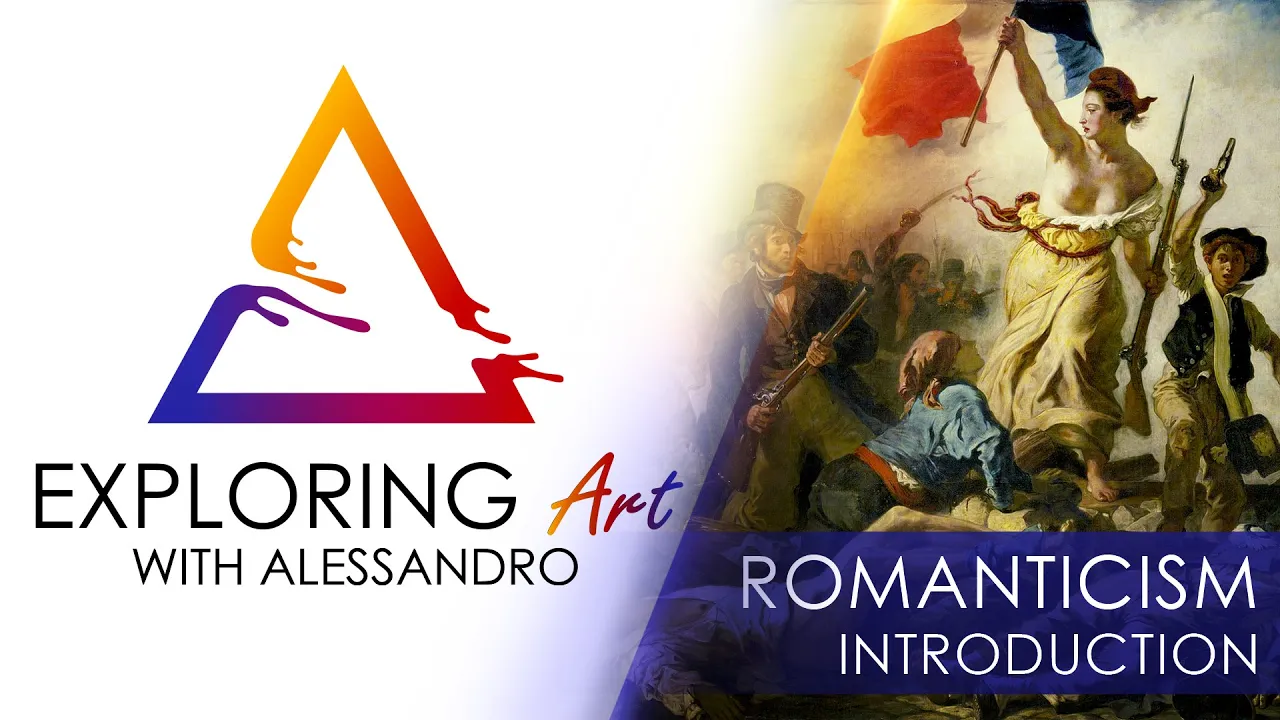


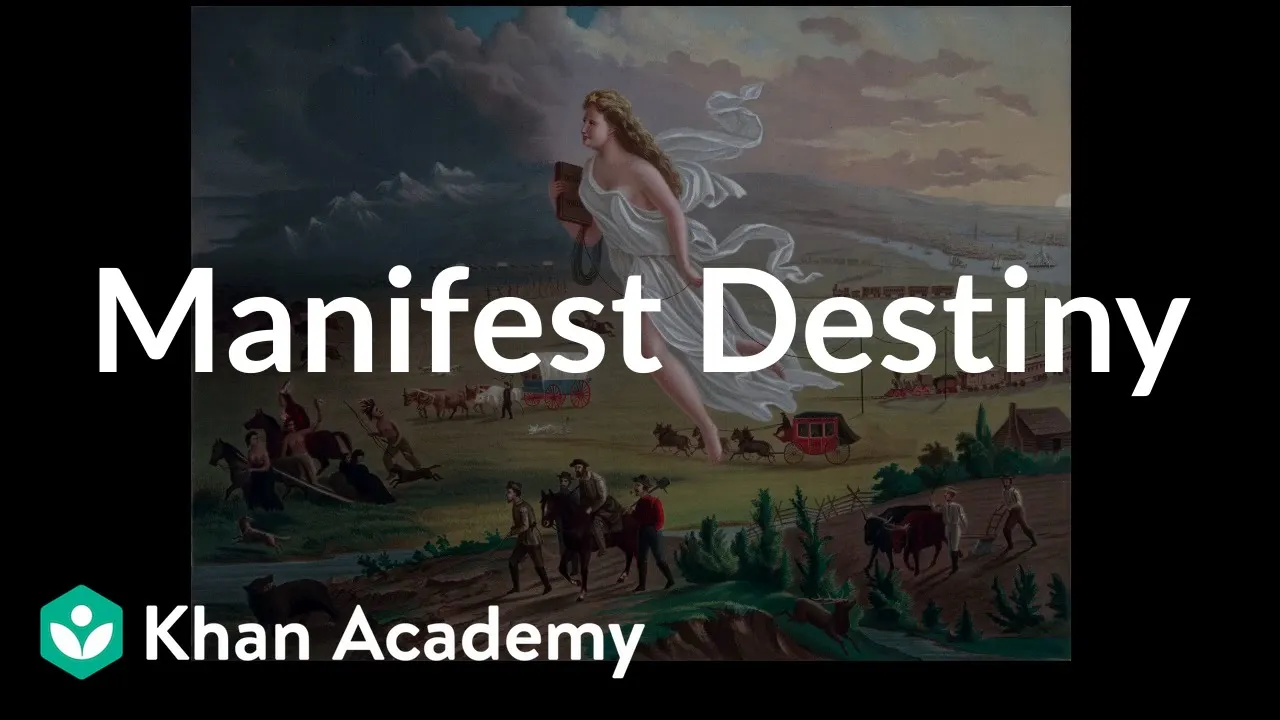
![Manifest DESTINY [APUSH Review Unit 5 Topic 2] Period 5: 1844-1877](https://i.ytimg.com/vi/ACaigPuJa3k/maxresdefault.jpg)
![Manifest Destiny, Explained [APUSH Review]](https://i.ytimg.com/vi/JVrwXC0AnIk/maxresdefault.jpg)








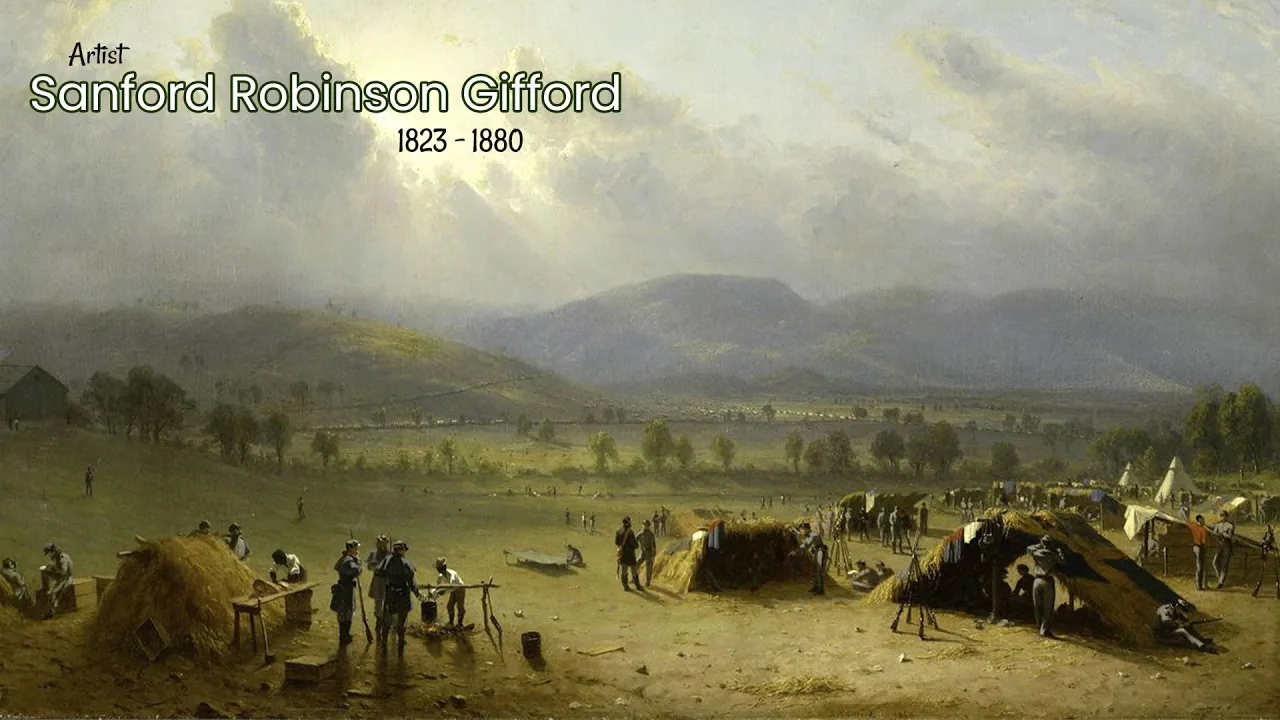

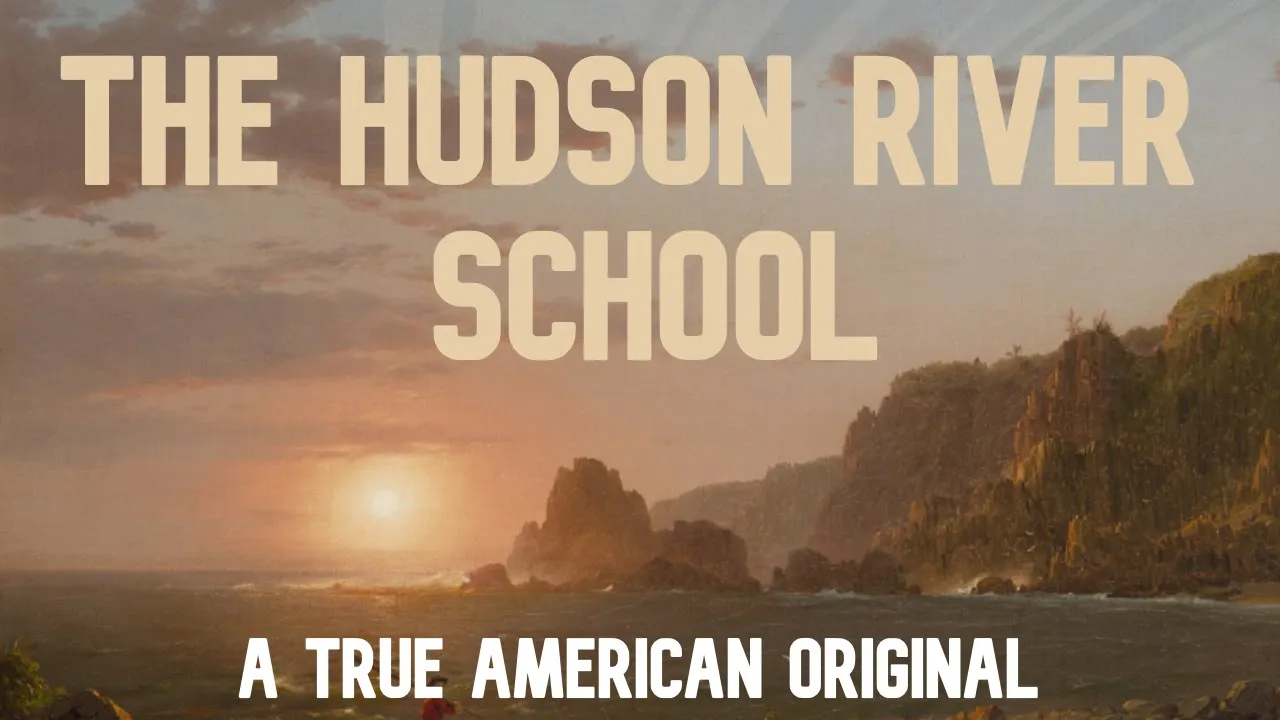












The Hudson River School (1825-1875) was an American art movement founded by Thomas Cole that specialized in landscape painting, characterized by its celebration of American scenery as proof of divine creation, its embrace of Romanticism's concepts of the sublime and beautiful, and its detailed transcription of nature; key artists included Cole, Asher Durand, and Frederick Edwin Church, who traveled extensively to capture America's diverse landscapes, from the Hudson Valley to South America, before the style evolved into more expressive movements like Luminism and eventually gave way to figure painting in the late 19th century.
Exploring the Hudson River School: American Landscape Art
Added:Understanding of the European Romanticism movement and its emphasis on emotion, individualism, and the sublime in nature.
Basic knowledge of 19th-century American history, particularly the concepts of Manifest Destiny and westward expansion.
Familiarity with Transcendentalist philosophy (e.g., Ralph Waldo Emerson and Henry David Thoreau) regarding the spiritual connection to the natural world.
An understanding of the traditional academic hierarchy of painting genres, where landscape painting was historically undervalued compared to history painting.
Exploration of Luminism, a mid-19th-century American landscape art style that evolved from the Hudson River School, focusing on light and tranquility.
Investigation into how Hudson River School paintings influenced early American environmentalism and the creation of the National Park System.
Analysis of modern and post-colonial critiques of the movement, particularly how these landscapes idealized expansion while omitting the displacement of Native Americans.
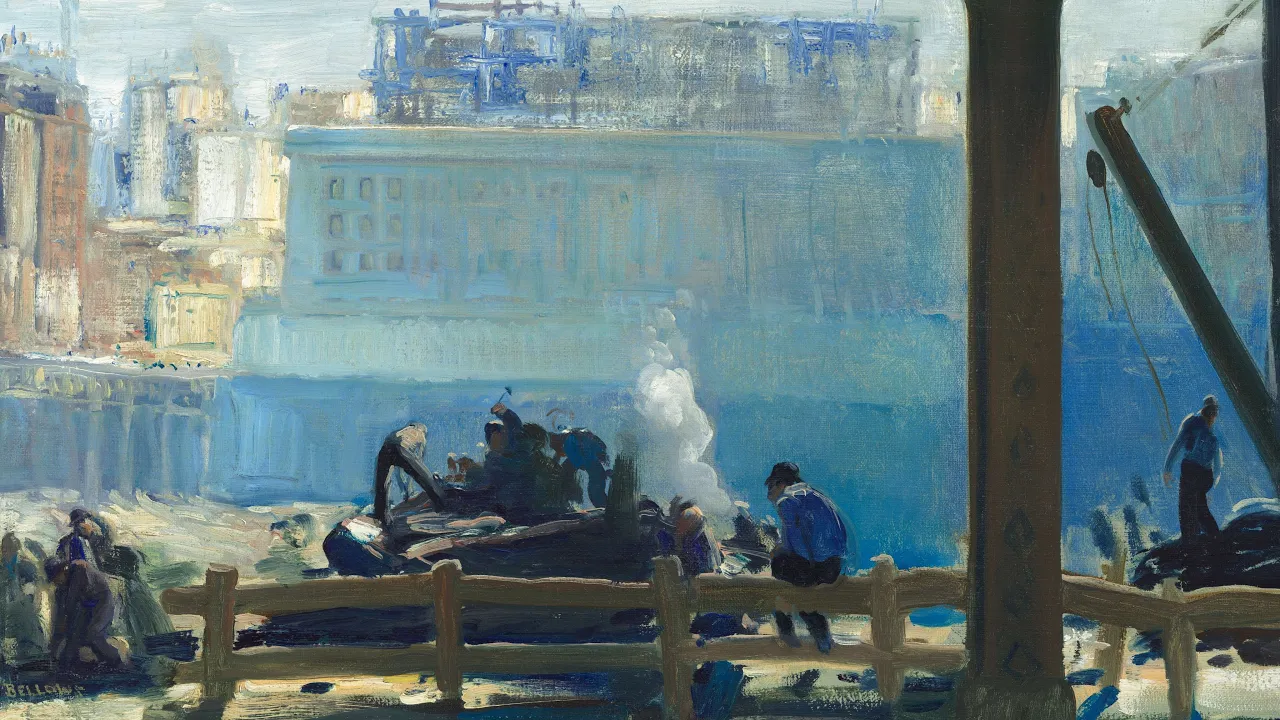
Study of the transition in American art from idealized landscapes to urban realism and the Ashcan School in the late 19th and early 20th centuries.
15.7K views83likes1:10:58Original Release: 2014-03-20
David daringer came to us as the Susan Morris Hillis curator of paintings and sculpture just a little over a year ago and there must be times in the last few months when he wonders what exactly he got into just this Academic Year for instance he mounted a really interesting exhibition uh last fall devoted to representations of children in the atheneem collections and in November he gave a a Wonder F and ambitious lecture on representations of children in European and American art two weeks ago he gave a talk on the role of artms in Europe and America part of the background to the really really wonderful exhibition devoted to Leo that we have mounted in our in our Gallery right now in which is a a real Mark of David's professionalism here at the library last night he joined me in giving a presentation to a small group about our next exhibition which opens in June uh devoted uh to uh image of SP images of spiritual sites in the ader andex tonight he's going to talk to us about the Hudson River Valley School of painting he's going to tell us what it was in terms of American art history and what it wasn't and in just a few weeks he will be our lecturer as we get on the coach and take our 4-day three night tour to the Hudson River Valley and while he's doing all of these things in a public way he is very much engaged in writing about and planning for uh the major Bicentennial exhibition that will be on view here throughout the entire first floor of the library uh in just two years time so I hope you will join me with a thunderous a thunderous Round of Applause so that we can let David daringer know that he is neither overworked nor underappreciated well I'm exhausted thank you all very much for coming uh here to the Atheneum on this lovely evening at long last a perfect evening to talk about the sort of American painting that we're going to talk about and thank you Richard for that that lovely introduction it was really very nice uh I'd also like to extend a special thank you to Brad Curry who is our professional audiovisual uh person who uh handles the uh slides and any problems that arise and the lighting and the sound uh all of which uh we could not do this without or at least it would be very difficult to do uh as Richard said uh my topic tonight is the Hudson River School of American landscape painting and this is really an introductory lecture so if you are an expert on the subject uh this will all seem extremely sophomoric to you it really is Hudson River School uh painting 101 uh but I hope I can succinctly describe as Richard said what it is and what it really isn't and never was uh it is one of the most popular areas of American painting of course and it's always a very popular subject to talk about um partially I think mostly hopefully because the paintings really are so beautiful to look at uh this talk will take about 1 hour uh so you can plan accordingly if you've heard me speak here before you know that sleeping is permitted but snoring snoring is not so just keep that in mind and you can sort of time it if I don't get too far off the track that uh I will talk for about 50 minutes to an hour uh like the titles of so many artistic movements and styles the name Hudson River School gives at best an incomplete idea of what it purports to represent and at worst it is confusing and misleading the problems with the term are twofold first of all the movement was a school only in the sense that its participants shared some basic ideas about art nature and culture and of course that is the pun behind George de's painting of 1985 which you see on your right on the screen that painting is called the Hudson River School and by the way just for your edification uh the painting on the left is Thomas Dow's landscape with sailboats which the Boston athum happens to have in its collection it's one of only a handful of paintings that we could even by a stretch called Hudson River school but it and its companion it's its pendant also by Thomas dowy of course are among the mo most beautiful landscape paintings that we own secondly the second problem with the term Hudson River School is that its practitioners were by no means limited geographically to representations of the Hudson River or E even the Hudson River Valley as we will seen at the time when the style flourished that is from the 1830s to the 1860s the movement was most often simply referred to by people at the time as the first school of American painting in fact the term Hudson River School wasn't even invented until the 1870s by which time the artists who had subscribed to the style had for the most part seen their best years indeed the term Hudson River School just like the term impressionism was originally invented as a pejorative a way of poking fun at what was by then a more taste a dinosaur really left over from a previous and then by then woefully uh out of fashion generation well whatever its limitations are the term as a term Hudson River School uh has become so widespread again just like impressionism that it would be difficult and probably senseless to try to change it luckily modern historians and certainly collectors of and dealers in the art of that period have left the pejorative connotations behind them mostly because of course Hudson River School paintings have reached that level seven to eight figures at sales and that sort of gets rid of any negative connotation no matter what so that leaves us free then to now Define the term Hudson River School refers to that group of American artists who specialized in landscape painting between about 1825 and about 1875 so about 50 years most of them were Bor born between 1810 and 1830 and spent at least part of their careers in New York City they were at their professional Peak the style was really at its peak in the 1840s and 50s and then it began to sort of dwindle in the 60s and by the 1870s as I said it was out of style uh much of the inspiration for these painters came yes from the Hudson River Valley but also from many of the other seemingly endless scenic areas of New York state New England and the upper South no notably the state of Virginia the areas preferred and so beautifully recorded by these artists include the Catskill and adarac mountain ranges and their waterways such as Lake George in New York state as we can see in these two paintings on the left John Frederick kensit's Autumn afternoon at Lake George and on the right also by the same artist view from cousins hotel at West Point of 1863 the White Mountains of New Hampshire as in the painting by Thomas Co excuse me there he is Thomas CO's Conway peak in New Hampshire from 1844 the Green Mountains of Vermont gord's Twilight the fields of Connecticut Frederick churches westrock New Haven Road Island Shore painted here by Worthington wit rdge second Beach at Newport Mount desert on your right and mount Katen on your left on the left by Sanford gford on the right again by Frederick Church the mountains in the shore of Massachusetts Boston Harbor by Fitz Hugh Lane on the left and the beach at Beverly by John kinet on your right both these paintings from the 1860s several members of the Hudson River school did go further field spending months outside the United States Europe especially Italy was the favored foreign destination of course as we see in paintings such as Thomas Cole's uh Aqueduct near Rome of 1832 and George Enis who started his career as a Hudson River School painter before moving on to other Aesthetics here painting Lake nemi in 1872 if they live long enough and had enough money some of them even went as far as Greece as did Frederick Church and Sanford gford to paint the ruins of the paron or even to Egypt and the Middle East as these two artists did again Frederick Church El kaznia Petra of 1874 which he painted for his house where it still resides and Sanford gord's on the Nile some of these artists headed in the other direction traveling deeper into North America where they were attracted by the wild rivers mountains and valleys of for example p P Sylvania as painted by Jasper cropsy the Valley of the Wyoming cropsy was a specialist in painting the colors of the American Autumn which were so different from those of Europe and therefore so fascinating to uh Travelers and by the huge vistas of the American West which these artists appropriately painted on huge canvases Worthington wit rdge on the cash laap pudra uh which is in I think Wyoming in 1867 and Albert beat's Valley of the yosim of 1864 es sking a strictly nationalist approach a few of these artists went South to the more far south to the more exotic climbs of South America Frederick churches seen on the Magdalena um which is in Ecuador I believe and mino's Landscape in Ecuador uh these two artists actually travel down there together in the 1850s and the ever adventuresome Frederick Church even went as far as the Arctic which was hardly a place that anyone went then much less now uh his Aurora Borealis of 1865 and his famous icebergs of 1861 I say famous because this painting only about 15 20 years ago was discovered in a European collection it had thought to have been lost and was sold uh at auction and brought the highest price at the time of any American painting so that brought it Fame for two reasons and of course being so expensive where is it now Dallas Texas but whether they stayed at home or traveled far and wide as Church certainly did they all shared a fascination with natural settings and as witnessed by their trips to places like South America they were willing to go to some links to get to it it's gener generally agreed that the Hudson River School was founded in the 1820s as I mentioned before and that it was founded by a man named Thomas Cole Cole's immediate followers were Asher Brown Durand and Frederick Edwin Church who was also Cole's only formal student and tonight we're going to focus on these three artists especially on Cole and church but we'll also take a look excuse me at some of the work of their followers uh of which there were many uh those who carried the Aesthetics of that school into the Next Generation artists some of whose names we've mentioned John Frederick Kensit Jasper cropsy Sanford gford Fitz Hua Albert beer Martin Johnson heed and I could go on and on all of these artists and all other members of the Hudson River School of which there were probably several hundred really were part of a greater movement as I'm sure you realize if you've studied art history known as Romanticism or literary history which which was the dominant force in the Fine Arts and in literature on both sides of the Atlantic throughout the 19th century um the Hudson River School is just the American version of romantic landscape painting in terms of art Theory Romanticism including the Hudson River School dependent upon an understanding of theories of the sublime the beautiful and the picturesque these ideas had been codified in the 18th century notably in the writings of the English philosopher Edmund Burke according to these really widely accepted theories Beauty meant Harmony and sociability and represented what was thought of as as the feminine sensual soft side of nature including human nature the beautiful was exemplified by the paintings of Old Masters of the 17th century such as CL Lorraine and pan here seen in paintings from the uh middle of the 1600s uh claude's landscape with the marriage of Isaac and Rebecca and Pan's landscape with polyphemus so you can see both of these artists are using the landscape as simply a setting for a greater uh story biblical and mythological on the other hand the subblime meant Discord and represented what would have been seen as the masculine brutal side of things uh what they called an agreeable horror uh it was given the definitive form in the paintings of the 17th again a 17th century artist this one from Italy uh salvator Rosa and there he is with landscape with Bridge exactly the sort of device that appeared over and over in these paintings and then so that was the Beautiful the sublime and then we come to the picturesque this this is the third part of the formula it was a sort of combination of the other two and allowed an artist to bring those two be the beautiful and the sublime together in a single painting or in a series of two or more images picturesque Landscapes are easy to spot they almost always contain common pictorial devices such as this bridge architectural ruins Mossy river banks ancient Oaks droopy Elms Shaggy farm animals Gypsies Tramps and thieves that's really what she was singing about was the picturesque well forming a school as they did the artists of the Hudson River School shared certain Style IC and ideological concerns that's what made them a school generally speaking they preferred to transcribe nature rather than to distill it and they shared an interest in physical phenomenon light and atmosphere and in science especially botany geology and meteorology their art often expressed a keen nationalistic point of view they felt that American scenery was somehow uh much better than its European counterpart and that's why they looked to the American scenery for their first school of American painting they didn't have the history yet or the architectural monuments that Europe had but they had nature uh which was still in a fairly pristine state but all of that aside why did this style of painting emerge at this particular time in the history of American art um questions about style and taste are always very difficult to answer in any definitive way it's ult to know why one thing is in style this year and not next year uh but in this case based on some things that we do know we can give at least a partial answer to that question first of all we should note that strictly speaking the artists of the Hudson River School were not the first to paint the American landscape uh not literally anyway uh but before the 1820s the painted American landscape existed almost solely as the backgrounds of portraits such as here in this marvelous Portrait by John SM of Francis Bren brenley from 1731 which is in the collection of the Metropolitan Museum of Art but really should be here in Boston because behind Mr brenley is the first known painted portrait of Boston in the history of American painting his house was actually in Boston but there it is far away out the window but that's the power of art so he can be both in it and have a view of it at the same time and then landscape or really more specifically cityscape also appeared in the form of paintings by people like a man named Francis guy who specialized in New York cityscapes in the 1810s and 20s this is his tontine coffee house in downtown what is now downtown Manhattan a famous hangout um place for politicians and and judges and the like well obviously these are totally tame images Wilderness as such was rarely a subject in American Art in the early years it was just too threatening both physically and psychologically instead on the a rare occasion when landscape dominated a painting as in the works of that great Boston artist Washington Austin it was uh almost always strictly imaginative and poetic so these are not real Landscapes that you could go out and find and therefore they're safe uh and at least the one on the left is also safe because it tells the story of Elijah Elijah in the desert so this is not pure landscape anyway it's really history painting set down in the middle of imagined landscape AP that situation began to change however during the first half of the 1820s and this happened for several reason reasons first of all history painting and that's really what we see here on the screen history painting which in Europe had long been recognized as the kind of art most worthy of an artist's and a Patron's attention had proved to have little or no Market in the United States it was usually just too big to fit into American Homes uh the only kind of Institution that could house it or even afford it would be a public institution uh but the only public institution in the United States that would would have had the wherewithal to commission history paintings was the United States government which was about as stingy and shortsighted back then as it is now so that wasn't going to happen much anyway certainly not happen enough to sustain a group of artists so with history painting out of the picture so to speak artists turned to the other accepted subject matters primarily portraiture that's how they made their money but portrait portraiture could only be so expressive and the fact that it was by definition personal and specific prevented it from carrying the universally appealing messages that made great art Mr brenley might be very cute sitting before his view of Boston but unless you knew him what were you to learn from him on the other hand by the 1820s Americans had begun to appreciate apprciate the land around them and to appreciate it for its natural beauty and also and this is more important as visible proof of the creative powers of God for many in fact nature was God perhaps the most famous delineation of that theory uh would be eventually Ralph Waldo Emerson's essay called nature published in 1836 there Emerson spelled out the possibilities of using nature as a way of making direct contact with God transcending organized religion alog together and with such theories in the air it's no wonder that artists began to think of landscape painting in a new way if nature could represent God then its depiction in art was not only acceptable but also desirable this new attitude towards nature coincided with another more practical development uh and this one more directly linked to Art before the 1820s artists had very few almost no opportunity ities in this country for the public display of their Works uh art galleries Museums Art dealers as we know them today simply didn't exist here artists had to rely heavily if not solely on the benevolence of their private patrons who hopefully would commission works and then go out and get their friends to do the same thing well this situation changed greatly in the 1820s when several major cultural institutions began holding annual exhibitions of Art and if you were here the last time I spoke a few weeks ago as Richard mentioned uh you heard all about this and these three major cultural institutions that all began to hold these ex exhibitions really in a meaningful way in the 1820s were the Pennsylvania Academy of the Fine Arts in Philadelphia which had been having annual exhibitions but by the 1820s they finally decided to concentrate on Contemporary Art and there's a typical installation from a little later in the century on the right of the Pennsylvania academy uh the second of these institutions was the National Academy of Design in New York which began holding exhibitions strictly of Contemporary Art in 1826 and the third as we move up the coast was the Boston Atheneum which followed suit beginning in 1827 the very year after the National Academy began holding annuals the Atheneum instigated uh annuals that were held for the next 50 years so these gave artists a reliable place where they could show their work work and hopefully sell it on a yearly basis uh these shows offered a sort of safety net that allowed artists to be more adventuresome especially in their choice of subject more and more they turned away from portraiture which really had to be commissioned and toward uh subjects that they could paint and then hopefully sell genre painting still life and especially landscape so by the late 1820s the scene was ripe for the Advent of a new school of landscape painting in America America and as luck would have it an artist with the talent and the sensibility to get the process underway was already in a place where he could do the most good and this man was the first of the Triumph R of founders of the Hudson River School Thomas Cole seen here in a photographic portrait attributed to Matthew Brady uh taken just a few years before Cole's death in 1845 Thomas Cole was born in 1801 in England where in his teens he was Apprentice to an engraver and taught himself to paint when he was 17 he came to this country with his parents and by 1822 he was working as a traveling Portrait Painter but he wasn't particular particularly interested in and really not very good at painting the human figure and so very smartly by 1824 he had discovered a preference for landscape painting he moved to New York and that summer he began traveling up the Hudson River sketching the local scenery uh and and that of any other place that had accessibility from the river by its tributaries and by the brand new Erie Canal over the next two decades Cole painted all over New York State going as far as Niagara Falls and in New Hampshire and Maine especially his love for the American wilderness or what was left of it was clearly expressed when in 1836 he moved his home and Studio to the small town of Catskill on the banks of the Hudson River Itself by which time he was famous and here's a watercolor uh by a friend of his Charles H Moore of Cedar Grove uh Cole's house uh painted some years after his uh decease and those of you who are going with us to the Hudson River Valley next month will see this house Cole's first big professional uh success had come soon after his arrival in New York City uh when in 1826 he produced and exhibited what might be called his first Masterwork uh a painting that immediately defined this new style that will be called the Hudson River school and I apologize for this uh unmasked slide which doesn't do the painting Justice by any means uh the it's called the Falls of cerkill that's a location near the Hudson River uh The cerkill Falls is a natural precipice of impressive height it's only a few miles from the Hudson River and just across the river from the town of Hudson New York uh together with nearby Catskill clove seen here in a painting by Cole of 1827 The Falls began attracting large numbers of tourists in the early 1820s the area had become so popular in fact by the time that Cole painted it that a large Hotel the capill mountainhouse had been built within easy walking distance of the falls so in other words The View that we see in Cole's painting on the right is not exactly what you would have seen if you had gone there in 1826 it is unlikely for example that a Native American would have been among the visitors to the falls that year he's standing right there exactly in the middle of the painting he's the uh really center of an ex compositional X and there he is for emphasis well he would not have been there in 1826 the hotel had also built a bridge across the top of the falls right there that had been there already a couple of years to accommodate the tourists so they could get the best view so by deleting the bridge and adding the Indian Cole does something with his art that uh he couldn't do in reality he restores the natural beauty of the place to a pristine condition and thereby both gives his viewers an idea of what the place looked like before the arrival of Europeans and takes it all the falls and its surroundings back in time bringing it closer to Creation ation and therefore closer to God for Cole and for many of his contemporaries the religious and dactic aspects of landscape require an attempt to preserve it Cole summarized this belief in his essays on American scenery which he published in 1836 in this age he stated when a meager utilitarianism seems ready to absorb every feeling and sentiment it would be well to cultivate The Oasis that yet remains to us this is 1836 one can only imagine what this man would have thought if he were here today it was paintings such as coals of cerkill Falls and the cerkill clove that made his fellow artists in New York realize that they had among them a young man of rare and promise promising Talent by the time Cole finished the earlier of these two paintings he had been invited by Samuel Morris and Asher Durand and others to found the National Academy of Design in New York and and uh he was soon elected to other major cultural institutions within the city uh the next year 1827 Cole participated in the Boston Atheneum first annual exhibition debuting here with his painting of Daniel Boon the first settler in Kentucky a work that is now in the collection of the meat art museum in ammer it and another landscape by Cole had been lent to that exhibition by Samuel Griswald Goodridge of Boston one of Cole's earliest patrons uh Goodridge was the editor of the Anthology called the token a Christmas and New Year's pres present for which he had an engraving made of Cole's painting of Daniel Boone one of the first times that was done of a Cole painting Goodridge remained a supporter of Cole and owned several other paintings by him including a now lost Shakara curse which had its subject taken from Native American history uh and which the Bostonian had actually commissioned from the artist he had arrived in New York two years before and here already he's getting these commissions which are then being engraved um he really went right to the top almost immediately in 1828 Cole announced his true artistic intentions though uh really uh that reached Far Beyond Simple transcriptions of nature with the exhibition in New York of a major pair of paintings on the left the Garden of Eden of 1828 and that same year the other part of the story The expulsion from the garden these are quite large paintings almost as big as the screen on which these slides are now be being shown these words might be taken together as a paradigm of Thomas Cole's aesthetic and a summation of what he hoped to do with his art first and foremost they are landscape paintings natural elements dominate them and it's landscape of which you are first aware but these Landscapes are not uninhabited almost hidden there among the Rock rocks and trees are tiny figures right there and then we can get a little closer this is on this is a detail of this area of the Garden of Eden and there you can see Adam and Eve frolicking in the nude and I guess waving to God or something uh you can see why Thomas Cole didn't remain a portrait painter very long even on this small scale they just sort of don't quite work and that's about as big as his figures get I mean he was very smart he knew exactly what he was doing and where his talents lay so to go back to the pair of them excuse me I'm allergic to people like the uh contemporary authors who Cole admired and this would have been coldridge and woodsworth Shelly and Keats in England uh William Cullen Bryant and James finore Cooper in America like these writers Cole believed that the depiction of landscape could rise to a higher level almost becoming history painting if it was simply the setting of a story preferably one that embodies literary and historical associations uh this pair of paintings clearly demonstrates how Cole used nature to enhance the story and at the same same time to evoke a range of emotions in the viewer that is it's really nature that tells the story and sets the mood in the painting on the left for example the Perfection and Tranquility of paradise is expressed in the Lush foliage and the ideal weather it's all way summer here Cole tells us nothing dies or threatens the garden's inhabitants on the other hand the second scene the expulsion on the right clearly expresses the terror that Adam and Eve now feel and they are there right there now the body language obviously very different having ravaged several trees in the foreground a storm rages in the distance and a volcano conveniently erupts back there in the back on the left in the foreground a torrent of water disappears into a dark abyss while a wolf at far left he's very hard to see in the slide sort of right in here somewhere is threatening these hapless Sinners as they try to escape uh from the terror of God and unfortunately also from Eden as it turns out as though to remind us of what our ancestors have sacrificed Cole gives us a reduced view of Eden as it begins to fade already out of our grasp back there and with this yet visible fragment of Paradise Lost Cole repeats what he has already done with the paintings as a pair the two uh sides of nature the beautiful and the sublime if you don't quite understand Sublimity it's the feeling you get when you stand outside during a thunderstorm and you love it and it's thrilling and but it's also frightening so this is the beautiful this is the sublime and then this is the two brought together so the whole thing acts tells the same story as a pair but just in case this one gets sold separately it also tells the story and in fact that's exactly what happened uh this painting the um Adam and even Paradise the Garden of Eden was actually lost for a long time you can imagine losing something so big and was um rediscovered not too many years ago so the two paintings could actually be displayed again together for the first time in about I guess over a 100 years this bifurcated view of nature which by extension is really a bifurcated view of God Appears often in Cole's art uh even in a less intimidating picture such as his uh famous probably his most famous picture view from Mount holyo after a thunderstorm commonly simply referred to as the Oxbow of 1836 here again a storm passes off to the the left leaving us to enjoy the beauty of the cultivated land in and around the Oxo that has been formed by the Connecticut River the Wilderness is contrasted with the cultivated land and the Sublimity of nature with its own Beauty with very little adjustment each of the two halves of this painting could stand on its own as a satisfying composition but brought together they supplement each other in order to make a statement and to teach the dactic lesson uh that Cole anyway thinks is necessary for great art and he is there himself right down here uh having just closed up his umbrella and he's sitting there painting the scene of the Oxo uh there from Mount Holio these lessons can be taught in a single picture as in the Oxbow or in a pair as we've just seen in the Garden of Eden pictures but already in 1833 Cole uh had taken the serialization of images much further than just a a pair when he began working on a great series of not one not two but five five paintings which he called the course of Empire he had begun thinking about this series in 1828 but had had no luck in finding a patron to support it to buy five huge paintings would be quite a commitment uh then the following year in 1829 he went to Europe and his experiences there gave him uh new romantic ideas about civilization and about the transience of grandeur and beauty and I suppose a new impetus to uh try to get a patron for his great idea of the course of Empire and as good luck would have it when he came back to New York he found that Patron and a man named Lumen Reed who had the money and was planning the house and gallery that could possibly hold five big pictures and so uh he did commission the course of Empire from Thomas Cole painted between 1833 and 1836 the series depicts the rise and fall of civilization and in an almost cinematic form sums up Cole's thoughts about the world and what is happening to it the series begins with the Savage State this is an image of the sublime Wilderness still threatening but promising here Cole establishes a geological marker that large outcropping of rock at the top of the mountain in the distance right there so keep your eye on that as we move through the series because this rock will act as a reminder that in all five paintings we're meant to be looking at exactly the same spot as it goes through the eons of time the Rock and the mountain also remind us that nature won't change it's still going to be there the Rock and the mountain will be there it's going to be man that comes and goes so the second painting in the series is called the Pastoral or Arcadian State uh based almost directly on French painting of the 17th century a few examples of what which we saw earlier then the series climaxes in a painting that is a bit larger than the other four and was meant to be displayed in the center uh with two paintings on one side and two paintings on the other this is the consummation of Empire it's the largest of the five as I said it's the focus of the group The consummation of Empire the composition here uh the use of classical architecture and the back lighting suggest that Cole's source of inspiration for this painting is something or some things he had seen in Europe paintings by Claude Loren such as his uh embarcation of the Queen of Sheba of 1648 I think you can see the direct connections between paintings like this and what Thomas Cole is doing and like Claude scene Cole's seems to be all hope and joy promise and prosperity until we see what happens next even as civilization flourishes the seeds of man's destruction are apparent if you could see these figures down here it's really a sort of bellian feast and uh people are running around and stripping their clothes off and women are being ravaged and so on so even though it's a beautiful setting you can see what where it's all going to lead civilization might be housed in these Grand monuments of classical architecture but too much wealth will inevitably lead to corrup corruption uh destruction Thomas Cole tells us is just around the corner this time Cole takes his in this painting called destruction he takes his inspiration from a Great British Artist John Martin this is Martin's Joshua commanding the son of 1860 this or something or some things very much like it which Cole must have seen in London he already knew John Martin's paintings from Engravings after destruction of course comes desolation and one assumes man's Extinction uh notice that uh the weather has changed uh the time of day has changed from um Dawn uh to night this is really a night scene that's the moon in the distance this painting as a series as I mentioned was uh commissioned by a New Yorker Lumen Reed and went uh into his home as soon as they were finished uh today they're at the New York Historical Society uh housed in a restoration a reconstruction of lumen Reed's um gallery and they're hanging just as Thomas Cole had planned them to be but they also went on the road they actually came here to the Boston Atheneum not to this building of course but to our Pearl Street Building uh and they were displayed there not once but several times in the 1850s and the catalog that the Atheneum published at the time gave a detailed description of each painting so that you could read it and understand what was going on and at the end of this long description of these paintings the Atheneum uh quoted uh uh Freedom describing the painting succinctly at long last freedom and then Glory when that fails wealth Vice corruption well knowing what we do about Cole's theories of art it seems likely that he believed that the course of empire was his greatest work we can certainly see why but in fact it contrasts sharply with many of his other paintings in fact if we look at his entire IR as many scholars have done uh Cole's output clearly expresses the dichotomy between Grand Manor history paintings which require what rather obviously placed compositional devices and a dramatic sometimes even melodramatic approach and those that transcribe the details of nature with an almost photographic realism this contrast is seen especially by contemplating the course of Empire as opposed to Cole's paintings such as screwn mountain of 1838 so painted just really at the time he's he's finishing the course of Empire he's also painting images like this this painting was also exhibited at the Boston Atheneum on other places in uh 1841 uh this is less emphatically didactic uh than the works in the series that we've just seen of course here in fact Cole allows nature to tell the whole story to play a more singular role in doing that or or delivering whatever message we might read into this totally natural scene no human figures no classicizing architecture No Angels no desolation no nothing just nature Cole was at the peak of his career when at the age of 47 he unexpectedly died after a brief illness and that happened in 1848 his passing was a tremendous shock I've just had a tremendous shock my no here we go page 21 it's always good to paginate learn that the hard way you know drop the entire thing slides and everything on the subway tracks and then what do you do so so his death in 1848 at 47 years old was a huge shock to the American cultural Community which quickly organized several tributes to him the American art Union for example a a relatively new art organization uh pulled together a huge retrospective exhibition of his paintings in just a matter of a month and his friend William Colin Bryant wrote and delivered his funeral oration then in gratitude uh to Bryant for doing that Cole's follower Asher Durand painted a double portrait of the poet and painter that he called kred Spirits seen it recently do you read the New York Times uh this painting has been for a hundred years owned by the New York Public Library it's one of the great iconic images in American art famously located in the galleries of the New York Public Library and just two days ago its sale was announced by the library it is a multi-million doll painting it's hard to say how much it's going to go for or he even who can afford it but hopefully it will end up in a public collection where we can all continue to enjoy it as I said this is a portrait a double portrait of Thomas Cole and William Cullen Bryant standing in Catskill clove discussing what they loved best both of them uh Bryant as a publisher and a poet and Cole as a painter but it's really a triple portrait the third party being nature and that of course is exactly what they are meant to be discussing uh in a way the painting summarize es everything that Cole did for the history of American art almost single-handedly he established a basis for landscape painting in this country he made it respectable to paint nature both as it is and as we wished it would be wish it would be and he focused attention on the beauties of the American land which partially thanks to him came to be seen understood and appreciated for the first time well it's not coincidental that Asher Duran would be the person to paint kendri Spirits because he really was Cole's first uh and most consistent follower here is a c to visit portrait of him from in 1869 when he met Cole in the 1820s Durand uh who was already 30 years old had established himself as America's leading engraver but under the influence of Cole he began to move away from engraving uh in favor of landscape painting from the late 1830s Duran began to send paintings instead of Engravings to the annual exhibitions of the National Academy in New York in the Boston Atheneum kred Spirits is surely one of Duran's greatest works we see again the artist's attempt to raise landscape to the level of History painting but unlike Cole Durand was also fascinated with the specifics of Nature and this is seen in works by him such as interior of a wood which is in uh andover's collection the photographic detail here attests to Duran's unusual habit of painting in oil out of doors usually just sketched out of doors but you know not paint in oil and here's a actually a painting by Duran of himself sitting in the landscape doing exactly that while his family frolics over here under the trees uh Duran created hundreds of these wonderful oil studies as as the one that's on the right and sent them to public exhibitions uh really approaching them as though they were finished works of art I mean that's the way he saw them and why not uh but that doesn't mean that he didn't also use them to create uh large exhibition pieces such as this marvelous painting from the Met called the beaches of 1845 here again we clearly see his fascination with the details of nature um every plant in this painting is botanically accurate and identifiable and this painting received tremendously favorable critical reviews when it was exhibited in 1846 critics compared to Ran's concern for detail with that of the best work of the 19th century British painter John conable as seen here in his the White Horse of 1819 and in fact the two painters shared a methodology of making oil sketch oil sketches out of doors for which Constable was famous here's a study with rainbow of 1822 the other most important follower of Thomas Cole the third of the men we're concentrating on tonight was Frederick Edwin Church who was Cole's only formal pupil and here he is in a photograph of about 8 1860 and here is his own painting called to the memory of Thomas Cole which is a painting of Cole's grave in the Catskill Mountains Church studied with Cole at cat school from 1844 to 1846 learning Cole style and even at least in the early years adopting his interests for example here's Church obviously going to the same spot Cole had painted a few years earlier at the Oxo at the completion of his studies Frederick Church announced himself to the world with the exhibition in 1846 of this work called the hooker party which takes its subject from the history of the state of Connecticut as Pioneers uh came there early Pioneers into the territory the painting was highly praised church was barely 20 years old and was immediately bought by the W Wadsworth Atheneum in uh Harford this was the young artist's first sale Frederick Edwin church had arrived as Cole had done Church decided to move to New York and his career path continued to mimic his Masters as he made a meteoric rise in the art world just as Thomas Cole had done 20 years earlier within weeks of his arrival he was elected to the National Academy and to the highly prestigious Century Association but like Cole Too Church stayed close to Nature by spending his summers in Maine and New England especially sketching and making studies for the paintings that he would then work up into exhibition p back in New York receiving all the time consistently rave reviews and one of these was for a painting which we might really see as his sort of senior thesis uh the proof of everything he had learned up to this point which would have been 1851 uh this painting called New England scenery uh with everything there for anyone to see uh that this new artist can do he can depict water still or in motion light on mountains and Meadows a village a sawmill people and the res requisite sunset in the early 1850s Church encountered what would turn out to be the second greatest influence on his life and his career as an artist and that was the writings of Alexander Von humbold Von Humboldt's multivolume book Cosmos outline of a description of the physical world was published in English in 1848 and made a tremendous impression on Church in Cosmos Von humbold reported on the variety of nature that was still available in places like South America which he had explored thus impressed and inspired Church did what no other artist and almost no North Americans had ever done and that was to go to South America himself and he eventually made two extended trips there uh one in 1853 basically to Colombia and the second in 1857 to Ecuador he visited Barn ke Bogata Kito Ibara riamba hiking and floating down the Magdalena River seeing the great volcanic mountains of cayambe kotaki and Chimborazo as other Scholars have noted the this was a grand tour for him but The Grand Tour was usually to Europe uh to see the great monuments of the past Church went to South South America on his Grand Tour to see geographical monuments the fruit of which are paintings that are among the artists most impressive scene in the Andes for example in this painting of the Magdalena River down which he floated shown in New York and Boston these Works revealed a world that had been seen by few North Americans and were the paintings were tremendously popular the best known of the series is the huge heart of the Andes which is a centerpiece of the American Wing at the Metropolitan Museum and has been practically since the day the museum was founded in a summer memory of this strange world so different from the North American scenes that he and other painters had been painting Church uses exotic vegetation to frame in the foreground a river which then leads the viewer's eye see that's a detail of it on the right uh the river leads the viewer's eye uh back to a waterfall in the middle distance up River further is a plateau uh which is home to a village behind which spreads a wide plane you can see this in the detail the river moving back to the plain and then to the foothills of what prove as we look into the way into the background of the huge Peaks this happens to be the snow covered Chimborazo one of Ecuador's most impressive Volcan volcanic mountains in keeping with the Majesty of this scene Church used a worthy canvas the painting is over 5 ft high and just a shade under 10 ft wide and by the way notice the insertion of Christianity here the little uh cross and he signed the painting right here on the bark of the tree and wouldn't you know the clouds parted and a little sunlight just happened to illuminate Frederick Church's signature well he knew how to promote himself and determined to do that all the way to the end he decided not to rely upon the usual exhibitions like at the National Academy or Pennsylvania Academy or here for the heart of the Andes it was too big too good for that uh it had been painted without prior commission it was totally on speculation so again uh he knew exactly what he was doing instead he designed a special installation first in a rented space and then in his own New York Studio there the painting was set off by an elaborate wooden frame conceived to give the viewer the sense of looking through a huge window onto the actual scene the frame was festooned with drapery palm trees were placed on either side and the whole thing was dramatically lit public response was wild and people were literally lined up around the block to see The Great Masterpiece at a dollar ahead he made a fortune Church's two South American trips provided him with almost endless material for his paintings second only to the heart of the Andes in this category is his great kexi which is now in the Detroit Institute painted in 18 62 it's a virtual illustration of Von hul's writings to church this was history painting not political perhaps but geological history here are the powerful forces of creation itself at work including those that lead to destruction and those that bring regeneration well as we have seen Thomas Cole's artistic theories taste and style were adopted and then adapted by both Asher Duran and Frederick Church according to their own talents and attitudes similarly slightly younger artists such as Martin Johnson heed Sanford gford John kenit Fitz H Lane adapted the basics of the Hudson River School as it had been established by these three older artists to create an interesting branch of the style recently this movement within a movement or a sort of subset of the Hudson River School has been dubbed rightly or wrongly luminism a style in which light plays a dominant role in a rather specific way in fact luminism characteristics are easily enough easy enough to see and to summarize and here are two examples that will help us do that John kensit's Shrewsberry River of about 1853 and Fitz Hughes Fitz H Lane's Owl's Head Penobscot Bay of 1862 which is here in Boston at the MFA and I'm sure you all know the MFA has a marvelous collection of Hudson River School paintings in general uh but especially uh lots of wonderful luminous paintings such as this one by he luminous paintings include little or no human activity uh this world is usually a very peaceful one in which water tends to be very calm and highly reflective blending with the sky and creating an enveloping atmosphere of Stillness and quietude no framing elements block the sides of the compositions giving them a by definition a panoramic feel and the paint service is usually smooth and Polished and without imposto seeming to negate the fact that a painter has ever even been here because of its almost other worldly qualities luminism has often been linked to the transcendentalist movement and especially to the writings of Emerson and through Row in fact by way of explaining a religious interpretation of these paintings Emerson's words usually some from his essay nature are often invoked almost as though in contemplation of a painting by lane or kinet or heed Emerson famously wrote standing on the bare ground my head bathed by the blight air and uplifted into Infinite Space all mean egotism vanishes I become a transparent eyeball I'm nothing I see all the currents of the universal beings circulate through me and I am part or parcel of God two more examples gord's Catskill clove and kensit's Beacon Rock at Newport after the Civil War younger American artists those born in the late 1840s and 50s began to go abroad in greater numbers uh they went for artistic training it was cheaper it was easier to get there it was better they sought fresher ideas and teachers who would allow them to be more experiment Al in their choice of subject matter and more imaginative in their interpretation of it as these European trained Americans began to return to the United States during the 1870s a new form of landscape painting emerged one which was less specific geographically and botanically moodier more expressive and more poetic than the Hudson River School had ever tried to be one of the great practitioners of this who was actually trained as a Hudson River School artist but then came under the influence of all kinds of things including contemporary European art was George Enis these are later paintings by Enis home at Mont Clair on the left and home of the Heron on the right both from the 1890s in fact landscape painting and general slipped to second place behind a new interest in figure painting which became the dominant genre in American art during the 1880s and 90s this new movement was announced as early as 1862 with James MC whistlers the white girl which was a uh Su Des scandal in Europe and America in 1862 and especially in this country with Winslow Homer's amazingly successful prisoners from the front which was his first Great Masterpiece the Heyday of the Hudson River school was over but many of the artists who had been such important participants in it lingered on almost as though by making up for Cole's early death Duran did not die until 1886 age 90 Jasper cropsy lived until 1900 Martin heed until 1904 Albert beer stat didn't die until 1902 and Worthington witd lived as late as 1910 perhaps a clearer sign that the dominance of the Hudson River School had ended however was the chosen fate of Frederick Church well into the 1870s Church continued to be one of this country's most successful and certainly one of its best known artists but already in 1972 he had decided to abandon the hectic art world of New York and move his family to a large estate that he had bought many miles north of the city and predictably overlooking the Hudson River a decade before this he had begun designing a large Morris or Persian inspired house there with the help of the well-known architect uh Calbert vul the house was finally close enough to being finished to allow OCC occupancy and church named his home and estate Olana a moish word for House of treasure or Safe Haven and in 1872 he and his family moved in here's a plan of the grounds uh by church and Calbert vo and a late 19th century view of the house and the estate Church spent the rest of the 1870s overseeing the completion of Olana two exterior views and the Landscaping of its grounds this actually constituted a retirement from the professional world for him and after 1880 Church painted only sporadically but nature and the scenery that he and his colleagues had loved and so Faithfully recorded lost none of their attraction to him church had carefully cited Olana high above the Hudson River and planned it so that its windows and porches carefully frame expansive views of the river the River Valley and the cat SK Mountains from Olana Church could see precisely the type of scenery and Landscape that for 50 years had inspired him Thomas Cole Asher Durand and all of their admiring followers this American scenery then has been captured forever one hopes in the windows of Anana and in The Marvelous paintings of the Hudson River School thank you thank you very much great stuff ain't it it's hard to go wrong talking about stuff like this uh I'd be happy to entertain um questions that is from any of you um before we go into uh wine and cheese and conversation yes ma'am um you mentioned about kindred spirits and fact here Public Library going be selling it since the library remain in New York do you have any idea about where it will go uh the question uh concerns uh Duran's painting of kendri spirits which I mentioned has just been announced with about 29 other works from the New York Public Libraries collection will be sold through sues um and the question was do I know where it's going to go I wish but uh no I don't I mean of course everybody in the field immediately thought oh who can afford it who's going to get it uh it should probably go to the Metropolitan because it is a New York picture uh it should certainly stay in the area and the Met would be the only player in that League I would think but I doubt it I doubt that the Met will do it I predict that the wealthy Detroit collector collector Richard manugian will buy the painting and will put it on long-term loan at the National Gallery of Art as a promised gift so you heard it here first other than that I don't know because it's it's impossible to tell how much it will go for it's just such an icon of American painting and culture and you know it's got it all Cole and Bryant so you've got literature and painting and it's big and impressive it's been been reproduced everywhere for a hundred years so we'll just wait and see yes I just read about the S of why is the New York Public Library selling so many at this time Financial always Financial yes the only only answer to any question is money or sex and as far as I know this has nothing to do with sex so it's probably money the question is why is the New York public selling and of course it's money it is um the corporate sense of running cultural institutions as though they're corporations you know we're going to run this place like a business so the first thing is to uh build the endowment and according to the New York Times this is what the president of the New York public said they're going to build the endowment and put more money into the purchase of books and of manuscripts and this is the only way they can remain competitive that's the official line so it's a huge loss to the patrimony of U culture especially in that City but hopefully much of it will remain in public View and not go into private collections yes sir in catch with Thomas Cole's Talent OR La of for the human figure p i remember maybe the Aly Institute ofine art seeing um portraits of like Steven rier where the rier is in the foreground and his home in the background and they're not really that yeah uh the question has to do with Thomas CO's ability or lack thereof to draw and paint the human figure specifically as seen in a series of paintings that he made on a commission from Steven Van rinier which are now in the Albany Institute which are marvelous paintings uh but they're really of the house and the estate the figures that are in them are relatively small within the entire composition and uh it's not that he's couldn't paint the human figure the portraits that he did paint early in his career of which some have survived are perfectly respectable but he knew he was not going to be famous in that direction so he would only have included renier and his family in those paintings if told to do so by rinier and that's exactly what happened yes sir my principal source of knowled scho this evening is the rooms in the metropolitan in New York and I was very interested in your emphas with that the uh question has to do with the collection of the Metropolitan Museum and why the American wing doesn't have more Thomas Kohl's uh and I mean you're right you don't see as many Kohls in the gallery as you do church and beer stat and all the Luminous painters uh and that's partly due to the fact that Cole uh did not paint as much uh because he didn't live as long uh but he was the first artist whose work was just sucked up by any public collection possible beginning in the 1960s and 70s and although the Met has a few good colds they really don't have many great ones they really have the great they have the paintings that were more popular and newer in the 1870s like um Church's heart of the Andes and especially beer stats uh great painting of L of um the Rocky Mountains uh it's not as though they were brand new but they had been painted in the 60s and 70s and that's when they were popular that's when the Met was founded and that's what the great benefactors of the Met had collected and that's what they got uh but they are fairly weak for Thomas Cole uh Thomas Cole's greatest paintings are actually in um museums that are further north like the Albany Institute uh some of the University galleries the MFA uh and now the Smithsonian the Smithsonian has been able to collect more Thomas Kohl's of late yes um in the even paintings trees look pretty fanciful was there any model for him to pain them from in whose paintings I'm sorry in just oh in uh the question has to do with Thomas Cole's pair of paintings of the Garden of Eden and the expulsion and uh specifically uh how he painted trees uh he had come up with a formula of how trees were painted and this is what makes Duran's paintings different from Kohl's and churches too uh in Cole's paintings uh foliage trees flowers whatever are hardly uh ever identifiable as being specific uh maybe occasionally you can say oh that must be an Elm or something like that but you can't really go much further than that with Cole because he wasn't that interested in being that specific whereas Durand and church were very interested in that that's what they studied very closely they made tiny on the spot sketches of these things and they wanted every plant even in heart of the Andes uh Church wanted to make sure that every single Little Flower and weed is identifiable some of the species of the plants in the heart of the Andes are now extinct and cannot be identified but we can rest assured that they could have been originally and that was all part of the plan for the great picture exhibition so that viewers remember people back in those days didn't have the visual stimulation we do so going in and seeing this tremendous painting displayed in this dramatic way that was real visual effects I mean that was as powerful to them as computer technology is to us today and so the more they had to look at and to study in detail and could recognize the better and so that's what church was trying to do it didn't really interest coal that much as long as it just looked like vegetation he was happy so I'll take one more question and then we'll yes way in the back absolutely mostly the British Romantic Poets um Wordsworth certainly they were all are all part of a unit uh and even uh to some degree uh the older American uh writers like Washington Irving that's what gave so many of these painters uh poets and writers like Irving and then Bryant uh gave these artists uh ideas about where to go paint and what to paint and how to interpret it and then vice versa The Poets uh would come back and write about the places that they had seen in the paintings uh William Cullen Bryant writing thanatopsis which Asher Durant immediately painted in a huge painting to illustrate for example uh and uh writing um I guess one of Bryant's most uh best known poems today was written to Thomas Cole to a young artist as he leaves for Europe and Bryant's main message was you know don't get distracted by those brighter Skies over there you don't need that that's fine but you come back here and this is where you should paint and this is the subject matter you should look at so it was really a two-way Street after a while uh for those of you who will be going with us to the Hudson River Valley next month uh to see some of these places that we've seen in the paintings and to visit Olana and Thomas Cole's house and other things like that um I if I don't know you or even if I do I'd love to say hello to you tonight so try to catch me at our reception uh and otherwise thank you all very much for coming for your warm response and let's go drink
Up Next
3:45
JMW Turner's Shipwreck and Ancient Rome at Tate Britain
@Tate
18.5K views•2013-10-23

114:18
Christian Iconography: History, Theology, and Meaning | Fr. Panayiotis Papageorgiou
@Trisagionfilms
58.8K views•2020-02-21
7:48
Ukiyo-e Art: History, Woodblock Printing & Influence
@japanathand
6.3K views•2023-06-08

16:34
Earliest Depictions of Jesus in Art: 10 Ancient Images Explained
@UsefulCharts
5.9M views•2022-06-03
Related Study Plans & Knowledge Roadmaps
Structured learning paths in Art History
art-history
Gothic Cathedrals: Engineering, Light & Society
01The Birth of the Gothic: Romanesque to Suger's Vision
02The Structural Triad: Pointed Arches, Ribbed Vaults, and Flying Buttresses
03Theology of Light: Lux Nova and Sacred Geometry
+ 2 more learning modules
14h5 modules
Explore Roadmap
art-history
Pre-Raphaelites: Realism, Symbolism & Critique
01The Victorian Art Establishment and Academic Formula
02The Founding of the PRB and Radical Realism
03Medieval Revivalism and Literary Symbolism
+ 1 more learning modules
8h4 modules
Explore Roadmap
art-history
Street Art: From Subways to Art Market
01Subcultural Origins in Philadelphia and New York (1970s)
02The Subway Era and Style Wars (Late 1970s - 1980s)
03The East Village Scene and Early Gallery Crossover
+ 2 more learning modules
10h5 modules
Explore Roadmap
art-history
Classic Maya Art: Iconography, Glyphs & Ritual
01Foundations of Classic Maya Visual Culture
02Deciphering Maya Hieroglyphs & Text-Image Integration
03Sacred Geography and Cosmological Architecture
+ 2 more learning modules
14h5 modules
Explore Roadmap