






![The Development of AMERICAN Culture [APUSH Review Unit 4 Topic 9] Period 4: 1800-1848](https://i.ytimg.com/vi_webp/IE7yMpgYn2A/maxresdefault.webp)













The American sublime, which flourished in 19th-century landscape painting and national parks, has been reformulated in contemporary art through elemental principles—simple rules applied to create complex works that challenge reason while evoking the sublime experience, as demonstrated by Steve Reich's 'Clapping Music' and Sol LeWitt's wall drawings at Mass MoCA.
The American Sublime: Edward Rothstein on Art and Beauty
Added:Philosophical foundations of the 'Sublime' versus the 'Beautiful' as defined by Edmund Burke and Immanuel Kant, highlighting emotions of awe, terror, and magnitude.
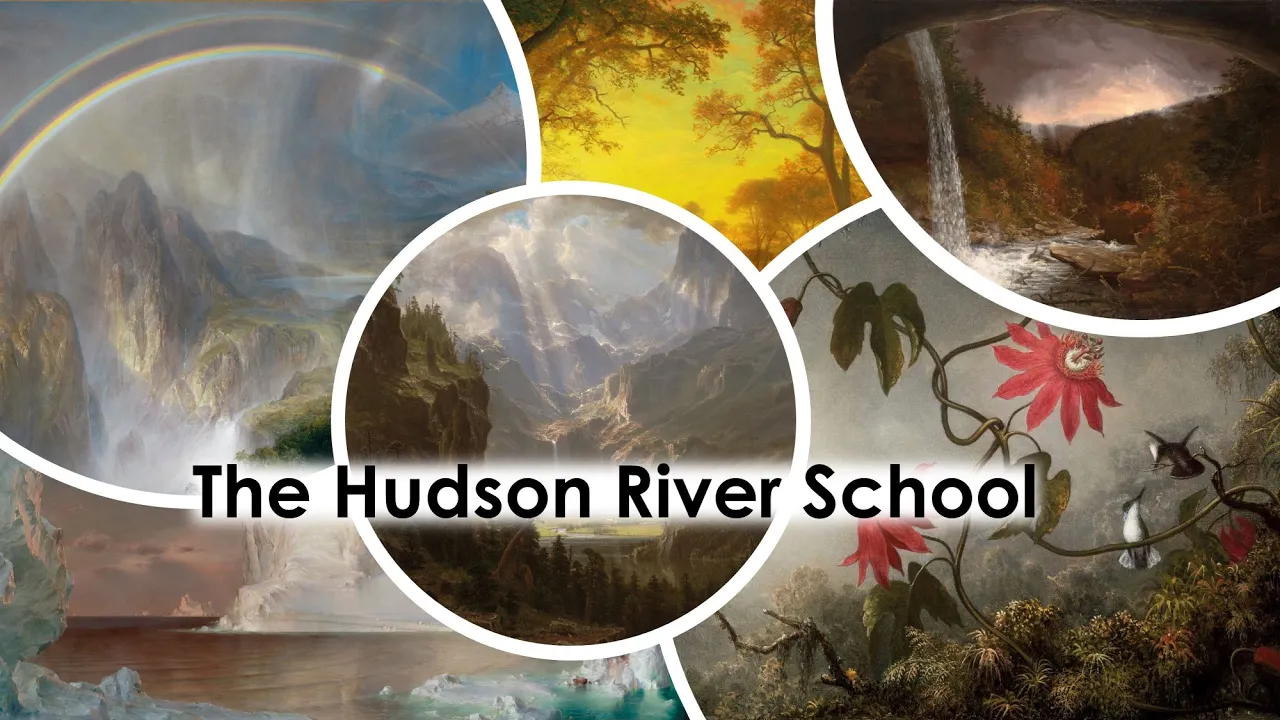
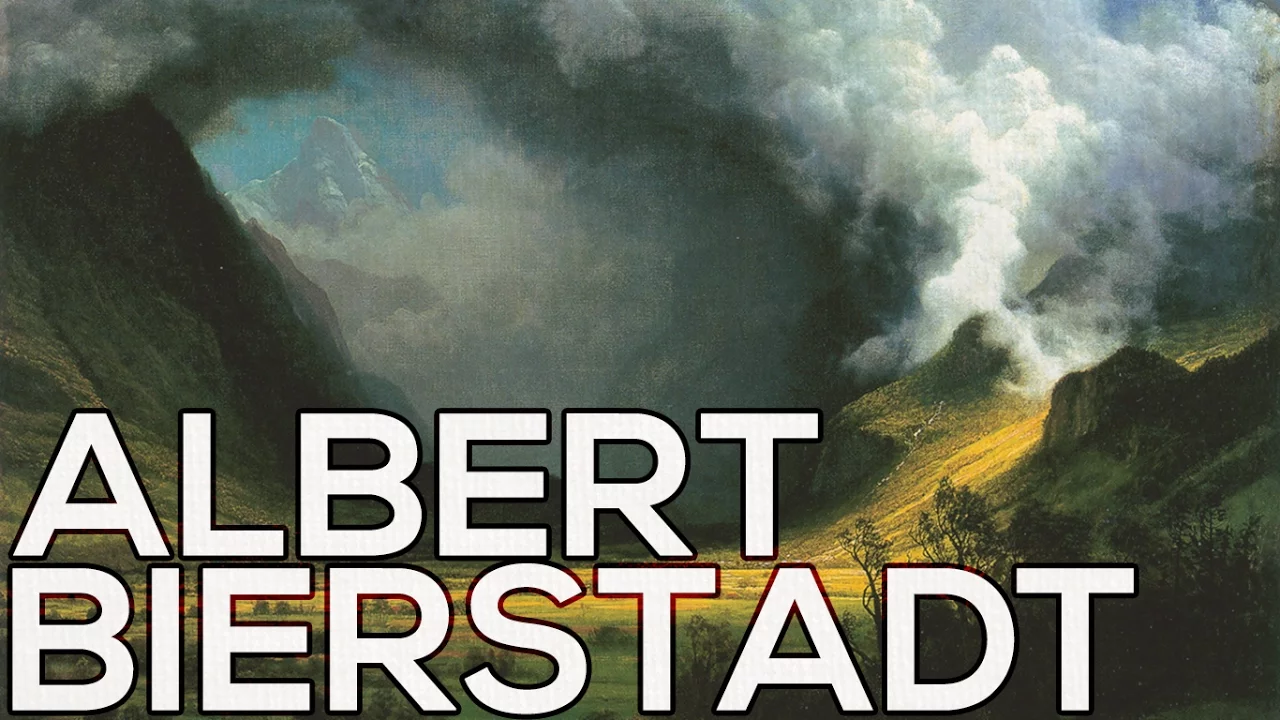
The Hudson River School and 19th-century American landscape painting, particularly the romanticized, large-scale works of Albert Bierstadt that linked nature with divine providence.
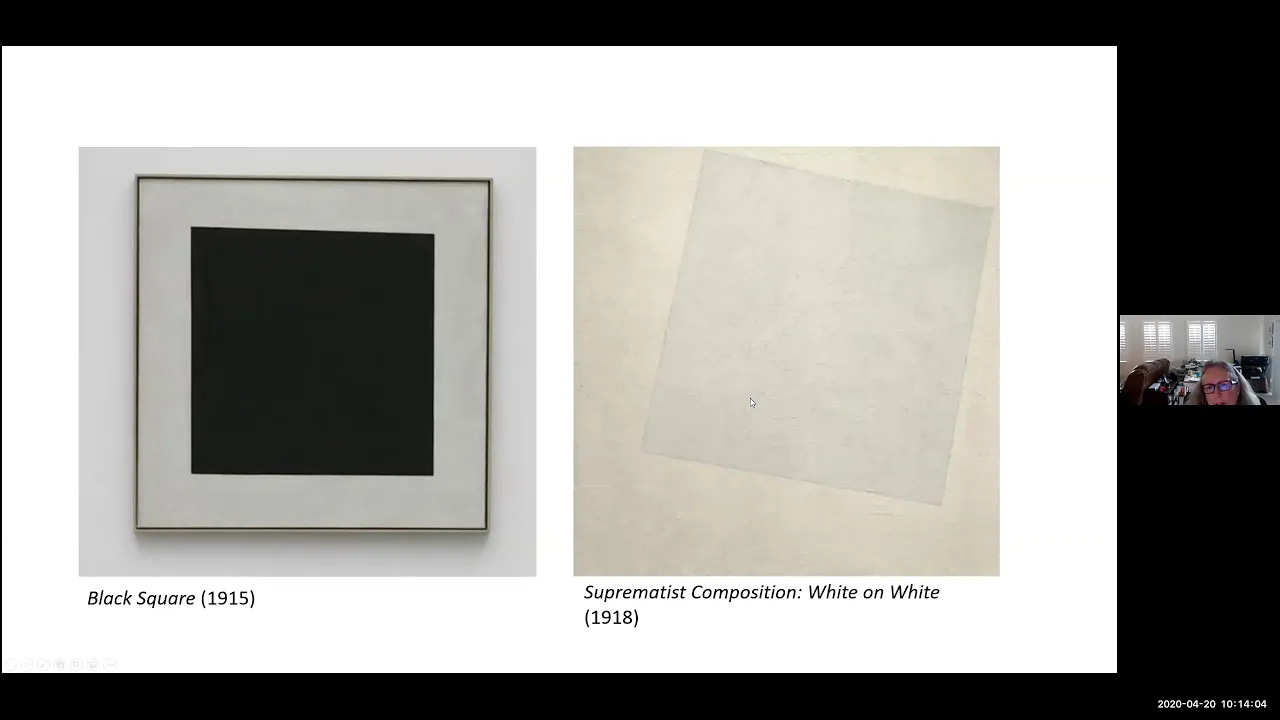
The core tenets of Minimalist and Conceptual Art, specifically how artists like Sol LeWitt shifted the focus of art from sensory aesthetics to systemic, idea-driven execution.
The influence of Transcendentalism (Ralph Waldo Emerson, Henry David Thoreau) on the American cultural relationship with nature and the frontier.
The evolution of the 'Technological Sublime' and 'Digital Sublime,' exploring how contemporary society projects feelings of awe and infinity onto technology, artificial intelligence, and virtual spaces.
An investigation into the 'Sonic Sublime' in music, analyzing how American composers—ranging from classical minimalists to contemporary avant-garde artists—evoke vastness and mathematical scale.
Critical and post-colonial deconstructions of the American Sublime, analyzing how idealized wilderness paintings contributed to the erasure of Indigenous populations and the justification of westward expansion.
Comparative analysis of institutional curation, examining how modern museums physically present and bridge the gap between 19th-century monumental paintings and mid-20th-century conceptual installations.
684 views6likes1:16:22Original Release: 2016-11-03
It looks like we still have a few more people coming in, but as you find your seats I'd like to welcome you to the Smithsonian American Art Museum. I'm Virginia Mecklenburg, the Chief Curator here. I mean, I don't know why I keep saying this, I know almost all of you who come to all these special events.
It's a pleasure tonight to welcome you to our 2016 Clarice Smith Distinguished Critics Lecture. I want to thank Clarice Smith as we always thank Clarice. There's our wonderful patron for this series who for really 10 years now has made it possible for us to bring the most compelling artists, art historians, and critics of our time to Washington to talk with us.
Housekeeping, first off, silence your phones. We don't like beeps in the middle of the talks. No food or drink, and we'll have a Q&A at the end of of the talk. When you have a question please go to one of the microphones. We will be webcasting the talk tonight and so we'd love to pick up your questions which we can only do if you travel to the mics mid auditorium. Tonight it is a very special honor to introduce Edward Rothstein. Dr. Rothstein is an astonishingly insightful and articulate critic who describes exhibitions, books, installations, and probes ideas in histories and places that deal with powerful and profound human experiences and also sometimes quirky ones. He's written for example on the National Cryptologic Museum.
Have you any of you all been there? It's over near Annapolis. In fact, yes. But also on the World War One galleries at the Imperial War Museum in London, and on the Anne Frank exhibition at the Museum of Tolerance in Los Angeles. It's probably no surprise that he has such an unpredictable bent given the breadth of his academic accomplishments.
He holds a bachelor's degree from Yale. He did graduate work in mathematics. Then did a master's degree in English literature, and a doctorate from the Committee of Social Thought at the University of Chicago. In case you don't think that's a good combination, his book, Emblems of the Mind: the Inner Life of Music and Mathematics, was named one of the best 25 books of 1995 by Publishers Weekly. But we've been reading at Ed Rothstein's writings for more than two decades in the New York Times, the New Republic, the New York Review of Books, and now for the last couple of years in The Wall Street Journal. In case you have not had enough of what he has to say at the end of the talk tonight, you can go to YouTube and you will find some of the previous talks that Dr. Rothstein has given. All this is background though to say that he is a very perceptive and probing observer of American culture and cultural institutions. His criticism and I say criticism advisedly offers alternatives to conventional thinking.
He's encountered some very unconventional things in the course of his work. He said he's reviewed history museums, science museums, political museums, and museums created by eccentric collectors. He's visited museums devoted to neon signs and ventriloquist's dummies. He's seen coffee beans sent to Confederate soldiers during the Civil War, even human mutations preserved in glass jars. Dr. Rothstein writes with wit and with grace. He described, when it was newly opened, the Exploratorium in San Francisco as "eccentrically original." That will get you there faster than almost anything I can think of. He spoke of the National Civil Rights Museum, which is based in the motel where Martin Luther King was assassinated.
He called it a place "where history is still memory."
His talk tonight is called Outrageous Form: In Search of the American Sublime.
Please join me in welcoming Dr. Ed Rothstein.
- applause - Thanks so much for that wonderful introduction. I was wondering at some point, "Well who was being spoken of here?
I deeply appreciate it and appreciate this opportunity to talk about a subject that in a way is slightly eccentric. Which i've also been thinking about for some time. The talk, quite frankly, is a bit of an experiment. I'm in the midst of thinking about this, so I'd be particularly interested in questions after I am done. I'll just begin.
While writing his fifth symphony Gustav Mahler wondered how listeners would respond to the brooding obsessively turning motifs that seemed to chase one another into ecstasy, or wearily wine down into despair.
"How should the public react?" he asked, "To this chaos that is eternally giving birth to a world that then parishes in the next moment? To these primordial sounds, to this blustering, bellowing, roaring ocean? To these dancing stars, to these shimmering, flashing, breathing waves?" His eighth symphony, The Symphony of a Thousand, makes that question sound modest. Mahler was in competition with the gods.
"These no longer are human voices," he wrote of his chorus in that symphony, "Rather planets and suns that are circling."
Extreme, no doubt. Just as the symphony is an extreme example of what might be called the musical sublime, but the extreme is partly what the sublime is about, and was a recurring theme in western concert music. Certainly the ambition to overwhelm the senses in mind was there in Beethoven's Ninth, in Berlioz's Symphony Fantastique, in Bruckner's Eighth symphony, in Liszt's B Minor Sonata, even Heinlein's setting of the words, 'let there be light' in his creation was long considered a prime example of the sublime. Of course as I don't need to remind this audience this yearning is not music's alone. Here for example, if this works, is the archetypal image of the sublime. Caspar David Friedrich's Portrait of a Wanderer in which a lone faceless human figure is looking out on the immensity of nature and its mist. The sublime is also characterized by Immanuel Kant in one of his few poetically charged passages.
Here are Kant's words, "prominent overhanging menacing cliffs, towering storm clouds from which come lightning flashes and thunder claps as they roll by, volcanoes and the destructive violence, hurricanes leading devastation in their trail, the boundless raging ocean, a lofty waterfall on some mighty river, all render our capacity to resist.
Insignificantly small in comparison to their power." Or more movingly, here's the sublime in Wordsworth, "and I have felt," he writes, "a presence that disturbs me with the joy of elevated thoughts. A sense sublime of something far more deeply interfused whose dwelling is the light of setting suns, and the ground ocean, and the living air, and the blue sky, and in the mind of man. Emotion and spirit that impels all thinking things, all objects of all thought, and rolls through all things." But is this glorious language just evocative of a past sensibility? Is it, is the sublime something European and romantic?
An American only to the extent that American art can be considered European or romantic? I don't think so.
The American sublime as i'll come to later in the talk, neatly dovetailed with the European sublime and then took off on its own directions. For a long time it did seem to fade away for reasons that I think are worth exploring. I think it is being reconstituted into ways, a couple of which I will later suggest.
There's also good reason for taking a close look at the nature of the sublime and its relationship to its classical opposite beauty, because these concepts tell us much about how we experience art.
The first part of my talk will be an attempt to shed light on these now antique terms so we might readily recognize their presence in new and different contexts. One crucial point is that these concepts are not solely descriptive of what is seen. They are aspects of how we see and how we think.
The word sublime probably comes from Latin roots sub meaning up to, and līmen meaning threshold or doorway. This etymology implies that the sublime involves standing on the edge of something at an opening perhaps looking out at a scene. The very same roots would later give us the word subliminal, which means below the threshold of awareness. The sublime as we will see is something far above that threshold. The early uses of the word imply a sense of standing at a distance in an almost detached manner viewing something as if through a frame. But from that threshold, it would be as if you were looking down on an otherworldly landscape from a grand perspective. You'd be in the world but not of it contemplating without being subsumed, not a bad description of Friedrich's painting. A sublime point of view would be one that would also allow you to map out that landscape. What from the ground might seem disordered and unstructured.
Woods sublimely viewed take on extraordinary sense.
This transcendent viewpoint was also thought to have an effect on the mind itself, which reacts to the vision being offered. In early accounts of the sublime the effect was not primarily astonishment or bewilderment, but rather a sense of heightened rational powers.
The famous treatise on sublime by an author once thought to be Longinus describes the sublime as "boldness and grandeur of thought." In its origins the sublime is a tribute to the powers of the mind. In 1694, in fact, the Dictionnaire de l'académie Française defined sublime as, "exalted, lofty." The term is only used in connection with spiritual matters that concern the intellect, thus a man of sublime virtue, a sublime genius, a sublime spirit, a sublime style, the sublime sciences. 70 years after that, the perspective on the sublime had changed slightly becoming more self-conscious. By then, the word sublime referred not just to the quality of mind or vision, but to the experience of that quality. The self-consciousness that is felt in experiencing the sublime.
It is partly this aspect of detachment that is implicit in the words origins, but it's also a sign of a more abstract perspective that was developing, that takes a step back to see not just the sublime view, but the mind understanding the view that is judged to be sublime. Diderot and d'Alembert's classic encyclopedia defined the sublime as, "that which lifts us above ourselves, and which at the same time, makes us aware of our exalted state." This vision of the sublime offers the sublime as a form of education. Elevating conscious awareness, the sublime is a spur to the mind guiding it to greater powers of perception and understanding.
That view came to dwell side-by-side with something closer to the way we think about the sublime today, in which the sublime seems to defy ordinary reason. Burke wrote in the 1740's that when confronting the sublime, "the mind is so entirely filled with its object that it cannot entertain any other, nor by consequence, reason on that object which employs it." The sublime creates an overwhelming astonishment that eclipses all of the sensations. In the 1790s Johan Saltzer, a Swiss mathematician and philosopher, wrote that the sublime "works on us with hammer blows. It ceases us. It irresistible overwhelms us. It is the highest thing that there is in art." Well what relationship did this idea have to the idea of the beautiful, which was even more powerful in the 18th century? Both phenomenal, were considered properties of art and nature, and while they could at times seem similar they were meticulously dissected for any differences or nuances. Burke could almost have been making a chart in his famous philosophical essay on the sublime. "The sublime was vast, beauty was small. The sublime rugged, beauty smooth. The sublime dark and gloomy, beauty transparent and illuminated. The sublime masculine, beauty feminine. The sublime inspiring terrors or even a form of pain, beauty only inspiring pleasure." But what have these contrast to do with the mind experiencing these contrasting aesthetic objects? Kant argued that "when we determine that an object is beautiful, any consideration of one's interest in the object is irrelevant. That its judgments of beauty have absolutely nothing to do with the usefulness of an object, its monetary value, or anything else." The beautiful object might inspire a desire to possess it, or understand it, but the actual judgment of its beauty is untainted by any other concern. "Insofar as we make an aesthetic judgment" Kant argued, "we have no other interest."
Pure aesthetic judgment is as detached and devoted to abstraction as mathematical thinking.
Moreover not only do we feel free of interest when we contemplate something beautiful, we also feel that that judgment is free of all other contingencies. We don't emphasize, we call an object beautiful, we don't emphasize the time of day we are doing this, the particular moment in our lives, our mood, the zeitgeist, instead we feel that beauty is something universal, beyond the reach of time, and certainly invariant as far as taste is concerned. The experience of beauty is an abstract experience and the judgment is an exercise in discerning something that is absolute, beyond the ravages of time or influences of interest. Now this whole concept might seem somewhat strange to us now. So steeped our way in cultural relativism of various kinds, but I believe the sensation is still there, it's just that we alter it when we talk about beauty. Cloaking the assessment with gestures and genuine reflections trying to make it more a matter of opinion than a matter of what we deeply feel to be universal fact. The conviction of universality though ensures that beauty is never simply a private matter.
It incorporates a belief about the public world, and the judgment of others.
We may not actually assert that everyone will agree with our judgment of beauty, but beauty inspires a feeling within us that everyone should agree. This feeling makes a claim not only on us as we view this beautiful object, but on our sense of other people judging it.
This does not mean that taste is universal or that beauty is a purely objective fact, it means that the judgment of beauty is necessarily treated as objective and felt as objective. Kant also made another crucial observation, "when we judge something to be beautiful," he said, "we judge it to have something purposive about it. We treat it as if it were made for our contemplation. Whether it's a natural scene or a painting of that same scene. Knit into the experience of the beautiful is the experience of judging something to be well made, even if we don't believe a deity actually made it. At the very moment beauty becomes apparent to us, in Kant's view, the world appears as if it were constructed for some purpose or better the world appears as if it were well suited to human perception and understanding. As if nature were constructed specifically for the sake of our contemplation." Kant refered to this as regarding nature after the analogy of art. Think of Wordsworth sense of the sublime, the emotion and spirit that impels all thinking things or objects of all thought. This means that when we approach a beautiful object we do not treat it as if it were accidentally or haphazardly constructed.
We immediately intent on discerning its internal order, its internal structure.
As Darwin taught us the existence of an extraordinary design doesn't mean an object was purposely designed.
Sophisticated organisms and even the brain itself can seem designed without being so, but in comprehending the objects workings and appreciating its beauty we act just as if it was so designed. Why we ask, is this part here not there?
What contribution does it make to the workings of the whole? What relationship does it have to the workings of other parts? These are questions that subliminally lie behind judgments of beauty. We treat an object as if nothing about it were accidental, as if every element had a function serving the whole, as if even the whole had a function and one of those functions may be to eliminate our understanding. This is what makes beauty seem like something almost mathematical in character, or rather makes mathematics seem like an exercise in beauty. The mathematician Hermann Weyl wrote, "My work always tried to unite the true with the beautiful, but when I had to choose one or the other, I usually chose the beautiful." G. H. Hardy who wrote one of the most beautifully written memoirs by mathematician asserted more dogmatically, "There is no permanent place in the world for ugly mathematics." The physicist Paul Dirac once proposed that, "If his theory were beautiful, an experiment proved it questionable and he would tend to doubt the experiment." The judgment of beauty and the creation of a theory are connected activities. A theory discloses beauty, a judgment of beauty helps shape the theory. The theory establishes order, defines conditions, shows the relationships between parts and a whole, it explains things but also discovers things, revealing unexpected connections.
"You must have felt this, too" Werner Heisenberg once said to Albert Einstein, "The almost frightening simplicity and wholeness of the relationships with nature suddenly spreads out before us and for which none of us was in the least prepared." This of course gives beauty a great responsibility and a great power, as well. When we judge something to be beautiful, when we see it as purposive as if it were created for our contemplation, we are saying something about its internal formal qualities, about the way it is constructed. We are comparing things, seeking to describe how one part relates to another.
This is a little bit like the idea of constructing the ratio to compare objects and converting them into some sort of a number, but objects don't have to have a number associated with them, creating a ratio which is a rational act literally in the meaning of the word. It also means establishing proportions. A sense of proportion has been sort of essential to the classical idea of beauty. A proportion is actually extremely powerful concept, because a proportion says that you can compare different aspects of a world being contemplated. You can compare the length of a vibrating string with the population of a country. That the proportion sets up huge mappings between completely different realms. In some ways a work of art that we judge to be beautiful we also judge to be doing something like this. To be creating comparisons or connections between something that we see or feel, something else that we see or feel, and sometimes these are completely and seemingly unrelated. The power of the work is to create in a sense metaphors or analogies between what it presents and our experience, between what presents and our ideas. The kinds of connections that are set up are really infinite and unbounded and change over time, as well.
The judgment of beauty, this characterization that I'm giving here, which is largely depending on Kant, I think the idea is an extremely powerful one that is not really treated with sufficient care. The concept has such ramifications about how we organize and understand the world.
I won't detour into other subjects which considerations of the golden rectangle, or the Vitruvian Man, or of Gothic cathedrals of the divine proportion, those are not essential to the concept of beauty that I've been trying to describe. It's the general idea that's important. That is this idea of proportions understood as analogies and comparisons. One thing being echoed in another. We can't even imagine art without some kind of this analogy taking place. In music for example, comprehending a composition means hearing internal connections between themes, between motifs modulations, or timers. A composition if properly regarded is a construction of patterns and proportions. The only way in which we come to know music is through such comparisons. Through noting differences, similarities, and transformations. This is a little bit off-topic but I sometimes say that one of the amazing things about music is that if you imagine a person locked in a bare room having never heard a composition in a particular musical tradition or using a particular language. This person was given absolutely no reference no dictionary, no history, nothing. In some ways listening to a work of music, the work of music will teach itself to the person. It will teach itself to the person through repetition, hearing it again. The mind learns to recognize internal similarities and make connections between them. In this way, music begins to make sense as we listen to it over and over. This idea of something having the power to be able to teach itself really through its execution of this idea of beauty is really quite remarkable.
I mean I think the visual arts are constrained in this respect, because there are very often clear references or even abstraction might grow out of physical objects. This is a little just a side comment about this.
The reason i'm going into this detail about the nature of beauty is that I think it explains one reason why we have this feeling that a judgment of beauty, when we when we feel this judgment being made, is something that we would assert to be universal and beyond time and interest. That this judgment takes place in some way using these elements that i'm speaking of. We're not talking about something incoherent but things that are quite precise and seemingly beyond contradiction.
That's why we feel something similar when we come upon the beautiful in art, or the beautiful in nature, or the beautiful music, or the beautiful in mathematics. It's experienced as a form of knowledge because it is through the archetypal rational act, that of analogy, between proportions that we come to know the beautiful. The relationship of the sublime to our mental life is quite different. Now Kant argues that "while the beautiful is related to the form of an object, the sublime exists even in formless objects. The beautiful object might seem purposive as he argues, the sublime object does not seem purposive, it does not even seem final or complete.
It seems incomplete. Beauty solicits understanding the sublime, he says, defies it." Thinking about beauty we are thinking about comparisons, ratios, analogies. The sublime, well, we have to go through something similar but ultimately it's time ease and defies us. We may understand everything lying before us, but are overwhelmed by the impact of seeing it work.
The sublime seems somehow paradoxical because it's linked to applications of limitlessness and the infinite, yet here it is before us all at once, seemingly graspable. We gaze at a landscape and we take it in from our lofty threshold, but what we take in seems beyond our abilities to make sense, beyond are imaginative powers to even conceive of what we are looking at.
Which is obviously layed before us as a form of conception. Here for example, is Turner's Snow Storm: Steam-Boat off a Harbour's Mouth from 1842.
This steamboat is caught in a formless vortex swept about by sensations that are two vast, complex, and contradictory to be controlled or ordered. This is the painting for which Turner supposedly had himself latched to a mast in order to bear witness to the storm. Presumably sometimes I feel this with Turner's paintings, not when you're looking at a reproduction though, that a viewer should also be latched to a mast. The strange thing is we understand what is happening in this picture. We make out its events, but we are swept along and we accept that we're swept along by them until we're unable to really get our bearings. It's extremely unsettling to our mind. At the same time I think we also feel this thrill of having grasp something that seems beyond our minds abilities to grasp. If beauty makes an object seem as if it were adapted to our rational mind, the sublime seems to subvert that judgment. Kant referred to the sublime as "creating an outrage on the imagination." We see it, but we can't really imagine it.
We think we understand it. We can even map it out and treat it as somehow rationally structured, but we look at it feeling the inadequacy of our imaginations. It makes the imagination seem inadequate, while giving on our understanding and almost ecstatic sense of having apprehended something really beyond its powers. The effect of the sublime is both elevating and extremely humbling. While beauty involves, as I was saying before, some assertion it refers outward, it involves some assertion or belief of universality. There is no such feeling that exists in contemplating the sublime. The sublime isn't, as this description should indicate, is an internal experience. It has no outer reference. I do not assert in looking at this painting that everyone who looks at it should feel the nature of the sublime.
The sublime is something that is not just individual but also personal and internal. Now look for example, at this landscape in Bierstadt's Looking Down Yosemite Valley California from 1865. We can see the structure of the scene. How the slope of the cliffs on the left descending from Fame Sentinel Rock lead strangely downward toward the unseen setting sun, or how the expansion of the sky from that same distant point sweeps upward as if it were about to continue overhead. How on the right El Capitan rises like the prow, a dark mass cutting off the light.
The world is divided and split between light and dark as if in some moment of creation, or since it is facing west, some eminent descent into darkness.
We've seen living creatures in the distance, almost as shadows scattered as randomly as rock formations. The natural world subsumes them as it does the observer. There is something encyclopedic suggested in the variations of this landscape: a single glance taking in, sheer granite cliffs, craggy peaks, reflective pools, skittish clouds, fertile grazing land. We might at first find this painting beautiful, absorbed in its parts and details and internal relations, but imagine seeing this painting as it is. The painting is more than five feet tall and seven feet wide.
You can't see the painting and take in the scene without stepping back. Even then few galleries could contain it.
It is meant to overwhelm just as the scene does and you get the feeling that Bierstadt would have really wanted to paint this image and many others that he painted as the way Borges imagined the most accurate map in the world as having a one-to-one correspondence with reality.
Bierstadt would have liked to been able to paint this life-size. There's something else happening too in this painting. He's given us a, Bierstadt, has given us this incredible natural scene with great timeless forms presented to us, but at the same time it is a moment that is extremely tenuous and transient.
Despite the imperious rock faces, this luminous moment will disappear in seconds, the way such things do late in the day. We are hanging a strange balance of large forces here - some unchanging, some infinitesimally continuous. If you blink you feel the sun's rays will change angle, the colors of the light will shift, and the painter, like the viewer, the observer, will find it all slipping away into darkness. The image is sublime because we can comprehend it, but we cannot apprehended it.
We understand it, but we can't grasp it.
There's some way in which it stymies us.
Here, from a few years later and even more expertly realized is Bierstadt's Yosemite Valley Glacier Point Trail. This is 1873. It's the same valley and you can see Sentinel Rock is on the left in the distance, and the perspective of the previous painting is really down this river to where it disappears.
This is that the Yale Art Gallery and it's also about 5-feet by seven, more than seven, feet.
It's breathtaking suggesting immensity inside the canvas. Of course, these classic images of the sublime can also descend into a mannerism, which is what I think happens here. I'm going to show you Thomas Cole's Catskill Mountain House, The Four Elements from 1844. I mean talk about an encyclopedic artifice. It's not enough that you have mountains and rocks and trees and stormy clouds. We also have to be aware of the four elements: earth, air, fire, and water. As if all the stops had to be manually pulled out in order to give us some sense of what is the sublimity. Well these last paintings that have shown, of course, have been examples of the American sublime.
Which in many cases successfully reproduced and in some cases, I think, transcended the European model, applying it to nineteenth-century America. You might argue in fact that the sublime was actually as a concept, as a movement, as a ideology was spent by mid 19th century in Europe. But in America it was only first reaching its stride.
Bierstadt in the Hudson River School actually presided over something very close to a nationalization of the spirit of the sublime. His Yosemite Valley paintings were painted in the wake of Abraham Lincoln's 1864 recognition of Yosemite's sacred quality.
This in the midst of the Civil War. The National Park movement which is now celebrating its a 150th anniversary. This institutionalized the sublime in the American West as a reflection of American character and aspiration. In many ways too for writers and painters at the century that followed, the entire conception of the United States had something sumblime about it. American Indians paid the price of manifest destiny, but the doctrine was also a dream of natural fecundity and wonder. Imagining a new Eden so overwhelming in scale and power that even in the late 19th century and early 20th when it was encroached upon by modernity, the result couldn't help but be sublime. Industry, the railroad, the city become sublime picturesque in the same scales Yosemite Valley. The American sublime incorporates the industrial sublime and treats it in a very different way, I think, from the way England's pastoral romance was disrupted by dark satanic mills. But we're also talking about a movement that came to an end really a century ago, probably after 1920's modernism. Since then, something else has taken place with the rise of democratic ideology on a wide scale. Recall our description of the sensations involved in making a judgment of beauty. The connection this judgment has to a wider world beyond ourselves, this sense given in the midst of making this judgment that we are touching on a universal sentiment, the notion that the objects that we are facing possess purposiveness and careful design. What happens to these sentiments when there is no accepted aesthetic or cultural universal? What happens when there is widespread resistance to even imagining such a thing let alone considering the possibility of beauty being associated with it? What happens when we can't imagine everybody saying one thing about anything?
When not even something beautiful convinces us really to step out of our postmodern or post postmodern selves.
Beauty is associated with an affirmation of the rational mind. How does such an idea thrive when our culture distrusts the universal character of reason itself?
The idea, the idea of beauty, I think, was for a long time an eclipse, but still the sublime sort of soldiered on, though something about it fell flat.
I mean, the success of the National Parks out west is a sign of this great appetite and yearning for the for the powers of the sublime, a vast appetite. Yet, there is some connection not being made between that appetite and a sense of vital, the vital sublime that we can sense in the best works of the era where the sublime was a concept that everyone understood and aspired to experience. Even the idea of the United States, of course, has lost its ora of sublimity. The Democratic sublime, as it has evolved, is so inchoate and so indistinguishable from climber and competition. The imagination is left unmoved by a phenomenon that once inspired it.
We can see the results of this, I think, on the National Mall. Last month I wrote an essay for the Wall Street Journal suggesting that in the last 25 years when a multiple of memorials, the preceding 60 years, had a few memorials that were extraordinary, the last 25 years has seen an explosion of memorials almost all of them mediocre. None of them achieving anything close to beauty and all of them exaggerating or distending themselves.
Play-acting at the sublime, I believe.
Whether in the monstrously monumental Martin Luther King Jr.
memorial or of the kitschly fascistic World War Two memorial. Yet, I know there have been times over the past decades when I've come away from a work of art or music which stunned me with amazement. I had the feeling that I was being shown something that in its effect if not in its first appearance was something very similar to the sublime of two centuries ago.
Sometimes the scale is no longer the point, and at times it is seen that there's been an effort to rebuild aesthetics from the ground up. To begin with rudimentary elements of an art form, to explore patterns, proportion, and reason. Extend them in unexpected directions. I'm going to give two not unrelated examples, and both depend on an almost elementary use of rational principles for their organization.
Nothing complex is involved everything is constructed using simple almost mathematical rules, and then in the midst of moments of elementary charm if not beauty comes a moment of amazement that even if we understand what we see or hear we cannot fully take in. The work becomes exhilarating, haunting, challenging, at times sublime. We've become self consciously aware of the minds powers and yet are humbled by its inability to grasp what is laid before us.
I'm going to play one musical example, a three minute piece from 1972 by Steve Wright.
It involves two people clapping. One performer claps a simple rhythm, but it's unsettling because it doesn't clearly establish a repeated internal pattern.
It is repeated without variation.
Another person begins by clapping the same rhythm in unison but after a set number of repetitions shifts the pattern out-of-phase by an eighth note, by an eighth note beat. After another set of repetitions the shift comes again, and so on, so that the identical rhythmic patterns go past each other in unusual ways, until they unite once again.
The video I'm going to play comes from an excellent YouTube source Gerubach.
He also presents a score along with it. It's an animated score, which in this case is very simple. It's just two clapping lines, but you can see exactly what is happening as you listen.
I'll just play this if this works.
Sorry, I'm having a technical problem.
Sorry, I know this is not sublime.
That will do it, I think.
Okay, thanks very much.
It's about three minutes.
- clapping - Now, I don't know if this is the first time you've heard that.
It requires actually a incredible amount of concentration listening to this multiple times. I mean, I don't want to make a claim that this is like Bierstadt's painting, but in a culture where assertions of beauty have given way to uncertainty and relativity here's a way to begin again. That is to pay tribute to reason and yet stymie reason with complexities. We follow what is happening but we end up finding ourselves in unexpected places. If you listen carefully and some of these sort of phase shifts there are really startling things that take place that you had would have no reason to expect to be there. Trying to actually anticipate or make sense of what you hear at first is completely bewildering.
Then it becomes a matter of getting to know this startling landscape that seems so bizarre. I think there are aspects of the sublime in this, hints of it, not a literal translation, not something that I'm going to say is 20th century minimalism's answer to the sublime, but it's something that I find interesting to think about.
One of the reasons why I find this so compelling is really the next example, which is really an extensive set of examples that I'm going to show. They begin just as really righteous did with a simple set of rules. Each set of rules is used to create a wall drawing, a drawing on a wall. One of them number 51, the rule read simply "all architectural points should be connected by straight lines."
Another rule number 87, says "a square divided horizontally and vertically into four equal parts each with lines and colors in four directions superimposed progressively" or number 38, "tissue paper cut into one and a half inch squares and inserted it into holes in gray pegboard walls." Now this does not seem like the elements for anything that you'd actually want to take a look at, let alone associate with notions of beauty or the sublime, but I'm talking about the wall drawings of Sol LeWitt.
The Yale Art Gallery conceived of an idea about 12 years ago that Sol LeWitt, who was then alive, should execute all his wall drawings in one place, surveying 40 years of his work. They ultimately amounted to 105 works created from 1968-2008, the year that Sol LeWitt died. It was the same year an exhibition of these works opened at Mass MoCA in North Adams, Massachusetts. These paintings cover an acre of wall space spread over three floors of an old mill building.
LeWitt's instructions were executed over six months by 24 assistants along with at least 30 other students helping.
Mass MoCA maybe the only place where such a project could have been executed.
There are huge windows overlooking flanking courtyards, interior walls were constructed each enclosing a space devoted to a wall drawing, or facing pair of drawings, or juxtaposed trio. Here for example, is how wall drawing 38 with those one-and-a-half inch squares of cut tissue paper was executed. This is a close-up.
This is looking at the wall from a side, and this is seeing it juxtaposed with its continuation. This doesn't give you a sense of what it's like to look at the entire wall, but it but it's something that is startling certainly when you hear the description, you say, "How can such a description result in something like this?" There's a lot of leeway left open for the executents. Sol LeWitt had people who worked with him and understood him and who realized many of these projects over his life. They were involved here.
Here is drawing 651, executed on a wall of Mass MoCA. This is the drawing that called for connecting architectural points with blue lines. Now this seems sort of trivial and maybe even silly, but even the fire alarm box, each corner is connected to every single other corner or vertex on the entire wall. So obviously this depends on what kind of wall it's executed on.
When I first saw this I thought there's something sort of little crazy about this enterprise, but it reminds me of how I used to do geometric doodling actually in earlier times by connecting points. Sol LeWitt was really an extraordinary doodler. That is, he begins with certain very elementary principles and does something.
I don't think you see them here.
This next one I'm not sure if this is visible, there is an entire wall filled with cross-hatched straight-edged pencil markings, either at a diagonal or on right angles. This does not get, this again is just a close-up to show the elements of what he did. His last wall drawings use bold really blasting acrylic colors. They were constructed according to very generously loose descriptions, but also an approach that is sort of built through the entire sequence of creating these 105 wall murals. Here is what two of these look like, and another. It is an industrial factory building so you have bare brick and old walls sort of coming in in the midst of these extraordinary murals.
You may already notice or realize how much changes when given the scale that this project is executed on. The underlying principles are again very elementary. The logic is always specified, but what I can't help to show you, but maybe only suggest is how the effective of all of this is really stupendous. It's unsettling, it's marvelous, I've never seen anything like it. Out of simple ideas of proportion and pattern something really astonishing sort of mind-boggling, literally mind-boggling takes shape. Some of it only partially imagined by Sol LeWitt, some of it really only partially imagined by his executents. The exhibition is going to be on these walls until the year 2033. 25 years after the 2008 opening, and it really must be seen.
I think I prepared the ground sufficiently. I'm not going to speak much more. I'm going to finish with a slideshow of these murals that shows some of my photographs mixed in with the museum's web images presented in the order of LeWitt's composition. I'm sampling only a small portion of what is on display, but it is something, I think, that a democratic sensibility might imagine when anything goes and nothing matters. Here are images that draw on universal ideas and then show how elemental beauty and proportion sort of exfoliates, erupts in unexpected ways.
After a visit there, there can be no doubt that we are really seeing a series of experiments in which the sublime is being reformulated out of these elemental, elements, ingredients.
We end up startled by both the abilities of the mind to create such ordered worlds and its total impotence to comprehend their manifold variety.
Here in a manually controlled slideshow is LeWitt at Mass MoCA.
That's just to show human scale.
That's the end.
- applause - I'm happy to take questions even comments are ok, too.
No?
Thank you very much. Can you again tell me where they had.. I'm having trouble hearing?
I'm sorry, all of the slideshow, these are at Amherst? No they are in North Adams, Massachusetts.
It is a converted shoe factory building. It's at a building, it's enormous. Personally, myself, I have trouble using the word, using the adjective sublime. I prefer keeping it unto itself as a substantive.
Would you comment on that? You can't hear me? I couldn't hear that very clearly. You say you have trouble with using a word sublime? As an adjective, I prefer it as a substantive.
Okay well what I was trying to do in the first part of this talk was to try to give an abstract sort of a characterization of both beauty and the sublime as far as the ways, with the crucial characteristic is not what is portrayed, that it is this is not a pictorial idea. That it has to be like those comments by Kant and it does not have to be natural phenomena that are outrageously dangerous.
To characterize both beauty and sublime as having this component that describes, that is associated with the ways our mind works, when we confront these objects. When we make a judgment of beauty our mind works in certain way. When we make a judgment of sublimity our mind works in another way. I was trying to essentially make this analogy that is, the idea is, now I might have chosen other examples, let's say I could see some of the portraits of Chuck Close or something like this, but the idea is something, what is it that we see now that has the same sort of mental affect that all of these philosophers, writers, poets, musicians, and artists were so preoccupied with from the late eighteen to the middle of the 19th century. I felt that these both in the clip, the three minutes of clapping music, which I admit it's sort of pushing it a bit.
There are probably more glorious examples, but I wanted to do was actually find something really stripped down to actual elemental character. To see what happens if I take the idea that, ok beauty is one sort of thing and sublime another. How would it manifests itself with these elements? I thought it works.
I have to say also if you go to Mass MoCA, I will assert, that this is a universal principle, you will be amazed.
I'm amazed, I applaud what you've done.
I just, I love the wow factor. I think some people as we, that generations we change the words.
My spirit goes for the sublime and I feel alone today, but thank you.
Hey, as you were mentioning some of the recent monuments in town that you referred to as mediocre, it got me interested in whether you notice the correlation between kind of mediocre sculpture paintings that maybe missed the mark at an attempt to kind of peer and on the sublime. Is a lot of art that kind of misses the mark in your mind maybe trying too hard to access the sublime? Or not having enough of the sense of the sublime? Or are they kind of totally kind of separate?
I don't usually think of the sublime as a sort of determined category for whether I like something or whether it will I think it works or something. I mean it happens to be a relevant category and it probably could be a subject of a paper or book is I think the sublime does come into play in dealing with historical memorials.
There is some way and I haven't thought this through, but you think of what, let's say, what the greatest memorial on the mall is which say is the Lincoln Memorial. Now that's partly because of accumulated sort of experience associated with it, but it's partly because you go there and the combination of the words on the wall the sheer immensity and out sizeness of this and this sort of classical temple just becomes, it overwhelms in a way. It overwhelms I think partially because of external associations, partially because we know what those words mean, partially because the words are so great, and there is something of - who did that statue?
Well there's something almost kitschy about it.
Now that kitsch becomes more clear when there isn't this sort of sublimity or successful sublimity. I can't characterize it better than that without thinking about it some more. But I think, for example, the Martin Luther King Jr.
Memorial is really so hideous and so unaffecting and so grandiose in a crude way that I find myself offended rather than in awe of it. I mean but it's clearly attempting to be monumental, in a sense that this is I don't know, what 30 feet, that he's on a slab of rock, that it's supposed to be slid out from two other slabs.
I mean it really it is supposed to be this great demonstration of a natural force who transformed humanity coming out of stone and emerging. Well the emergence doesn't happen, for me, and I find it sort of, I feel like the sublime is misunderstood there in some very basic way. I could go to, I think also the monumental aspects of the World War Two Memorial which really sticks at me also, I just look at it sometimes I think this is like something Mussolini would have like cooked up.
It's so bizarre that one of the, that a war that had such important things riding on its outcome and so many sacrifices and deaths involved, tens of millions are dead, to come up with something like this is like a travesty.
What it is is it doesn't even attempt to get at the immensity of what this event was or suggested something about it to us where we say, "well I really feel now the weight of history in a way I did not before." Anyway I'm going on too long, but the ideas is I don't have this in my mind as a sort of checklist but it just seems to me that the, and the designs for the Eisenhower memorial that I've seen have similar weaknesses, just grandiosity and overkill, so to speak. It's the wrong idea, it's the wrong word to use when discussing memorial, but it's something like that.
Thank you very much for your talk, enjoyed it very much.
I maybe miss reading your examples, but it seems to me that these contemporary efforts you've identified to begin reformulating the sublime all seem to have sacrificed the humanity that used to be inherent in our efforts to achieve the sublime. That is they don't refer to anything outside of their own internal geographic reality, there's none the sensitivity or nuance that used to be significant or helped people relate to these notions of the sublime. I'm wondering whether they haven't really sanitized the sublime or made the sublime more barren than it once was. Am I miss reading these examples, and if not, or even if so, how does that affect the value of the sublime to the viewer? We understand what it once, the impact that it once had, but how does the viewer relate to and gain value from this form of sublime? Well that's an interesting question because yes, I do, I agree with you that the human element is stripped out in these examples. Partly because I was deliberately picking examples that grew out of minimal abstraction and then built something that verged on or suggested was redolent of this sensation of the sublime. I didn't want to, I have had mentioned Chuck Close before, I was thinking of using it, but in a way they're just too many other complications coming in. I wanted to really highlight the abstract quality of these two phenomena. I think the other aspect of this is that the reason why I think these sorts of attempts were made, beginning in the late 1960s and extending up to the near present, was because of the breakdown of consensus or the notion of a objectivity that say Kant and his description of beauty had as a sort of fundamental tenet of aesthetic judgment.
Once there was no longer any way to believe that others would agree, because beauty has that kind of power or to assert that. These were attempts to sort of remake and redo. I'd say that yes they're limited and they're kind of experiments of mine right now. The other aspect, the other point I wanted to make about this is that one of the aspects that I find incredible about the sublime is, in the descriptions and then what I was trying to describe, there's this tremendous sense of you see something sublime and something happens in your mental life. That there's a great interior tunnel that takes place that people have tried to describe.
One of the key things I think about the sublime is that it is inhuman and that the great sublime images that exists diminish, that Bierstadt painting we see these figures they're on the trail. They're looking out, but you know this guy is like pointing out there, this guy on the horse well is he waving? We don't care about those people. In fact, they're there in a way because the natural world has made them irrelevant or even I mean puny sort of like pictorially but also involved in sort of day-to-day stuff that has nothing whatsoever to do with what lays before them. The sublime I think always in creating this sense of bewilderment or stymie the faculties of reason. In a sense puts the human, makes the human less crucial, it puts it as something dwarfed by the immensity of forces around it.
Similarly with the Turner paintings, almost all of them. I mean, these landscapes, if the human exists in them it's only, you can imagine them sort of swirled into this miasma of water and air. But doesn't that create the awe, the relative size of the humans to the huge landscape, or Turner's waves, isn't that where the awe that creates this feeling of sublimity come from?
Without it, I mean, your modern examples have eliminated the human figure altogether.
You have no scale unless you have someone standing.
I mean, again, I could probably pick other examples, but this it's not crucial. I mean, I think in a way this painting is also caused by placing the human figures there. It's demonstrating something, it's demonstrating the sublime a certain way by showing them dwarfed.
It didn't, Bierstadt didn't need to do that in the other Yosemite painting. There are no human figures that one. It was this weird Eden in which the life-forms are not the point anymore. It is sort of awe inspiring, because we start to feel how unimportant and inadequate all of our tumult really is. I don't know, a thought.
Thank you Dr. Rothstein. I'd like to invite the audience to join us in a reception upstairs in the courtyard. Thank you so much for coming here and giving us such a wonderful talk.
Thank you.
Up Next
8:25
Romanticism and Manifest Destiny in Red Dead Redemption 2's Landscapes
@polygon
131K views•2018-12-14

114:18
Christian Iconography: History, Theology, and Meaning | Fr. Panayiotis Papageorgiou
@Trisagionfilms
58.8K views•2020-02-21

7:48
Ukiyo-e Art: History, Woodblock Printing & Influence
@japanathand
6.3K views•2023-06-08

16:34
Earliest Depictions of Jesus in Art: 10 Ancient Images Explained
@UsefulCharts
5.9M views•2022-06-03
Related Study Plans & Knowledge Roadmaps
Structured learning paths in Art History
art-history
Gothic Cathedrals: Engineering, Light & Society
01The Birth of the Gothic: Romanesque to Suger's Vision
02The Structural Triad: Pointed Arches, Ribbed Vaults, and Flying Buttresses
03Theology of Light: Lux Nova and Sacred Geometry
+ 2 more learning modules
14h5 modules
Explore Roadmap
art-history
Pre-Raphaelites: Realism, Symbolism & Critique
01The Victorian Art Establishment and Academic Formula
02The Founding of the PRB and Radical Realism
03Medieval Revivalism and Literary Symbolism
+ 1 more learning modules
8h4 modules
Explore Roadmap
art-history
Street Art: From Subways to Art Market
01Subcultural Origins in Philadelphia and New York (1970s)
02The Subway Era and Style Wars (Late 1970s - 1980s)
03The East Village Scene and Early Gallery Crossover
+ 2 more learning modules
10h5 modules
Explore Roadmap
art-history
Classic Maya Art: Iconography, Glyphs & Ritual
01Foundations of Classic Maya Visual Culture
02Deciphering Maya Hieroglyphs & Text-Image Integration
03Sacred Geography and Cosmological Architecture
+ 2 more learning modules
14h5 modules
Explore Roadmap