












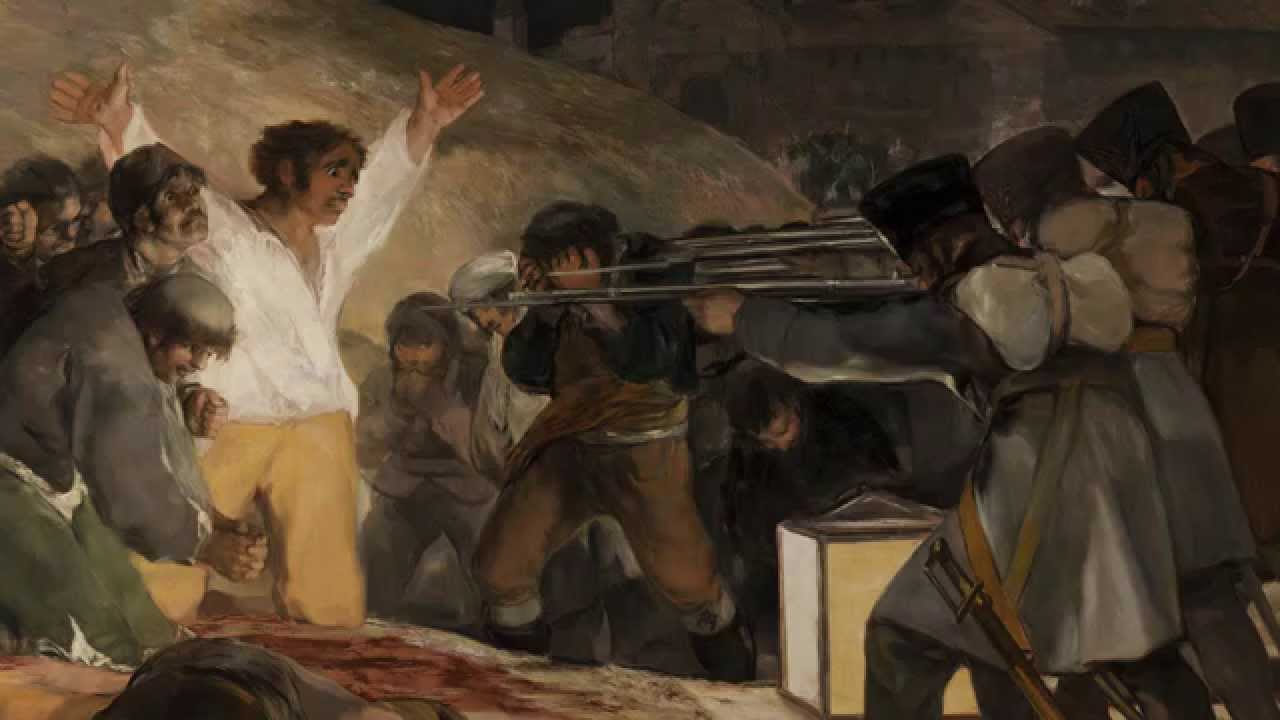


![19th Century ARTS & CULTURE [AP Euro Review—Unit 7 Topic 8]](https://i.ytimg.com/vi_webp/yUg78ogIv9c/maxresdefault.webp)











Romantic landscape painting evolved from expressing sublime natural terrors to celebrating national identity and manifest destiny, as seen in Delacroix's Liberty Leading the People (1830) and Cole's Oxbow (1836), where artists used landscape to assert cultural values and political visions.
Romanticism Art History: Delacroix to American Landscape Painting
Added:Understanding of Neoclassicism as the dominant artistic movement of the late 18th century, against which Romanticism reacted.
Basic knowledge of the major historical disruptions of the era, specifically the French Revolution, the Napoleonic Wars, and the rise of the Industrial Revolution.
Familiarity with the philosophical concept of 'the Sublime' and how it redefined humanity's relationship with nature.
Fundamental art history terminology regarding formal analysis, including expressive brushwork, color theory, and dramatic composition.
The transition into Realism (e.g., Gustave Courbet and Jean-François Millet) as a rejection of Romantic drama in favor of depicting everyday life.
In-depth analysis of the Hudson River School and how American landscape painting intersected with the ideology of Manifest Destiny and nationalism.
The influence of late Romantic landscape artists, particularly J.M.W. Turner, on the emergence of French Impressionism.
An exploration of how Romantic subjectivity and emotional intensity paved the way for late 19th-century Symbolism and early 20th-century Expressionism.
204 views4likes13:36Original Release: 2016-02-11
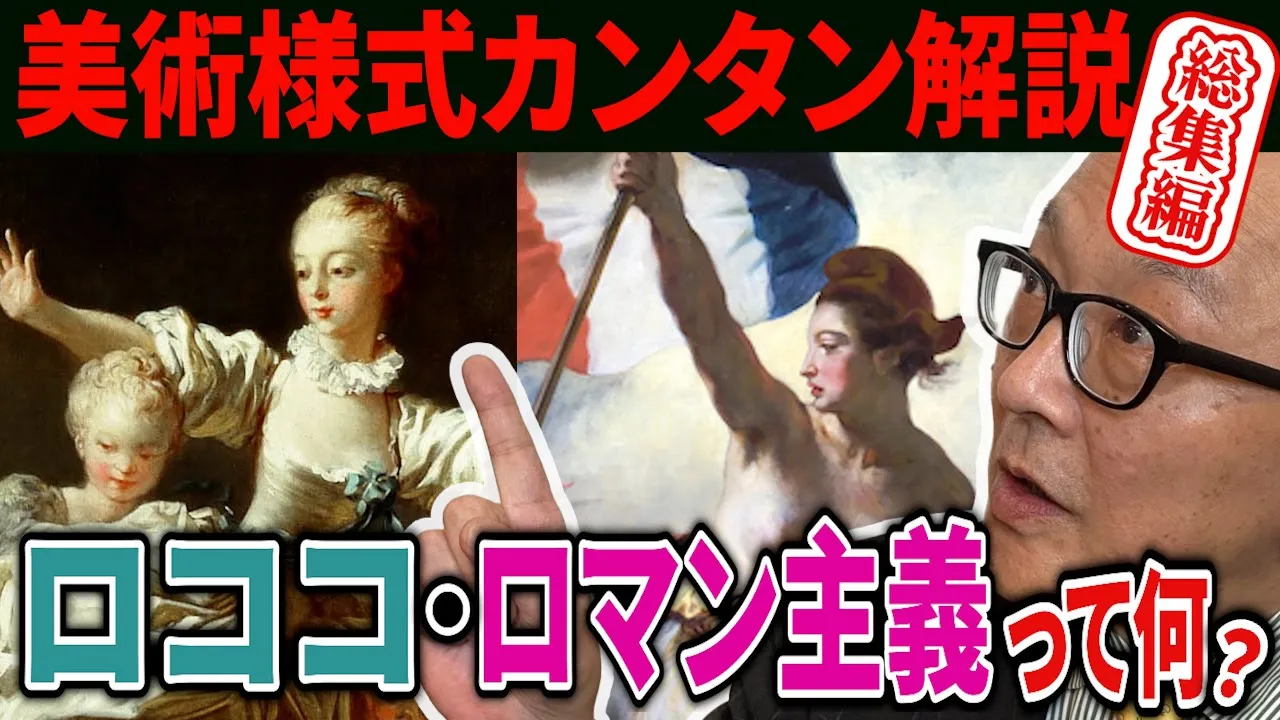
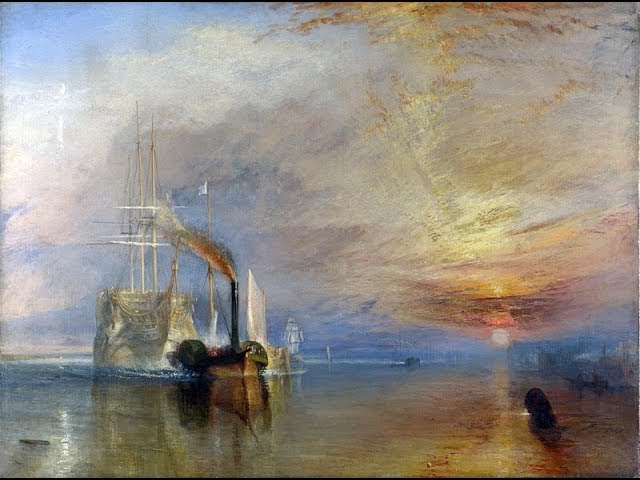
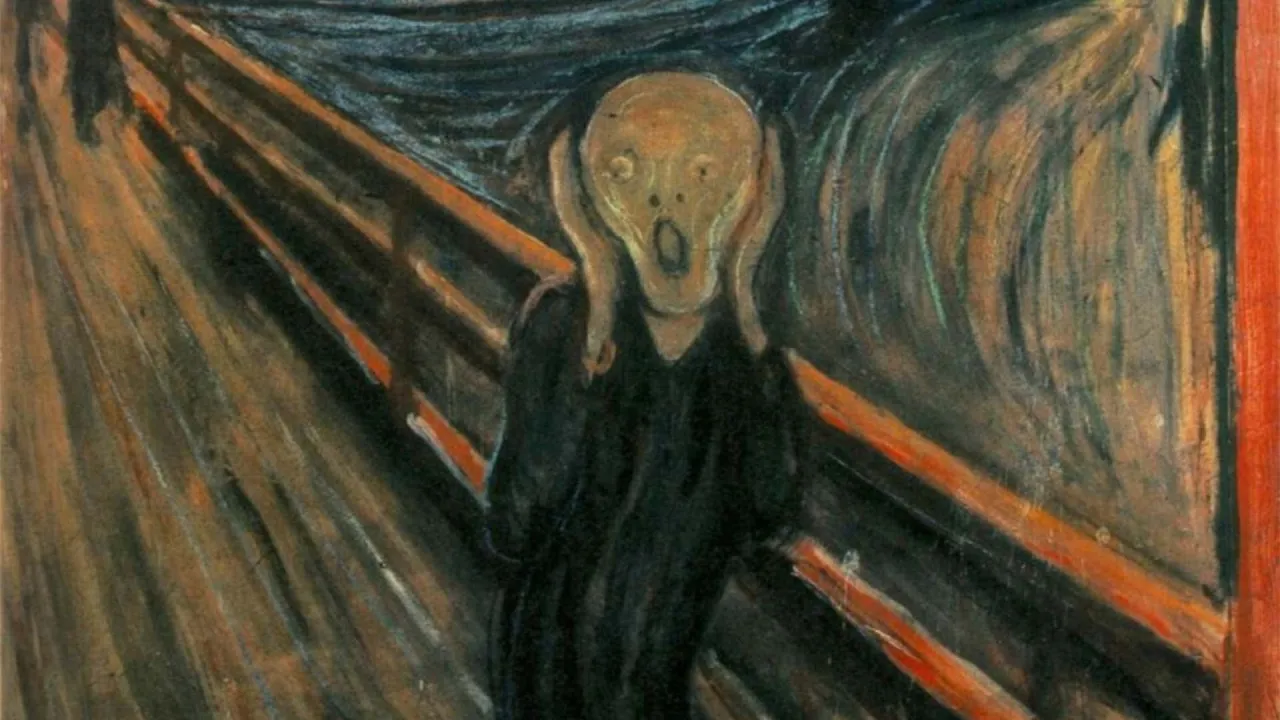
I ended my last lecture with this iconic painting and I'm hoping you'll choose to earn some extra credit by watching more of the excellent video discussing this work so let me make just a few additional points the tricorn hat which I've circled in green was a symbol of the French Revolution also delaqua signed the painting on the barricades I've circled the signature in red which Drew attention to this again iconic element of the revolution in the 1850s after another Street Le Revolution ution in 1848 the French political leadership Enlisted the architect Baron Housman to remake Paris into the city of wide treelined avenues that we enjoy today the alleged goal was to make the city more sanitary the unspoken but probably more important goal was to make it harder for the Riff Raff to throw up barricades note that delaqua rendered the allegorical figure of Victory quite un allegorically art critics at the time weren't especially dismayed by her bare breast nothing new there but they were dismayed by the dirt on her dress and the way she thrust herself into the midst of the battle rather than hovering decorously in the air the newly installed Bourgeois King Louis Philip bought the painting and hung it in the palace Gallery after the Parisian mob staged another Rebellion In 1832 the king had the painting taken down and returned to delaqua when the revolution of 1848 brought in another Republic Liberty Leading the People came out out of storage and was actually displayed in the academy Salon of 1855 in 1874 it entered the collection of the P du lra in Paris where it's now one of France's most cherished images I'm going to flip through just a few more works by delaqua both to prepare you for a possible attribution question and to illustrate some other elements of Romanticism so in the ongoing battle between line and color pan and rubben which side do you think delaqua took well I've already mentioned that angra inherited the mantle of Busan in line and I would argue that even the raft of the Medusa was more focused online delaqua though was the great advocate of color we see rubin's influence especially clearly in this painting well why do I say that well it's hard to miss the voluptuous nudes little Slimmer the carefully modeled figures the vibrant colors and of course the pyramidal composition the the story however comes from contemporary literature specifically a poem by the great romantic poet Lord Byron and the setting is the ever popular exotic although in this case ancient near East basically an Assyrian King has learned that his armies have been defeated so he has his guards kill off his women slaves and horses more Ori orientalism with the usual dose of sex and horror to keep our interest here we see the fascination with orientalism combined with headline news in 1822 inhabitants of the Greek island of kios tried to join the Greek war of independence ottoman Turks invaded the island and killed or enslaved tens of thousands of Islanders this war fascinated and horrified the classically attuned Western European Elites the Romantic poet Byron whom I've just mentioned would die fighting for Greece here's still another element of Romanticism which we saw in the raft of Medusa as well romantic painters often chose current events and what they saw as ongoing Injustice as the subject of their works of course that's part of LIberty Leading the People Too and here are some paintings that delaqua made after a visit to North Africa In 1832 earlier he had painted the struggle between humans but increasingly he turned to combat between nature and man or between animals the dangerous power of nature is another popular romantic theme okay German Romanticism has fallen off the list but I can't ignore this famous painting altogether Germany was the epicenter of a particularly gloomy and dramatic form of Romanticism represented Above All by the great poet and dramatist Gera his Works inspired a cult of solitary sorrowful romantic young men seeking the meaning of life in an often unforgiving world or nature and here he is friederick the artist uh who painted our solitary young man was especially famous for his winterscapes I'm throwing this in mostly because I just really like this painting but take a close look at the upper right friederick has painted in a shipwreck once again highl highlighting that struggle between man and nature I love the rhythm of this painting with its strong parallel diagonals and of course its pyramidal composition so the English Romantics were just as enamorate of Nature and just as eager to get in touch with their feelings but they were far too British to engage in a lot of German anst but you'd and you'd never guess it from this painting but what we're seeing here is actually a reaction to the other great set of 19th century revolutions which we usually lump together under the term Industrial Revolution England gave birth to the manufacturing technology that would transform the lives of ordinary people and the country soon became the richest in the world but artists such as Constable were mostly dismayed by industrialization's impact on the countryside the displaced agricultural workers the pollution The Agrarian riots and a kind of loss of Innocence uh in this famous painting no longer on the list Constable seeks to recapture the rural Simplicity of his rural suff childhood okay enough recapping and detouring here is our next required work I actually have an excuse for hanging on to my free freeder and Constable slides I want you to think about what's different about the Oxo which is probably the most famous painting of the so-called Hudson River school for that matter what might be different about American Romanticism I think the quote that I've included offers a pretty strong clue it seems to me that while Cole is also addressing the subblime note he even uses the term Sublime in his American context refers more to Nature's Wild Beauty than to its wild Terrors note the word Birthright art historians associate Cole with the notion of manifest destiny an idea very popular in America that God had given this land to Americans that is white European Americans to settle he's also asserting a uniquely American artistic Vision at a time when writers such as James fenmore Cooper Edgar alen Poe and Washington Irving were also laying claim to a uniquely American literary Vision Cole by the way was an immigrate from Britain he arrived in the US in 1818 at the age of 17 he painted this work partly to respond to a British art critic who claimed that Americans did not pay attention to their own scenery nor do Cole seem to be claiming along the lines of British romantic such as Constable that the countryside is being despoiled in the same essay he wrote and I quote the imagination can scarcely conceive Arcadian veils more lovely or more peaceful than the Valley of the Connecticut its Villages are rural places where trees overspread every dwelling and the fields upon its margin have the richest veror but why might I think Cole is a little more ambiguous about settlement than this quote seems to indicate the circle might offer a clue well it seems to me that this painting quite deliberately contrast the raw beauty of wild nature with the still lovely but much pler settled uh land on the on the right is this a tribute to the way Americans have tamed nature and made it fruitful or do we detect a note of wistfulness even regret where after all has this artist chosen to hang out that's his self-portrait I've circled in red as we see from this closeup he's chosen to hang out in the wilderness not in The Arcadian settlement what do you notice about his brush Strokes by the way we're seeing more of those loose dos of bright color very characteristic of most though not all romantic work angra had very tight brush Strokes Cole also Illustrated James fener more Cooper's Last of the Mohicans which mourned the passing of the noble savage another of Russo's favorite themes I think this painting also suggests at least a little ambiguity about progress some art historians and this was in your video I think that Cole left a hidden message in the Oxbo the word Noah is roughly in sized in Hebrew letters a code that read upside down God's ey view spells out Shai the almighty so the landscape isn't just an American Birthright it's a beautiful element of God's creation romantic painters were generally more sympathetic to religion but this was especially true in the United States where Rebellion against religion was not as major an element of the Enlightenment for that matter American Romantics weren't as likely to rebel against reason our Enlightenment Revolution had ended quite well thank you very much indeed Cole's last paintings were explicitly religious and that was true of paintings of other landscape painters of the Hudson River School who aren't on the list okay he's not on the list either but since we live in the west I have to throw in another famous American landscape painter who has uh shown up on AP test in the past and who is sometimes associated with the Hudson River School even though he mostly painted California Sierra Nevada mountains and the Prairies so this too is nature Sublime but again not as terrifying and here's another beer stop painting this time with human figures portrayed as Noble Pioneers fulfilling the call to settle America from sea to Sea I haven't seen planes with mountains quite like that very often but at any rate we see more Manifest Destiny a point that has shown up on past AP exams okay this was a painting I didn't know and I really look forward to seeing it in the flesh so to speak when I travel to Mexico City soon the artist painted 50 years after the Oxbow and I think you'll see some important similarities so what are they well there are compositional similarities we have a bird's eye view we have the contrast between Wilderness and civilization the hillside in the foreground the thunderstorm receding in the distance the the tiny figures captured in the wild portion of the painting and this too is a nationalist work asserting a Mexican vision of Nature and history it's very much about Mexican national identity Velasco probably understood what he was looking at better than Co did before entering the Academy of San Carlos which by the way was the first Art Academy and the first art museum in the Americas was in Mexico City uh Velasco studied zoology and botany at the nearby medical school he also studied mathem atics geology and surveying so in some ways he's really an Enlightenment as well as a romantic figure okay I know I'm repeating the KH Academy video you watched or I hope you watched but in the distance we see important historical landmarks circled in red is the Basilica of Guadalupe next to the hill of tayak where the Virgin of Guadalupe appeared Wan Diego the roads marked out in purple are the ancient azte causeways now Mexican roads leading into Mexican city the ancient Aztec capital tenochitlan was built on Lake Tex ccoo which I've circled in Green at this point it was receding under the pressure of agricultural Industrial Development and here we see the ancient volcanoes that according to Aztec Legend represented two ill- fated lovers an Aztec princess and a courageous Warrior the KH Academy experts pronounce these names I not that brave or that competent the similarities in the two paintings are probably not accidental Velasco would have known American landscape painting and like Co he was making a patriotic point about his nation's beautiful landscape and dramatic history Velasco was a product of and the poster child for a very deliberate effort by The Mexican government to train Mexican artists and to produce a distinctively Mexican art he was also the first Mexican painter to achieve International prominence so here is another Velasco landscape and another Valley of Mexico uh that showcases his knowledge of Mexican geology and botney a cool little factoid in 1879 Velasco discovered a rare species of salamander that was later named after him in Latin of course so which of our other required painters shared this Botanical interest Rachel R uh note that the religious element appeared in our required IM image and is much stronger in this later painting I also detect the influence of Turner stay tuned
Up Next

76:22
The American Sublime: Edward Rothstein on Art and Beauty
@americanartmuseum
684 views•2016-11-03

114:18
Christian Iconography: History, Theology, and Meaning | Fr. Panayiotis Papageorgiou
@Trisagionfilms
58.8K views•2020-02-21
7:48
Ukiyo-e Art: History, Woodblock Printing & Influence
@japanathand
6.3K views•2023-06-08

16:34
Earliest Depictions of Jesus in Art: 10 Ancient Images Explained
@UsefulCharts
5.9M views•2022-06-03
Related Study Plans & Knowledge Roadmaps
Structured learning paths in Art History
art-history
Gothic Cathedrals: Engineering, Light & Society
01The Birth of the Gothic: Romanesque to Suger's Vision
02The Structural Triad: Pointed Arches, Ribbed Vaults, and Flying Buttresses
03Theology of Light: Lux Nova and Sacred Geometry
+ 2 more learning modules
14h5 modules
Explore Roadmap
art-history
Pre-Raphaelites: Realism, Symbolism & Critique
01The Victorian Art Establishment and Academic Formula
02The Founding of the PRB and Radical Realism
03Medieval Revivalism and Literary Symbolism
+ 1 more learning modules
8h4 modules
Explore Roadmap
art-history
Street Art: From Subways to Art Market
01Subcultural Origins in Philadelphia and New York (1970s)
02The Subway Era and Style Wars (Late 1970s - 1980s)
03The East Village Scene and Early Gallery Crossover
+ 2 more learning modules
10h5 modules
Explore Roadmap
art-history
Classic Maya Art: Iconography, Glyphs & Ritual
01Foundations of Classic Maya Visual Culture
02Deciphering Maya Hieroglyphs & Text-Image Integration
03Sacred Geography and Cosmological Architecture
+ 2 more learning modules
14h5 modules
Explore Roadmap