















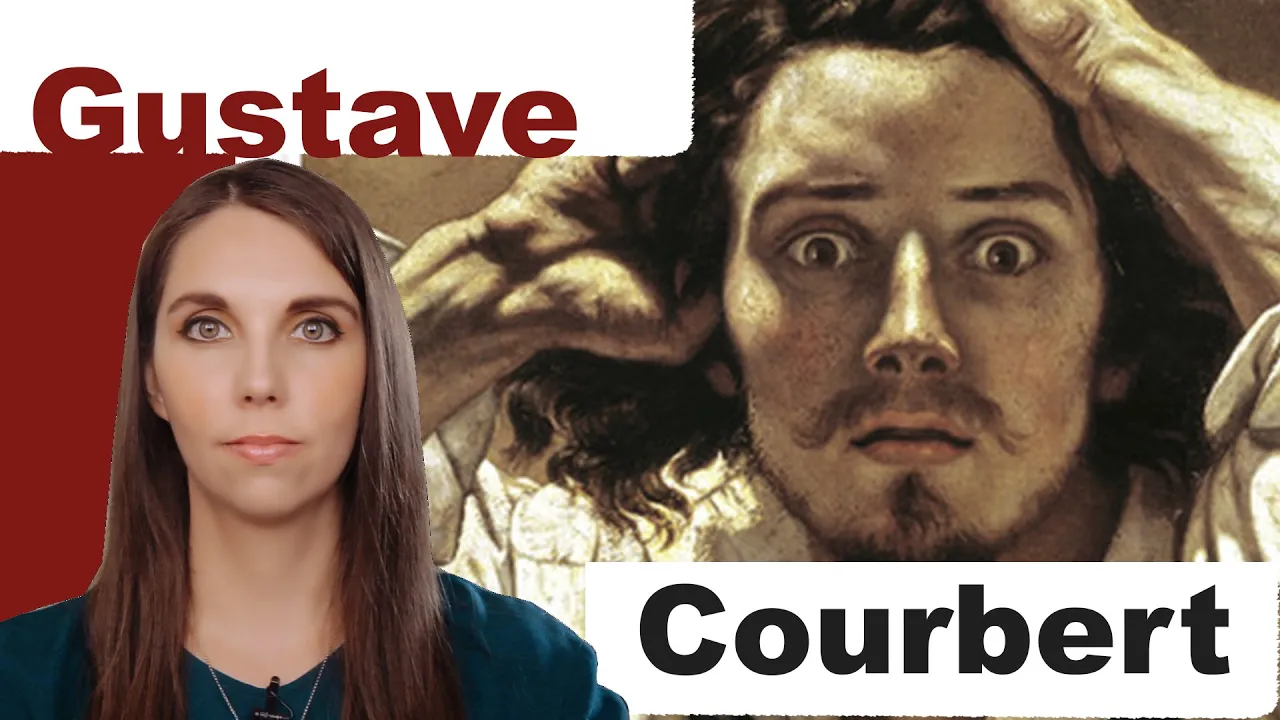


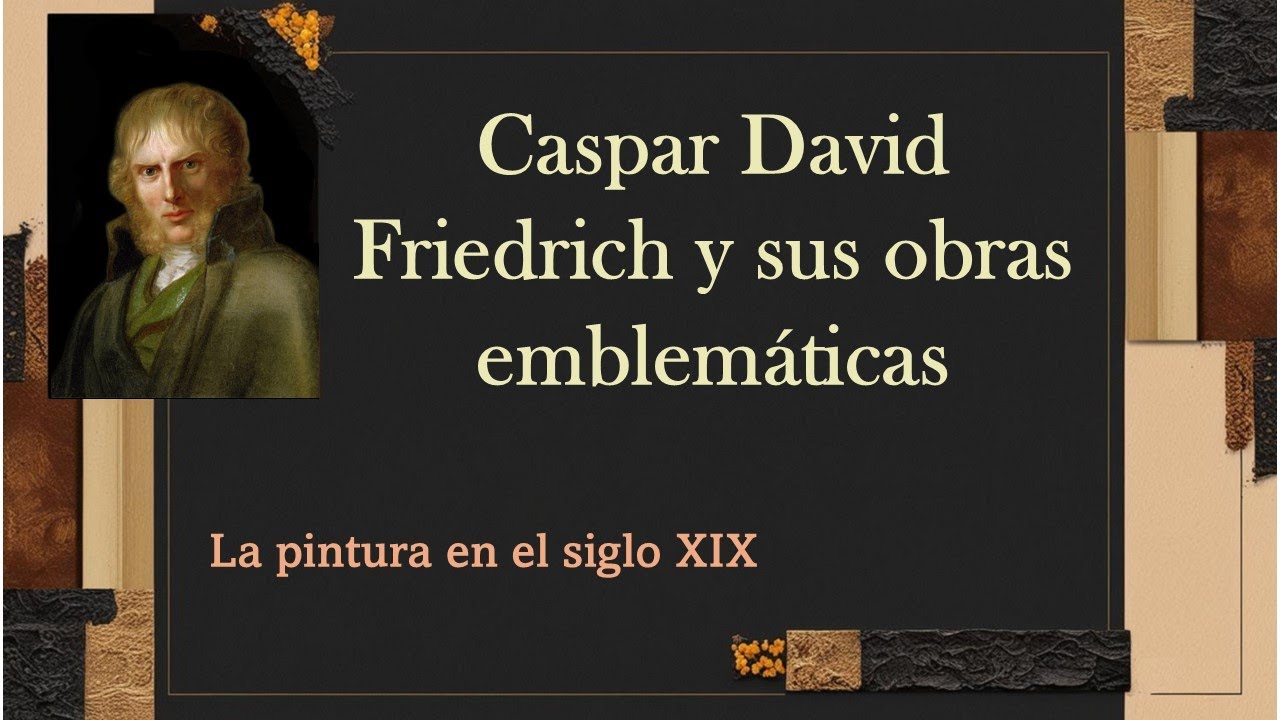


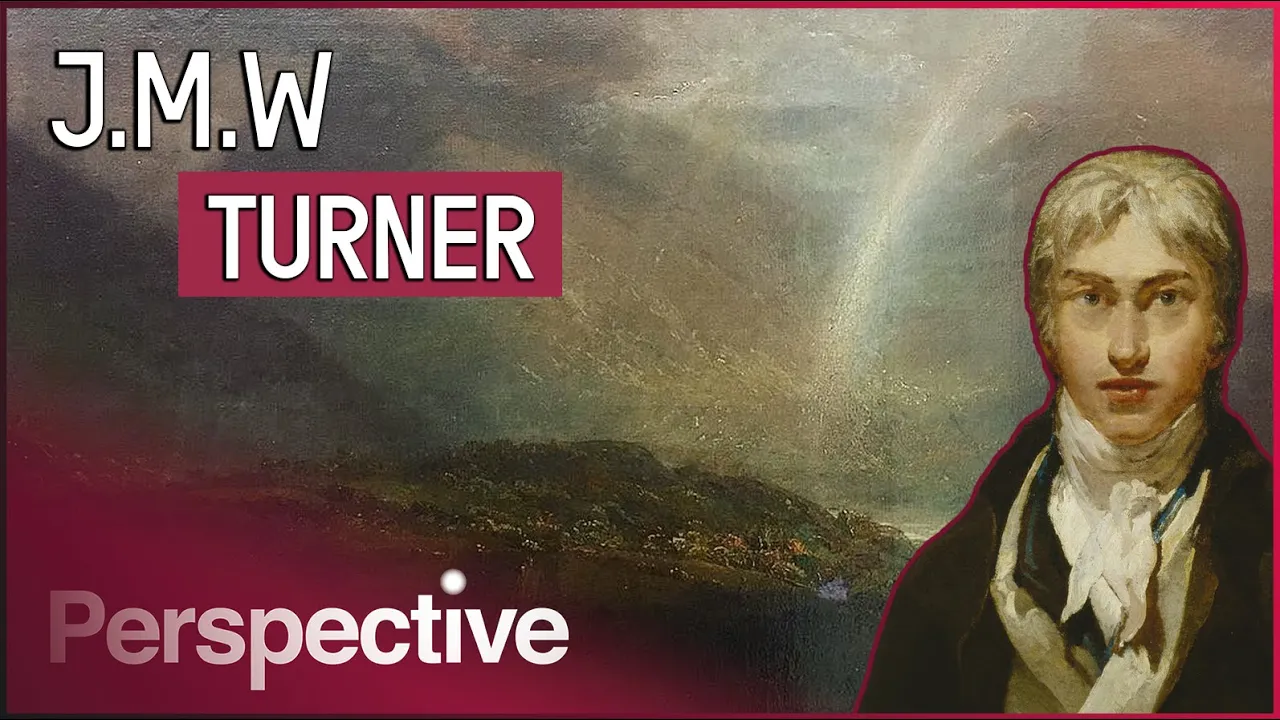



The Romantic movement (late 18th to mid-19th century) emerged as a reaction against Neoclassicism, emphasizing individual emotion, personal response to nature and events, and the sublime over reason; key artists included Jacques-Louis David (transitioning from Neoclassicism to revolutionary heroism), Antoine-Jean Gros (emotional depth), Theodore Géricault (contemporary history painting like 'The Raft of the Medusa'), Eugene Delacroix (passionate works like 'Liberty Leading the People'), Francisco Goya (dark visions of war), John Constable (naturalistic English landscapes), J.M.W. Turner (emotional color and light), and Caspar David Friedrich (spiritual landscapes), collectively transforming art from academic beauty to expressive personal vision.
Romanticism: Art Movements of Western Art Documentary (Episode 05)
Added:[Music] [Music] [Applause] July 14th, 1789. The Bastile in Paris is overrun by the forces of the French Revolution, heralding the start of a new era, not only for France, but for the whole of the Western world.
When one considers the profound developments in European life in the decades that followed, in war, in politics, in economic growth, in technological advances, and in intellectual thought, 1789 can be considered the beginning of the present modern age. In the history of art too, the French Revolution appears to signal the start of a new age. A time of significant changes both for the subject matter of visual art and for the individual artists creating it. It was a time that produced some of the world's greatest masterpieces, the time of the romantics.
[Music] Looking back at the history of art, the romantic movement is somewhat indefinable. Clearly, there were certain themes that are common to the whole movement, and they were manifested right the way across Europe. In a way, it's by looking at these great romantic masterpieces that we can define romanticism and see what the masters of this movement accomplished.
[Music] The classical world that had seemed to be a model for behavior and action couldn't explain war, horror, and the carnage of the Napoleonic era. So therefore, people started to look far more at the individual response to things. And really, the individual is at the core of romanticism.
The word romantic itself provides the first step to identifying these themes. Romantic in its original use referred to the romances, the supernatural literature and poetry of the middle ages which included for example the legendary tales of King Arthur among the many other fanciful tales.
[Music] In the 18th century, this romantic literature'ses emphasis on feeling, emotion, and exotic wild nature began to appeal to many in an age dominated by the belief in the power of science, order, and reason. Romanticism was the predominant artistic movement of the 19th century and it encompassed not only painting but uh music and literature. so that we uh can see that people as diverse as Byron and Wdsworth and Beethoven all work within the romantic tradition. It was here in London in the middle of the 1700s that the great British politician and philosopher Sir Edmund Burke developed a theory that became very important to the romantic movement. He made the case that psychologically there were two types of artistic aesthetic that satisfied the human being.
One of these aesthetics was that of beauty. The other though was that of the sublime. Romanticism in a way is a contrast and sometimes a violent contrast of these two aesthetics. On the one hand, romantic painting had to be beautiful. It had to have a sense of harmony and proportion. And indeed, it was very important that art be attractive.
And yet on the other hand, so many romantic masters sought to refer to something that was bigger than beauty.
Whether it was the grandeur of history, the grandeur of nature, it was something larger than man himself that romanticism tried to refer to.
The romantic movement can be seen as a reaction against the neocclassical period. If the broad theme of the neocclassical period was the idea that the collective should be working towards the common good, the predominant idea of the romantic period was that of the dignity of the individual who was existing beyond the bounds of normal society.
At the time when Burke was writing, Western art was almost exclusively concerned with beauty. The art market across Europe was dominated by the tastes of the wealthy for beautiful art for their town and country homes. To meet this need, a wouldbe artist would undergo an academic training in the techniques of the masters of the past, who it was felt could not be surpassed. Fine art had become a taught discipline with clear objectives and restrictions. As the great portraitist Sir Joshua Reynolds said to his Royal Academy students in 1772, "Art has its boundaries, though imagination has none." The romantic artists would soon take issue with this [Music] opinion. The reverence of the past inherent in artistic life at Reynolds time was, if anything, stronger than it had ever been. The mid- 18th century saw the excavations of Pompei and Hercuanian and the first authoritative research into Greek architecture. The neocclassicist movement, a Rome based artistic style of the second half of the 18th century, stemmed from these discoveries, a movement whose artists sought the noble simplicity and quiet grandeur of Greco Roman forms.
The artist most associated with the neocclasses style was a Frenchman who spent seven years in Rome before returning to France in 1781. A man who had become profoundly connected with the art and the politics of his day. Jacques Louie Davided Davided although is often seen as being an exponent of neocclassicism and associated ideas in his paintings he shows that he could actually draw on romanticism to add new elements of meaning to his neocclassical paintings.
With the famous oath of the Horati, he established himself as a major figure in society, a society which would shortly afterwards be plunged into the turmoil and exhilaration of revolution. A revolution which Davidid passionately supported for the study of romantic art though the well-known events of the revolution are not as important as the ideas behind it. And these ideas stem mainly from the work of the philosopher Jean Jacqu Rouso. His fervent championing of the rights of the individual, summed up in his classic phrase, "Man is born free and lives forever in chains," inspired many in the late 18th century. In romantic art, this respect for the individual would express itself in the recurring theme of heroism. But as well as emphasizing the rights of the individual and the group, Russo also believed in the importance of human emotion and emotion would become another key theme of the romantic age.
The philosophy of romanticism was that of a personal response to things, a personal response to uh to landscape, a personal response to uh the events, the great um emotional events that happened at the time. Uh so that uh because it was a personal response each artist produced work which whilst belonging to a romanticist ideal was individual to themselves. So the individual's own feelings rather than general feelings became paramount.
So romanticism is about the self-portrait about journals. It's about emotion. So romanticism takes over from neocclassicism where passion takes over from reason.
Following the events of 1789, Jacqului David Devid became deeply involved with Rob Spierre and other leaders of the early revolution. His most famous work of this period, his painting of the murdered statesman Mara was an undeniably heroic rendition. And with the rise of Napoleon, for many at the time the ultimate hero figure, Dvid continued with the heroic theme as the new leader's official painter. Dvid's large canvas of 1800 showing the French leader on horseback dramatically about to cross the San Bernard pass was possibly his most memorable work from this period.
Davided draws on the idea of the heroic individual. We have instances of dramatic movement in the the flowing drapery of Napoleon and of the hair of the horse. Indeed, there seems to be almost a type of struggle between man and nature in this painting. Yet, Davided remains true to his neocclassical ideals because Napoleon remains the master of nature. He hasn't entered into the true spirit of romanticism where nature overpowers the small individual.
But although Dvid became the official painter of the Napoleonic era in terms of the development of romantic art, one of his contemporaries was even more significant. The little known Antoine Jean Gro, a former pupil of David. His 1798 Napoleon at Arco implied a much greater emotional quality in the French leader than David.
Gross's work became a strong influence on two of France's greatest painters of the romantic age. The first of whom was Theodore Jericho. Born into a wealthy family, the young Jericho grew convinced of his destiny as a great artist. In his own words, he wanted to shine, to illuminate, to astonish the world.
So in 1812 and virtually self-taught apart from two brief apprenticeships, Jericho announced himself to society with his first contribution to the Paris Salon, the charging light cavalryman.
Although there are elements of the painting which kind of reveal that he hadn't had a formal academic training such as the problems of proportion and the kind of awkward posture of the male figure. In a way, he played upon the fact that he hadn't had the formal training and this allowed him to emphasize his particular use of flid brush stroke, his desire to allow paint to be visible, his wish to kind of show that he'd been physically engaged with the paint and with the canvas.
Two years later, he displayed a companion piece, the wounded heavy cavalrymen, where again technical flaws were offset by the artist's overall power of execution. Mixed reaction to this second work, however, combined with an ill-considered affair with the young wife of one of his uncles, persuaded the disillusioned Jericho to undergo a trip to Italy in 1816.
In the years he spent there, he traveled widely and studied hard in a concerted attempt to improve his technical skills, notably in drawing and the representation of the human form. When he returned to Paris a year later, he felt ready to produce his masterpiece, and he chose a fresh contemporary event as the vehicle for his high ambition. Another strand within romanticism is that painting should be about the present day. To people of the early and mid 19th century, antiquity was remote. It didn't relate to their own experience. And Jericho is really the first artist that elevates a contemporary event in onto the scale of a monumental history painting. The episode he commemorates is the raft of the Medusa. The Medusa was a French frigot that ran ground in 1816. The story of the Medusa had outraged French society. Following the Medusa's loss, the ship's officers had commandeered the lifeboats for themselves.
So, while the captain and the officers uh were saved, the other ranks and some passengers were put on a makeshift raft. 150 of these people were crammed onto a raft with inadequate food and water.
Only 10 survived the two weeks of thirst, disease, murder, and eventually cannibalism that resulted before the raft was picked up by a passing ship. The moment when the desperate survivors site their rescuers is what Jericho chose to depict in a truly monumental canvas for the salon of 1819, the raft of the Medusa.
What we see then is the moment when the rescue ship is cited. So we have figures trying to attract the attention of the rescue ship. But what happens is that this commemorates an episode when the rescue ship sees them for the first time and then fails to pick them up. It returns later for the final um saving of the crew. So we have on the top of the picture these figures waving frantically for the attention. But then as you drift through the painting, the figures in the bottom foreground are slumping back uh recognizing that they hadn't been seen. One of the people who survived from the raft of the Medusa was the ship's carpenter who um constructed supervised the construction of the raft.
So Jericho um uh sought him out and asked him to produce uh a complete scale replica uh as a model of the raft uh so that he could then uh use that as an image from which he could construct his painting. And the painting in fact is 24 ft wide. So it's a a fairly uh huge image.
Now although Jericho wanted to suggest this misery and deprivation of this act, we don't see any act of cannibalism on this raft. Clearly because cannibalism is one of the great taboss of western society. What we also see are whole bodies. Clearly a corpse that's ravaged by the sun and heat for a number of days is going to start to decay. All these dead figures on the raft of the Medusa seem like dead antique athletes. So there is an element of decorum kept in it. What we also see is the raft is tipped up at an angle. So we're invited to share this misery that's taking place. So in many ways the raft of the Medusa is a key document in romanticism in that the self and individual involvement is being looked at but also the present day is being magnified as an object worthy of art.
When Jericho exhibited the painting of the salon, um he as he looked at the image, he realized that pictorially speaking, there seemed to be a gap rather on the the lower right hand side of the painting um which in a sense required another figure. So he had uh his life model come and uh pose for him and he painted this figure uh into the picture within the week preceding the exhibition. Unfortunately for Jericho, the agilation that he expected from his great canvas did not arrive.
reaction to the painting was generally favorable, but the work was not purchased by the state as Jericho had hoped. It would seem that although the raft of the Medusa was wellreceived, its style and message was simply too bold to be hailed right away as a masterpiece. So it was that with great disappointment that Jericho came here to London. After a short time painting here, he then returned to Paris. Back in Paris, Jericho became very interested in painting portraits of the patients at the local lunatic asylum. Indeed, Jericho launched here what is generally perceived as a romantic trait, plumbing the depths of extreme human psychological states of mind.
Romantic artists were interested in figures who manifested certain traits of devian from a prescribed norm. People who are outside the boundaries of society.
People who are mad, people who are ill, people who are poor, anyone who really was different in some way.
Age 33, Jericho died a tormented and frustrated soul. Only posterity would give him the status of romantic hero that he so desired in [Music] life. By contrast, the second great figure of French romantic painting would attain great fame in his own lifetime and live on into his 60s. Eugene Delequa, born 7 years after Jericho and like him the product of wealthy parents, was inspired by the older man's tragic story and by the raft of the Medusa in particular. His earliest successful work, his Dante and Virgil of 1822 overcomes technical weaknesses with a harmonious overall handling of light and color, very much as Jericho had done with his charging cavalrymen.
Further success would come in 1824 with his large canvas, the massacre at Kios, his own giant rendition of a horrifying scene from recent history. In this case, the slaughter of the islanders of the Greek island of Kios by occupying Turkish forces.
The Greek struggle for independence was widely supported in artistic circles.
And this support was boosted when the great poet of the romantic age in literature, Lord Byron himself, died fighting for their cause in 1824. Perhaps it was a fitting way for him to die. A heroic romantic fighter for liberty and freedom. Later, a memorial was posted here at Westminster Abbey in London in the famous Poet's Corner.
Delawqua, who is a great admirer of Byron's writings, adapted one of his plays to make his dramatic painting of the death of Sardinopoulos. It's full of passion and it's full of emotion. And this is stressed by heavy use of paint, dramatic brush work, huge huge buildup of figures one on top of another, complex use of diagonal lines, a complex use of lines of muscle, lines of bodies, and a return to the the dark somber colors of painters from the Barack era.
[Music] The year 1830 brought yet more political upheaval in France with the July revolution installing the constitutional monarch Louis phipe. It was a development widely popular with liberal thinkers and artists. For the Paris salon of 1831, no fewer than 23 artists contributed work glorifying the new revolution.
But of those works, only one is still remembered today. A work that many believe to be Eugene Deoqua's finest achievement, Liberty Leading the [Music] People. Deloqua's painting of Liberty Leading the People is a rendering of the events of the July Revolution in 1830.
And um Deloqua uh said that whilst he couldn't perhaps fight for the revolution, at least he could paint for it. Deloqua chooses to show a day on July the 28th when the revolutionary mob attacks the royalist forces. And in the center of this painting, we have a personification of liberty. So she's bare breasted holding the trickle and a musket in her hand. She's the central figure and she's surrounded by other figures from different classes of society. So we have a humble factory worker. The figure in the top hat is probably a factory supervisor. On the other side of liberty, we've got a ruffian from the streets holding pistols. And at the base of the barricade, we have a figure in a blue shirt seemingly dying. And if you like, his dying vision is of this representation of liberty.
It was a painting that was produced through uh a great many working studies.
Um so that uh Delawqua um tried to create an image that people would recognize as um an event which had happened only shortly before.
Liberty on the barricades is seen as one of the great romantic statements about modernity and spontaneous action. The figure groups in this painting seem very weighty and monumental. Liberty herself might well be modeled on the Venus demo. Liberty also wears a red cap. That's the the bony rouge, the red cap of freedom. And of course it becomes a very potent symbol for liberty and freedom fighting.
Uh and of course it occurs on the 100 Frank French bank note.
By 1831, Deloqua was widely acknowledged as the leader of French romantic painting. And there can be no doubt that his great works with their handling of intense emotion, horror, and violence earn him a place among the great painters of all time. But the romantic artistic themes that inspired Deloqua were not restricted just to France. In England and Germany, as we shall see, landscape artists in particular felt the romantic spirit.
Spain too would make a contribution to the art of the age. But although that contribution may have been limited to the works of just one artist, that artist genius was such that many consider him to be the greatest painter of the romantic era. Francisco de Goya.
Born in 1746 to a goldsmith father and an aristocratic mother, Goya received a formal artistic training and quickly made a name for himself both as a designer for the Spanish royal tapestry factory and as a portraitist. Goya's paintings of the Madrid society of his day show the influence of the great 17th century Spanish portraitist Velasquez.
Like his great predecessor, Goya would eventually become the official painter to the Spanish court. But for all their undoubted excellence, it is not for portraits such as these that Goya is regarded as a romantic genius. For students of Goya, the year 1792 is of the utmost significance. For that year, he was struck down with a grave illness.
We don't exactly know what it was. Um but two years later when he recovered he was found to be stoned deaf and that um created within within him uh a feeling which rather darkened his view of the world. So that whilst his earlier paintings uh were quite assertive and rather positive, his later paintings became much more uh filled with uh rather terrifying images. For example, he made a series of prints, los capricios, the caprices, the follyies of mankind, in which he pillaried such things as witchcraft and superstitious beliefs. It was a later print, however, which he titled, "The sleep of reason produces monsters that makes the full romantic point and goes beyond the stage of the enlightenment. The tortured artist depicted is almost certainly Goya himself. As a representation of the romantic theme of the solitary heroic artist fighting a terrible battle against private demons, it was utterly unsurpassed.
[Music] Goya would go on to produce further collections of illustrations in his lifetime with the subject matter growing progressively more horrific. The series, the disasters of war, unpublished till after his death, was a great Spanish artist's response to the particularly bloody conflict between his country and the forces of Napoleonic France.
In a way, maybe Goya's lithographs of the disasters um have some kind of connection with political cartoons or the type of satirical cartoons that were popular in the 19th century press, particularly the 19th century popular press. They were direct. They didn't require a knowledge of art. They didn't require a classical education to be understood. And this is very important if Goya was trying to reach a broad audience and maybe an audience who didn't have the privilege of education, status, and money. But for all the intensity of his illustrations, Goya's greatest work would be executed in paint with the war of Spanish independence again the subject matter.
On the 2nd of May 1808, the people of Madrid rose up against the occupying French forces. The 68-year-old Goya would depict this uprising 6 years later in a large canvas that fully captured the emotion and energy inherent in such a tumultuous event. This work alone represents an artistic triumph of the First Order. But with his companion painting depicting the terrible revenge of the French on the 3rd of May 1808, his achievement was even [Music] greater. In it, French forces have been rounding up Spanish civilians. They've been prepared here for execution, and one of them is standing with his back against the wall. In order to make his point, Goya has chosen his moment very carefully. The man knows he's about to be shot. The whole scene is lit by a dramatic, stark candle light. The forces of the French are there on the right.
And there on the left, the man stands seconds before the trigger is pulled.
He's thrown his arms up. He's completely defenseless. And like Christ himself is about to be crucified. Now, when we see commemorative paintings like this, we usually expect them to be extremely heroic. And if you like, if death is taking place, it's seen as being a way to an ultimate victory. But we don't find this in the 3rd of May 188. We contrast the terrorized victims on the left hand side of the painting with the faceless firing squad of the French.
These figures all seem too close together. In reality, a firing squad would have had more distance between them. What effectively we get here is an anti-heroic painting. The man in the white shirt isn't a hero. He's a victim.
The the colors that um seem to be almost thrown onto the canvas um rather like uh a blood spattered image. Um and the background is black night that uh overall hangs like a paw above the whole scene. It it creates a a very sinister image.
uh and the the figures of the French executioners, they are all depicted in a very aggressive pose whilst they show sort of no pity for the people who they're executing. We have, if you like, three distinct time frames in this painting.
We have the present with the firing squad just about to shoot the group in the middle. If we go back a few moments, the people that are lying on the left hand side would once have been alive.
And then on the other side of the central group, we have those terrorized figures that are waiting to be shot. This rather gruesome element uh in Goya's painting is really what gives it the sincerity which a subject like that needed.
England of course was generally spared the cataclysmic political upheavalss that dominated the societies of Jericho, Deloqua and Goya. And this may explain why the most significant works produced by great English artists during the romantic period were not contemporary history paintings but landscapes. And through the work of John Constable and JMW Turner, England contributed fully to the art of the romantic age. and in so doing changed the art of landscape forever. Prior to the romantic age, landscape paintings were dominated by the concept of the picturesque. In a time when nature was felt to be subordinate to man, landscape paintings, like other branches of painting, conformed to certain formal notions of beauty.
These formal notions were derived mainly from the work of great 17th century French painters such as Cloud Lraine whose calm idealized scenes were inspired by his interpretation of the classical age of Greece and Rome.
The 18th century was the age of the English landscape garden, and the picturesque aesthetic with its mix of the beautiful and the sublime would dominate landscape painting until a young man from East Anglia began to change the rules. The painter John Constable was a type of painter who wanted to go out into the English landscape and paint what he saw. As he put it in a letter to a friend, there's room enough for a natural painter. And to pursue this aim, he chose to paint almost exclusively in the area of Suffach, where he had grown up. The pictures he produced are now among the best loved all in English [Music] art. Here we are in Birmingham's Museum and Art Gallery to have a look at a fine example of a late Constable painting. It shows Salsbury Cathedral and it was painted from the garden of his friend Arch Deacon Fischer. It's typical of a romantic landscape painting. It's got loose open brush work and reflects his great love of nature. However, Constable had a difficult time making a living painting landscapes as most painters were in the business of portraiture painting. However, his friend, Archdacon Fischer, helped him, guaranteed a certain price for his paintings, and gave him the peace and tranquility he needed to carry on with his work. Romantic landscape painting varies in style. In this case, it has large open brush work, typical of the sketches he made for the final versions, which he would show in the Royal Academy every year. This is a small sketch. Of course, the final versions were much larger.
Constable wasn't interested in the idea of an idealized classical landscape. He was more interested in a specifically British type of landscape. One of the ways that he could achieve this was a more varied type of composition where he could just focus on a small aspect of a landscape or he could focus on a part of a landscape that he remembered from his childhood. something that was personal to him or personal to the people who were looking at his paintings. Constable's mission with landscape, if you like, was to recreate the greenness of the English countryside and he has this extremely close contact with the areas that he grew up. Of course, he's also the son of a miller, so he's a country boy, if you like. So he understands weather conditions. He was an obsessive observer of clouds. He said that the clouds in a painting were the chief organ of sentiment. But it is not Constable's techniques that are most significant from a romantic point of view, but the sheer sense of feeling in his work. And he never expressed this feeling better than in his best known work, The Haywing.
The Haywain is certainly the most uh reproduced painting uh in Britain, but like so many very famous paintings, it's actually rather misunderstood. Um it was one of a series of paintings which he called his canal scenes. And uh this painting the the hayway which he in fact called landscape noon was the third of this series of six paintings. And it was this series upon which he wanted his reputation to stand. He shows a summer scene. So the haywne is the cart that's actually crossing the river. And on the left hand side you see a cottage. That's Willie Lot's cottage.
Willie Lot was uh a countryman who allegedly never spent even a night away from home. So the whole thing is locked in very closely to Constable's own experience. The Haywane itself uh is empty, an empty cart, but in the far distance we can see another way uh which in fact is is full this time. It's it's uh piled high with hay. And this empty cart is coming across the river to replace the the one which has been um filled with hay. And we can see the tiny figures of the reapers um who are bringing the hay in. So it's a working image. Previous to this, a lot of landscape painting hadn't really examined the true range of colors in the countryside.
Constable is very keen to show the differing ranges of green and yellow and brown that occur in the English countryside. Unlike Claude who very often framed trees on either side to focus a painting, there are no framing devices in Constable's painting. And it seems to me that that's because Constable wanted us to imagine that this scene extends either side. If you like, this is simply a fragment of nature that he's painted for us.
For all the feeling expressed in Constable's timeless masterwork, his paintings remain recognizable scenes of the tranquil rural surroundings he knew so [Music] well. Constable had a contemporary JWM Turner and it's interesting to compare these two painters works.
Whereas Constible was not particularly interested in looking at old master paintings and wanted to be directly out in the landscape, Turner was a much more academically minded man who loved the old masters and studied them carefully. Turner was a man of many different character traits. One of those was as an intellectual and in fact he did read perhaps it was even here at Oxford that he first encountered the writings of the German romantic philosopher Gerta. Now Gerta's writing is extremely romantic and in it he proposes that color in painting can have direct emotional meaning. Blue, for example, which is a cool color, is taken to be gloomy and melancholic and the least happy of the colors. On the other hand, there was yellow, which was brighter, warmer. It was more happy and serene. This systematic and romantic use of color that was developed by Gerta and then carried on with Turner had some interesting applications.
In his late years, Turner was able to do a sequence of paintings in which he used plus and minus colors to capture the dramatic universal drama of life and death. As a painter, what he wanted to do was to show his own personal uh response to to nature, to the landscape, but very much to the dramatic events that happened in the landscape. Like Constable, Turner aimed at the truth, but not just the truth as sensed by the eyes, but truth as felt and experienced.
Turner could be seen to be forerunner of the impressionists because of his radical treatment of the effects of light and the effects of rapid movement through the use of paint. Many artists before Turner almost wanted to conceal the fact that they were using paint through their concern with the smooth finish. Yet Turner wanted to prove that paint could be a very powerful way of expressing nature. An example of this new approach is this image. Slavers throwing overboard the dead and dying from 1839.
Like Jericho's raft of the Medusa before it, this is a depiction of an actual event. A disgraceful incident on a slaving ship in 1783 when slaves were thrown overboard during a storm in order for the shipping company to claim the insurance for their loss. Turner captures the horror of the event, but in an utterly different way from Jericho. Here, the sea almost seems alive. such as the sheer sensation of turbulence that Turner was able to create. Turner didn't just turn to the old masters to render his sense of the sublime. He was also able to capture the sublime experience of modern engineering, such as in his famous rain, steam, and speed of 1844.
[Music] It actually depicts a locomotive going over a railway bridge outside Maiden Head in Barkshire in England. Now, of course, at this time, the railway age was new. One of the aspects of romanticism was that it should be modern. So, here Turner is examining modern technology and at the same time contrasting it with landscape. So, not only do we see this locomotive rushing headlong towards us, but we also see a hair crossing the railway line. And if we look down onto the river, there's a boat. Here we have a a railway train which seems to rush towards us. And the story of how this painting was created comes from a lady who was on the train with Turner.
And uh she tells us of a rather what she described as a rather funny old man who said uh would she mind if he stuck his head out of the window? Um so she said if he wished to do this. Um, and he stood there for fully nine minutes with his head out of the window of this railway train, mentally absorbing what it was like to be rushing along in a railway train. To us in modern ages, 30 or 40 mph doesn't seem like any great speed at all. But of course, at this time, people were actually quite worried that human beings might pass out through such extreme speeds.
What Turner does to animate the painting is to show everything out of focus. So he anticipates or suggests the speed of the locomotive by showing it out of focus. But he also seems to put the firebox of the engine at the front. So another element of romanticism is this aspect of imagination and creativity.
[Music] If Turner painted the greatest romantic landscapes and seascapes in England, then his equivalent in Germany was undoubtedly Casper David Friedrich, the final essential artist of the age. Born in 1774, he settled in Dresden as a young man and would remain there for the rest of his life.
As with Constable and Turner, Friedrich's landscapes would represent his greatest artistic contribution. Landscapes inspired by ideas that were utterly romantic. Emotion characterizes his work. In this case, a strong sense of melancholy, but Friedrich's personal views on the role of the artist are significant, too. He saw the artist's role as being that of a mediator between nature and humanity.
Nature, he believed, was too sublime for the multitude to grasp.
[Music] Whether Friedrich eventually succeeded in this ambitious aim of mediation is uncertain, but his renditions of nature are amongst the most spiritual and sublime ever created.
For example, with his monk by the sea, we see nature utterly dominant as in the later work of Turner, but with land, sea, and air utterly [Music] separated. But the highly spiritual Friedrich wanted to do more in his paintings than simply represent the sublime aspect of nature. He wanted to instill symbolic meaning into his work. His marvelously transcendent abbey in the oak forest gives us a clue to his intentions. The funeral procession takes place in an otherworldly [Music] graveyard. But perhaps a stronger example of Friedrich's use of symbolic meaning can be witnessed in his first classic work, The Cross in the mountains. widely reckoned to be the first use of landscape for an alterpiece and an image whose every element contains symbolic meaning.
Kasper Davidid Friedrich was really the first artist who saw that religion and spirituality could be contained in landscapes alone. We know that Friedrich was a devout Protestant and he felt that landscape could be used as a way of examining essential Christian truths of redemption and salvation. In 1880, he paints the cross in the mountains. Now, we know that in Germany and Austria still today, we have these elaborately carved guilt crucifixes that adorn the tops of mountains. So, what we've got here is one of these scenes with the cross in the mountains surrounded by evergreen trees and the dying rays of sunlight. Friedrich felt that by examining this kind of symbolism, it could be an aid to meditation and understanding religion. Now, of course, many people at the time objected to landscape creeping onto the altar, as they said.
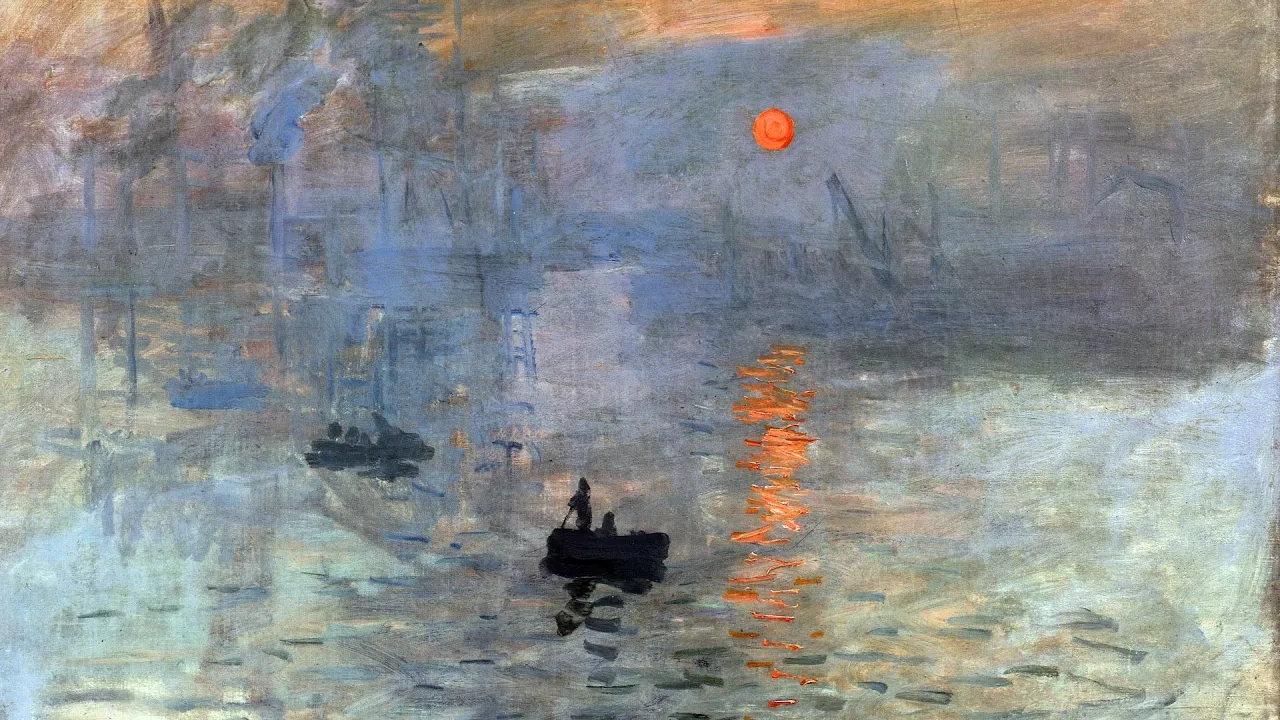
Friedrich is also responsible for the elaborately carved frame around the paintings. It's supposed to be a kind of devotional altarpiece. We know that this painting was shown in Friedrich's studio for a while and it was placed on an altar table. So people that came in approached it as a revered object. They came and observed it in hushed [Music] silence. In looking back at the romantic age, we can see that it was a time in which artists developed new conflicting and often dramatic themes in their paintings. Of course, the abiding political and philosophical concern of this period was that of liberty. Artists from the period such as Deloqua, Goya, Constable, Turner, and Friedrich all celebrated this liberty in their exploration of painting. Once this new liberty had been won by painters, they handed it on to the impressionists. And as we will see in the last program in the series, this was a liberty that they too would hold very dear.
Up Next
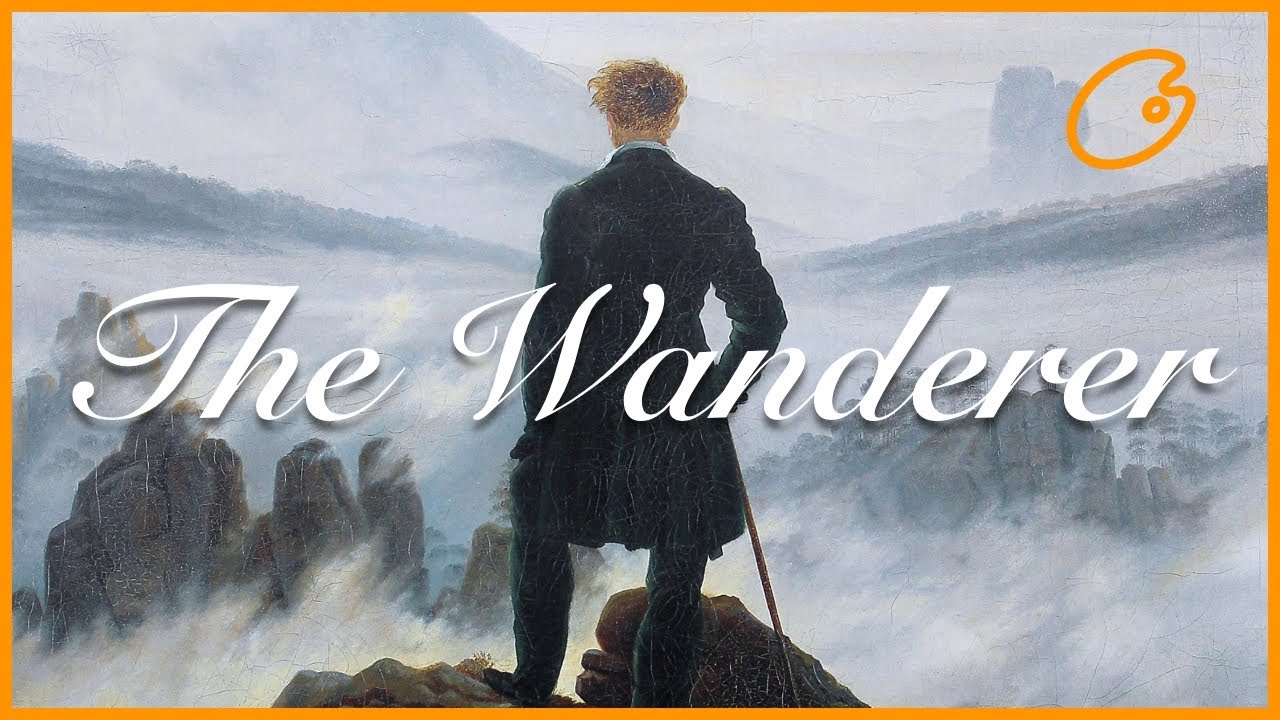
Wanderer Above the Sea of Fog: Art Analysis & Romanticism
@piecesofdotart
32.7K views•2021-05-06

Christian Iconography: History, Theology, and Meaning | Fr. Panayiotis Papageorgiou
@Trisagionfilms
58.8K views•2020-02-21
Ukiyo-e Art: History, Woodblock Printing & Influence
@japanathand
6.3K views•2023-06-08

Earliest Depictions of Jesus in Art: 10 Ancient Images Explained
@UsefulCharts
5.9M views•2022-06-03
Related Study Plans & Knowledge Roadmaps
Structured learning paths in Art History