








![[미술품 조사분석사 5급] 4강 미술영역 탐색 - 원근법의 세계](https://i.ytimg.com/vi/zjVRnqyxd8U/hqdefault.jpg)
















Landscape painting evolved differently across cultures and time periods: Chinese landscape painting emerged around the 9th-10th century AD with artists like Wang Ximeng and Fan Kuan creating imaginary, imaginative landscapes valued for their artistic vision; in contrast, Western landscape painting only became its own independent genre in the late 18th to early 19th century, emerging with Romantic painters like Caspar Friedrich who emphasized the sublime—combining beauty with fear and terror to express humanity's complex relationship with nature; this evolution reflects broader cultural attitudes toward nature, from Eastern philosophical appreciation to Western responses to industrialization.
History of Landscape Painting: Eastern & Western Traditions
Added:Basic terminology of visual art and painting mediums, including ink wash on paper/silk versus oil on canvas.
Fundamental cultural philosophies, specifically the contrasting views of nature in Daoism/Buddhism (man as part of nature) and Western Humanism (man dominating nature).
The concept of linear perspective (Western) versus multiple-point or shifting perspective used in Eastern handscrolls and hanging scrolls.
A general understanding of the European Romantic era and the philosophical concept of the 'Sublime' in art.
In-depth study of the Hudson River School and how its idealized landscapes influenced 19th-century American expansionism and early environmentalism.
The evolution of landscape art into 20th-century movements, such as Impressionism, Expressionism, and the move toward total abstraction.
Exploration of modern Land Art and Earthworks (e.g., works by Robert Smithson and Andy Goldsworthy) as physical extensions of landscape representation.
Advanced technical analysis of traditional Chinese brushwork styles (such as 'ax-cut' or 'hemp-fiber' texture strokes) compared to Western oil glazing and impasto techniques.
17.6K views267likes12:47Original Release: 2021-01-11
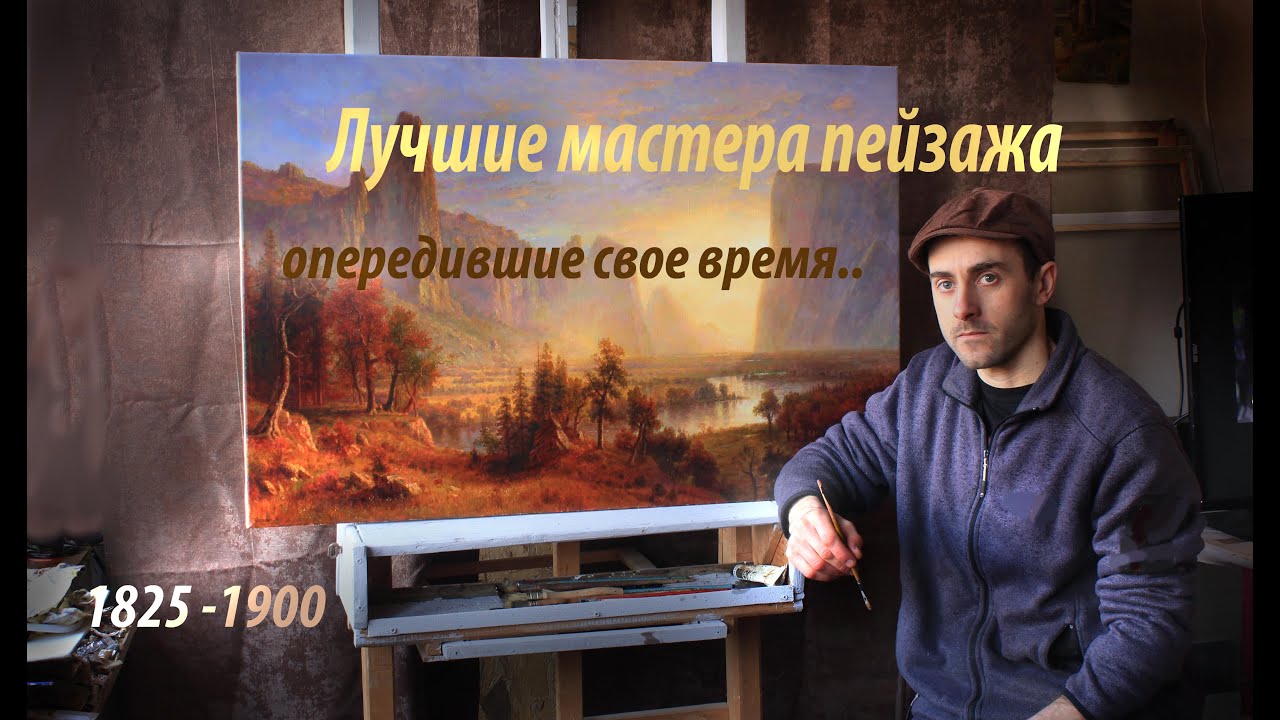
to get started in this course i want to talk a little bit about the history of landscape as a genre or the nature landscape as a genre now those of you have had me in class before know that i always go back and talk about history because the history of any genre is important to the way that we think about a genre now its traditions its format its purpose and and also its meaning that is why do we make landscapes why are landscapes so important to us so i'm going to start by talking about chinese landscape painting we're going to go way way way back it might surprise you to learn that landscape as a genre uh became a thing much much earlier in the eastern hemisphere than in the west uh this painting by um the artist wang ximeng was painted in the 9th or 10th century a.d 900 or 1000 a.d and this was really the emergence of very very golden period in chinese landscape painting although chinese landscape painting has remained very important and one of the one of the more most amazing aspects of chinese art through today uh these landscapes that were painted during this time period this was done on in but in ink on silk were uh were actually imaginary and you can see that they really give they give importance to the natural landscape and they certainly are referring to the chinese landscapes that these artists saw but these uh the painting itself comes out of the artist's imagination and that was considered the most important the most valued way of making a landscape i'll show you one more this is by fan quang about fan quan about the same period and uh this is a this is actually um ink and wash also on silk i believe and notice that this is this dramatically vertical landscape now landscape traditionally we think of as being more long and wide um but it also can be vertical and chinese landscapes are really famous for sort of their excess of this they are long long long panoramas or very very very tall scrolls we'll have a little assignment based on this idea very interesting way to explore landscapes okay let's zip forward about 800 years now forgive me for uh for just jumping over so much history uh first of all we don't have time in this class to cover all of those 800 years but also i want to uh in western landscape history which i want to talk about next uh it doesn't really begin until about the late 18th early 19th century lots of reasons for that that we don't have time to get into in this course there was of course landscape in painting before that time period and europe has a long painting tradition that goes back pretty much as far as the chinese but it was mainly landscapes were used as backgrounds they weren't seen as a primary subject or they might be a subject but it would be a history painting which wasn't considered as important um it isn't until the late 18th century early 19th century that's the 1700s 1800s that landscape becomes its own genre and this emerges with the romantic painters and now interesting the romantic painters are responding to the new industrial world that is emerging and they're sort of moving back to talking about nature and the psyche the painting you're looking at is by casper friedrich who is one of the most important of the romantic painters also called symbolist painters and you can see that this landscape is very intense a little bit frightening it does have this crucifix which is laid out on this craggy craggy cross and the symbolist painters were often placing these kinds of symbols or these psychic or religious symbols into their paintings now one of the key things that comes up in painting is the idea of the sublime now the sublime in this case doesn't mean like oh that piece of pie was sublime the sublime here refers to fear and terror and power and so in terms of landscapes the landscape itself is beautiful but it's also terrifying which you can see in this seascape with these crashing waves and these craggy rocks now friedrich and i'm going to go on to another friedrich now like uh the chinese painters was also painting from his imagination and the romantic paintings of landscapes were were primarily from the imagination and were valued as uh coming from the imagination the idea of the value of a painting depicting an actual landscape that is the thing of the future an emergence probably primarily with the emergence of photography interestingly enough so before that time a landscape was a was an imaginary a fantasized landscape this landscape is very interesting in terms of the idea of the sublime this is another casper friedrich and in this landscape he's depicting uh actually this shipwreck up in the in the arctic a place that he had never been it's crashing into all of these icebergs and being splintered apart so of course this really talks about this idea of the natural world which was equivocated with uh the world of god uh really being this kind of awesome and amazing but also terrible place a place of fear and death so let's move forward and just look at a little bit more examples of different ways of approaching landscape painting now i'm really tip of the iceberg here not to use it in reference to the last painting but i really can just barely touch on all of the landscape painting that was going on but i want to give you a couple of ideas or senses of how landscape was operating this painting by john constable is what we would call a picturesque landscape painting and that is there's nothing of the sublime in here there's no terror there's no fear this is this comforting safe uh landscape that that is controlled that is um that is that is a safe control place and probably a place it appears to be more a place where um humans have been humans have lived there may be a road nearby so we're in this safe experience of nature now on the other hand and heading over into the americas we have this kind of a landscape now this is a western landscape this is actually a california landscape uh by albert bierstadt uh there's a lot of things to sort of unpack here about this this this particular landscape in this era one is that the american west opened up a whole new territory of both landscape painting and then of course landscape photography it's a really important part of the history of the landscape in the americas another thing is that albert bierstad did study photography and so photography becomes very very important not just in as its own medium which happens a little bit later but it becomes very important in its influence game so one of the first things you might realize about this landscape is that he is depicting a landscape that he's actually looking at he's trying to show what's actually in front of him and one of the reasons he's doing that is first of all he's so amazed and awed by the american landscape the american landscape of the west and he's trying to describe it for the rest of the world another thing is that photography by this time has been invented and he has actually studied it and so the idea of making an actual depiction of the scene in front of us is becoming a more valued idea you also notice because of the influence of photography you notice the quality of light and then of course we're back to the sublime these paintings by the way if you ever get a chance go to the young museum in san francisco and you can see some of these in person they're huge they're luminous and they're really overwhelming so yes we're looking at this beautiful scene right we love that but it is also a very frightening landscape it's a treacherous landscape we can fall off of cliffs we can get taken away by um by rushing water so this has absolutely that classific that quality of the sublime that is the awe and the power of this of this especially this new landscape now on the other hand if you go back to john constable and you take a look at uh this painting that he made of europe which was at that time this very very settled place white settled place um you can see that this landscape is focusing on this kind of known quantity we have little docks built it's we have boats the landscape is is all within our control it's this sort of idyllic safe place with kids with fishing poles and all of that now bierstad was also making uh paintings with people in them but in this case he's making paintings of the native americans that were there when the white explorers arrived now this becomes quite contentious and i really want to bring this up and have ongoing conversations about this so we have the quality of the sublime here of course because these mountains are sheer there's a thunderstorm coming in there's a lot of this kind of terror the native americans in this case are very very comfortable in this landscape they almost resemble the uh the people in the previous painting but notice that in this case the natives are very very far away from the painter um he's not talking about it as being uh his experience he's talking about it as being this experience of the other the the native american that they discovered along with the landscape they're embedded into the landscape now of course this is a very important aspect of landscape painting and later landscape photography who makes the landscapes and who owns the landscapes who tries to acquire the landscapes and we'll talk more about that as we go along very very challenging subject now the last painting in this section and then i'm going to take a little break and have you come back so we can talk about photography this is a painting by thomas moran also of the american west really one of my favorites very different style you can see that this is the yellowstone valley in montana and you can see some of these same kinds of ideas of the sublime this incredibly overwhelming landscape terrifying people standing on the edge another aspect of the sublime that i want to point out here is the idea of scale now a little bit different i think these the the people in this are actual or look like they're in western dress they're western explorers but they're very very small in relationship to this daunting overwhelming landscape now one of the reasons i'm showing moran and i'm going to talk about him again in the next video is that he was actually a painter who was hired to come along with early western photographers to help them learn to compose so there's a direct connection between these paintings bierstad moran and these other early painters and the photographers who are going to emerge very soon okay take a break come back and we'll learn about photography
Up Next

48:02
Romanticism: Art Movements of Western Art Documentary (Episode 05)
@artandfilm21
60.2K views•2015-12-07

114:18
Christian Iconography: History, Theology, and Meaning | Fr. Panayiotis Papageorgiou
@Trisagionfilms
58.8K views•2020-02-21
7:48
Ukiyo-e Art: History, Woodblock Printing & Influence
@japanathand
6.3K views•2023-06-08

16:34
Earliest Depictions of Jesus in Art: 10 Ancient Images Explained
@UsefulCharts
5.9M views•2022-06-03
Related Study Plans & Knowledge Roadmaps
Structured learning paths in Art History
art-history
Gothic Cathedrals: Engineering, Light & Society
01The Birth of the Gothic: Romanesque to Suger's Vision
02The Structural Triad: Pointed Arches, Ribbed Vaults, and Flying Buttresses
03Theology of Light: Lux Nova and Sacred Geometry
+ 2 more learning modules
14h5 modules
Explore Roadmap
art-history
Pre-Raphaelites: Realism, Symbolism & Critique
01The Victorian Art Establishment and Academic Formula
02The Founding of the PRB and Radical Realism
03Medieval Revivalism and Literary Symbolism
+ 1 more learning modules
8h4 modules
Explore Roadmap
art-history
Street Art: From Subways to Art Market
01Subcultural Origins in Philadelphia and New York (1970s)
02The Subway Era and Style Wars (Late 1970s - 1980s)
03The East Village Scene and Early Gallery Crossover
+ 2 more learning modules
10h5 modules
Explore Roadmap
art-history
Classic Maya Art: Iconography, Glyphs & Ritual
01Foundations of Classic Maya Visual Culture
02Deciphering Maya Hieroglyphs & Text-Image Integration
03Sacred Geography and Cosmological Architecture
+ 2 more learning modules
14h5 modules
Explore Roadmap