

















The Theotokos mosaic in the apse of Hagia Sophia, Istanbul, dating to the period immediately after the end of iconoclasm (8th century), represents a pivotal moment in Byzantine religious art where Emperor and patriarchs formally reaffirmed the importance of religious images; the 16-foot-high Virgin Mary holding the Christ child, surrounded by gold representing divine light, serves as a powerful statement that images are essential for spiritual teaching and worship, countering the earlier period of iconoclasm when virtually all religious images in Constantinople were destroyed due to concerns that people were worshiping the images themselves rather than venerating the divine prototypes they represented.
Hagia Sophia Apse Mosaic: Theotokos & Byzantine Iconoclasm Explained
Added:Understanding the historical and architectural significance of the Hagia Sophia as the imperial cathedral of Constantinople, built during the reign of Emperor Justinian.
Familiarity with the theological concept of the 'Theotokos' (God-bearer) and its definition at the Council of Ephesus (431 AD).
A basic timeline of the Byzantine Iconoclastic Controversy (726–843 AD), including the central theological arguments of both iconoclasts (image-breakers) and iconodules (image-venerators).
An introduction to the role and purpose of sacred imagery and icons in Eastern Orthodox Christian worship and theology.
The evolution of Middle and Late Byzantine art styles, particularly the 'Macedonian Renaissance' that flourished after the definitive end of iconoclasm.
A comparative analysis of Byzantine sacred art versus Western Medieval and early Renaissance artistic developments in Italy and Western Europe.
The historical preservation, plastering, and eventual 20th-century restoration of Hagia Sophia's mosaics following its conversion into a mosque in 1453 under the Ottoman Empire.
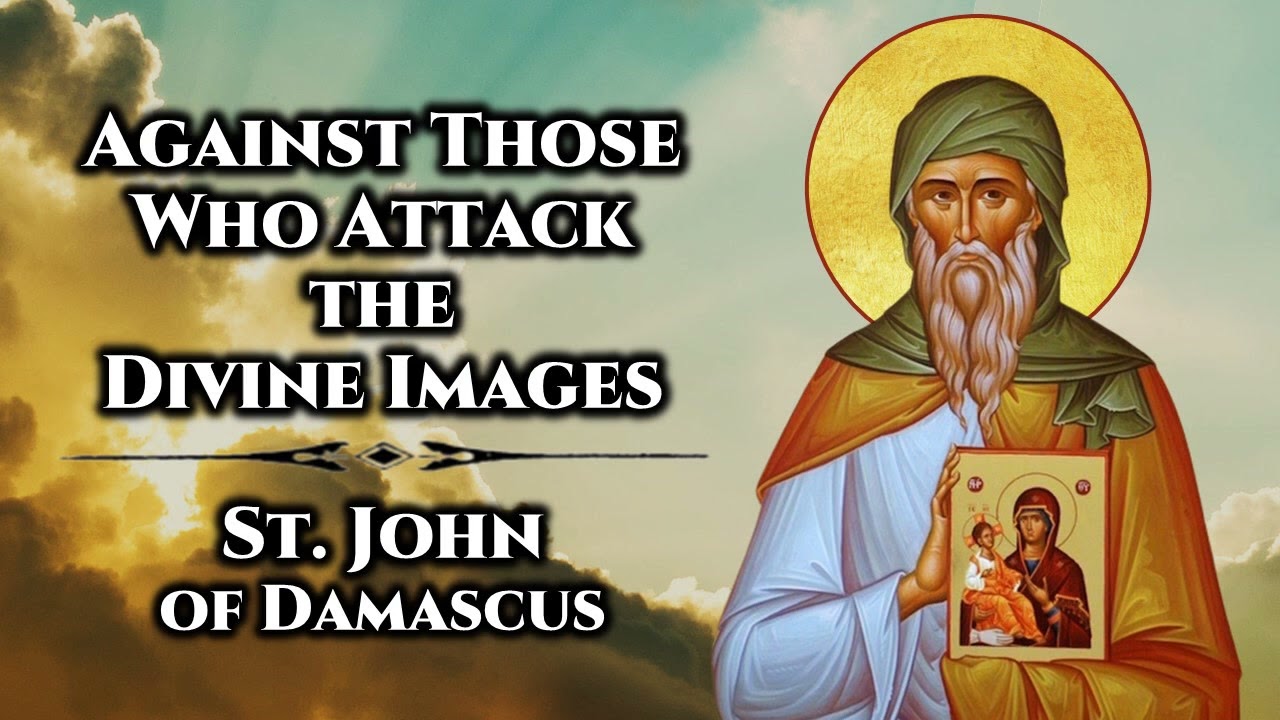
An in-depth study of the primary theological writings defending images, such as Saint John of Damascus's 'Three Apologetic Treatises against those who Decry the Holy Images'.
120.1K views886likes5:01Original Release: 2014-06-08
(music) Voiceover: Images are really powerful things and they're political as well and they figure in to the history of religion and the history of Christianity.
Voiceover: The history of the Byzantine Empire very specifically.
There was always tension in the Church about creating images of Christ, images of Mary, images of God.
Voiceover: Well, if you think about it, God is the creator and then an artist is also creating, it's usurping, and so this was always a tricky issue.
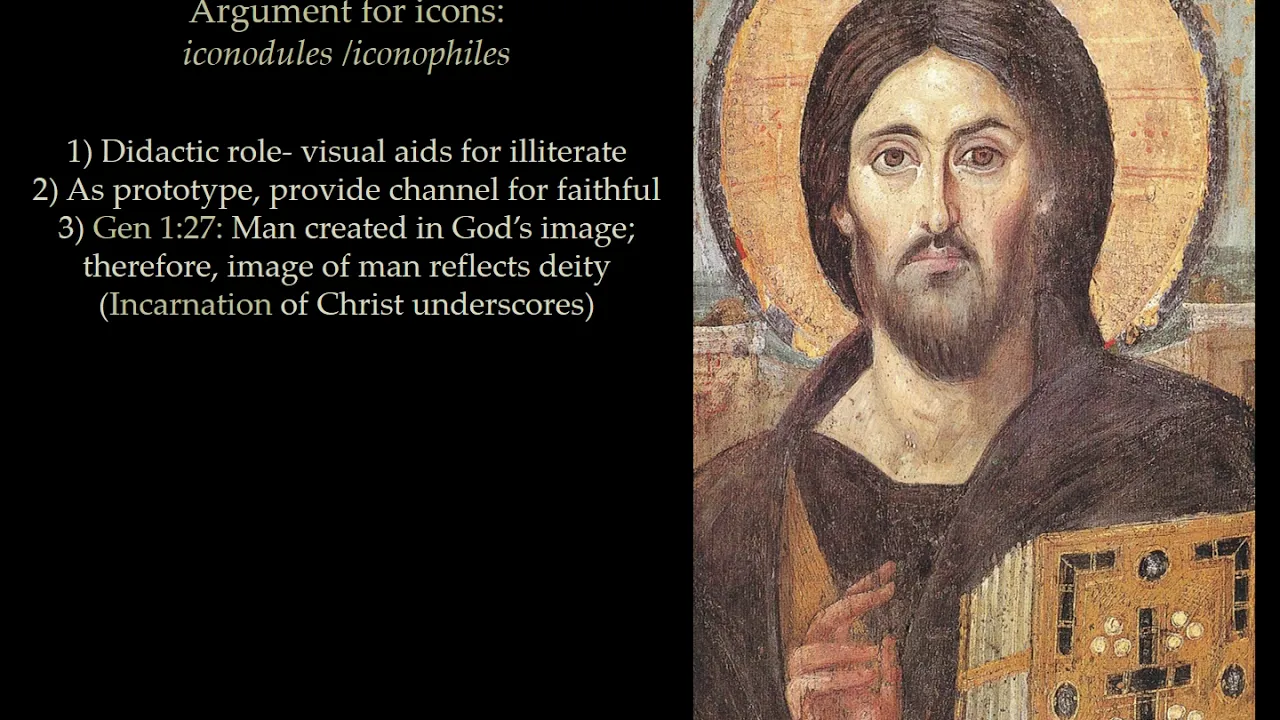
Voiceover: Icons, images of Mary, images of the saints, of Christ had become increasingly central in the Byzantine Empire and in worship.
There was concern that people were infact worshiping the images instead of venerating them or respecting and using the images to pass through to the prototype to the Divine figure that was pictured in the image.
In the 8th century, the emperor forbade the use of images in the Church.
Voiceover: This begins a period of iconoclasm.
Iconoclasm is a Greek word that means breaking images.
There was real violence.
We believe that virtually every image in the City of Constantinople was destroyed during this period.
Voiceover: This lasted from the early 700s to the mid 800s.
Voiceover: Question is, why?
Why in the world were images seen as so destructive and so dangerous?
Really it had to do with this concern that people were venerating not the God that an image represented, but the image itself.
Voiceover: There is a commandment against creating images.
Voiceover: So, artists were at a luck for quite a while.
Voiceover: They were, yes.
Voiceover: (laughs) What we're looking at here is a mosaic in the most prominent place in Hagia Sophia, that is the most important church in the Byzantine Empire.
Voiceover: This dates to the period just after iconoclasm comes to an end.
Voiceover: This is an enormously important statement.
Voiceover: This is the emperor and the patriarchs saying, "No more iconoclasm. We want images.
We think images are incredibly important."
There was a resurgence of patronage of religious art during this period right after then end of iconoclasm.
Voiceover: We see this glorious image of the Virgin Mary seated on a clench with two cushions and she holds on her lap the Christ child.
Voiceover: It's the only resemble icons that remained Vast majority were destroyed, some do remain.
Voiceover: This is specifically close to an icon that is in the Church of St. Catherine in Sinai in Egypt.
This is a great example of the style that we call the middle Byzantine.
That is the period immediately after the iconoclasm.
Voiceover: She may look small here in the Church of Hagia Sophia, which is so tall and vast, but in fact she's 16 feet high.
Voiceover: It's just that she's dwarfed by the immense proportions of this architecture.
Voiceover: By the gold of that apse.
Voiceover: That gold of course is a way of representing the Divine light of heaven.
Voiceover: It's something we see very often in Byzantine art.
Voiceover: Look at the way that she's right above that road windows.
She really is floating.
She really is even above the sky.
Voiceover: Throughout Hagia Sophia there's a sense of light as connected to the Divine.
As she rests on those windows and windows below her again and then above her in the semi-dome, there is a sense of her being surrounded by Divine light.
Voiceover: So we've got this light, we've got this gold field, but we've also got a real sense of solidity and it's so different from the way we usually think of think of the icon as flat Look at the platform that they're seated on.
Look at the solidity of the bench.
These are really solid pieces of timber and by the way, very elegant.
In fact, there's even gems.
If we think about it in the context of the end of iconoclasm, this is an artist that is representing these forms and saying, "These things are here to stay."
Voiceover: The image is meant to reaffirm the importance of images.
It had originally an inscription, most of which is now gone, but that inscription said, "The images which imposters had cast down here pious emperors have set up again."
There is a reassertion here of the importance of images and a condemning of those who destroyed the images.
Voiceover: This particular image is called the Theotokos.
That is "one who gives birth to Christ".
Voiceover: Referring here to Mary.
Voiceover: This image was unveiled by the patriarch of the Eastern Church.
Voiceover: That day he gave a sermon in which he said, "Christ came to us in the flesh and was born in the arms of His mother.
This is seen and confirmed and proclaimed in pictures.
The teaching made manifest by means of personal eye witness and impelling the spectators to unhesitating ascent."
Voiceover: This is about the power of the image to move one emotionally and spiritually to inspire and to teach.
(music)
Up Next
9:38
Chora Church Mosaics & Frescoes | Byzantine Art History
@smarthistory-art-history
43.5K views•2021-04-29

114:18
Christian Iconography: History, Theology, and Meaning | Fr. Panayiotis Papageorgiou
@Trisagionfilms
58.8K views•2020-02-21

10:26
Redgrave's The Sempstress: Victorian Social Realism, 1846
@smarthistory-art-history
3.2K views•2011-10-22

16:34
Earliest Depictions of Jesus in Art: 10 Ancient Images Explained
@UsefulCharts
5.9M views•2022-06-03
Related Study Plans & Knowledge Roadmaps
Structured learning paths in Art History
art-history
Gothic Cathedrals: Engineering, Light & Society
01The Birth of the Gothic: Romanesque to Suger's Vision
02The Structural Triad: Pointed Arches, Ribbed Vaults, and Flying Buttresses
03Theology of Light: Lux Nova and Sacred Geometry
+ 2 more learning modules
14h5 modules
Explore Roadmap
art-history
Pre-Raphaelites: Realism, Symbolism & Critique
01The Victorian Art Establishment and Academic Formula
02The Founding of the PRB and Radical Realism
03Medieval Revivalism and Literary Symbolism
+ 1 more learning modules
8h4 modules
Explore Roadmap
art-history
Street Art: From Subways to Art Market
01Subcultural Origins in Philadelphia and New York (1970s)
02The Subway Era and Style Wars (Late 1970s - 1980s)
03The East Village Scene and Early Gallery Crossover
+ 2 more learning modules
10h5 modules
Explore Roadmap
art-history
Classic Maya Art: Iconography, Glyphs & Ritual
01Foundations of Classic Maya Visual Culture
02Deciphering Maya Hieroglyphs & Text-Image Integration
03Sacred Geography and Cosmological Architecture
+ 2 more learning modules
14h5 modules
Explore Roadmap