
















To create rich ambient pads using granular synthesis, first record a simple sustained sound (like piano notes in C major with root and fifth intervals) and process it with reverb and delay; then load this into a granular synthesizer, configure parameters such as triangle grain shape, randomized density and size, and randomized start positions to create a tonal cloud effect; add a wavetable oscillator for stability, apply modulation via LFOs and random generators to introduce movement, and finish with post-processing effects including tape warble, reverb, and EQ to achieve a lush atmospheric texture.
Creating Ambient Granular Pads in Arturia Pigments 2: A Step-by-Step Guide
Added:Basic principles of Granular Synthesis, including concepts like grain size, density, position, and spray.
Fundamentals of Wavetable Synthesis, specifically how scanning through wavetables alters harmonic content over time.
Understanding modulation routing, including how LFOs, envelopes, and randomizers are mapped to synth parameters.
The standard signal flow of a synthesizer, including oscillators, filters, amplifiers (ADSR), and basic effects sends.
Advanced generative sound design techniques to create self-evolving ambient pads that shift over long periods without input.
Integrating spatial effects (like shimmer reverb, frequency shifters, and micro-delays) to place granular pads in a professional 3D mix.
Utilizing MIDI Polyphonic Expression (MPE) to modulate granular parameters dynamically per-note during live performance.
Field recording and custom sample preparation techniques specifically optimized for granular engine importing and manipulation.
81K views3.2Klikes22:10Original Release: 2020-05-22
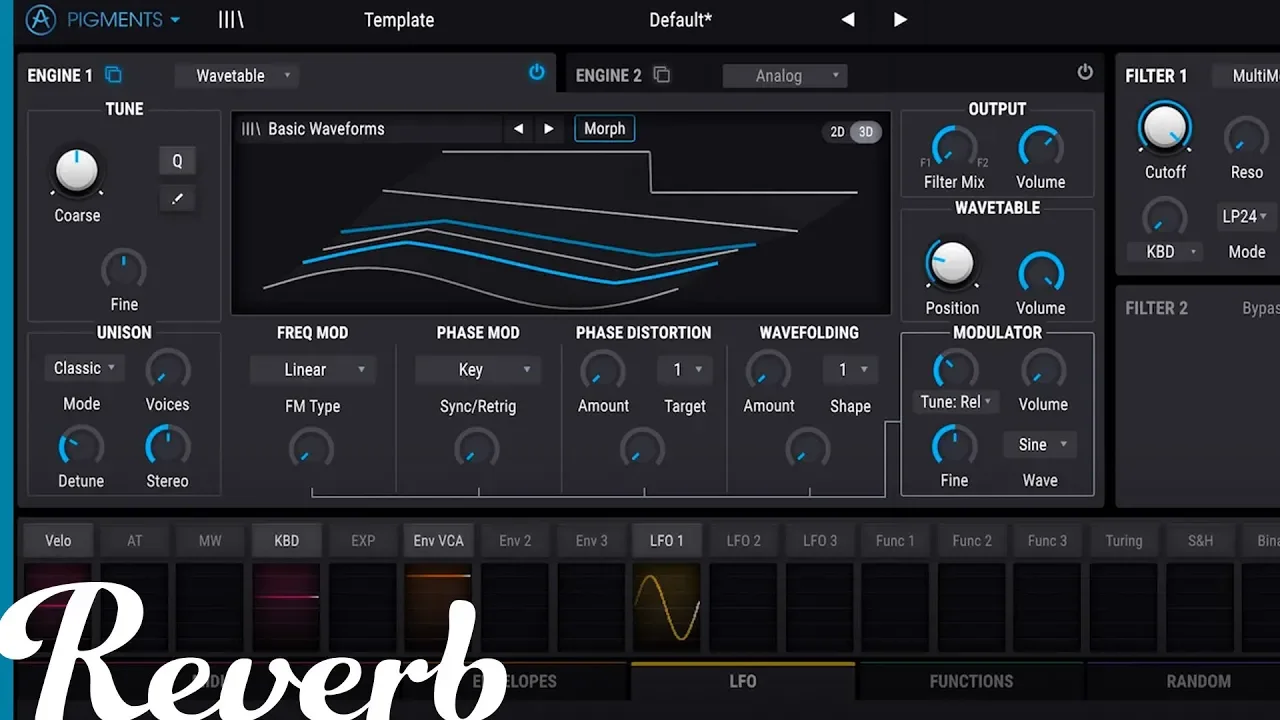
do you ever listen to an ambient or chill track and get really really inspired to make your own and you sit down and look out the window gazing back on all that could have been reflecting on the impermanence of it all and you roll up your sleeves and you press your nihilistic fingers against the keys and you get a sound like this do you wonder how to get those rich lush atmospheric sound beds that other artists use that seem to transport you to another dimension do you question the meaning of life the universe and everything and wish to express your assorted existential crises musically do you sometimes forget to wipe these are all important questions and if you answered yes to any of the above then boy are you in for a treat because today I'm going to teach you how to make sounds like this out of only a handful of elements you probably have sitting around right now [Music] good morning friends and welcome back to another episode of morning coffee with Cameron and as you probably guessed in this video we're going to focus on making big lush ambient droning sound scapes that you can use to kick start your next ambient track or use as an intro or break down or whatever you would like the only real requirement to follow along with this tutorial is that you have a granular synthesis are Terry of pigments - and it's granular engine but that's not required to do this all you need is some kind of granular Cynthia could use reason grain omnisphere UV ifalcon quanta the mangle pad shop granulator or fruity granulizer or anything else that offers some kind of granular synthesis mode if you don't have any kind of granular synthesizer unfortunately I couldn't find one that was free that I can honestly recommend I found a lot of them just didn't really sound great or we're very hard to use however a couple substitutes that are really easy to get a hold of our audacity because it includes a version of Paul stretch or get the full version of Paul stretch itself you can get very similar results using those if you know a decent free granular cynthia's t feel free to leave that down in the comments below because i'm sure that would help a lot of people out myself included because like I said I tested out a few and I couldn't really find anything I thought was decent that I can honestly recommend as I mentioned I will be using pigments too in this video because I think it has a really good interface so it's easy to translate these settings into other synths but pigments also offers a couple unique things like some fun unison modes and a couple other things that I'll be utilizing just for a bit of a different character but otherwise as long as you have a granular synth a nice reverb and some kind of wave table or subtractive synth to layer it with that's all you need to do this if the tips in this video helped you make a cool track feel free to share it to me on social media or my Dischord because I'm always excited to hear what you guys create and if you're ready to share your track with the world why not check out my friends over at distro kid I've personally been using distro kid myself to distribute my music for years and it's about as easy as it gets distro kid makes it incredibly straightforward to distribute your music to all the major retailers in the known universe in only a handful of clicks for only $20 a year you can upload unlimited songs so even when you're really grinding out tracks you can upload all of them without any worries or any extra fees and you keep 100% of your earnings district it goes beyond just regular distribution because you can also maximize your revenue by getting your music placed in the Content ID system you can get a verified Spotify profile and they can also help you get an official verified YouTube artist account which is pretty neat to get started with district it and save seven percent off your first year you can use my referral link which is district it com /v IP slash Venus theory and you can click the link down in the description below I get a small kickback as well so it's a great way to get your music out there and help support the channel so I can make more videos like this one so get your reverbs ready top off your coffee and let's hop into the DAW and get started so here we have the final patch and there's quite a bit going on but in this video I'm going to be breaking this down into more or less a formula so once you understand the process and the workflow and maybe save this whole thing is like a template in your DAW you can make these huge atmospheric sound beds in like five minutes let's take a listen to the final sound here and then we're gonna crack open a new pigments and start this whole process from the ground up [Music] in order to get the ball rolling we're gonna need to start off by designing the initial thing we're going to feed into the granular synthesis taboos pianos a lot or guitar sounds or world instruments it can really be any sound you want there are just a couple of rules to this initial thing to keep in mind that I find give the best results in this example I'm going to be using a piano here this is arteria piano v this is one of my presets this is just a really soft mellow piano sound so this gives us a nice kind of rounded thing that's not going to be too obtrusive you know this is a background element it doesn't need to be super bright and big and exciting it just needs to fill out a lot of space and provide that atmospheric vibe and the world for the track to sit in once you've selected your initial sound whatever that might be we're gonna kick things off by adding a new audio track here and then we're gonna route that instrument into this audio track so I'm gonna route the output of piano V to the input of this audio track if you are in Ableton you can do this with the resampling mode on a track if you are in FL you can use Edison otherwise just do what I'm about to do and bounce that file out and then bring it back in now that we've got our piano sound set up here what we're going to do is just let this run and record some stuff we're not really gonna worry about playing in a certain tempo or anything like that but there are a couple of little footnotes I think are important to get the best results the biggest thing I find is playing not too many notes and not making everything too short we want long sustained notes that kind of run together and create this big kind of washy thing and I typically do this always in the key of C the reason for this is I can save these materials for later and just put them in a folder of like things I can put in a granular synthetic ool pad out of this way I always know that it's in C I'm not guessing what key I made this thing in when it comes to the actual notes you should play I find using the root and the fifth is a really good result because that means it's gonna translate to any key a lot better you can also use the minor third maybe maybe not otherwise relying on the root the and then the second and fourth degrees of the scale usually provides pretty good results if you're not really sure what I'm talking about and don't know much about music theory you can pause this video and go over to music theory net it's a free website with a bunch of resources to learn the basics of music theory there's a lesson on scales and scale degrees that should take you about five or ten minutes and then you can come back and get started with this whole process one last piece of advice before we begin this process is to add maybe just a couple different effects to this sound I'm gonna use an untimed delay so I'm just gonna set this to free mode have a bit of feedback maybe filter it and do some other stuff to it and then maybe we could add like a quick little reverb of some kind let's add a dragonfly Hall reverb and make it about four seconds this way we're just getting something that's maybe a bit more interesting than just a standard piano sound now that we've got this all set up and out of the way let's record a little bit play a couple notes and then we're gonna use that as the basis for this entire droning thing [Music] cool so now we've got that done and it's really really quiet so we can just go in here and boost up the volume of this clip a little bit maybe add a gain utility of some kind to boost it up even further and we should have something that's just kind of some droning piano notes turn it up a bit more SiC and that's really all we need to do as you could hear I was just mostly playing C and then G and a little bit of D a little bit of F so I was focusing on the root the 5th the 2nd and the 4th this way I'm not using the 3rd because this makes the whole thing a bit more totally ambiguous so it'll end up working in a major or minor key if you know that you're mostly gonna write in minor feel free to include the minor third but do keep in mind that as you translate this or move the pad around it's not gonna really change in key exactly but otherwise just use like the root and the 5th played a couple times for 30 seconds or so and that's really all you need now that we're done we don't need this piano anymore so we can ditch that and we're just gonna trim this file up I'm gonna get rid of all that silence at the beginning right about there and get rid of all this stuff at the end we don't need now we're going to bounce this clip post fader so I'm just gonna bounce this with that gain and all that stuff on it now that I've bounced this out we have this loop here with no blank space on the beginning or end and that's all we need to throw this into pigments and get started so we've got a nice fresh pigments here let's change the engine one of wavetable to sample then we're going to drag in our trimmed up piano loop here and enable granular mode feel free to experiment with these settings but I'm gonna show you what I generally do that gives pretty good results so first off I'm going to leave the shape as triangle you could change the shape to be more of a ramp wave that can give you some more kind of sprinkly transient Tigranes but in this case we just want something nice and smooth and mellow so I'm just gonna leave it as it is now we're going to up our density here and then we're going to add some randomness to the density then we're going to randomize the size a little bit here we can adjust the width to be even wider and then we're going to crank up this start here now what cranking up the start is doing there is not changing the starting point but rather randomizing where the grains are coming from so within this sample it's just gonna start from some random spot this way we get this tonal cloud of notes not starting from the same exact point every time now that we've got this done we could up this size to maybe about four or five hundred milliseconds make sure everything just has a little bit of randomness the pitch randomness don't go too crazy on but adding a little bit just can add some interest in movement other than that maybe drop the limit down to 64 I find 64 gives pretty good result to 128 can get a little intense and washy now that we've got all this set up the only other thing to know is that if you recorded this in a different key maybe you played around in a you might need to go in here to the Edit tab and change the root note in this case it's in C so we're gonna leave it at C and give this a play and see what we've got in this case it's got a lot of low-end information we really don't need so we're going to use this filter here and go more towards the high pass and just roll this up to the point where we get rid of a lot of that low mud we don't really need [Music] next up we'll go over here to empty effects change this to unison and we'll up this to two voices and set the detuning really low and maybe increase the stereo spread this way we're just going to get an even more wide epic sound and this is what we end up with so far [Music] cool so we're well on our way to a decent result now let's move into Engine two and we're going to enable this and set the mode to wave table since we've got this big washy granular thing a bit of the problem with this is that it doesn't really have a stable droning Center so by adding a wave table oscillator we're going to get that nice wave table movement to the sound but it'll also drone out and hold a single note which just ends up tonally stabilizing the entire result from here you can just scroll through and find something nice I think maybe we'll go with additive thin or additive Twain why not this is going to be a bit tricky so you're gonna need to blend this in against the granular stuff to find the point where it just rounds everything off so we'll go up here to the output drop the volume all the way down and just bring this in slowly as we hold out a single note [Music] pigments makes it really easy to add a lot of modulation so we're gonna start off by going to let's start with the LFO one here then we're going to up the position and we'll go into LFO change the mode to unipolar change the rate to Hertz and drop this to something very very slow maybe we'll change the range of modulation because that might be a bit intense and now let's play this again and see what we've got [Music] to add a bit more movement and interest to this we'll go over to the random tab and we'll assign random one to the wave folding and phase distortion we don't want to do too much just a little little tiny bit then we're going to change the mode to sample and hold and increase the rise and fall times this creates a slow subtle drifting modulation this just ends up adding even more movement to this wave table than was already there before so let's give this a play now and see what we've got [Music] this wave table gets kind of high in pitch so let's drop the chorus tuning down an octave and that way we have a nice low droning Center for this whole thing now we need to add a couple more things here just to make this a bit more moving and interesting so let's start off by utilizing the filter here and then we'll go to MW which is mod wheel then we can assign our mod wheel to the filter cutoff and here in the unison we'll up the voices as well when we increase the mod wheel one of the cool things about the unison and pigments is that has a couple modes and we can use chord and change the chord to fifth so what this means is as I move my mod wheel up the filters going to open but we're going to get a chord coming out of the wave table as well with a couple different voices which is pretty neat and let's increase the stereo here drop our mod wheel down give this another play and take a listen to how this morphs when I move my mod wheel [Music] let's adjust our mod wheel a bit here let's adjust the voices and maybe increase the filter cutoff to go up all the way it maybe add a touch of resonance as well the thing with pads is you want stuff that just has a lot of movement to it you don't want just one static thing so adding as much modulation as you can is a good idea next up let's go to our envelopes tab here and go to this first envelope which is our VC a which is controlling the volume let's increase the attack to be relatively long and increased the release this gives us more of a classic pad sound that has a bit of rise and release to it that way it's not just instantly on and then instantly off because that sounds a bit kind of boring to add a bit more interest here let's go back to the random and we'll use random - in sample-and-hold mode will increase the rise and fall set the rate to Hertz and something pretty slow right about there should be good let's go to random - and assign this to the sample and grain start and have this just scrubbing all the way through as much as we can maybe start it in the middle since it's bipolar this way it's scrubbing through this entire granular sample the whole time because it's scrubbing through here and the grains are starting randomly this just adds even more movement and interest to the sound finally let's go in here and maybe add another filter we'll use we'll just go to multi mode and try something like maybe a notch set the cutoff somewhere we'll go to random sample and hold increase the rise and fall set the rate to Hertz and find something slow ish go to random 3 and assign this to the cutoff this is just going to add some movement to the pad I think that is not totally necessary but again it just provides more movement in modulation so it doesn't ever really sound static or repetitive at any point well we've got all this done we can go into our effects tab and maybe add just a few quick things I find a little bit of overdrive just a tiny tiny bit can be nice and then maybe we could throw on a nice chorus with the rate very very very very slow now let's play the sound and take a listen to where we're at [Music] so maybe the chorus here is a bit excessive and this filter maybe isn't going to work out in this case but that's sounding pretty cool I think [Music] that's really all there is to the synth part of this now comes adding some post-processing to this sound that really finalizes it and makes it more interesting to begin the processing chain I find it's good to start off with some kind of warbling thing I like bad tape from Denise here let's add a little bit of harm drop the hiss and drop the Wow and shake to something very very low and this is just gonna add that kind of drifting warbly tape movement to the sound that just creates a bit more character the color here is just gonna darken the sound a little bit overall now that we've got that we can add an untimed delay now let's use another comeback kid we'll set this to free mode increase this to something relatively long drop the feedback make it stereo filter this out we can go to cheap mode and add some tape and swirl will enable destiny drop the wet and then we're just going to find a really nice super big reverb my favorite of course is cloud seed so what I like to do is create a reverb that's relatively long maybe 10 to 20 seconds and then just get rid of the dry output so I'm mixing this 100% wet and once you do that that's really where the magic happens that took what we had earlier from you know a pretty solid pad sound into this [Music] another really great reverb is the dragonfly Hall reverb I just up the decay to about eight seconds maybe increase the late level slightly and that gives you something more like this [Music] as you can hear different reverbs have a pretty tremendous impact on the final results so experimenting with a couple different reverbs to find what sounds the best is really time well-spent because different reverb algorithms can add a totally different flavor and vibe to this kind of granular texture thing finally to finish things off I find an EQ is usually good step so we're just gonna hold out a note here and just EQ based around that so once we have our drone we'll play the root of our song or maybe a quick chord like a root and a fifth or something and then we're gonna EQ based on that just so we have a drone that's gonna fit and not overwhelm the mix [Music] and that's pretty much all there is to it from here you could layer this with some ambient recordings of walking around outside or you could add more effects like some Lofa effects or a bit crusher or any number of things just to add a bit more texture and interest to this but this is the core idea and as you can see it's really really straightforward to do once you understand these steps you can knock this out like you said in like five minutes and make these huge droning things and that wraps everything up for this video so as always thanks for watching and I hope you learned something be sure to like and subscribe and I will see you guys again soon [Music] you [Music]
Up Next

14:55
Echo Chambers and the Failures of Modern Discourse
@rationalityrules
72.9K views•2020-11-22

26:22
Walking in the City: Urban Rituals and the Flâneur in Contemporary India
@PSBTIndia
1.9K views•2016-08-02

142:35
Exploring Vital: A Comprehensive Guide to a Free Synth Plugin
@VenusTheory
79.6K views•2020-11-13

1:42
Game of Thrones Opening Credits: A Cinematic Analysis
@gameofthrones
46.3M views•2011-04-18
Related Study Plans & Knowledge Roadmaps
Structured learning paths in General & Interdisciplinary Studies
general-studies
Artificial Light: History, Tech & Human Impact
01The Pre-Electric Era: Fire, Oil, and Gas Lighting
02The Incandescent Revolution and Grid Electrification
03Gas Discharge and Fluorescent Illumination
+ 3 more learning modules
14h6 modules
Explore Roadmap
general-studies
Elevator Engineering: History, Physics & Cities
01From Hoists to Safety Brakes: The Dawn of Vertical Lift
02Hydraulic vs. Traction: The Engineering Physics of Elevators
03Modern Speed, Safety, and Algorithms
+ 2 more learning modules
12h5 modules
Explore Roadmap
general-studies
Rubber: Material Science, History & Geopolitics
01Origins of Natural Rubber & Mesoamerican History
02The Chemistry of Natural Rubber & Vulcanization
03The Geopolitics of the Rubber Boom & Colonization
+ 2 more learning modules
12h5 modules
Explore Roadmap
general-studies
Containerization: Evolution, Logistics & Trade
01Ancient Trade & Bulk Cargo: Amphorae to Barrels
02The Industrial Revolution & Cardboard Packaging
03The Containerization Revolution: Malcom McLean
+ 2 more learning modules
12h5 modules
Explore Roadmap