



![[LAB OPTIMASI INDUSTRI] MODUL 8 "GHAME THEORY"](https://i.ytimg.com/vi/3-c1LdSXEa4/maxresdefault.jpg)




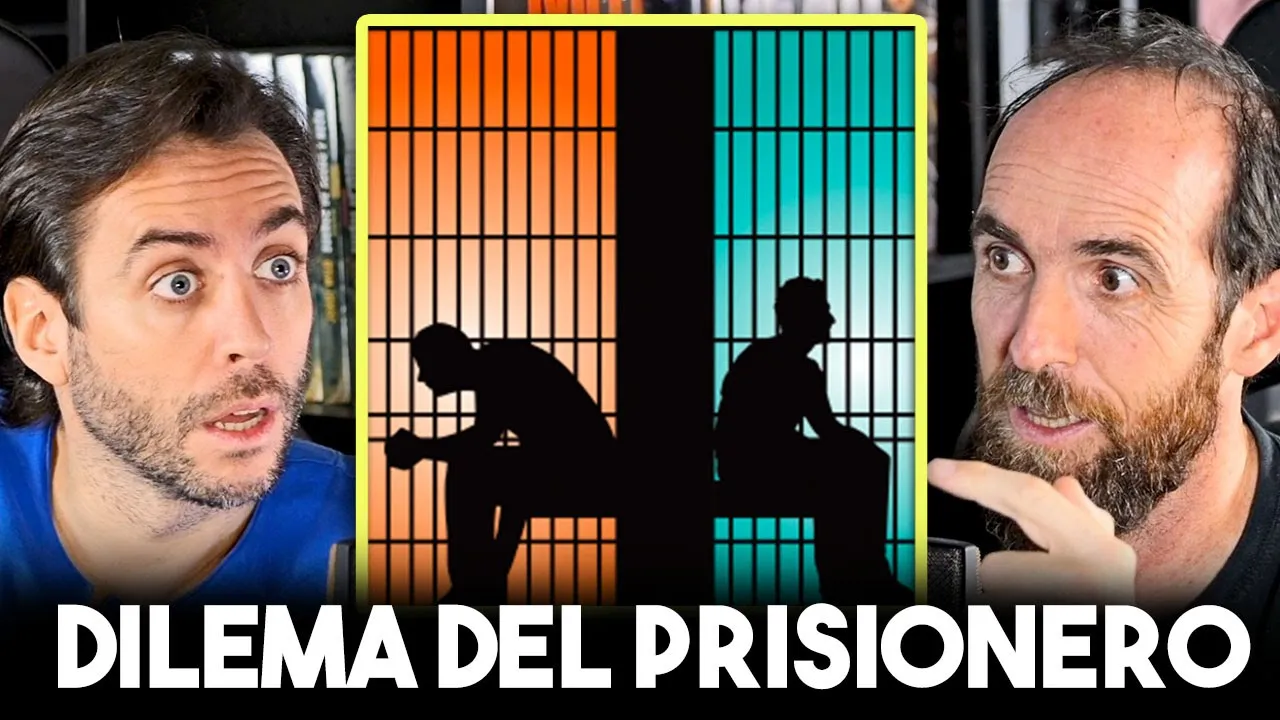
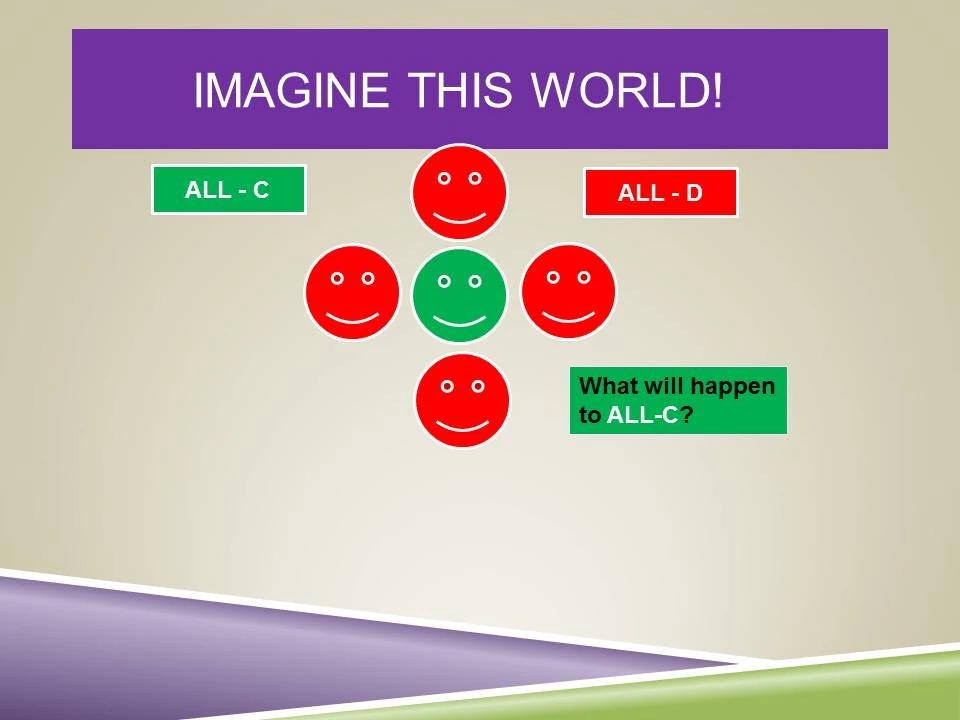


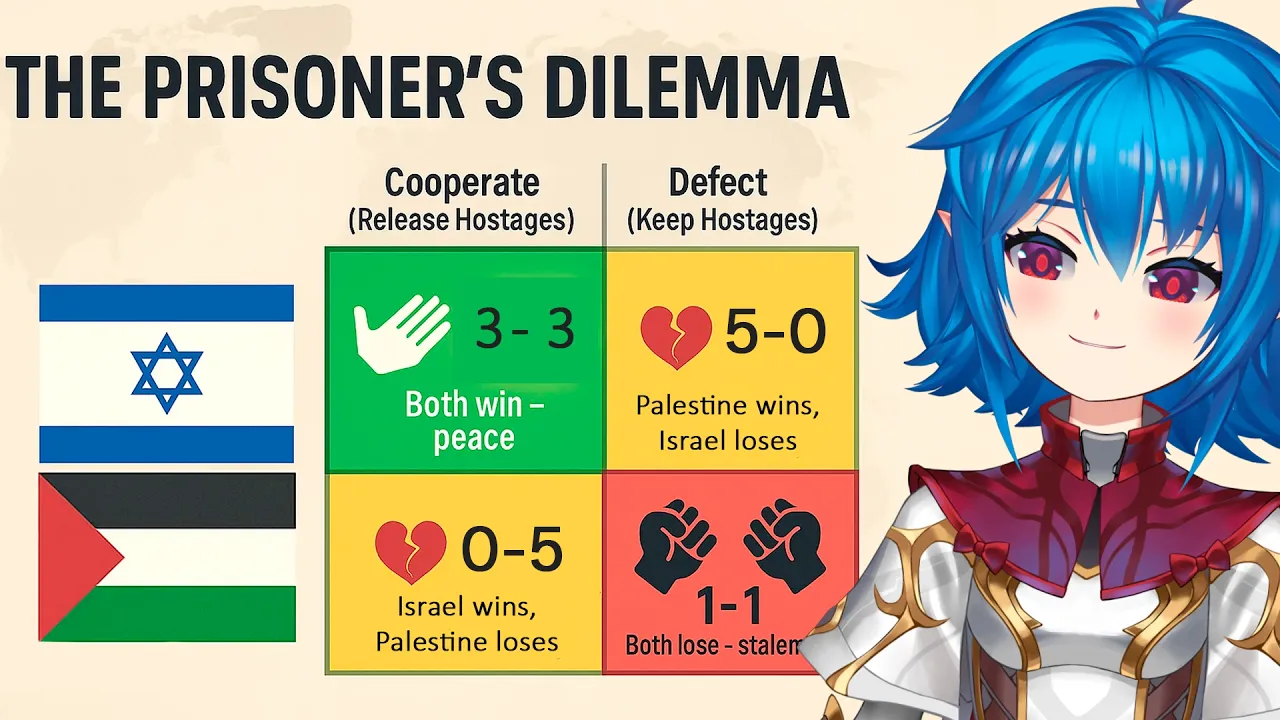






The Prisoner's Dilemma demonstrates that when individuals act rationally in their own self-interest, they often end up with worse collective outcomes than if they had cooperated; this occurs because each person's optimal choice (betraying the other) leads to mutual punishment, even though both would be better off if they both chose cooperation, illustrating why cooperation is difficult to achieve in situations where individual incentives conflict with group interests.
The Prisoner's Dilemma: Game Theory & Rational Decision-Making
Added:The fundamental definition of Game Theory, including components like players, strategies, and payoffs.
The concept of 'rationality' in economics, where decision-makers aim to maximize their own utility or payoff.
How to read and interpret a basic 2x2 payoff matrix representing two-player strategic interactions.
The distinction between individual self-interest and collective or social welfare.
The concept of Nash Equilibrium, where no player has an incentive to unilaterally deviate from their chosen strategy.
The Iterated Prisoner's Dilemma, exploring how repeated interactions and strategies like 'Tit-for-Tat' foster cooperation.
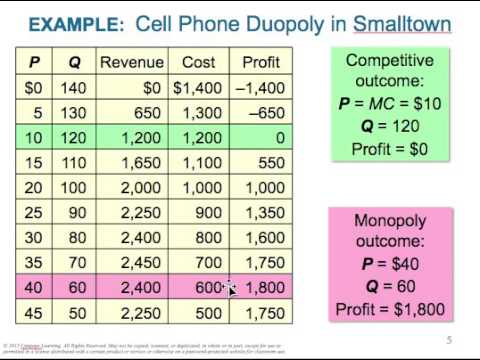
Real-world applications of the dilemma, such as the Tragedy of the Commons, global arms races, and oligopoly pricing.
Methods of overcoming the dilemma, including the role of binding contracts, social norms, and institutional regulation.
329.8K views14.4Klikes7:14Original Release: 2019-08-21
Let me tell you a story it's a murder mystery it's a human drama But it's also the most famous game theory problem ever proposed Big thanks to Nord VPN for sponsoring this episode Start protecting your internet experience today with seventy five percent off a three year plan and one month free when you use the code extra credits at the link below A call comes in to the station. There's been a murder the police rush out to the scene The scene's clean no prints, no weapons, no leads. it's time to round up the usual suspects and see who talks Word on the street is that Alice two guns McKenzie and Bob the knife Stefano did the deed?
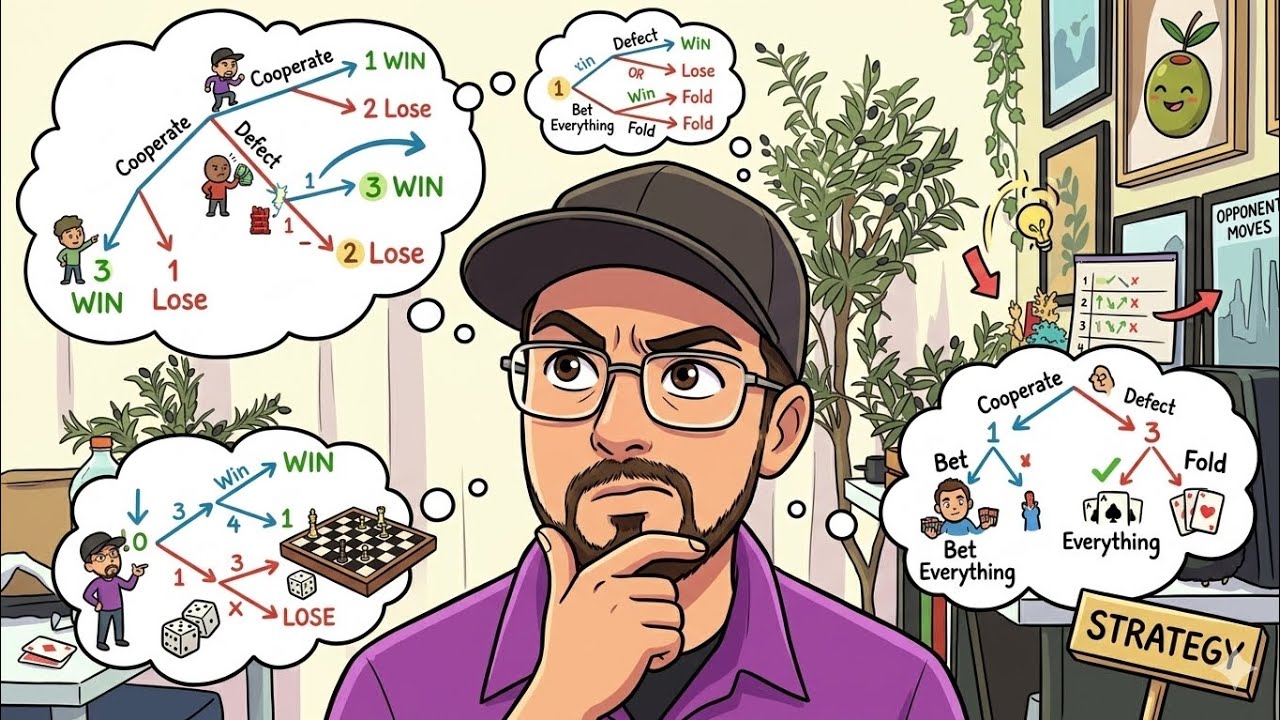
Everyone knows it, but no one's willing to go on record and help us make the case So it's time to bring in the suspects and see if we can get one of them to flip Alice and Bob or as our files refer to them a and B are in two separate holding cells. The detectives are pressing them They both have outstanding warrants for minor crimes So if neither of them talk they're both going to still get a year in the slammer But the cops don't want that. They need a conviction So they offer both a and B the same deal if they rat out the other one Then the one who did the squawkin gets to do the walkin no jail time and old warrants swept under the rug But a and B know that if they both blame one another the cops are just going to call them both Accessories to the murder and they're each going to get 10 years upstate They have no way to communicate with each other and they're told they have an hour to decide Time's up what do A and B do now assuming that there's no later repercussions like getting whacked for being a snitch There's actually only one rational course of action here But the reason this problem is so interesting is that that course of action is bad for everyone and it's why the prisoner's dilemma serves to provide us with an understanding of why so often as a Species or as a group we'll all agree that a particular course of action is bad and get proceed to do it Anyway, how well let's look at the prisoner's dilemma more closely You can think of it as a 2x2 grid with participants, choices, and outcomes So as you can see here if a turns over b and b Stays silent a gets to walk out free and B gets a lifetime in jail If a stays silent and B turns over a then a gets a lifetime in jail and B gets to walk free If they both rat each other out though, they both spend 10 years in prison And if both stay silent they both get off with only one year in jail So what's the best option for the two of them to both stay?
Silent if they did that they'd serve a sum of 2 years total, but what's the best option for either of them individually?
Clearly to turn state's evidence because in this situation it's the choice You'll never regret if your partners stay silent and you give up the goods on them You get to walk away free, but if your partner tries to pin the murder on you, well at least this way You're only going to be serving 10 years instead of a life sentence If both players are playing optimally for themselves, then the only logical choice is to blame the other person in fact the only outcome where neither Participant regrets their decision or feels as though they should have done something else when both players decisions are revealed is both a and B blame each other This is called a Nash equilibrium and it's something we might talk about in detail some other day But you can see that outcome is actually terrible even though it's the only rational choice from each individual players perspective This behavior comes into play all the time in teamwork based games ever play a mobo where one player hogs all the kills This is why or if you've ever been in a game where one of the DPS characters spams I need a shilling when it's clear You should be healing the tank the root of that behavior can be found here, too but nowhere is this clearer than in the real world and a great example of this is as a group the overwhelming majority of nations agree It would be best for the world if we banded together and did something about climate change But let's look at that decision grid for any individual country Your country can either opt in to lower its carbon output and pay for research or not If you do and the rest of the world does not then you're baring the majority of the cost your economy is weaker for not exploiting fossil fuels and climate change still isn't solved because it required a group effort if you don't and the rest of the world does everyone else is left shouldering the cost of fighting climate change while you Still get to reap your oily rewards if you and everyone else decide to actually fight climate change Well, then you had to bear some of the costs but climate change might actually get solved and finally Let's say you nor any other country tries to do anything at all Well, at least you didn't have to pay any cost for trying so with all that in mind What's the only rational answer from an individual actors perspective to not try?
Of course, this is terrible reasoning and it shows the fundamental problem with the prisoner's dilemma It's not actually how real-world problems work. It's a simplification that ends up leaving out a lot I mean on the positive side There's all sorts of ancillary benefits to getting off fossil fuels or developing alternative energy technologies or if Alice rats out Bob she's going to have to watch her back for the rest of her life, which is a pretty big negative Unfortunately people in real-life situations do often think in terms of the prisoner's dilemma Especially when those individuals involved are actually large bureaucratic organizations like governments or corporations Which leads us to a world where individual actors are?
Continuously making decisions that appear to be the right one for them that really end up being worse for everyone themselves included but with all that said we can actually end this episode on a positive note because a large number of psychological studies have shown that at least when dealing with each other as active individuals as Specific human beings where we know other human beings welfare are at stake. We tend to choose cooperation Perhaps it's an evolutionary holdover. Perhaps it's out of some sense of fairness or community, but we do often opt to work together Well beyond the bounds of any statistical noise, so in the spirit of that Please don't be an Alice or a Bob or even a bad Genji because sometimes the best possible outcome requires a decision That doesn't seem best for you. We'll see you next week once again Thanks so much to Nord VPN for sponsoring this episode and solving my personal dilemma of how to protect my information online Nord doesn't log and keep your data which means it's not being saved and shared with big brother plus they use military-grade encryption have 24/7 customer support and use thousands of servers across 60 countries one of which our internet overlords think I've logged in from right now [laugh] start protecting your internet experience today with 75% off a three-year plan and one month free by using the code extra credits at the link below Subtitles by Dylan Miller
Up Next

1:51
The Tragedy of the Commons Explained | Shared Resource Dilemma
@NSFScience
223.4K views•2011-12-08

5:07
Impact of Yuan in Indo-Russian Trade Amid Sanctions
@WION
261.9K views•2022-07-01
10:33
Behavioral Economics Explained: Rationality, Nudges, and Risk
@crashcourse
1.1M views•2016-03-12

113:18
The Age of Easy Money: Fed & Inflation | Full Documentary
@frontline
21.2M views•2023-03-15
Related Study Plans & Knowledge Roadmaps
Structured learning paths in Economics
economics
Sovereign Debt: Defaults, IMF & Restructuring
01Introduction to Sovereign Debt & Government Bonds
02Debt Sustainability & Credit Ratings
03Anatomy and History of Debt Crises
+ 2 more learning modules
12h5 modules
Explore Roadmap
economics
Market Design: Matching Theory & Gale-Shapley
01Introduction to Market Design and Price-Free Markets
02Two-Sided Matching & The Gale-Shapley Algorithm
03School Choice Systems and Mechanism Design
+ 2 more learning modules
10h5 modules
Explore Roadmap
economics
Impossible Trinity: Forex, Capital & Policy
01Introduction to Monetary Policy and Central Banking
02Exchange Rates and International Capital Flows
03The Mundell-Fleming Model
+ 2 more learning modules
8h5 modules
Explore Roadmap
economics
Healthcare Economics: Market Failures & Systems
01Introduction to Healthcare Markets and Market Failure
02Asymmetric Information and Adverse Selection
03Moral Hazard and Insurance Design
+ 2 more learning modules
12h5 modules
Explore Roadmap