
















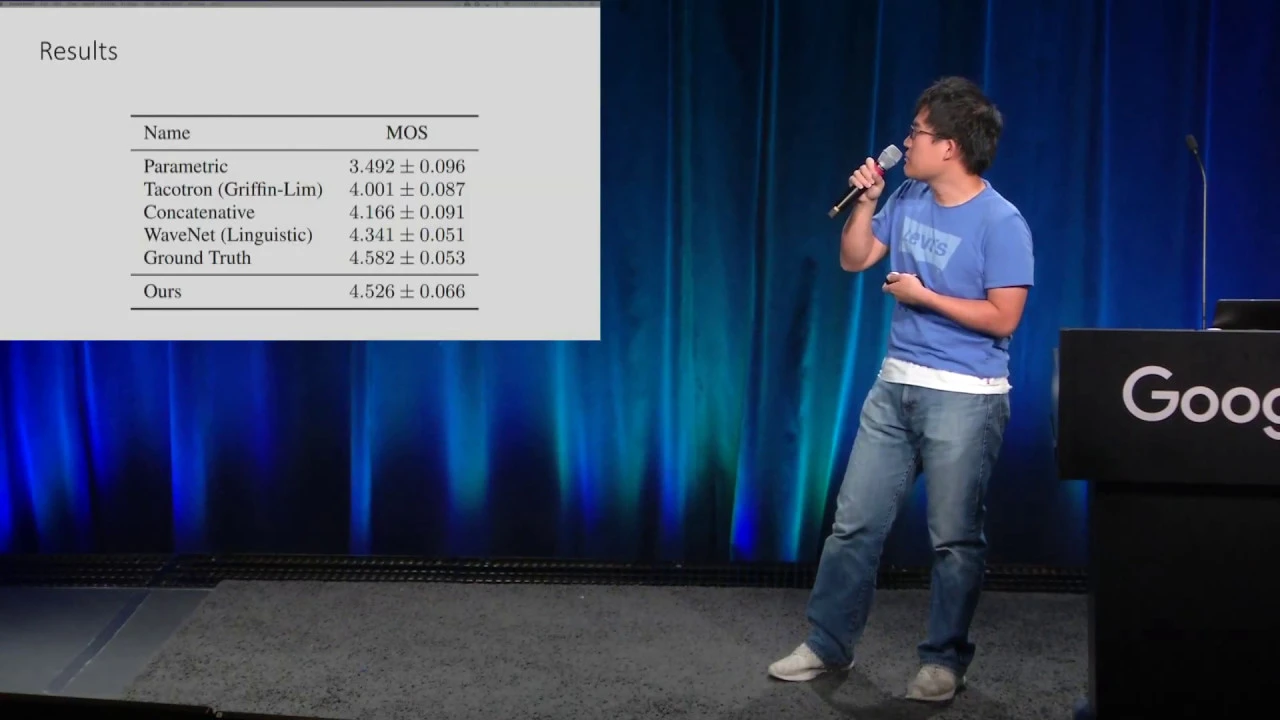

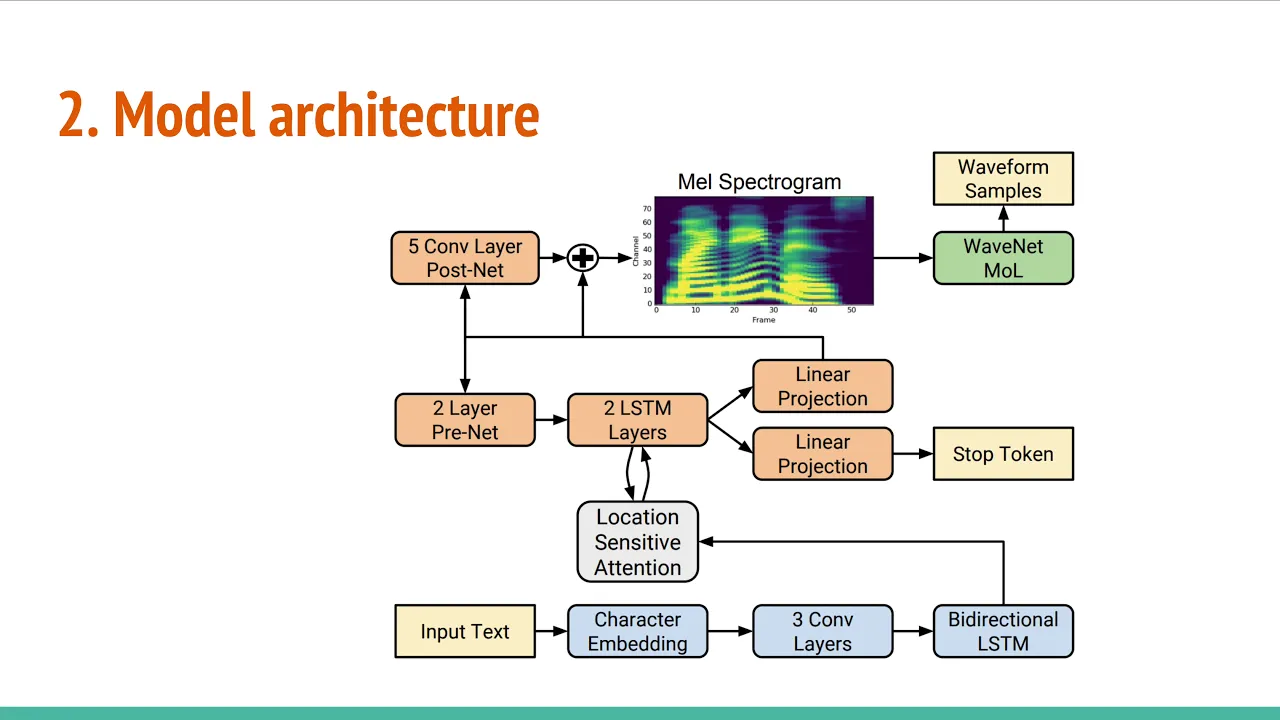





![[토크ON세미나]딥러닝 기반 음성합성(2) 4강.최신음성합성모델-WaveNet Vocoder, FloWaveNet, WaveGlow, Parallel WaveNet](https://i.ytimg.com/vi/FGoUrDKWkQQ/sddefault.jpg)



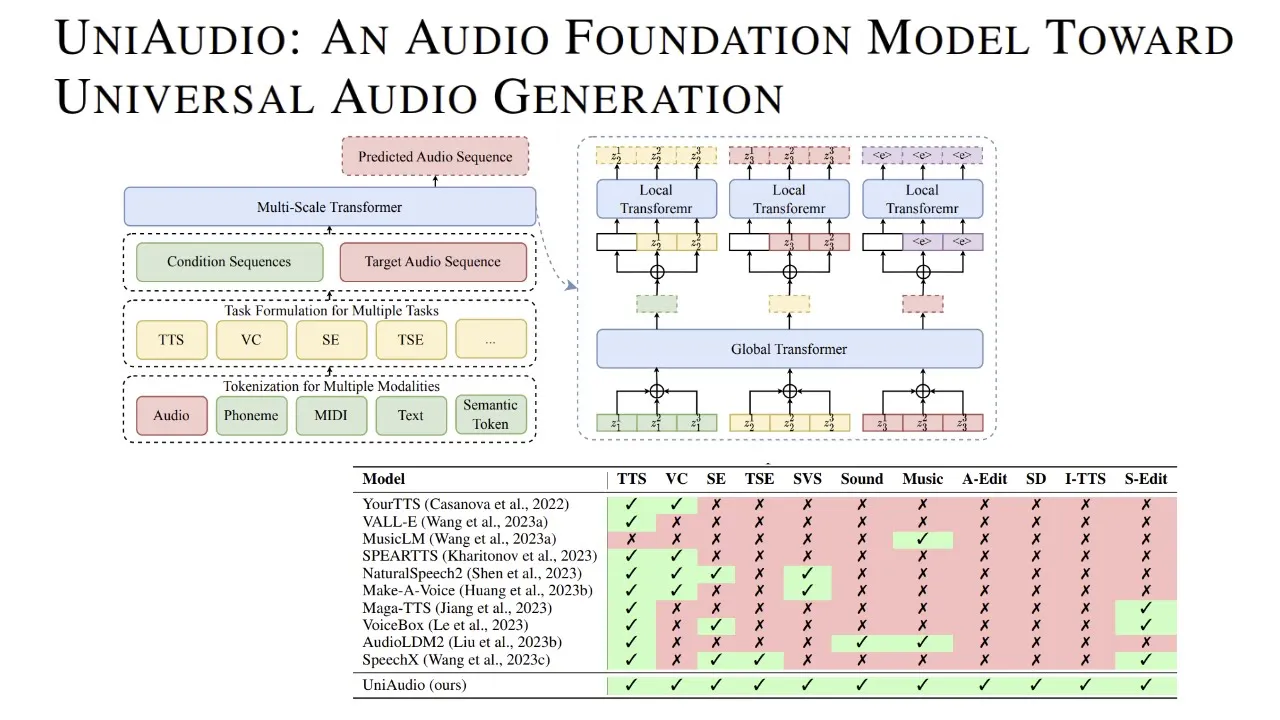

WaveNet is a generative model for raw audio introduced by DeepMind in 2016 that solves the vanishing gradient problem in recurrent neural networks by using causal dilated convolutional layers instead of traditional RNNs/LSTMs. The model employs a stack of residual blocks with exponentially increasing dilation factors (doubling at each layer up to 512), allowing it to capture long-range dependencies in sequential data. Each residual block combines tanh and sigmoid activations with skip connections to maintain gradient flow. The architecture processes signals autoregressively, predicting the next sample based on previous ones, and has applications in text-to-speech synthesis, speech-to-text transcription, signal conversion (ECG to PPG, MRI modalities), and gesture detection from EMG signals.
Implementing WaveNet from Scratch in PyTorch (Paper Explained)
Added:hi there in this tutorial we want to walk through the wavenet implementation in pi torch and as you can see the wavelength is introduced by deepmind in 2016 the time that there was no attention and transformers to the use and the wavenet came when they planned to replace something with lstm because of some problem with the recall neural network like gated recurrent you need gru or the lstm and the problem was suppose that we have these inputs like input number 1 2 3 2 i guess 16 um so we can apply each of them to lstm and if we say this is one lstm cell this is another lstm cell so we apply this signal or a sample of a signal here and it calculates some latent features and send it to the near cell and the information from these two cells one is this one one is this one is coming to this cell and it's going forward we have some some sort of recurrence information between time samples but the problem was we have a vanishing gradient so the effect of this cell on this cell is somehow vanished and in some signals for example if we suppose an ecg signal and suppose that we want to predict the next component and the next component we know that should be a p signal if you don't have a t and uh it should be related to these parts which is far away and usually lstm look at the nearest neighbors like uh the lstm look at these parts more and then when we go further the guardian vanish happened and we we don't have much information some methods came to introduce the escaping connection like i will escape this to this point i will skip this to this point and they were increasing the compositional cost the lstm was slow and it became slower when they have all the connections and they can be bi-directional is that not only we get the information from this way we can get the information from another way and yeah yeah those complex architectures came along for processing a sequence but the wavenet has a smart view to solving this problem not by using the recurrent neural network but just by using the convolutional layers to do a sequence processing so what they are proposing is create autoregressive model and autoregressive models means that we want to solve this problem then we have sample from time one to time t minus one and one predict the next sample we can extend that like after we predict the next sample we put it to the system again and we predict a next sample that can be continued forever the way that they are proposing away is using the causal convolutional layers and dilation causal term coming from the signal processing means that we don't have any information about the future of the signal so we only process the previous samples and so we get the sample of these two points apply a convolution or applies whatever we want to do and if you look at the last output which is uh the next sequence it get the information from last four sample and if you want to extend that there are there are two ways like increasing number of layers so if you have more layers it it can get like from six input samples or from seven input samples but increasing layers is not a good idea always because we are increasing the complexity and they introduce another way is a dilated causal convolution layers which means that we use a dilation factor and convolution and we ignore some points in the middle so for example if i use dilation uh 2 which means that i am applying convolution but not on these two but i ignore the middle points and i apply it on these two so in that case i'm um for for predicting this output i am using the for information from all 16 inputs here the way that they assign dilation is they double for every layer up to a limit and then repeat it so it is like 1 2 4 2 512 and again they have a larger receptive field they they call it receptive field in the paper so the receptive tool can be increased this is the visualization of a stack of dilated causal convolution layer and if we go further we see the figure four which is the whole architecture the entire architecture of the wavenet so we have input and we apply causal convolution on it these stacks here you see there are some pages stacked together they are figure three so the way that we define each circle here each layer here is defined in figure 4 like this so we get an input we apply the dilated convolution on it and we apply a tangent hyperbolic activation sigmoid activation we multiply them together and applied another convolution layer with kennel size one and after that we have two output one output is coming from these residual points and one is the skip connection so the convolution layer here can be two different convolution not not just one so we have two convolution with size one one for creating a skip connection one for going to the next layer so the skip connection here is like somehow we get the information from this channel we can apply like max cooling something like that for getting the information from each skip connection we can get the information from different layers to avoid the vanishing gradient so what we wanna implement is this part the main part is the the stack of residual network here and after that we should get the skip connection and apply a relu function and apply a one by one convolution layer again another relu to get the softmax and get the output which is the output here the last sample the output here or this one the xt so let's see some of the usage of wavelength so they said that they can use the wavenet for multi-speaker speed generation for text to a speech so we have a text and we want to convert it to a speech and it can be vice verse we have a speech one converted to the text and for converting two signals together like suppose we have a ecg signal and we get the ppg or converting methanol cg to fetal ecg or another example is like converting the t1 weighted images in mri to t2 weighted and vice verse but as i said this is a a little old in 2016 because there are lots of advanced methods like transformers and different kinds of transformers emerged after 2017 and they can get better accuracy than wavelet but still they have not worse to look at so they said also they can be used for text-to-speech and for music generation uh also for belongs to separation they can use signal classification like the gesture detection from from the emg signal let's dive into the implementation so i have created an empty project called wavenet and i will create a class here the name of wavenet and first thing we want to create is based on the block diagram is the causal convolution and because we have dilation implemented in pythos we can create a causal dilated convolution and if you want make dilation we can passing a value to it if you don't want to dilate it we can pass one so we can create a class that covers dilated convolution and causal convolution i will create a causal dilated convolution and it should inherit from an end module i import from torch i will create init method and i will define the forward mode we have conf 1d we can create convolutional one dimension in torch and it get the number of input channels so i can say in channels out channels and i pass these two variable to the class so these are parameters that we need for creating a causal uh dielectric convolution and we need a kernel size we pass that too yes right is one i suppose there is no padding because it makes a little more complicated and dilation is something that you can pass to the system and i say bias is equal to false i don't want to buy us yeah so we need to pass the kernel size and dilation what's the difference between the causal convolution and convolution that we have defined here i have prepared some shapes it's not called convolution is like this so for this example that can size is three how many samples we want to remove from output to have the causal convolution it's probably two because we don't want to have the result of convolution on these two it means that subtract one from it to calculate how many uh output should be ignored and if you have dilation the relation should be multiplied so it means that if i wanna calculate ignore output ignore out index i can call it so it is the kernel size minus one multiplied by dilation and for calculating the result i can say return the convolution on the signal but i want to get from first to minus ignore out index okay so it means that we ignore some of the last samples that calculated by the convolution so so far if we back to the diagram we have created this part and we want to create a residual plug so the residual bullet is created by a dilated convolution italian hyperbolic and sigmoid activation multiplied and another one-dimensional convolution so let's back to the code and let's create press block let's create a class called wave net we get a signal and we want to apply a causal in the first the first that we want to apply the cause of convolution we don't want to we don't have we don't have any dilation so i initialize self causal conf console dilated convolution one dimensional and i use this class but we need number of impulse number of outputs so everything come here number of input channel number of output channels so and what else we need to do is dilation so we use all parameters here what about the dilation i want to create causal conf that's why i do not pass any dilation i say dilation is one yeah and same we want to create dilated in this case we need to pass a dilation but as paper said we need have different different kind of dilations we suppose that each stacks have same number of layers so we need to pass number of stack size and layer size based on that we need to create a function we say build dilations so build dilation get stack size and layer size the paper said that suppose this is a stack stack one the dilation in each layer suppose it has like five layers it should be one two four in power of 2 so 8 16 and until 512 here i want to say for stack in range stack size and also for layer in range layer size so i want to create dilations and dilations can create it by two in power of layer so for each stack i can have a dilation that's better and i can say dilation for all the stacks okay and here after we finish the loop append this dilation return dilation using numpy i can import numpy so we can say import numpy smp and i can say np vectorize that function that is build dilation vectorize and i can use that build dilation by just passing the kernel size and stack size this is function with calculation i just remove the s so we have a numpy array here and they have to return relation for all dystaxia and we're supposing that we are not exceeding the number of layers otherwise we have to take care of two start from one again after like 10 layers so we just suppose that the size of the network is not that big now we have dilation so we can create different causal different causal diletted convolution layer for each stacks and for each layers let's back to the residual block so we have this dilated convolution in the residual block okay and we need to pass again number of input channel number of output channel the kernel size and the dilation this is just one dilation and after we have that we need we need to find two activation functions so i use tangent hyperbolic and also we need sigmoid we need also two convolutional layer one for this residual and one for skip connection so we will create these two so the channel size here is one so first thing we need to say i want a causal convolution okay and i want to apply an x and get the result back and i want to apply two activation function one is tangent hyperbolic we call it x1 and another is the sigmoid okay and call it x2 and i want to multiply these two x1 and x2 together and after that they need to pass from a residual connection so i i may call them x again as we said we need a residual convolution layer so just to not remove the input so i change the name of the input can say this is input x and we have input x here and we have x and we can sum input x and x and put it in x again so we have this is a residual output maybe i can call it res output also we need to apply the escape connection so the self skip convolution 1d should be applied on x and this is a skip output so we have implemented these parts we have all skip connections and residuals and we need to return both we need to return the residual outputs and escape outputs so one of the thing that we forgot is uh so here we have residual block but output size of the escape maybe is different than the output of the residual so it's better to have a different output for that you can say this is a skip channels how many channels we have and here we can use the skip channels the residual outputs come again to the input so it means for this block which is the residual block the input and output has same shape so we don't need to pass two different things instead of having two things we can say just residual channel because we have a skip channel there so you can remove this part and i just say residual channel which is here and also it's coming here and it's for residual convolution the output also is the same and for the first causal convolution we have again so are just making it a little simpler so we have residual channel coming for skipped connection for input and output of residual block and we need a stack of residual block and a stack of residual block here you will see that we have created ones and we have to create them in k layers so for creating that stack it's better idea to not have information here but create another class a module called uh stack res residual blocks so in a stack of residual what we need to get from the wavenet so far is the layer size and the stack size i think that i can put the build deletion instead of there here and i can say build deletion function and i can do the vectorization here i'm just moving everything from that part to here so i can initialize the residual block and what it's need is the residual channel so that's why i need pass a residual channel here and also the skip connection and kernel size okay and here we put everything there from the residual connection to kernel size we can make it more simpler because this is like a stack one and we have another stack another stack and we don't need to put them in different array this is just for making it more clear so in other words for each deletion per stack and i can say for deletion in deletion in per stack so if i do something like that i can create a residual block and what else we need to pass here is dilation so we can pass the dilation here and this is this is one of the residual blocks so i can create residual blocks and for making it accessible for all set it as a class parameter so what we are doing here is we are creating a stack we just putting putting them in a list and then we want to apply it so we have an output the residual output coming here another residual output coming here and it's start from one to five hundred twelve yeah and again i start from one and five on the twelve and so on so let's back to what we were doing so we have residual blocks and we want to do the forward function for residual block in cell breast blocks and we get two output because this is the residual block one is the output and another is the skip connection but the first visual output is x this is more clear when we wanna see what's output of this and also we need to stack the skip connection so we can say skip outputs and we add them to to a list and what we want to return from this is the residual output and the escape output but we wanna have a stack the stack of skip outputs okay so this is a stack of tensors we can go here and create and a stack of residual block and we name it stack residual block the input is the stack size so we get it from the input we want to get the layer size the residual channels which is as input channel and the skip channel number of skip channel so we need pass and skip channel how many skip channels we want and we have the kernel size the skip channel coming here and apply on the one-dimensional convolution so uh the output size is equal to the skip skip connections let's keep channel so that's why i can say this keep channel and output are same from this figure you can see that there is a causal convolution and there is a layer here i call it like a dense layer so let's create that dense layer i i'm gonna create it here so a class dense layer so here we are getting the skip connection you're getting the skip connection and what we want to do with this keep connection is using the torch sum to add escape connections together our assumption is the escape connection that we are passing to the system is created of number of batches uh the number of channels and the number of time samples but because usually we have number of channels in the last so we have number of time samples here or samples here number of channels here so i want to reduce it over which dimension one reduces on dimension two okay and i want to get the output here and we want to define the relu and what else we need we need to define a convolution and we need we need to have the input channel output channel and i know that the the output channels it's not important for us we have on the input channel we can pass only the input channel and the kernel size is one and dilation we don't have any dilation but it is false now can remember which is not right is this one and this one that we don't want to have a causal convolution there that's why instead of causal convolution maybe it's better for for these two i change them after the output we need to pass it from rouleu and to convolution in other ruling convolution so it would be self that relu out and self that this is another out and we will have self that convolution when we get out so i want to do it twice so i can say for i in range to do this so this will be applied twice and and what else we will have a soft max and the output i can say out dot softmax and we can return it back and instead of having this function maybe it's better to have like relu we have self dot soft max and n n dot soft max with peak s and here i can pass the dimension on t so that's why i select dimension one here rest of that we can say return to self soft max after applying the out okay so we have the dense layer we can use this dense layer initialize it and the dense layer get the number of input channels which is equal to number of our channels here okay what else we need so we have everything so we have only we only need the causal convolution so i can define the causal convolution we have and definition here causal convolution and we don't we don't want to have a dilation so it would be causal convolution and the input channel and the output channel of that it's equal to the input channel and we don't have any direction as i said yes and let's finish the whole process so first we apply the causal convolution on x and we get another x then we apply a stack of stack residual block and we apply x to it and we will return two things the residual output and the torch stack for skip connections we don't need the residual outputs because we are using the skip connection we have the last last layer here from the last residual connection so we don't need it but if we need it we can use it for something else like predicting two different things in the same time after they have dense layer which get the skip connections and return the output tool so seems that we have implemented everything and it's time to test up here we can create a new test and go to the project folder and create another folder called the tests and hit ok and create test wavenet so we have test pigments first we want to call the wavenet just by some random values and see if we return something back and we can have a real example then for this purpose i only need the wavenet so i just call wavenet and wavenet is uppercase and what we need for wavelet is number of input channels so i can say my input channels one i i don't need to define itself because everything can be defined here so i i only have input channels and i need output channels how many channels we have in output so we have output channels i think maybe one so we are converting one channel to another channel what else we need a kernel size i suppose that kind of size maybe just for example it can be three and what is the stack size it's as essex as you remember it it's how many stacks we put together i just set two and how many layers we have i just set it to like five okay so we have our wavelets and i can run test run wavenet just to see that it is working or not so we need wavenet and we need pass and input so we need an we need an input what is input the input can be defined using the parameters in pi torch so i can say from torch import nnn and here we need an end that parameter can use import numpy as np and you can use np that random and the size is i set the number of channel the input channel and how many items is in is in that signal so i'm supposing that i have a windows like i'm not feeding a whole long signal i'm just feeding like 200 samples maybe so sample size is like 200 it can be more like 2 000 so i am using a 2000 so this is my input but we need to make a batch so what is a batch size batch size is suppose the battery is eight and for that repeating we can use from inops i can import repeat so you can say repeat the self input i want to say we have number of channel number of times sample size and we want to change it to number of batch number of channel number of time yeah and we need b which is the batch size okay that's it and we need to assign it to self input everything should be okay this is our output and if i just want to see the output i'm not sure that we will get the correct result but one of the other things is here we say number of channel number of t but it's not right so usually we should have vice versa you should have number of sample size and after that number of charms that's why we'll change these two for readability this is this is exactly the same thing that we discussed that here that we need sample with patch size time and number of chat so let's run this data position to must be 10 so not numpy array so here i can say torch i can import torch that rand n so let's see what is there it said giving groups weight of size one one one by one by three expected input these size to have one channel but got two thousand channels instead so it's it means that the convolution is supposing that uh the channels is here in pytorch we need to have a number of channels in the middle so we have number of times here number of channels in first we have something like this so we need to change the wavenet because what we were supposing is different we are getting the c and after the t so when we want to do skip connection we have to run it on channels and we want to when you want to do soft max we need to apply dimension i'm i'm not sure about these two parameters still so it said that got three dimension expected four dimension input for four dimensional weights so because we have dilation here and we are this is this size is same we have a dilation here and then we want to add this signal to to the signal one because this is causal we are removing some of the part of the removing some some of the part of the residual output because of causality and we have to do the same for input but for input we are more interested to the latest samples this is not in the future but it is in the current stuff so we ignore some of the sample from the first just to solve this issue so this is one of the things that we have to take care about we can write something here like calculate in the paper i didn't mention it as feel of you said receptive so we can say receptive field okay and it it needs the stack size and layer size so we have stack size so we have for each layer in layer size so we are doing this okay so this is uh the dilation of each layer but when we have a stack size so we are multiplying the receptive fields by the stack size so if i apply mp that sum on it i am calculating the receptive field so why i'm doing that because i can create another test calculate receptive field so when i want to calculate receptive fields it means that i want to have a self wavenet they can have a stack size as in parameter and self.layer size is equal to layer size and here we're not going to pass them i can pass the stack size and pass the layer size okay and here also i don't need to pass them to a function we can say this is a layer size and this is a stack size okay in that case if i wanna show you the receptive field of this network you can say self.wavenet calculate receptive field and print it i just want to print it's not the unit test i just want to show you that so it said it is 62. so with two stack and layer size five the receptive field is 62. so we can also calculate the uh output size so we can say calculate output size and output size if we get an input and we know the receptive fields we can calculate it easily so we can say x that size 2 minus the self calculate receptive fields is the output size so it is output size and just to be sure that this is not a fallout so we do something like that yeah we need to do some same thing but we applied to input so we can say skip output is skip output and this but difference here is we need to have the same size and every time it's changing size so we need to say what is the skip size we want to pick then we can pass that escape size to the input here we can say what is the skip size and every time we just get the latest of the skip size and it means that when we want to run the residual block in forward function here you know we need to pass the escape size and that skip size again can come here and go to and come here that when we want to stack residual block we want to forward something we need the escape size so instead of passing the escape size one of the things that we can do is we can calculate the output size based on the input and we say skip size is equal to output size so it's exactly the same way that we can keep as much as information that we need i can't do something smaller than a skip size but i cannot do something bigger than the same size so that's the best way that we can do so another problem that i found is when you want to remove the last ignore out index from the output of the convolution for creating a causal convolution let's see the images again so we have this dilated convolution and every time it's come here we are removing some some samples because of the dilations and because we have different value for dilation the output of each layer has different shape and different lengths that's why i said you want to have a padding same to have the same output as number of inputs so the time sample should be the same in that case we can use our self ignore out index otherwise if you don't want to use that i've seen in a stack overflow through causal convolution they just ignore the last index and that's okay if you have a kernel size 2 and padding 1 but if you want to have a more general causal convolution it's better to have this if you see the figure it said that here we have dilated convolution it didn't say about the causal convolution instead of causal dilated convolution here we can have just the dilated convolution so we can pass like a variable here that do we want to have a causal or not then if we want to have a causal so we can return these otherwise we can return everything from the convolution so these two parts can be changed to make the code works so in that case if you run so you will see that we have the output and this means that the code is working and this is just a unit test we want to train the model on some data and to see if it is converging and everything is fine or not so i think now it's time to have a real real example using real data and for that i have opened the visual studio code just to create a jupiter notebook and i have a file here a csv file which is included from different times and there is a signal this is a physiological signal and there is open channel number of open channels i don't know what is the uh channel here but it was uh in the kaggle we have different open channels like two here one two two here so what you wanna do is you wanna create a time series prediction you wanna have these signals like supposedly have different time sample of signal so this is this is our signal here like this is in time t and this is in time t plus don't know n okay and we have our signal as open channel the last column here and every time that we have a signal we have a status of number of open channels and what you want to do is you want to have like this signal and predict that is this open or not and then another another window we can have these three and we can't say is this open or not okay so this can be so instead of auto regressive it is somehow a regressive model so we have these inputs as a time series they have dependency in time but you want to predict another signal or another set of space of that the other other application is like we have whole sequence here and based on this sequence here we want to predict like these two sequence it can be more than one prediction it can be multiple prediction because we are we are doing a sequence of sequence conversion okay let's create a file here and call it dmo.ipymd so the first thing we need we need to load the data so you can use pandas and if you haven't seen on those series i recommend you see the series we have provided and we can use read csv and we load the train command filter here so this is a data frame and what you want to do is you want to get signal and also you want to get open channels and you want to convert these two to tensor but for now i think the better way is to create a data set and then data loader and use a main loop for training the network let's do this so i will create a class called time series data set this data set should inherit from torch utils data and data set so we need a function defined as length and we want to get the length of data sets and also we need another function another method for get item and that gate item get an index okay we have a self here and also we need init function we can pass an x and y which we are supposed there are data frames so we can say they are pd.
data frame or maybe pd.series they are series so we only need these two and also we need another thing we need maybe i can just pass the df to make it more simpler and uh what else we need is so as i said we have a window we need that we need to find out what is the sequence length what's what is the sliding window lens so you can call it sequence lens and i'm supposing this is like 10 okay and what we are going to do here is when we want to get item we want to return self.
so for signal so we have df here so we can say self.df is equal to df and here we can say df if the data is too weak we have to just pass past the path of the data and here we load it section by section or in other approach that hand does allow us to load the big data in some chunks but for this problem we don't have an issue with that and we do not bother ourselves to do some advanced loading mechanism so we need to get the signals but most of this we can say i want to get from which rows from first column and for y i can say something similar but for second column so we have data frame loaded and if you if you just want to see the df that shape just showing you we have about five million records i wanna pass based on the sequence when i say give me the index for example index zero i'm saying give me from index to index plus sequence length so the sequence length should also be a parameter and i like to have a super in top and we can have sequence length is equal to sequence length and here sequence lengths can be used here and for y we don't want to pass the series like this you want to just pass one value and for that case so let me make it a little more clear so we have x and we have y and for y we want to get the latest value the latest value is index plus self.sequence minus one okay and we want to return x and y that's it now we want to instantiate that datasets i can do the instantiation here and because this is a class i can name it by uppercase i can name it uppercase and here i have my class i can pass df and i want to say every thousand any value can be used here and we have time series data set so we have time series loaded so we have our data set now we need to exploit it to train and test and create data loader for training and test purposes for doing that we can use torch that utils that data that there is a random split we can use that it said which data said you want to do a random split time series data sets and what are the lengths that you want to split it let me show you something so if i say length of the data sets we we haven't returned any length that's why it's i return as an non-type so the way to return the length is you say return we need a data frame so data frame and the first shape which means number of rows minus sequence lengths so if i do it again and run it so it will return us the lens because we have implemented the length method and here we can use this lens and we say i wanna seventy percent of the data to be a train and 30 percent to the test so i can say maybe this is cleaner so i can say turning numbers which is this one okay and here i can't say the whole lens minus train numbers i can replace this with train numbers too you can say torch utils data data loader okay and for data loader we need to pass the data sets the output here is two things because we have split the data first is train data set and second is test status for validation data so for training data sets we are loading data loader on it and data loader also need a batch size and we can do shuffling uh the batch size i said like eight it can be bigger but currently i'm not on a gpu i'm not working on gpu and next thing i said is the shuffling so shuffling can be true same things for test datasets and here we can say train data loader and here test data so we will create a generator for and loading our data if we run this so it will be run without any issue now we can go to our main loop so we can now load our models we have wavenet and wavenet needs number of input channel which is one number of output channels which is one number of kernel size i suppose it's three can be two also and stack size i suppose it is like let's make it a smaller so one and layer size is like three can be more than that like five and what else so i just put them out size so we can define what is our outsides let's let's look at the code there are some small changes we've applied first is here so we we get the outsize and that outsides can come here if our outsize is bigger than the skip size the skip size we calculated from the model if it is bigger than the camera is an exception that cannot be happened we can also can show some error message but if it is not bigger than a skip size you can use it for a stack residual block so in that case you will we can control the output size another change i've done is here so the input of the model is batch channel and t but there is a point that i forgot to mention here is the dense layer the final things are if you see the blue diagram the things that coming to the dance layer is a stack of escape connections so it is a stack of skip connection because append that i call it appended stack we append them and then we have the batch then we have the channel and we have the output size because we we cut the skip connections lens based on the skip size so this is the lens and if we have this lens and we want to apply some we have to apply some on the appended skip connection this should be fixed in your code and also another change is the softmax so you want to apply softmax not on the batches after applying this sum you're removing this appended escape connections therefore we have these sites and when i say one it means number of channels and we want to apply softmax not on the channels different channels you want to apply softmax on output size so this should be two okay these are fixes that we need to take care of i wanna solve this issue using the categorical cross entropy what what do i mean by that is so we have an output which can be any integer number after softmax and the number of outsides that we have defined here can be like a number of classes that we have so i'm i'm using the last layer instead of sequence the sequence modeling using as a classifier but if we don't want to do that you can just have our skip channels and after that we can connect our wavenet to another linear layer and create a new model called like classifiers based on wavenet so we can we can have different approach if you want to do that we want to have the output size here for that i can say calculate the max on this column the max is 10 so we have 10 different number of classes so here we can use this and i say i want to have output size in size 10.
the next step let's define optimization from torch we can use adam you can use different like adam weighted or different algorithm i just want to use a simple so on the parameters of the model i don't want to change default values and our last function these torches and and that cross entrophylas now we can say number of epochs i set it to for now just for one and we save for epoch in range box so we wanna what you wanna do is load the data loader for train data so we can say for a step and x data y data i say train data in y terrain in train data loader but i want to have enumerate on that and also tqdm i want to use tqdm to make it tractable for loop and for that we can say from tqdm import tqdm so we have our training data we need to pass the training data to the wavenet model there are some issues i will i will talk about that because we have here the series but we want to tensor but i will i will talk about it and this is our output and we need to say optimizer zero graph we want to make the gradient zero and we calculate the loss using our loss function between our output and y three and we say last should be backward and after that optimizer should go one step so the x terrain is as as we defined here and as we defined number of batch size it is like eight by number of samples but we need number of channels too and we have only one channel that's why we need to unexcuse x terrain on skus and on xtrain do an excuse on the first the zero is the batch the first is the channel as i said here zero is batch first is channel and the last is the time so we need to do that and we have x strain here just to be sure that extreme is followed not double we can also say fallout okay we can also show this is epoch but a book number can be here i want to see the loss so i can say print loss for a step so here i want to show the last which is last item and here i want to show this stuff and this is f so if i run this let's let's see some errors and fix those okay it said batch must contain standstill numpy arrows numbers these at least found honda series the things that we can do here is we return values we're moving from pandas to numpy so let's have a data set again load it and let's run this what else 9.64 object has no attribute values so uh the thing here is the the y is just one number and doesn't doesn't need to have values do this around this so we will have another expected target size 8 by 10 but got eight is happening here we have y output and y3 one of the other things that we need to take care of is the size here the output size should be maximum plus one because suppose if you have zero and one and we say what is the maximum it is one and in that case we are just setting the size output as one which is just one neuron and the classes were two it means that we we need two neurons but we only selected one so uh by checking the output size and white string size we can find out that the first input of the loss function which is the output of the wavelet model should be in size of batches and size of classes so it is it is correct and for white train we have also um it is not one hot coded it is just the number of the based on the number of item we have class number and loss function can handle that if i run this so i i can just remove these because there's no change they are i just unexcused the train data and after that i excused the output because we don't we don't need the channels we don't need the information in the channel that's why i think you can start training but for each loop i don't want to show a result i can't say gullible a step like 100 or maybe thousand and every thousand so if a step the mode of a step to global step is going to zero i can print the loss so if i do it now let's let's stop it again and i just wanna remove these two lines too so we it is training it's in 2.3 the loss is 2.3 the losses cross entropy loss you can also add the accuracy it's the loss didn't change as you see here but we should wait until we see any convergence so the system is turning and still there is no there is no effect on the loss another thing we can do is besides of having the loss we can have the accuracy because this is a classification and for accuracy we can find the maximum of the maximum element of the output for each rows and after that we can calculate the accuracy and in that case we will have accuracy but still the model is not is not practical and we have to change some parameters and find unit to make it work you can say that accuracy is dropped even for after training so uh now i'm thinking that maybe um having limited size of the stack maybe is not a good idea for this problem so it's better to get the maximum number of features from the escape connections but after having a dense layer i'm thinking that maybe it's better to have a linear layer because in this problem we we are working on a classification issue you can create another class like wavenet classifier like this so we can say they've net classifier for classification we are saying that number of input channel number of output channel the kernel size the stack size layer size and the output size here i don't wanna i don't wanna use this output size as the output of the model that's why i can remove these parts but here we can have a wavenet classifier and for wavenet classifier we can have output size okay and like before we will put anything here like the stack size the layer size the kernel size but this time we are creating a wavenet so this is a wavenet and we know that wavenet get all these parameters except the last one the output size but we also need have a linear layer it needs number of input features a number of output features so the number of input features can also be defined like uh based on the wavenet and based on the input to the wavenet we can define the skip connections so the escape size calculate output size this function which needs the input and we know the number of output layers which is this okay and here we just say self.
wavenet and we get the x back and we have our linear layer and maybe the soft max on the linear layer is good so let's define a soft max 2 so that's soft max and we have it in some of max we want to do it on last dimension and we can say self.softmax on the result and self.linear on x we can return this as a classifier output but this should be defined by the wavelet so that's why maybe it's better to pass the wave network instead of having all these parameters so i don't need a stack size stuff like that here i can remove them and i just need to pass i don't need a stackstar layer size i just need to pass wavelet this way which we know this wavenet is from class favorite in here i can't say wavenet calculate that output size and this wavenet can go to the wavenet and we can say self.wavenet calculate output sizex one of the things we can do is you can get the sequence length sequence length maybe it's better to be before output size the sequence length like this formulation can be used for calculating the output size of the wavenet so if we calculate the receptive fields we are like this and we have a sequence length so you're exactly on the right place to calculate the output size of the escape connections so this should work so if i use wavenet classifier so here i will say wavenet classifier wavenet classifier now use this level classifier whenever i'm using wavemap okay and i'm just passing if we see what parameters need the wavenet and sequence length the sequence length is defined here when we are defining the times so i can say sequence length here which is like 100 i can say maybe thousand so this is sequence length can be used for next parameter and you want to have output size which is this we don't have it here anymore so if i restart the kernel i have to resolve kernel to load everything cannot assign module before module in it i forgot to say super init because this is inheriting from an end module so i have to use this let's do everything again okay now we have a classification based on wavenet and let's see how these outputs can change during the iteration the last is this one you see the loss is reduced and from zero now we get 37 percent accuracy i hope it can be continued if i didn't have any problem again a little improvement with us it's a good sign we have a wrapper on the wavenet sequence of sequence modeling for classification we can see that there is a try to decreasing loss and seems it's working fine so i made some changes um for training loops so we have the bigger learning rate here and also uh remember that we had the wavenet outside here i just bring it back so we have a wavenet initialized here uh just for having it more killing our core so we have just wavenet classifier and i also tried the scheduler so every 500 iteration i will apply the scheduler exponential lr to the optimizer and i i didn't receive any uh improvement in performance with the schedule that i i was just putting here to show you that i have tried these and that other parts that i have changes this so after each 500 iteration we come here and apply the validation data set on the model and for for that we use no graph because we don't want to use the graph gradient descent here and we apply the model we apply the data to the model and calculate the accuracy and calculate the average of accuracy for 200 sample of data the reason i'm just putting this is because my cpu and my gpu has some limitation and data is really big about 5 millions records so um you can remove these parts and also you can make the bigger batch size here and try different sequence lengths here and i put this for training so remember that the loss here is loss for validation after some after each 500 we do a validation you can see it's it has started from 11 and it is increased for each 500 iteration i put it a lot i put it a lot on running so it seems that it can even be improved more but i stopped it here this is the way this is just i stopped the cell and keyboard interrupt and you can see that we could get about 74 percent accuracy i think we can get more if we let it to be trained for at least one approach it is not even one of it is half of a book and you can increase the epoch number here and also change the the kernel size number of second number of layers also one of the things that i've noticed is if we have some sort of normalization layer in between so we don't we didn't have used any normalization like patch normalization the layer normalization i think that would be helpful because i've seen sometimes the soft max is just showing one value it means the output of the previous layer is saturated so for getting better and better performance we can work with this model but as you as you can see with this data we could uh convert the model to like 75 percent i don't know the goal of this but um different different parameters like the sequence lens and the number of batches led it to be trained for more than at least one epoch and yeah so thank you for watching this tutorial and have fun you
Up Next

Building Your First Neural Network with Python and Keras
@misraturp
10.6K views•2022-10-14

Secure Multiparty Computation (MPC): Foundations & Challenges
@SimonsInstitute
7.3K views•2015-05-28

Bypassing Tor Censorship: Bridges and Pluggable Transport Guide
@Coding_ForEveryone
397 views•2024-06-11
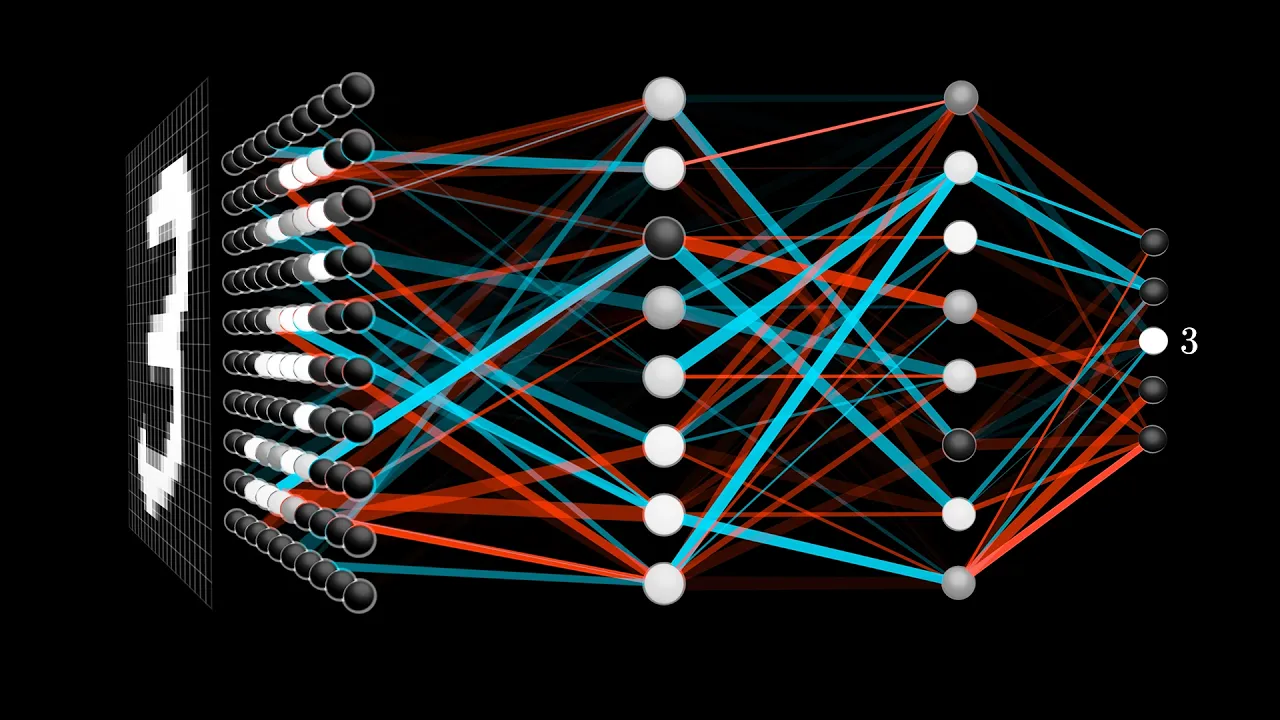
Neural Networks Explained: Math, Layers, and Learning Fundamentals
@3blue1brown
21.9M views•2017-10-05
Related Study Plans & Knowledge Roadmaps
Structured learning paths in Artificial Intelligence