


![Political Science Most Repeated Questions [100% CONFIRMED]⚠️ Class 12 CBSE 2026 Part 3 Human at Ease](https://i.ytimg.com/vi/o49U49-HPFg/maxresdefault.jpg)















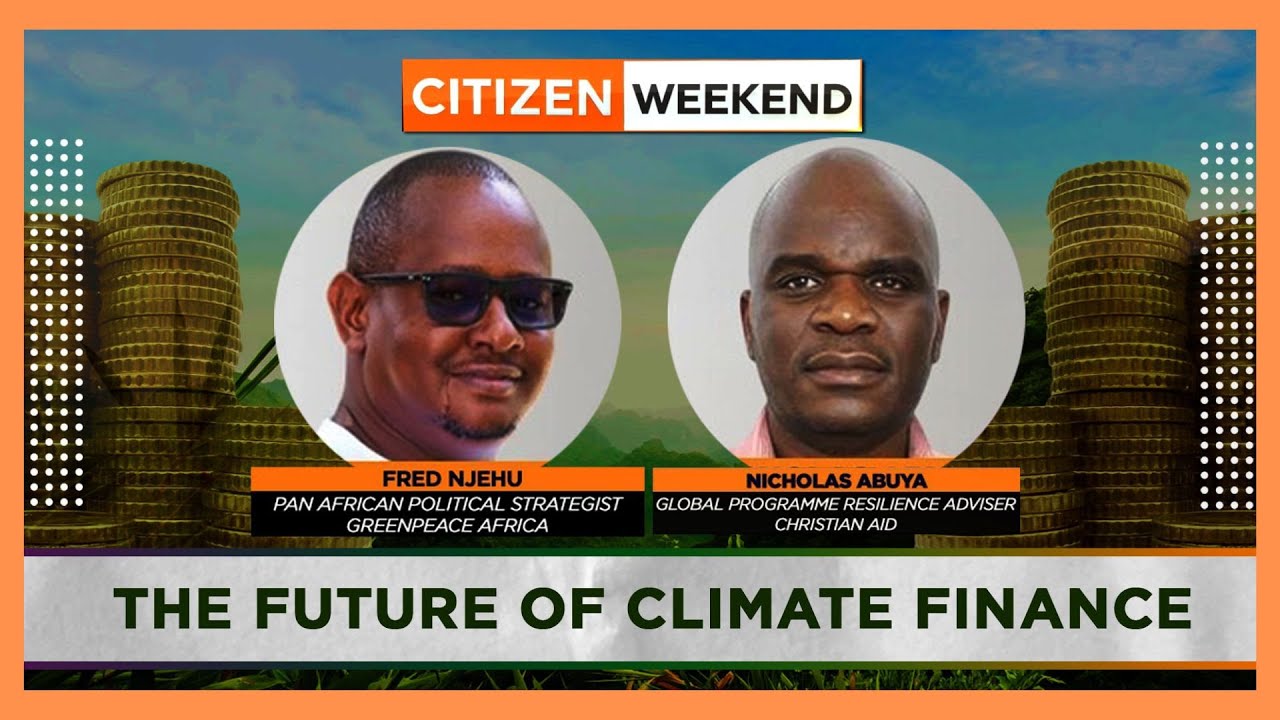





At COP27 in 2022, rich countries finally agreed to establish a fund to compensate developing nations for climate damage, acknowledging that historically, wealthy nations have emitted disproportionate amounts of CO2 while contributing least to adaptation costs; however, the implementation faces challenges including determining fair contribution levels, calculating precise damages, and ensuring sufficient funding beyond previous pledges like the unfulfilled $100 billion annual commitment, with proposed solutions including taxing fossil fuel company windfall profits, implementing pollution levies on aviation and shipping, and canceling climate-related debts for vulnerable nations.
Climate Reparations: Rich Nations' Liability for Extreme Weather
Added:The distinction between historical greenhouse gas emissions of the Global North and the disproportionate vulnerability of the Global South.
The concept of 'Common But Differentiated Responsibilities' (CBDR) established under the UNFCCC.
Basic principles of environmental economics, specifically negative externalities and the 'polluter pays' principle.
Attribution science: the scientific methodology of linking specific extreme weather events to human-induced climate change.
The operationalization and governance of the UN 'Loss and Damage' Fund established at COP27 and COP28.
International climate litigation and legal frameworks for holding sovereign nations and corporations liable for environmental damages.
Innovative climate finance mechanisms, such as global carbon taxes, debt-for-nature swaps, and the Bridgetown Initiative.
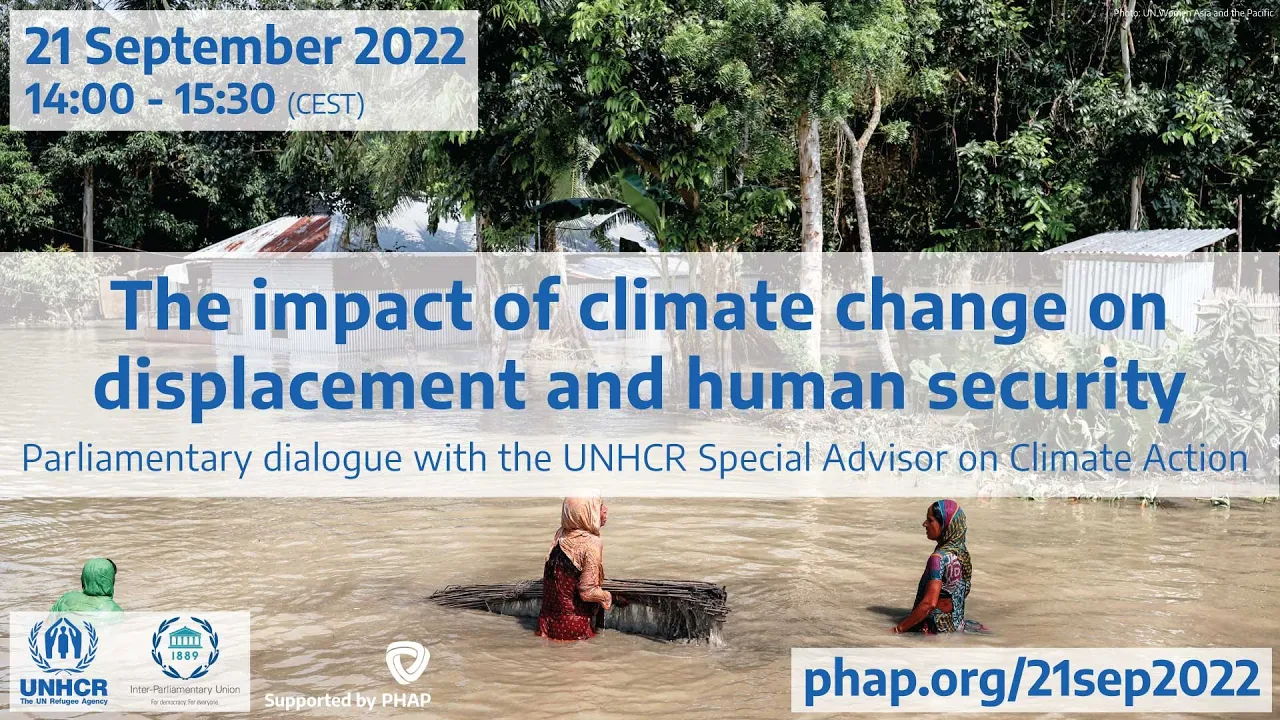
The geopolitical implications of climate-induced displacement and the legal status of 'climate refugees' under international law.
44.6K views1.6Klikes12:37Original Release: 2022-12-23
It might not look like it, but this right here – this is history being made.
"Hearing no objection, it is so decided."
"Today a historic step forward in addressing the effects of climate change in the developing world."
"A breakthrough agreement was reached at the United Nations climate change conference COP27."
"This is a very positive result for 1.3 billion Africans."
On 20th November 2022, the rich countries of the world agreed to set up a fund to pay for some of the damage they've done by heating the planet.
By burning fossil fuels, their citizens and industries have done the most to make heat waves hotter and coastal floods stronger.
But they'd refused to talk about cleaning up the damage.
"We should not be apologizing!"
"...already hurting hard-working Americans that are struggling to keep up with these lofty ideals."
"This is a folly, a folly we shouldn't be going down."
The richest countries are terrified of being held liable for violent weather.
But the poorest can't afford to pay for other people's pollution.
So should the rich world be paying for the damages – and if so, how?
The first thing to know is that people in rich countries have burned more than their fair share of fossil fuels.
We were the first to industrialize.
We built factories and burned coal, belching gases that clogged up the atmosphere and heated the planet.
Today our electricity grids are getting cleaner.
But our lives are still tied to fuels like oil and gas.
Over the last 150 years, the US has spewed out the most carbon dioxide, followed by China and Russia.
Big countries like India, Indonesia and Brazil make the top 10, as well as smaller ones like Germany and the UK.
But if you look at emissions per person, lots of these countries drop down the ranks.
The Chinese, Indians, Brazilians and Indonesians are out.
Canadians and Australians are in – along with smaller and lower-income countries who have lost lots of forest relative to the size of their population.
The injustice here is that the people hit hardest by climate change are mostly the least responsible for it.
Pacific islands are drowning.
Sub-Saharan Africa is facing floods and droughts.
Heat waves are killing crops in South Asia.
The scale of this damage is terrifying politicians in rich countries.
They fear accepting responsibility would open the floodgates to expensive legal battles.
And through 30 years of climate conferences, they have resisted pressure from diplomats and activists to pay for the damage.
"You cannot adapt to extinction.
You cannot adapt to the loss of your cultures.
You cannot adapt to the loss of your identity.
Loss and damage is happening right now and it is time to put it at the center of all negotiations."
The COP27 climate summit was where rich countries finally buckled.
"Right before this COP, there was this avalanche of very clear impacts around the world."
This is Adil Najam, a professor of international relations who studies climate summits.
"Heat in Europe, fires in Australia, drought in California, heatwave across South Asia.
And the top of it was in many ways the floods in Pakistan, which were huge, big visual, in-our-face reminder of what climate impacts look like."
In Pakistan, extreme monsoon rains made stronger by climate change led to floods that washed away homes, crops and livelihoods.
The bill for losses and damages came to a staggering $30 billion.
Just two months later, Pakistan's climate minister Sherry Rehman led negotiations for a group of countries who make up 85% of the world's population.
They demanded rich countries set up a fund to help them recover from extreme weather.
"The establishment of a fund is not about dispensing charity – it is clearly a downpayment on the longer investment in our joint futures.
It is a downpayment and an investment in climate justice."
That demand came at a time when parts of Pakistan were still underwater.
"What that did was that it upped the game for everyone.
It became very embarrassing to do what we have done 26 times before."
The EU caved.
At the last minute it offered to break a deadlock in negotiations by agreeing to a fund – on a couple of conditions.
It wanted to expand the number of countries expected to pay to include ones like China.
It wanted to limit the number of countries who would receive money to just the most vulnerable.
And it wanted to make everybody cut pollution faster.
That move left the US isolated – and so, unexpectedly, it gave in.
Nearly 200 governments agreed to set up a fund for rich countries to pay lower-income ones for the losses and damages of climate change.
The details of who will pay and who will receive money will be fought over next year.
And promising to set up a fund is very different from actually paying into it.
Rich countries have already broken a promise made at a climate summit in Copenhagen in 2009.
They told lower-income ones they'd get them $100 billion a year by 2020, not as compensation for damages, but to clean up their economies and adapt to extreme weather.
In reality, they only got $83 billion together that year.
Which, sure, doesn't sound too bad.
But much of it is loans that need to be paid back with interest.
And $83 billion is nowhere near the amount that's actually needed.
For context, it's only about 10% of what the US spends on its military each year.
So how much of a breakthrough is the latest fund?
"It depends on whether you think the glass has three drops of water in it or not.
This is certainly not half full or anywhere near it, but it's those three drops of moisture that might be there that might keep the conversation alive."
The idea of paying reparations for historical injustice isn't new.
South Africa has paid reparations to victims of the apartheid system.
Germany has paid billions of euros to victims of the Holocaust and World War II.
In 2021, it also agreed to pay victims of its genocide in Namibia.
But such cases are the exception, rather than the rule.
And the amount is almost always far less than what experts say would be fair.
Climate change is even trickier.
For a start, it's hard to work out exactly how much it adds to any extreme weather event – particularly in parts of the world where weather data is poor.
And even when scientists can put a number on extra rainfall or higher temperatures, it's not clear how much that increases the costs of the damage, like broken bridges or washed-out houses.
The second problem is that the damage will continue well into the future.
Taking responsibility would mean not a one-off payment, but a constant flow of money – and that's going to be a hard sell in rich countries, whose taxpayers will ultimately foot the bill.
"...we have people whose homes are cold..." "...an Australian taxpayers, when you have a cost-of-living crisis, should not be forking out for this..." For that reason, the EU and US are desperate for more countries to pay up – particularly China, the world's second-biggest polluter.
But the thing is, per person, its income and historical emissions are still well below any threshold for contributing.
Stronger contenders are countries like South Korea, Israel and the big oil producers in the Middle East.
And activists are furious about suggestions that lower-income countries should cough up.
"Expecting that now developing countries should also start paying for the fund is absolutely unfair and unreasonable because rich countries have not yet paid their fair share."
This is Harjeet Singh, one of the activists who led the push for loss and damage payments at COP27.
"Had they reduced their greenhouse gas emissions based on equity, they would have the right to say yes, the challenge is so big, we have done our part, now we need more countries to chip in.
Rich countries not paying their fair share of finance and then demanding other big developing countries to come forward is not fair at all."
The problem is: the scale of the damage is just mind-blowing.
The fairest solution would be for the countries most responsible to compensate the ones hit hardest.
But because rich countries are so unlikely to do that in full, it's worth looking at other solutions that add money to the pot.
An obvious solution is to get money not just from the countries that have polluted the most, but also the companies.
"Today, I am calling on all developed economies to tax the windfall profits of fossil fuel companies."
This isn't a climate activist or environmental campaigner... This is the Secretary-General of the United Nations speaking in September 2022 about the outrageous sums of money oil companies have made since Russia invaded Ukraine and sent energy prices soaring.
"Those funds should be re-directed in two ways: to countries suffering loss and damage caused by the climate crisis, and to people struggling with rising food and energy prices."
There's a simple logic here: the fossil fuel industry has profited from selling products that kill.
Taxing them when they're making tons of money would generate funds to distribute to victims.
Doing this just for companies in rich countries would have raised $30 billion in 2022.
Throw in Saudi Aramco, the world's biggest oil company, and you could have made $50 billion.
And their profits would still have been way bigger than the year before.
But while a windfall tax would certainly help, it's not a long-term solution.
Those profits are going to sink as countries shift from fossil fuels to renewable energy.
Another option is to tax polluting activities like flying and shipping.
You could set a levy on frequent flights, so everybody has to pay a bit more for each additional flight they take.
You could then use the money to compensate victims.
"Most of the money would come from developed countries, and most of the money would come, particularly in the case of aviation, from a tiny minority of people who fly the most."
This is Sarah Colenbrander, a climate finance expert who says such a levy would have the added benefit of reducing the total bill.
"Some kind of frequent flyer tax would be a way to really a) discourage more carbon intensive forms of travel – where people have other options – and therefore reduce the extent of loss and damage."
Another simple solution would be to cancel some of the trillions of dollars of debt lower- and middle-income countries owe the world.
Many were already struggling to pay off debts when the pandemic struck.
Now they're stuck with soaring energy bills and expensive food.
Add extreme weather to the mix and you have a perfect storm of problems.
Climate change sinks countries further into debt traps.
You borrow at high interest rates to recover from a flood, which leaves you less money to build sea walls, which leaves you more exposed to floods, which... you get the idea.
"Debt cancellation has emerged as one of the key demands to help countries use those resources to respond to disasters – and at the same time be more prepared to deal with them, which means more money for adaptation."
There are two big benefits to this idea: it frees up money for lower-income countries and gives them freedom to spend it in the best way they see fit.
And on top of that, it's easier for rich countries to accept because it's not an immediate hit to their finances.
Of course, none of these solutions give rich countries a free pass.
"This is not expected to be a substitute.
We're not saying that debt cancellation or aviation levies are happening instead of those transfers – but the idea is that these are ways to increase the pot."
That combination might be the most realistic solution.
It makes rich polluters pay off their climate debts.
It helps vulnerable countries recover from extreme weather.
And it spreads the burden of payments across the richest governments, businesses and individuals.
The next step is just getting some money into the fund.
"If you want more videos breaking down climate solutions, then click subscribe – we've got new videos coming out every Friday for you."
Up Next

10:40
Global Climate Justice: A New Social Contract for a Just Transition
@TED
58K views•2022-10-28

12:54
Triumph of Orthodoxy Icon: Byzantine Art & History Explained
@BenCallan
2.1K views•2024-08-06

9:49
FastAPI vs Flask vs Django: Choosing the Right Python Web Framework
@TechWithTim
302.5K views•2024-05-26

1:42
Game of Thrones Opening Credits: A Cinematic Analysis
@gameofthrones
46.3M views•2011-04-18
Related Study Plans & Knowledge Roadmaps
Structured learning paths in General & Interdisciplinary Studies
general-studies
Elevator Engineering: History, Physics & Cities
01From Hoists to Safety Brakes: The Dawn of Vertical Lift
02Hydraulic vs. Traction: The Engineering Physics of Elevators
03Modern Speed, Safety, and Algorithms
+ 2 more learning modules
12h5 modules
Explore Roadmap
general-studies
Rubber: Material Science, History & Geopolitics
01Origins of Natural Rubber & Mesoamerican History
02The Chemistry of Natural Rubber & Vulcanization
03The Geopolitics of the Rubber Boom & Colonization
+ 2 more learning modules
12h5 modules
Explore Roadmap
general-studies
Containerization: Evolution, Logistics & Trade
01Ancient Trade & Bulk Cargo: Amphorae to Barrels
02The Industrial Revolution & Cardboard Packaging
03The Containerization Revolution: Malcom McLean
+ 2 more learning modules
12h5 modules
Explore Roadmap
general-studies
Textile Tech: Evolution, Labor & Global Impact
01Pre-Industrial Textiles: Handloom & Cottage Industry
02Mechanization: The Spinning Jenny to the Power Loom
03The Factory System & Global Labor Transformation
+ 2 more learning modules
10h5 modules
Explore Roadmap