Readymades are manufactured objects chosen by artists as works of art, pioneered by Marcel Duchamp who argued that art is defined by the artist's selection rather than the object's inherent qualities; this revolutionary concept transformed the artist's role from creator to selector, fundamentally challenging traditional notions of art and paving the way for conceptual art.
What Is a Readymade in Art? Marcel Duchamp & Art History
Added:Deep Dive
Traditional definitions of fine art, which historically prioritized manual craftsmanship, representation (mimesis), and aesthetic beauty.

Revisão ENEM - Literatua: Vanguardas Europeias - Mande dúvidas com #12hNerds
61K
Mimesis is the imitation or copying of reality. For centuries since classical antiquity, art established a mimetic standard where viewers could immediately understand what a painting wanted to communicate. Painters traditionally focused on harmony, balance, and sobriety of forms. This established pattern of artistic representation was the norm before vanguard movements emerged.
Click to watch →

El concepto de arte (la perspectiva de Tatarkiewicz) 2
1.5K
According to the classical definition inherited from the 17th century, art is conscious human activity that aspires to and achieves beauty. This was the canon accepted in the 19th century, but beauty is an ambiguous notion—in its broadest sense it means anything that pleases, while in a restricted sense it is equilibrium, clarity, and harmony of forms. This characterization fits classical art but hardly applies to Gothic, Baroque, or 20th-century art. The second distinctive feature is that art represents or reproduces reality. This definition was not applicable to all art but only to mimetic art like painting, sculpture, and poetry. Baty attempted to apply this principle to music and gesture art, concluding imitation of nature is common to all arts, but the word imitation has many meanings, none of which apply to all art. The third feature is the creation of forms—art is the figuration that gives form to matter and spirit. This was incorporated into the definition only in the 20th century, but even this has difficulties from the diversity and ambiguity of terms. The fourth feature is expression, shifting from the activity of people to the intention of the artist, with proponents like Croce and Kandinsky. However, expression is only the objective of some artistic schools and does not constitute the distinctive feature of all art. The fifth feature is that art produces aesthetic experience, but this definition is too broad because aesthetic experience can be produced by things other than art, and too restricted because the effect of many 20th-century works is of a different nature. The sixth feature is that art produces a shock—the most recent definition. Many modern artists believe their task is to produce experiences that are shocking, disconcerting, or scandalous. Additional definitions include Kierkegaard's and Langer's view that art creates forms symbolizing human emotions, and the identification of art with creativity, but science and technology are also creative. Each definition contains part of truth but none can do justice to the entire field. The class of things to which art belongs is extremely extensive and varied, and it was not until modern times that all these different things began to be grouped into a single class. Some terms resist being defined with exactitude—their denotation tends toward an extensive area, and the varied objects denoted have no common feature but at most a family resemblance. This category of concepts is called open concepts, and in a brief span, all basic concepts of aesthetics—beauty, aesthetic experience—were relegated to this category. The conclusion was that art is an open concept, affecting not only art but any human activity.
Click to watch →

Aprende en Casa II 3° Secundaria Artes 31 de Agosto
10.2K
The term 'fine arts' was introduced in the 18th century when beauty and reason dominated. In 1747, Charles Batteux theorized that art consists in the imitation of beauty in nature, including dance, painting, sculpture, music, poetry, and architecture. In 1911, Italian journalist D'Annunzio added cinema. This definition excluded art that did not imitate beauty or symmetry.
Click to watch →

Austin Osman Spare - Part 1 | Monarey Martinez & Jenna Sparrow | The Bad Art Show |#2
6K
Fine art traditionally refers to painting and sculpture, as well as ceramic work and other tangible artistic objects. This definition has evolved over time, with contemporary art expanding to include performance art, installation art, and digital art. However, the traditional definition of fine art focuses on physical, tangible objects that can be displayed in galleries and museums.
Click to watch →
Visual Arts - BSED Math 1
125
Fine art refers to an art form practiced mainly for its aesthetic value and beauty, or for art's sake rather than its functional value. It is rooted in drawing and design-based works such as painting, print making, and sculpture. During ancient Mediterranean civilizations, fine artists were regarded as mere skill workers. The category can be traced back to the 18th century and the early modern period of Western art, or perhaps even sooner to the Renaissance art in Italy. Painting is the process of using paint to create an artwork in a two-dimensional surface. Portrait painting is a genre depicting a person or group of people. Mona Lisa by Leonardo da Vinci is considered an archetypal masterpiece of the Italian Renaissance. Sculpture has been used as a form of human expression since prehistoric times, with the earliest known examples dating from around 32,000 BCE.
Click to watch →
Deep Dive
The rise of the Dada movement, including its anti-establishment philosophy and reaction to the devastation of World War I.
What is Dada? Art Movements & Styles
230.5K
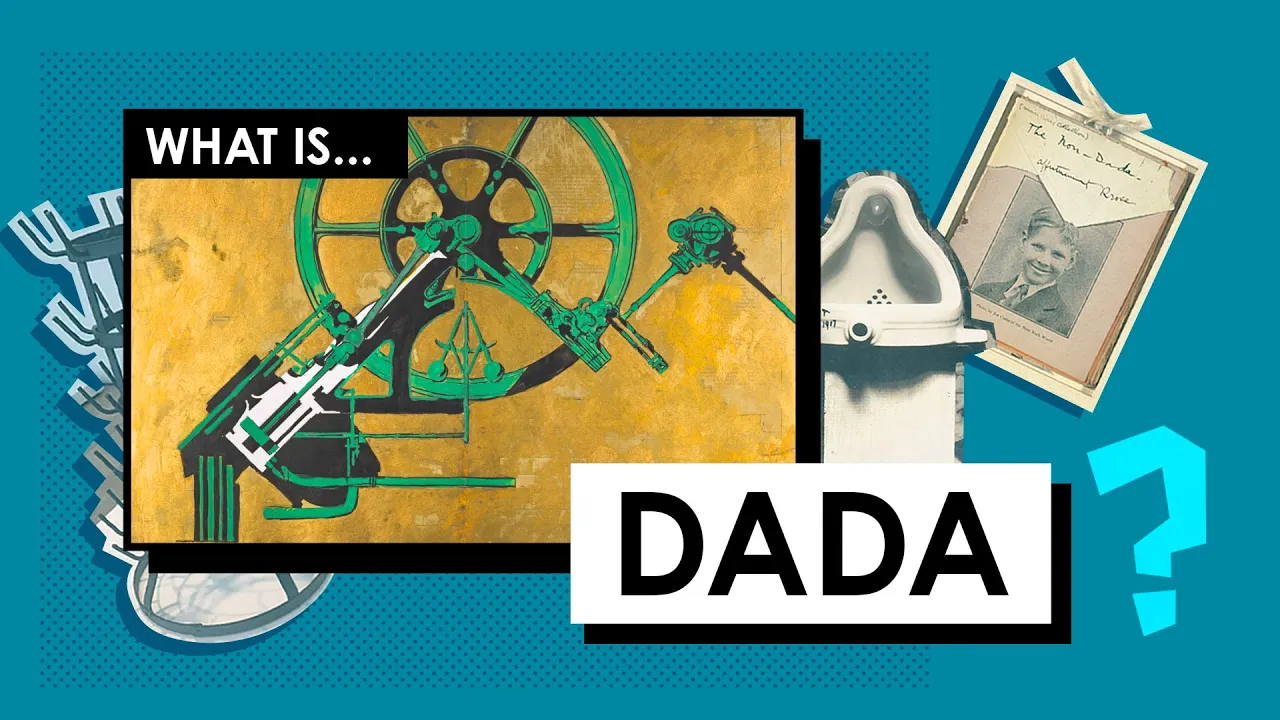
Dada was an international avant-garde movement that emerged in Zurich's Cabaret Voltaire in 1916 as a radical reaction against the horrors of World War I, characterized by anti-bourgeois, anti-establishment attitudes and a celebration of the absurd, nonsensical, and ridiculous; key figures like Marcel Duchamp (who coined 'readymade' for found object art) and Hannah Höch (known for satirical photomontages) challenged traditional artistic conventions, and while the movement was succeeded by Surrealism in the early 1920s, its legacy continues to influence contemporary art and culture.
Click to watch →
DADA - what it is, and are memes the new form of it?(FLO, Hannah Hoch) - 1x16
1.6K
Dada was an early 20th century art movement that emerged as a reaction against nationalism, materialism, class issues, and political problems, particularly following World War I. Originating in Switzerland, it was especially prevalent among academics and those with time for philosophical reflection. The movement was anti-establishment and anti-monetization, deliberately making art difficult to commercialize. Dada was paradoxically anti-Dada, meaning the movement itself was critical of the concept of having an art movement, group, or direction, which stemmed from the pretentiousness of creating something discussed by contemporaries rather than critics.
Click to watch →
Do Not Try to Eat This
115.6K
Dada emerged in early 20th century Switzerland as a radical artistic movement responding to World War I's devastation. Founded in February 1916 at the Cabaret Voltaire in Zurich by artists including Jean Arp, Hugo Ball, Tristan Tzara, and Sophie Tauber, Dada rejected all norms, traditions, and rationality. The movement used randomness and chance as core principles, exemplified by Arp's method of tearing drawings and arranging fragments accidentally. Named from a German-French dictionary meaning 'hobbyhorse' or 'stupidity,' Dada embraced absurdity to challenge the order that had led to wartime atrocities, attacking barriers of war and nationalism while celebrating independent spirits.
Click to watch →
stop searching for meaning
460.2K
Dadaism emerged around 1915 as a direct response to the absurdity and senseless violence of World War I. The movement arose because governments were making decisions that led to senseless killing and destruction, creating an absurd society. This reaction manifested in art that mocked and challenged the rationality of the war and the governments that perpetuated it.
Click to watch →

Dadaism Explained: The Birth of Anti-Art and Its Enduring Influence
473.3K
Dadaism emerged in February 1916 at Cabaret Voltaire in Zurich, Switzerland, during World War I when artists fled to neutral ground. Founded by international figures including Tristan Tzara, Hugo Ball, and Jean Arp, the movement rejected war, bourgeois values, and artistic conventions. As Andre Breton described, Dada was 'a state of mind' opposing established rules. The name 'Dada' reflected this anti-meaning stance—it could mean a baby's sound, a rocking horse, or 'yes-yes' in Romanian. The Cabaret Voltaire became a hub for performances, poetry readings, and avant-garde exhibitions lasting six months. Dadaist poetry employed random creation methods like cutting newspaper words and selecting them by chance, exemplified by Hugo Ball's nonsensical lyrics that later influenced Talking Heads' 'I Zimbra.'
Click to watch →
Deep Dive
The impact of the Industrial Revolution and mass production on society, which altered human relationships with everyday objects.
Out there, in the unconscious | Walter Mariotti | TEDxSanMarco
353
Between the 16th and 17th centuries, especially in the 18th century, industrial production changed the relationship between human ideas of themselves and their ideas of objects. This transformation caused people to no longer acknowledge the value of things, which in turn meant they could no longer give the same concept the same words—a first occurrence in human history.
Click to watch →

Xadrez Verbal Podcast #129 - Oriente Médio, África e EUA
8.2K
The industrial revolution's mass production has fundamentally changed how individuals relate to objects and society. Instead of clothing being made to fit individuals, individuals now fit into standardized clothing and social systems. This shift represents a broader transformation in how human beings relate to material objects and social structures, with implications for individual identity and autonomy.
Click to watch →

CEF Palestra 30032014 Moral Estranha
385
The Industrial Revolution changed how people lived by moving them from family-based agricultural work to factory work. This separated families, replaced cooperation with competition, and shifted focus from community to individual consumption. The new 'god' became money, and people became more isolated and competitive, moving away from the values of brotherhood that Jesus taught.
Click to watch →

Foro Ciencias para la Vida 2012 - Ernesto Lleras
381
According to several thinkers, the Industrial Revolution transformed human relationships from subject-to-subject interactions to subject-to-object relationships. Workers became objects of production, and the relationships of production shifted from creative action to mere labor force. Social relationships transformed from human-to-human connections to client-provider dynamics. This transformation fundamentally changed how humans relate to each other and to their work.
Click to watch →

Industrialização – Tipos de indústria e Fatores Locacionais – Geografia – 6º ano – E.F.
20.2K
The Industrial Revolution was a radical behavioral change in society that replaced artisanal production with mass production using machines. This shift moved from custom-made goods (where shoes were made to fit individual feet) to standardized production (where feet had to fit pre-made shoe sizes). This required creating measurement systems like shoe sizes (35, 36, 45, 46) and clothing sizes (P, M, G, GG, extra-G) to enable large-scale machine production.
Click to watch →
Deep Dive
The traditional role of the artist as an elite craftsman rather than a theoretical designer or conceptualist.
Ananda Coomaraswmy and Indian Poetics (ENG)
1.5K
Traditional art theory holds that beauty and purpose are complementary—art cannot exist without either. Beauty is the attractive quality of truth, not equivalent to truth itself. Beauty, truth, and goodness form a single principle where all three elements are present together in a work of art. The artist is not an individual genius but someone seeking the universal self, with genius being a spirit encompassed within cosmic energy. All forms of traditional art are necessarily anonymous, as the artist creates archetypes perceived from a supra-individual level rather than personal expression. Originality is not newness but geniusness, and the traditional craftsman who repeats established designs works at a higher level than one creating private inventions.
Click to watch →

Terence McKenna - Opening the Doors of Creativity (Video) (1990)
1.5K
Different images of the artist have been held up at different times: the Artist as artisan, the Artist as handmaiden of a ruling class or family, the Artist as designer for the production of integrated objects into a civilization, and the Artist as mystical journeyer who goes into a world unseen by others and returns to tell them of it. The notion of the Artist as mystical journeyer was lost in the post-medieval and Renaissance conception of art until the late 19th century. Beginning with the Romantics, there is a new permission to explore the irrational, which is the bridge back to the archaic shamanic function of the artist. The Symbolists re-emphasized the emotional content of the image and rejected previous rationalism, setting the stage for truly shamanic movements in art.
Click to watch →

INDIGNADOS POR ESTO! Avelina Lésper y Antonio García Villarán / El juicio de Maurizio Cattelan
123.9K
The video explains a fundamental distinction in art: the artist (artista) versus the craftsman (artesano). The artist is responsible for the concept, vision, and intellectual creation, while the craftsman executes the physical creation. In Cattelan's case, he conceived ideas like the Pope with a meteorite, while Druet physically created them. The video argues that if Cattelan had hired a lesser craftsman, the works would not have achieved their fame. This distinction is crucial for understanding how contemporary art values conceptual innovation over technical execution, and how galleries strategically hire skilled craftsmen to realize visionary artists' concepts.
Click to watch →

La Emboscadura 10: Nicolás Gómez Dávila, Escolios.
397
Gómez Dávila argues that the artist must stop recognizing himself as an artist and become a craftsman. The concept of artist has become very diffuse and complicated, while the craftsman implies working with hands, imprinting something of oneself in the material, and creating something tangible. The craftsman's work is unique and involves hours of conscious work, which goes against the values of the industrial system. The industrial system has reduced objects to mere commodities without soul, creating what Marx called the 'fetishism of commodities.' The craftsman's work, by contrast, has life and meaning, representing a return to more traditional artistic values.
Click to watch →

PUNZADAS SONORAS 4X21 - ARTESANO Y ARTISTA: DESNATURALIZAR LA DISTINCIÓN | #RPS
2.3K
The distinction between artist and craftsman emerged during the Renaissance through progressive separation. Artists differentiated themselves by pursuing technical and speculative knowledge, gaining independence from guilds. The Academy of San Fernando institutionalized artistic taste, separating theory from practice. Key differences include: artists associate with uncertainty and originality while craftsmen link to routine and functionality; artists relate to 'talent' (innate gift) while craftsmen relate to 'aptitude' (learnable skill); craftsmen's knowledge is acquired and habitual while artists' knowledge is unconscious and spontaneous. Soetsu Yanagi's concept of 'mingai' (popular crafts) challenged this separation, arguing for beauty in everyday objects as nourishment for the soul.
Click to watch →
Prerequisite Knowledge
- Concept 01Traditional definitions of fine art, which historically prioritized manual craftsmanship, representation (mimesis), and aesthetic beauty.
- Concept 02The rise of the Dada movement, including its anti-establishment philosophy and reaction to the devastation of World War I.
- Concept 03The impact of the Industrial Revolution and mass production on society, which altered human relationships with everyday objects.
- Concept 04The traditional role of the artist as an elite craftsman rather than a theoretical designer or conceptualist.
Subsequent Learning
- Step 01The emergence of Conceptual Art in the 1960s, where the concept or idea behind the work took precedence over the physical object.
- Step 02The concept of Institutional Critique, which examines how the gallery or museum space itself legitimizes and validates objects as art.
- Step 03The evolution of 'found objects' (objet trouvé) and appropriation in later art movements, such as Pop Art and Neo-Dada.
- Step 04Philosophical and legal questions regarding authorship, copyright, and originality in contemporary art practice.
Origins & Definition
Impact & Legacy
Origins & Definition
0:00Playing Section
- 1
Readymades are art from manufactured objects, first termed by Marcel Duchamp.
- 2
Early examples include Bicycle Wheel and In Advance of the Broken Arm.
- 3
Fountain from 1917 is Duchamp's most controversial readymade work.
The Aesthetic and Craft-Based Critique of De-skilling
While Duchamp’s readymades are celebrated for launching conceptual art, critics from formalist and traditionalist perspectives argue that they initiated a damaging trend of "de-skilling" in visual art. This counterpoint posits that by divorcing art from craftsmanship, technical skill, and aesthetic beauty, the readymade reduced art to a purely intellectual exercise or a institutional joke. Formalist critics, such as Clement Greenberg, championed medium specificity and visual quality, arguing that art's true value lies in its physical execution and aesthetic resonance rather than mere conceptual cleverness. From this viewpoint, prioritizing the idea over the object diminishes the unique sensory and emotional power of art, leading to a state of aesthetic nihilism where institutional designation—rather than inherent quality or labor—defines artistic value. Consequently, opponents argue that the legacy of the readymade has alienated the public and devalued the rigorous training of artists, replacing genuine creative mastery with institutional gatekeeping.
Deep Dive
The emergence of Conceptual Art in the 1960s, where the concept or idea behind the work took precedence over the physical object.

What is Conceptual Art?
16.8K
Conceptual art is an art movement that emerged in the 1960s where the idea or concept behind the work takes precedence over the finished art object; it is primarily associated with American artists like Sol LeWitt and European groups like Art & Language, and was first named by Henry Flatt in 1961, representing a logical extension of Marcel Duchamp's earlier work to challenge the primacy of visual perception in art.
Click to watch →
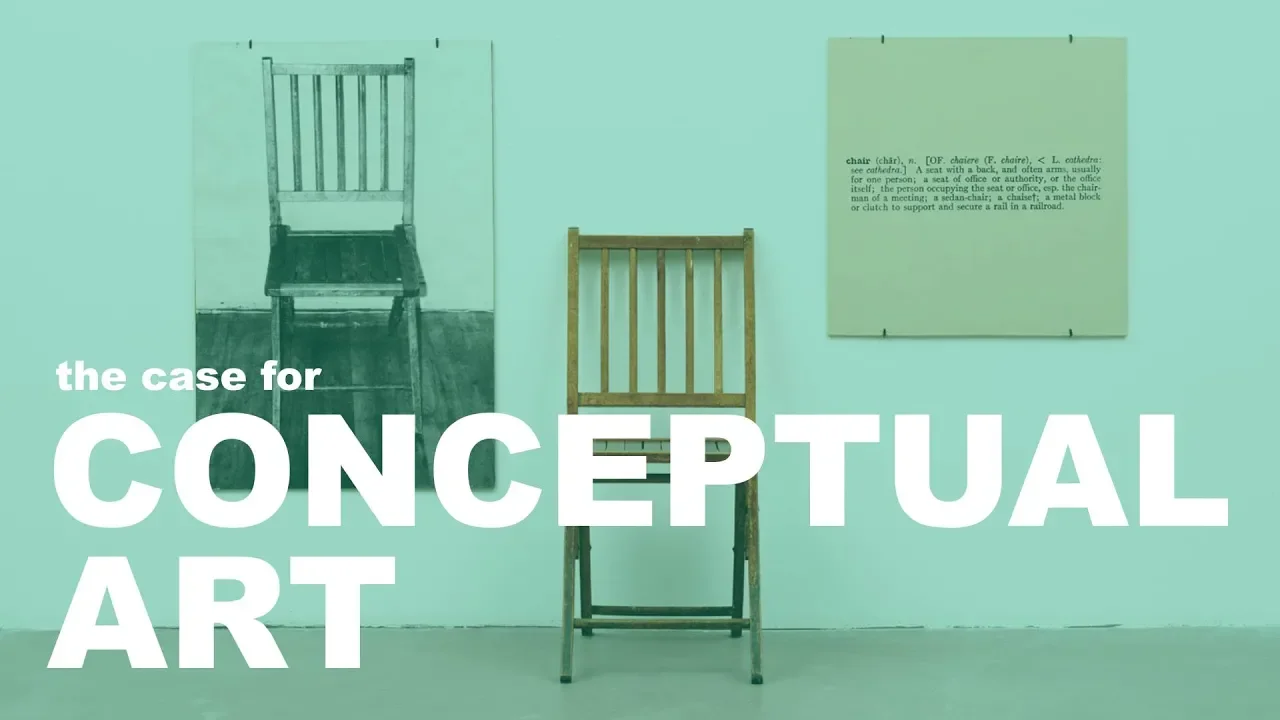
The Case for Conceptual Art
1M
Conceptual art is an art movement that emerged in the 1960s where the idea or concept behind the artwork is considered more important than the physical form or technical execution; artists like Joseph Kosuth and Sol LeWitt demonstrated that art can consist of simple objects placed in art contexts, dictionary definitions, or instructions for others to execute, challenging traditional notions of what constitutes art by emphasizing intellectual engagement and the viewer's role in defining meaning.
Click to watch →
Nghệ Thuật Vị Niệm Cùng Alessandra Dias / Introduction To Conceptual Art With Alessandra Dias
534
Conceptual art is an art movement where the idea or concept behind the artwork takes precedence over the physical object itself, with the content being the most important element while form and subject become secondary; this movement emerged in New York in the mid-1960s to mid-1970s as artists reacted against modernism's commodification and questioned traditional art institutions, with pioneers like Marcel Duchamp, Robert Rauschenberg, Sol LeWitt, and Lawrence Weiner challenging conventional art practices by emphasizing intellectual engagement and audience participation over visual beauty.
Click to watch →

🔴 LIVE: Artes - ✨Revisão Mágica✨ - ENEM
86.3K
Conceptual art (1960s-present) prioritizes the idea or concept behind the work over the physical object itself. Artists like Sol LeWitt and Marcel Duchamp (through his readymades) challenged the traditional role of the artist as creator of aesthetic objects. LeWitt's wall drawings were instructions that others executed, emphasizing that the idea was the art, not the finished product. Conceptual art often involves text, documentation, or instructions rather than traditional visual elements. The movement questioned the value of art objects and the role of the art market, democratizing art by making it accessible through ideas rather than expensive objects.
Click to watch →
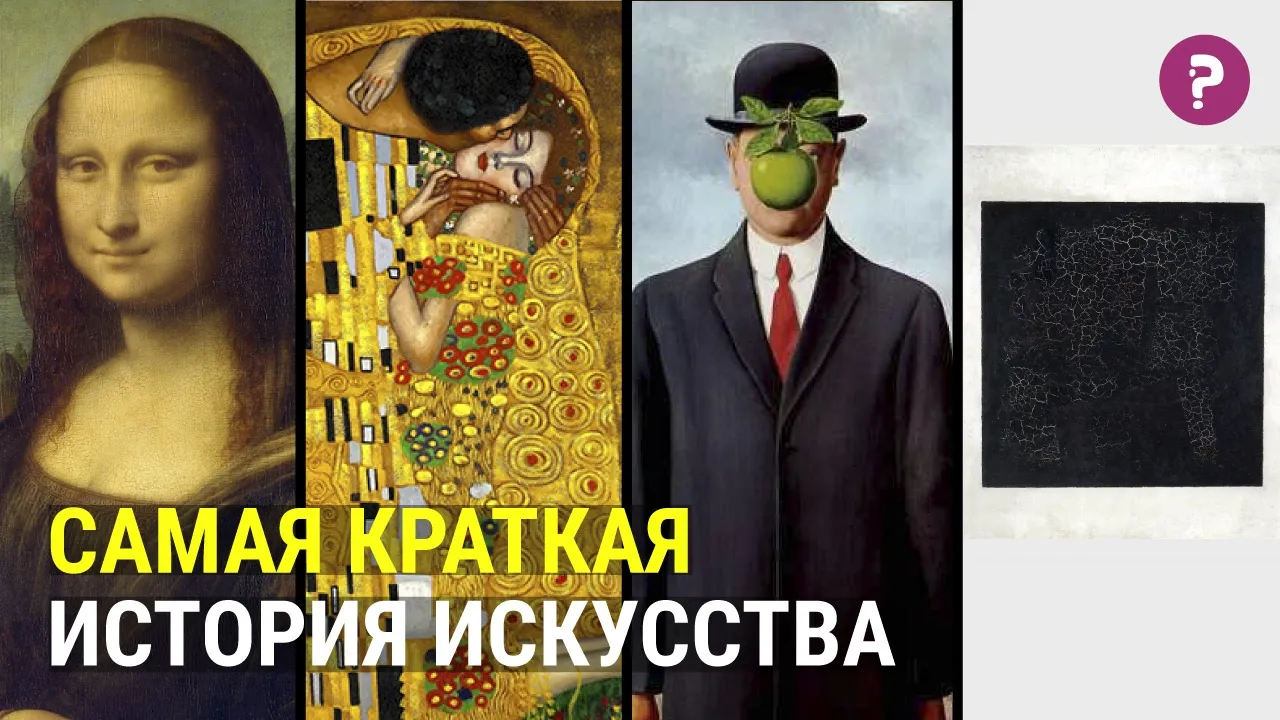
От Возрождения до Современного искусства - Самая краткая история искусства.
118.5K
Conceptual Art (1960s-1970s) declared that the idea behind a work matters more than its execution. Artists like Robert Rauschenberg destroyed paintings to question whether destruction constitutes art; Piero Manzoni sold his breath in balloons as 'art'; Walter De Maria buried kilometers of wire, leaving only fragments visible. The movement prioritized intellectual provocation over aesthetic experience.
Click to watch →
Deep Dive
The concept of Institutional Critique, which examines how the gallery or museum space itself legitimizes and validates objects as art.
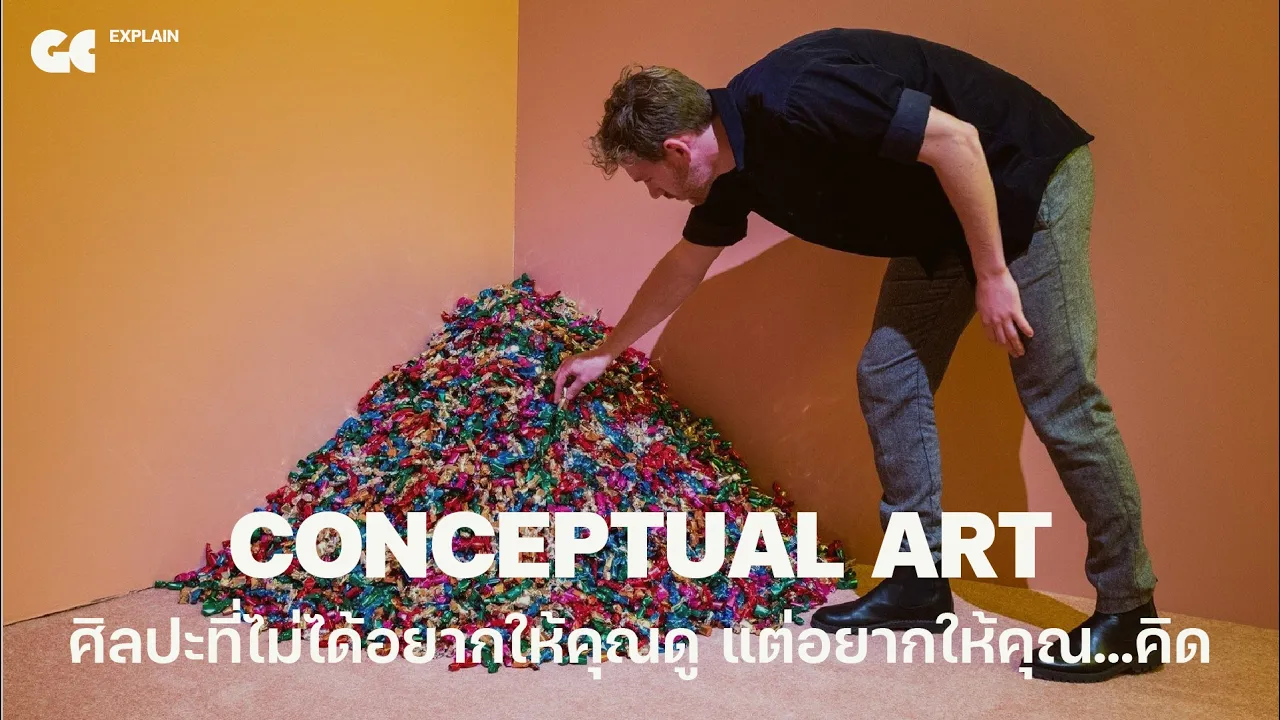
Conceptual Art ศิลปะที่ไม่ได้อยากให้คุณดู แต่อยากให้คุณ…คิด | GC EXPLAIN
1.6K
Institutional critique in conceptual art examines how museums and galleries construct meaning through selection, framing, and certification rather than intrinsic artistic value. This concept challenges the myth of museum neutrality, revealing that curatorial decisions involve ideological choices, financial interests, and power dynamics. Artists like Michael Asher removed gallery walls to expose building infrastructure, creating discomfort to reveal that supposedly pure artistic spaces are actually controlled systems. Marcel Broodthaers created fake museums with empty cases containing banal objects, demonstrating that institutional authority derives from the power to declare something as art rather than from the objects themselves. This critique enables art to address topics like money, profit, and systemic injustice that conventional beautiful art cannot effectively communicate.
Click to watch →
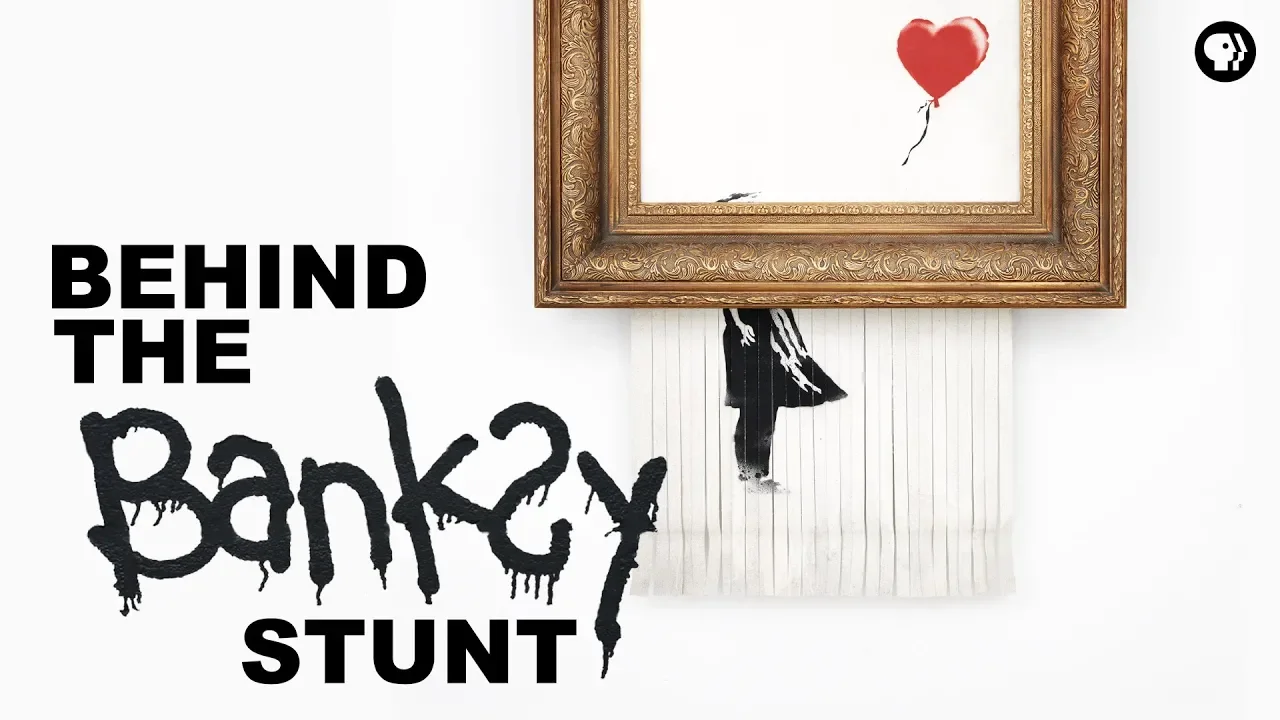
Behind the Banksy Stunt
2.3M
Institutional critique is an academic term describing art that actively critiques the structures it lives in, such as museums, galleries, and auction houses. This concept emerged after institutions started collecting more ephemeral and performative works made by artists in the 1960s and 1970s who strategically tried to avoid traditional art spaces. Despite artists' efforts to evade these spaces, museums were happy to matriculate these evasive works and include them in their histories of art. The art world loves being questioned and criticized, which has become almost like a kind of high-class teasing or 'negging.'
Click to watch →

1 Introduction to Institutional Critique
7.5K
Institutional critique examines the relationship between artists and institutions, drawing attention to how art is framed, presented, and valued within the art system. Emerging in the late 1960s alongside conceptual art, this movement involves artists actively resisting institutional power structures. Key components include examining social, political, cultural, and economic factors that determine what constitutes fine art. The art system encompasses museums, galleries, private collections, critics, curators, dealers, collectors, patrons, and funding bodies—all serving as gatekeepers who control artistic value and historical recognition. Artists reveal processes to enable public scrutiny or express dissatisfaction with hidden biases and commercial agendas. According to art critic Astrid Mania, institutional critique seeks to unmask the structures and ideological armatures of western exhibition institutions. Antonymont's 'Between the Frames' exemplifies this approach through extensive interviews with 160 professionals across eight chapters, demonstrating how artworks' interpretation depends less on artist intentions than on how they are absorbed and positioned by the art system.
Click to watch →
![Crítica institucional renovou a relação entre arte e museu [Na Cultura...]](https://i.ytimg.com/vi/ED6yMJPVOsA/maxresdefault.jpg)
Crítica institucional renovou a relação entre arte e museu [Na Cultura...]
102
Institutional critique is an artistic practice that emerged in the 1960s, where artists are invited by museums to create site-specific works that critically examine the institution's systems, behaviors, and relationship with society, serving as an intrinsic mechanism for cultural institutions to reveal their idiosyncratic behaviors and update themselves to correspond with contemporary realities.
Click to watch →

Can Buildings Curate: Panel Discussion
393
Institutional critique through the anatomy of the gallery museum may be a thing of the past since its techniques have been co-opted by the institution of the art world and art market. Every form of radical cultural activity at some point gets co-opted and warmly embraced by institutional big brother. The notion of critique has changed fundamentally. In the 70s and 80s, fundamental critique was important to make certain modes of power relations visible. Now that these layers have been addressed, practitioners move on and build upon this knowledge. The interesting point is how to rethink critique in a broader sense, as classical critique inside versus outside is no longer possible. Things must work within one structure with lots of micro-conflicts.
Click to watch →
Deep Dive
The evolution of 'found objects' (objet trouvé) and appropriation in later art movements, such as Pop Art and Neo-Dada.
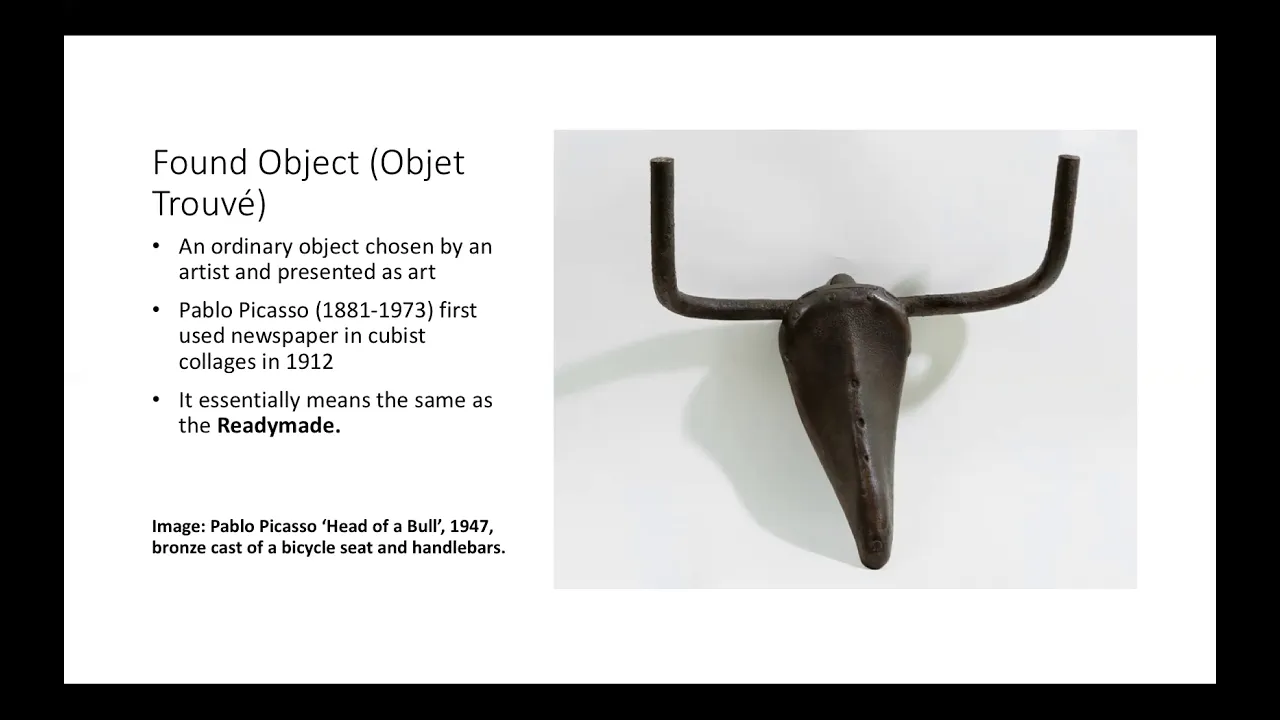
A Brief Introduction to the Readymade in Contemporary Art
2.5K
The ready-made is an artistic concept where an ordinary manufactured object is selected by an artist and presented as art, with the artist's choice becoming the creative act rather than the physical making; this concept, pioneered by Marcel Duchamp with his famous 1917 work 'Fountain,' has evolved through Neo-Dada, Pop Art, Conceptual Art, Postmodernism, and Appropriation Art to become a normalized practice in contemporary art where found objects are accepted as legitimate artistic materials.
Click to watch →
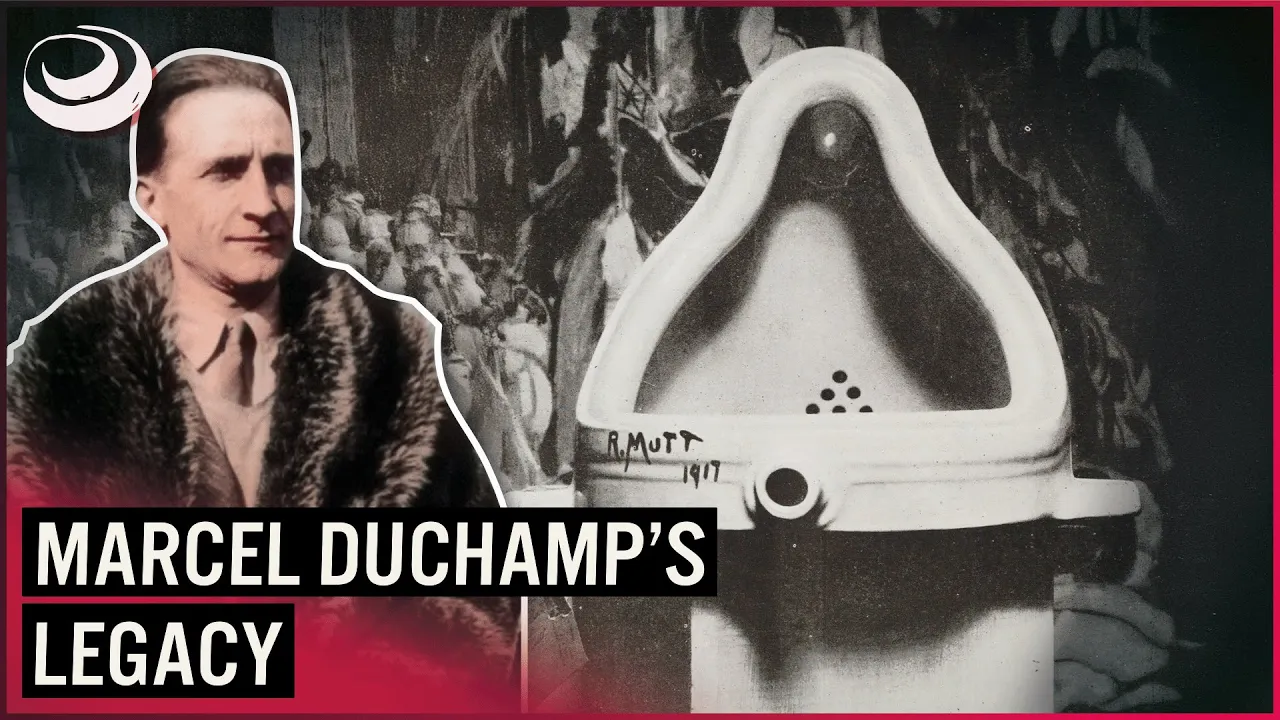
Before & After Duchamp: How One Artist Changed Art History
15.6K
Duchamp was the first person to think about the relationship between copy and original. The found object, ready-made, industrial product can be as interesting as original art. In Duchamp's view, art is no longer simply about making objects or producing something—only God made something out of nothing. After that, we are in a world where things are already made, already have names. Creating is making new things out of existing things by reconfiguring them strategically or thinking about their conditions to recreate them or find entirely new ways of looking at them. With photo-mechanical reproduction, appropriating became immediately recognizable. Defiling the Mona Lisa was a broad statement that nothing from the past or tradition needed to be bowed down to.
Click to watch →
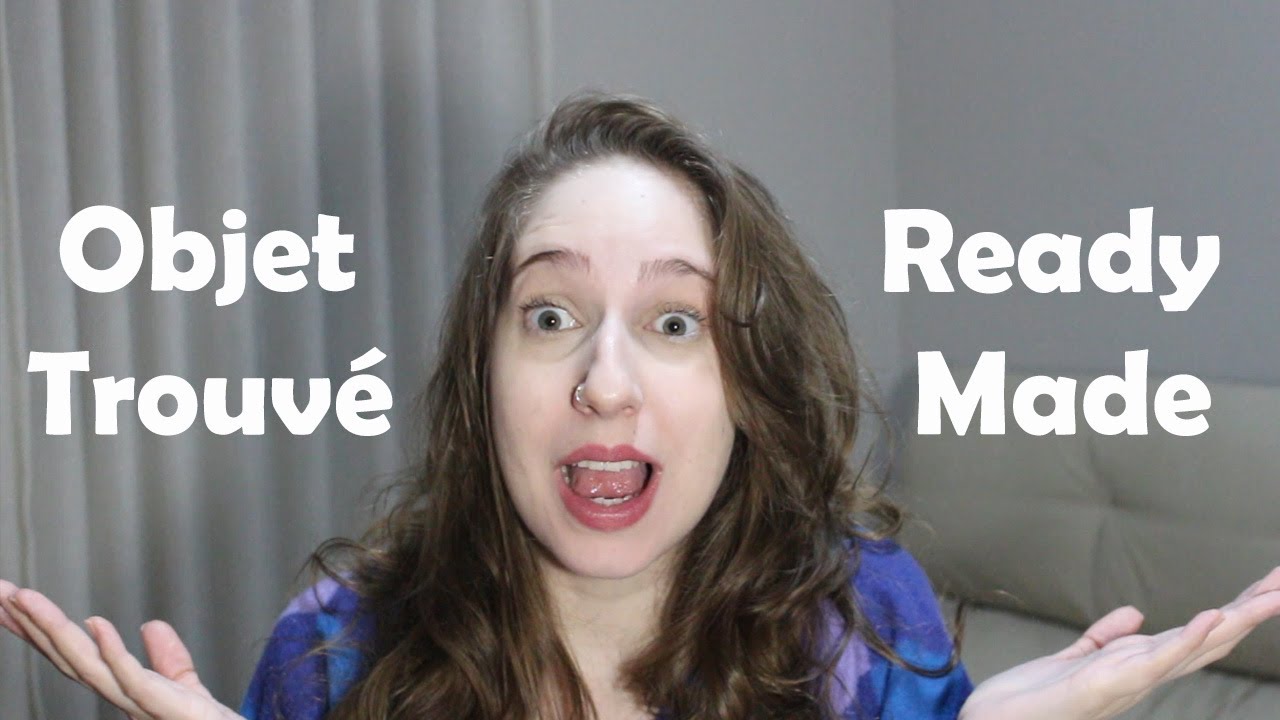
O que é Ready-Made? Ou Objet Trouvé?
5K
Ready-made (objet trouvé) is an artistic practice where artists select ordinary objects from everyday life and transform them into works of art by recontextualizing them, thereby challenging traditional notions of artistic creation and questioning what constitutes art; this movement, exemplified by Marcel Duchamp's 'Fountain' (1910), emphasizes conceptual meaning over technical skill and has influenced various art forms including performance, video art, and photography.
Click to watch →
Neo-Dada
11.2K
Neo-Dada was an art movement that emerged as a bridge between Abstract Expressionism and Pop Art, characterized by its rejection of traditional artistic standards, use of unorthodox materials and mundane objects, and emphasis on audience participation; key artists like Robert Rauschenberg created works such as 'combines' (hybrid painting-sculptures) and Jasper Johns challenged viewers to question what constitutes art, while John Cage's piece '4'33'' (four minutes and thirty-three seconds of silence) exemplified the movement's embrace of ambient sound and chance operations.
Click to watch →

AULA 10 - Dadaísmo
196
Dadaist techniques of appropriation, collage, and found object art have influenced many subsequent art movements, including the Neo-Dada movement of the 1960s and 1970s. Artists like Robert Rauschenberg adopted Dadaist procedures, using collage and mixed media in ways that critics at the time identified as 'Neo-Dada.' This demonstrates how Dadaism's radical approach to artistic creation established a template for future artistic experimentation, showing how artistic movements can influence each other across generations. The movement's legacy includes the concept of installation art, where the entire space becomes the artwork rather than a single object, and the practice of presenting everyday objects as art, which continues to challenge traditional notions of artistic creation.
Click to watch →
Deep Dive
Philosophical and legal questions regarding authorship, copyright, and originality in contemporary art practice.

Podiumsdiskussion - Zwischen Kunst und Wissenschaft
362
Authorship has always been contested, as culture is historically collective rather than individual. AI currently functions as a tool requiring human intervention, but questions arise about compensating artists whose works train AI systems. The tension between technological democratization and artistic uniqueness persists, with photography's evolution offering precedent. Artists must consciously resist ubiquitous digital sources to maintain creative authenticity, raising fundamental questions about originality, ownership, and the future of artistic practice in an age of intelligent machines.
Click to watch →

2da sesión con Pablo Helguera
209
Originality in contemporary art refers to presenting new concepts that help viewers rethink what art is. Derivative art repeats existing approaches and is valued as less relevant. Marcel Duchamp's 1917 'Fountain' established the readymade concept, where artists take commercial objects and present them as art, challenging the notion that artists must physically create works. Andy Warhol's 1964 soap box challenged notions that art must be abstract. Jeff Koons' 1980s dog sculptures led to a landmark copyright case where the original photographer won nearly one million dollars. Sherrie Levine's practice of copying admired artists' works challenged traditional notions of authorship. The distinction between appropriation and plagiarism lies in presentation: appropriation acknowledges the process and presents work as the artist's own, while plagiarism presents another's work as one's own for gain.
Click to watch →

Lluís Peñuelas. Arte y derecho: la problemática de las falsificaciones (3/15)
291
Three basic concepts lack legal consensus: what constitutes a work of art, who is the author, and what is an original work. Tax laws define 'works of art' for customs purposes (e.g., oil paintings must be hand-painted), but this protects domestic industries rather than artistic merit. Property intellectual law regulates reproductions but doesn't define original works. This creates confusion where legal reproductions are mistaken for authentic artworks. The solution requires specific laws regulating authorship, reproductions, and originals to protect collectors and citizens.
Click to watch →

Clase 4 de octubre
317
Plagiarism is illegal because it involves taking another's expression and claiming it as one's own. The law protects original expression because each author's personality inevitably colors their work. While some philosophical traditions question whether true originality exists, copyright law universally requires originality as a threshold for protection, reflecting that all people express themselves differently.
Click to watch →

L'art & l'imitation - Jacqueline Lichtenstein avec Adèle Van Reeth - Citéphilo
1.6K
This section examines the philosophical challenges of forgery to artistic categories. When art imitates art, there is no true beginning—each work references previous works, creating an infinite regression that raises questions about authorship and originality. In the 17th century, originality began to emerge, particularly in discussions of writers like Corneille and La Fontaine, where originality meant being the origin of what one creates. The concept of authorship is a recent myth that has been constructed in both painting and literature. In the Middle Ages, much literature had no attributed author, and in painting, workshop production meant many works attributed to famous artists were actually created by assistants.
Click to watch →
Origins & Definition
Impact & Legacy
Origins & Definition
0:00- 1
Readymades are art from manufactured objects, first termed by Marcel Duchamp.
- 2
Early examples include Bicycle Wheel and In Advance of the Broken Arm.
- 3
Fountain from 1917 is Duchamp's most controversial readymade work.
The Aesthetic and Craft-Based Critique of De-skilling
While Duchamp’s readymades are celebrated for launching conceptual art, critics from formalist and traditionalist perspectives argue that they initiated a damaging trend of "de-skilling" in visual art. This counterpoint posits that by divorcing art from craftsmanship, technical skill, and aesthetic beauty, the readymade reduced art to a purely intellectual exercise or a institutional joke. Formalist critics, such as Clement Greenberg, championed medium specificity and visual quality, arguing that art's true value lies in its physical execution and aesthetic resonance rather than mere conceptual cleverness. From this viewpoint, prioritizing the idea over the object diminishes the unique sensory and emotional power of art, leading to a state of aesthetic nihilism where institutional designation—rather than inherent quality or labor—defines artistic value. Consequently, opponents argue that the legacy of the readymade has alienated the public and devalued the rigorous training of artists, replacing genuine creative mastery with institutional gatekeeping.
Traditional definitions of fine art, which historically prioritized manual craftsmanship, representation (mimesis), and aesthetic beauty.
The rise of the Dada movement, including its anti-establishment philosophy and reaction to the devastation of World War I.
The impact of the Industrial Revolution and mass production on society, which altered human relationships with everyday objects.
The traditional role of the artist as an elite craftsman rather than a theoretical designer or conceptualist.
The emergence of Conceptual Art in the 1960s, where the concept or idea behind the work took precedence over the physical object.
The concept of Institutional Critique, which examines how the gallery or museum space itself legitimizes and validates objects as art.
The evolution of 'found objects' (objet trouvé) and appropriation in later art movements, such as Pop Art and Neo-Dada.
Philosophical and legal questions regarding authorship, copyright, and originality in contemporary art practice.
48.5K views887likes3:11@littlearttalksOriginal Release: 2016-09-11
Hey guys, it’s Karin.
Welcome back to Little Art Talks.
Today let’s talk about what are Readymades and why they’re considered works of art.
The definition of readymade itself isn’t all that difficult to understand.
They’re works of art made from manufactured objects - things already made.
Right?
Pretty straight forward.
What usually is a little more difficult is understand is how or why readymades are considered art.
The term readymade was first used by French artist Marcel Duchamp.
The earliest readymade included Bicycle Wheel of 1913 and In Advance of the Broken Arm of 1915.
Bicycle Wheel is a bicycle wheel mounted on a wooden stool and In Advance of the Broken Arm is an inscribed snow shovel.
However, Duchamp’s most notorious readymade came in 1917, when he created the Fountain.
The Fountain was a men’s urinal that was placed on its back, then signed by the artist with a false name.
Duchamp deliberately chose ordinary, functional – and rather dull – objects.
He chose objects: ‘…based on a reaction of visual indifference, with at the same time a total absence of good or bad taste…’ In the May 1917 issue of avant-garde magazine The Blind Man run by Duchamp and two friends, an anonymous editorial explained the theory behind the readymade: “Whether Mr Mutt with his own hands made the fountain or not has no importance.
He CHOSE it.
He took an ordinary article of life, and placed it so that its useful significance disappeared under the new title and point of view – created a new thought for that object.” Here, they make a case for the Fountain with 3 main points: First, the act of choosing the object is a creative act in itself.
Second, by removing it’s “useful” function of an object, it becomes art.
Third, by presenting the object with a title in a gallery, the object is given “a new thought” or new meaning.
These readymades assert the idea that art is defined by the artist, as opposed to being determined by its media.
The role of the artist changes from maker of art to chooser of art - a trend that is often seen as the beginning of the movement to conceptual art.
At the time, readymade was perceived as an assault on the conventional understanding of not only the status of art, but also it’s very nature.
Since its first controversial presentation as an art object in 1917, Duchamp’s Fountain has provoked lively discussion about art, ideas and meaning.
While the term was invented by Duchamp to describe his own works, it has since been used more generally for artworks made from manufactured objects.
For example, works by Young British Artists such as Damien Hirst, Michael Landy and Tracey Emin.
I hope this video helped you better understand readymades.
If you enjoyed this video please like and subscribe for more videos on art history.
Thanks so much for watching, and I’ll see you guys next time.
Up Next

9:26
Unsafe C Functions: Secure Coding Strategies for Modern C and C++
@DavesGarage
64.6K views•2023-01-09

12:54
Triumph of Orthodoxy Icon: Byzantine Art & History Explained
@BenCallan
2.1K views•2024-08-06

9:49
FastAPI vs Flask vs Django: Choosing the Right Python Web Framework
@TechWithTim
302.5K views•2024-05-26

1:42
Game of Thrones Opening Credits: A Cinematic Analysis
@gameofthrones
46.3M views•2011-04-18
Related Study Plans & Knowledge Roadmaps
Structured learning paths in General & Interdisciplinary Studies
general-studies
Elevator Engineering: History, Physics & Cities
01From Hoists to Safety Brakes: The Dawn of Vertical Lift
02Hydraulic vs. Traction: The Engineering Physics of Elevators
03Modern Speed, Safety, and Algorithms
+ 2 more learning modules
12h5 modules
Explore Roadmap
general-studies
Rubber: Material Science, History & Geopolitics
01Origins of Natural Rubber & Mesoamerican History
02The Chemistry of Natural Rubber & Vulcanization
03The Geopolitics of the Rubber Boom & Colonization
+ 2 more learning modules
12h5 modules
Explore Roadmap
general-studies
Containerization: Evolution, Logistics & Trade
01Ancient Trade & Bulk Cargo: Amphorae to Barrels
02The Industrial Revolution & Cardboard Packaging
03The Containerization Revolution: Malcom McLean
+ 2 more learning modules
12h5 modules
Explore Roadmap
general-studies
Textile Tech: Evolution, Labor & Global Impact
01Pre-Industrial Textiles: Handloom & Cottage Industry
02Mechanization: The Spinning Jenny to the Power Loom
03The Factory System & Global Labor Transformation
+ 2 more learning modules
10h5 modules
Explore Roadmap