Trademark rights differ fundamentally from copyright in that trademarks do not expire and provide perpetual protection for brand names and logos, meaning even if original copyrighted works enter the public domain, trademark holders retain exclusive commercial rights to those marks; however, nominative use of trademarks for descriptive purposes (such as identifying landmarks) is legally protected, though content creators may still face legal risks including lawsuits or out-of-court settlements from trademark owners.
Trademark Law: Commercial Use of Landmarks and Legal Boundaries
Added:Deep Dive
Basic principles of Trademark Law, including how trademarks function as source identifiers and the concept of distinctiveness.

Distinctiveness in trade mark lecture 5
3.7K
Distinctiveness is the core value and basic principle of trademarks, enabling consumers to identify the source of goods or services; it can be inherent (naturally distinctive from the start) or acquired (developed through use and gaining secondary meaning), with categories including fanciful, arbitrary, suggestive, descriptive, geographical, and personal names, and marks that lose distinctiveness through non-use or become generic may lose protection.
Click to watch →
Trademark lecture 2- Grounds for registration| procedure of registration| rights conferred| IPR
51.8K
Trademarks must be distinctive to serve as source identifiers, not merely describe goods' characteristics. Terms like 'Auto' for automobiles are customary and cannot be monopolized. Shapes essential to technical results or natural product forms cannot be registered, as this would prevent others from creating similar functional products. Color trademarks face limitations on exclusive use combinations. These restrictions balance trademark protection with public interest in competition and innovation.
Click to watch →

【弁理士】素人でも短答試験(商標法)を解くことができます!~応用編~ | 弁理士同好会#64
575
Trademark law rests on three core principles: (1) Distinctiveness - marks must identify source; (2) Non-confusion - marks must not mislead consumers; (3) Economic protection - promoting smooth commerce. Generic industry marks lack distinctiveness and cannot register. Geographic terms can mislead consumers about origin, violating non-confusion principles. Consumer perspective is essential in all trademark analysis. The law balances protecting legitimate business interests while preventing consumer deception. Understanding these fundamentals enables proper application to complex registration scenarios.
Click to watch →

商標の機能 識別力とは?
142
Trademark distinctiveness (識別力) is the most important function of a trademark, which enables consumers to distinguish one's own goods or services from those of others. This function allows consumers to identify and purchase specific products from particular manufacturers by recognizing their respective trademarks, such as identifying Kirin Beer or Sapporo Beer by their distinctive marks. The distinctiveness function is so fundamental that it forms the basis for determining whether a trademark should be protected by law.
Click to watch →
Trademark Law Explained: A Comprehensive Overview by an IP Attorney
9.1K
Trademark law protects commercial identity by enabling consumers to identify product sources. The three core functions are: indicating source/origin, guaranteeing consistent quality, and distinguishing goods/services from competitors. Trademarks encompass words, slogans, logos, sounds, scents, and colors, but exclude domain names, business names, purely ornamental designs, and functional features. Protection extends to the source, not the product itself. Trade dress protects product packaging when consumers associate it with specific manufacturers, but functionality prevents protection. Trademark distinctiveness determines protection levels: arbitrary/fanciful marks (invented terms like Kodak, Starbucks) are inherently distinctive and prima facie registrable; suggestive marks (requiring imagination like Whirlpool, Coppertone) receive protection; descriptive marks must acquire secondary meaning through five+ years of use or substantial advertising; generic marks (describing product categories) receive no protection.
Click to watch →
Deep Dive
The fundamental legal distinction between real property rights (ownership of physical structures) and intellectual property rights (ownership of intangible brand elements).

Forty Eighth Facebook Live Session on Significance of prior art while filling your IP
111
Intellectual property differs fundamentally from real property: (1) IP is intangible (ideas, solutions, creative labor) while real property is tangible (physical objects); (2) IP has no physical boundaries and can be used by multiple people without restrictions, unlike real property which has usage limits; (3) IP is non-excludable, meaning owners cannot restrict certain users (like customers) from using it for non-commercial purposes; (4) IP is the product of creative human labor that cannot be directly perceived by others.
Click to watch →
Is Intellectual Property, Property: A Debate Between Mark Lemley & Richard Epstein
5.6K
Intellectual property differs dramatically from physical property in practical, legal, and policy dimensions. Unlike land, IP rights cannot be visually identified—a smartphone contains approximately 500,000 parcels of IP owned by thousands of entities. IP disputes scale massively higher than real property disputes (10% of patent value ends in litigation versus occasional boundary lawsuits). IP law develops remedies diverging from property norms: no criminal penalties, no automatic injunctions, no automatic profit disgorgement, and damages apportioned among contributors. The term 'intellectual property' is relatively recent (late 1960s), with 19th-century courts more likely describing IP as public franchises or monopoly rights. Treating IP as property drives demands for mandatory injunctions, hold-up scenarios, and full social surplus capture, representing an agenda that may misalign with IP realities.
Click to watch →

Kennisclips intellectuele eigendom - Onstoffelijkheid (9/10)
9.7K
Property rights (eigendom) apply only to tangible, physical objects (zaken), while intellectual property rights protect intangible creations. According to the Dutch Civil Code, property rights are unlimited in duration, whereas intellectual property rights are time-limited (patents 20 years, designs 25 years, copyright 70 years post-author death). This time limitation reflects a legislative balance between rewarding creators and allowing society to eventually benefit from innovations. Trade name and trademark rights are exceptions as they prevent market confusion rather than protect intellectual achievements.
Click to watch →
Software Licenses
13.5K
Intellectual property (IP) differs fundamentally from real property. Real property refers to physical objects like real estate, pens, and watches that can be physically picked up and possessed. Intellectual property encompasses ideas, concepts, and creative works that cannot be physically possessed. While you can pick up a CD containing a song, you cannot pick up the song itself—the lyrics, tempo, rhythm, and artistic expression—which constitutes the intellectual property.
Click to watch →

data.europa academy 'Data ownership – what is ‘your’ data?'
824
Physical property ownership (like owning a car) grants absolute control over a specific item. Intellectual property rights differ fundamentally: copyright authors retain moral rights regardless of exploitation rights transferred; IP rights extinguish upon use with consent; and IP rights create exclusive monopolies that affect competition. These distinctions matter significantly when considering whether data should be protected by similar IP frameworks.
Click to watch →
Deep Dive
The legal definition of 'use in commerce' and how it separates commercial marketing from artistic expression or news reporting.

H3H3 Case Update: Denims Wins on Fair Use* (*: 90+% chance)
10.6K
Even if a use is considered at least partially commercial, its transformative nature may offset the significance of commercialism. News reporting is almost always commercial but is still protected by fair use. A commercial use is demonstrated by showing that repeated and exploited unauthorized copies of copyrighted works were made to save the expense of purchasing authorized copies. Indirect revenue promotion does not constitute the commercial exploitation that precludes fair use.
Click to watch →
The Download // Navigating Usage Rights: People, Places, and Things - Getty Images
693
A news article or documentary is defined as reporting news, discussing historical or current events, or other public interest topics. This is separate from commercial use, which is seen as selling a product, raising money, or promoting a company's goods or services. There is some gray area, such as advertorial content that tries to pass off as informational, which should be checked with legal teams.
Click to watch →
KuchenTV: Zerstört ihn Shurjoka schon wieder? Anwalt Solmecke REAGIERT | Anwalt Christian Solmecke
263.6K
For trademark infringement to occur, the use of the mark must be 'commercial' or 'in commercial traffic' (im geschäftlichen Verkehr). This means the use must be connected to business activities, such as selling goods or services, or promoting products for commercial purposes. Simply mentioning a trademark in conversation, journalism, or news reporting does not constitute infringement, as these are not commercial uses. The key distinction is whether the use is intended to benefit from the mark's reputation or commercial value.
Click to watch →

Experienced practitioners: Trademark ex parte expungement and reexamination proceedings
599
Use in commerce is defined as the bona fide use of a mark in the ordinary course of trade and not merely to reserve a right in the mark. The definition further specifies that goods must actually be sold or transported in commerce, which is defined as commerce that may be lawfully regulated by Congress (not purely foreign commerce). To establish nonuse, petitioners must show that the mark failed to meet any part of this definition during the relevant time period, whether goods were never sold/transported, or if goods were sold but not in the manner required by the statute.
Click to watch →
Lauren the Mortician, TikTok’s Litigious Undertaker | TMT #119
16.3K
The commercial nature of a use is only one factor in fair use analysis and does not automatically weigh against fair use. The Supreme Court has stated that commerciality carries only presumptive force against finding fair use, and this presumption would allow nearly all illustrative uses listed in fair use analysis, including news reporting, comment, criticism, teaching, scholarship, and research.
Click to watch →
Deep Dive
The concept of Nominative Fair Use, which allows the descriptive use of a trademarked term or image to identify the actual product or place.
Bandersnatched: Chooseco says Netflix used "Choose Your Own Adventure" Trademark
17.9K
Trademark fair use allows legitimate use of competitor marks to describe products or services. Nominative fair use permits referencing a mark to identify actual goods, such as comparing products to competitors. Descriptive fair use applies when marks describe product characteristics rather than source. The key distinction is whether use suggests endorsement or sponsorship. Comparative advertising using competitor marks is generally permitted. The 'Choose Your Own Adventure' case illustrates how descriptive marks receive limited protection, and whether referencing a format constitutes infringement depends on whether it creates consumer confusion about source or sponsorship.
Click to watch →
Copyright attorney introduces Fair Use (just the basics)
11K
Trademark fair use allows non-owners to use trademarks nominatively to refer to actual trademarked products or their sources. United States law protects product criticism and analysis and actively encourages this type of usage, particularly in comparative advertising by competitors. This doctrine prevents trademark holders from monopolizing references to their products, allowing legitimate discussion, comparison, and commentary about goods and services in the marketplace.
Click to watch →
Trademark Law- by Dr. Naira Matevosyan (MD, MSJ, PhD)
322
There are four defense strategies in trademark infringement lawsuits: fair use, first amendment, special defenses to dilution, and first sale doctrine. Fair use defense has two subtypes: descriptive fair use and nominative fair use. Descriptive fair use protects the use of trademark as ordinary word to describe or refer to a company or product service by name and applies to fanciful or arbitrary marks. Nominative fair use allows using trademark as name to refer to a product or service. In 1983, the Third Circuit established tests known as Lab factors to determine likelihood of consumer confusion: price of goods and other factors indicative of care and attention expected from buyers, evidence of consumer's actual confusion, number of times defendant has used the mark without actual confusion, and defendant's intent in utilizing the mark.
Click to watch →

'Absolutely nothing' new with Bills Mafia trademark developments
800
Nominative fair use is a legal principle in trademark law that allows individuals to use a trademark to refer to the actual product or service it identifies, even when the trademark owner has registered it. This doctrine permits people to use terms like 'Bills Mafia' to describe themselves as members of the Bills family, as long as they are not implying an official affiliation, sponsorship, or endorsement relationship with the trademark owner. The key distinction is that fair use allows descriptive use without suggesting commercial connection.
Click to watch →
Trademark Infringement: Module 5 of 5
1.4K
Unauthorized trademark use may be permissible under fair use doctrines. Nominative fair use allows referencing trademark owners' goods without implying endorsement, requiring non-misleading use, no implied sponsorship, and only necessary identification (typically words, not logos). Descriptive fair use permits using famous marks for their common descriptive meaning, such as 'inhibitor' for corrosion inhibitor products. Parodies and commentaries also qualify as fair use when not misleading or defamatory. First Amendment protects expressive works using trademarks when having artistic relevance and not explicitly misleading about source/content.
Click to watch →
Prerequisite Knowledge
- Concept 01Basic principles of Trademark Law, including how trademarks function as source identifiers and the concept of distinctiveness.
- Concept 02The fundamental legal distinction between real property rights (ownership of physical structures) and intellectual property rights (ownership of intangible brand elements).
- Concept 03The legal definition of 'use in commerce' and how it separates commercial marketing from artistic expression or news reporting.
- Concept 04The concept of Nominative Fair Use, which allows the descriptive use of a trademarked term or image to identify the actual product or place.
Subsequent Learning
- Step 01Advanced analysis of architectural Trade Dress, focusing on how specific building designs can be registered and protected under IP law.
- Step 02Comparative study of 'Freedom of Panorama' laws internationally, analyzing how different countries balance public photography with IP protection.
- Step 03Deep dive into landmark-related trademark litigation, such as the iconic 'Rock and Roll Hall of Fame v. Gentile' case.
- Step 04The legal and business frameworks of licensing agreements for utilizing famous landmarks in media, video games, and commercial merchandising.
Landmark Blur
Copyright vs Trademark
Commercial Purpose
Risk Assessment
Permission Attempt
Uncertain Outcome
Final Decision
Invitation
Landmark Blur
0:03Playing Section
- 1
Explains why a famous LA landmark is blurred despite being iconic.
- 2
Mentions trademark law governs commercial use of recognizable designs.
The Public Commons and Freedom of Panorama Defense
While landmark owners often assert trademark rights to control commercial representations of iconic structures, critics argue this constitutes trademark overreach that threatens the public commons and freedom of expression. This counterpoint—often grounded in 'Freedom of Panorama' laws and free speech principles—posits that landmarks, once integrated into the public sphere, become part of a shared cultural heritage. Opponents of strict trademark enforcement argue that allowing private or public entities to monopolize the visual representation of public architecture stifles artistic creation, documentary filmmaking, and independent photography. Furthermore, legal scholars and courts have sometimes limited these trademark claims (such as in the landmark case Rock and Roll Hall of Fame v. Gentile), ruling that a building's shape does not automatically function as a trademark unless the public perceives it specifically as a brand identifier rather than merely a depiction of the monument itself. This perspective advocates for preserving public spaces and structures as open, shared resources for creative expression.
Deep Dive
Advanced analysis of architectural Trade Dress, focusing on how specific building designs can be registered and protected under IP law.

(第4回)知財実務オンライン:「デザインの保護に関する裁判例の分析」(ゲスト:iCraft法律事務所 代表弁護士 内田 誠)
1.2K
The recent Design Right amendment expanded protection to include building exteriors (Article 1, Paragraph 1, Item 1) and building interiors (Article 1, Paragraph 2). This allows architects and construction companies to protect spatial designs through design right registration. Copyright protection requires designs to be 'appreciable as art when separated from function' - a high threshold requiring significant artistic merit. Unfair competition requires the same 'special characteristics' and 'distinctiveness' criteria as product design.
Click to watch →

#LunesDeDerecho | El ABC de la propiedad intelectual
1K
Architectural designs can be protected through multiple intellectual property mechanisms: (1) Industrial design protection (requiring novelty); (2) Three-dimensional trademark protection (requiring distinctiveness); (3) Artistic work protection. The appropriate mechanism depends on the specific characteristics and requirements of the architectural work.
Click to watch →

建築デザインを守る「建築物・内装の意匠権」を解説
168
Buildings and interior designs have become newly protected subjects under intellectual property law. This change addresses the reality that companies increasingly use distinctive exterior and interior designs to enhance brand value. The legal framework now protects both exterior building appearances and interior designs that achieve overall unity through furniture arrangement and decorative elements. To register a design, companies need architectural drawings or photographs showing the exterior appearance, with designs demonstrating overall coherence. Examples include distinctive seating arrangements and counter layouts in restaurants. Unlike trademarks, design protection only requires novelty and distinctiveness, not brand recognition. This protection prevents unauthorized copying of unique spatial designs, ensuring companies can maintain their competitive advantage through distinctive architectural and interior concepts.
Click to watch →

著作権から建築の文化を考える 水野祐(弁護士)
1.8K
Design rights protect aesthetic appearances of buildings and interiors, requiring registration with the Patent Office. This differs fundamentally from copyright's automatic protection. Examples include the UNIQLO building and convenience store interiors. The expansion of design rights means architects must conduct prior searches to avoid infringement. This creates a fundamental trade-off: stronger design protection benefits current creators but restricts future designers' freedom. Architects must balance legal protection against design freedom constraints.
Click to watch →

トレードマークの保護について②【商標法・不正競争防止法】
3.1K
Store interior design can be protected as trade dress under the Unfair Competition Prevention Act, with the 2018 Tokyo District Court decision marking the first case where store interior design was recognized as a source indicator. Store exterior shapes alone are generally not registrable as three-dimensional trademarks; protection requires additional elements like color combinations or company names. Building designs can alternatively be protected under the Design Law as decorative elements rather than source indicators.
Click to watch →
Deep Dive
Comparative study of 'Freedom of Panorama' laws internationally, analyzing how different countries balance public photography with IP protection.
Sprechstunde »Fotorecht«: Ihre Zuschauerfragen – Blende 8 – Folge 159
16.4K
This segment examines international variations in panormafreiheit and public space photography. The Netherlands has similar regulations to Germany with additional protections for train stations. Belgium and Luxembourg follow French law, which lacks panormafreiheit entirely. Italy, Ukraine, Belarus, and Greece also lack this protection. For street photography in public spaces, incidental capture of people in public areas is permissible as they are not featured as portraits. The German Federal Court of Justice has ruled that people moving through public streets must tolerate being captured as incidental subjects. Time-lapse videos may be legally protected because rapid playback makes individual persons unrecognizable.
Click to watch →
#WikiLoveAfrica 2021 : How IP, copyright, and licenses work on Wikipedia and Wikimedia Commons
925
Freedom of panorama permits photographing copyrighted works in public spaces without permission, but this right varies dramatically by country. Nigeria uniquely among African nations grants full freedom of panorama, allowing free photography of public monuments. Many African countries restrict such photography, requiring either permission or application of the minimum principle. Partial freedom of panorama exists in some nations with significant restrictions. Photographers must understand their country's specific laws regarding public space photography to avoid copyright violations while contributing to collaborative projects like Wiki Loves Africa.
Click to watch →
Wiki Loves Africa: Intellectual Property Rights and Licensing Policy on Commons
297
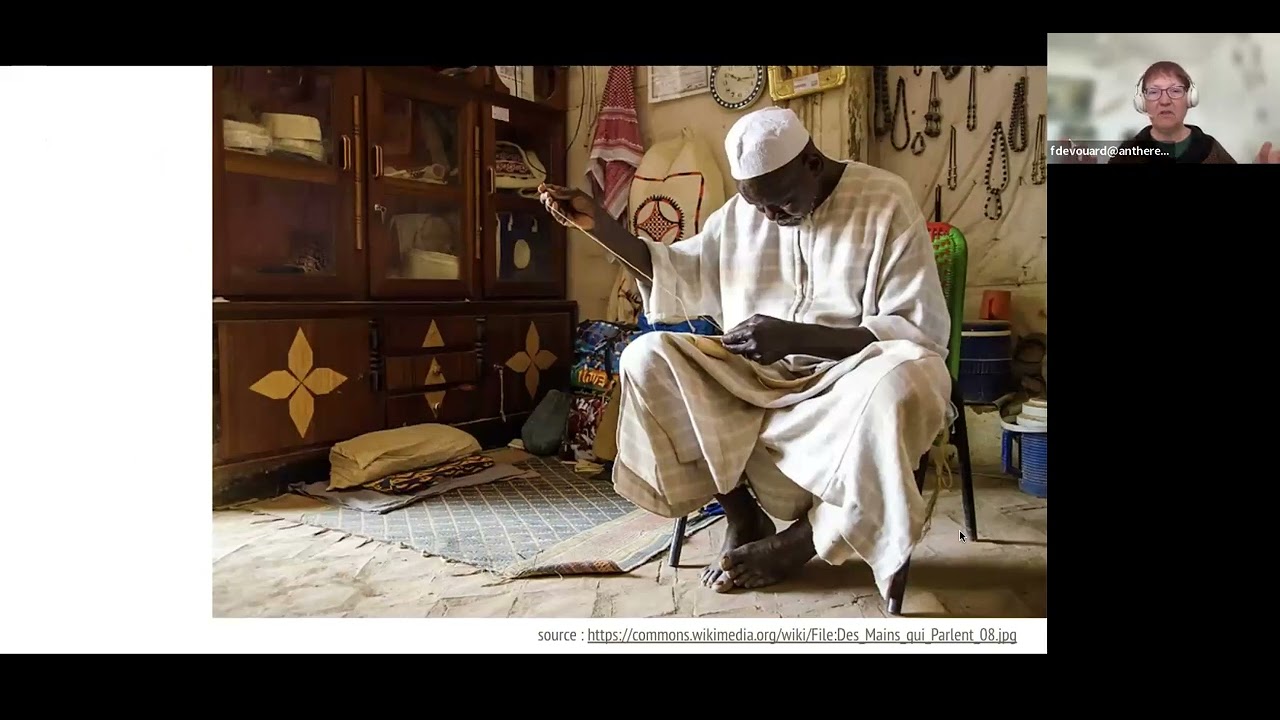
Not all works receive copyright protection; sufficient creativity/originality is required. Simple logos often fail the originality threshold and enter public domain, while complex logos may be protected. Threshold standards vary significantly between jurisdictions—U.S. has higher standards than Europe and Canada. In Africa, limited case law creates uncertainty. Freedom of panorama allows photography of protected buildings in public spaces, but this right exists only in some countries (Switzerland) and not most African nations (Benin, Botswana, Burkina Faso, Cameroon, Ivory Coast, Zambia, Togo, Sudan, South Africa). The de minimis doctrine provides a workaround: tiny portions of copyrighted material within larger images may be exempt, allowing photographers to capture scenes containing protected elements while complying with copyright laws.
Click to watch →
Wikimania 2011 - 1st Day - Wiki Academy: Copyright and Intellectual Property
428
Freedom of Panorama (FOP) is a copyright exception allowing depictions of public buildings and sculptures without infringement. It originates from German copyright law and exists in various forms globally: Israel covers architecture, sculptures, and applied arts; the US only covers buildings; the UK has strong provisions but excludes 2D works; the former Soviet Union generally restricts to non-commercial use; France and Italy have no FOP. Wikimedia Commons faces implementation challenges including inconsistent speedy deletion practices, translation difficulties, vague statutory language, lack of case law, and enforcement delays. These problems create approximately 50% failure rates in deletion requests and raise questions about fairness to contributors who uploaded images without prior warnings.
Click to watch →

Architecture & the Media - Workshop: Copyright in architectural images
623
Freedom of panorama refers to the possibility of reproducing works permanently located in public spaces without infringing copyright. The European Union Directive of 2001 provides Member States the possibility of having this freedom of panorama in their copyright laws, but does not require such rules. Different member states have varying approaches: UK allows photography/film/broadcast of works permanently situated in public places; Germany requires images to be taken from public ground without utility like ladders or drones; Spain allows reproduction of works in public space; France and Italy have this limitation only on very specific cases based on case law rather than statutes.
Click to watch →
Deep Dive
Deep dive into landmark-related trademark litigation, such as the iconic 'Rock and Roll Hall of Fame v. Gentile' case.

Michigan Music History Podcast Ep 2
166
The term 'Rock and Roll Hall of Fame' is trademarked by the Rock and Roll Hall of Fame in Cleveland, Ohio. When the Michigan Rock and Roll Hall of Fame was being planned, the Cleveland organization told them they could not use the name 'Michigan Rock and Roll Hall of Fame' and suggested using 'Michigan Rock and Roll Legends' instead to avoid legal issues. The Michigan organization had to include 'Legends' in their name to avoid potential lawsuits.
Click to watch →

Leo Lins PRESO. MC Poze LIVRE. ISSO É JUSTIÇA?
24.5K
Comedian Danilo Gentile was condemned in 2021 to pay an indemnification of approximately 40,000-42,000 reais to the nurses' union for a joke about a nurse. Unlike Léo Lins, he was not sentenced to prison, and the money went to a union rather than an NGO.
Click to watch →

Pastor Tolan Morgan • The Man Question • Fellowship Bible Baptist Church
16.5K
When God has marked you, it means you are His possession, His property, and He has purpose on you. You are His trademark, His landmark, and His personal mark. The speaker states that this is why the enemy cannot destroy you because you have been marked by God. Every weapon formed against you has not prospered because you are God's landmark, trademark, and personal mark. When God gets you on His mind, He is about to pay you a visit. The speaker distinguishes between God's visits to people under the covenant (friendly reasons) and people not under the covenant (hostile reasons).
Click to watch →
Distinguished Jurist Lecture with Hon. Karen Valihura L’88, Delaware Supreme Court
538
In Brookfield Asset Management v. Roster (2021), the Delaware Supreme Court overruled Gentile v. Rosette, a precedent it had decided 15 years earlier. The court found separate and independent direct and derivative harms involving economic and voting power resulting from alleged overpayment by a corporation of assets to a controlling stockholder. The court explained that when examining a question of law in a prior case, the essential danger is that parties have acted in reliance on the answer the court previously gave. The court noted that precedent should not be overturned by narrow majorities and very recent precedent should not be lightly overturned when the only change is opposition or mere disagreement with the reasoning and outcome.
Click to watch →

Liberdade de Expressão e Danilo Gentili
1.1K
Humorist Danilo Gentile was involved in a controversy with politician Maria do Rosário. After making a joke about her, she sent an extrajudicial notice, and he made additional offensive remarks. She filed a criminal lawsuit for the crime of injúria (insult), which is a crime against honor that can result in criminal penalties.
Click to watch →
Deep Dive
The legal and business frameworks of licensing agreements for utilizing famous landmarks in media, video games, and commercial merchandising.
The Rise & Fall Of 4Kids Entertainment - PART 1 | Tekking101
132.2K
Licensing is a business arrangement where one company authorizes another company to temporarily access its intellectual property rights. In this arrangement, the original rights holder grants permission for another company to use their concepts, names, likenesses, or properties for a specified period in exchange for payment. A concrete example provided is Nintendo licensing Mike Tyson's likeness for the video game Mike Tyson's Punch-Out!!, which later had to change the character's name to Mr. Dream when the license expired.
Click to watch →

SDCC Exclusives + a NEW wizard CONFIRMED! Live with Nerd of the Rings & Happy Hobbit #TORNTuesday…
1.8K
The panelists explain that officially licensed merchandise requires rigorous approval processes and legal agreements comparable to major adaptations like video games and films. These frameworks involve signing agreements similar to those used by Peter Jackson's producers and Electronic Arts for their Lord of the Rings games. The licensing process ensures commercial sales maintain quality standards and proper authorization, establishing standardized protocols for commercial use of intellectual property across different media formats.
Click to watch →

ANA MARIA BRAGA TEM CRISE AO VIVO NA GLOBO E PÂNICO ANALISA TUDO
89.7K
Character licensing generates significant revenue through merchandise and products. The video explains that the Friends TV show generates approximately one billion dollars annually in licensing revenue. Characters like Superman and Batman (from DC Comics) can be licensed for video games, mobile games, toys, and other products. This demonstrates how intellectual property rights create ongoing revenue streams beyond initial content creation.
Click to watch →

Amiibo Shopping w/ FGTEEV Mom & Chase! Surprise + Unboxing Super Smash Bros 4 WiiU - Wave 1
4.5M
Popular video game characters often become licensed merchandise that extends beyond the original game platform. The video shows characters from various Nintendo franchises including Mario, Kirby, Princess Peach, Link, Wii Fit Trainer, Villager, Samus, Donkey Kong, and Yoshi being sold as physical figures. These licensed products allow fans to own tangible representations of their favorite game characters, creating additional revenue streams for game developers and providing collectors with opportunities to expand their collections beyond digital gameplay experiences.
Click to watch →
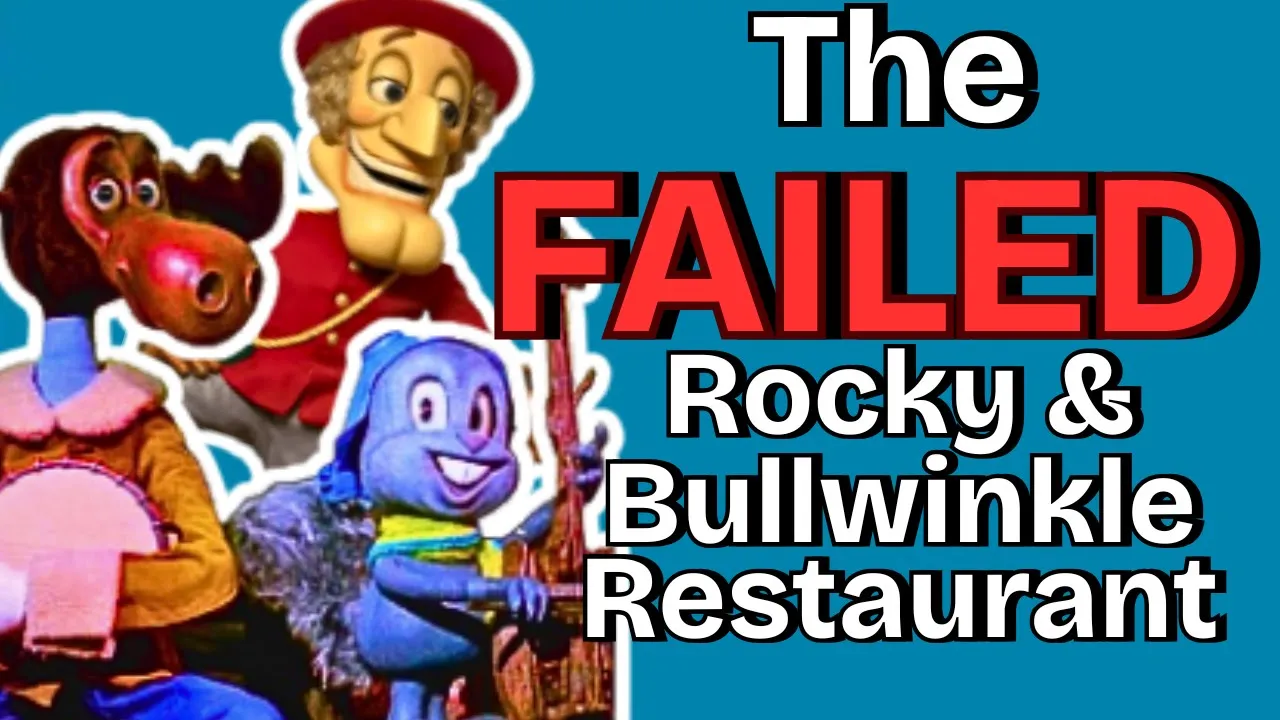
The History Of The FAILED Rocky And Bullwinkle Chuck E. Cheese KNOCKOFF - Bullwinkle's Restaurant
58.9K
David Brown obtained permission to use the Rocky and Bullwinkle characters for merchandise and entertainment purposes without owning the intellectual property rights. This demonstrates the business model of character licensing, where third parties pay for the right to use established characters in new products or venues. Brown used these rights to create a traveling live show featuring performers dressed as the characters, introducing a new character named Moon Beam (a female moose love interest for Bullwinkle) specifically for this performance.
Click to watch →
Landmark Blur
Copyright vs Trademark
Commercial Purpose
Risk Assessment
Permission Attempt
Uncertain Outcome
Final Decision
Invitation
Landmark Blur
0:03- 1
Explains why a famous LA landmark is blurred despite being iconic.
- 2
Mentions trademark law governs commercial use of recognizable designs.
The Public Commons and Freedom of Panorama Defense
While landmark owners often assert trademark rights to control commercial representations of iconic structures, critics argue this constitutes trademark overreach that threatens the public commons and freedom of expression. This counterpoint—often grounded in 'Freedom of Panorama' laws and free speech principles—posits that landmarks, once integrated into the public sphere, become part of a shared cultural heritage. Opponents of strict trademark enforcement argue that allowing private or public entities to monopolize the visual representation of public architecture stifles artistic creation, documentary filmmaking, and independent photography. Furthermore, legal scholars and courts have sometimes limited these trademark claims (such as in the landmark case Rock and Roll Hall of Fame v. Gentile), ruling that a building's shape does not automatically function as a trademark unless the public perceives it specifically as a brand identifier rather than merely a depiction of the monument itself. This perspective advocates for preserving public spaces and structures as open, shared resources for creative expression.
Basic principles of Trademark Law, including how trademarks function as source identifiers and the concept of distinctiveness.
The fundamental legal distinction between real property rights (ownership of physical structures) and intellectual property rights (ownership of intangible brand elements).
The legal definition of 'use in commerce' and how it separates commercial marketing from artistic expression or news reporting.
The concept of Nominative Fair Use, which allows the descriptive use of a trademarked term or image to identify the actual product or place.
Advanced analysis of architectural Trade Dress, focusing on how specific building designs can be registered and protected under IP law.
Comparative study of 'Freedom of Panorama' laws internationally, analyzing how different countries balance public photography with IP protection.
Deep dive into landmark-related trademark litigation, such as the iconic 'Rock and Roll Hall of Fame v. Gentile' case.
The legal and business frameworks of licensing agreements for utilizing famous landmarks in media, video games, and commercial merchandising.
6.7M views211.7Klikes2:24@TomScottGoOriginal Release: 2015-11-02
Welcome to the United States, welcome to Los Angeles, and welcome to the world-famous [BLEEP].
Trademark rights are an interesting thing.
You may already know about copyright, about it's been extended in the US and Europe many, many times, and always -- strangely enough -- just before the early Mickey Mouse cartoons were about to become public domain. But that's copyright, not trademarking. Separately to those cartoons, the name and basic design of Mickey Mouse is also trademarked. It's something that Disney use to sell... well, many, many, many things. So even if those early cartoons were to go out of copyright, I couldn't start selling my own Mickey Mouse merchandise, the same way I can't just set up a store called Wal-Mart or start selling my own drink called Coca-Cola. The rights to the names and designs don't have an expiry date, as long as they're being used and defended.
The distinction is about commercial purpose. Which is why I've blurred the [BLEEP] behind me. You already know what it is and what it looks like, it's one of the most recognisable landmarks in America. You can easily find photos and videos of it all over the web, even videos of people climbing it and being chased off by the police. But am I using it for a commercial purpose by making this video about it? I don't think so, I'm using it nominatively, to describe the thing itself, which is legal. But am I willing to risk it when there are lawsuits from the trademark owner and out-of-court settlements going back decades?
Now, could I have gotten permission if I'd made a couple of phone calls? Yeah, maybe, but they'd have probably have charged me a fee and wanted me to sign a lot of paperwork, and frankly, I'm on vacation. Am I likely to get sued if I actually show you it? Probably not.
But am I absolutely, 100% sure that the trademark owners wouldn't go after me if I showed you one of the most recognisable landmarks in America? And that I wouldn't have to settle out of court or risk the cost of defending a very expensive lawsuit?
No. I'm not 100% sure.
That's the reason that there's just a blur of pixels behind me.
I'm out here in LA for another few days. If any YouTube types want to collaborate on something on November 6th or 7th, send me an email, details are on screen now. I don't have much time but it'd be great to do something, so do get in touch.
Oh my god, it's bright out here.
[Translating these subtitles? Add your name here!]
Up Next

25:29
Domino's Trademark Threat Over Restored Car: Legal Analysis
@lawfulmasses
126K views•2018-03-19
4:27
US Secondary Sanctions Impact on EU Businesses and Blocking Legislation
@Bureauvandijk
1.6K views•2019-03-20
5:27
Forensic Phonetics: Speaker Identification in Legal Cases
@nptel-nociitm9240
539 views•2025-03-19

24:42
Police Interrogation Tactics: False Confessions & Legal Reform
@LastWeekTonight
7M views•2022-04-18
Related Study Plans & Knowledge Roadmaps
Structured learning paths in Law
law
Self-Defense Law: Imminence & Castle Doctrine
01Foundations of Self-Defense Law
02Imminent Threat & Reasonable Belief
03The Principle of Proportionality
+ 3 more learning modules
12h6 modules
Explore Roadmap
law
Defamation Law: First Amendment & Actual Malice
01Introduction to civil torts and the First Amendment
02Elements of Defamation: Libel and Slander
03Public Figures vs. Private Individuals
+ 2 more learning modules
8h5 modules
Explore Roadmap
law
Hearsay Rule: Trial Evidence & Exceptions
01Introduction to Trial Evidence & Courtroom Basics
02Demystifying Hearsay: The Core Definition
03Non-Hearsay: Exclusions Under FRE 801(d)
+ 3 more learning modules
14h6 modules
Explore Roadmap
law
Medical Malpractice: Law, Liability & Care
01Foundations of Tort Law and Civil Liability
02The Four Elements of Medical Malpractice
03Defining and Proving the Standard of Care
+ 2 more learning modules
12h5 modules
Explore Roadmap