

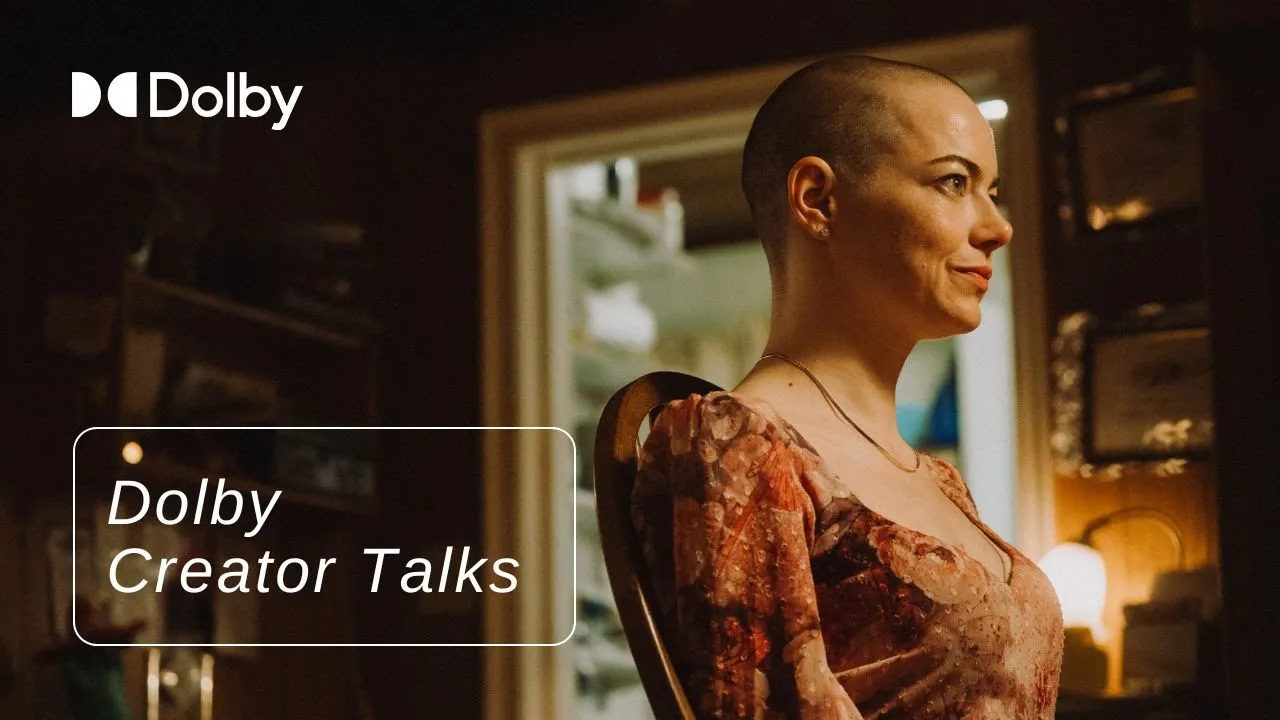
In independent filmmaking, sound design can serve as a primary storytelling tool that externalizes a character's inner psychological world, creating immersive experiences that traditional musical scores cannot achieve; this approach involves using heightened, abstracted sounds and spatial audio techniques to build the character's reality rather than merely accompanying the narrative, as demonstrated in 'If I Had Legs I'd Kick You' where sound design functions as the film's score and creates visceral bodily reactions in the audience.
Sound Design as Storytelling: Mary Bronstein & Filipe Messeder | Dolby Creator Talks
Added:Fundamental concepts of cinematic sound, including the distinction between diegetic (sound originating within the film's world) and non-diegetic sound (such as musical scores or voiceovers).
The standard post-production audio workflow, specifically the collaborative relationship between a film Director, Sound Designer, and Re-recording Mixer.
Basic elements of soundtrack construction, such as Foley, dialogue editing, sound effects (SFX), and ambient room tones.
An introductory understanding of spatial audio and multi-channel sound formats like Dolby surround sound.
The study of psychoacoustics in film, exploring how specific frequencies, silence, and sonic distortion physically and emotionally affect the audience.
Advanced spatial audio mixing, focusing on object-based audio production and immersive mixing layouts like Dolby Atmos.
Auteur sound analysis, researching the distinct audio styles of filmmakers and sound designers like Walter Murch, David Lynch, and Alan Splet.
Hands-on experimental sound design techniques in a Digital Audio Workstation (DAW), such as using sub-bass, asynchronous sound, or extreme time-stretching for narrative effect.
424.1K views61likes54:06Original Release: 2025-10-21
Welcome to Dolby Creator Talks. This is a show about how artists use technology to tell their stories. And I'm your host, Glenn Kaiser. Today we're talking about If I Had Legs, I'd kick you, the searing and darkly funny motherhood drama from A24, which features a tour to force performance by Rose Burn. The movie made quite a splash when it premiered at this year's Sundance Film Festival, and it opened last weekend in select theaters. Joining us today are writer, director Mary Bronstein, and the movie's supervising sound editor, sound designer, and re-recording mixer, Philippe Messier. I'm especially excited to talk about this film because it takes such an unconventional and wildly effective approach to sound as a storytelling tool, and it features an incredible Dolby Atmos mix. Here's my conversation with Mary and Phipe. I got the chance to see your movie at the Telluride Film Festival um several weeks ago. Wonderful. and I knew within 5 minutes that I wanted to have you on the podcast. We had to we had to talk about this completely completely unusual track that you guys put together on this film and I'm just so I'm so happy to that this has finally come together and we're able to to get you on the podcast. Thank you. Thank you for having us. Yeah. Thank you so much. Yeah. So, often times on this podcast, especially when we're talking with uh writer directors, um I I like to talk about how they choose to start the movie. You know, that first few minutes, you you have so much responsibility. You have to not only introduce the characters and the situations, but you really also kind of have to set the the cinematic rules of the road and explain to the audience kind of how you're going to tell this story. So, I want to talk about the very first scene and if I had legs, I'd kick you because I feel like it just so richly sets up how you're going to tell this story. So, the the scene is a conversation with your main character, Linda. Uh it's it's you know, it's with her daughter and a doctor and the thing that we notice right away is that the entire scene plays out on a pretty extreme closeup of Linda who is just an amazing performance by Rose Burn. And so I wanted to talk with you about your decision to start the movie that way. Why you chose, you know, to play that entire scene. We never see the other people. Why you chose to play the entire scene in a close-up on Linda and sort of I'm curious what then the possibilities for sound design that that opened up by making that decision. Absolutely. Uh, and I should point out too, um, which I mean the movie is not shot in chronological order, but it just so happened that we shot that opening scene on the first day. Uh, that was just a happy scheduling accident, but um, yes. So, I open the the film with a closeup, which you think is a pretty tight closeup, uh, but the camera's on a dolly and keeps getting closer and closer and closer until we're right up in her eyeball. And um as you said um what I very much was trying to do was tell the viewer this is the language of the movie. This is what you're going to be experiencing for just under two hours. You're going to be in this woman's point of view. You're going to be in this woman's reality. And so what I'm doing is making that in a very literal visual sense. You are practically inside of her head. Um, and that's the going up into the eyeball. And, uh, it teaches the the viewer, uh, how it's it's it's shocking, I think. Uh, it's a very big swing to open a movie that way. Um, but it, uh, in my mind pays off because it really does tell the viewer, um, get ready because by the end of this movie, you're going to know every pore on this woman's face, every hair on her hairline, everything. and I'm gonna make you in a in a very radical sense um be cut off from any way to reality test against her reality. So, uh you know, as you pointed out, we're not seeing the daughter's face. We're not seeing the doctor. We do end up seeing the doctor who who I play, by the way. Um and you and you do it very well, by the way. It's performing. I'm a nicer person than than that character. Uh but one of the first lines in the movie um I say off camera which is perceptionist reality and that's a cornerstone of the entire movie storytelling wise, visually and soundwise that we are in this woman's perception. We don't know. We have no way to tell because we don't see her from we're never anywhere where she isn't. We we don't see her from anyone else's perspective. We don't hear anything she doesn't hear or see anything she doesn't see. So, we have no way to reality test against um what she's going through. What she's going through is a is a hell. Um she's in hell and she's sort of spiraling down if you want to go, you know, bring Dante into it into all the different levels all the way down. Um and um what that opened up for me uh from a visual um uh storytelling perspective is that I could employ surrealism. I could employ um abstraction and I could employ um even experimental film making within how I show how I tell the story. And um the close-ups are used throughout. And in fact, on that very first day, Rose was like, uh, she knew because it's on a script level. It describes, I wrote the script, um, knowing I would direct it. So, it's a very visual, uh, visually written script and as Phipe will will talk about, um, sound as even in the script. Um, and uh, you know, she knew that it would get close, but when when it actually got that close, she literally said to me, "Are you are you kidding? Is this" And I was like, "Nope, nope, nope. This is what it's going to be." And she's like, "Okay." And uh, you know, we were filming on a 35mm camera and you when it is silent in that room, you can hear the of the film. Uh and it just sort of lent itself to um to the feeling of uh this is a this is a practical movie. Uh almost all the effects in the movie are practically done in the room. Uh and using film is just another part of that. It's an object that you can touch and you can hear and you can even smell.
um you know and um in that very first scene um is where we um use uh creative sound design. Um uh I can I I don't want to hog it up. I'll I want Philipe I'm going to throw it to you in one second. But one thing that um when Philipe and I started talking about it and he got right away is the idea that uh the sounds in this movie should be as heightened as the storytelling. So in that very first scene we hear birds outside the window, right? Um but those birds are are a little little too perfect sounding. They're a little little louder than birds might be. Um, and then in fact they're the same birds that you hear outside of her window, her therapy office window later. Um, that can't be right. Uh, and even if the audience doesn't pick up on it on a conscious level, subconsciously there's something going on that's uncanny. But Philipe, I want you to talk about that first cue and we're up in her eyeball. Yeah. Well, so you know, just when we started when I read the script and it opens with this incredible scene, there was so much description of of Linda, of Rose and what she's feeling inside. And when Mary and I sat down to just watch some scenes and watch a rough cut that we had, it became immediately apparent to us that we were inside of Linda's head. And so when we started playing around with the very first turnover and just just thinking about um how things should sound, actually the very first thing we did instead of starting to lay down sound was to start panning around the voices was to put her in the center and was to just localized the entire film as swirling around her. Um that was one of our very first conversations uh before I had like seen the film and it became immediately apparent to me that this was the language of the film. Uh Mary had showed me um kind of a like a a pitch deck uh amazing uh like sketchup of of how the film would be. And a big part of that was the sound. we would be experiencing the world before Linda even notices it, right? We're um the the film is coming at us in a way that you're that it's it's more like a hear don't show, right? And um so placing her right in front and and the her daughter, you know, to our to our left and the her doctor to our right immediately throws you into this language. We're like Mary said, we're telling the audience that you're not in for for your standard film ride. You know, we are you're experiencing this. You're not watching this. That's exactly right. And I got to say like that that's what excited me from that very first scene because of course you know I I'm attuned to this so I think about it but like from that very first moment when I realized like oh only Linda's dialogue is coming out of the center channel you know the other people you're pinning them to other spaces other points in the space and it's a that's an element that you recurse throughout the film we get voices coming in from all around us which you know Philipe you know you that is something that is not traditionally done in film mixing So immediately I thought, "Oh, this is going to be really interesting. These these people are doing something really interesting and distinctive in the way they're handling the sound." So I just thought it was really it's a it's a bold choice. You know, Mary, you you you I think you've referred to as as a as a as a big swing and but I think it it completely paid off.
Yeah. And I think like there's some movies, you know, that you and I'm not saying one is I'm not saying this in a derogatory way. Um, but there's some movies that you consume and then there's some movies that you experienced. And from the very beginning, the conversations I had with all my department heads and certainly with Philippe when we were in the sound mix was this is a this is a film that you this is an experiential film. This is this is a film that I want people to be um totally uh when they're sitting in their movie seat, they are engulfed um by the emotions that Linda's having and by the things that she's seeing and the things that she's hearing. And um you know, I am not a sound designer. I'm not a sound technician. Um but having the expertise of Phipe and and Ruie Garcia um also uh telling me that there are these tools that we can use. We can do things like we can separate out the voices. We can have we can we can have it so that uh if Linda is hearing something behind her that we hear it behind her or if with the roof collapse for example that that is happening above us visually we can hear it above us if we're in the theater.
They came out.
All right. Hey. Yeah, we just got home and you would not believe.
And those are things that I didn't um I came to the table without knowledge of. And once um they opened that those possibilities up to me. Uh I would say that the being in the sound mix was one of the most fun parts of making the movie. It was like a playground. It felt like play.
It was hard work. Um but it was like playing. It was experimenting. It was I'll never forget the day that uh that I've said this before to Philip anyways last but the day that he said that he got a Herie Gertie. I was like, "Oh man, I I am I was like I'm I don't know what you're going to do with the Herie Gertie, but I am so excited about this." Um and just just the idea that uh this movie also I should point out to to uh people listening and watching had does not have a score in a traditional sense in in that um the the what functions as a score is all sound design and soundsscape. Um, and that was something that uh that happened. Uh, I knew I I didn't want to score, but you kind of have to go through um the process of, you know, well, they all movies have scores, so let's try to find the right kind of score. And it never ever ever was right. And I finally said, this movie does not have a score. It's all sound design. Um, and one of my biggest influences for that was, um, the movie Eraser Head. Um, and I think that the way that we ended up working, uh, really ended up being in that tradition where you have, you know, David Lynch, uh, creating sounds by putting a microphone in a bathtub and swirling a toy boat around it, you know, and creating a sound that you don't even know what that sound is, where it comes from, or how it was created, but it becomes part of uh, the film in a way that of course that's the sound that is happening. It's so interesting to me that you invoke that and of course that was a legendary collaboration between David Lynch and his longtime sound designer Alan Splat just a master of the form. But like that movie, your movie uses sound as a as a very sometimes a very blunt tool to heighten tension and to create this this very uncomfortable feeling. And and I love the way you talk about the your film as being, you know, an an experiential uh kind of uh a cinematic presentation because, you know, I've seen the movie twice now in theaters with with a with an audience and the reactions are just all over the map. You know, there's there's there's there's great nervous laughter. You know, people people need to release that tension. And then I I you know we we'll get into this but there's you know a moment later in the film where the feeding tube is being removed and I was sitting sitting next to a friend of mine who is a producer who has made some movies that you have definitely seen and I realized out of the corner of my eye that he had his hands over his ears like he just it was just too much. Yes. It's just I'm I'm so you must you must it must be such a treat for you to watch how people are responding to this. It is.
It really is because um there's also um very early on in the film and this goes to some of the humor uh or tension really you know to me there's two ways while watching a movie that your body can release tension or that the filmmaker can use those ways as a tool and one is crying and one is laughing right and you know we have I give both of those opportunities in this film and I think uh it depends on how who you are and what you're coming into the movie seat with. How humorous you're going to find the moments that I intend to be humorous or not. Um, and I h I've had my my hard laughers and I've had my nervous like should I be laughing at this or not? And I've also there's also people that that that uh that don't the humor doesn't land for them at all and it's still a satisfying experience. And um that's a tight rope that I that I walked uh very carefully. Um but the sound has a lot to do with that. Early on in the film, there's a part where Linda is she's got this one moment where she's like, "Ugh, the child's in the bathroom. I have one moment to myself."
and she starts stuffing cheese in her mouth. And Phipe, I don't know if you want to talk about how you what the sound with that, but I've had people be like, it is people laugh at that scene, but then it's so disgusting. I was like, I want to I want to make this and any other food that is be as disgusting as possible. Absolutely. Yeah. No, that's an interesting moment also because that was actually one of our first um besides the like the score cue that comes in, right? You know, when we're in the doctor's office, that is also a moment where we play with our perspective a lot.
You know, we drop out almost all the sound and all you're hearing is her chewing. You're really going into Linda's head here. And it's I it's one of the only moments of the film other than when she returns to her house later on where we actually drop the sound. It's, you know, it's it's when you're really inside Linda's head where we give you that break and then the rest of her hell comes rushing right back in. Uh yeah. So that was and and you know that was a that moment finding finding the sound of that moment was a was a big part in finding the language of the film. Um when you know when we talk about uh Alan Split and David Lynch, a lot of their work was was devised in in rhythm and in the in in like the repetitive nature of a lot of the the the beautiful background work that Alice B did. Um and when I first watched the full cut of this film, what it was giving me was so many beats and rhythms, right? This film has almost like a a metronome going throughout it. the entire time in the baby monitor, but also in her breathing exercises and the constant wave crashing that we hear when we're outside of the motel and eventually at the beach.
Um, all of these rhythms, we really played into it. That was our, you know, part of our first conversation. You know, we wherever the baby monitor drops off, something else will pick it up to continue that tempo, that that metronome. I I see what you're saying because uh when she has that baby monitor, we're getting there's a there's a a rhythm to the to the machine, the the the the pump device that that daughter is hooked up to. That's that's fascinating. Yeah, that's I I I I'm I'm just so I'm intrigued by this because, you know, of course I noticed right away that there's no score, not a traditionalist, so you're using sound design as score, but Mary, I'm kind of curious for you about like that's such a courageous decision and you just mentioned that, you know, I can only imagine that you might have had some push back from some produc from some producers maybe about like what are you talking about? You're not going to so so you did actually experiment with it, but you came back to this core idea. I came back to this core idea.
I I went into it uh knowing that I didn't really want score uh in a traditional way. Um because my uh my feeling about score, I'm not against score, but my feeling about score is that it's what it's meant to do is give an extra ingredient um to the for the audience to understand what's happening emotionally in the scene or to give an extra ingredient for that emotion to occur.
And um what I felt like was between the close-ups and how uh heightened and raw and visceral the performances are um it's almost like a glass of water that's filled up to the top. It's if you put the score in if I always I no matter what we tried to do it it would overflow and it's too much and it's hitting you on the head too much. like this is a dramatic moment. This is a tense moment and and so it just didn't work. And uh you know it's it's with a film uh you fight a lot of battles uh to win the war and that was a little bit of a battle. Um and thank goodness um I I was able to win that one. Um and I think once we were able to demonstrate what we were doing um they totally got it. everybody got it and was on board and and also quite frankly, you know, Rose Burn doesn't need the help. You know, that's what I that's what I mean. And so, and so by using sound design, it's it's not so much uh what a score does as I described, but it's it's giving it's world building. It's it's it's building the world that she lives in. And some of it is in her head. So, I always think of the cues that come in and when you see it in a theater, you know, Glenn, when you see it in a theater, uh, some of those cues are making your chest bones rumble. Um, you know, in a quite a literal way, it's happening to you and in the same way that it's happening to her. Uh, it's making you it's it's the ground under your feet feel like it's rumbling if you're in a theater with the right sound system. And so um uh it's adding to it's taking her inner world and it's externalizing it for the viewer. And then it's also just building out her world. For example, one of when when we do um sound checks um uh and and I was so nervous the first time I had to do a sound check where Philipe wasn't going to be there and I was like what do I do? How do I know? where I don't know numbers and dials and these things and and we have some touchstones that we do. Uh and and one of them he told me is to stay to until the first scene in her office in her office. And if you can hear the clock, you know that it's loud enough. Uh because the clock in her office is louder than a regular clock would be. And it's the way that she is hearing the clock because she wants to get the hell out of there. She wants the session over. She wants to get the hell out of there even though you cannot hear the clock in her therapist's office because she wants that time to be extended and she does not want that time to be over. Uh and and so um that's that was one of the first things that we played with. And also like just the amount of conversations. talk about nitty-gritty uh you know technical discussions. How loud how loud is too loud with the clock? When does it become silly? When is it right? When is it low? But as far as a sound check, um it's that uh it's that when the ceiling crashes, it should it should make people jump and they do. Um and uh the clock ticking um should be heard. uh like the d the it should be it should be upfront um and also for me the birds outside the window uh and those are things that um since I don't know about numbers and dials Philipe um you know spelled out for me and that's what I that's what I use so I always as soon as I I don't I I can't stay in a theater watching my own work um I find it too stressful because as you're saying there's so many reactions that people are having and if somebody's not have if I feel that the room is not giving a reaction that I think should be there. I, you know, that's that's excruciating as a film. Exciting. It'd be like a standup telling a joke and there's crickets. You just want to run away. And so, but I do always stay um uh for the clock if I don't have the opportunity to do a sound check beforehand. But if I do, those are the parts that um that we uh Oh, and the other part uh is uh if I do a soundtrack beforehand, they'll play also the part where the light beam comes out of the hole in the ceiling, which should also make you jump. Um and uh even when I'm doing a sound check, it m it still makes me jump. Then I know that it's loud enough. Um, but I've had some sneaky uh some sneaky uh you know people in booths um we say this is what it is and then they turn it down and I remember Philipe at one point at one screening I forget what it was ran ran up to the booth and was turn it back up. Yeah, that was our that was our Sundance screening. I was like sitting kind of in the middle row and I had to like you know crawl over like so many people sprint to the back and saying that because people aren't used to I think Glenn to your point um people aren't used to um s sound sound in this way and us wanting to get these bodily reactions from sound. Um, and so they're like, "Oh, if it's always at this number, they didn't really mean for for it to be at that number. Let me let me put it back down." No, we meant it. We mean it. It becomes like we start to chase our tail around because the projectionists know that, oh, they mix hot because they think it's going to be too low, so we're going to It just becomes a mess. But Philipe, I'm just curious for you as a as a sound designer, was this was this your dream to to, you know, have have the opportunity to work on a film where it's all on you and you're, you know, there's no score to work against or was it kind of terrifying or was it both? It was a little of both. Um, it's always a dream to be able to carry a film. Um, and especially when it's written for sound. I mean, I when I first read the script, I I told the people that sent it to me that I have to speak to Mary within the first five pages because I I heard it through like just right then and there. Um, and then I went back and finished it, but like immediately I was like, we have to talk to her. Um, it's it's always a dream to be able to carry a sound uh a sound film, but it's it was terrifying when we made the decision to do it.
um because it was not in the plans. Um and certainly I had to kind of change gears and start thinking about things in a different way. Um I had never composed a film before and it was it was a big ask. Um, you know, as Mary was saying, we had started with score and we had started with many different iterations of it. And so me and my team, we started designing uh these more abstract cues to elevate the score to always be a bed underneath it because we were changing pieces a lot and um we always had to have something there to support um the music. It was then in our first temp where um it was like a a two-day session where we we came in because we needed to make something for for A24. And Mary turned to me and said, "Can you just mute the music here?"
And when I did that, exposed the kind of like underlying sound design score bit that I had written to go, you know, like underneath the music. And she said, "Okay, turn that up. That's it. That's the score. That's the score of the film right there." And so, you know, like I had a pit in my stomach and like my heart just sank because I was like, "Okay, we have to develop this. We have to make this into actually something." because it was not necessarily anything in that moment. Well, well, so I I want to dig in on a little bit. What So what what actually are you doing? Like you you've mentioned using, you know, occurring elements in the spaces to provide a rhythmic element, but are you So I I presume that you're just you're you're using tones. You're like, how are you how are you kind of getting to the same point that a score might, but you're using sound design elements? Well, this all started um with the very first thing that Mary and I did was uh Lucian Johnson and Mary Lucian was the the film's editor. Um they sent me the very first a little snippet of the film, which was the scene of the uh the light beam shining through the through the hole. That was for like an audience test screening months before we had started. And they had asked me to come up with something. It was not necessarily supposed to be a jump scare or or not. It was just we don't really have, you know, like uh we we just need like some three options here. And one of the options that I that I came up with was uh besides it being just like a big hit, which was kind of like the obvious was this like accompanying like heavenly light like tone that just comes out of it. And Mary loved that. and took that to the to the test grading. Um, so when we started to think about the score, I immediately went back to that to that one tone that we had created. And yes, that was many different recordings of Herie Gertie and um other like just other tonal sounds. Um, and so I just kept thinking about that sound and how can we stretch it and how can we modulate it. So, um I work a lot with um with Reason, um making uh like synthesizer patches and so feeding that sound back into to Reason and then creating a patch where I can modulate the sound became kind of like the that was our pallet. That was our pallet to work with for the score. And then we just started together. We had a lot of sessions where Mary was sitting on the couch here in the studio and we we would just score the film together. We would say look what if it goes up here and goes down here. What if we introduce a new element? So we started harmonizing on top of that and suddenly we were writing music. Um you know it's it's it came out of the sound design as like a a sound effect in a way but it quickly became score that was that was exactly coming out of the language of the film. You use this to heighten these moments of kind of emotional tension. And I'm thinking about there's a there's a really wonderful scene, Mary, that you have with it's uh it, you know, Linda is it's it's in a a therapy session that she has with Carolyn Prim. Yes. um and and you know who is a a very distraught mother who is very concerned about the welfare of her of her own child and and and Linda kind of drops into this moment of real clarity and gives Carolyn this this advice that I feel like she herself needs to hear and it's just a wonderful moment and I noticed the second time I I saw it like oh this there's a tone that's ramping up here there's something you're you know Philipe you're working very subtly to kind of you to shore up this very important moment and I thought it was just a beautiful very subtle way to do that. Yeah. I mean from a writing perspective that's exactly you totally get it. She's she go she kind of leans forward um into she leans instead of the camera coming towards her which usually is what is happening. She leans into the camera and she kind of leans out of the light and it becomes very shadowy and she kind of goes into a days in her eyes where she's very much speaking to herself. Um, and then she kind of snaps right back out of it. And um, it's it's, you know, effective on a uh, you know, Rose Rose's performance is impeccable in that moment and is completely effective. uh if you had no sound design. But that is one moment where uh sound design just is it's an example where it brings it all together because then we can have this zoning in sound. Um you know and that you that is something that you can only really uh do with sound. Um, and then the tradition, the the transition, sorry, out of that scene into um the scene, the next scene where she's uh listening to um a video, a YouTube video, um is a is a ramp up to where it ramps up so so big that you think it's going to pop and the pop is the is the cut. Um and and that was something that uh we worked on quite a bit, Phipe, right?
um of of calibrating that. But it was one of the most exciting things because it was like I feel like in that in that scene and how it transition to the next scene uh off of the sound um is is the language that of sound in the movie and how it relates to cutting. Uh we do that a few more times where there's like a ramp up and then it's like a rubber band snapping um and the snap is is the is the film cut is the cut to the next scene. And it's so uh the the other one where that happens I think is is where um for me where uh Linda is on the couch um uh crying uh te a tear comes out of her eye and she's saying I I just want someone to tell me what to do and her lip is quivering. It's a very quiet moment but then under that you start hearing this rumbling cut. Oh, we're in a car and the [ __ ] hamster's in the car. And and then the sound the sound in that scene is a whole could probably be a whole other episode of your podcast. But uh but you know, we do that a few times and when I just when I would see it, uh the work uh fully um fully in there uh and watch it back. So magical for me. So magical for me. Um because again uh it's just the difference between um the layering the layering of these sounds and tones that are all um cyclical in the movie. They refer they they refer to other sounds and they refer to other parts that are coming in the future or or whatever. And uh it's just it's it is in lock step with the way that I think my script is which is also cyclical in that uh people say dialogue to other people that then they say to somebody else and somebody else says that same thing to somebody else and then we have of course the theme of the circles and it it just all was so magical. Um, but that first that that cue that you're talking about, um, yeah, Phipe, that took a that took a little bit to get right. Uh, but when we got it right, it was like a magic moment. I remember. Yeah. Well, one thing that, you know, an approach that we took that I was really grateful for was we were trying not to like paste our our, you know, our score, our sound design score on top of what was happening. It always if you listen to the soundtrack of the film it always comes out of something that is currently happening. Um so right so like the rhythm and tempo of her dissociation right then in that moment comes is the tempo of the clock that you kind of lean on. So she leans in the backgrounds drop a bit. You start hearing the clock a lot more and then the bass kicks in with that same with that same tempo just like also like in that scene where she's crying on the couch. What is making her lip quiver, right, is this piece of score, but it's actually just the engine rumbling of the car of the next of of the next scene. I see. You're pre you're preapping the car engine from the hamster scene under the genius. That's just exactly. So, it's and it's like we want it to be like this earthquake that's like quivering her lip and you don't know what it is and maybe there's another squirt cube coming, but it's just the car in the next scene. And then when we are into the scene, it kind of the mix kind of balances out again. Uh we wanted Yeah. everything to be coming out of what Linda's experiencing. That's really fascinating. So Mary, I'm kind of curious for you since this is such a it's such a sound forward film. Yeah. I'm I'm curious. So I would say traditionally, you know, in in most film making, picture leads the sound. And maybe Philipe, this is what you were talking about a little bit, but I'm curious, were there times when the sound concept influenced the way you shot a scene or certainly the way you edited a scene together or maybe even production design? Because it seems like you were really thinking about sound even as far back as when you were writing the script. I was I was thinking about sound um all the way back when I was when I was writing it. Um, for me the um something uh the ocean the ocean was something where um the sound of the o of what an ocean sounds like exists. Um we know what an ocean sounds like. We know what it sounds like when we're close to it. We know what it sounds like when we're in a uh a town that's adjacent to an ocean and we're a little bit far away from it, but it's still there.
And we know what it sounds like when we're in the ocean. Um, and those are those are three different ways to uh and we know what it sounds like when there when when there are violent waves crashing.
We know what those things sound like. Um, and so those are sounds that exist that you don't uh that that were we don't need to invent. They're not abstract. But uh so I but what we ended up doing with them and what Philipe ended up doing with them is abstract them to the point where uh you what I knew what I wanted was the ocean to be everpresent. It's a it's a theme in the film that comes up in a dialogue way. Um, and I wanted um to shoot, we did end up being able to shoot in a practical location where the beach was actually behind um the motel that we shot at. So, it was practical in that sense. And I wanted that because I wanted uh even when the actors were on set um that you're hearing that in the background and then um we could so we have the actual sound uh you know uh that's that's being picked up uh on set. Um and then we can use that. I knew that I wanted to use that later in sound design to to in some way that would heighten it. but I didn't know what it was. But so that's an example of sound sort of leading um leading an idea. I knew that when Linda is running into the ocean. Uh I knew I mean and the universe uh smiled upon me that night because I will tell you that every other night that we were shooting on on MTalk I was psychotically cons I was just consumed by what we had one night to do that and I you can't control the ocean. Uh and and you can't know what waves you're going to get. And I would go out with my with my flashlight and look and it was as calm as anything every night. I swear to God. And I would be like this scene this scene is not going to work if the ocean is calm. Freaking out. I was freaking out. And then that night it was so violent that it was almost like, "Oh my god, is this too dangerous to do?" But um what I wanted uh I knew is that um I wanted the ocean to be everpresent um so that when we actually have our character literally meeting with the ocean, literally smacking against the ocean that there's a satisfaction there. Um and um what I mean Philipe you can speak to what you did but um you know it's a really I've been told by the audience and this is what our intention was is that it feels like you're being smacked in the face by by the power of the ocean.
Um that's what I wanted conceptually it to feel like. Um uh and I think it sound we achieved that with with sound. Well, you and I spent about 2 days working on just that scene alone. So, um it was it was a big focus of ours and and so was keeping the ocean alive throughout the whole film. Anytime we were anywhere near it, you want to hear it. Um, what I really appreciated about um, you and Luke's um, approach to this was that you were very open to uh, changing the edits um, if if we needed to for sound. There were actually a couple of moments in those big, you know, rubber band snap moments where we did play with where exactly would the cut go, right? So then I would temp in what I felt like was the the natural resolving of the of the rhythm and then Luke would go back in and actually change the edit to match that. Um, another version of that was when we finally dialed in what the correct breathing tempo for the exercises was, you and Chris, uh, Chris Msina, the the DP, actually went in and reshot some of the more abstract um, you know, like whole uh, like dream sequence um, aberrations to match with the sound that we had created.
We then went back and um re-calibrated the the pulsing of those things to match the correct rhythm. And also I actually went back and redid the breath rhythm. Um, so in some parts, I won't give away which parts, but some in some parts it's my it's my breathing instead of Roses because I'm in the sound. I'm in the sound mix and we're uh saying it feels like it needs to be a little bit more like this and Phipe is actually directing me of of the tempo. Uh, and those are moments where sound ended up dictating picture uh picture decisions. Well, there's so much that we could talk about and Mary, you're absolutely right. We could do an hour just on the hamster seat, but we're not we're not going to do that. We're not going to do that. That that's that's the simple obvious choice. But I cannot let you go. I have to talk to you about the the baby monitor. Yes.
Oh my god. So, you know, the second time I saw the movie, I I knew that we were going to talk, so I I had my notebook with me and I was taking notes and I I just want to write here's what I wrote down in my notebook in the dark while I was watching the movie. Sound design, baby monitor, motel, ambulances, medical equipment, voices. Yeah, the baby monitor distorts and picks up other sounds.
It's making me so tense. What was what I wrote in my tense? It's supposed to make you tense.
the idea and this is on a script level and maybe what Philipe is talking about when what he first reacted to because it might be one of the first sounds that I mentioned in the script is that you know she has this idea that it's safe for her to leave the the motel room because she has this baby monitor this tether but at the same time that it's makes her safe it's also like I can't get away because I have this ball and chain machine um those people that that have children um might know what a real baby monitor sounds like. This does not sound like a real baby monitor. And I never wanted it to. I wanted it to sound like we have the um the of the machine um how that sounds and then we have a lot of static um that's loud. She has it turned up all the way. Um, and then there's some and then there's some some sleepy sounds of the child rustling and rolling over and sighing in her sleep. And then um that's all a cacophony of hell for Linda. Um, but but Philipe, you can talk about how those were my ideas of the sounds and then and then it was abstracted. You did sneak in some other stuff in there, didn't you? Or did I did I just make that up? There's a lot of imagination going on in the baby monitor because we're playing along like with just her distance to the room itself. Um there are a lot of voices in the motel and including our um our our neighbor who is listening to a a continuous baseball game all night long. Yeah. And and you do hear all these different like abstract weirdness coming through. Um, but the the main focus here was focusing on the rhythm of the of the you know the feeding tube. And that was one of our like main focuses in the beginning is like what does this thing sound like and what is the rhythm of it?
You know the actually you had a a a really great rhythm to start with the the practical one and you know we just elaborated on it and made it as kind of chaotic as it as it could be. I mean how could you possibly sleep through that thing? But so then really playing up this like this anxiety of um of the machine through the baby monitor wherever she went was that yeah that was a big focus of ours um and done through many different layers of you know speakerphone plugins and many different other uh like um static and distortion um plugins as well. Um, one of my actually favorite moments in the film, uh, for, you know, as far as our our mix goes, is actually when she comes back into the room and she turns off the monitor and then you hear it finally cleanly, uh, like it just picks right back up. She can never get away from it. What it actually sounds like. Yeah. Yeah. And then I'll add too about the baseball game. That is also an idea that came in the sound mix because it sounded there was a moment where we thought um it's too uh we have the oceans and we can have some crickets but it sounds too there needs to be one added element when they're in that hallway uh that exterior hallway that that adds that just is something else going on to add to just be a little chaotic. And that was something that was not in the script.
That was not an idea that came in and in there were different things that we thought of and I forget who said it but like what if the guy's listening to a baseball game in the corner and uh I had um a friend uh just read copy of like an old baseball transcript and we put it in there and this thing anytime you're outside the room is this baseball game never ends. I don't know how notice it, but it's there and it just adds to it adds to the whole thing. Yeah. I mean, it's like this idea of like the indifference, right, of of the world around her, right? Like it's the game that's going on. It's the it's the spa music that's outside of her, you know, her office. All of these things going on are completely indifferent to this chaos that is going on inside of her, but they're all mounting on top of each other. Well, we're coming towards the end of our time, but um one of the things that I just was so uh struck by your film, you know, it's it's not often that we hear Dolby Atmos used in this kind of in this kind of way certainly for lower budget, you know, independent films. I think that a lot of people still think of I mean, I still have conversations with directors about why why do I need Atmos? I'm just making a dialogue movie. I don't have big action sequences.
And to me, your film is just a a great example of of anytime you want to give the audience a sense of a space and take them on a journey. Yes. Uh Dolby Atmos is a great tool. So Mary, it's your first time. You've never worked with Atmos before. What did you kind of like what did you what what did you take away from it and what would you say to a director who says, "Do I need to do I need this this Dolby Atmos thing?" I think it's essential if you are I can only speak to someone who who has only made art films or or something that would be categorized as an art film where the where the creative struggle is at the center of it not a commercial one. So, um I can only speak to that and I would say that uh if you're trying to create something where the audience feels completely immersed in your idea or in perform in what's going on on the screen, it's like the greatest tool because as we were talking about in those moments where we're up in the ceiling in that liinal space um that abstract space and we have the soundsscapes swirling around us um I can have that visually and I do have that visually. But then if the sound was just static um in front um that's a very different experience than feeling like you are actually swirling around in that in that space that has no beginning or end. And I think um when it was explained to me what Atmos was uh I was so excited about it. So the ceiling falls in and and we can hear it from above us as if the ceiling of the theater is actually falling in. How how incredible it's a it's it's another tool in the toolbox. Um uh just like all these other tools that we have. Um and for me um I would say it would be a shame if it was just used on on big budget action films.
uh you know uh the use of it in art films. I think there there's tremendous tremendous experimentation and playing that can be done there that's so effective. Well, I mentioned I I saw the film twice. Uh I knew I wanted to hear the Atmos mix. So there there was a screening at the at the at the Academy in Beverly Hills at the Samuel Goldwin Theater, which is is just one of my favorite movie theaters in the world. It's a great place to watch movies. So, that's where I saw it last weekend and and uh there were a lot of folks there and uh one of the guys that I was talking with afterwards is uh I I'll just I'll just say he has two Academy Awards for sound so he knows what he's listening to. And as he was he was raving about the film as we were walking out, he just said he said to me, "I hope someday I get a chance to mix a movie like this." Phipe. Phipe, how does that make you feel? Well, humbled. So, what you've done is really remarkable. It's really it's it's it's it's, you know, treating sound as a storytelling tool on a whole different level. And, uh, my hats off to you. I'm so I'm so excited that you guys were able to make the time and come on the Dolby Podcast to talk with us today because I wasn't kidding. Like 5 minutes into the first time, I was like, I have to talk with these people about this movie. Yay. We did it, Philipe. We did it. We did it. We did it. Well, thank you so much. Thank you so much for having us on. Absolutely. Congratulations. Thank you so much. Thank you so much. Many thanks to Mary and Philipe for joining us on the podcast today. And an extra special thanks to our friends at A24 for helping us put this conversation together. Be sure to check out If I Had Legs, I'd kick you. It is now playing at select theaters and will be in wider release starting October 24th. We'll have links as always in our show notes. And of course, if you have the opportunity, go see it in Dolby Atmos. If you'd like even more conversations with artists and filmmakers about how they use technology to tell their stories, be sure you are subscribed to Dolby Creator Talks, you can find links to our show on all the major podcasting platforms, including the video version on YouTube, in our show notes, or you can simply search for Dolby wherever you get your podcasts. If you're curious to know more about what we do at Dolby Creator Lab, head on over to dolbycreatorlab.com. There you'll find information about all of our programs. You can access the entire library of episodes of the show and you can sign up for our mailing list.
Until next time, this is Dolby Creator Talks. I'm your host Glenn Kaiser. Our producer and editor is Michael Coleman. Our executive producers are Amanda Schneider and Jack Ferry with additional editing by Matt Nixon. And our production coordinator is Karen Maro. Thanks for joining us.
Up Next

19:04
How Missing (2023) Built Cinematic Tension Through Computer Screen Editing
@EditingPodcast
648.3K views•2023-04-13

26:22
Walking in the City: Urban Rituals and the Flâneur in Contemporary India
@PSBTIndia
1.9K views•2016-08-02
45:20
Yorgos Lanthimos & Johnnie Burn: Crafting the Sound of Bugonia
@Dolby
450.6K views•2025-11-04

1:42
Game of Thrones Opening Credits: A Cinematic Analysis
@gameofthrones
46.3M views•2011-04-18
Related Study Plans & Knowledge Roadmaps
Structured learning paths in General & Interdisciplinary Studies
general-studies
Artificial Light: History, Tech & Human Impact
01The Pre-Electric Era: Fire, Oil, and Gas Lighting
02The Incandescent Revolution and Grid Electrification
03Gas Discharge and Fluorescent Illumination
+ 3 more learning modules
14h6 modules
Explore Roadmap
general-studies
Elevator Engineering: History, Physics & Cities
01From Hoists to Safety Brakes: The Dawn of Vertical Lift
02Hydraulic vs. Traction: The Engineering Physics of Elevators
03Modern Speed, Safety, and Algorithms
+ 2 more learning modules
12h5 modules
Explore Roadmap
general-studies
Rubber: Material Science, History & Geopolitics
01Origins of Natural Rubber & Mesoamerican History
02The Chemistry of Natural Rubber & Vulcanization
03The Geopolitics of the Rubber Boom & Colonization
+ 2 more learning modules
12h5 modules
Explore Roadmap
general-studies
Containerization: Evolution, Logistics & Trade
01Ancient Trade & Bulk Cargo: Amphorae to Barrels
02The Industrial Revolution & Cardboard Packaging
03The Containerization Revolution: Malcom McLean
+ 2 more learning modules
12h5 modules
Explore Roadmap