



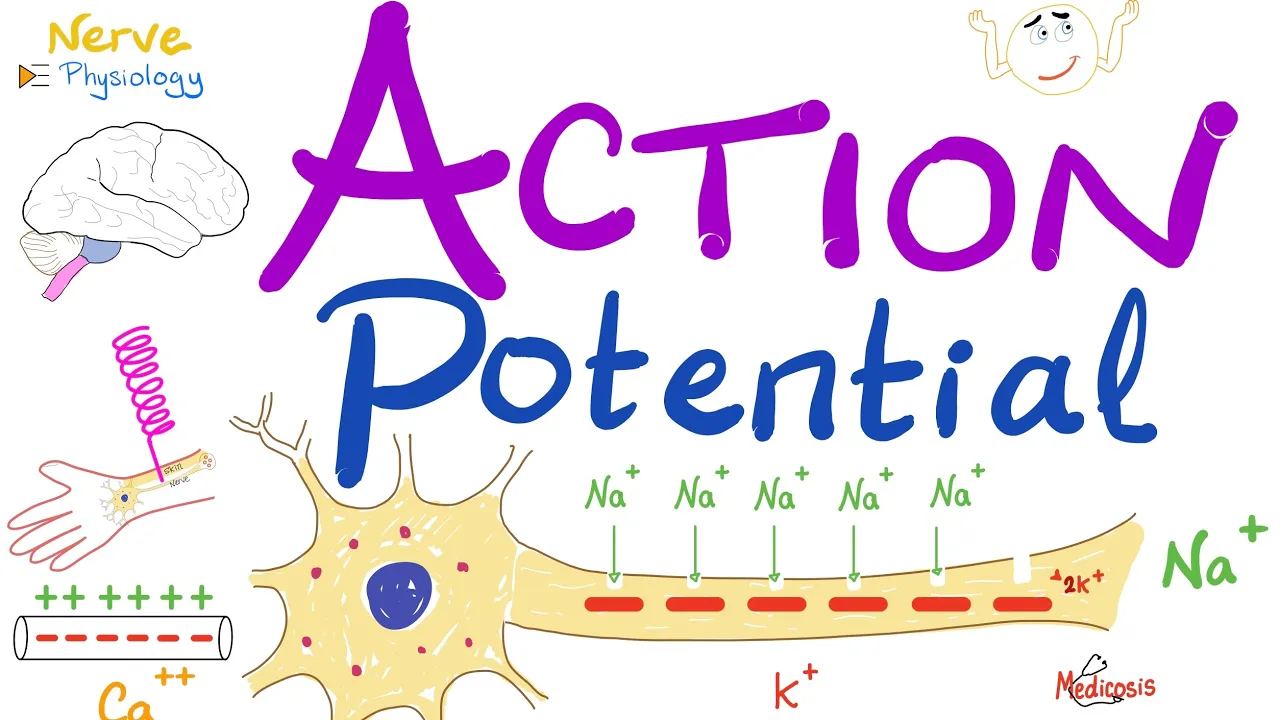














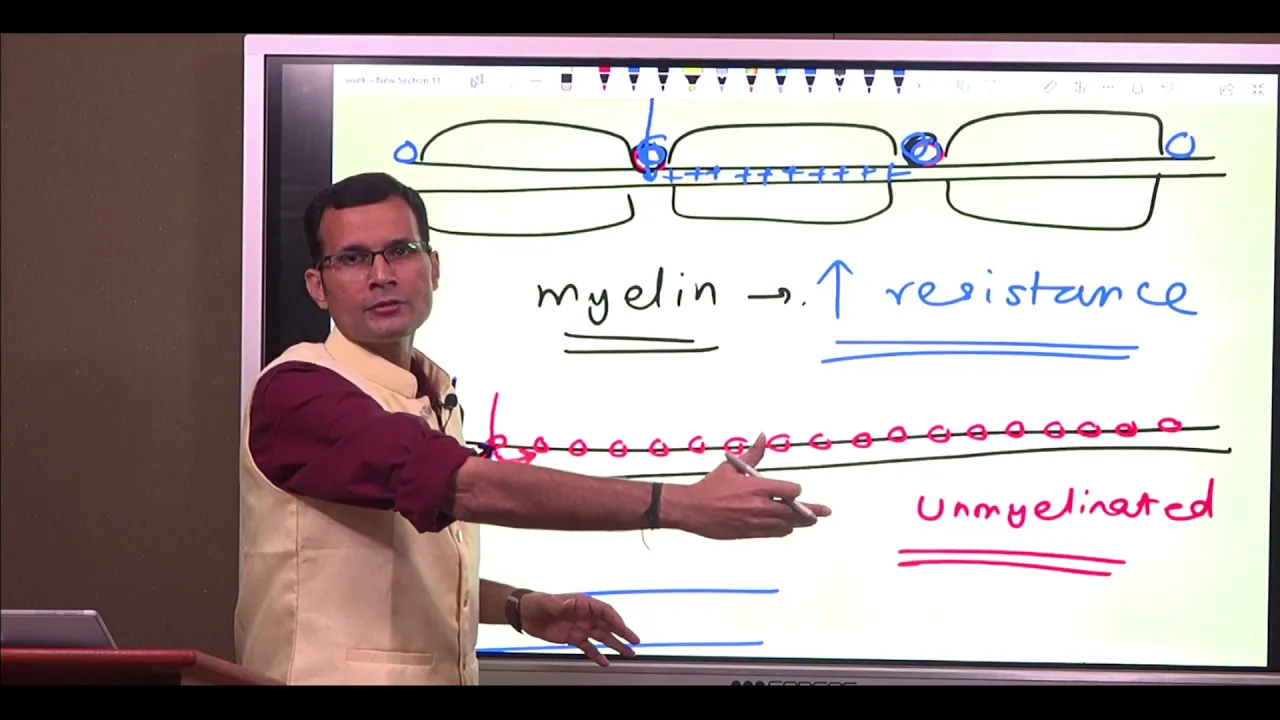



Action potentials propagate unidirectionally along axons through a domino-like chain reaction: when sodium channels open at one point causing depolarization, the resulting positive charge triggers adjacent sodium channels to open, while the original site enters an absolute refractory period where sodium channels are inactivated and cannot be reopened, preventing backward propagation toward the cell body.
Action Potential Propagation: How Signals Travel Along Neurons
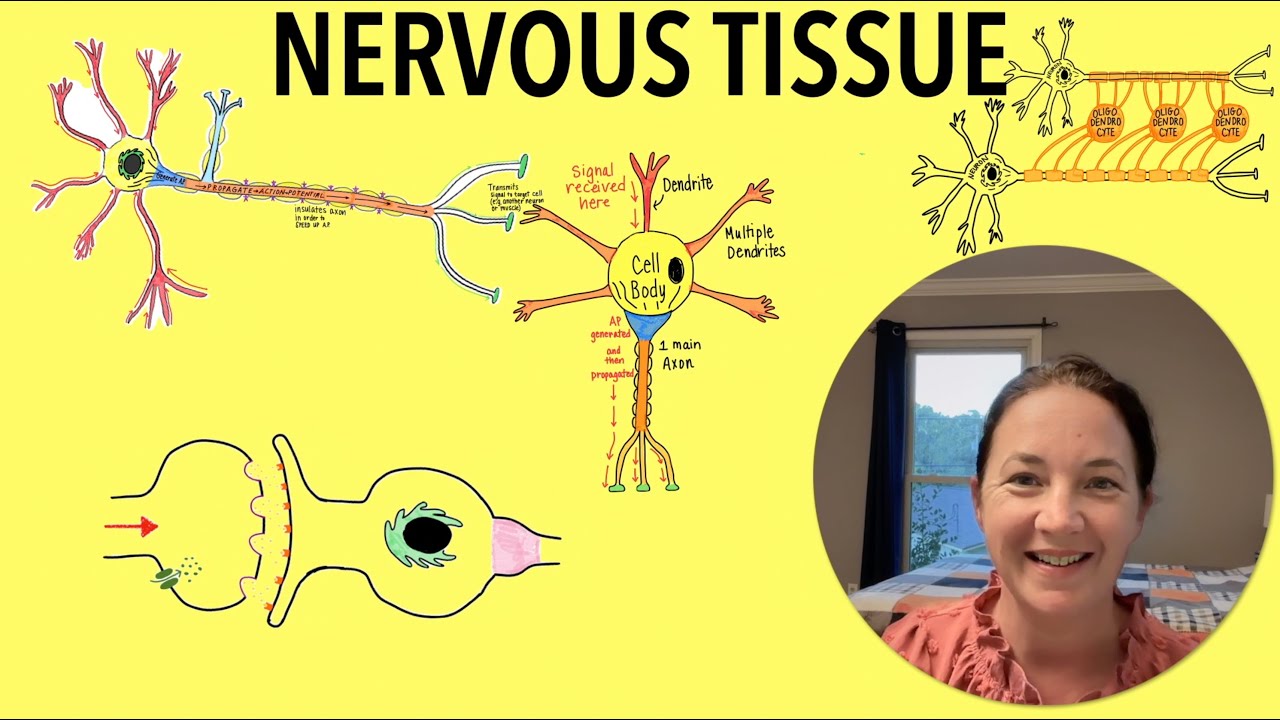
Added:Basic anatomy of a neuron, specifically the roles of the dendrites, cell body (soma), axon, and myelin sheath.
The concept of resting membrane potential, including how the sodium-potassium pump establishes electrochemical gradients.
The individual phases of an action potential (depolarization, repolarization, and hyperpolarization) at a single point on the membrane.
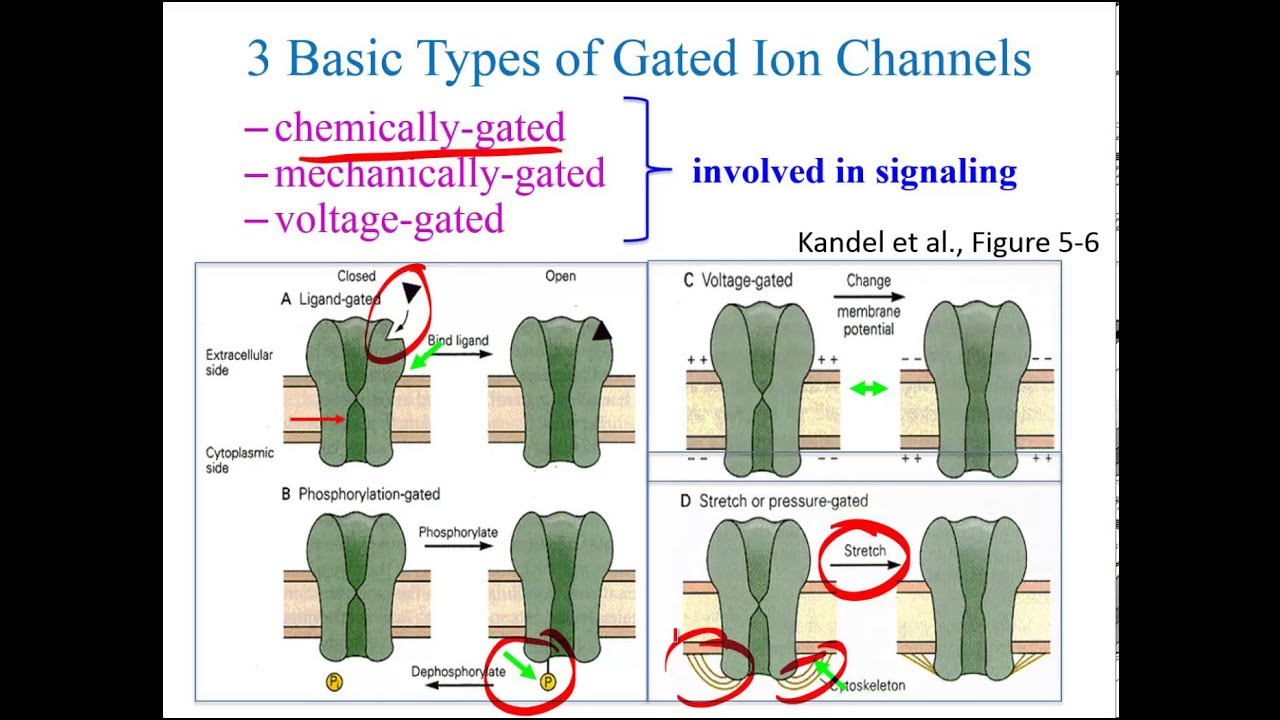
The fundamental mechanism of voltage-gated ion channels and how they respond to changes in membrane potential.
Saltatory conduction, exploring how myelin sheaths and Nodes of Ranvier allow action potentials to 'jump' and travel faster.
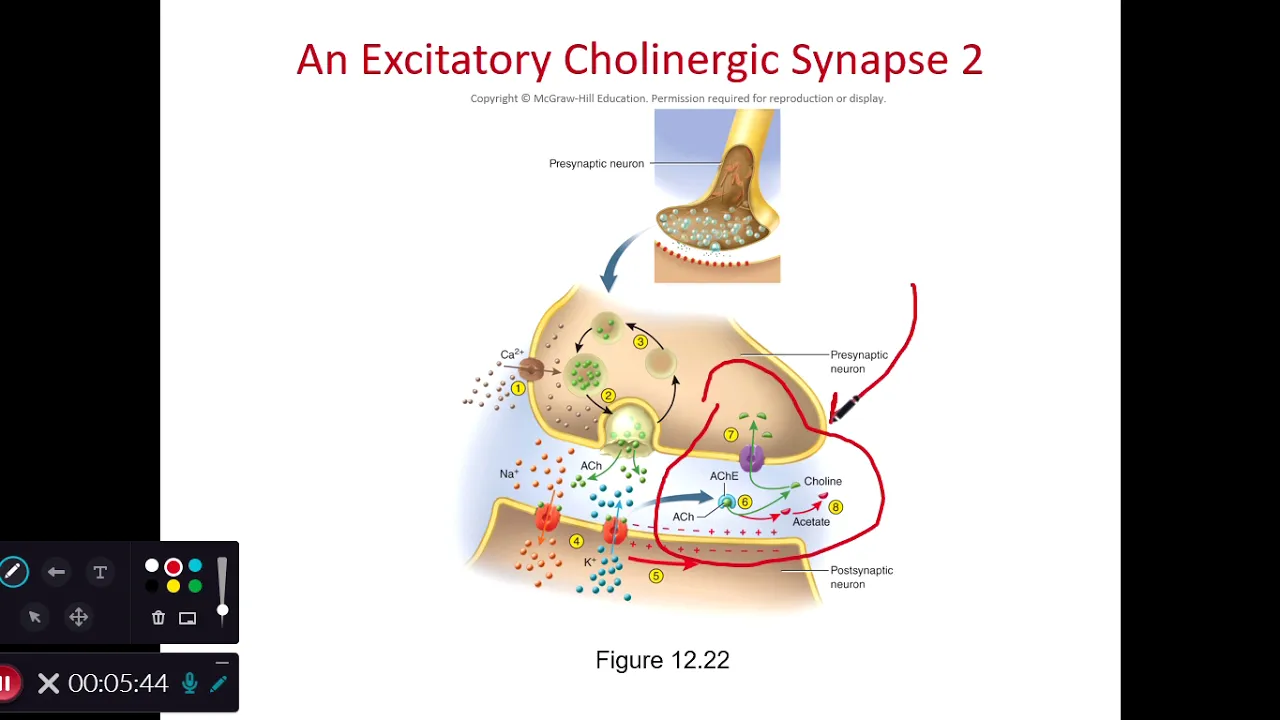
Synaptic transmission, examining how the electrical action potential is converted into a chemical signal at the axon terminal.
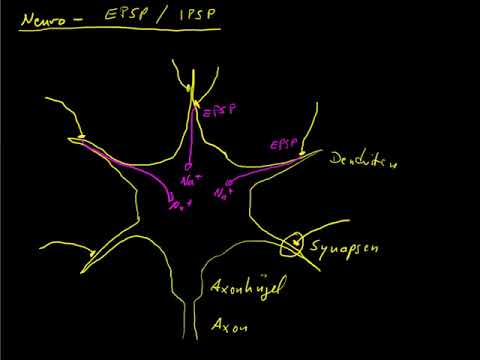
Post-synaptic integration, including how EPSPs and IPSPs are summed at the axon hillock to determine if a new action potential will fire.
Pathophysiology and pharmacology, such as how demyelinating diseases (like Multiple Sclerosis) or local anesthetics (like Lidocaine) affect signal propagation.
93K views1.3Klikes11:21Original Release: 2014-09-19
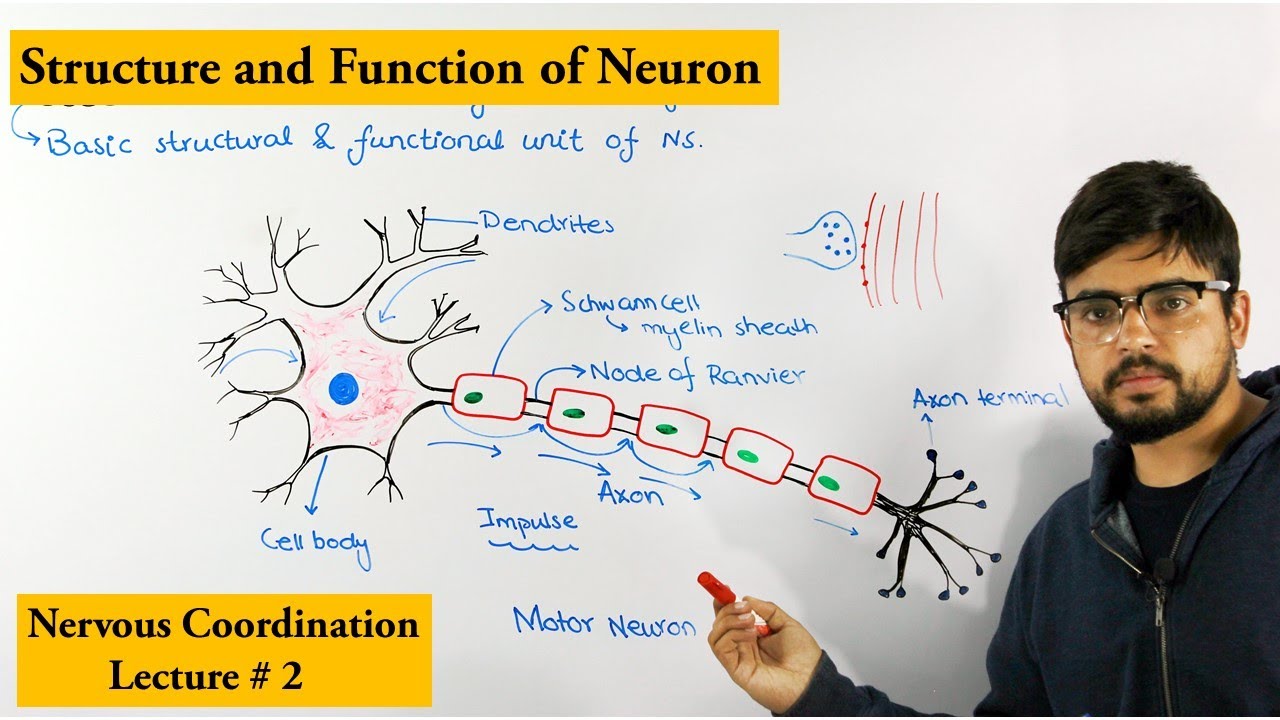
Now that we know what an action potential is and how the cell generates this action potential, let's discuss how the action potential actually propagates or moves along the axon of our nerve cell. So let's begin by recalling some basic information about the neuron. So basically the neuron contains the soma also known as the cell body that contains the nucleus and the organels.
It contains these projections known as dendrites that receive the electrical signal from other cells and then our dendrite sends those electrical signals through the soma and to the axon hillock. Now that axon hillock receives the stimulus and if the stimulus is high enough, if it reaches the threshold value, an action potential is generated on the axon hilllock and then that action potential somehow moves along the axon and all the way to the axon terminal away from the soma of the neuron. Now the question is how exactly does our action potential actually travel along the axon and why does our action potential only move in this direction away from our soma. So let's begin by zooming in onto our axon hillock uh as shown in the following diagram. So this is before any stimulus is actually applied. So before we apply our stimulus the inner portion of the cell membrane. So this is one cell membrane on this side and this is the other cell membrane on the other side and this is our cytoplasm of the axon hillock. So before we apply our stimulus, our cell membrane is resting.
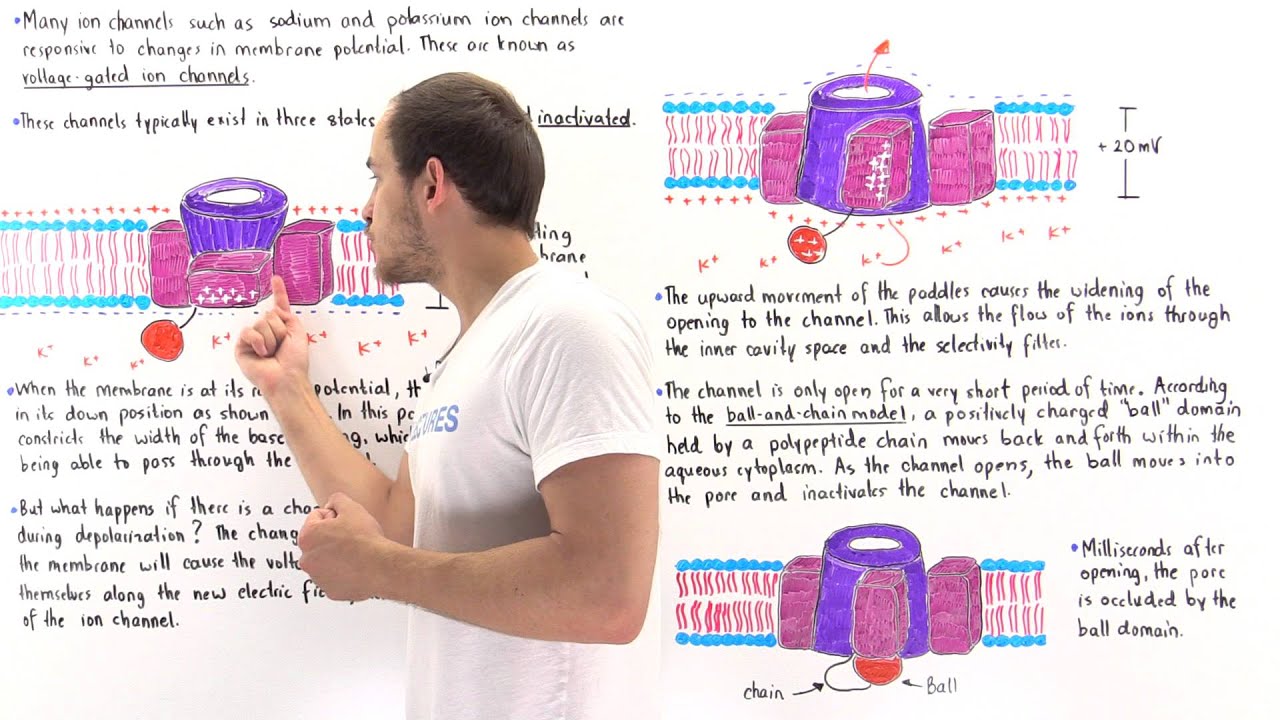
And remember the resting membrane potential means that the inner portion is negatively charged and the outer portion the extracellular portion of the cell membrane is positively charged as shown. So before any stimulus is applied, the membrane is negatively charged inside the cell and positively charged right outside the cell. Now let's suppose our dendrites receive that signal and transmit that signal through the cytool of the soma and to the axon hillock. Now if the stimulus is high enough, if it is equal to or exceeds the threshold value, then what that basically causes is the opening of the sodium voltage gated channels. And as soon as our stimulus is applied to a certain region, let's say this region, our channels, the sodium channels on the membrane open up and the sodium travels down its electrochemical gradient and from the outside and into that cell. So we have an influx of sodium into our cell. Now as soon as our sodium ions rush inside the cell they will reverse the polarity of the cell and this is known as the depolarization period. So that basically means because we have positively charged sodium ions flowing into the cell that will make the inside of the cell momentarily positive and the outside of the cell will become momentarily negative in the region where the stimulus is applied. So that is shown in the following diagram. the sodium channels open up and our sodium ions move into the cell as shown and that will cause the inside of the cell membrane to become positively charged and the outside to become negatively charged. Now notice the adjacent region of the cell membrane still contains a negative charge on the inside and the positive charge on the outside. The question is how exactly will the adjacent section of the cell membrane be influenced by the influx of the sodium ions into the cell. So it turns out that the increase of the positive charge inside the cell where the stimulus actually took place will cause an increase in the positive charge found in the region right next to where the stimulus actually took place. So what that means is as we have a buildup of sodium ions in this region that will influence the charge value on the region right next to it. And so this will begin to become more positively charged. And remember as the inside of the cell initially becomes more positively charged that will begin to stimulate the opening of the sodium ion channels the sodium voltage gated channels. So what that basically means is we stimulate the NA channels to open up adjacent to where the stimulus actually took took place.
So to see what we mean let's take a look at the following diagram. So as soon as the sodium channels begin to open up on the adjacent region, the sodium channels where the stimulus actually took place begin to close. And as they begin to close, that will basically inactivate our sodium channels. And that will open up the potassium channels and now potassium ions where the stimulus actually took place. the potassium channels will begin to open up and our potassium ions will begin to move down the electrochemical gradient from the inside of the cell to the outside of the cell and this is known as our repolarization period. Now we're going to once again change the polarity of the cell and so the inside will become negatively charged because we have these positively charged sodium uh potassium ions leaving. So that means the inside will become negatively charged, the outside will become positively charged.
But at the same exact time, the concentration of charged of positive charge increases in the adjacent region.
And that causes our sodium voltage gated channels to open up in the adjacent region. And so we have an influx of sodium ions into the cell around this region. And in this manner we can see that the action potential moves from this initial position where the stimulus took place to the next position along the cell membrane of our axon. So once again at around the same time as the sodium channels begin to close and the potassium channels begin to open in the stimulus region in this region here the sodium channels in the adjacent region will begin to open causing depolarization to take place here. So we have depolarization taking place here and repolarization taking place here.
Now in this same effect, so we basically have a domino effect taking place and so each adjacent consecutive region will basically be depolarized as our uh action potential moves along our cell membrane. Now the next question that we want to basically answer is why doesn't our action potential move in the opposite direction? So we said earlier that as the positive charge increases on this side this inside negative charge begin uh becomes more positive and that's exactly why what causes this section to depolarize and the same thing is true here. So as this inside becomes more positive, this inside also begins to become more positive. And so as this as these ions begin to close, these sodium ions will begin to open. And so the action potential will begin to move in this direction. But notice in this case, we also have a negative charge to the left of this increasing positive charge. So in the same way that this negative charge becomes more positive when we have the influx of sodium, why doesn't this the one right in back also become more positive? And so we also have an action potential traveling this way. Why doesn't that actually take place? Well, it turns out that this region that is being repolarized is actually experiencing an absolute refractory period. And that means that all the sodium gated channels are actually closed. All the sodium voltage gated channels are actually closed and inactivated. And that means no matter how high the stimulus is, no action potential can be generated in the region right before our action potential. So once again, you might be wondering why the action potential does not move back towards our cell body. So, we know it moves this way. But why doesn't it move backwards? Well, this is because the region of the membrane right before the depolarized section is in its absolute refractory stage. And that means no matter how large our stimulus actually is, no action potential will take place in that region. And this is because the sodium channels are inactivated. there's nothing we can do that will activate those inactivated channels. So we have to wait until they recover from that inactivation period. So this is explained uh in the following diagram.
So as our action potential moves over this way, the region right in back of that action potential is experiencing a refractory period absolute refractory.
And that means our sodium channels on the cell membrane here and here are inactivated. And no matter how high our stimulus is, no action potential can be generated in this section. And so our action potential does not actually move in a backward direction towards our soma. It only moves towards our axon terminal. And this is shown in the following diagram. So our stimulus is applied to this section. If it's high enough, we basically have this propagation of the action potential take place and it only moves away from the soma away from the cell body and towards our axon terminal. So this is the mechanism by which our propagation of the action potential actually takes place. In the next lecture, we're going to discuss a concept known as mileelination. We're going to discuss what makes our signal propagation faster on the axon. And we're going to discuss something called saltatory conduction.
Up Next
5:06
Vesicle Fusion: Membrane Docking & SNARE-Mediated Cargo Release
@CellClips
57.6K views•2019-03-01

50:12
Bacterial Communication: Quorum Sensing and Biofilm Formation Explained
@JHUAAP
12.6K views•2011-06-28

7:47
Post-Translational Modifications Explained: Types & Functions
@AKLECTURES
136.8K views•2014-09-11

7:08
Bacteriophages: Earth's Deadliest Killers and Future Antibiotics
@kurzgesagt
34.6M views•2018-05-13
Related Study Plans & Knowledge Roadmaps
Structured learning paths in Biology
biology
RNAi: Biogenesis, RISC & Gene Silencing
01Molecular Biology Foundations: DNA to Protein
02Introduction to RNA Interference (RNAi)
03Molecular Biogenesis of miRNA and siRNA
+ 2 more learning modules
10h5 modules
Explore Roadmap
biology
Mycorrhizae: Signaling, Biophysics & Ecology
01Foundations of Mycorrhizal Symbiosis
02Molecular Signaling and Root Colonization
03Biophysics and Bioenergetics of Nutrient Exchange
+ 1 more learning modules
11h4 modules
Explore Roadmap
biology
Circadian Clocks: TTFL, SCN & Periphery
01Foundations of Molecular Biology & Gene Expression
02Introduction to Chronobiology and Actograms
03The Core TTFL: Molecular Architecture of the Clock
+ 3 more learning modules
14h6 modules
Explore Roadmap
biology
Population Genetics: Math, Drift & Selection
01Genetic & Probability Foundations
02The Hardy-Weinberg Principle and Baseline Models
03Mathematical Modeling of Natural Selection
+ 3 more learning modules
18h6 modules
Explore Roadmap