














When deciding to extubate ICU patients, clinicians should evaluate five key criteria: (1) Respiratory mechanics assessed by Rapid Shallow Breathing Index (RSBI) - values under 105 on T-piece trial or under 60 on CPAP/pressure support indicate readiness; (2) Secretion clearance capacity - patients must be able to cough and clear secretions effectively; (3) Hemodynamic stability - patients should be off or on minimal vasopressors with controlled heart rate and rhythm; (4) Neurological status - patients must follow commands and be able to lift their head to protect their airway; (5) Improvement of underlying condition - the primary reason for intubation (such as pneumonia, pulmonary edema, or neurological issues) must show significant improvement. Additionally, a cuff leak test should be performed in patients intubated longer than five days to check for tracheal edema before extubation.
ICU Extubation Criteria: The 5 Key Factors for Safe Decisions
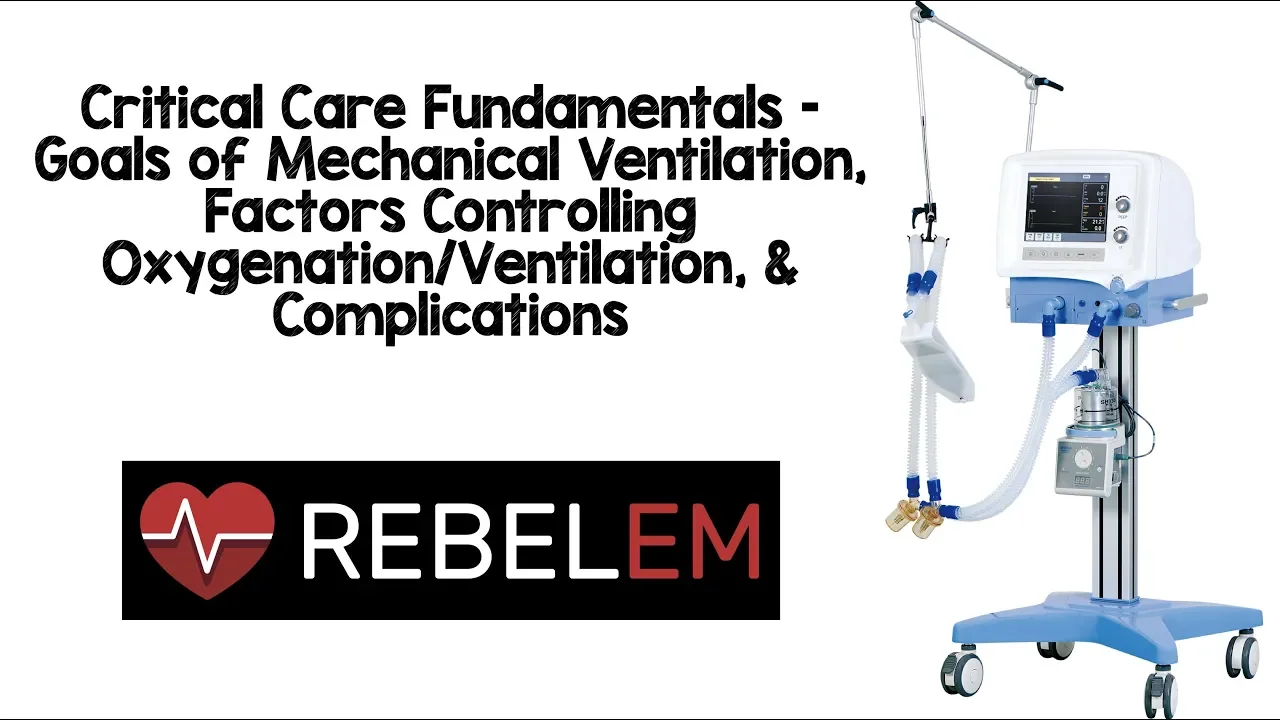
Added:hey everybody welcome back to a critical-care survival guide today we want to talk about a topic that is one of my favorite things to talk about in the ICU and that is when to excavate patients I found that sometimes knowing when to take the endotracheal tube out it's harder than knowing when to put it in because there's much that goes into making this decision I'm going to try to break this down into five key elements that will help you when it comes time to get those patients off the vent the questions I asked my team when I'm rounding in the ICU beginning in with how are they doing in terms of their respiratory mechanics the ratio we look at is the ratio of frequency that's number of breaths per minute over the tidal volume at the patient's breathing this is also called the rapid shallow breathing index or our SBI r is B as some affectionately call it the RIS V was validated and patients that had it endotracheal tube coming out of their mouth and they had blow by oxygen what's called a TPS because it kind of looks like a t and the patient and this set up would have to be doing all of the effort on their own the ventilator is not connected to the patient so the patient is doing all the work plus a little more they're having to overcome the resistance of the endotracheal tube to breathe this is called a t-piece trial and in patients that had a R is B that was less than 105 on a t piece they had a very very high incidence of successfully being excavated there is B in reality we don't have patients on T pieces very much when it comes time to excavating them we often excavate them off of a very low setting say for example CPAP and pressure support C pops typically about five and pressure support anywhere from five to ten when patients are on CPAP pressure support they're getting a little bit of extra help with each breath so the R is B number 105 maybe a little bit too high the lower there is B the better typically in patients on CPAP pressure support five over seven if you're seeing that there is be as less than 60 in my opinion that's usually a pretty good sign that that patient is taking big enough breaths and a low enough frequency telling you that their respiratory mechanics are ready to be extubated remember there is B is just one of the five number two secretions secretions are a huge issue for patients that are getting excavated because they are gonna have to cough and clear those secretions if you're having a lot of thick secretions and a high amount that's one more barrier to a successful excavation so I typically asked my nurse my wrist where therapists hardly do have secretions and if they say they're having tons of secretions that's another thing I keep in mind because if this patient doesn't have a very very strong coffee if they're weak maybe they are having trouble lifting their head if it's a neuro injured patient maintaining clearance of their airway through coffee and clearance of the secretions can be a big problem so it's a question you want to ask before you exudate number three how does their chemo dynamic Stability patients that are still on base opressors patients that let's say have cardiogenic pulmonary edema and you're still diary seing them and they're still having soft pressures as soon as you take away the positive pressure ventilation a couple of things happen number one they're after load actually goes up number two they're going to be more awake because the sedation is coming off so they may get more tachycardic more more anxious and that may push them into tachy dysrhythmias like a fib so I'd like to have atrial fibrillation well controlled I like to make sure the patient is adequately Diner east I like to see them off pressures as much as possible sometimes you have to excavate on low doses of these oppressors if everything else is lining up that's probably okay but if you're on higher doses of a suppressors if you're having tachy dysrhythmias probably not the best time to extubate number four following commands Mental Status and the big one I look for here is can you lift your head lifting your head is one of the key things that patient needs to be able to do to protect their airway right because part of coughing is take a deep breath in and then moving forward coughing and expelling those secretions patients who can't lift their head off the bed whose mental status is really suboptimal they're very high risk for getting re intubated so this is definitely one of our big five that we look for we like to have patients following commands lived in their head and it ties into the fifth criteria which is the underlying issue is it better the reason that they got intubated pulmonary edema have we diurese them wicked pneumonia requiring antibiotic therapy and clearance is that better is it due to a let's say neurogenic problem like a seizure and their postictal but now they're awake is that better is the underlying condition improved so as you think through which patient's you want to excavate it's just a quick wait five things to kind of run through and your list I like to ask my residents and my interns what is the big five before we excavate and we like to try to check each one of these if you don't get a lot of checks you still may excavate but you want to be paying particular attention in those patients I'll throw one other consideration on here for you guys to close out and that's something called the cuff leach check cuff leak patients that have been intubated for more than five days are an increased risk of developing tracheal edema or swelling women have a higher proclivity for this to happen one thing I asked my respiratory therapists to do is to put the patient on a volume mode to a guaranteed volume and then we let the air out of the cuff after we've suction them out and we like to see a couple of things we like to see and hear that an audible cuff leak so air is coming into the lungs and then coming back out around the tube and coming out of the patient's mouth you can see and hear that secondly I look at the ventilator and I want to make sure that the tidal volume that is exhaled drops by at least about a hundred if I've seen those two things and I feel pretty good that they don't have bad tracheal edema if I let the cuff down tae-bong doesn't change and I don't hear or see any cuff leak well then I'm worried that they've developed some tracheal edema now I might consider giving them some steroids or at least if I do extubate be very vigilant watching to see if they develop Strider or some post extubation complications thanks again for watching congratulations on xtube a new patient
Up Next
Extubation Procedure: Removing an Endotracheal Tube Safely
@GeorgeORRT
79K views•2017-11-29

Graphic Medicine: Comics for Collaborative Healthcare Communication
@nationalpatientadvocate
189 views•2023-12-04

Neuroanatomy: Central and Peripheral Nervous System Divisions Explained
@AKLECTURES
136.2K views•2014-09-20
Stages of Labor and Vaginal Birth | Childbirth Animation
@nucleusmedicalmedia
52.1M views•2017-08-18
Related Study Plans & Knowledge Roadmaps
Structured learning paths in Medicine