














In mechanically ventilated patients, peak inspiratory pressure reflects the combined effects of airway resistance and respiratory compliance, while plateau pressure specifically measures alveolar pressure at end-inspiration; by performing an inspiratory hold to obtain plateau pressure, clinicians can distinguish whether elevated peak pressures result from increased airway resistance (treatable with suctioning, bronchodilators, or addressing tubing issues) or decreased lung compliance (requiring identification of underlying conditions like ARDS, pneumonia, or pulmonary edema), with normal lung compliance being approximately 100 mL/cmH2O and ARDS compliance ranging from 10-50 mL/cmH2O.
Ventilator Peak and Plateau Pressures: A Clinical Approach
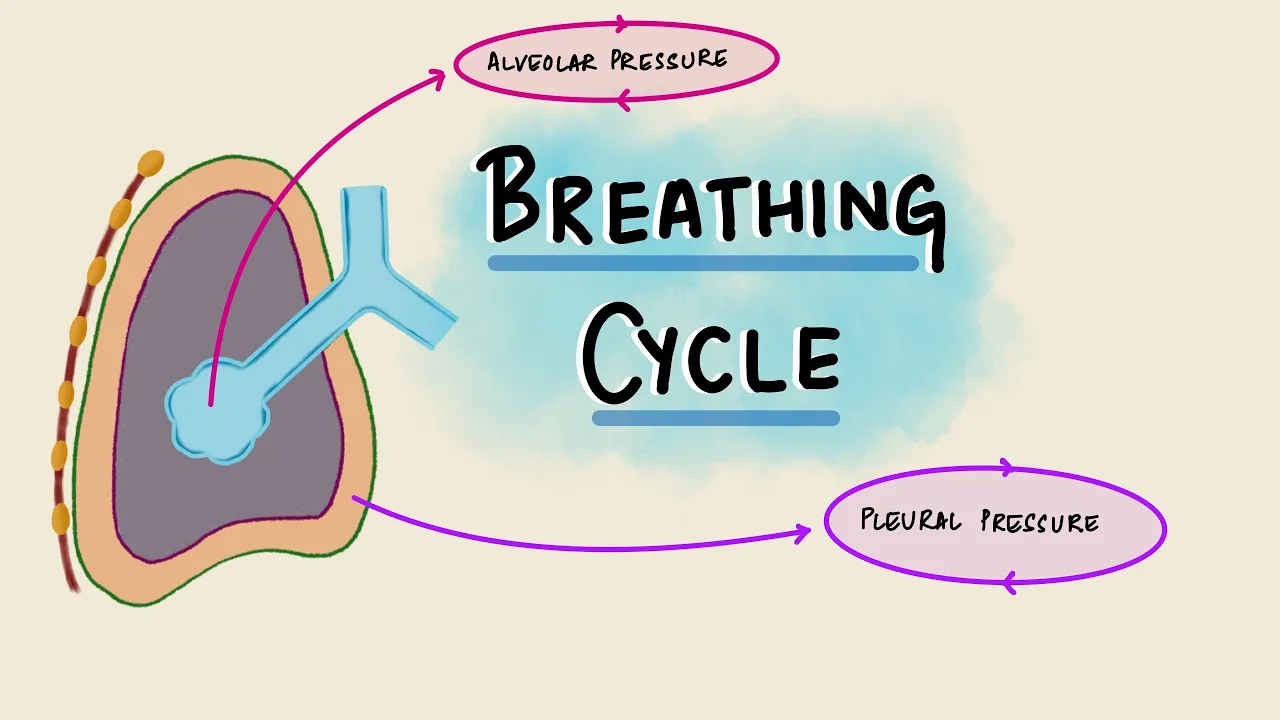
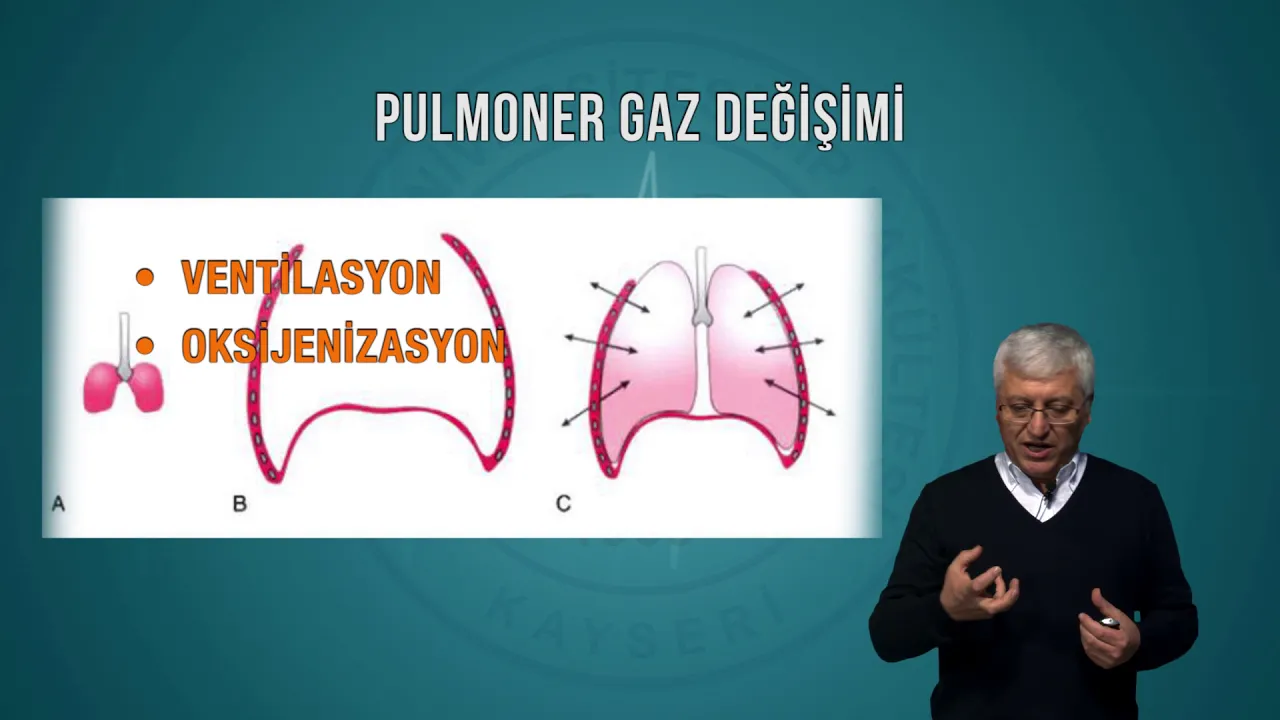
Added:Basic anatomy and physiology of the respiratory system, specifically how intrapleural and alveolar pressures change during normal breathing.
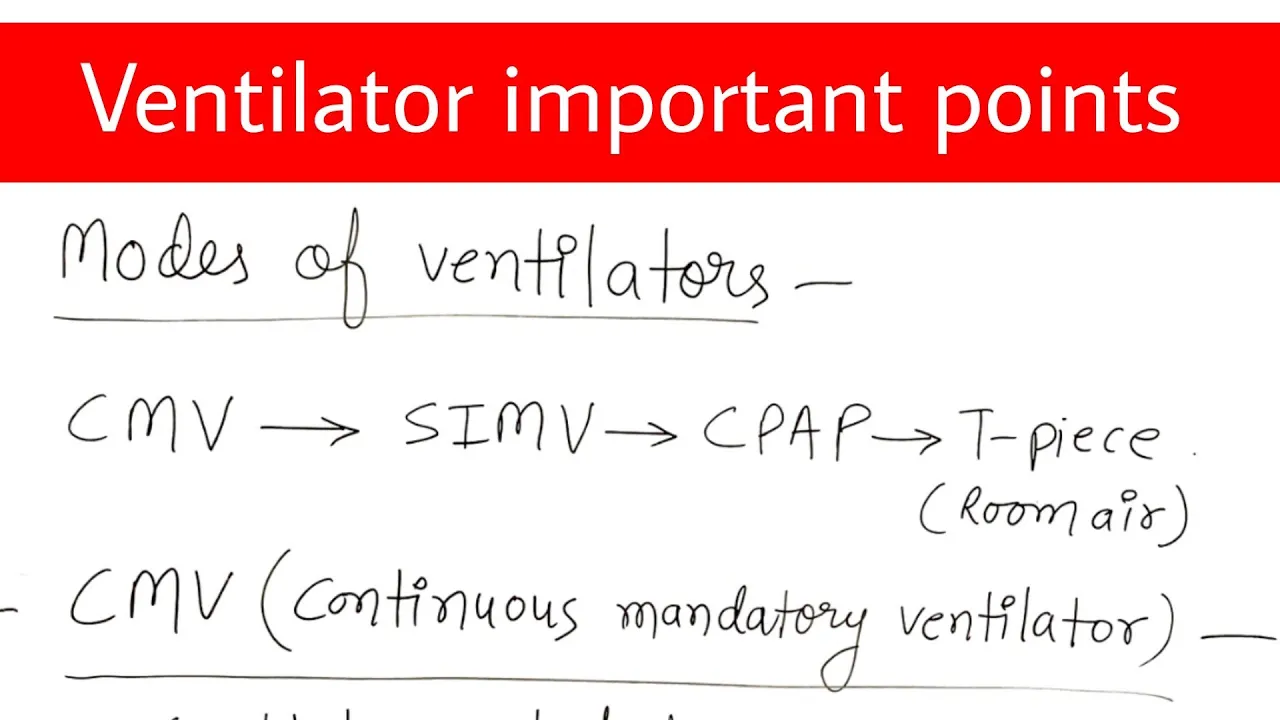
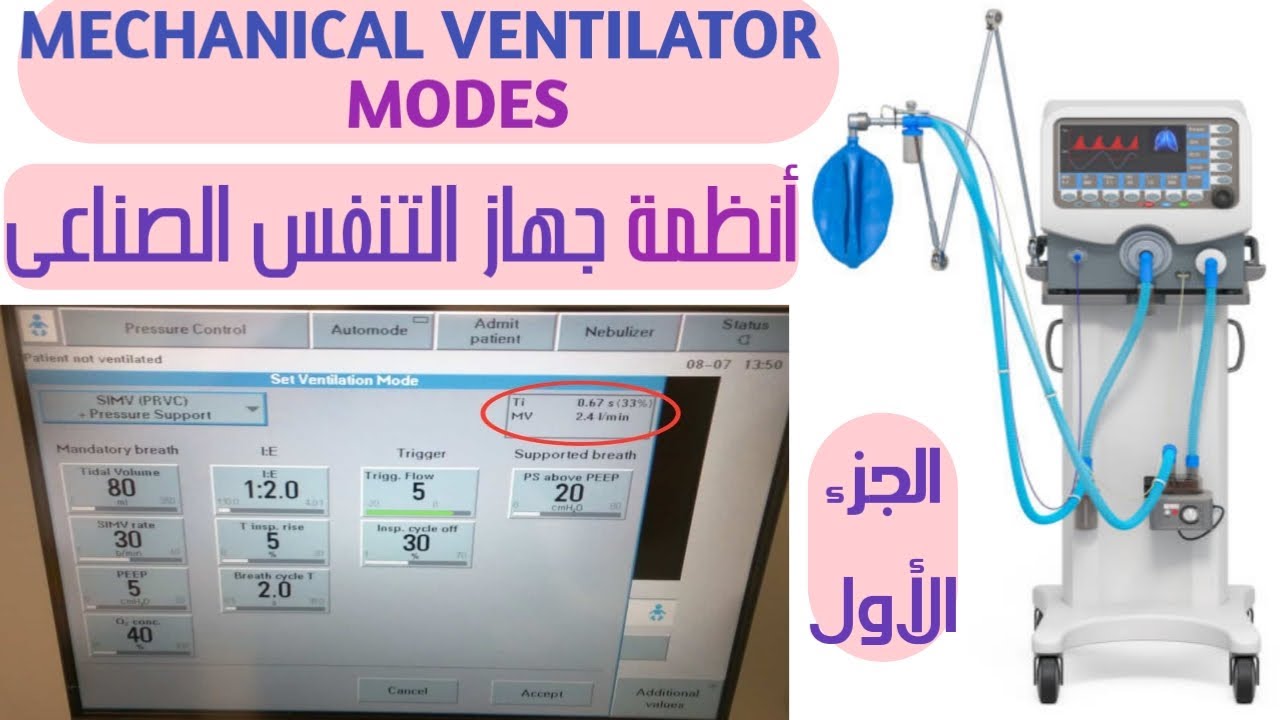
Fundamentals of mechanical ventilation modes, particularly the difference between volume-controlled and pressure-controlled ventilation.
The mathematical concepts of compliance (how easily lungs stretch) and resistance (opposition to airflow) within a pneumatic circuit.
Standard ventilator parameters and settings such as Positive End-Expiratory Pressure (PEEP), tidal volume, and inspiratory flow rate.
Application of lung-protective ventilation strategies, specifically keeping plateau pressures under 30 cm H2O to prevent ventilator-induced lung injury (VILI).
Calculation and clinical interpretation of driving pressure (Plateau Pressure minus PEEP) and its role in predicting ARDS patient outcomes.
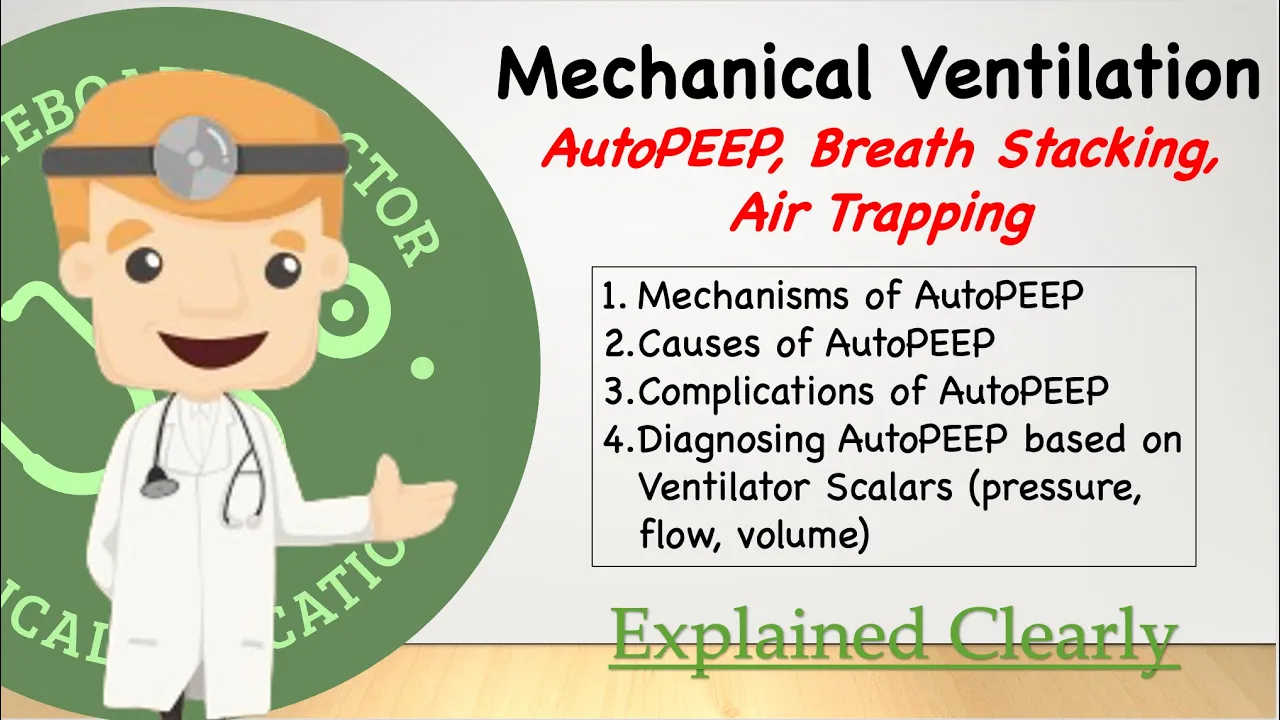
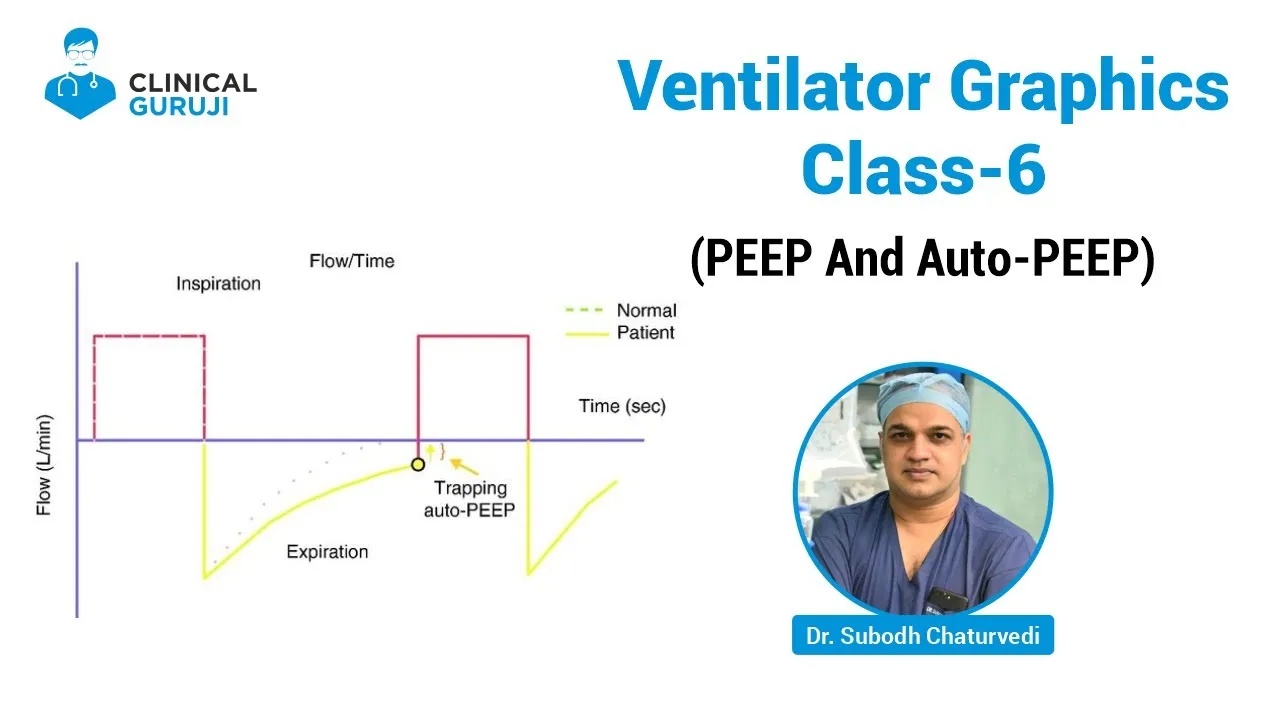
Advanced troubleshooting of patient-ventilator dyssynchrony, such as detecting auto-PEEP (intrinsic PEEP) and air trapping.
Interpretation of ventilator graphics and scalars (pressure-time, flow-time loops) to identify real-time changes in respiratory mechanics.
62.1K views1.6Klikes9:07Original Release: 2022-01-14
welcome back let's talk about ventilator peak and plateau pressures first a case you were called to the bedside because the ventilator high pressure alarm is going off and the patient is now more hypoxemic the patient is 50 years old with the history of copd and admitted with ards they are currently on a volume control mode of ventilation sedated and breathing passively on the ventilator the ventilator screen says that the current peak pressures are in the range of 45 to 50.
the oxygen saturation is 84 on 100 fio2 how do we approach this problem in this video we will describe how to obtain a plateau pressure for an adult patient requiring mechanical ventilation describe the concept of lung compliance and identify a framework for approaching elevated peak and plateau pressures in the mechanically ventilated adult patient shown is an intubated patient requiring mechanical ventilation first let's talk about the pressure waveform on the ventilator shown is a sample pressure waveform for a patient on a volume control mode of ventilation the peak inspiratory pressure is just that the peak pressure at the end of inspiration this pressure is determined by four major variables inspiratory flow rate and flow pattern airway resistance compliance of the respiratory system and total positive end expiratory pressure or peep for our case if we assume that no recent changes have been made to either the inspiratory flow rate or the set peep a change in peak inspiratory pressure is due to a change in airway resistance a change in compliance of the respiratory system or a combination of the two so how do we determine if an increase in the peak inspiratory pressure is due to a change in resistance or compliance we perform an inspiratory hold or pause when an inspiratory hold is performed all flow in the ventilator circuit is stopped briefly for 0.5 to 1 second at the end of inspiration remember the four variables that determine peak inspiratory pressure in the upper right hand corner of our ventilator screen by briefly pausing flow we remove the variables of flow and airway resistance and because we set and know the peep an inspiratory hole allows us to indirectly measure compliance of the respiratory system by measuring the plateau pressure the pressure in the alveoli at the end of inspiration compliance is the ability of a system to distend or increase in volume when a pressure is applied as an equation compliance c equals change in volume over change in pressure a highly compliant system is one that can significantly increase in volume with very little pressure on the other hand a low compliance system is stiff and changes very little in volume when a large pressure is applied let's apply this equation to the lungs of a ventilated patient in the intensive care unit for the lungs of a ventilated patient compliance equals the tidal volume divided by the driving pressure driving pressure equals the plateau pressure p-plat minus the peep therefore compliance equals tidal volume divided by plateau pressure minus peep assuming the tidal volume and peep have not been changed an increase or decrease in the plateau pressure reflects a change in compliance a normal compliance in an individual with healthy lungs is approximately 100 milliliters per centimeter of water lung compliance in ards is typically in the range of 10 to 50 milliliters per centimeter of water essentially the lower the compliance the stiffer the lungs therefore by performing an inspiratory hold we can identify the plateau pressure and then determine if the increase in peak inspiratory pressure is due to an increase in plateau pressure i.e a change in compliance or if the plateau pressure is unchanged a change in resistance shown is an example of a pressure waveform with an increase in peak inspiratory pressure due to an increase in plateau pressure as well as a pressure waveform with an increase in peak inspiratory pressure without a change in plateau pressure let's create a ventilator to alveoli framework for identifying specific causes of increased resistance and decreased compliance first resistance anything that decreases the diameter of the ventilator tubing endotracheal tube and or major airways will lead to an increase in resistance when creating a framework and differential for problems that increase resistance we can start at the ventilator and work towards the patient first any kinking or obstruction in the ventilator tubing prior to the endotracheal tube can increase airway resistance once we get to the endotracheal tube if the patient is biting on the tube and therefore decreasing the diameter of the tube that can increase resistance moving further down airway secretions or mucous plugs will decrease the diameter of either the endotracheal tube or the airways themselves and increase resistance and finally furthest down bronchospasm will cause the airways to clamp down again decreasing the diameter and increasing resistance therefore if the increase in peak inspiratory pressure is due to an increase in resistance one approach to diagnosing and managing the problem is ensuring the ventilator tubing is not kinked or obstructed by running the length of the tubing from ventilator to patient next ensure the patient is not biting the tube and treat by adding a bite block or increasing sedation next pass the inline suction catheter into the endotracheal tube to remove any secretions or mucous plugs finally in the right clinical scenario for example asthma or copd exacerbations consider inhaled bronchodilators for treatment of bronchospasm what if the increase in peak inspiratory pressure is due to an increase in plateau pressure as we talked about earlier the plateau pressure measures the pressure in the alveoli at the end of inspiration and is directly related to compliance as plateau pressure increases compliance worsens therefore we need to think about acute processes that affect the alveoli either via alveolar filling or by preventing alveolar expansion first diseases that result in alveolar filling will decrease compliance from the session on acute respiratory failure the differential of blood hemorrhage pus pneumonia and ards and water cardiogenic and non-cardiogenic pulmonary edema like an ards is useful when managing ards keeping the plateau pressure less than 30 if possible is a key part of lung protective ventilation next any process that prevents the alveoli from expanding will increase alveolar pressure and decrease compliance this can be broken down into intrathoracic and extra thoracic categories the intrathoracic category includes pneumothorax and pleural effusion in addition auto peep will increase plateau pressure extrathoracic processes include abdominal compartment syndrome acs and tensocities or other fluids filling the abdomen note a more chronic cause of decreased compliance is fibrotic lung disease acute management of an increased plateau pressure is dependent on identifying the underlying disease process it is important to remember that elevated peak and plateau pressures can occur together as many of the problems we discussed can co-exist in the critically ill patient shown as the complete ventilator to alveoli framework for thinking through elevated peak and plateau pressures at the bedside let's go back to our initial case an inspiratory hold is performed the peak inspiratory pressure is found to be 45 with a plateau pressure of 24 which is unchanged from the last ventilator assessment suctioning is performed and a large amount of thick secretions are removed from the endotracheal tube immediately following suctioning the peak inspiratory pressure decreases to 32 and the oxygen saturation improves to 94 percent in this video we described how to obtain a plateau pressure by performing an inspiratory hold on the ventilator and how to use that information to determine whether an increase in peak inspiratory pressure is due to a change in resistance or a change in compliance of the respiratory system next we describe the concept of lung compliance represented by the equation compliance equals tidal volume divided by driving pressure plateau pressure minus peep finally we identified a ventilated alveoli framework for thinking through both elevated peak and plateau pressures at the bedside thank you for watching
Up Next

8:36
Ventilator Waveforms & Troubleshooting | ICU Basics
@ConanLiuMD
68.7K views•2022-06-21

48:47
Graphic Medicine: Comics for Collaborative Healthcare Communication
@nationalpatientadvocate
189 views•2023-12-04

10:28
Neuroanatomy: Central and Peripheral Nervous System Divisions Explained
@AKLECTURES
136.2K views•2014-09-20
3:05
Stages of Labor and Vaginal Birth | Childbirth Animation
@nucleusmedicalmedia
52.1M views•2017-08-18
Related Study Plans & Knowledge Roadmaps
Structured learning paths in Medicine
medicine
Abnormal LFTs: Diagnostic Workup & Pathology
01Liver Anatomy and Basic Physiology
02Introduction to Liver Function Tests (LFTs)
03Hepatocellular vs. Cholestatic Patterns
+ 3 more learning modules
12h6 modules
Explore Roadmap
medicine
Analyzing Blood Smears: RBC, WBC & Platelets
01Introduction to Blood Components & Smear Preparation
02Normal Morphology of Blood Cells
03Erythrocyte Pathologies & Morphological Variants
+ 2 more learning modules
12h5 modules
Explore Roadmap
medicine
Mechanical Ventilation: Waveforms & Alarms
01Anatomy and Physiology of Breathing
02Introduction to Mechanical Ventilation & Core Modes
03Ventilator Settings and Waveform Interpretation
+ 2 more learning modules
12h5 modules
Explore Roadmap
medicine
Neuro Exam: Localization & Stroke Syndromes
01Foundations of Neuroanatomy and Vascular Supply
02The Neurological Examination: Step-by-Step
03Principles of Neurological Localization
+ 3 more learning modules
18h6 modules
Explore Roadmap